

 Brazil
 Antarctica
 Argentina
 Bolivia
 Chile
 Colombia
 Ecuador
 Guyana
 French Guiana
 Falkland Islands (Malvinas)
 Paraguay
 Peru
 Suriname
 Uruguay
 Venezuela
 Germany
 Austria
 Belgium
 Croatia
 Denmark
 Slovakia
 Slovenia
 Spain
 Finland
 France
 Greece
 the Netherlands
 Hungary
 Ireland
 Iceland
 Italy
 Luxembourg
 Norway
 Poland
 Portugal
 the United Kingdom
 the Czech Republic
 Sweden
 Switzerland
 Turkey
 Bermuda
 Canada
 the United States
 Greenland
 Mexico
 Saint Pierre and Miquelon
 the Dominican Republic
 South Africa
 Egypt
 Australia
 Fiji
 New Zealand
 Papua New Guinea
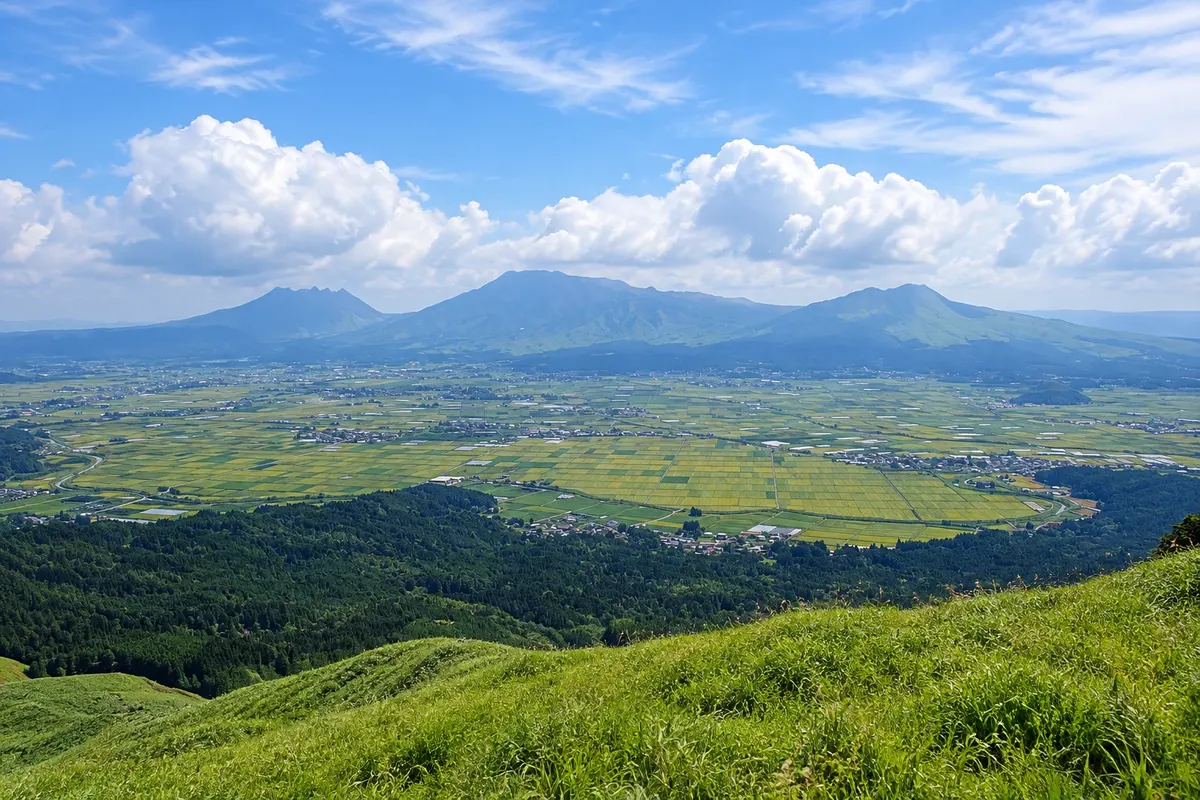
Viewpoint · Aso, Kumamoto
Daikanbō
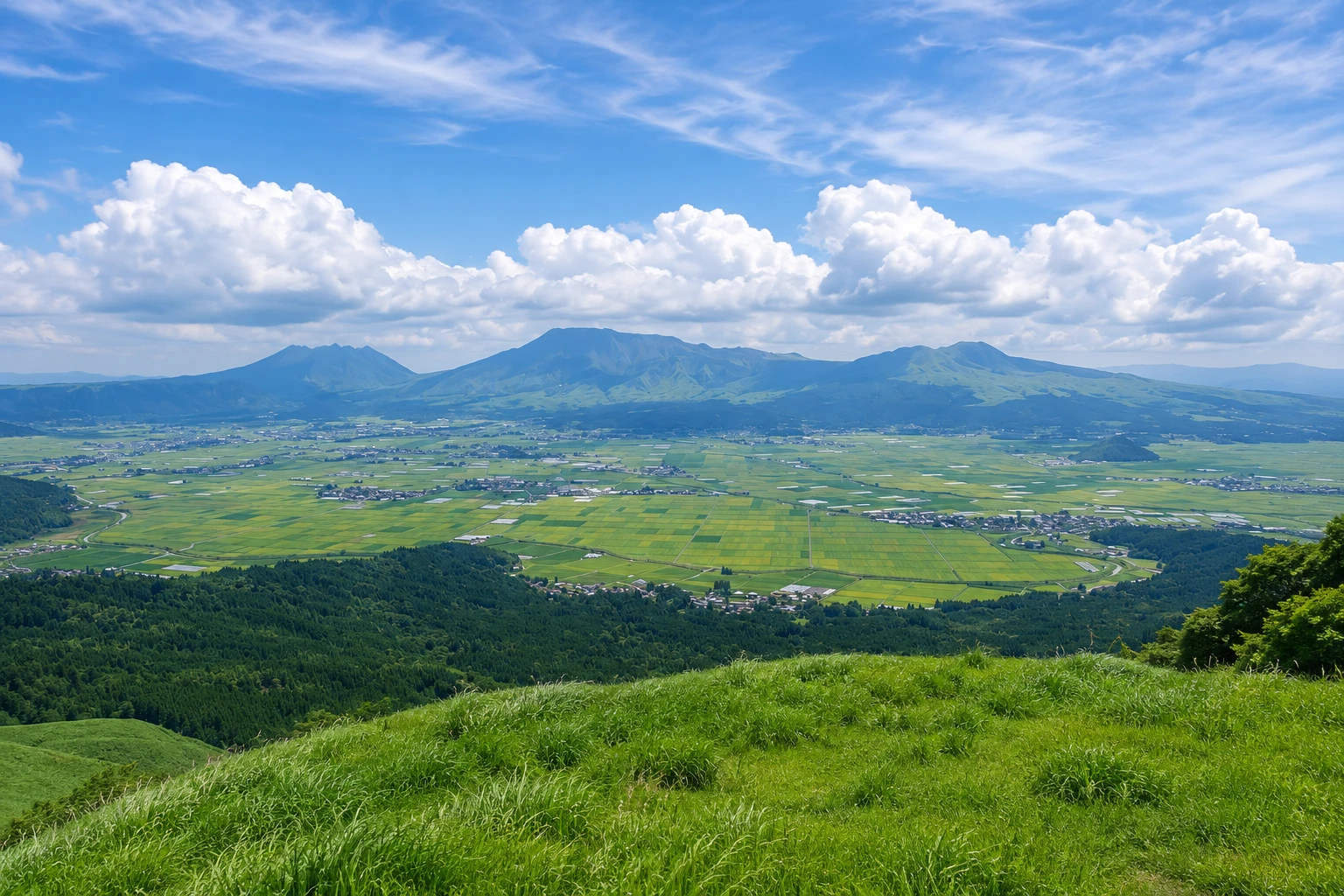
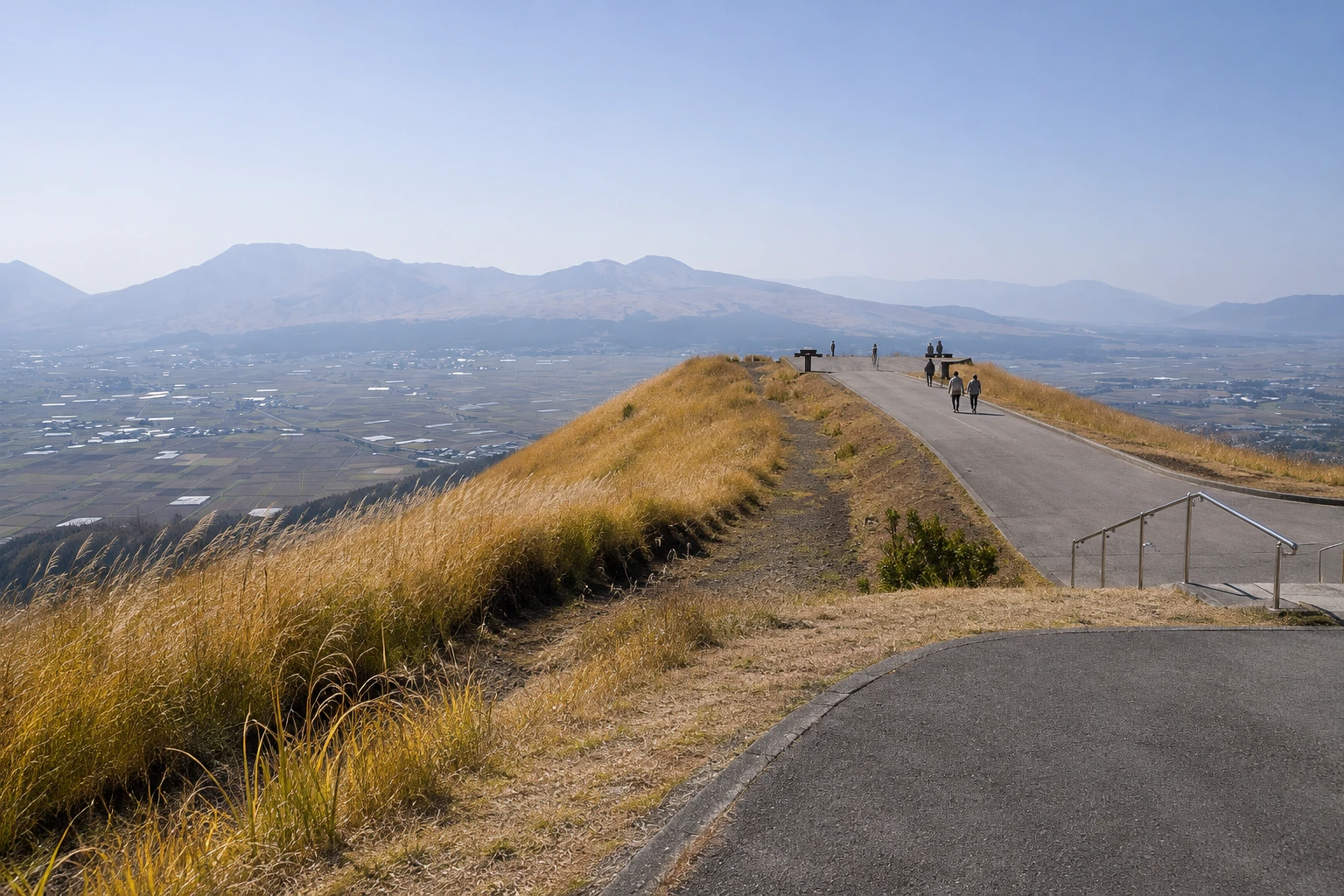
The highest point on the north rim of Aso caldera, at 936 meters, with views of the five peaks, the plain and the pastures; on cold mornings the caldera often fills with mist.
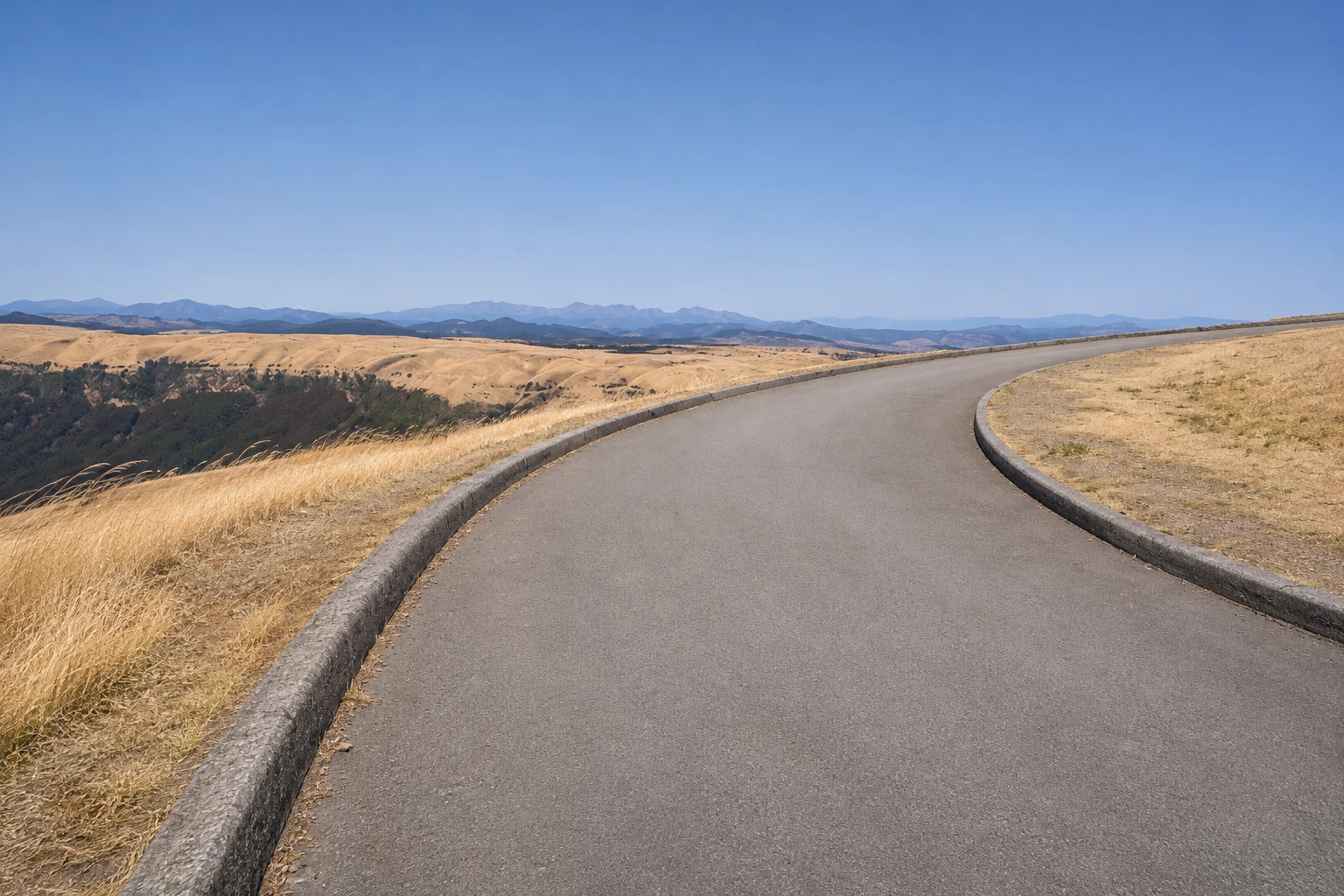
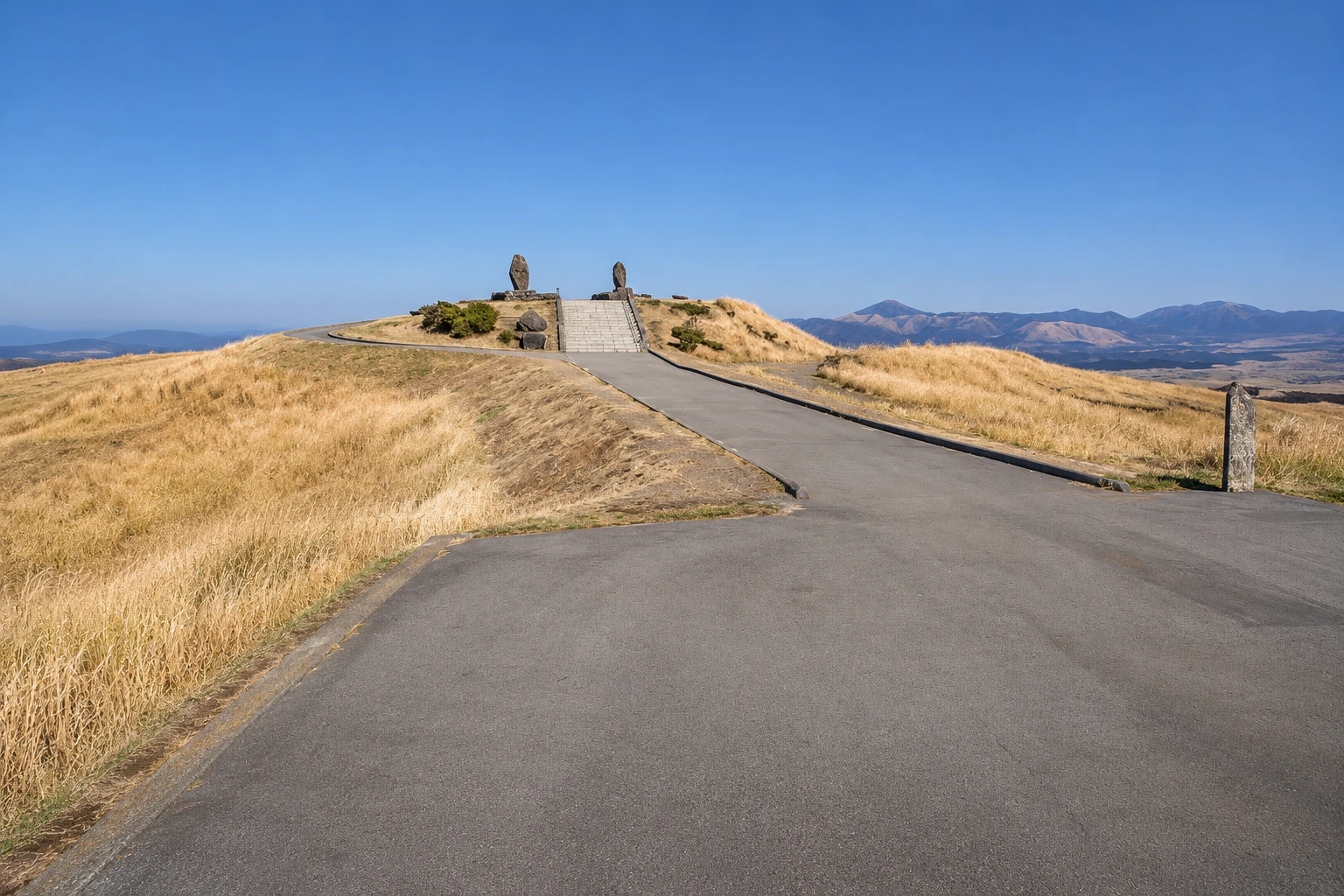
Illustrative images. The pictures in this guide are illustrations based on the real place, not photographs, and may differ from it.

A look at the place
Daikanbō in pictures
These pictures are illustrations based on the real place, not photographs. They may differ from the place.
Click the picture to enlarge it.
Discover
About Daikanbō
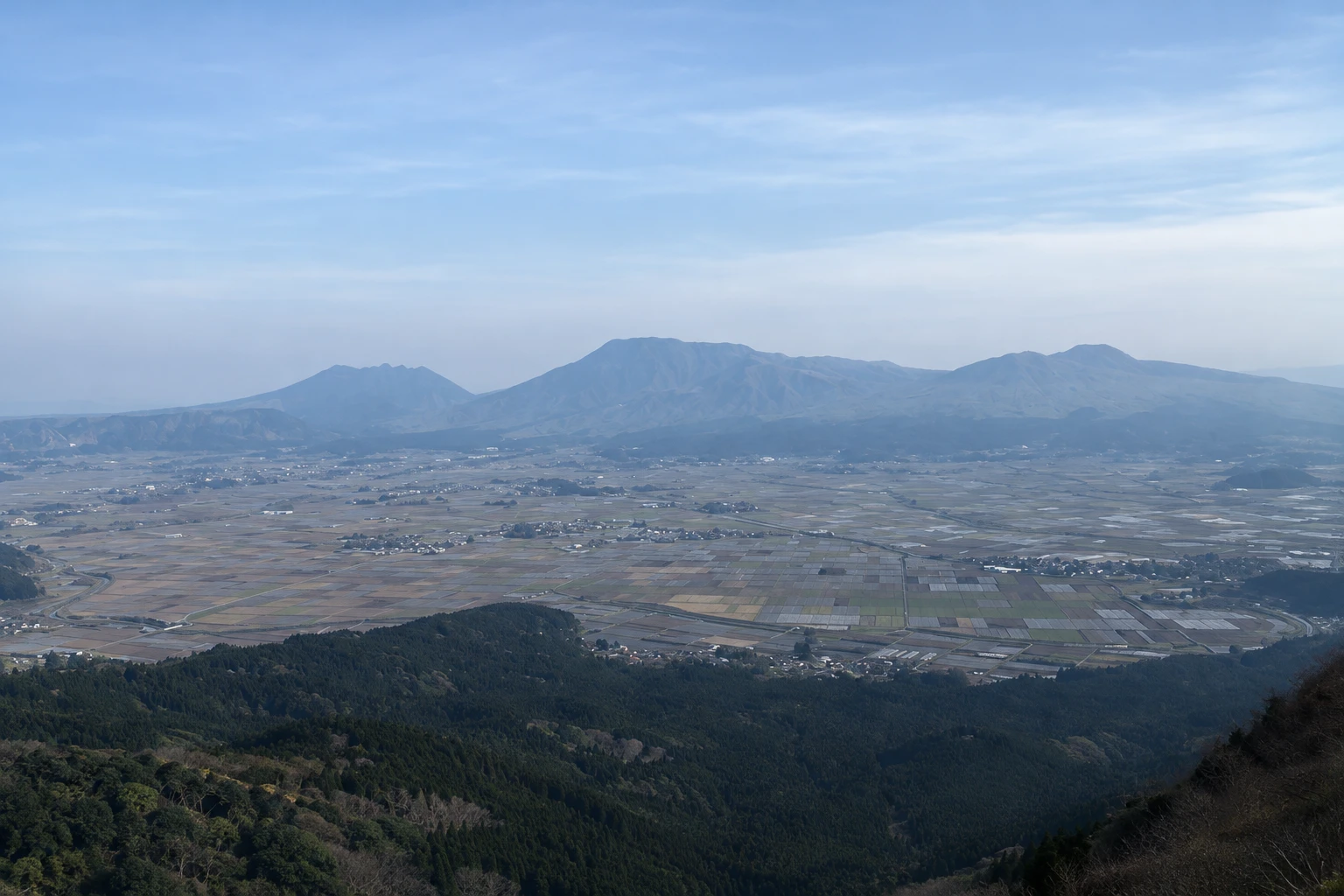
Daikanbo is a grassy promontory on the north rim of Aso caldera, at 936 meters altitude, with wide views of the interior. Below are rice fields, towns and the railway; in the center are the five peaks, whose reclining profile is likened to a reclining Buddha. On clear days the Kuju mountains to the east also appear.
On cold mornings, especially in autumn and early winter, mist often fills the caldera, and from Daikanbo the peaks look like islands in a sea of clouds. The phenomenon, called unkai, is more common after windless nights, just after sunrise, and does not happen every day.
From the parking area short paths lead to the top of the promontory and to viewpoints on the cliff edge, with fences. There is a rest center with a restaurant and local products for sale, such as milk and ice cream from Aso farms. The surrounding pastures are used by Akaushi cattle, and the Milk Road runs along the rim with similar views.
Daikanbo is near the road to Yufuin and Kurokawa Onsen, and many people stop there en route between Aso and eastern Kyushu. The wind is constant and the temperature is markedly lower than at the caldera floor. Even without mist, the place conveys the caldera’s vastness: the railway and villages below look like miniatures.
Before you go
Practical information
Cidade Turismo reviews its information regularly, but something may have changed. Check with the place before planning your trip.
How much time to set aside
About 30 minutes to 1 hour.
Best time
At dawn, from October to December, for a chance to see the mist over the caldera; or late afternoon, with low light on the peaks. Summer tends to be cloudy and humid. Bring warm clothing at any time of year.
How to get there
It is about 16 km from Aso Station, a 20-minute drive up the road to the north rim. There are buses with few departures on the route between Aso and Kurokawa Onsen.
Tip
To try to see the mist, sleep in Aso and go up by car or taxi before dawn. Then follow the Milk Road that runs along the rim.
Get your questions answered
Frequently asked questions about Daikanbō
When is it easiest to see the sea of clouds at Daikanbo?
On cold, windless mornings, generally from October to December, shortly after sunrise. It depends on overnight conditions and does not happen every day.
How to get to Daikanbo without a car?
There are a few buses between Aso Station and Kurokawa Onsen that stop at Daikanbo. Taxis from Aso Station also make the trip in about 20 minutes.
What can you see from Daikanbo?
The interior of the Aso caldera, with its rice paddies and towns, and the five central peaks. On clear days the Kuju mountains appear to the east.
Is it cold at Daikanbo?
Yes, it’s very windy and the temperature is lower than at the caldera floor. Bring warm clothing, especially early in the morning.
Beyond the guide


