

 Brazil
 Antarctica
 Argentina
 Bolivia
 Chile
 Colombia
 Ecuador
 Guyana
 French Guiana
 Falkland Islands (Malvinas)
 Paraguay
 Peru
 Suriname
 Uruguay
 Venezuela
 Germany
 Austria
 Belgium
 Croatia
 Denmark
 Slovakia
 Slovenia
 Spain
 Finland
 France
 Greece
 the Netherlands
 Hungary
 Ireland
 Iceland
 Italy
 Luxembourg
 Norway
 Poland
 Portugal
 the United Kingdom
 the Czech Republic
 Sweden
 Switzerland
 Turkey
 Bermuda
 Canada
 the United States
 Greenland
 Mexico
 Saint Pierre and Miquelon
 the Dominican Republic
 South Africa
 Egypt
 Australia
 Fiji
 New Zealand
 Papua New Guinea
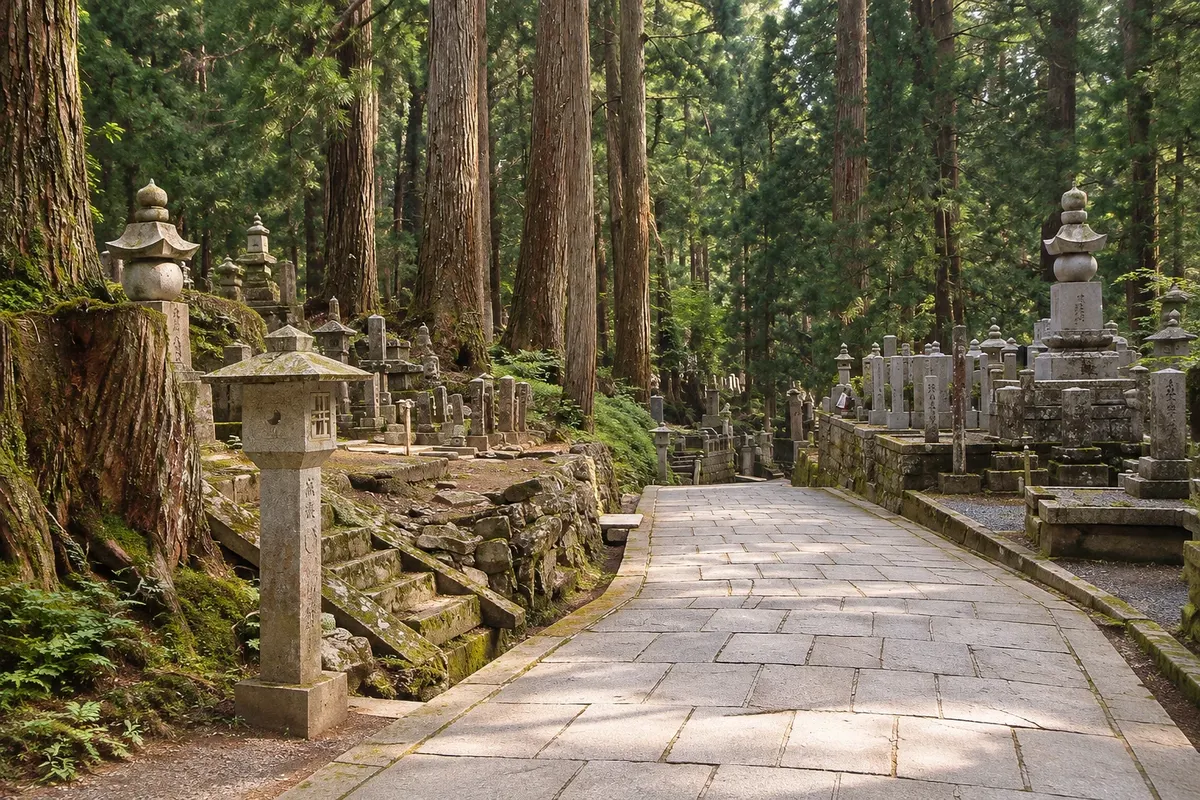
Sacred site · Koya, Wakayama
Okunoin
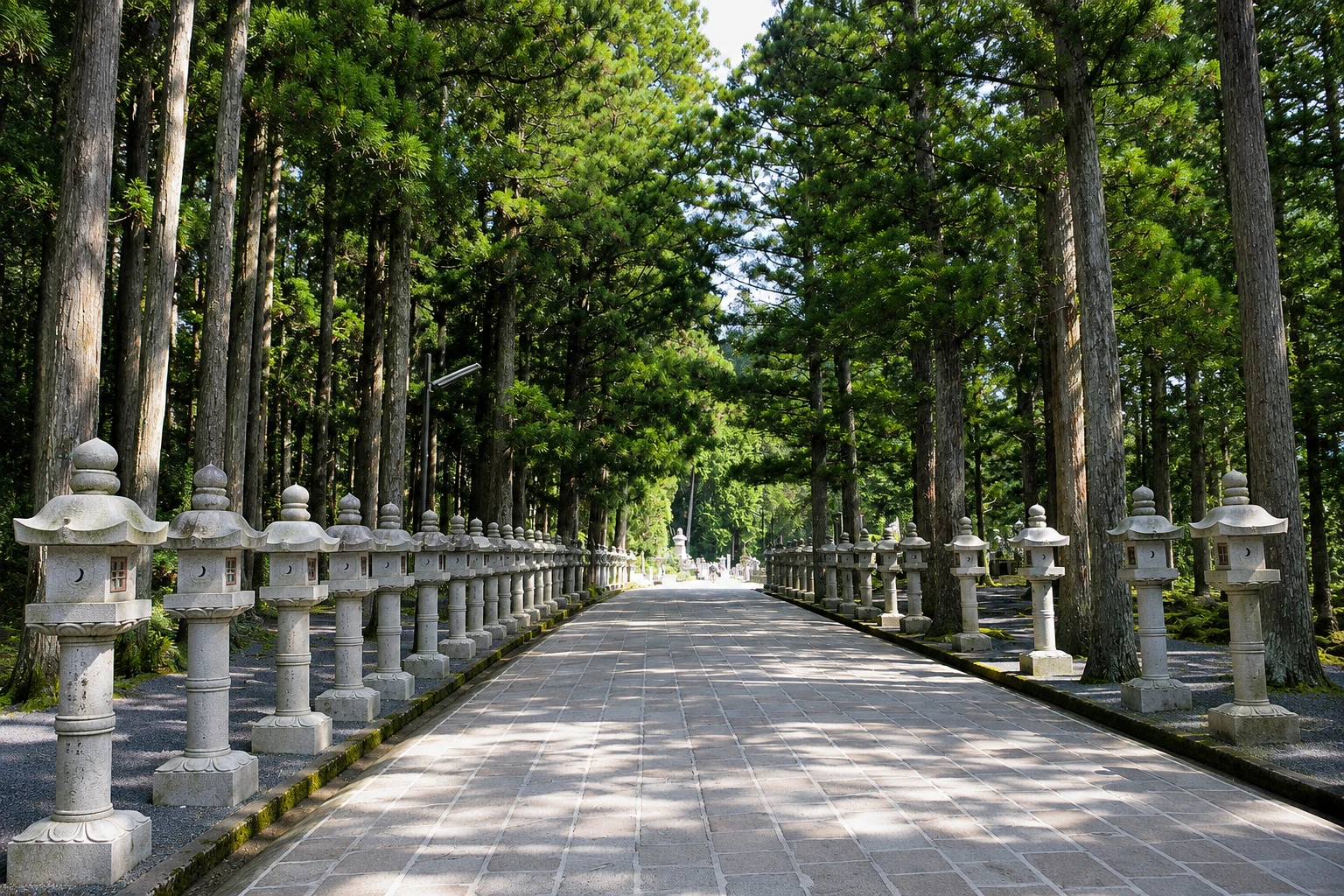
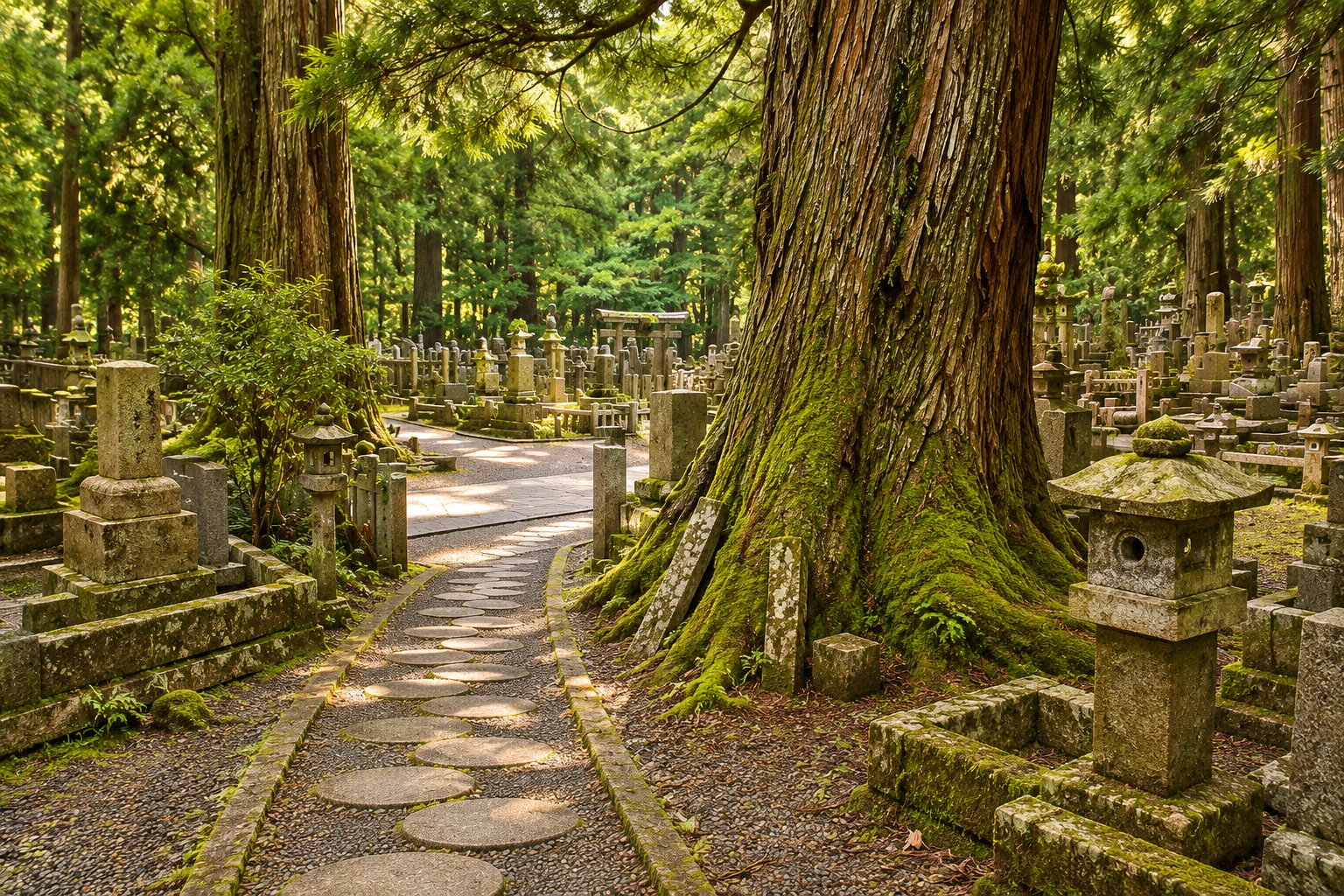
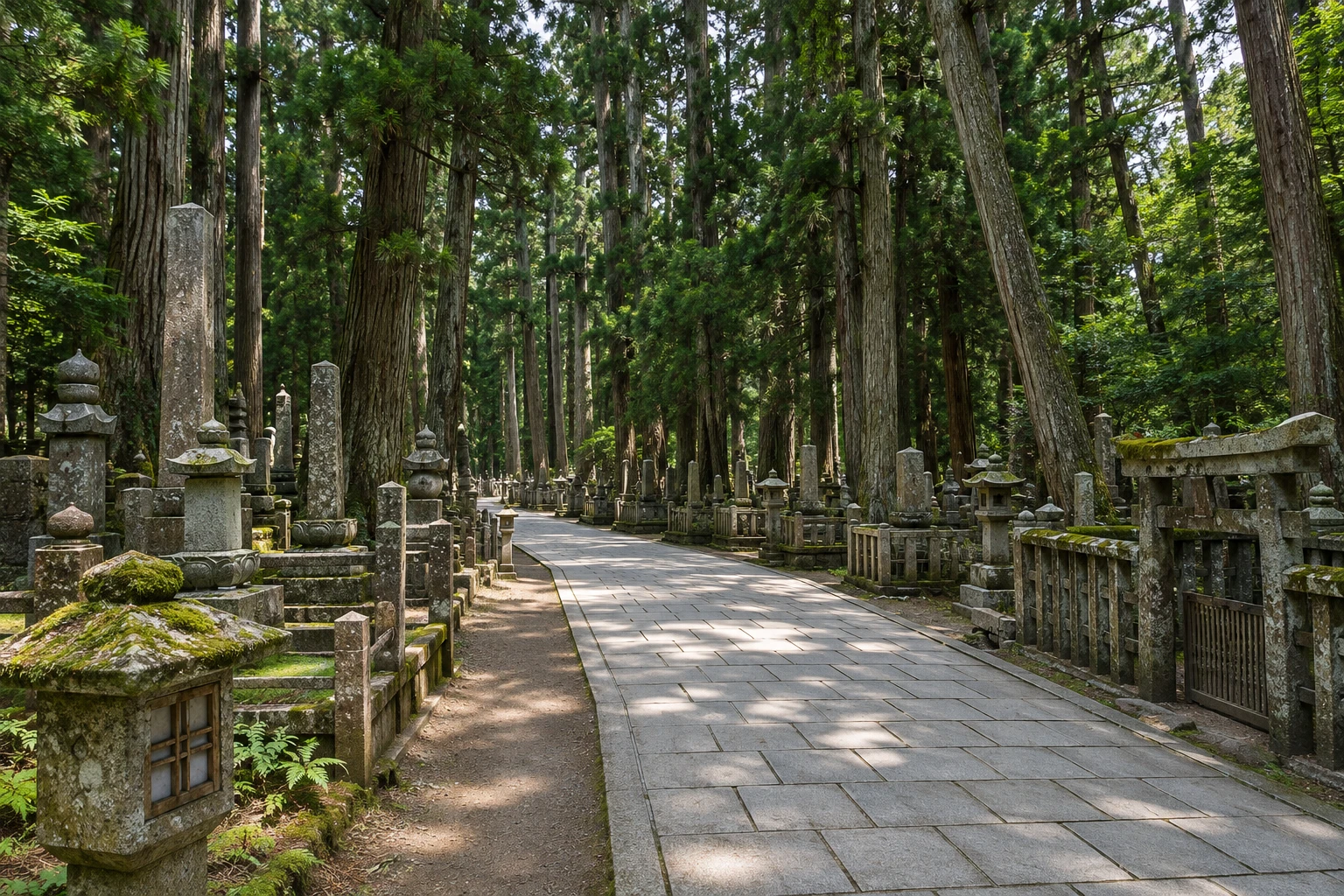
Cemetery and shrine where, according to Shingon belief, Kukai remains in eternal meditation. A path of about 2 km runs among centuries-old cedars and more than 200,000 graves and memorials to the lantern hall and the mausoleum.
Illustrative images. The pictures in this guide are illustrations based on the real place, not photographs, and may differ from it.

A look at the place
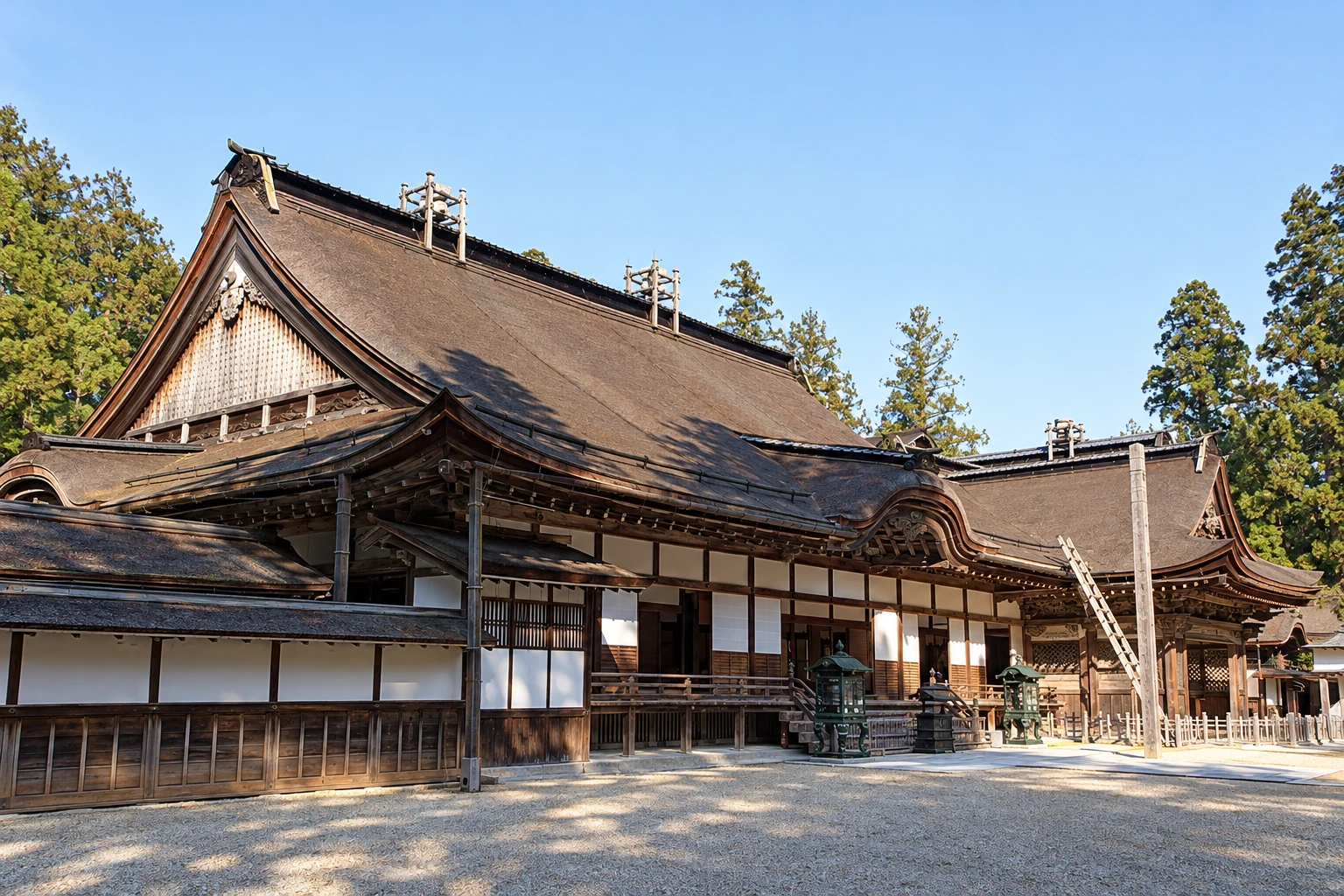
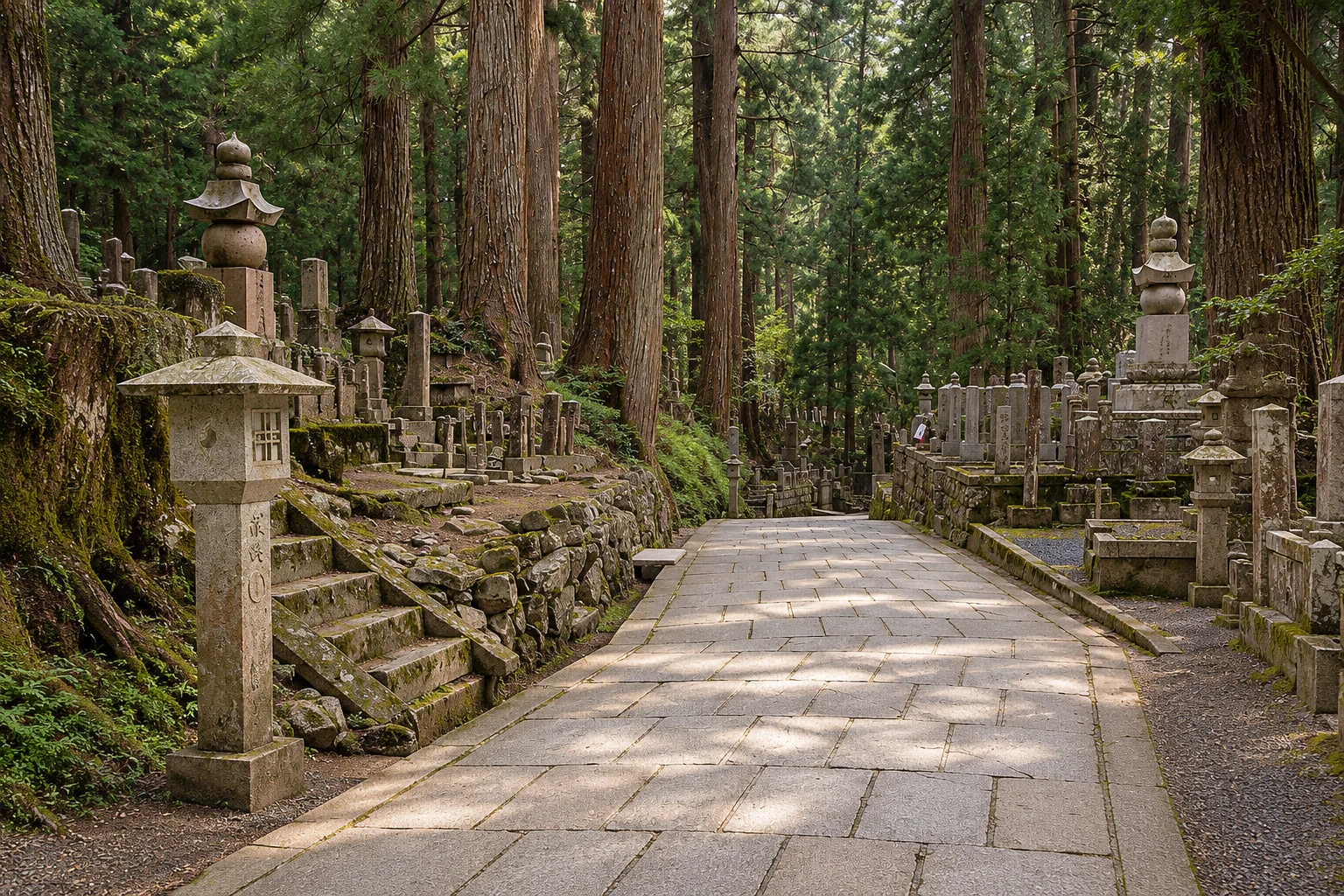
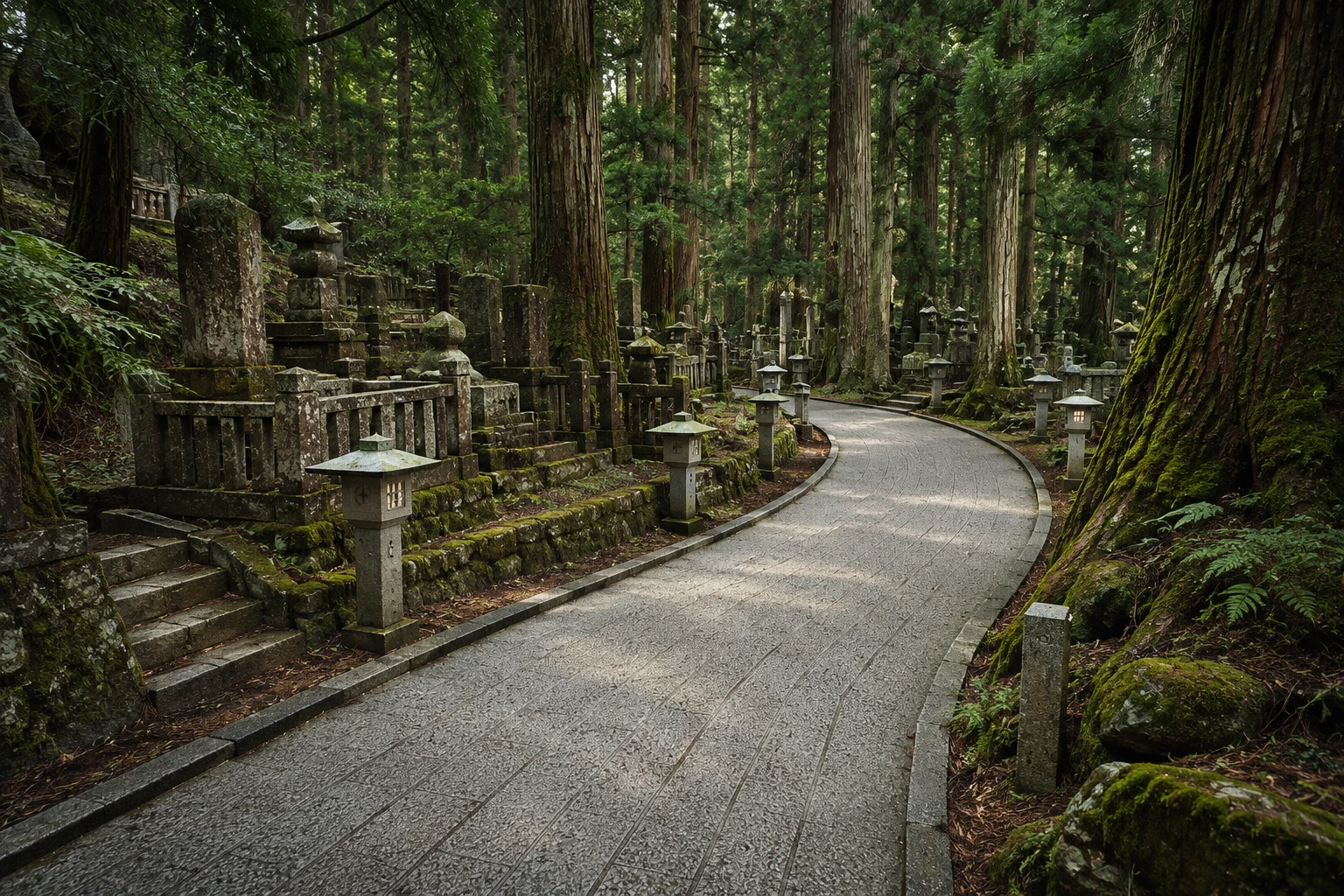
Okunoin in pictures
These pictures are illustrations based on the real place, not photographs. They may differ from the place.
Click the picture to enlarge it.
Discover
About Okunoin
Okunoin is the most sacred site in Koyasan. There stands the Gobyo, Kukai’s mausoleum, which, according to Shingon belief, did not die in 835 and remains in eternal meditation, awaiting the future Buddha. For centuries, being buried or commemorated near it was the wish of nobles, samurai, monks and ordinary people.
The main path begins at the Ichi-no-hashi bridge and runs about 2 km among cedars, some over 500 years old, and more than 200,000 graves, stone pagodas and moss-covered memorials. There are graves of great clans from the era of internal wars, such as Oda Nobunaga’s and Toyotomi Hideyoshi’s, and modern memorials for companies, disaster victims and professional groups. Jizo statues with red bibs appear along the way.
At the end, the Gobyo-bashi bridge marks the most sacred area: beyond this point photography and eating are not allowed. The Torodo, the lantern hall, contains thousands of lanterns donated by the faithful, some kept lit for centuries according to tradition. Behind it is Kukai’s mausoleum. Twice a day, monks carry a meal to the mausoleum in a small procession.
The path is open at any time, and many visitors walk it at night as well, with the stone lanterns lit. In August, the Rosoku Matsuri candle ceremony fills the path with candles.
Before you go
Practical information
Cidade Turismo reviews its information regularly, but something may have changed. Check with the place before planning your trip.
How much time to set aside
About 1 hour 30 minutes to 2 hours to go and return along the main path.
Best time
Early morning, with mist among the cedars and few people, or at dusk, when the lanterns are lit. In August, the candle ceremony usually draws large crowds. In winter the path can have snow and ice.
How to get there
It is at the eastern end of Koyasan. The bus from the funicular station stops at Okunoin-guchi, the start of the path by the Ichi-no-hashi bridge, and at Okunoin-mae, a shorter access point. From the town center, it is about a 20-minute walk to the Ichi-no-hashi bridge.
Tip
Enter via the Ichi-no-hashi bridge to walk the full ancient path and return via the shorter access to Okunoin-mae. After the Gobyo-bashi bridge, put away your camera and speak softly.
Official website
Get your questions answered
Frequently asked questions about Okunoin
How long is the Okunoin path?
About 2 km from the Ichi‑no‑hashi bridge to the lantern hall and the mausoleum, a flat walk of about 40 minutes without stops.
Can you photograph in Okunoin?
Along the path, yes. After the Gobyo‑bashi bridge, in the lantern hall area and at the mausoleum, photography is prohibited.
Can you visit Okunoin at night?
Yes, the path remains open and the stone lanterns are lit. There are guided night walks; bring a flashlight and sturdy footwear.
Is there an entrance fee for Okunoin?
There is no admission fee for the path or the lantern hall.
Beyond the guide


