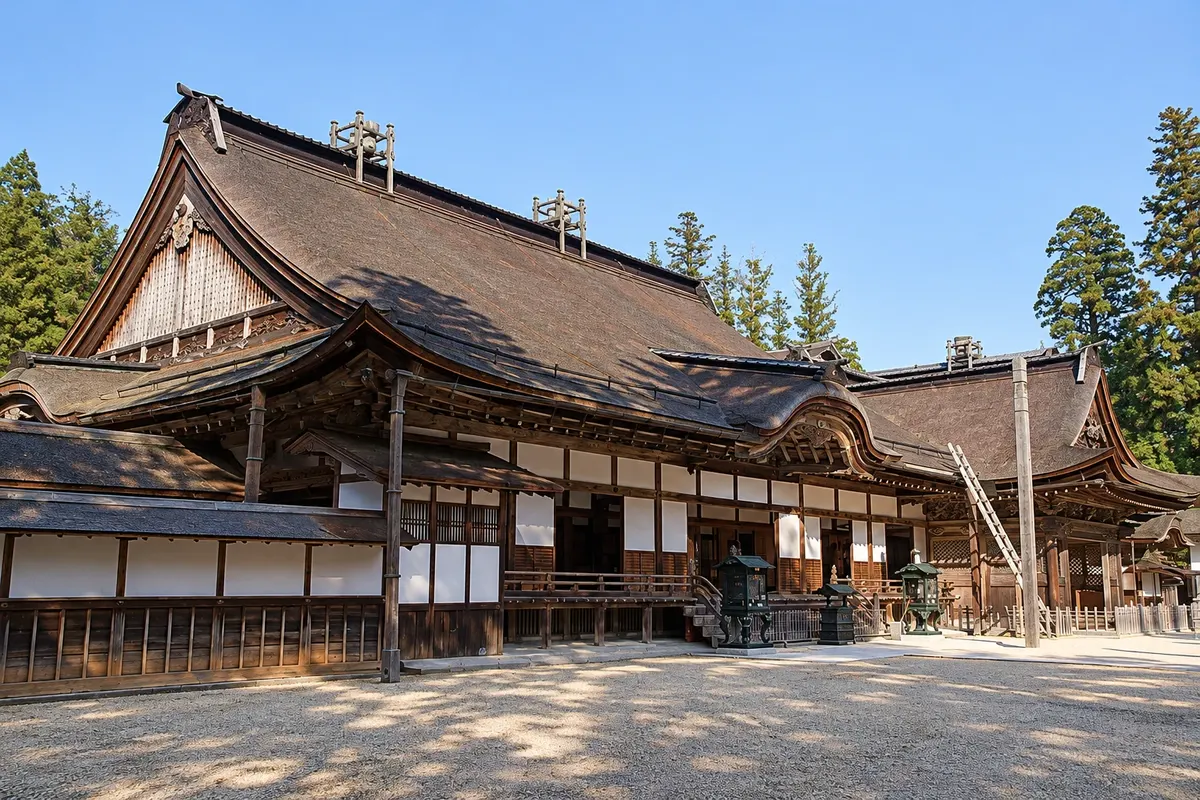
Koyasan, Mount Koya, is a high valley surrounded by eight peaks, about 800 meters above sea level, in the mountains of the Kii Peninsula in Wakayama Prefecture. In 816, the monk Kukai, later honored after his death as Kobo Daishi, received imperial permission to establish there a center for meditation of Shingon Buddhism, the esoteric school he brought from China. The valley became a temple town, with around a hundred temples and a small civilian population, the town of Koya.
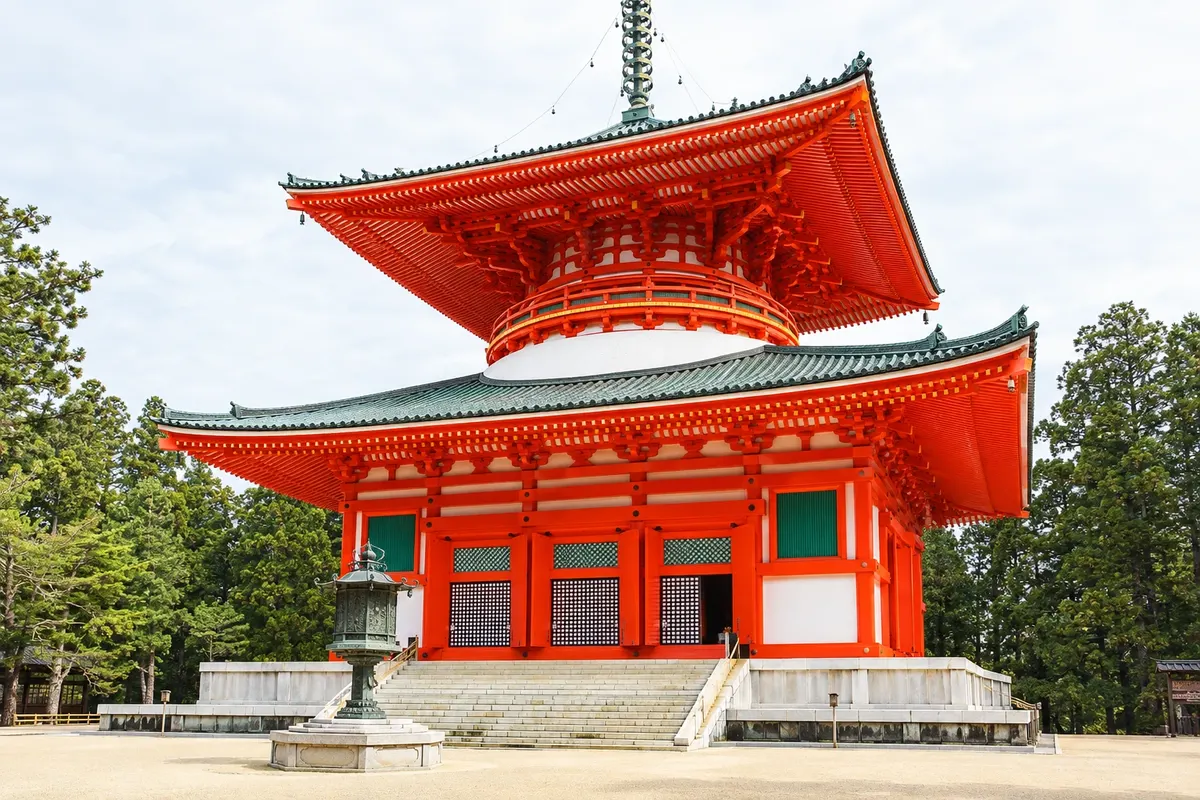
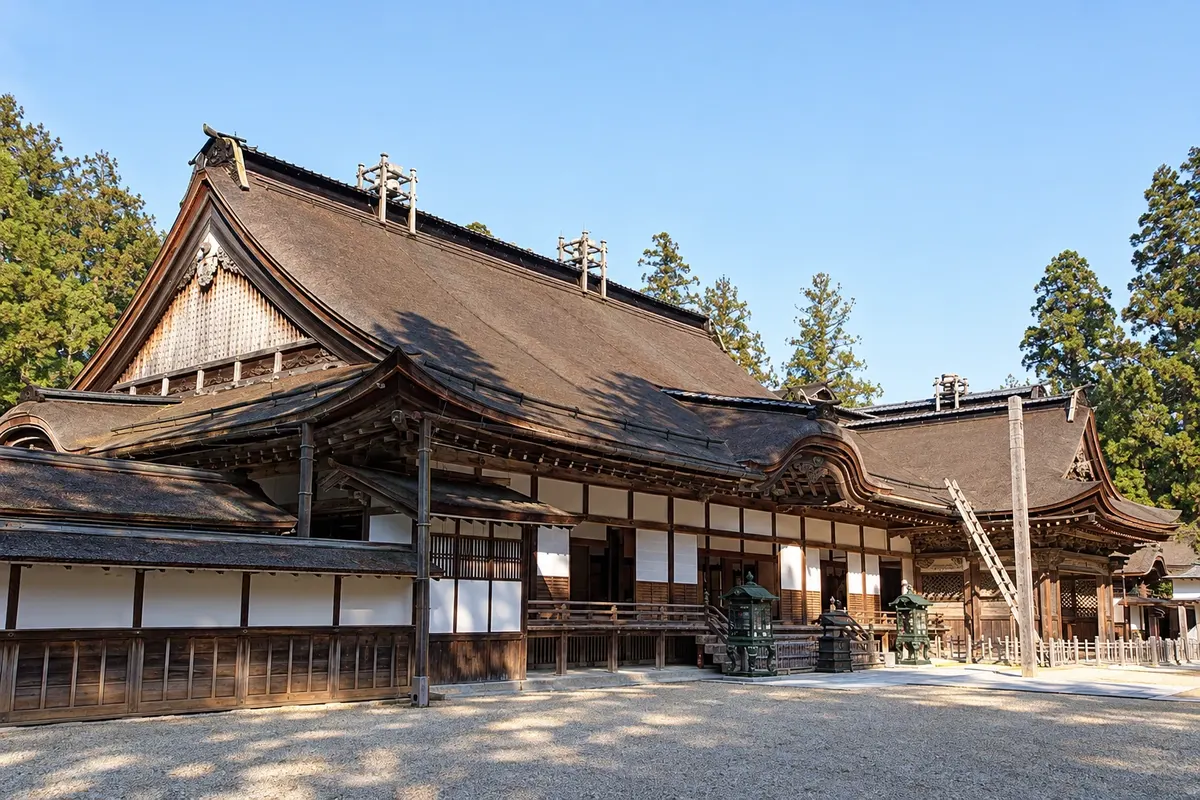
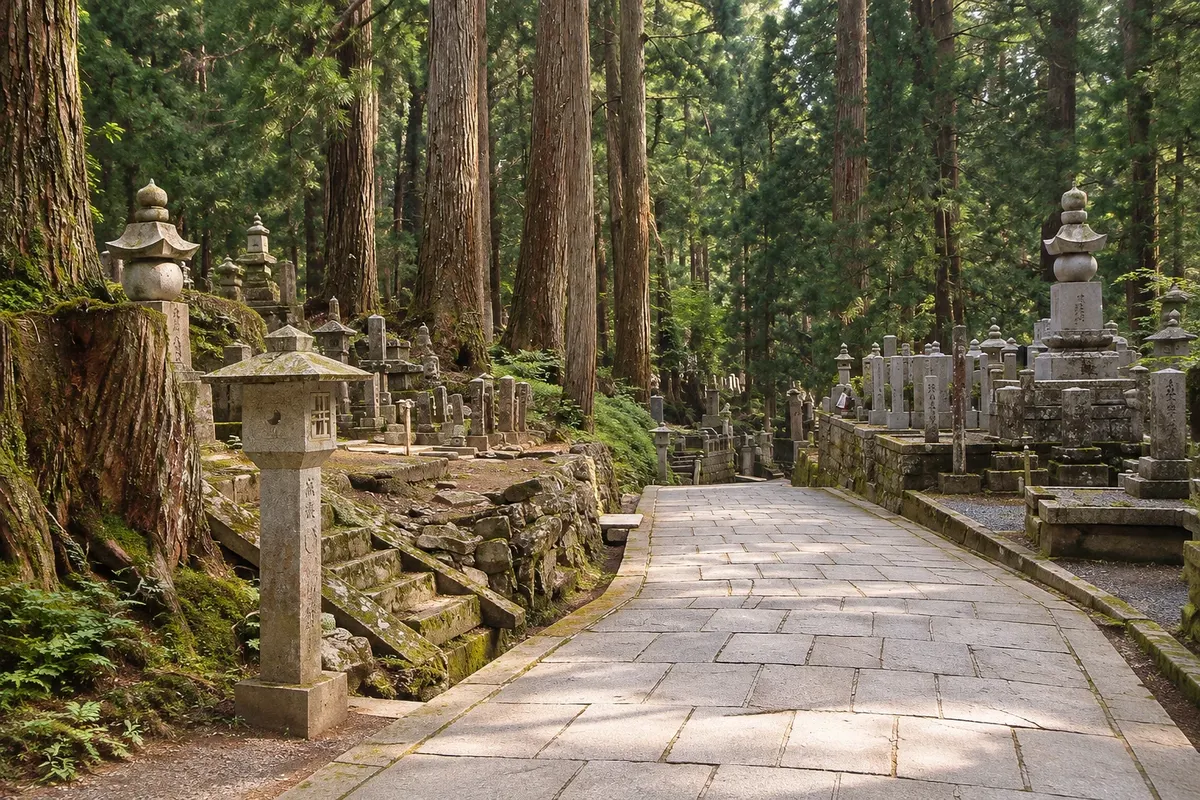
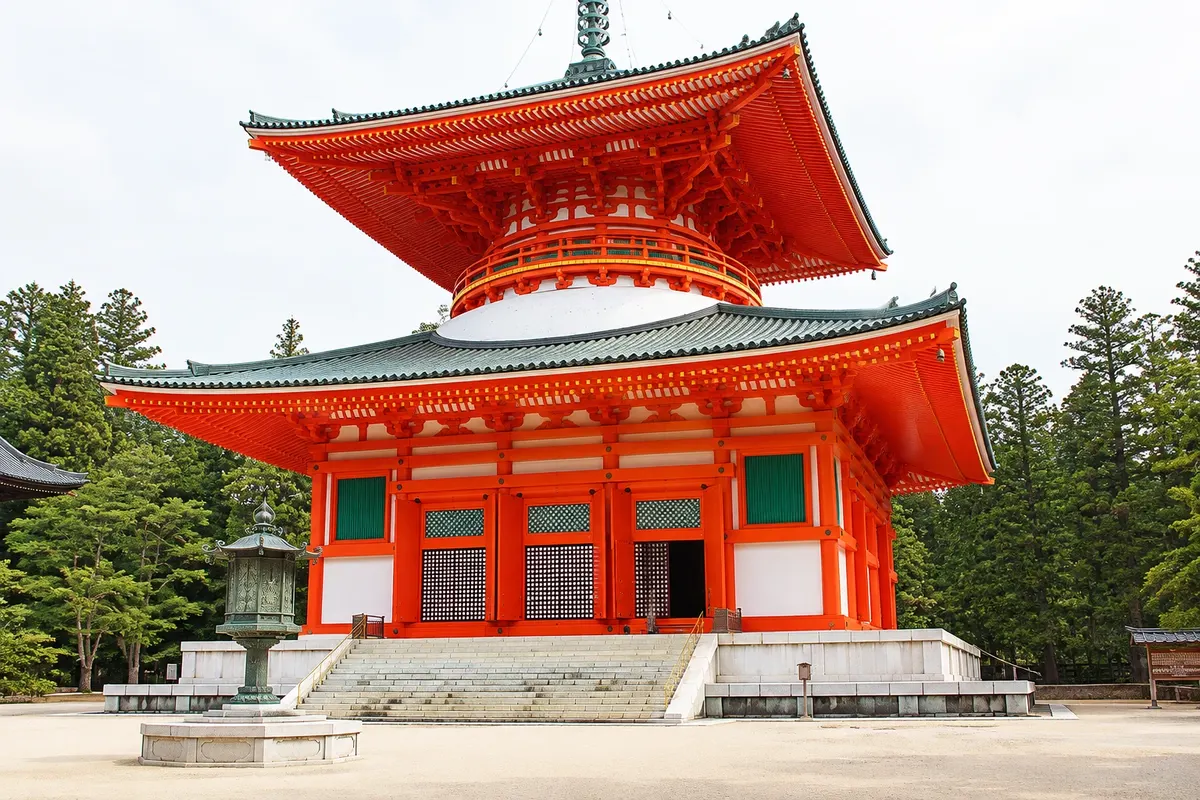
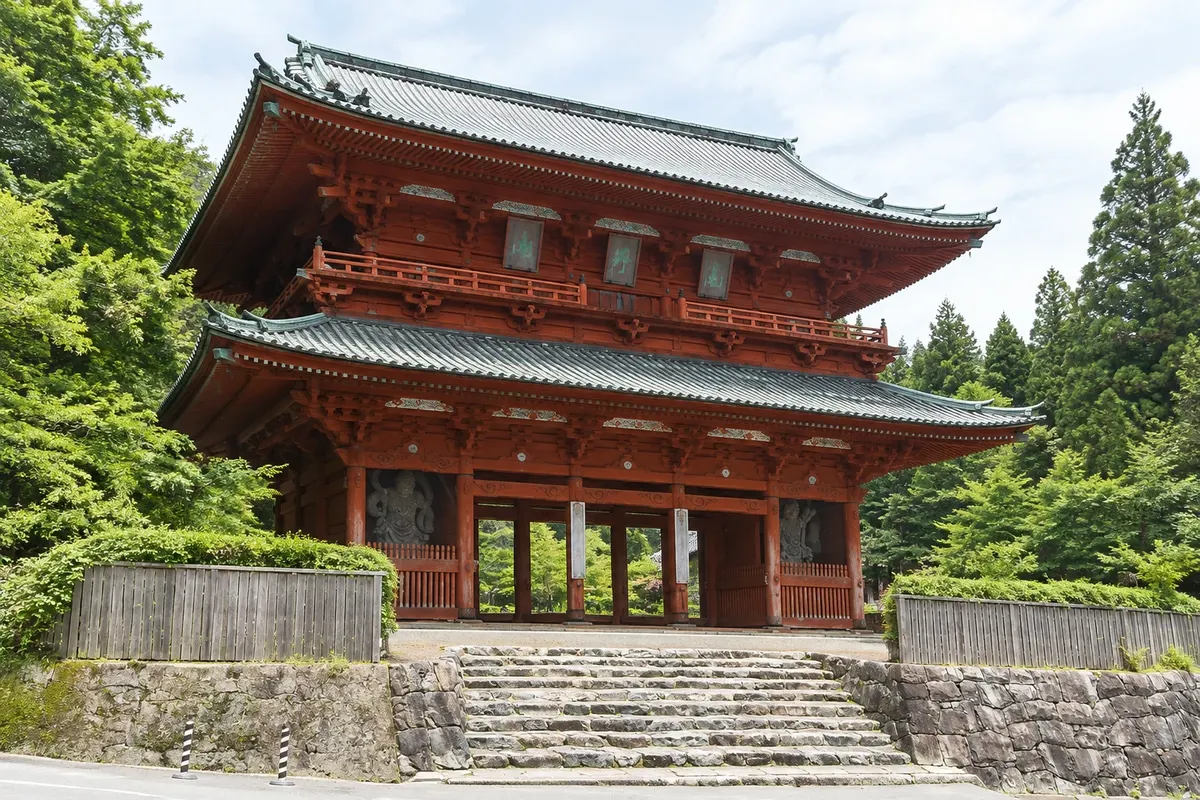
The site is part of the Sacred Sites and Pilgrimage Routes in the Kii Mountain Range, a UNESCO World Heritage Site since 2004. Visits focus on two main areas: Danjo Garan, the complex of halls and pagodas Kukai planned at the center of the valley, with the large red pagoda Konpon Daito; and Okunoin, the cemetery where, according to belief, Kukai remains in eternal meditation, at the end of an about 2 km path lined with centuries-old cedars and more than 200,000 graves and memorials. Among them are Kongobu-ji, the head temple of the Shingon school, and the large Daimon gate at the western entrance.
A particular feature of Koyasan is temple lodging, shukubo: dozens of temples welcome visitors to tatami rooms, serve the monks’ vegetarian cuisine, shojin ryori, and invite guests to the morning ceremony. The experience is part of the visit and varies from temple to temple.
The climate is noticeably colder than Osaka: in winter there is snow, and even in summer nights are cool. An ancient trail, the Choishi-michi, climbs from the valley to the mountain, marked by stone posts every 109 meters.
This destination brings together 1 city: Koya.


 Brazil
 Antarctica
 Argentina
 Bolivia
 Chile
 Colombia
 Ecuador
 Guyana
 French Guiana
 Falkland Islands (Malvinas)
 Paraguay
 Peru
 Suriname
 Uruguay
 Venezuela
 Germany
 Austria
 Belgium
 Croatia
 Denmark
 Slovakia
 Slovenia
 Spain
 Finland
 France
 Greece
 the Netherlands
 Hungary
 Ireland
 Iceland
 Italy
 Luxembourg
 Norway
 Poland
 Portugal
 the United Kingdom
 the Czech Republic
 Sweden
 Switzerland
 Turkey
 Bermuda
 Canada
 the United States
 Greenland
 Mexico
 Saint Pierre and Miquelon
 the Dominican Republic
 South Africa
 Egypt
 Australia
 Fiji
 New Zealand
 Papua New Guinea