

 Brazil
 Antarctica
 Argentina
 Bolivia
 Chile
 Colombia
 Ecuador
 Guyana
 French Guiana
 Falkland Islands (Malvinas)
 Paraguay
 Peru
 Suriname
 Uruguay
 Venezuela
 Germany
 Austria
 Belgium
 Croatia
 Denmark
 Slovakia
 Slovenia
 Spain
 Finland
 France
 Greece
 the Netherlands
 Hungary
 Ireland
 Iceland
 Italy
 Luxembourg
 Norway
 Poland
 Portugal
 the United Kingdom
 the Czech Republic
 Sweden
 Switzerland
 Turkey
 Bermuda
 Canada
 the United States
 Greenland
 Mexico
 Saint Pierre and Miquelon
 the Dominican Republic
 South Africa
 Egypt
 Australia
 Fiji
 New Zealand
 Papua New Guinea
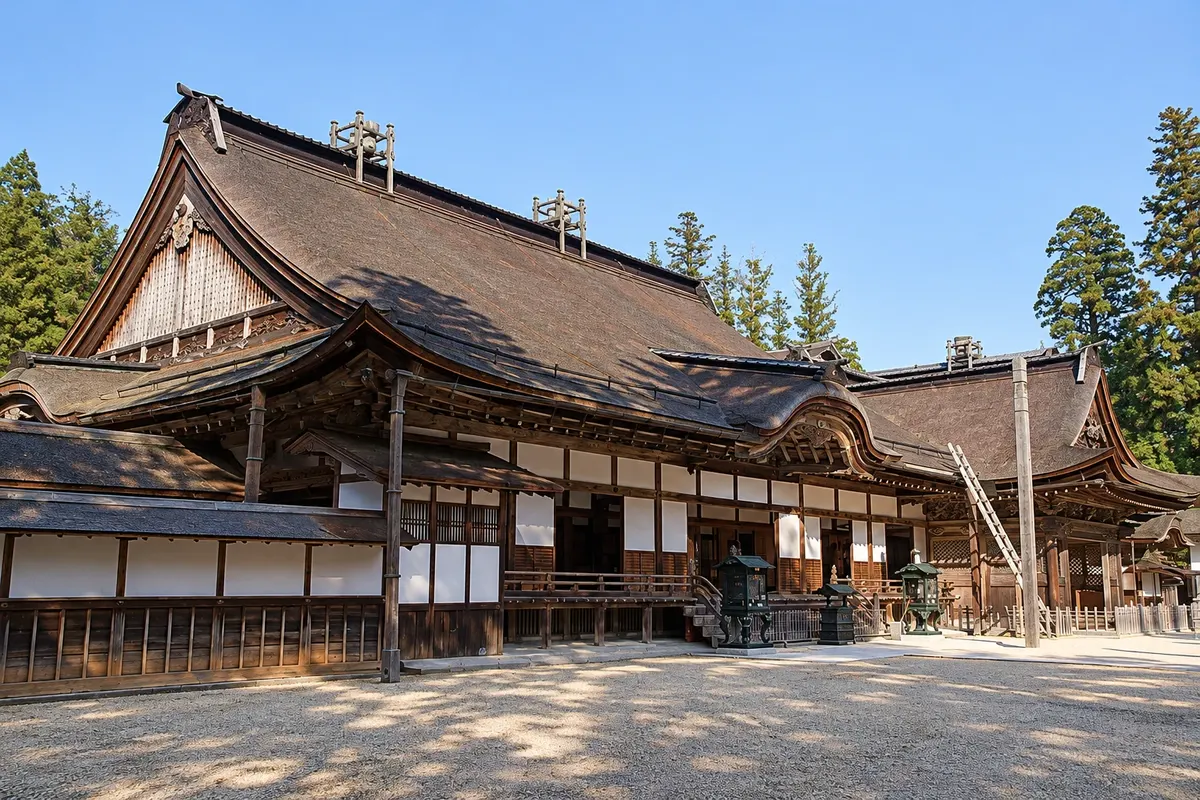
Temple · Koya, Wakayama
Kongōbu-ji
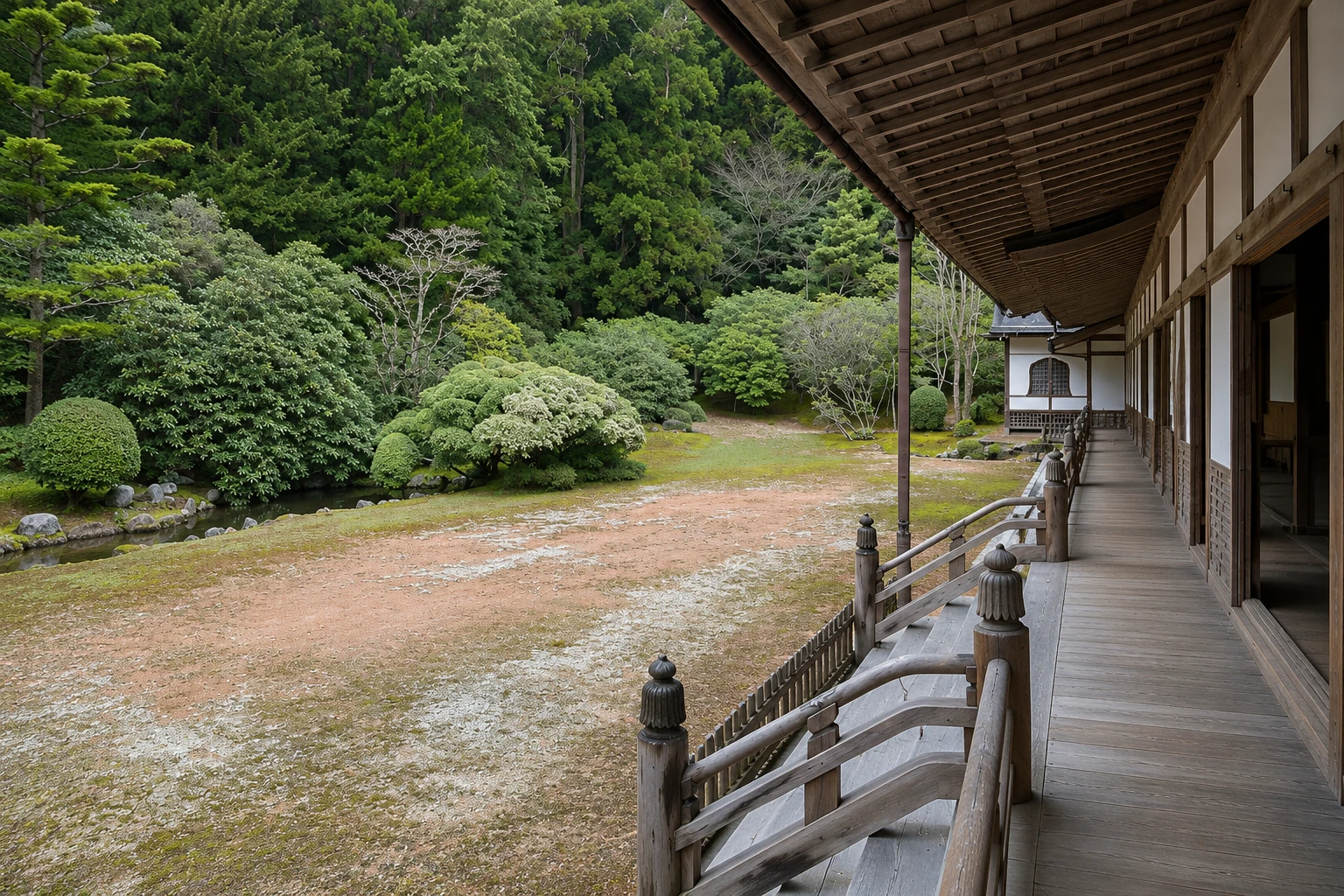
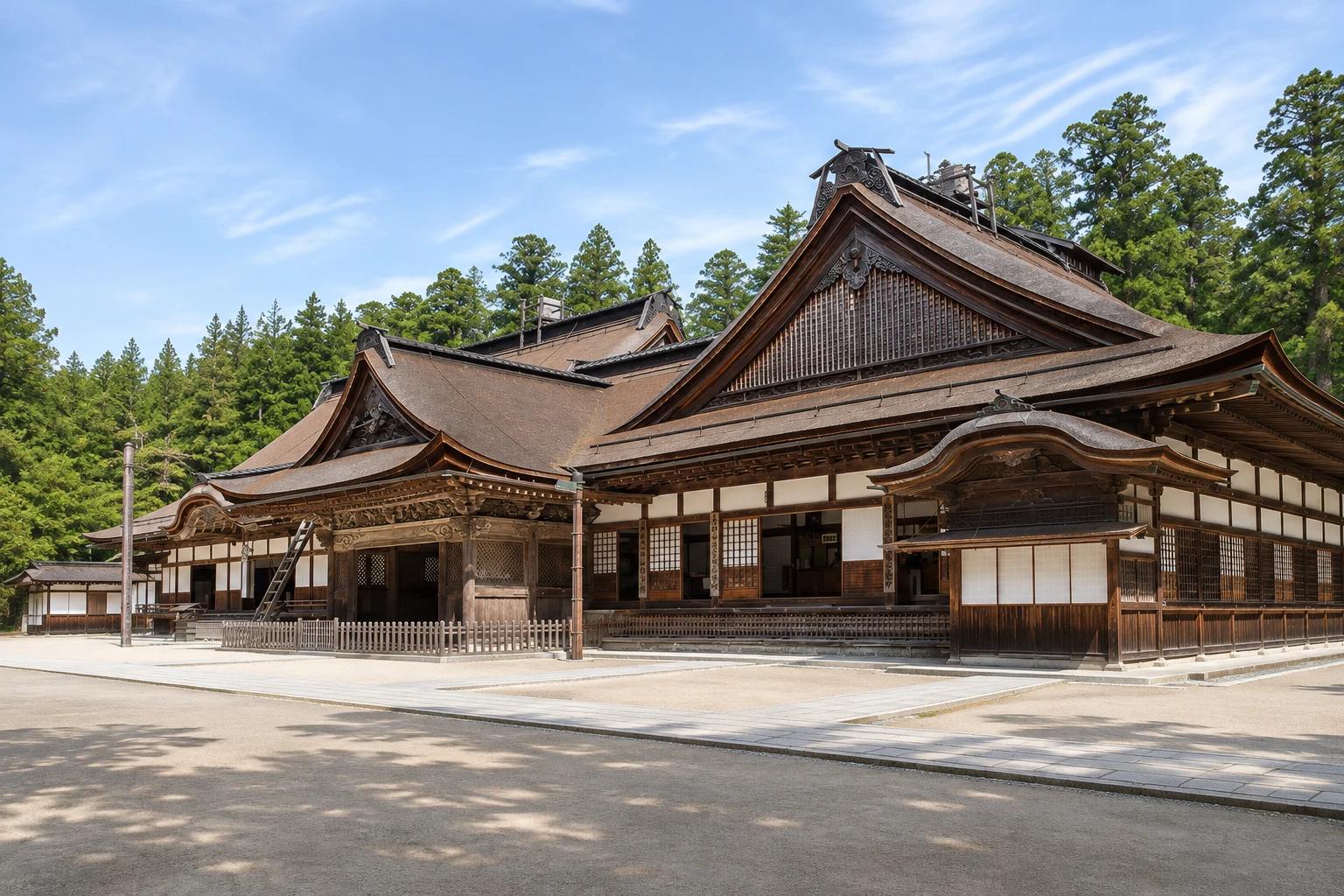
Head temple of the Shingon school of Koyasan, with sliding-door rooms painted by the Kano school and the Banryutei, one of the largest rock gardens in Japan, representing two dragons among clouds.
Illustrative images. The pictures in this guide are illustrations based on the real place, not photographs, and may differ from it.

A look at the place
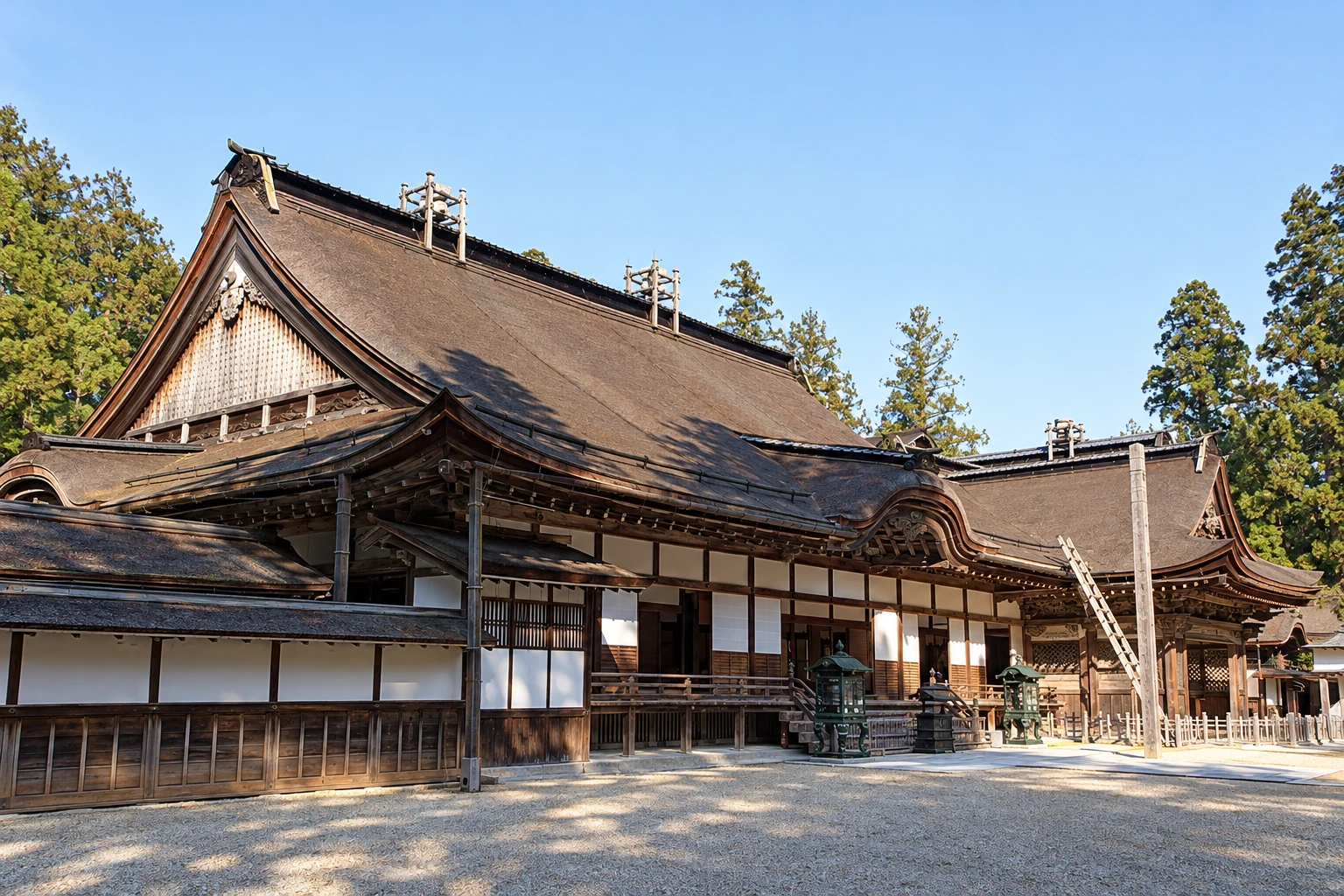
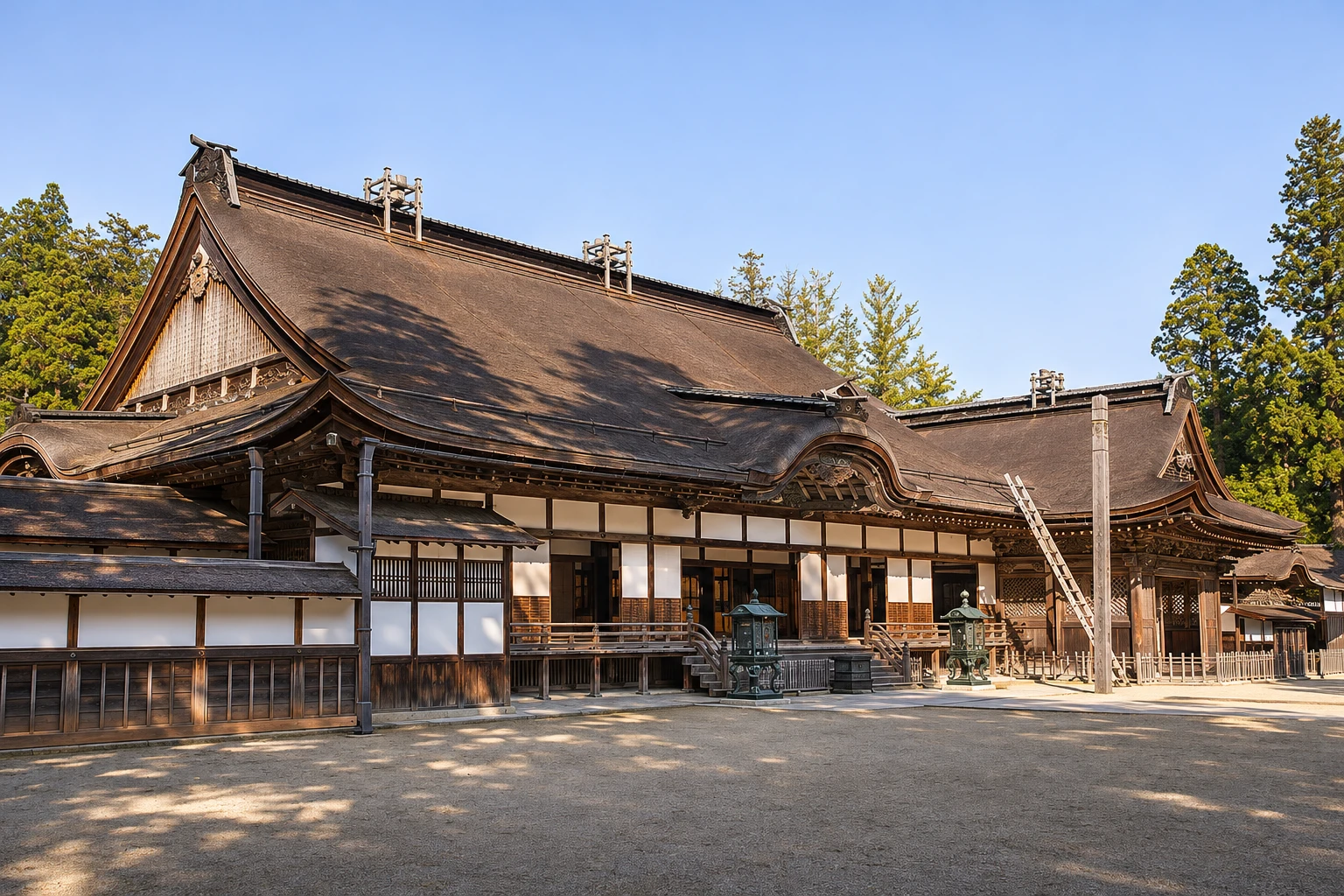
Kongōbu-ji in pictures
These pictures are illustrations based on the real place, not photographs. They may differ from the place.
Click the picture to enlarge it.
Discover
About Kongōbu-ji
Kongobu-ji is Koyasan’s main temple and the headquarters of the Koyasan Shingon school, which oversees thousands of temples across Japan. Kukai used the name to refer to the whole mountain; the present temple arose in the late 19th century from the merger of two temples associated with the Toyotomi clan, one of them built by Toyotomi Hideyoshi in memory of his mother. The main hall, rebuilt in 1863, is one of the largest wooden temple buildings on the mountain.
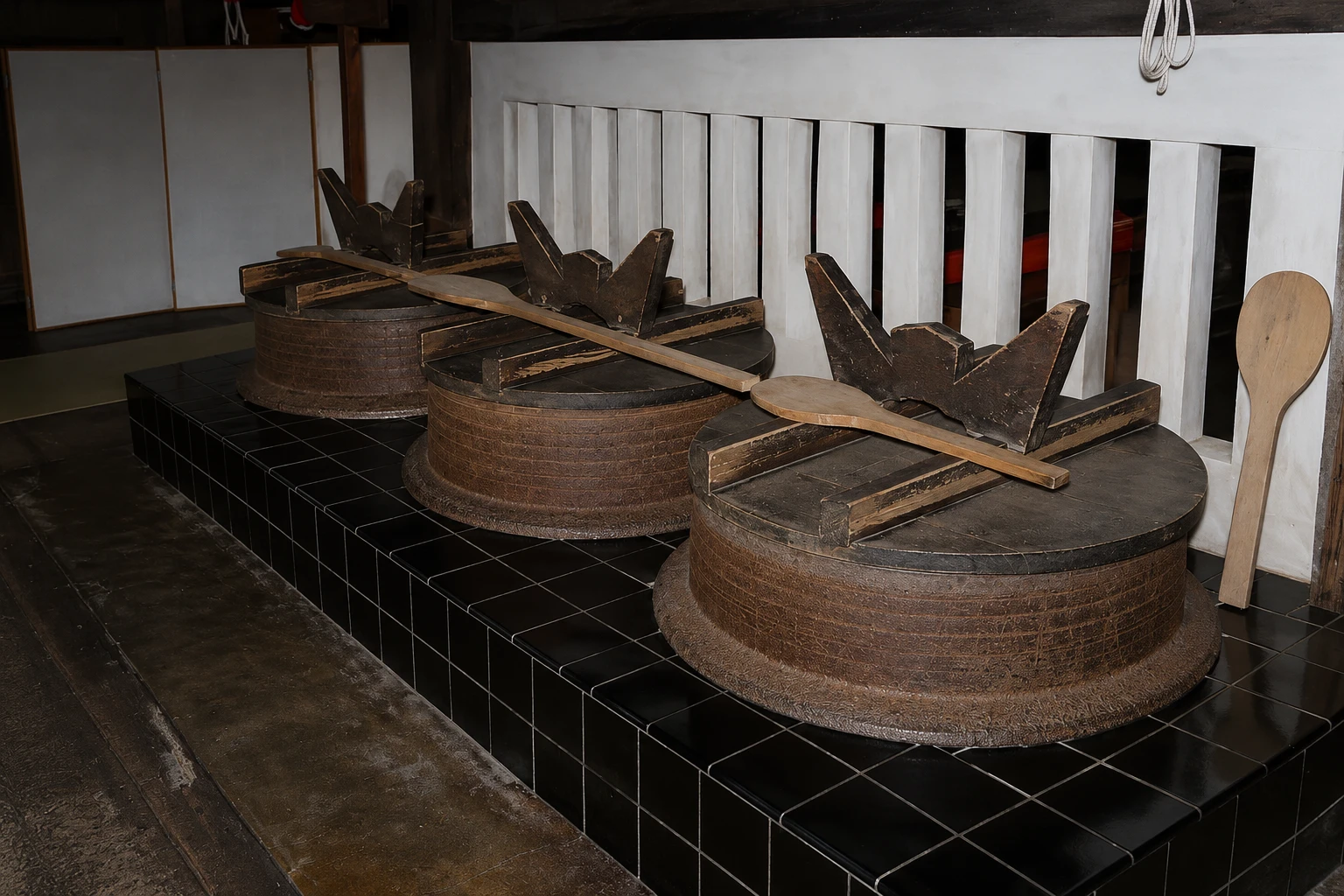
The visit follows long wooden corridors and tatami rooms with sliding doors painted by artists of the Kano school, showing herons, willows and the four seasons. The Yanagi-no-ma, the willow room, is known for the story of Toyotomi Hidetsugu, Hideyoshi’s nephew, who committed ritual suicide there in 1595. The old kitchen, with large rice cauldrons, reveals the scale of monastic life.
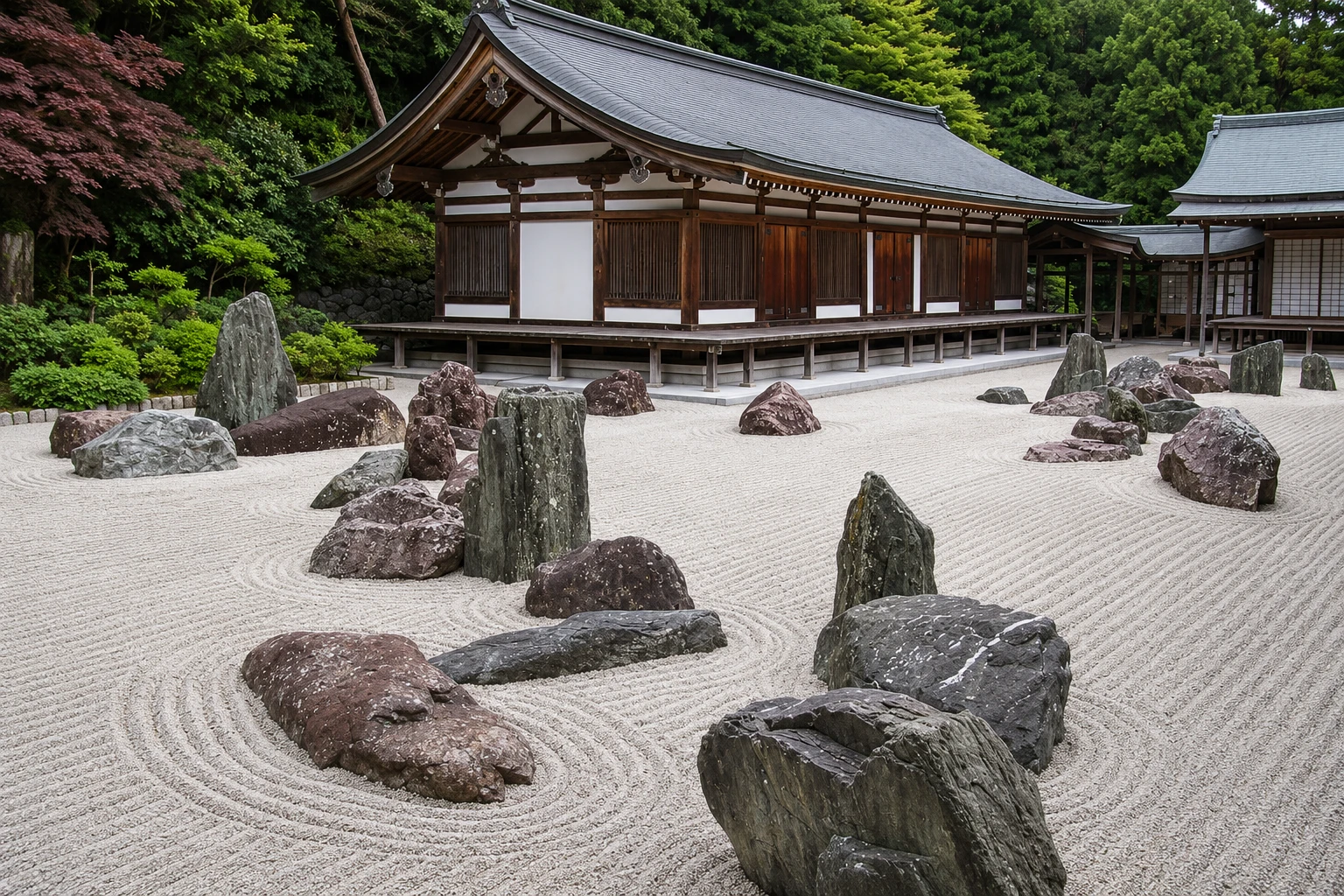
The Banryutei is one of the largest rock gardens in Japan, about 2,340 square meters. It represents a pair of dragons rising from a sea of clouds to protect the temple: the 140 granite stones came from Shikoku, Kukai’s birthplace, and the white sand was brought from Kyoto.
At the end of the visit, tea and a sweet are usually served in a large hall. The temple is part of the Sacred Sites and Pilgrimage Routes in the Kii Mountain Range World Heritage site and hosts school ceremonies throughout the year.
Before you go
Practical information
Cidade Turismo reviews its information regularly, but something may have changed. Check with the place before planning your trip.
How much time to set aside
About 45 minutes to 1 hour.
Best time
In the morning or mid‑afternoon, outside group tour times. In November, the courtyard trees usually change color. Check opening times, which can change on ceremony days.
How to get there
In central Koyasan, at the Kongobuji‑mae bus stop, a few minutes’ walk from Danjo Garan.
Tip
Follow the route indicated by the corridors and reserve time to sit facing the Banryutei. Wear socks: the visit is done barefoot on cold wood.
Official website
Get your questions answered
Frequently asked questions about Kongōbu-ji
What is Kongobu‑ji’s Banryutei?
A rock garden of about 2,340 square meters, one of the largest in Japan, representing two dragons among clouds. The granite stones came from Shikoku.
Is there an admission fee for Kongobu‑ji?
Yes, there is an entrance fee for the interior; check the current rate. It usually includes tea and a sweet at the end of the visit.
Is Kongobu‑ji Koyasan’s main temple?
Yes, it is the headquarters of the Koyasan Shingon school and administers the mountain’s temples.
Does Kongobu‑ji accept overnight guests?
No. Overnight stays in Koyasan are offered at other temples with shukubo along the main street.
Beyond the guide


