

 Brazil
 Antarctica
 Argentina
 Bolivia
 Chile
 Colombia
 Ecuador
 Guyana
 French Guiana
 Falkland Islands (Malvinas)
 Paraguay
 Peru
 Suriname
 Uruguay
 Venezuela
 Germany
 Austria
 Belgium
 Croatia
 Denmark
 Slovakia
 Slovenia
 Spain
 Finland
 France
 Greece
 the Netherlands
 Hungary
 Ireland
 Iceland
 Italy
 Luxembourg
 Norway
 Poland
 Portugal
 the United Kingdom
 the Czech Republic
 Sweden
 Switzerland
 Turkey
 Bermuda
 Canada
 the United States
 Greenland
 Mexico
 Saint Pierre and Miquelon
 the Dominican Republic
 South Africa
 Egypt
 Australia
 Fiji
 New Zealand
 Papua New Guinea
Temple complex · Koya, Wakayama
Danjo Garan
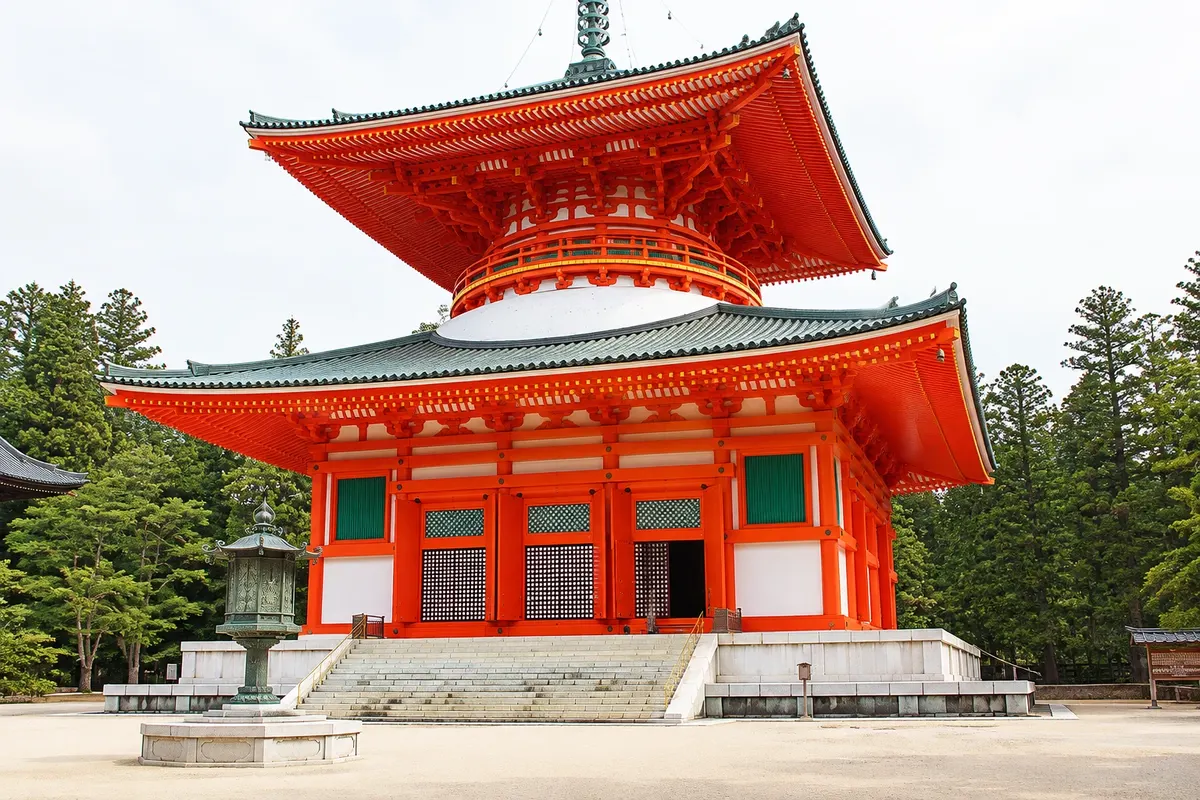
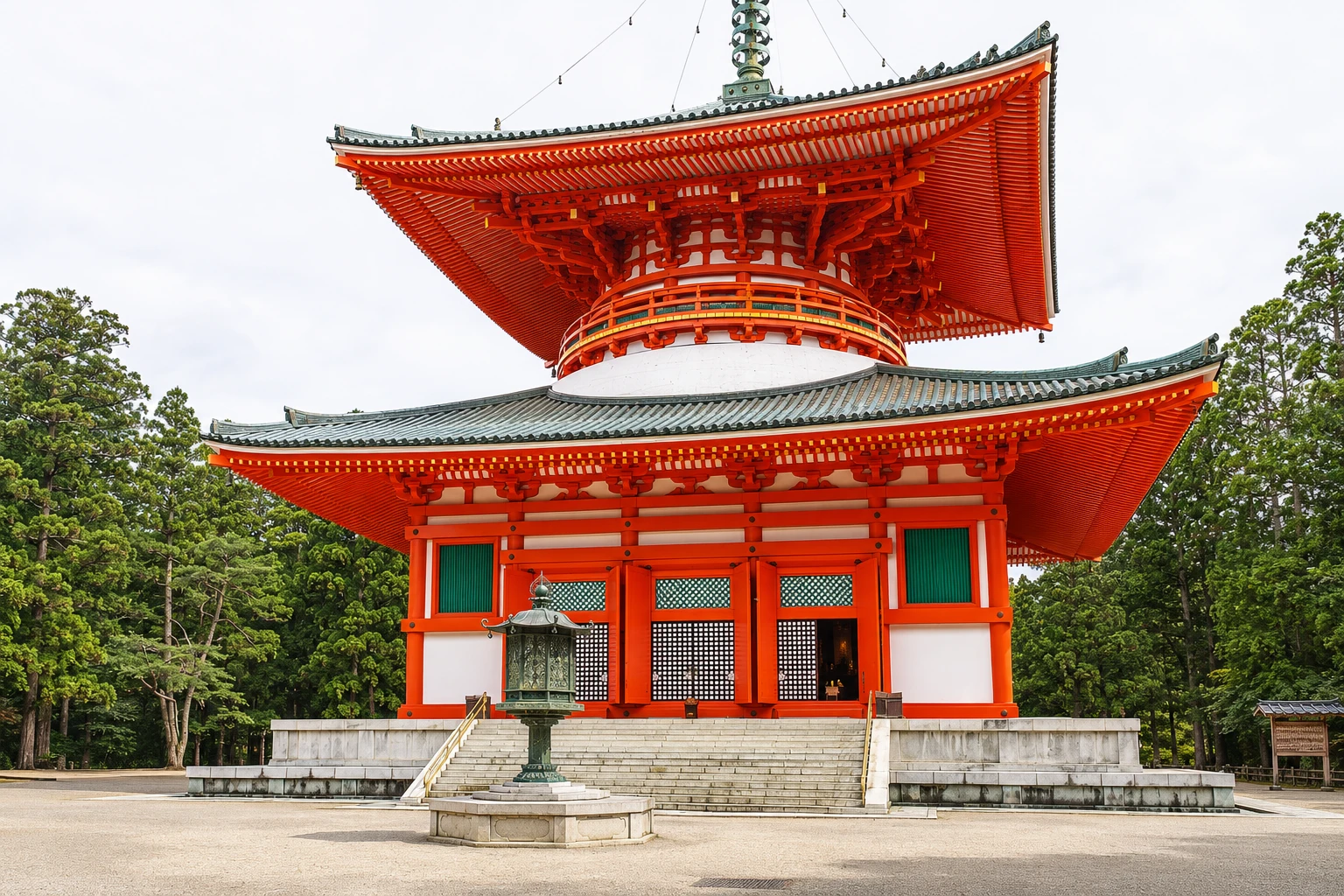
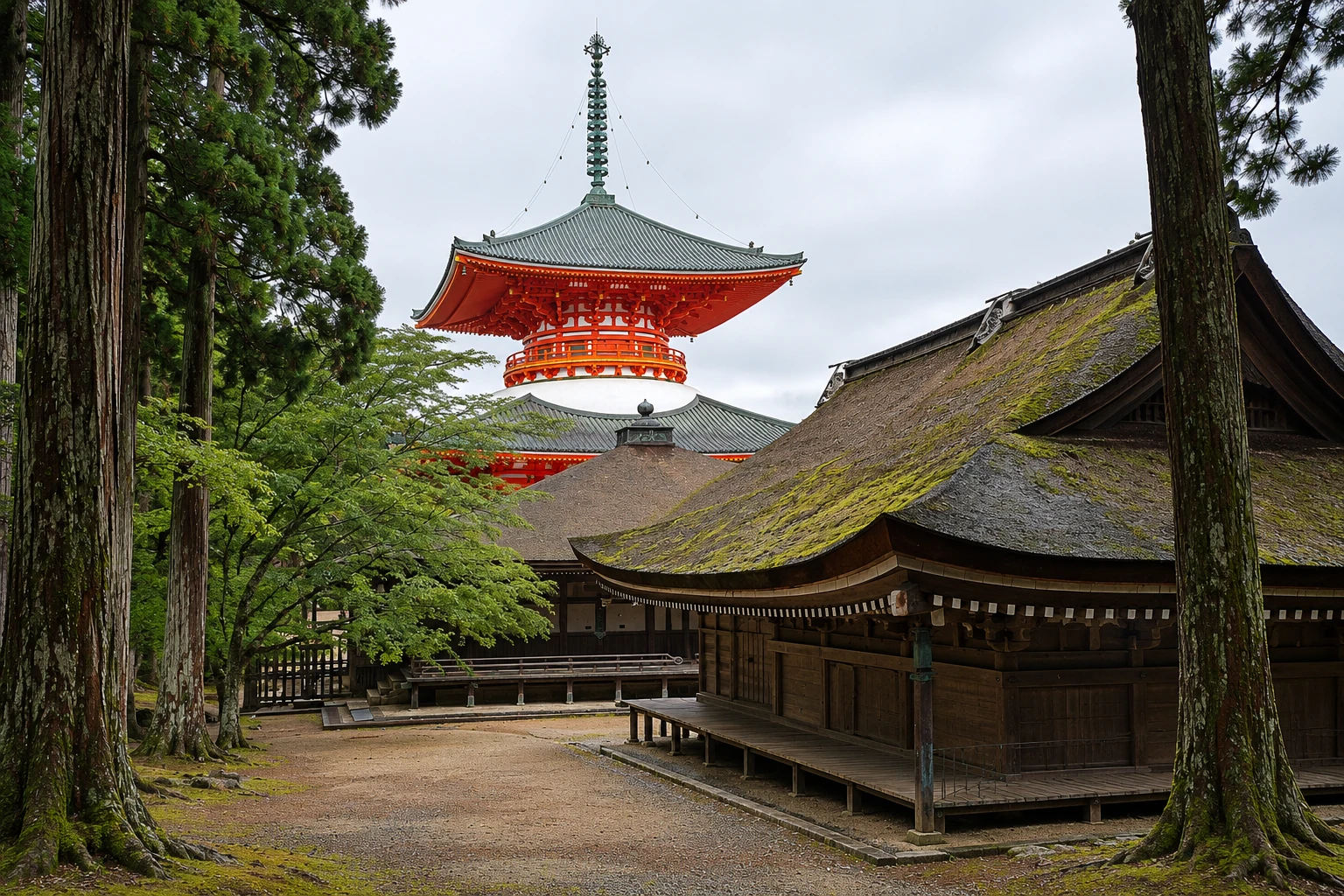
Complex of halls and pagodas planned by Kukai in the center of Koyasan, with the large red pagoda Konpon Daito, nearly 50 meters high, and the Kondo hall. Next to it is the Reihokan museum, with treasures of Buddhist art.
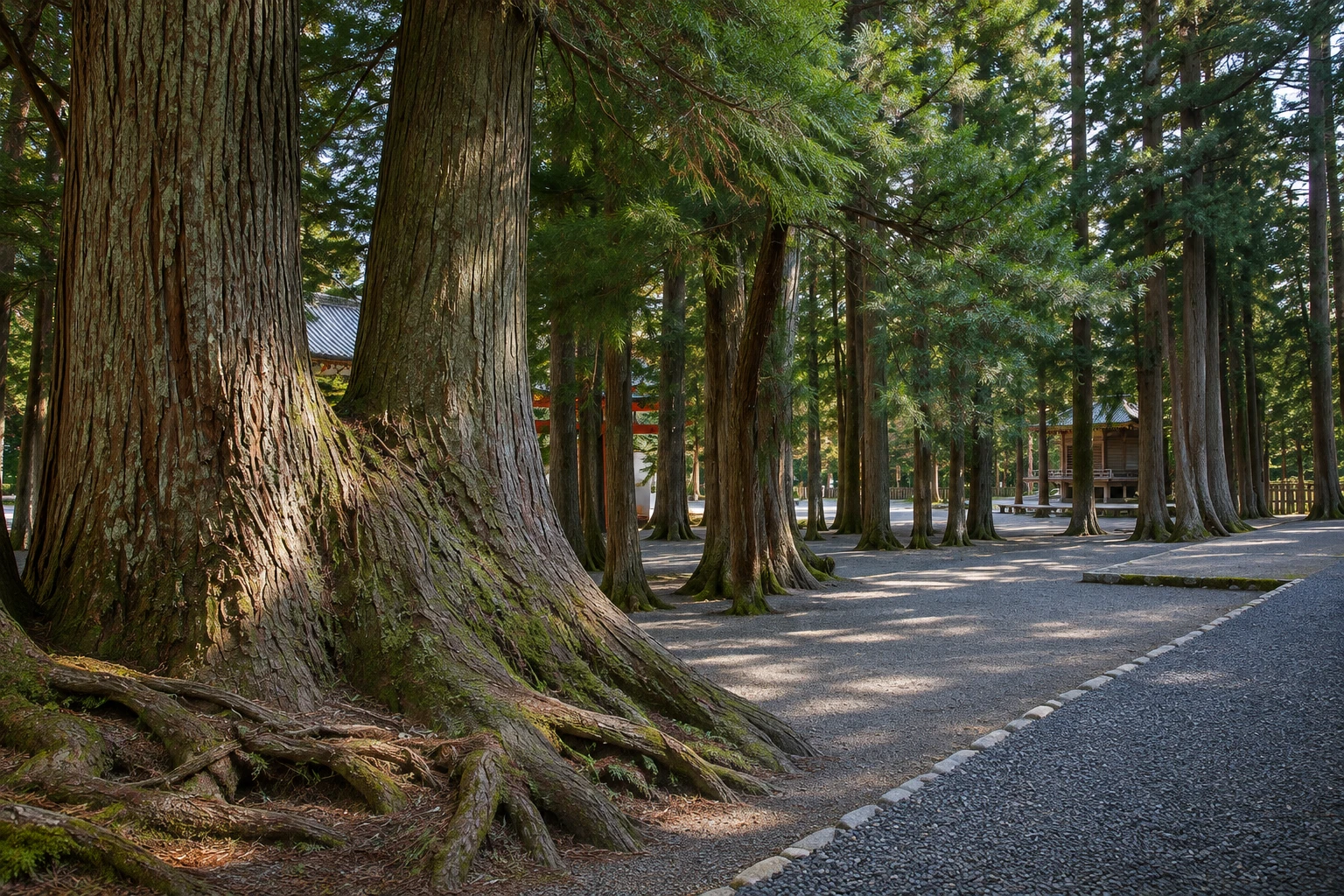
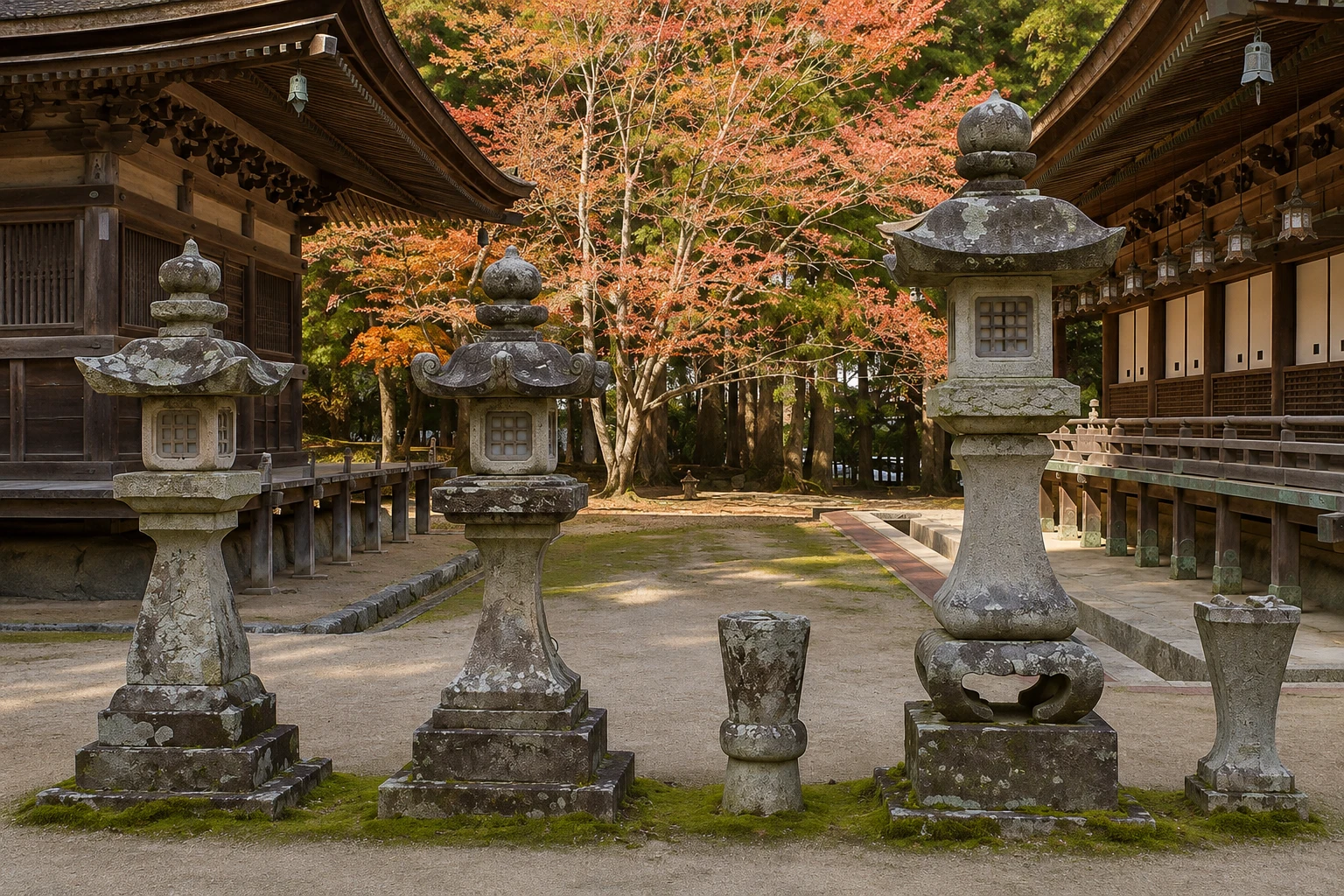
Illustrative images. The pictures in this guide are illustrations based on the real place, not photographs, and may differ from it.

A look at the place
Danjo Garan in pictures
These pictures are illustrations based on the real place, not photographs. They may differ from the place.
Click the picture to enlarge it.
Discover
About Danjo Garan
The Danjo Garan is the religious center that Kukai designed when he founded Koyasan in the 9th century, to represent the universe of esoteric Buddhism. It is a complex of about twenty halls, pagodas and shrines on a wide expanse of gravel and cedars in the center of the valley. Together with Okunoin, it is one of the mountain’s two main sacred sites.
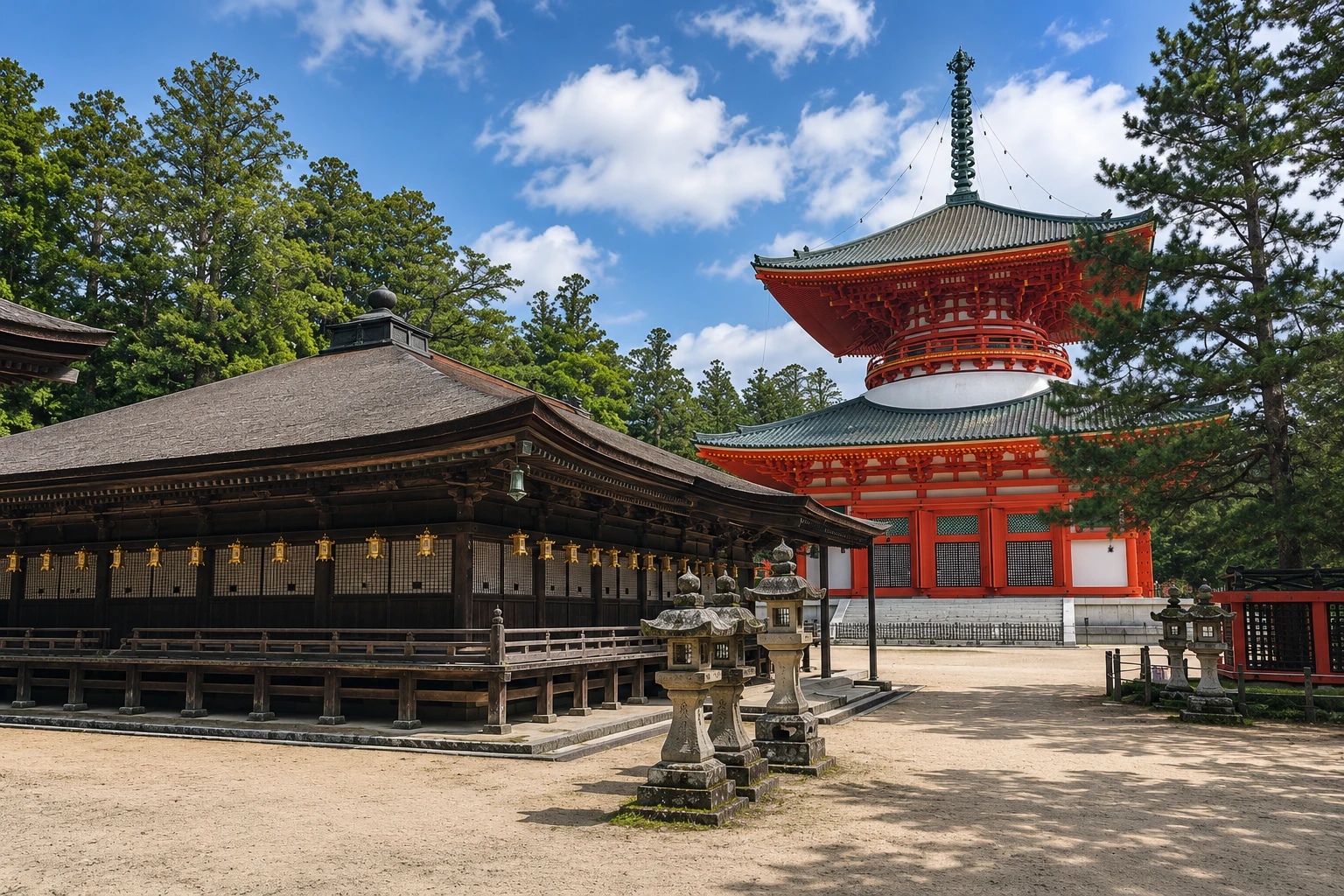
The best-known building is the Konpon Daito, the large pagoda of about 48.5 meters, painted red and white. Inside it houses a statue of the Buddha Dainichi, surrounded by other images, and columns painted with bodhisattvas, forming a three-dimensional mandala. The current structure dates from 1937, after several fires. Beside it are the Kondo, the main ceremonial hall, and the west pagoda, made of dark wood.
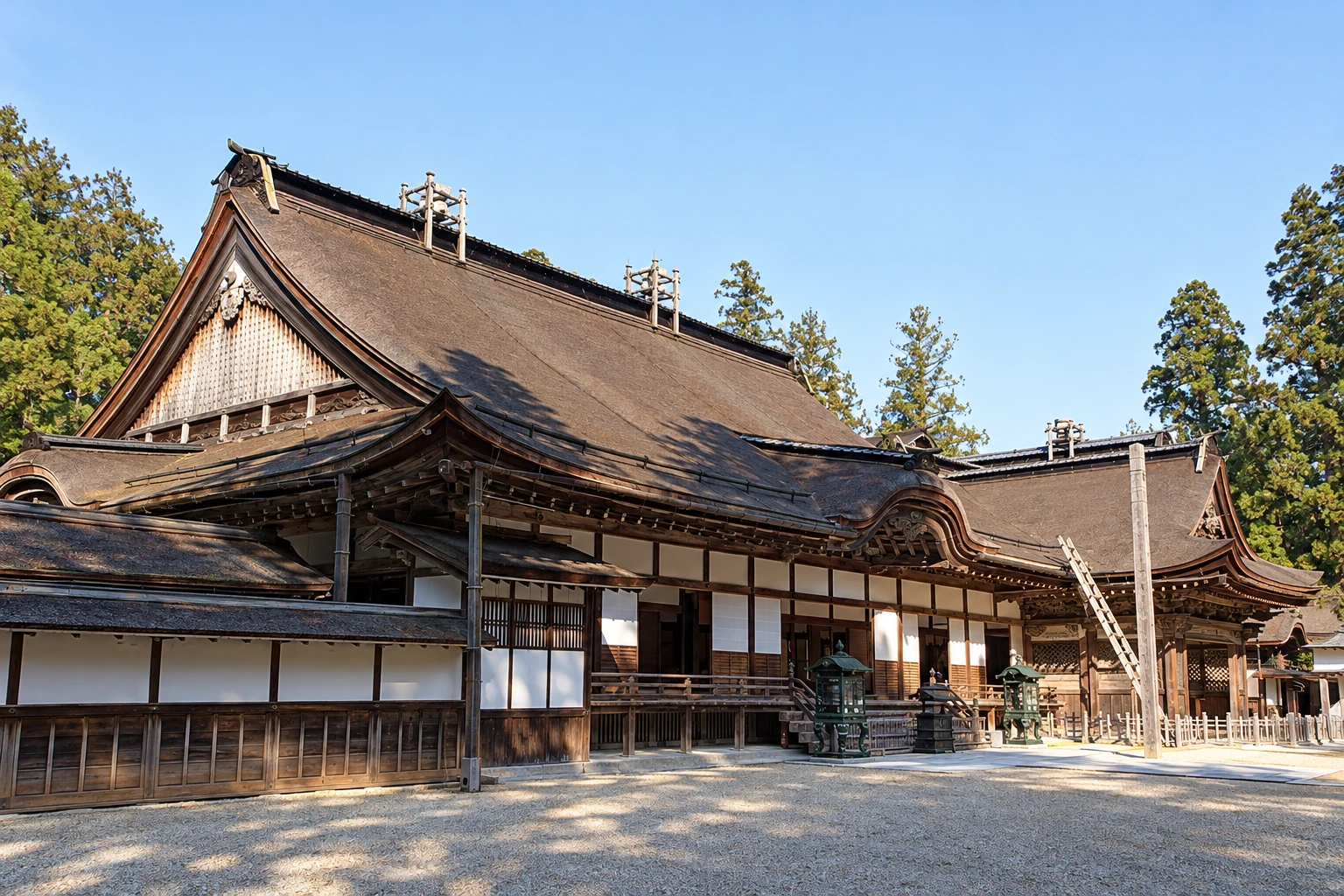
On the grounds are also the Miedo, a hall that preserves a portrait of Kukai and opens only on special occasions; the central gate Chumon, with statues of guardian kings; and the sankonomatsu pine, with needles in groups of three, sought by visitors as an amulet. The Shinto shrine Miyashiro recalls the mountain deities that, according to tradition, yielded the site to Kukai.
Next to the Garan, the Reihokan museum houses one of the largest collections of Buddhist art in Japan, with paintings, sculptures and ritual objects from Koyasan’s temples, many designated national treasures, displayed in exhibitions that change throughout the year.
Before you go
Practical information
Cidade Turismo reviews its information regularly, but something may have changed. Check with the place before planning your trip.
How much time to set aside
1 to 1 hour 30 minutes; add 1 hour for the Reihokan museum.
Best time
In the morning, with light on the red pagoda and fewer tour groups. In November the maples on the grounds often turn red. Check opening hours for the interior of the Konpon Daito and the Kondo.
How to get there
It is in the center of Koyasan, at the Kondo-mae bus stop, about 10 minutes by bus from the funicular station and a few minutes’ walk from Kongobu-ji.
Tip
Enter the Konpon Daito to see the three-dimensional mandala: it is the most striking part of the Garan. The grounds are open; entry to the pagoda interior, the Kondo interior and the Reihokan museum requires separate admission.
Official website
Get your questions answered
Frequently asked questions about Danjo Garan
What is the Konpon Daito?
The large red pagoda at Danjo Garan, about 48.5 meters high, which houses the Dainichi Buddha surrounded by other images and painted columns, like a three‑dimensional mandala.
Is there an admission fee for Danjo Garan?
The grounds are open. Admission is charged for the interior of the Konpon Daito and the Kondo, and for the Reihokan museum; each is paid separately.
What is in the Reihokan museum?
Paintings, sculptures and ritual objects from Koyasan’s temples, including many national treasures and important cultural properties, in exhibitions that change throughout the year.
Is Danjo Garan far from Okunoin?
They are on opposite sides of the valley, about 3 km apart. The bus connects them in a few minutes; on foot it’s about 40 minutes.
Beyond the guide


