

 Brazil
 Antarctica
 Argentina
 Bolivia
 Chile
 Colombia
 Ecuador
 Guyana
 French Guiana
 Falkland Islands (Malvinas)
 Paraguay
 Peru
 Suriname
 Uruguay
 Venezuela
 Germany
 Austria
 Belgium
 Croatia
 Denmark
 Slovakia
 Slovenia
 Spain
 Finland
 France
 Greece
 the Netherlands
 Hungary
 Ireland
 Iceland
 Italy
 Luxembourg
 Norway
 Poland
 Portugal
 the United Kingdom
 the Czech Republic
 Sweden
 Switzerland
 Turkey
 Bermuda
 Canada
 the United States
 Greenland
 Mexico
 Saint Pierre and Miquelon
 the Dominican Republic
 South Africa
 Egypt
 Australia
 Fiji
 New Zealand
 Papua New Guinea
Neighborhood · Yokohama, Kanagawa
Yokohama Chinatown
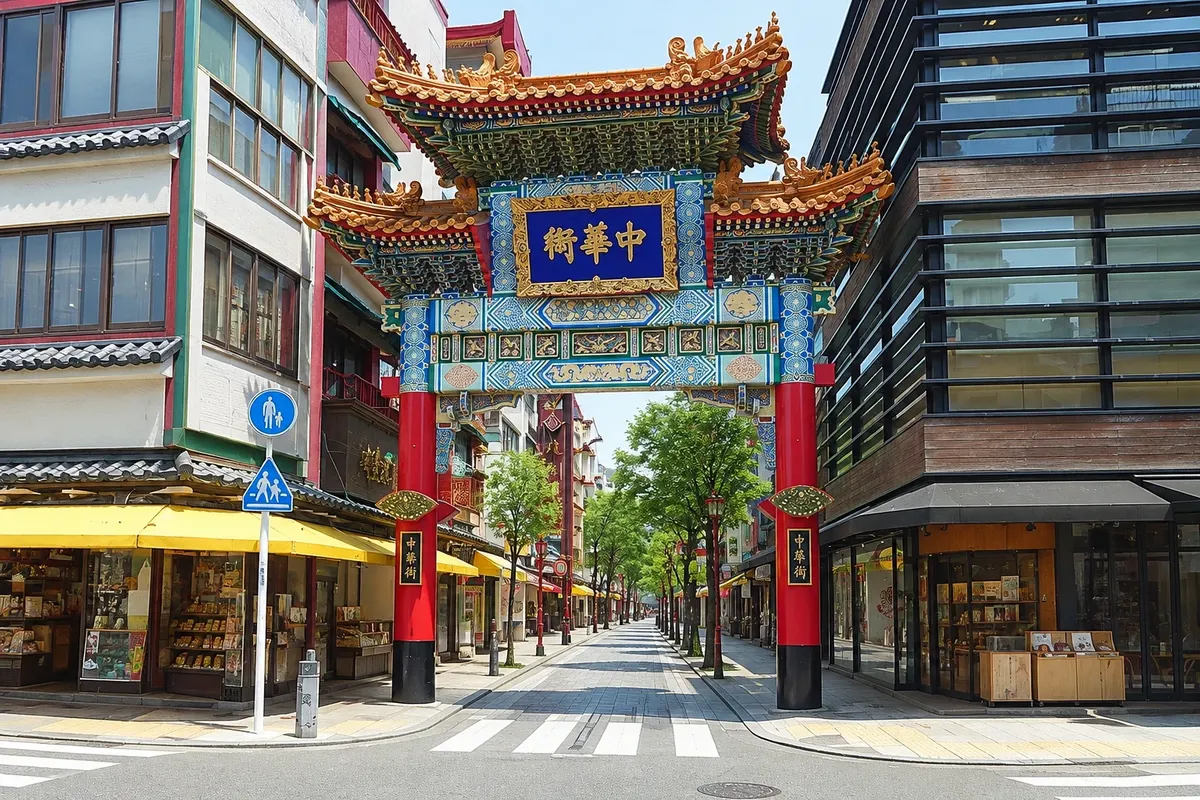
The largest Chinatown in Japan, born after the port opened, with colorful gates, Guan Yu and Mazu temples and hundreds of restaurants and food stalls.
Illustrative images. The pictures in this guide are illustrations based on the real place, not photographs, and may differ from it.

A look at the place
Yokohama Chinatown in pictures
These pictures are illustrations based on the real place, not photographs. They may differ from the place.
Click the picture to enlarge it.
Discover
About Yokohama Chinatown
Yokohama’s Chinatown (Yokohama Chukagai) began to form soon after 1859, when the port opened to foreign trade and Chinese merchants arrived as intermediaries for Western firms. It is Japan’s largest Chinatown, with several hundred shops and restaurants in a few blocks between Ishikawacho Station and Yamashita Park.
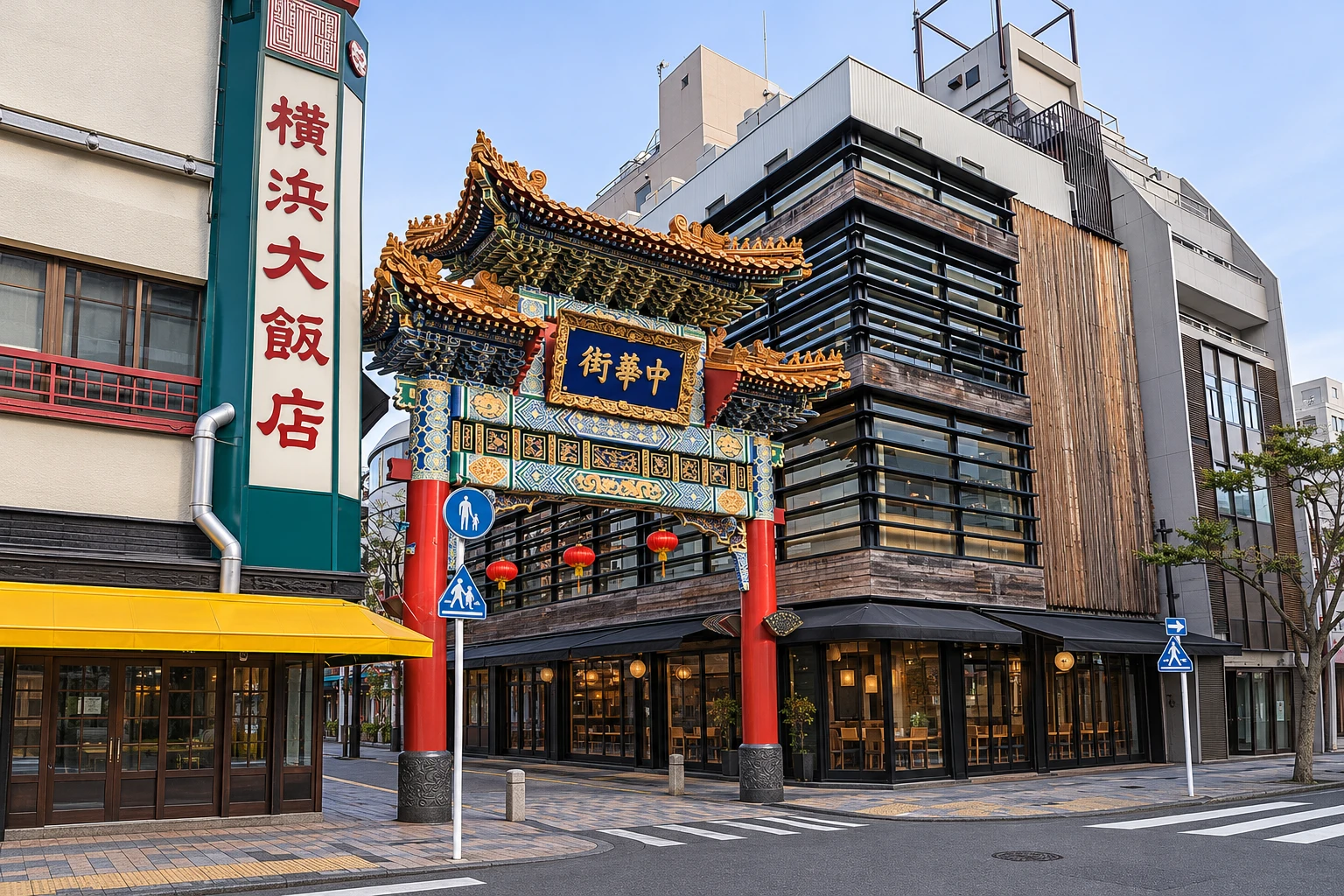
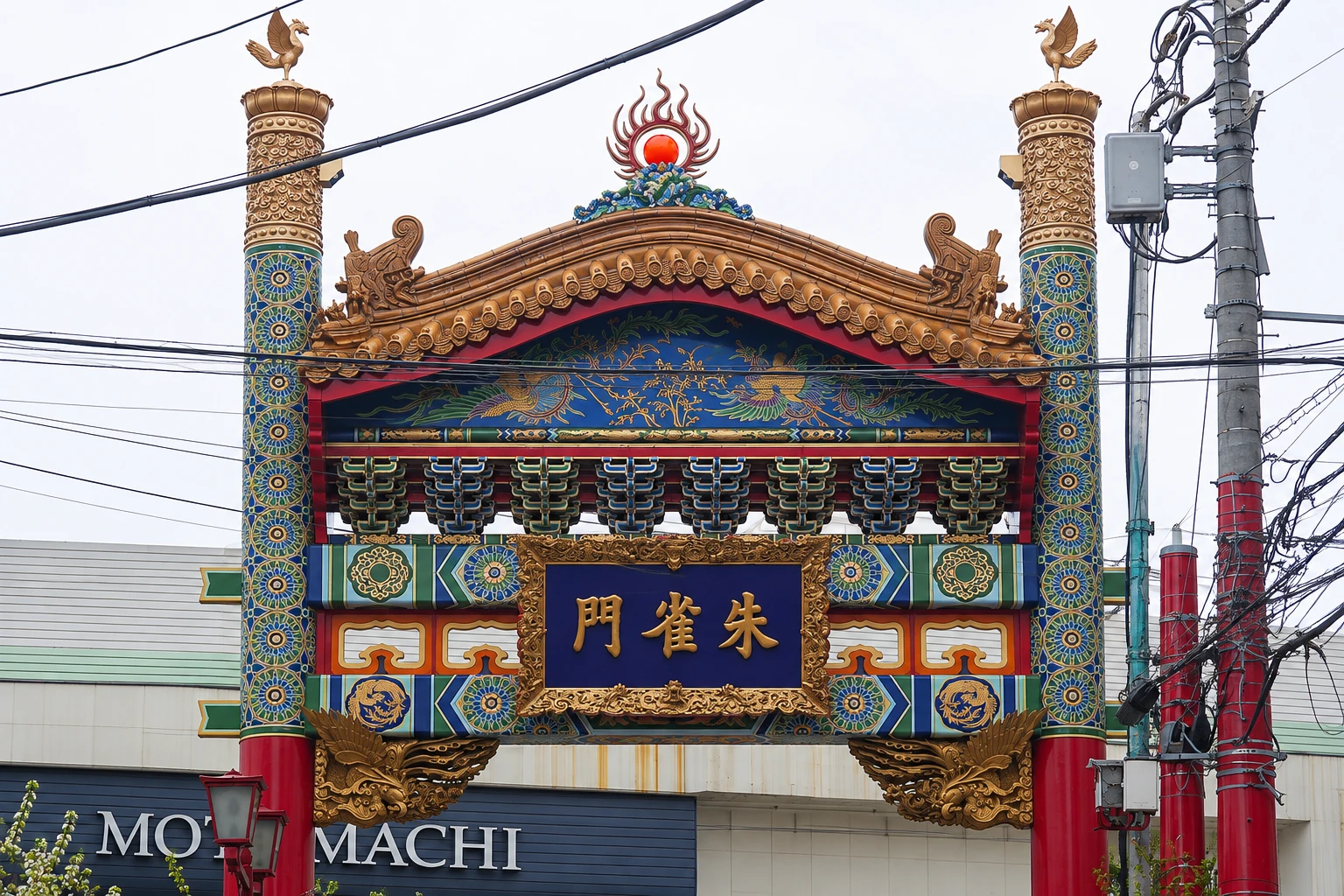
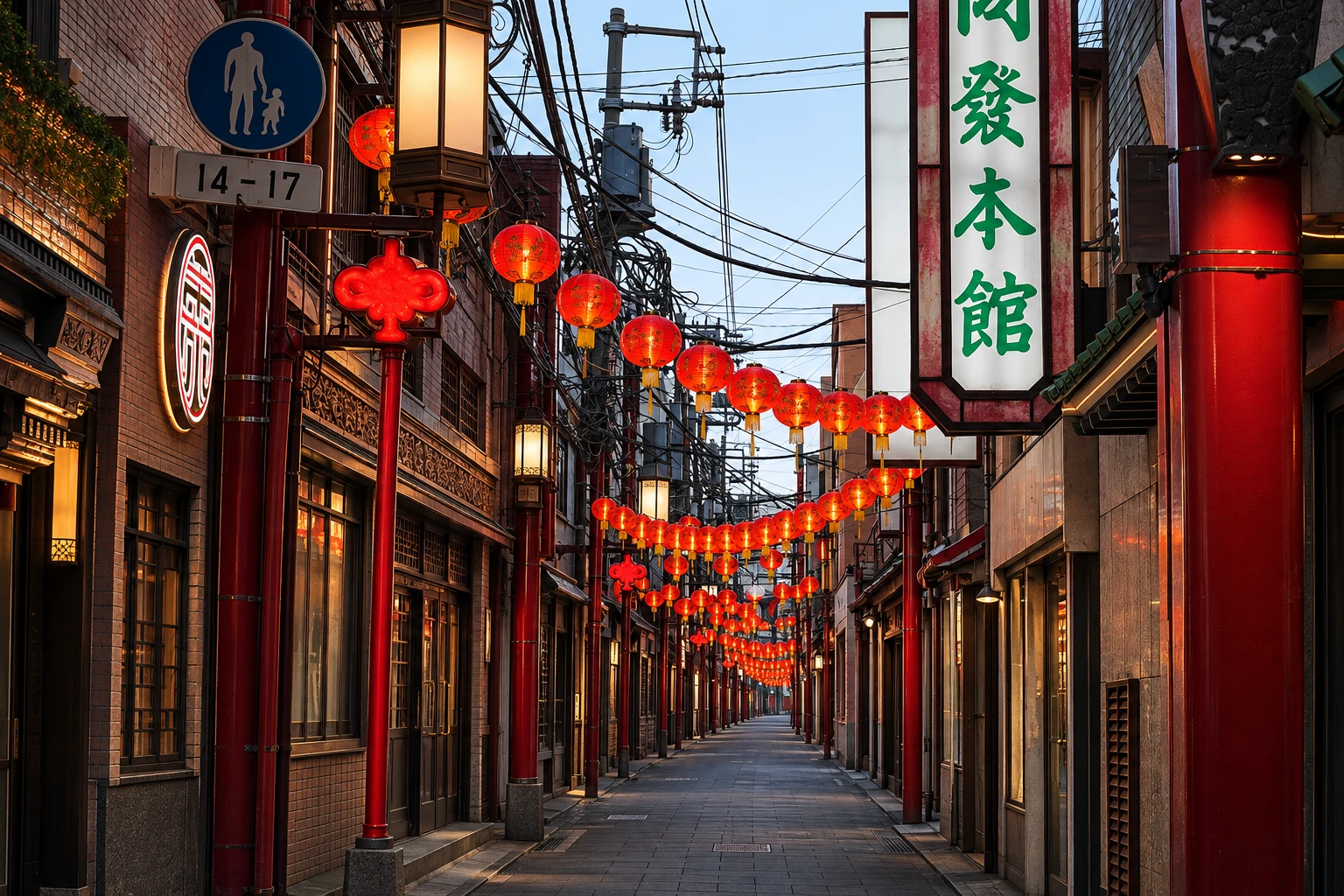
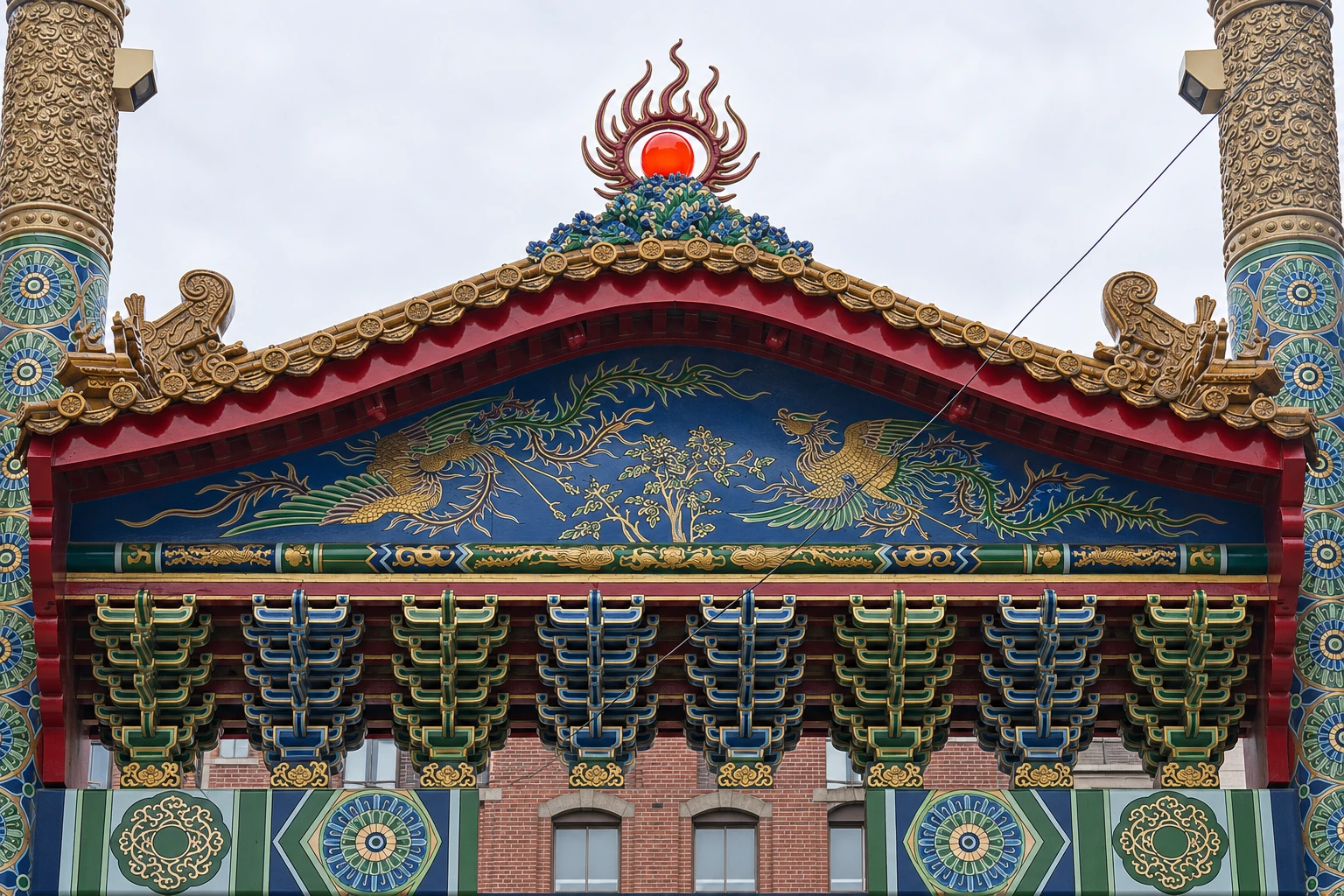
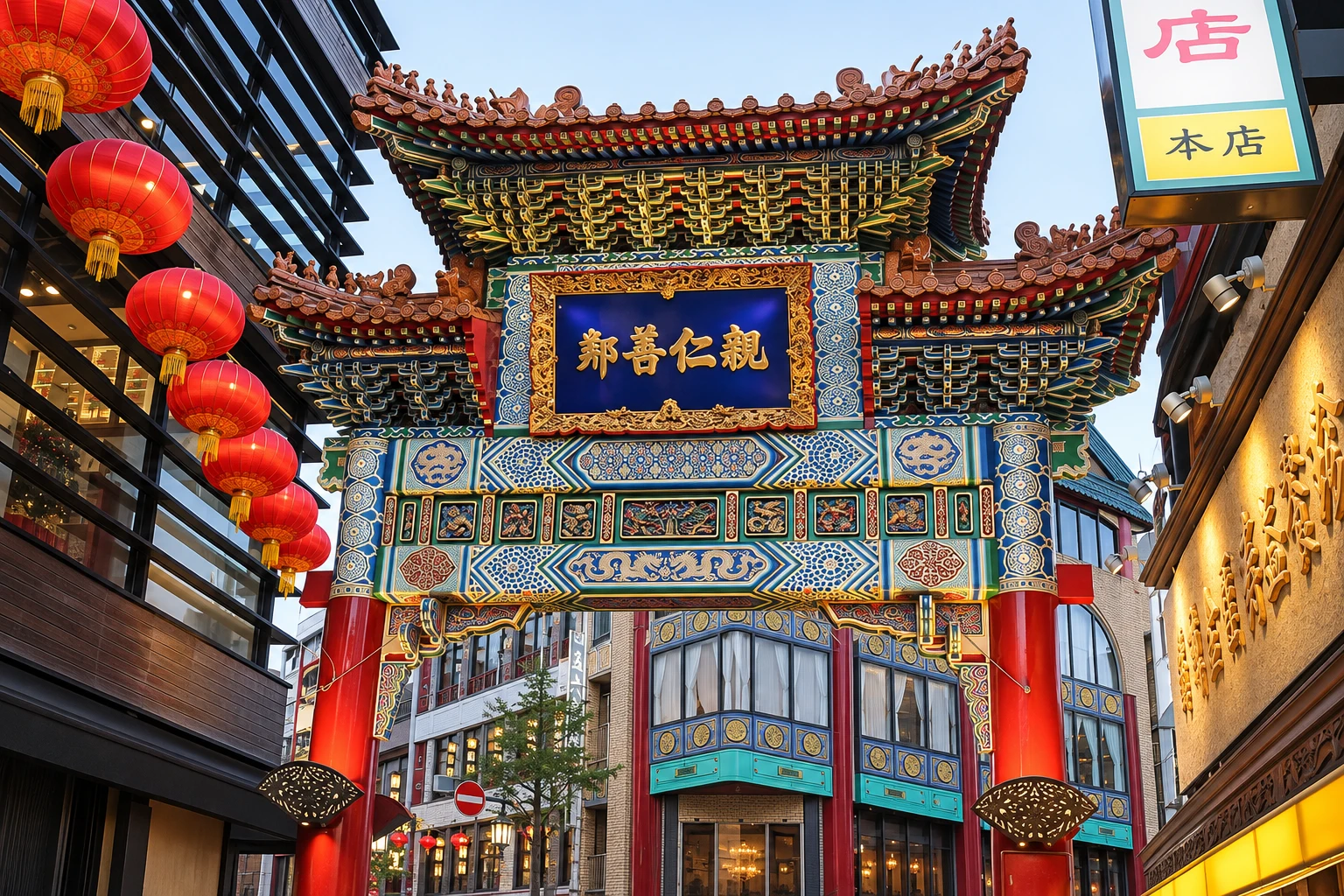
The neighborhood is ringed by traditional Chinese gates, colorful and with decorated roofs, each associated with a direction and a protective deity. The best-known gate is Zenrinmon, on the main street. Inner streets have red lanterns, painted facades and signs in Chinese.
In the center are two temples. Kanteibyo, dedicated to Guan Yu—the Chinese general venerated as a deity of business and loyalty—is covered in gold and red. Masobyo is dedicated to Mazu, the sea goddess who protects sailors. Both receive worshippers and visitors, with incense and offerings.
Most visitors come for the food: nikuman (meat-filled steamed buns) sold at street stalls, chestnuts roasted in stone pots, Peking duck and restaurants serving Cantonese, Sichuan and Shanghai cuisines. Lunar New Year fills the streets with lion and dragon dances and parades.
Before you go
Practical information
Cidade Turismo reviews its information regularly, but something may have changed. Check with the place before planning your trip.
How much time to set aside
One to two hours, including a meal.
Best time
At dusk, with the red lanterns lit. The Lunar New Year festival, held between January and February, features dances and parades; the Chinese National Day holiday in October also has celebrations.
How to get there
Motomachi-Chukagai Station on the Minatomirai Line is right next to the neighborhood. Ishikawacho Station on the JR Negishi Line is about a 5-minute walk on the opposite side.
Tip
Try small portions at street stalls instead of a single full meal. Combine the neighborhood with Yamashita Park, a few minutes away, and with the Yamate hill.
Official website
Get your questions answered
Frequently asked questions about Yokohama Chinatown
What to eat in Yokohama’s Chinatown?
Nikuman (steamed meat buns), filled breads, dumplings, roasted chestnuts, Peking duck and dishes from various regions of China.
How to get to Yokohama’s Chinatown?
By Motomachi-Chukagai Station on the Minatomirai Line, or Ishikawacho Station on JR, about a 5-minute walk away.
Which temples to visit in Yokohama’s Chinatown?
Kanteibyo, dedicated to General Guan Yu, and Masobyo, dedicated to the goddess Mazu, protector of sailors.
When is Chinese New Year in Yokohama?
On the lunar New Year date, which falls in January or February; the neighborhood hosts lion and dragon dances in the streets.
How much time to allow for Chinatown?
One to two hours, including a meal.
Beyond the guide


