

 Brazil
 Antarctica
 Argentina
 Bolivia
 Chile
 Colombia
 Ecuador
 Guyana
 French Guiana
 Falkland Islands (Malvinas)
 Paraguay
 Peru
 Suriname
 Uruguay
 Venezuela
 Germany
 Austria
 Belgium
 Croatia
 Denmark
 Slovakia
 Slovenia
 Spain
 Finland
 France
 Greece
 the Netherlands
 Hungary
 Ireland
 Iceland
 Italy
 Luxembourg
 Norway
 Poland
 Portugal
 the United Kingdom
 the Czech Republic
 Sweden
 Switzerland
 Turkey
 Bermuda
 Canada
 the United States
 Greenland
 Mexico
 Saint Pierre and Miquelon
 the Dominican Republic
 South Africa
 Egypt
 Australia
 Fiji
 New Zealand
 Papua New Guinea
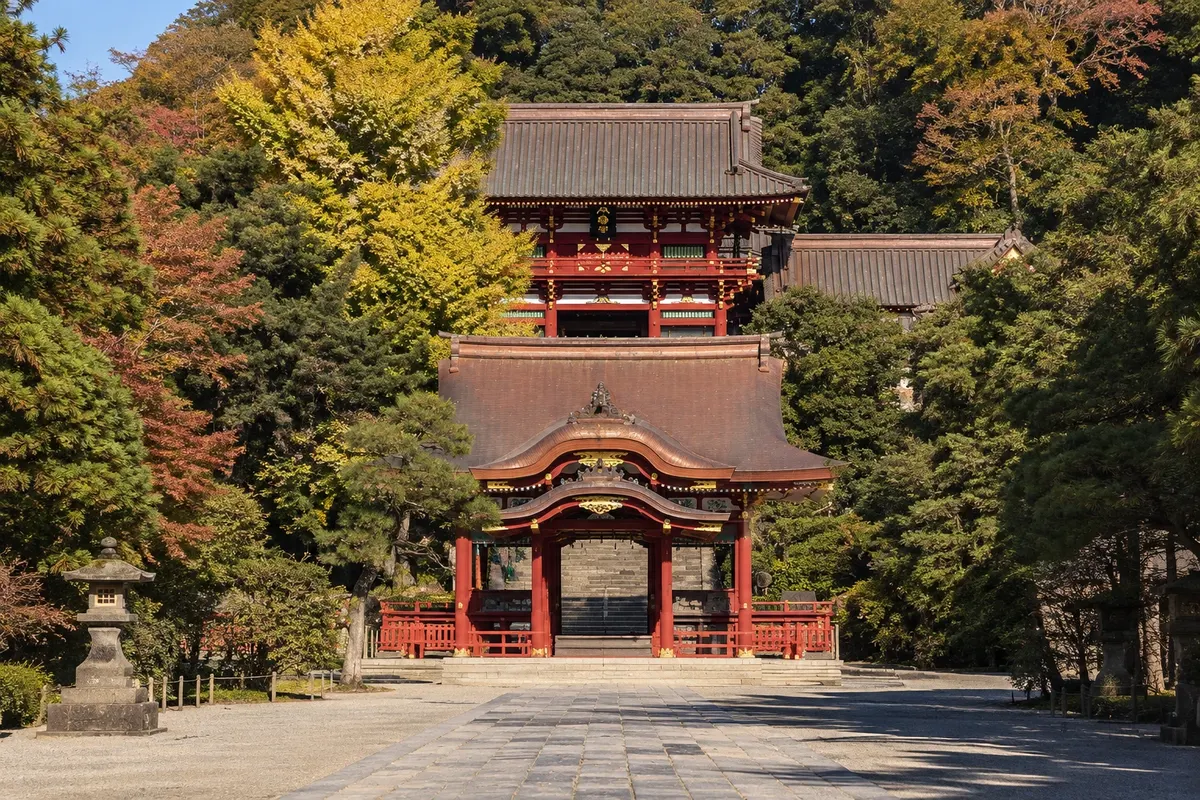
Shrine · Kamakura, Kanagawa
Tsurugaoka Hachimangu
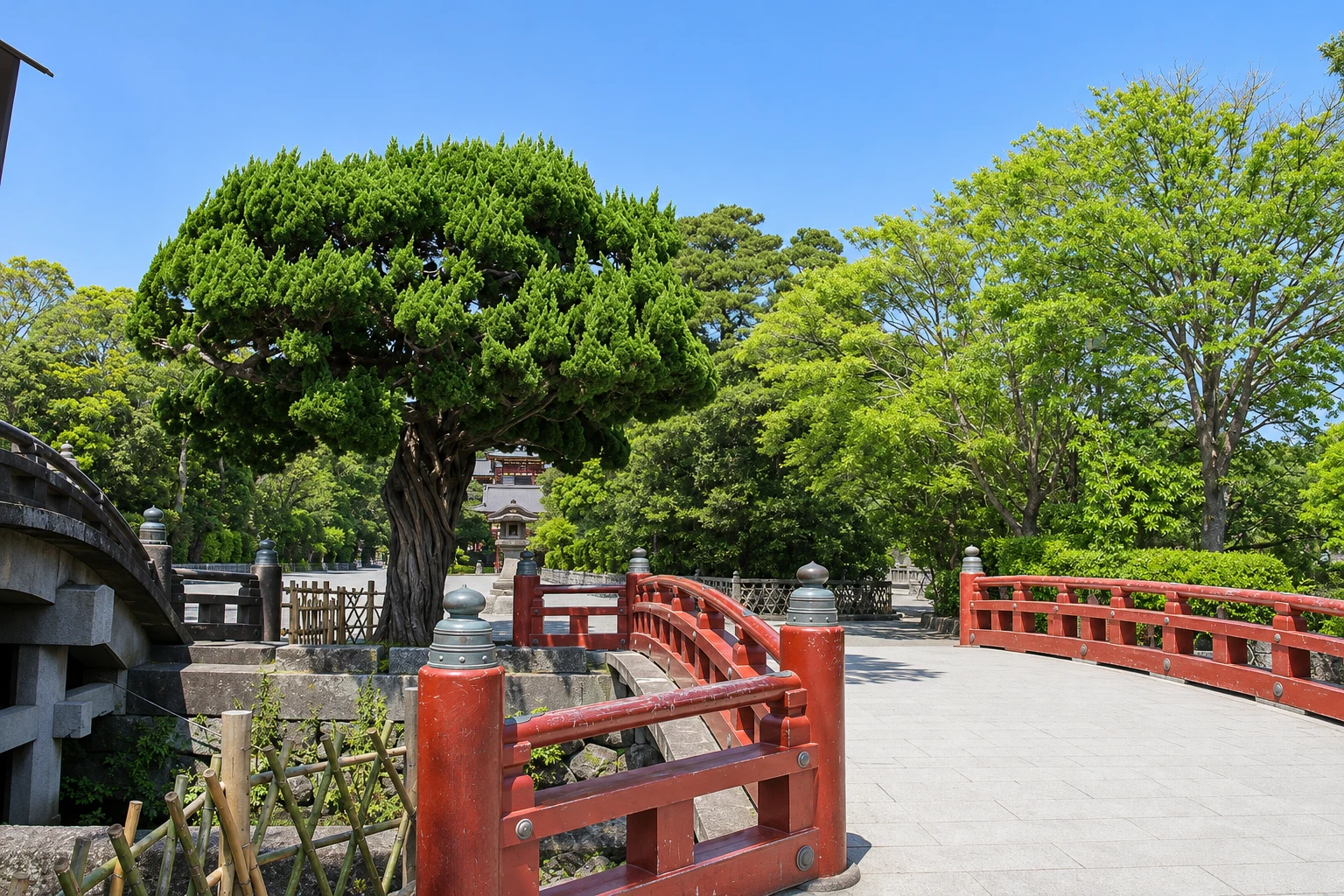
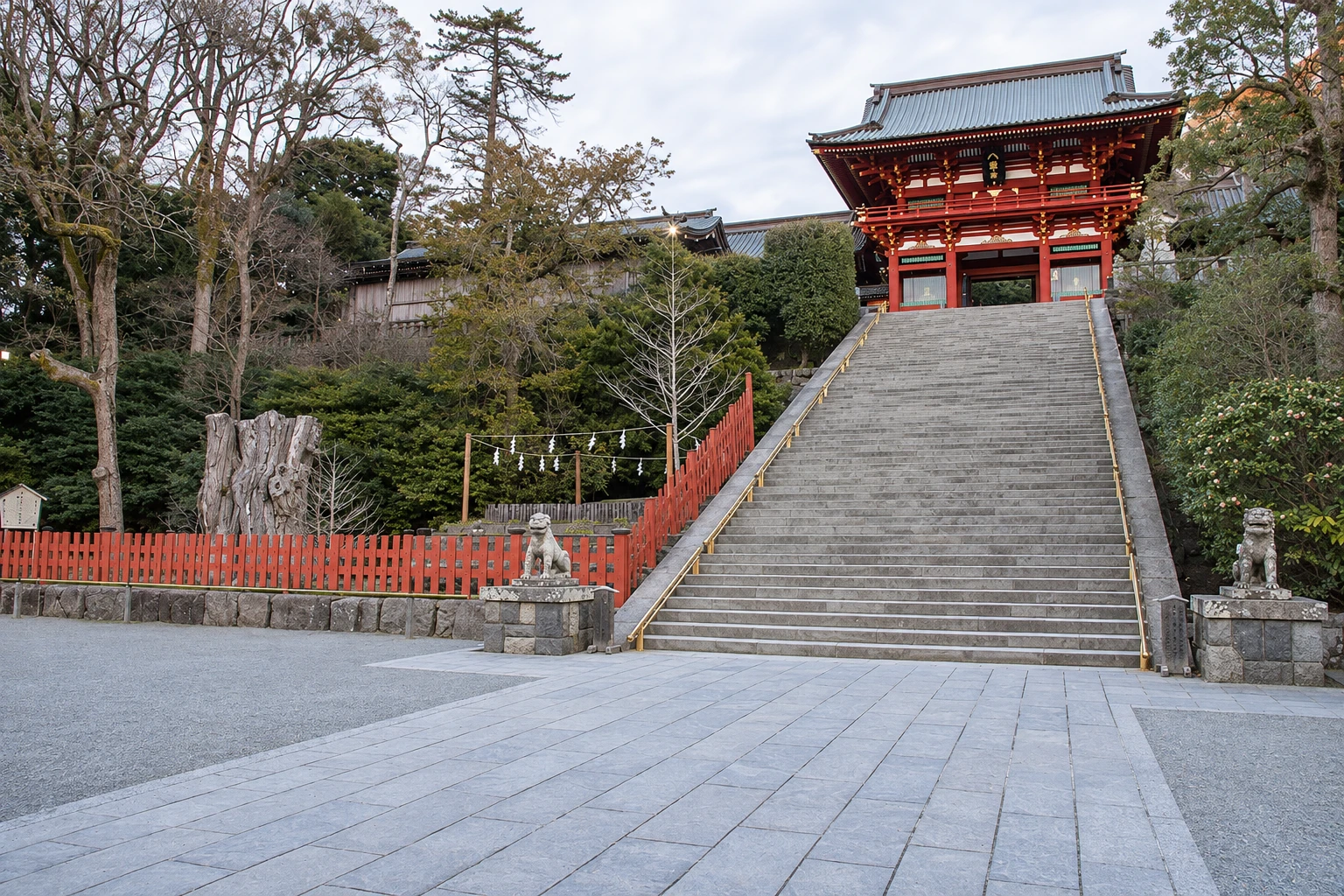
Kamakura’s central shrine, linked to the first shogun, at the top of a staircase at the end of Wakamiya-oji Avenue, with lotus ponds and the Komachi shopping street.
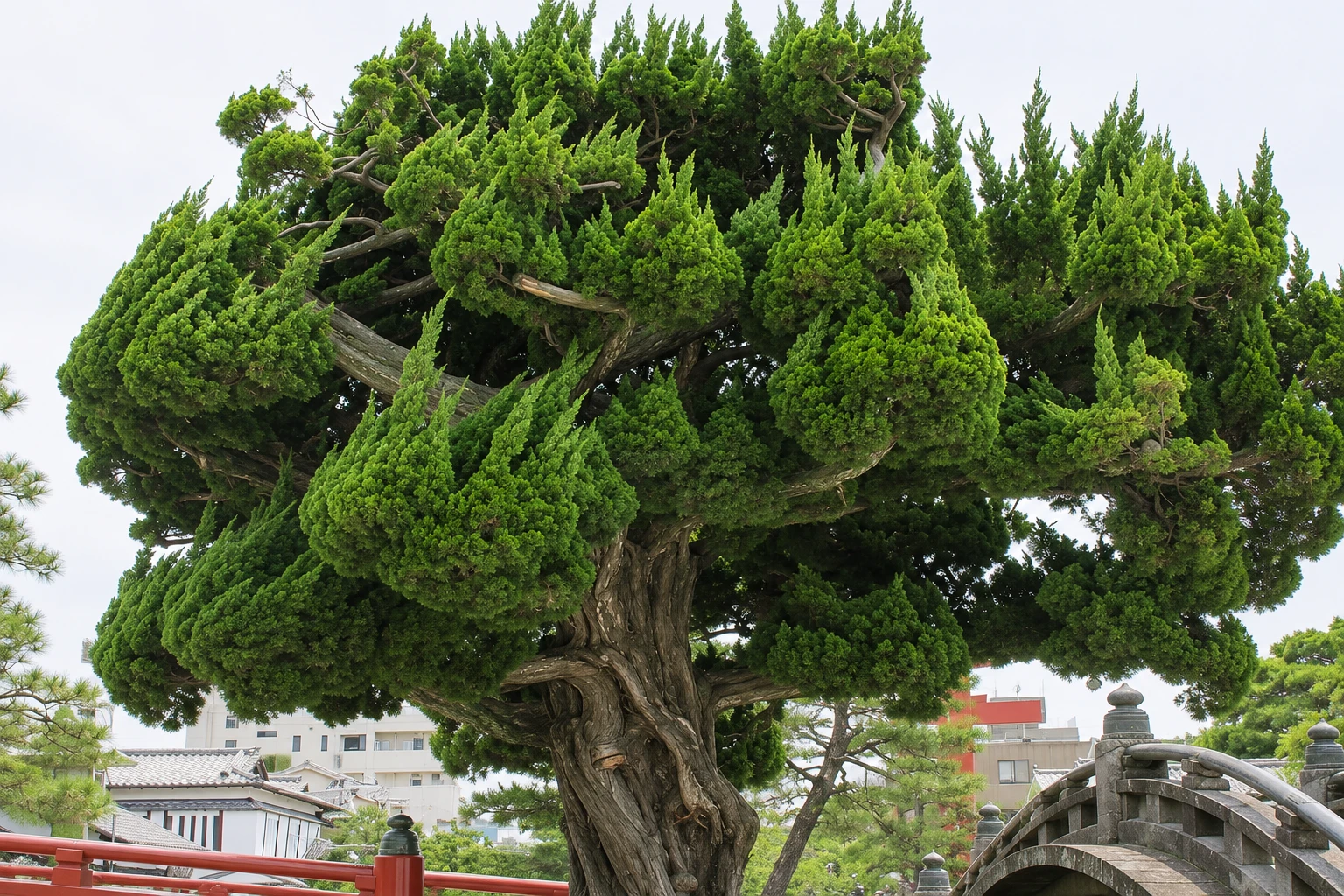
Illustrative images. The pictures in this guide are illustrations based on the real place, not photographs, and may differ from it.

A look at the place
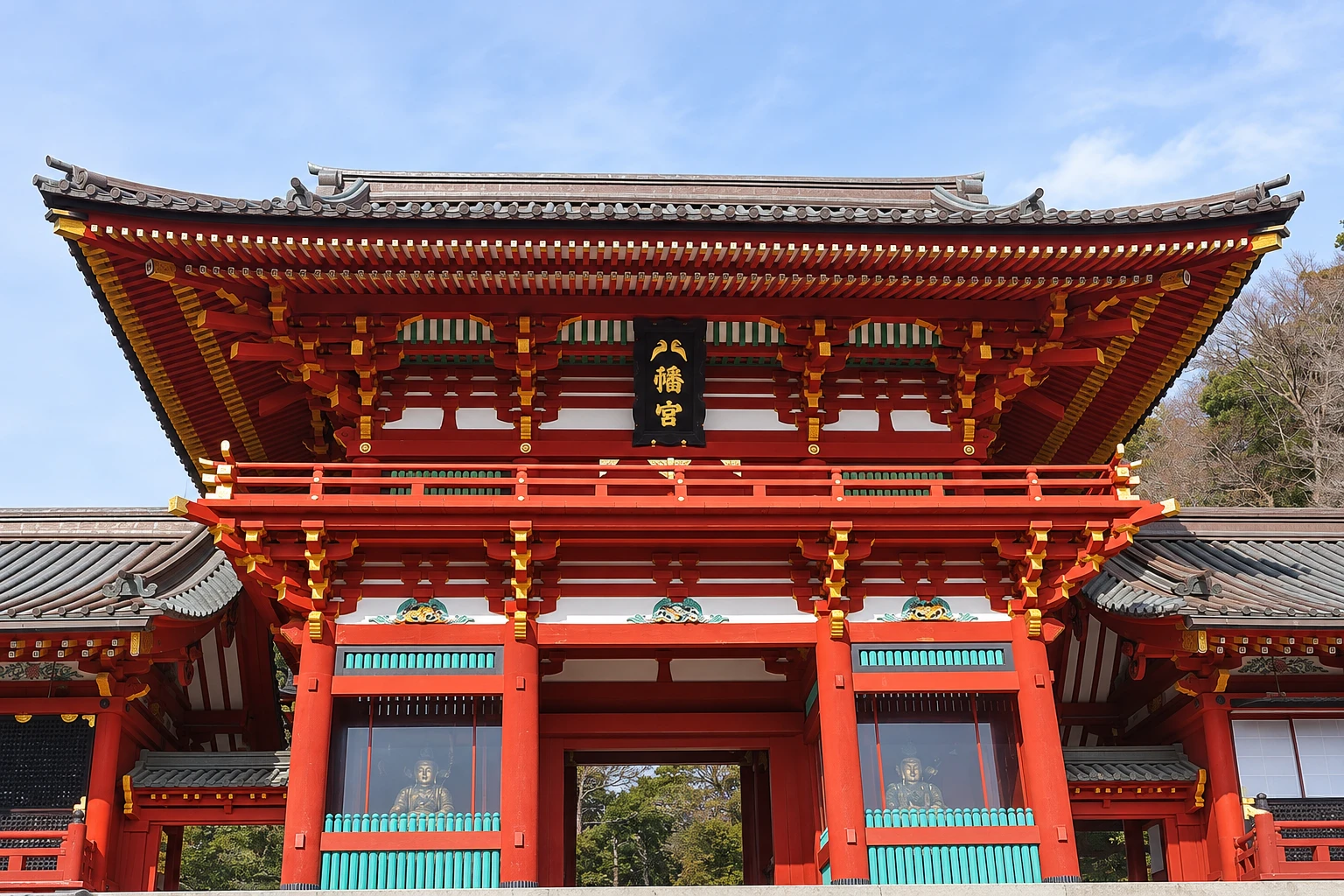
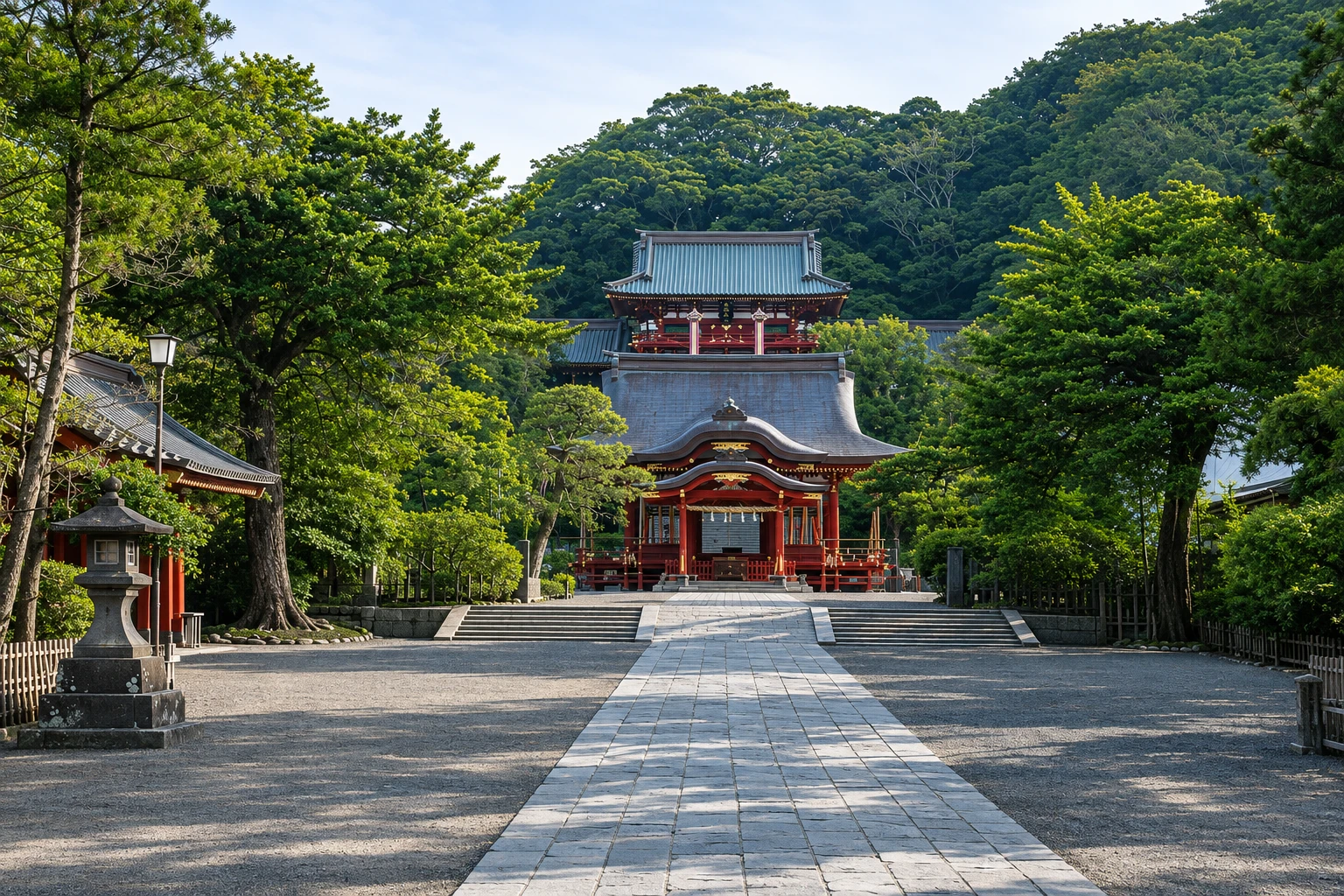
Tsurugaoka Hachimangu in pictures
These pictures are illustrations based on the real place, not photographs. They may differ from the place.
Click the picture to enlarge it.
Discover
About Tsurugaoka Hachimangu
Tsurugaoka Hachimangu is Kamakura’s most important shrine and the heart of the old town. It was founded in 1063 near the beach and moved to its present site in 1180 by Minamoto no Yoritomo, who made it the protective shrine of the shogunate. It is dedicated to Hachiman, a deity associated with warriors and samurai.
Wakamiya-oji Avenue descends straight from the shrine to the sea, and in its middle runs the Dankazura, a raised path lined with cherry trees and azaleas that leads to the large torii gate. On the grounds, the Genpei ponds, one on each side of the bridge, have lotus flowers that usually bloom in July and August.
The main hall sits at the top of a wide staircase, painted red, with views over the avenue and the town. At the foot of the stairs is the Maiden stage, where weddings and dances take place, and the spot where, according to tradition, the dancer Shizuka performed for the shogun in honor of his runaway lover, his brother. Next to the shrine, the Kamakura National Treasure Museum displays sculptures and paintings from the city’s temples.
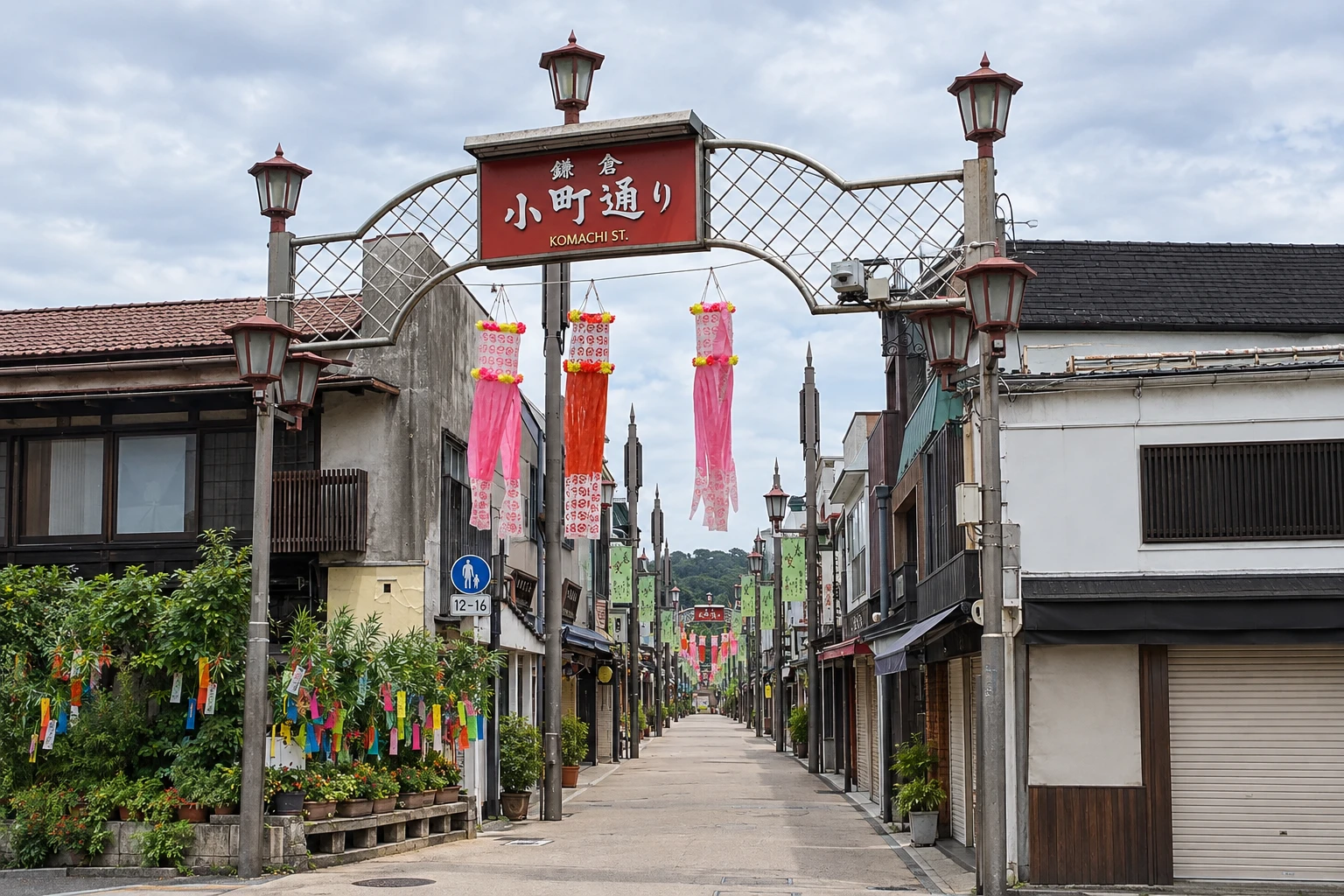
In September, the shrine festival includes yabusame, mounted archery, with riders in Kamakura-period costumes firing at targets at a gallop. Komachi-dori, the street beside it, leads from Kamakura Station to the shrine and is lined with sweet shops, ceramics stalls and food vendors.
Before you go
Practical information
Cidade Turismo reviews its information regularly, but something may have changed. Check with the place before planning your trip.
How much time to set aside
About 45 minutes to 1 hour.
Best time
Early in the morning, before Komachi Street fills up. The cherry trees along the raised path usually bloom around late March to early April; the lotus are at their peak in midsummer. New Year’s and the September festival with yabusame draw large crowds.
How to get there
From Kamakura Station (JR lines and the Enoden), it’s about a 10-minute walk via Komachi-dori or the Dankazura.
Tip
Approach via Wakamiya-oji Avenue along the Dankazura path, and return via Komachi-dori to stop for food on the way. From the top of the steps, look back to see the avenue descending to the sea.
Official website
Get your questions answered
Frequently asked questions about Tsurugaoka Hachimangu
Is there an entrance fee to Tsurugaoka Hachimangu?
The shrine and its courtyard are open without charge; the adjacent National Treasure Museum charges admission.
How do you get to Tsurugaoka Hachimangu?
On foot, about 10 minutes from Kamakura Station via Komachi-dori or the Dankazura approach.
When is Kamakura’s yabusame held?
At the shrine festival in mid-September, and at other spring events. Check the dates for the year.
What is Komachi-dori?
A pedestrian street between Kamakura Station and the shrine, lined with shops selling sweets, food, ceramics and souvenirs.
How much time should you set aside for Tsurugaoka Hachimangu?
About 45 minutes to 1 hour.
Beyond the guide


