

 Brazil
 Antarctica
 Argentina
 Bolivia
 Chile
 Colombia
 Ecuador
 Guyana
 French Guiana
 Falkland Islands (Malvinas)
 Paraguay
 Peru
 Suriname
 Uruguay
 Venezuela
 Germany
 Austria
 Belgium
 Croatia
 Denmark
 Slovakia
 Slovenia
 Spain
 Finland
 France
 Greece
 the Netherlands
 Hungary
 Ireland
 Iceland
 Italy
 Luxembourg
 Norway
 Poland
 Portugal
 the United Kingdom
 the Czech Republic
 Sweden
 Switzerland
 Turkey
 Bermuda
 Canada
 the United States
 Greenland
 Mexico
 Saint Pierre and Miquelon
 the Dominican Republic
 South Africa
 Egypt
 Australia
 Fiji
 New Zealand
 Papua New Guinea
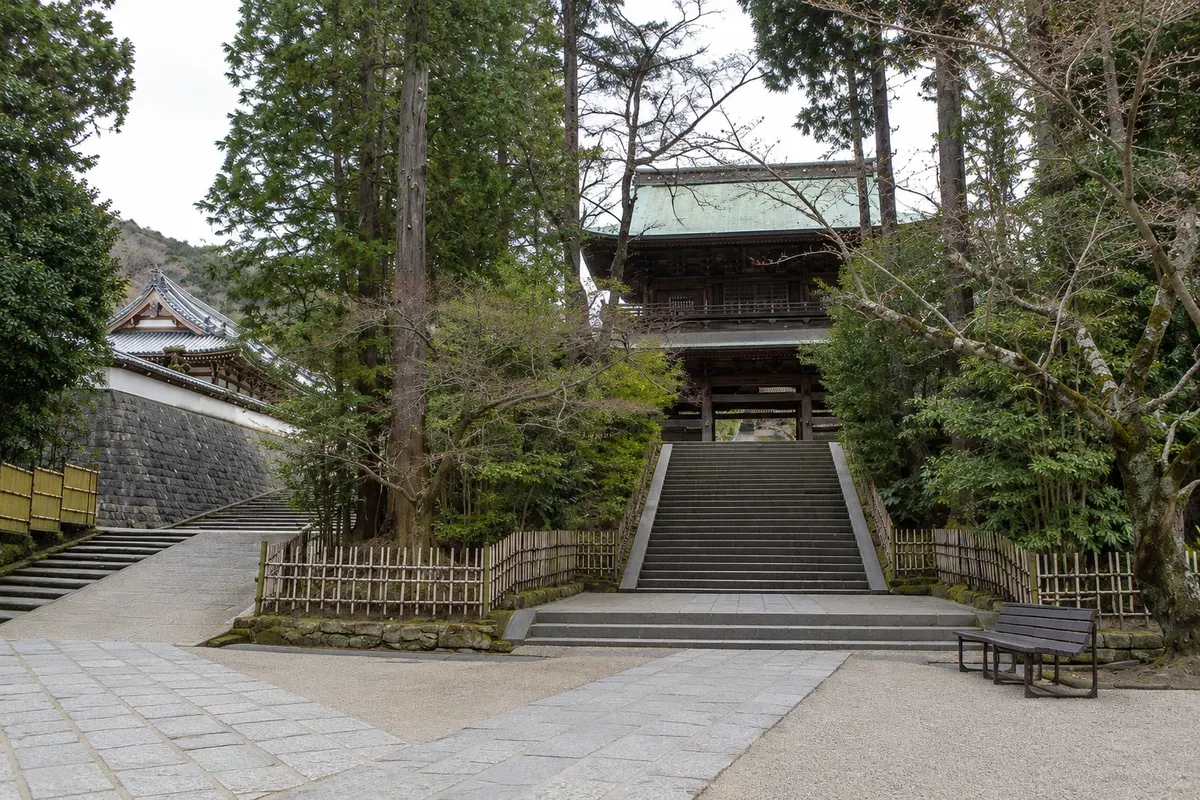
Temple · Kamakura, Kanagawa
Engaku-ji
Major Zen monastery in Kita-Kamakura, founded in 1282, with a wooden gate, halls among cedars, the large bell and the Shariden reliquary, a National Treasure.
Illustrative images. The pictures in this guide are illustrations based on the real place, not photographs, and may differ from it.

A look at the place
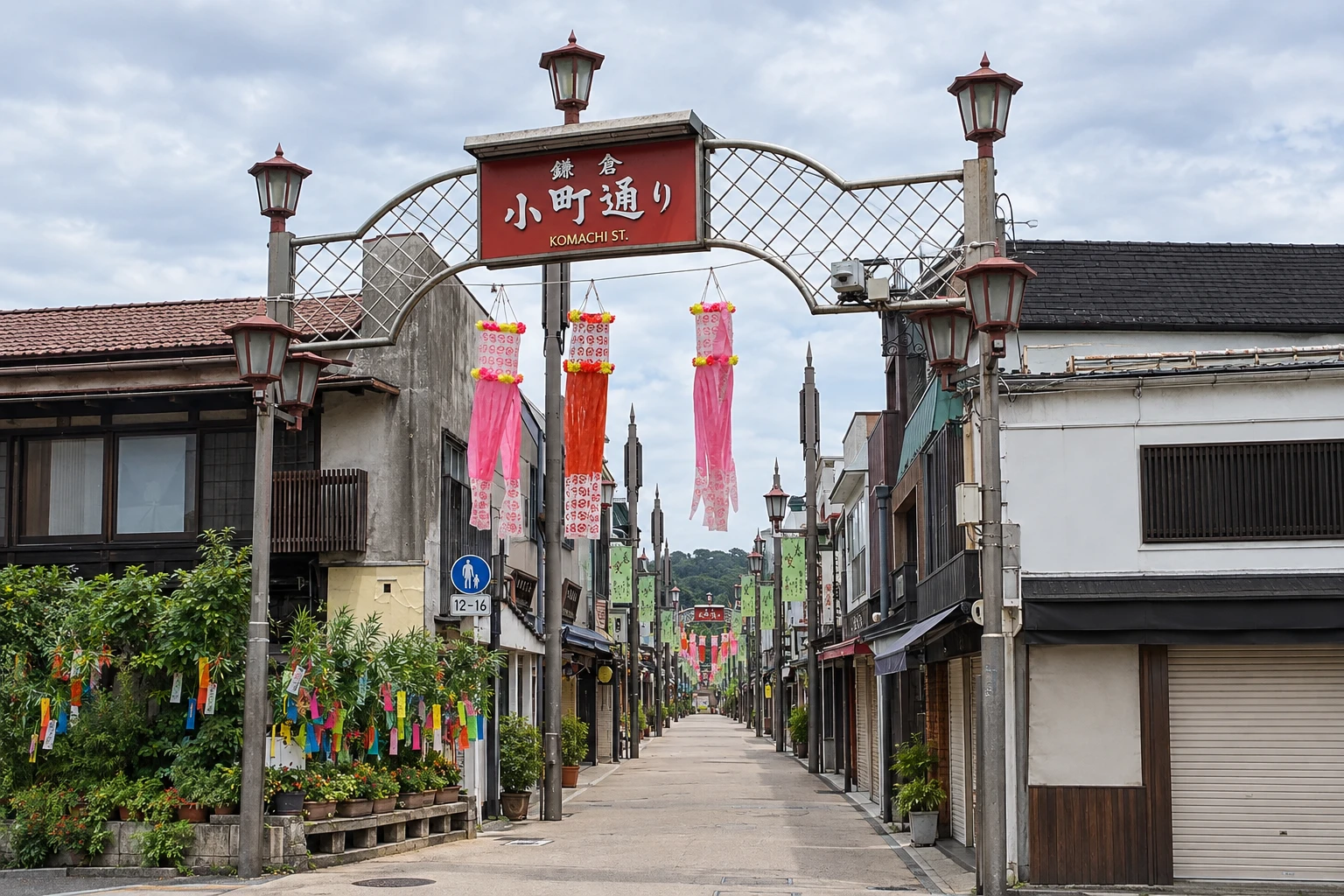
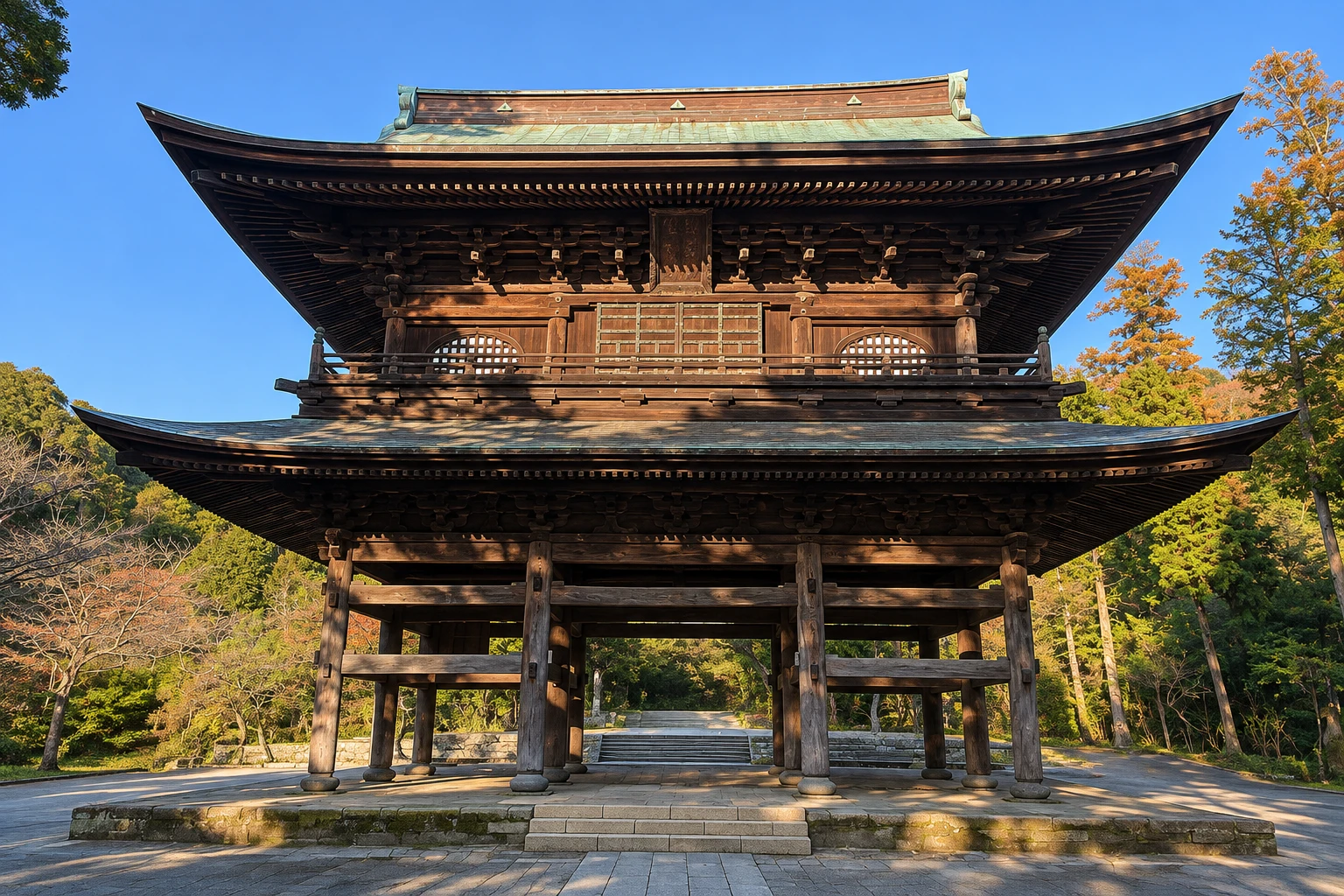
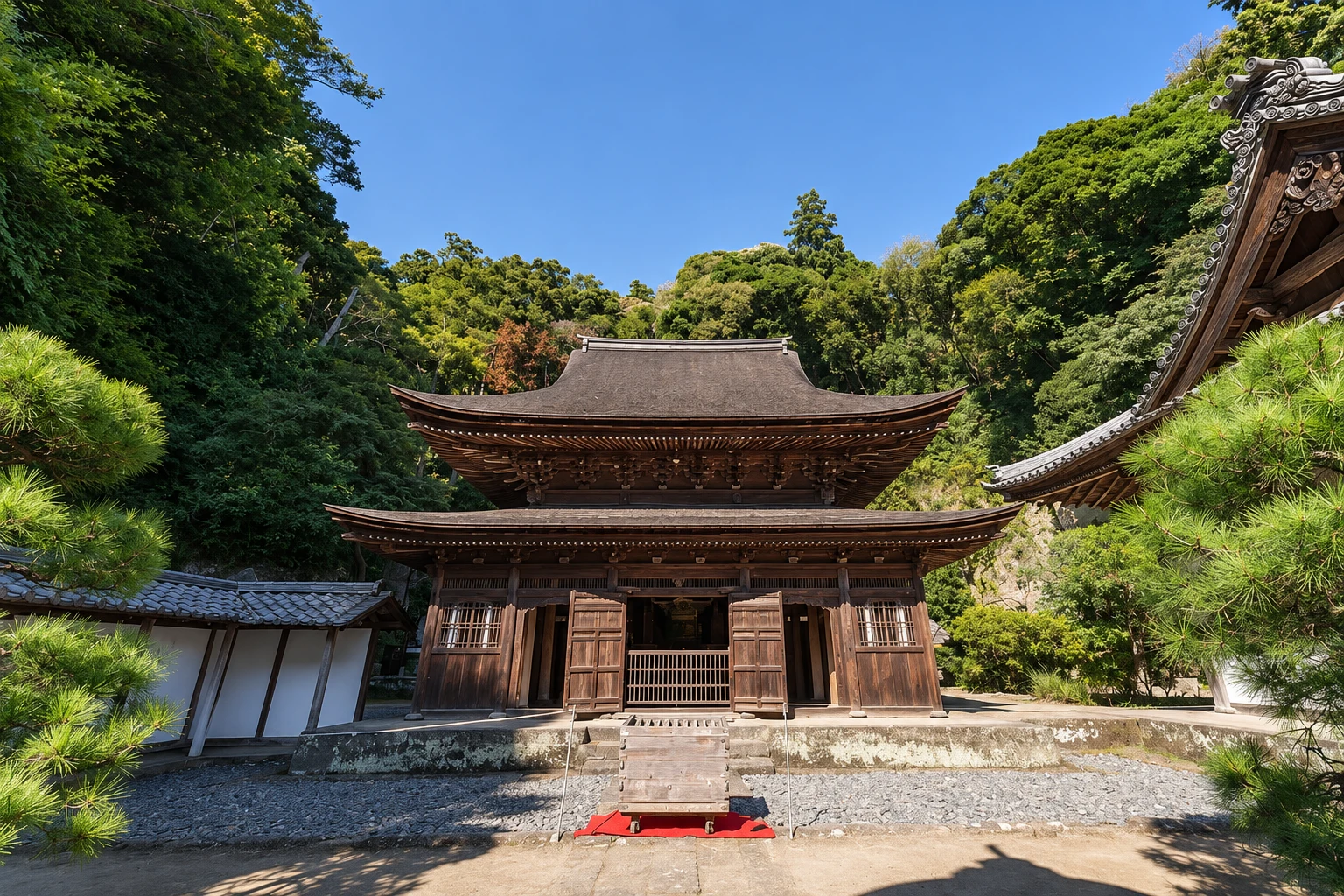
Engaku-ji in pictures
These pictures are illustrations based on the real place, not photographs. They may differ from the place.
Click the picture to enlarge it.
Discover
About Engaku-ji
Engaku-ji is one of Kamakura’s principal Zen monasteries, beside Kita-Kamakura station. It was founded in 1282 by Hojo Tokimune, regent of the shogunate, who invited the Chinese monk Wuxue Zuyuan to lead it and honor the dead of the two Mongol invasions. It is the second of the Five Great Zen Temples of Kamakura, and the monastery remains active.
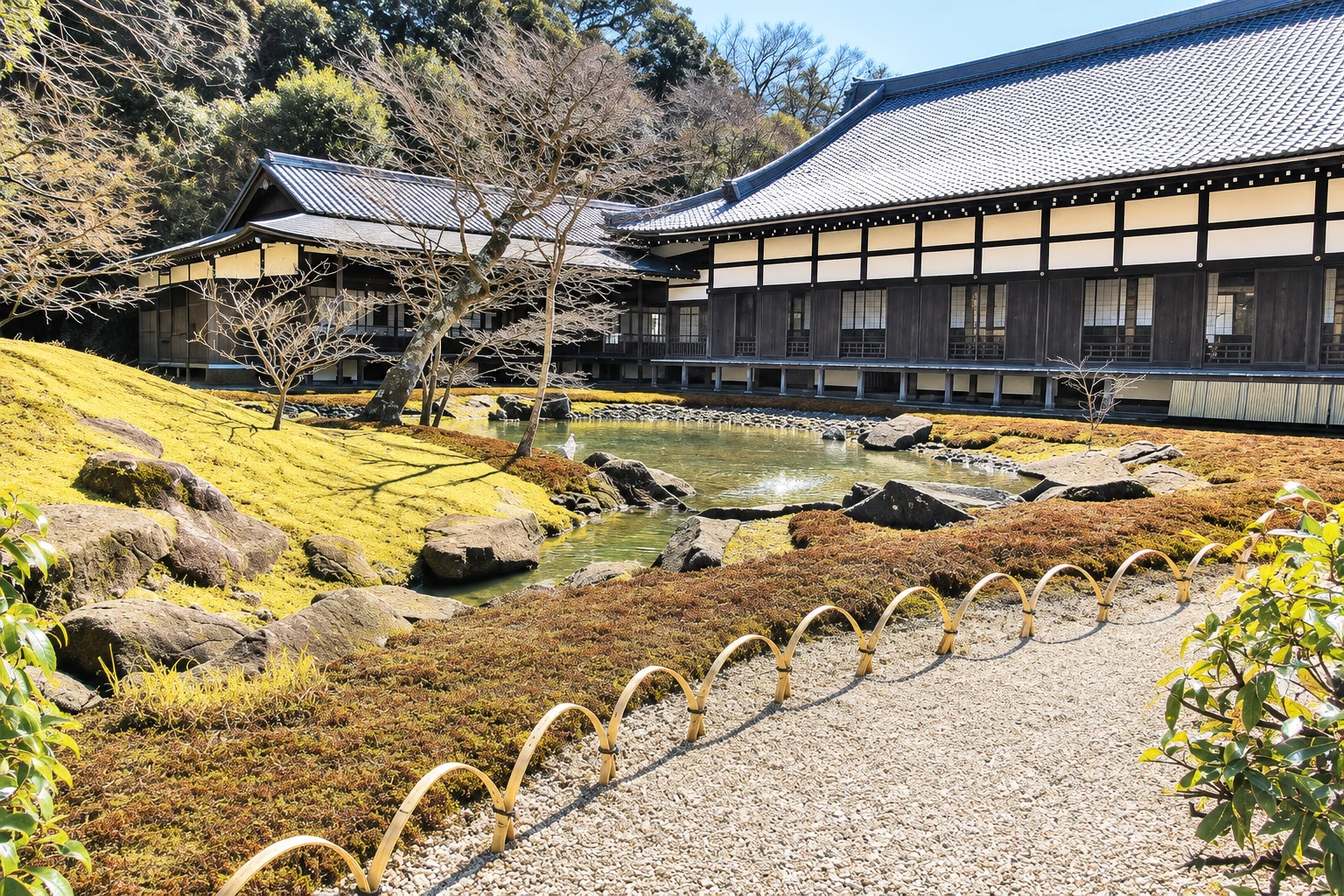
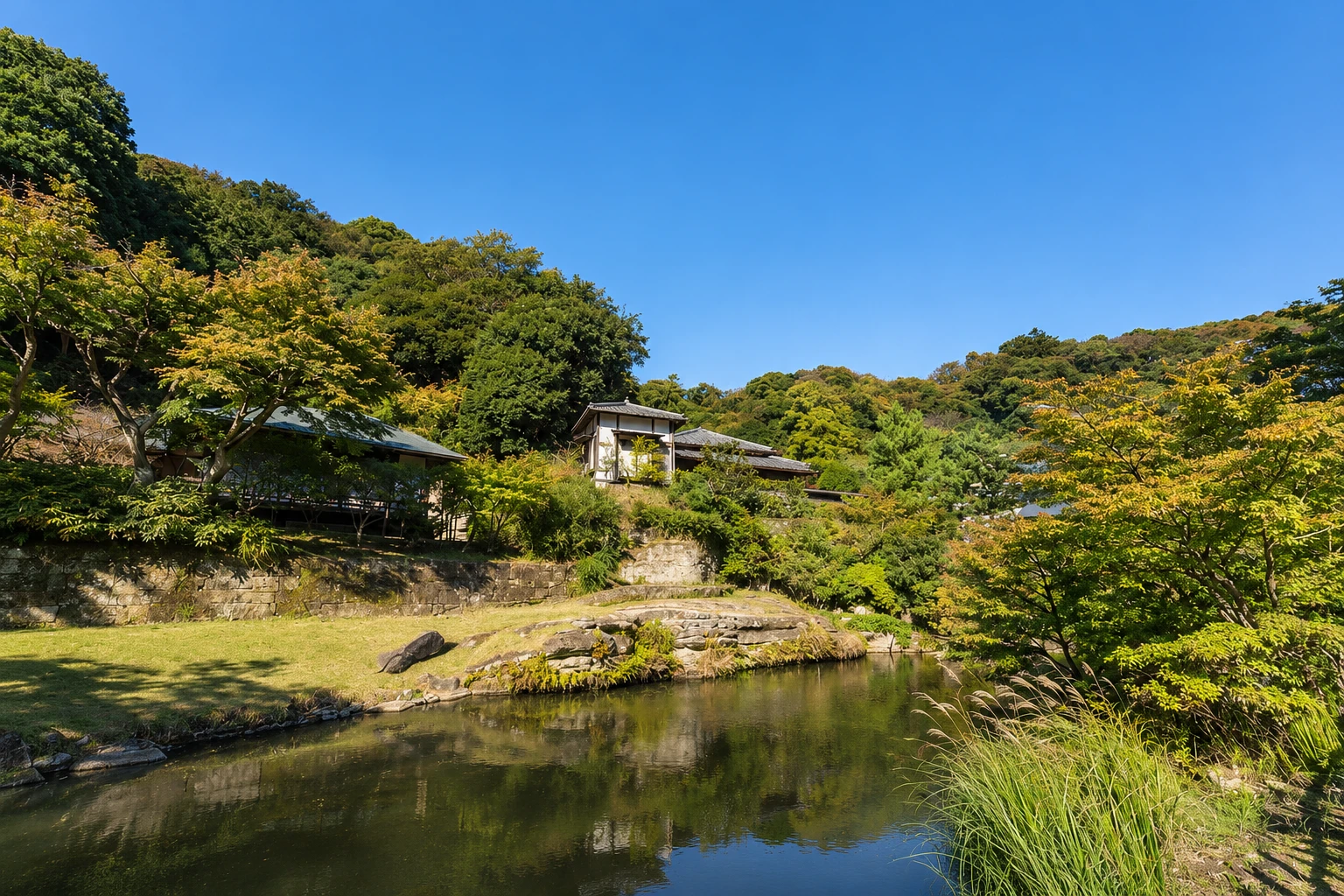
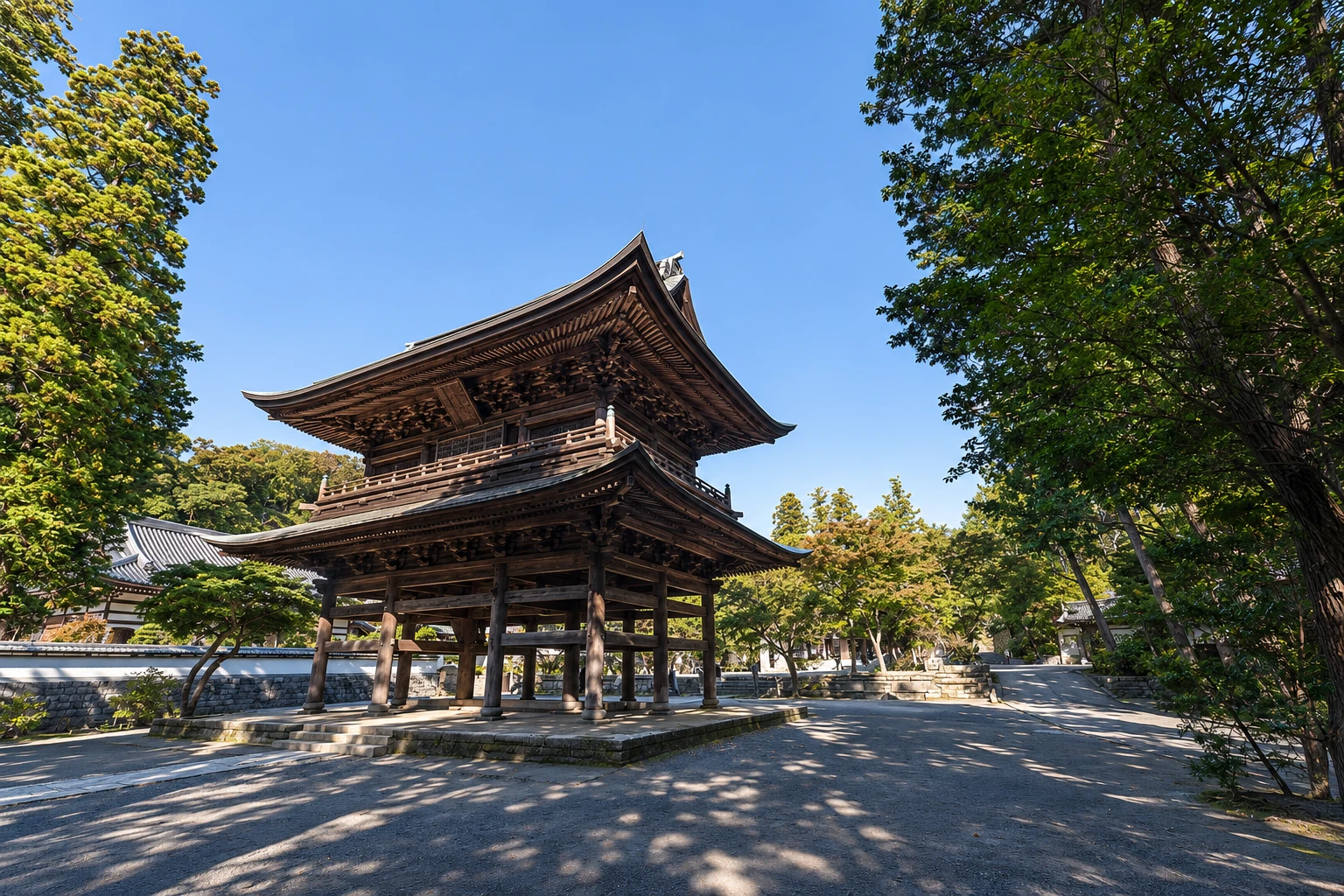
The grounds rise through a valley between tree-covered hills, with buildings scattered among cedars and maples. The entrance is through the Sanmon gate, a dark two-story wooden gate. Beyond it are the Buddha hall, with a crowned Shaka statue, and the meditation hall where monks and laypeople practice zazen.
At the top of a side staircase stands the large bell, the Ogane, cast in 1301, the largest in Kamakura and a National Treasure, with a teahouse beside it and views of the valley. The Shariden reliquary, also a National Treasure, is one of the finest examples of Zen architecture from the Kamakura period; it is usually open to the public only on a few days each year, but can be seen from a distance.
The temple has gardens with ponds and small subtemples. Filmmaker Yasujiro Ozu is buried in the monastery cemetery. Engaku-ji often offers meditation sessions for the public on specified days.
Before you go
Practical information
Cidade Turismo reviews its information regularly, but something may have changed. Check with the place before planning your trip.
How much time to set aside
From 1 to 1h30.
Best time
Autumn colors reach Kamakura late, usually between November and December, and the temple valley fills. The valley is quieter in the morning. The Shariden opens only on a few days each year: confirm the dates.
How to get there
The entrance is beside Kita-Kamakura station on the JR Yokosuka line, one stop before Kamakura.
Tip
Make Engaku-ji the first temple of the day and then walk down the valley road to Kencho-ji and central Kamakura.
Official website
Get your questions answered
Frequently asked questions about Engaku-ji
How do you get to Engaku-ji?
Take the JR Yokosuka Line to Kita-Kamakura Station, next to the temple entrance.
What to see at Engaku-ji?
The Sanmon gate, the Buddha hall, the large bell Ogane, the gardens and, at a distance, the Shariden reliquary.
Is the Shariden at Engaku-ji open to the public?
Only on a few days of the year. Otherwise it can be seen from outside the gate.
Can you meditate at Engaku-ji?
The temple usually offers zazen sessions to the public on specified days. Check the temple’s schedule.
How long does a visit to Engaku-ji take?
About 1 to 1.5 hours.
Beyond the guide


