

 Brazil
 Antarctica
 Argentina
 Bolivia
 Chile
 Colombia
 Ecuador
 Guyana
 French Guiana
 Falkland Islands (Malvinas)
 Paraguay
 Peru
 Suriname
 Uruguay
 Venezuela
 Germany
 Austria
 Belgium
 Croatia
 Denmark
 Slovakia
 Slovenia
 Spain
 Finland
 France
 Greece
 the Netherlands
 Hungary
 Ireland
 Iceland
 Italy
 Luxembourg
 Norway
 Poland
 Portugal
 the United Kingdom
 the Czech Republic
 Sweden
 Switzerland
 Turkey
 Bermuda
 Canada
 the United States
 Greenland
 Mexico
 Saint Pierre and Miquelon
 the Dominican Republic
 South Africa
 Egypt
 Australia
 Fiji
 New Zealand
 Papua New Guinea
Shrine · Ise, Mie
Naikū (Inner Ise Shrine)
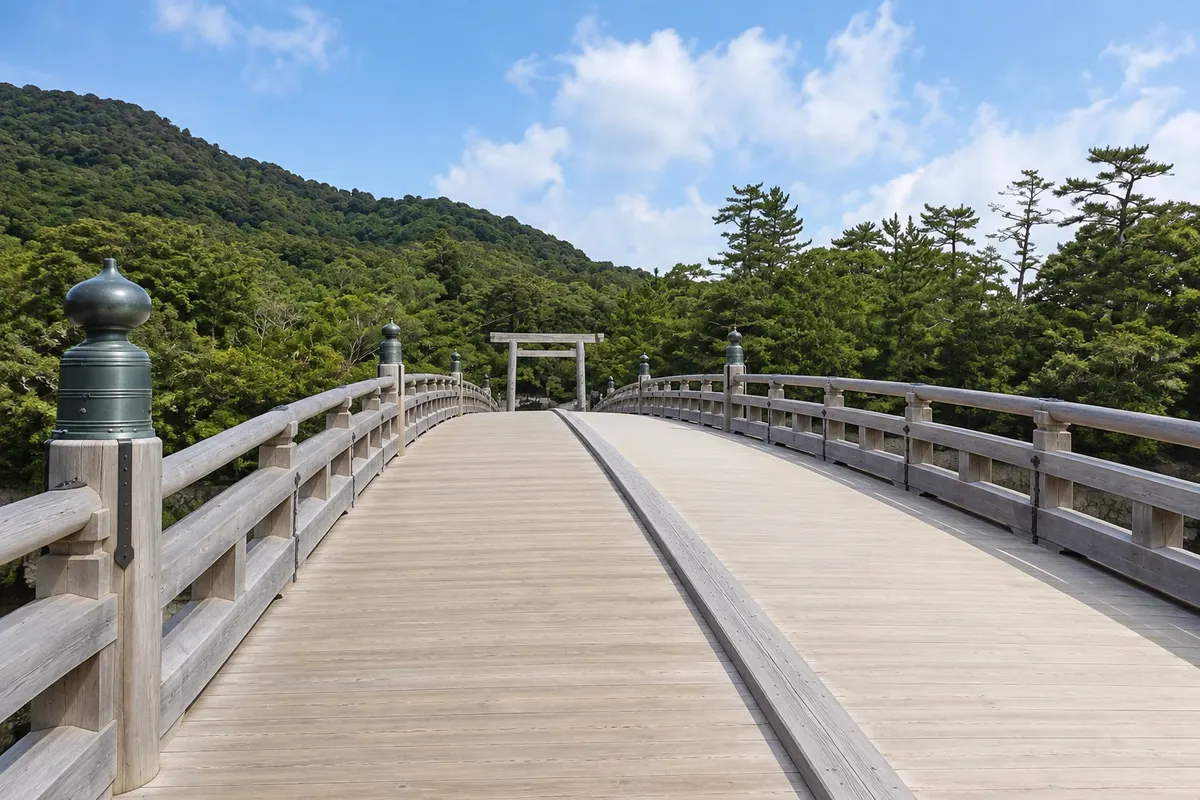
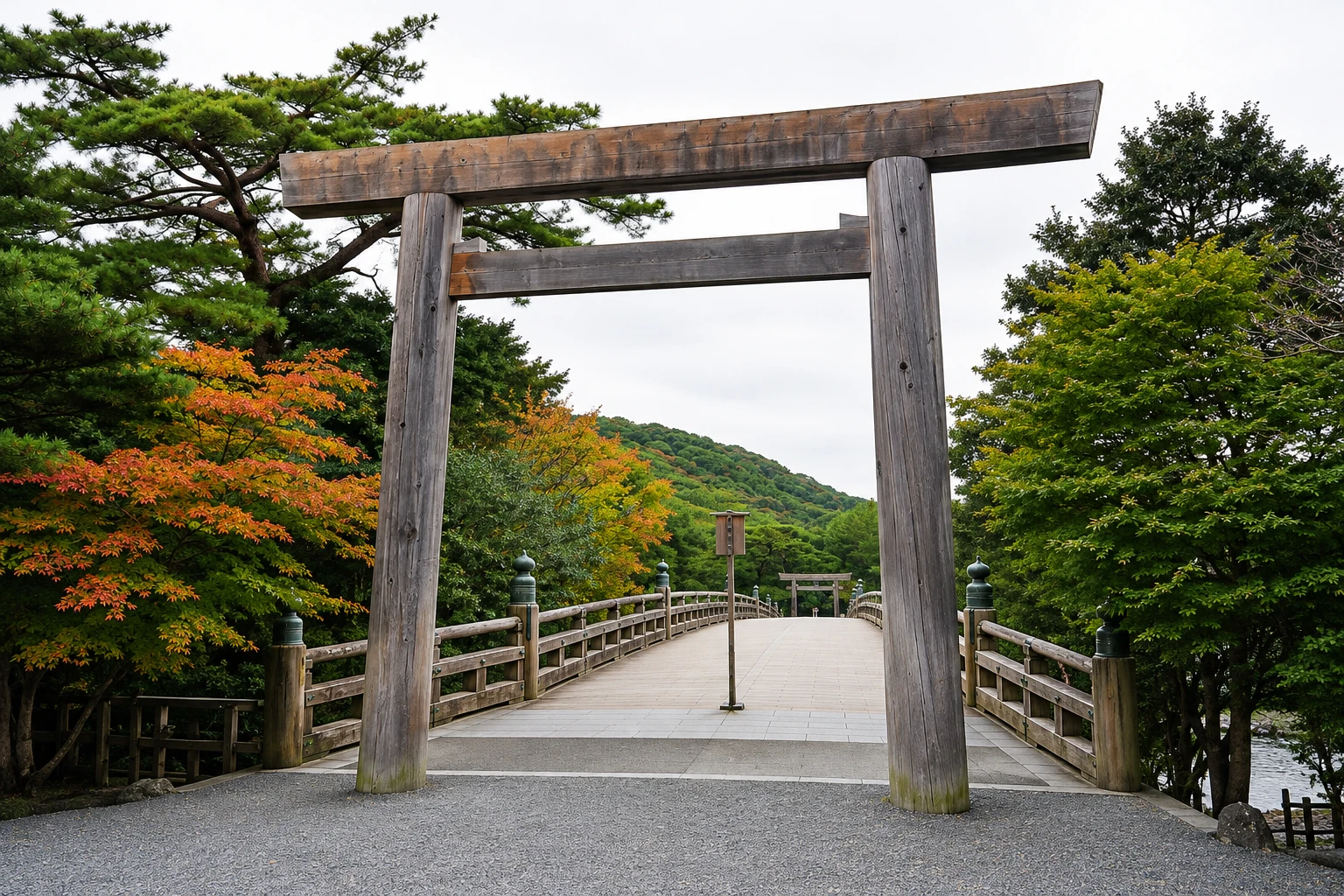
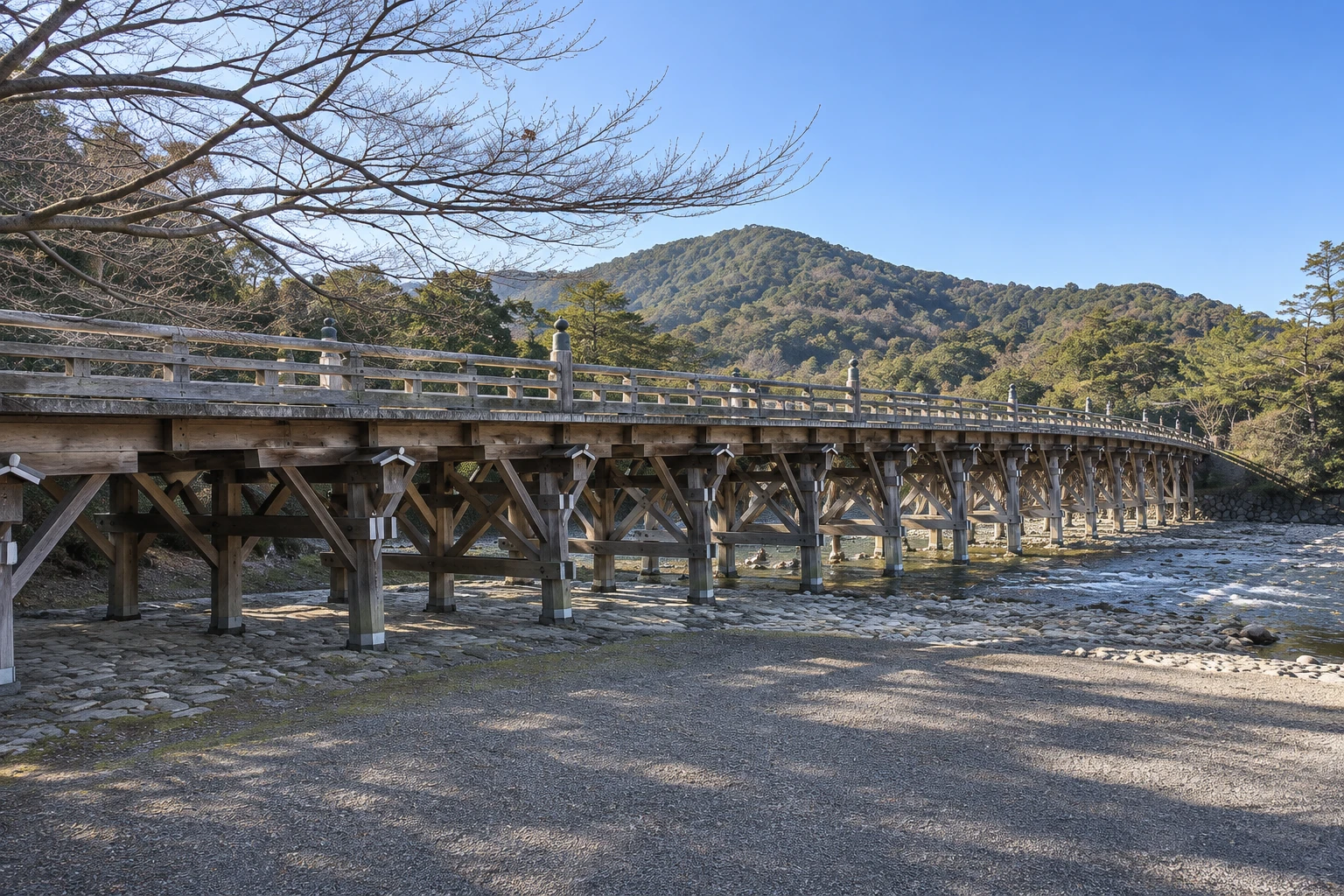
The main shrine of Ise Jingu, dedicated to the sun goddess Amaterasu, set in a cedar forest beside the Isuzu River. You reach it via Uji Bridge; in front of it are the pilgrims’ streets Oharai-machi and Okage Yokocho.
Illustrative images. The pictures in this guide are illustrations based on the real place, not photographs, and may differ from it.

A look at the place
Naikū (Inner Ise Shrine) in pictures
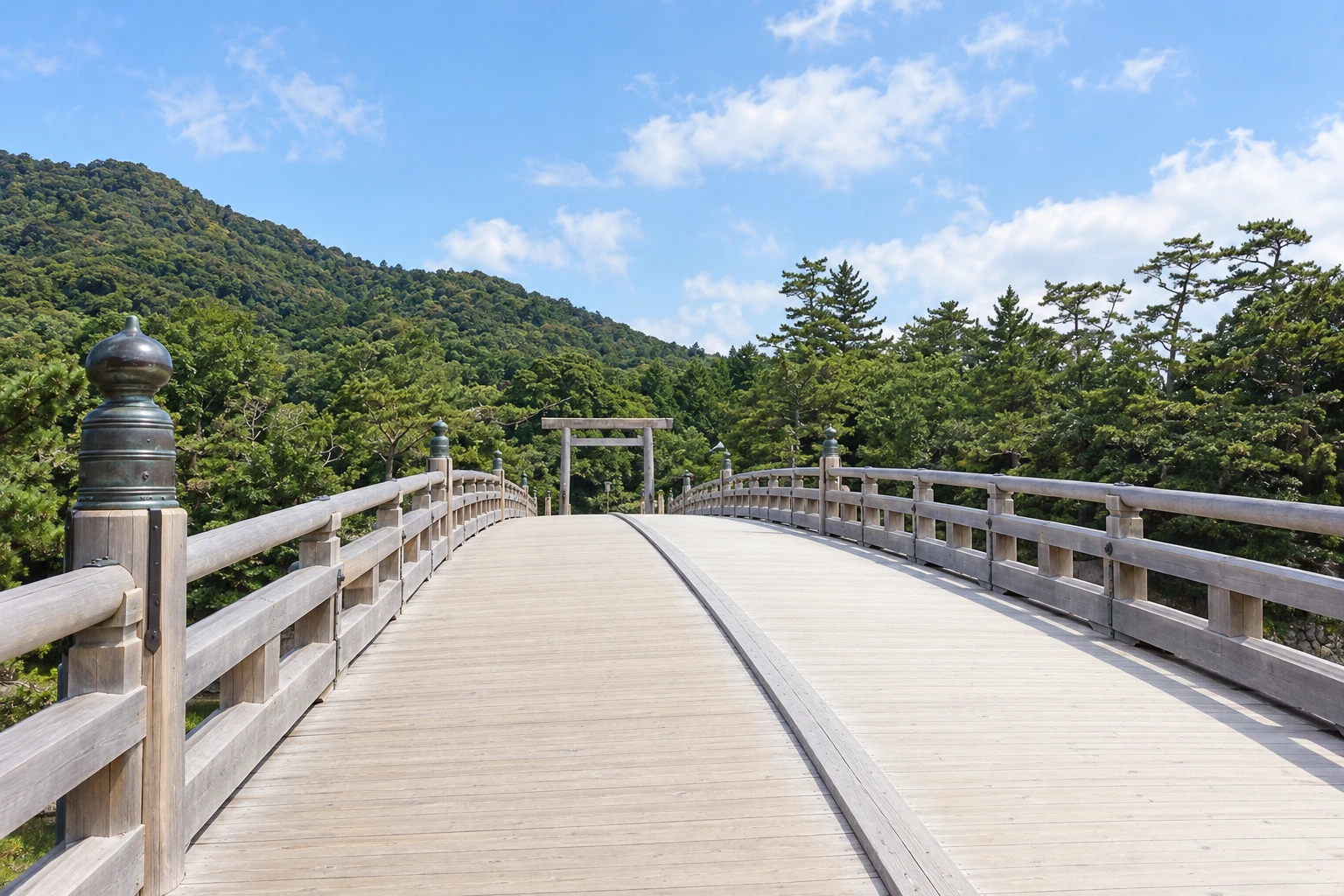
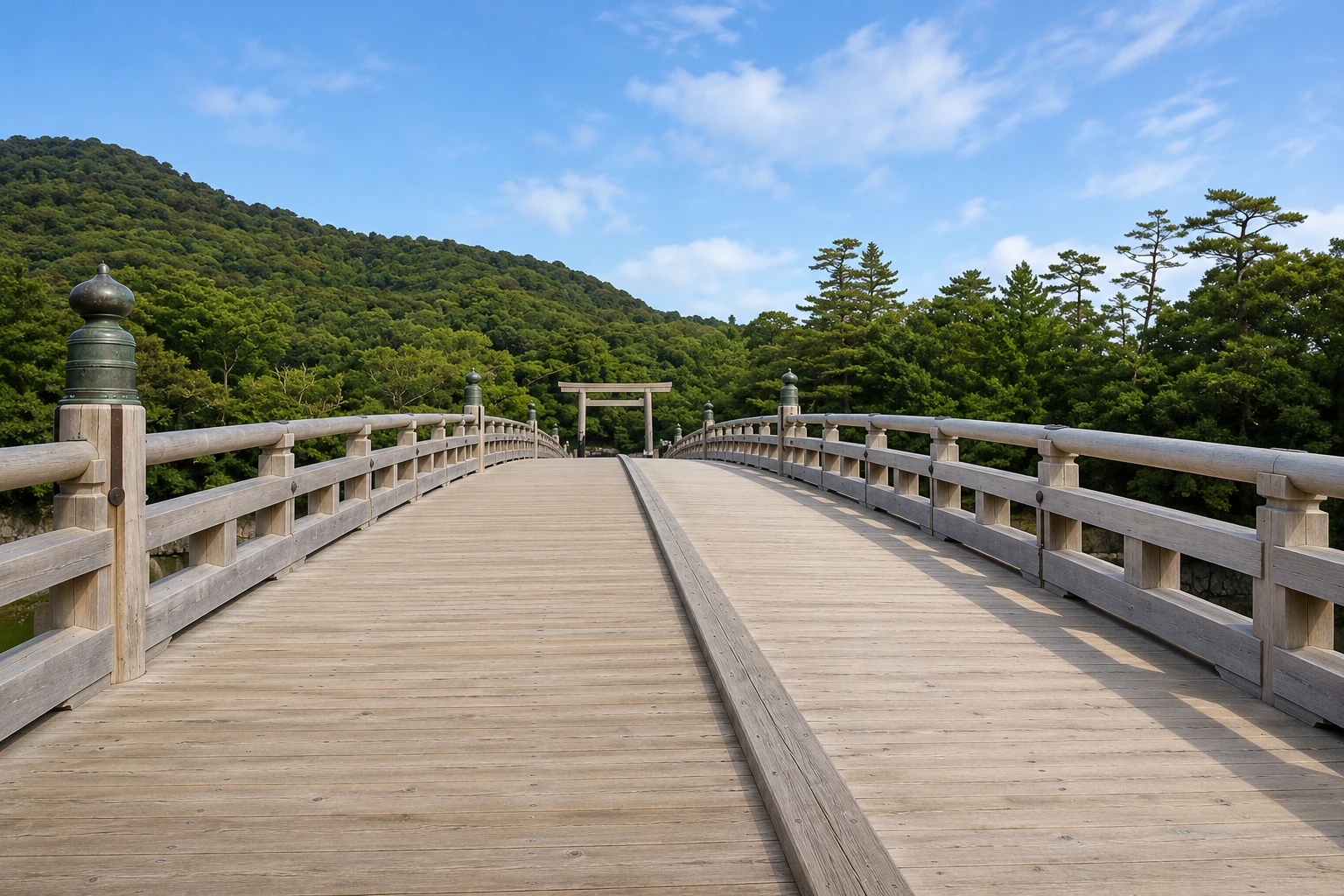
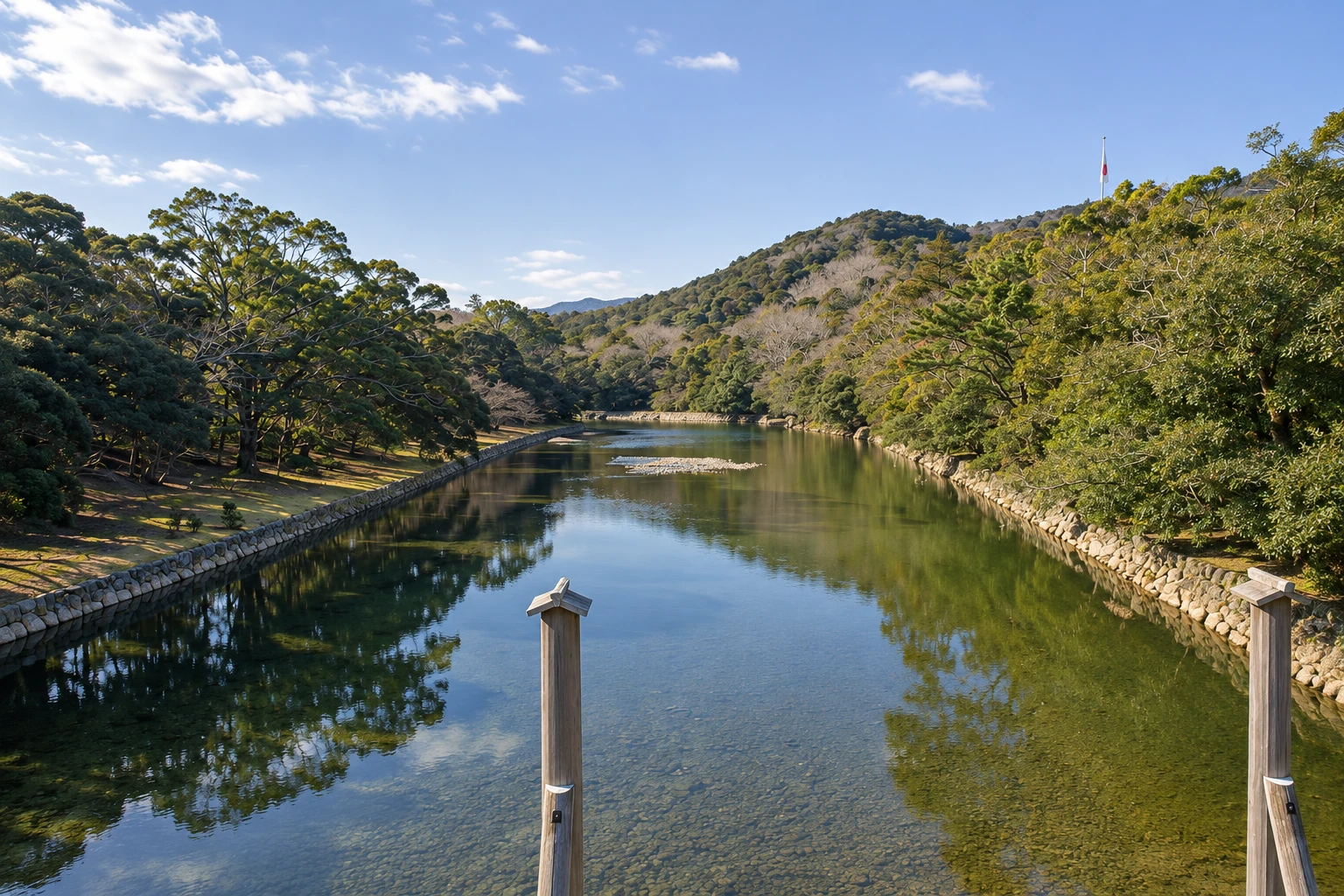
These pictures are illustrations based on the real place, not photographs. They may differ from the place.
Click the picture to enlarge it.
Discover
About Naikū (Inner Ise Shrine)
Naiku, officially called Kotai Jingu, is the Inner Sanctuary of Ise and the most sacred site in Shinto. It is dedicated to Amaterasu-Omikami, the sun goddess traditionally regarded as an ancestor of the imperial family, and is said to house the sacred mirror that forms part of the imperial regalia. No one except priests and the imperial family enters the main precinct.
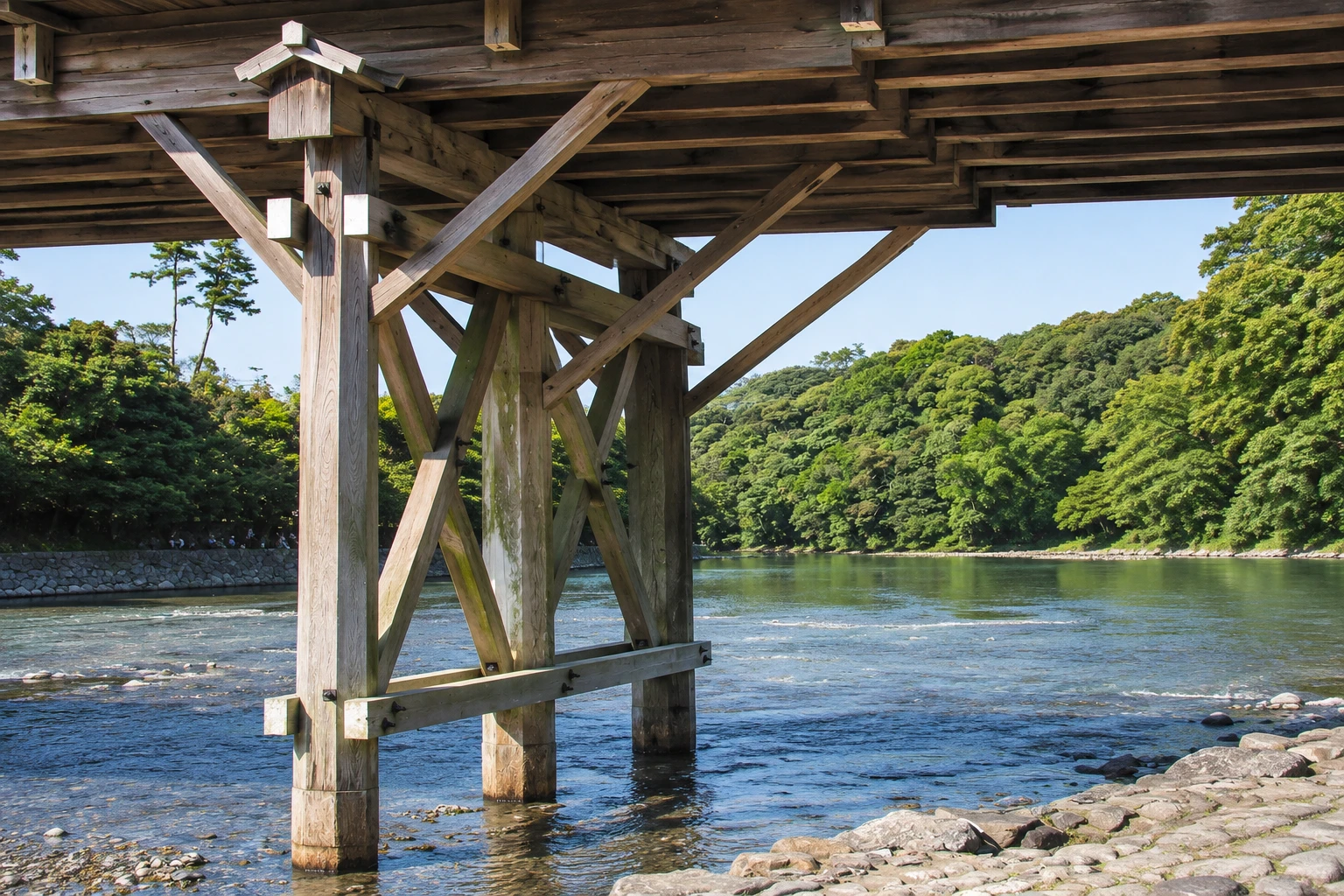
The visit begins at the Uji Bridge, a cypress wood bridge about 100 meters long spanning the Isuzu River, with torii gates at both ends. Beyond it, a gravel path crosses gardens and a forest of huge cedars. On the riverbank, visitors descend stone steps to wash their hands in the water as a purification ritual. The path passes ceremony halls, stables for the sacred horse and smaller shrines.
The main shrine sits atop a stone staircase, behind four wooden fences. From outside you can only see the gate and part of the thatched roof with crossed rafters, in Ise’s characteristic shinmei-zukuri architectural style, without paint or ornamentation. Beside it, the empty lot covered with white stones awaits the next reconstruction: every 20 years the buildings are rebuilt from scratch there in the Shikinen Sengu rite.
Facing the Uji Bridge, Oharai-machi street, about 800 meters long, has wooden houses with shops and restaurants, and the Okage Yokocho recreates the atmosphere of the pilgrim town from the Edo period.
Before you go
Practical information
Cidade Turismo reviews its information regularly, but something may have changed. Check with the place before planning your trip.
How much time to set aside
About 1 hour 30 minutes to 2 hours, plus 1 hour for Oharai-machi.
Best time
Early morning, just after opening, when the forest is silent and there are few groups. New Year and public holidays draw crowds. Shops in Oharai-machi close in the late afternoon.
How to get there
About 6 km from Geku. Buses run from Ise-shi and Ujiyamada stations and from Geku to the Naiku-mae stop in about 15–20 minutes.
Tip
Visit Geku first, as tradition dictates, and arrive at Naiku early. Put your camera away on the steps of the main shrine and save late afternoon for Oharai-machi.
Official website
Get your questions answered
Frequently asked questions about Naikū (Inner Ise Shrine)
What is the difference between Naiku and Geku?
Naiku, the Inner Shrine, is dedicated to Amaterasu, the sun goddess. Geku, the Outer Shrine, is dedicated to Toyouke, the food deity who provides the offerings to Amaterasu. They are about 6 km apart.
Can you enter the main shrine at Naiku?
No. Visitors pray in front of the gate; the inner precinct, behind four fences, is reserved for priests and the imperial family.
Is there an admission fee to enter the Ise shrines?
There is no charge to enter Naiku or Geku.
What is Oharai-machi?
The pilgrims’ street in front of Uji Bridge, lined with wooden houses, shops and restaurants. Next to it, Okage Yokocho recreates an Edo-period town.
Beyond the guide


