

 Brazil
 Antarctica
 Argentina
 Bolivia
 Chile
 Colombia
 Ecuador
 Guyana
 French Guiana
 Falkland Islands (Malvinas)
 Paraguay
 Peru
 Suriname
 Uruguay
 Venezuela
 Germany
 Austria
 Belgium
 Croatia
 Denmark
 Slovakia
 Slovenia
 Spain
 Finland
 France
 Greece
 the Netherlands
 Hungary
 Ireland
 Iceland
 Italy
 Luxembourg
 Norway
 Poland
 Portugal
 the United Kingdom
 the Czech Republic
 Sweden
 Switzerland
 Turkey
 Bermuda
 Canada
 the United States
 Greenland
 Mexico
 Saint Pierre and Miquelon
 the Dominican Republic
 South Africa
 Egypt
 Australia
 Fiji
 New Zealand
 Papua New Guinea
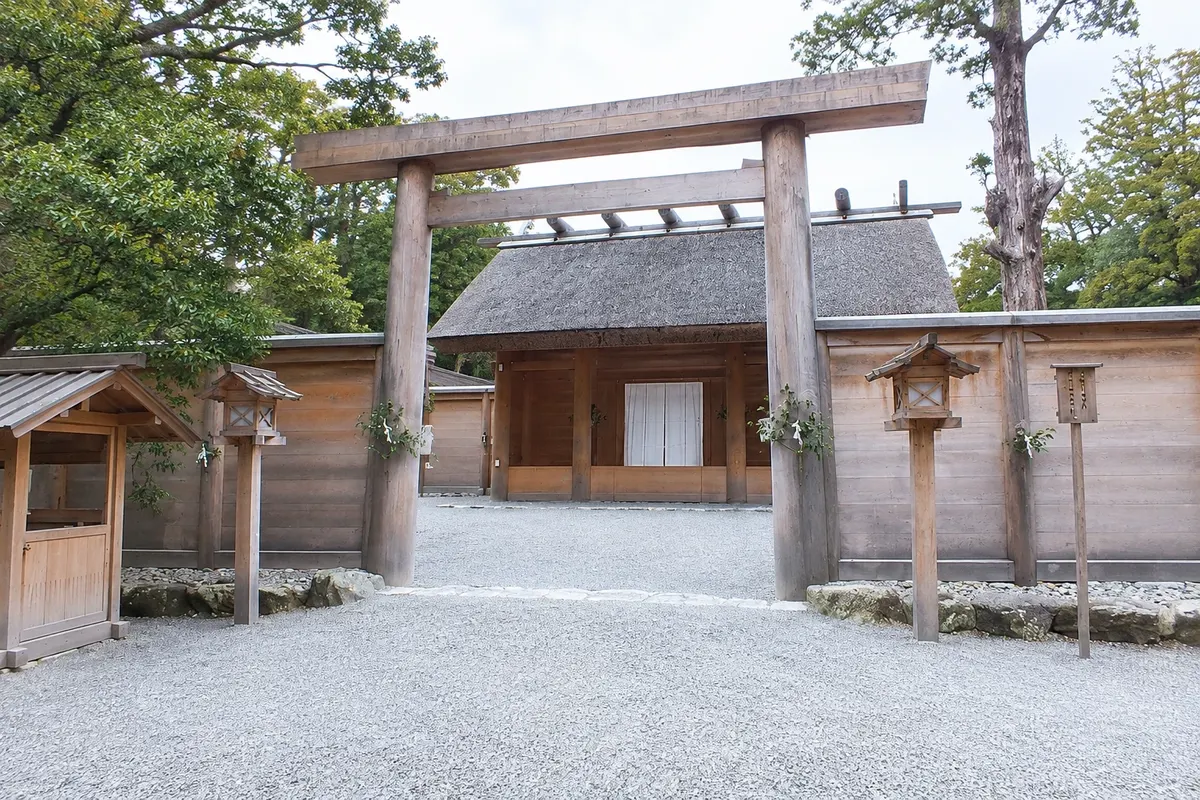
Shrine · Ise, Mie
Gekū (Outer Ise Shrine)
The Outer Shrine of Ise Jingu, dedicated to the goddess Toyouke, who provides the offerings to Amaterasu, set in a forest near Ise-shi station. Next door, the Sengukan museum explains the reconstruction ritual held every 20 years.
Illustrative images. The pictures in this guide are illustrations based on the real place, not photographs, and may differ from it.

A look at the place
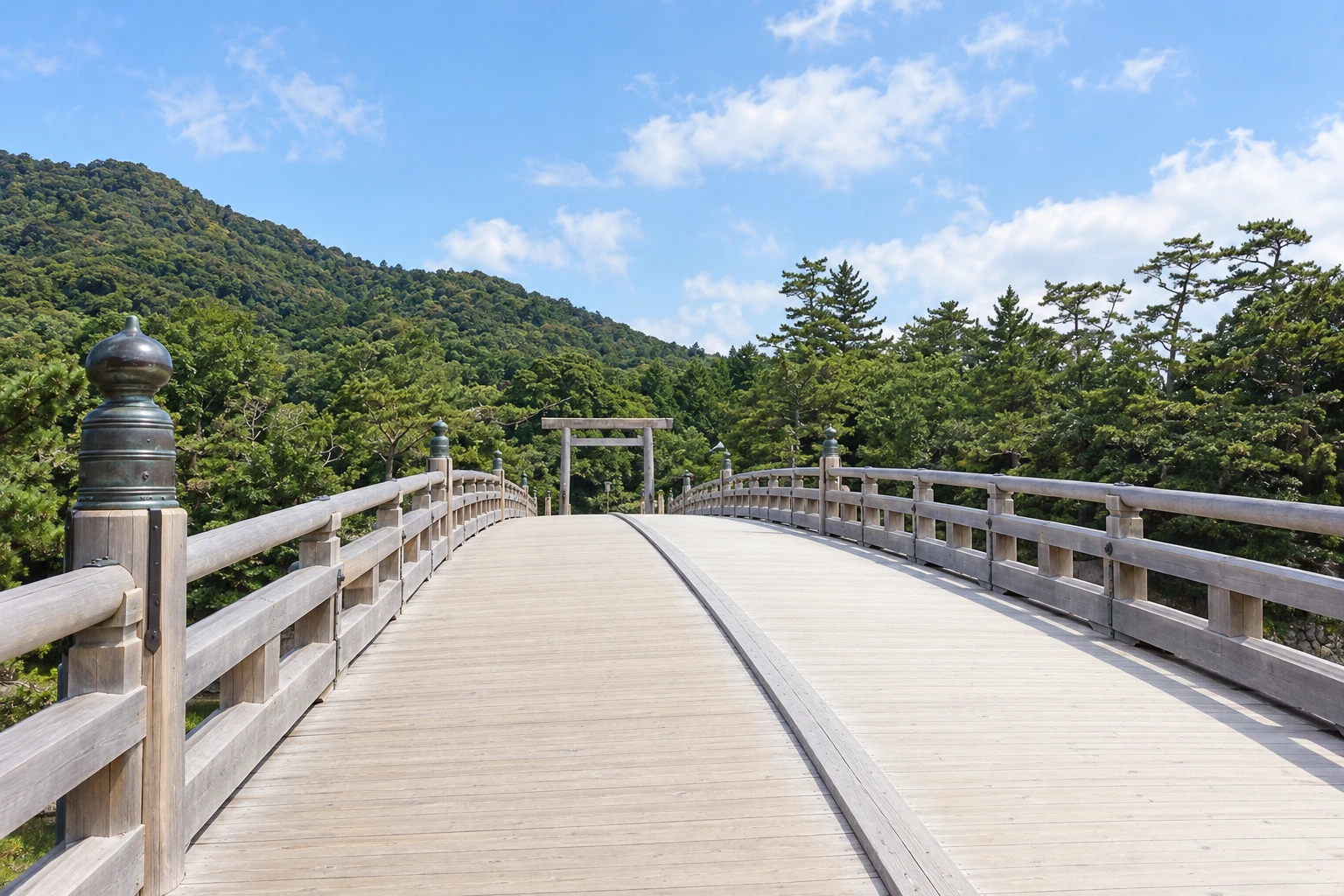
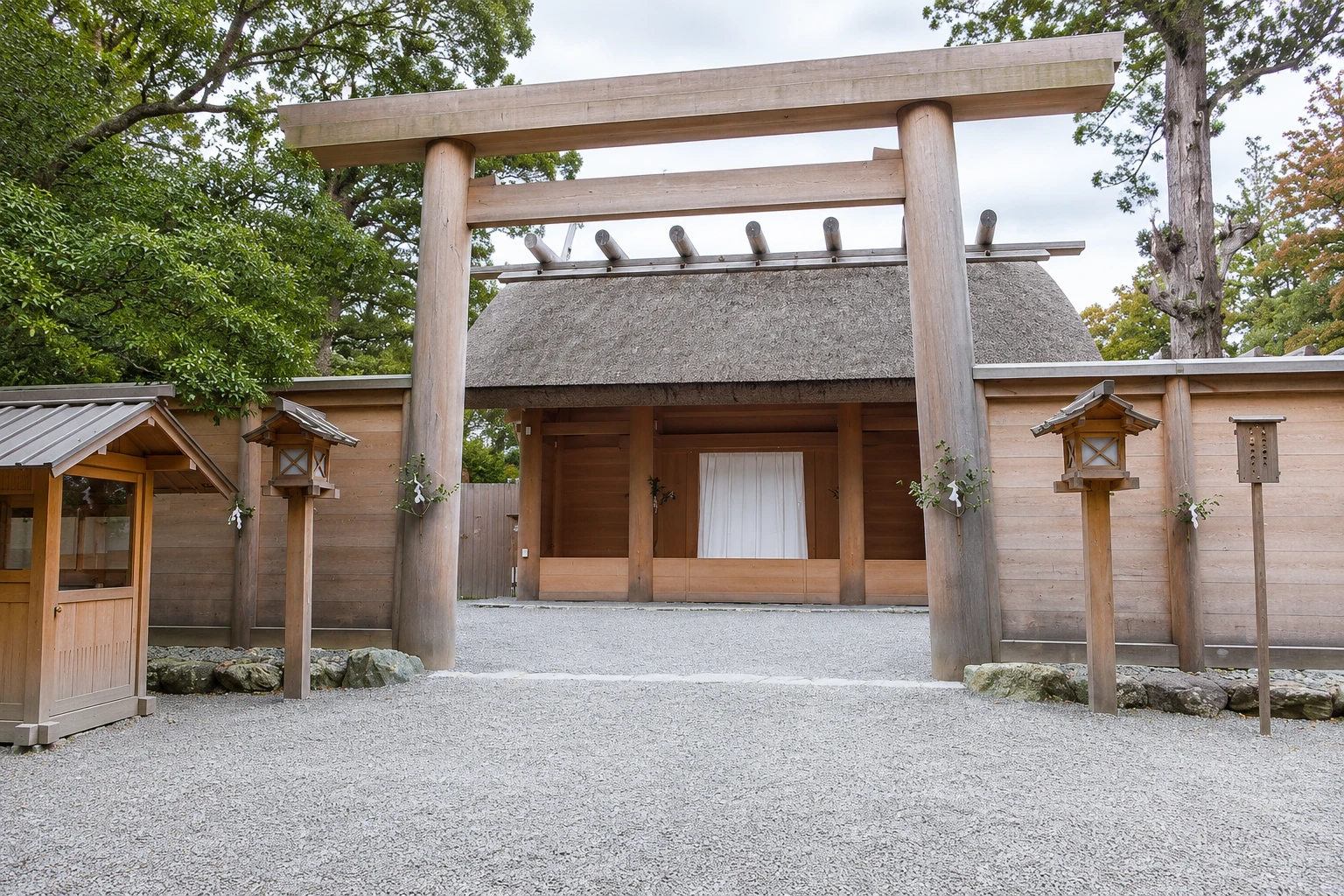
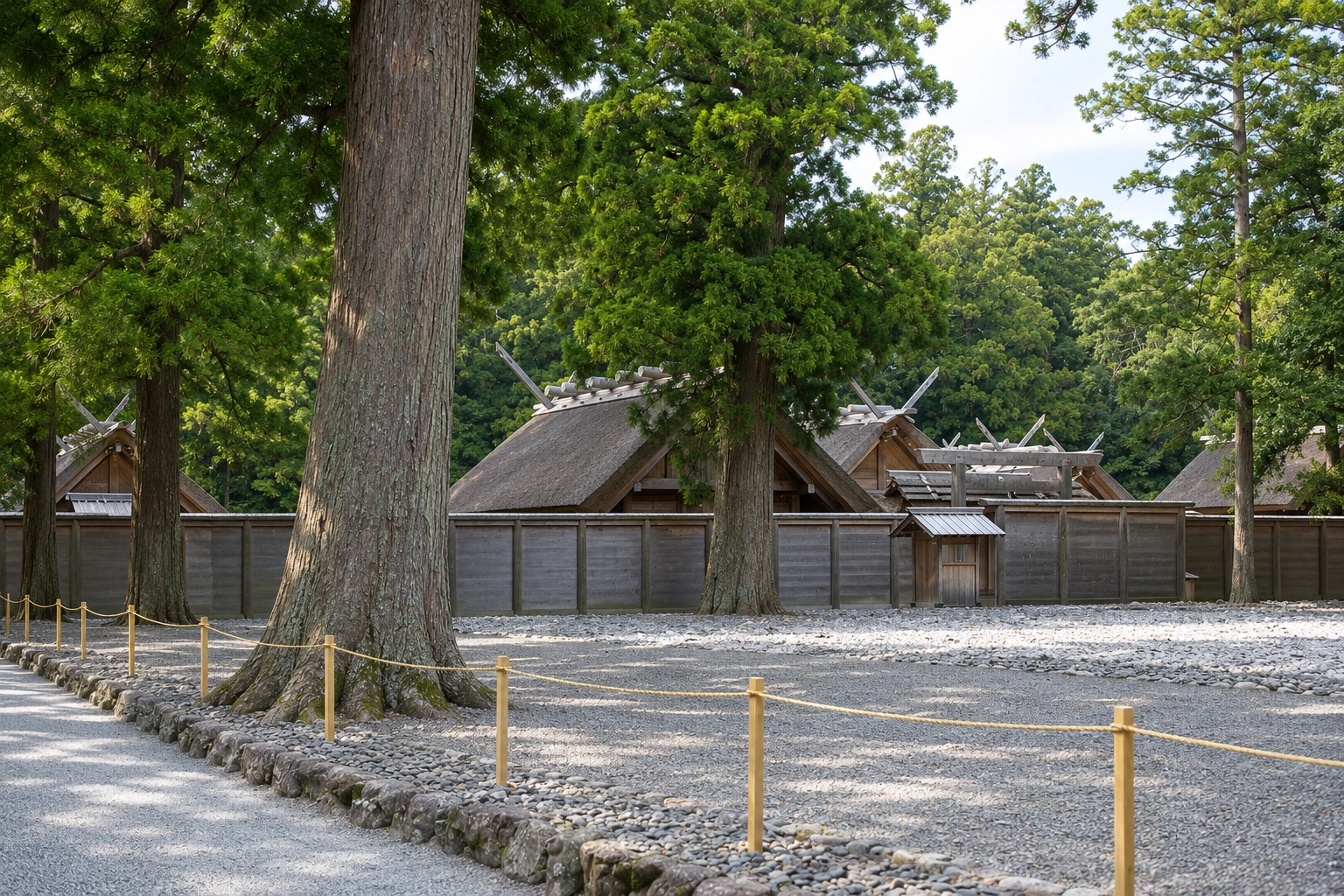
Gekū (Outer Ise Shrine) in pictures
These pictures are illustrations based on the real place, not photographs. They may differ from the place.
Click the picture to enlarge it.
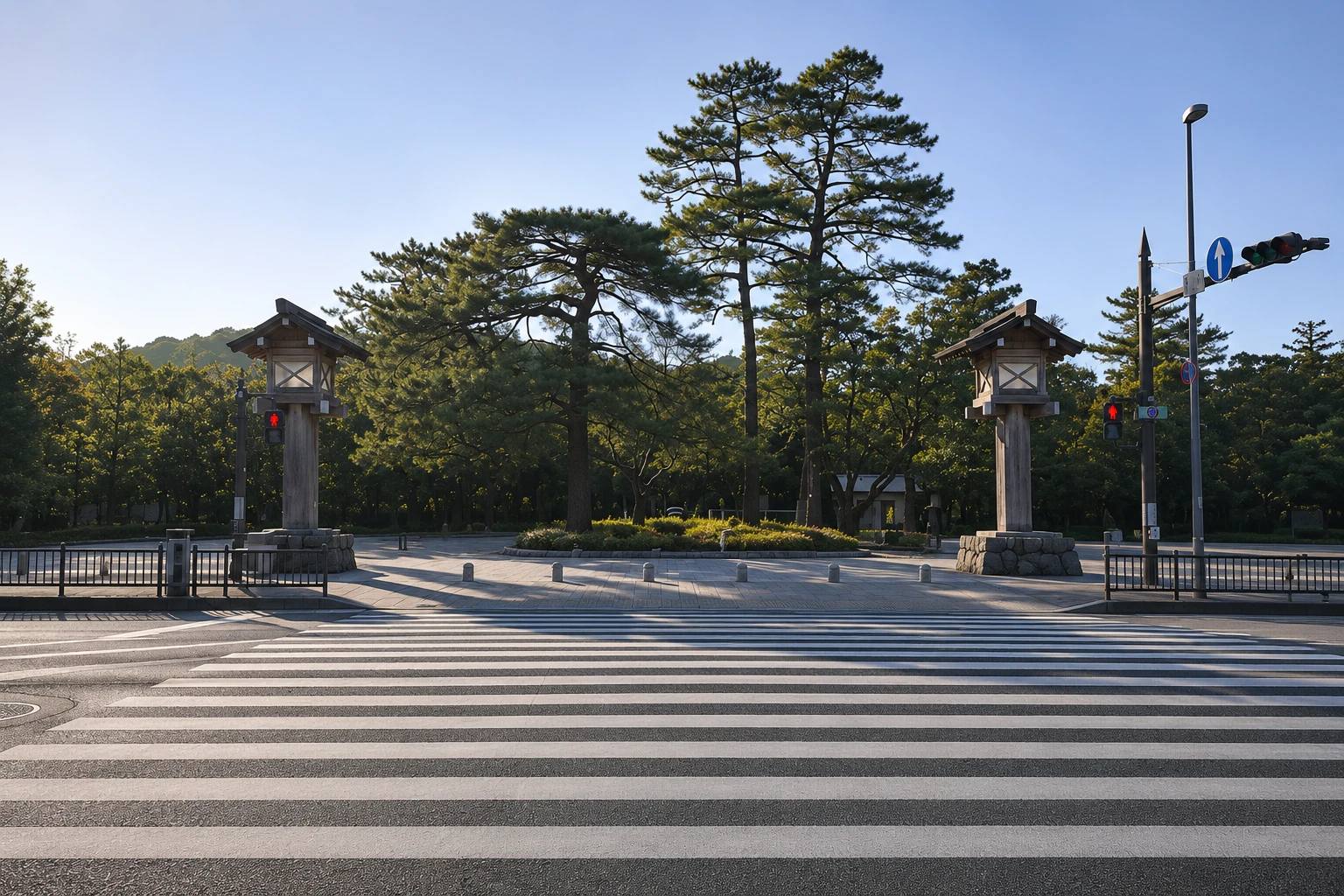
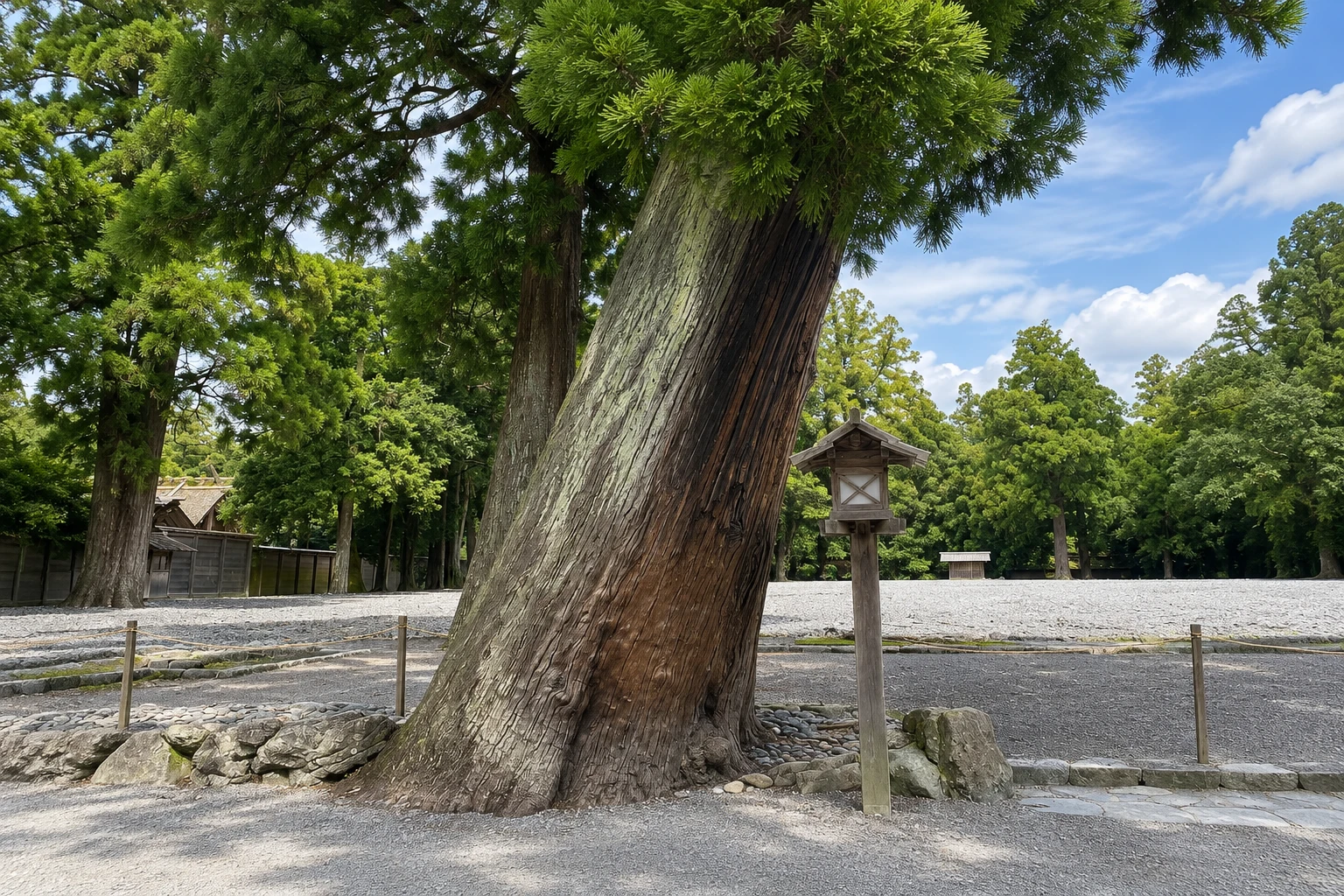
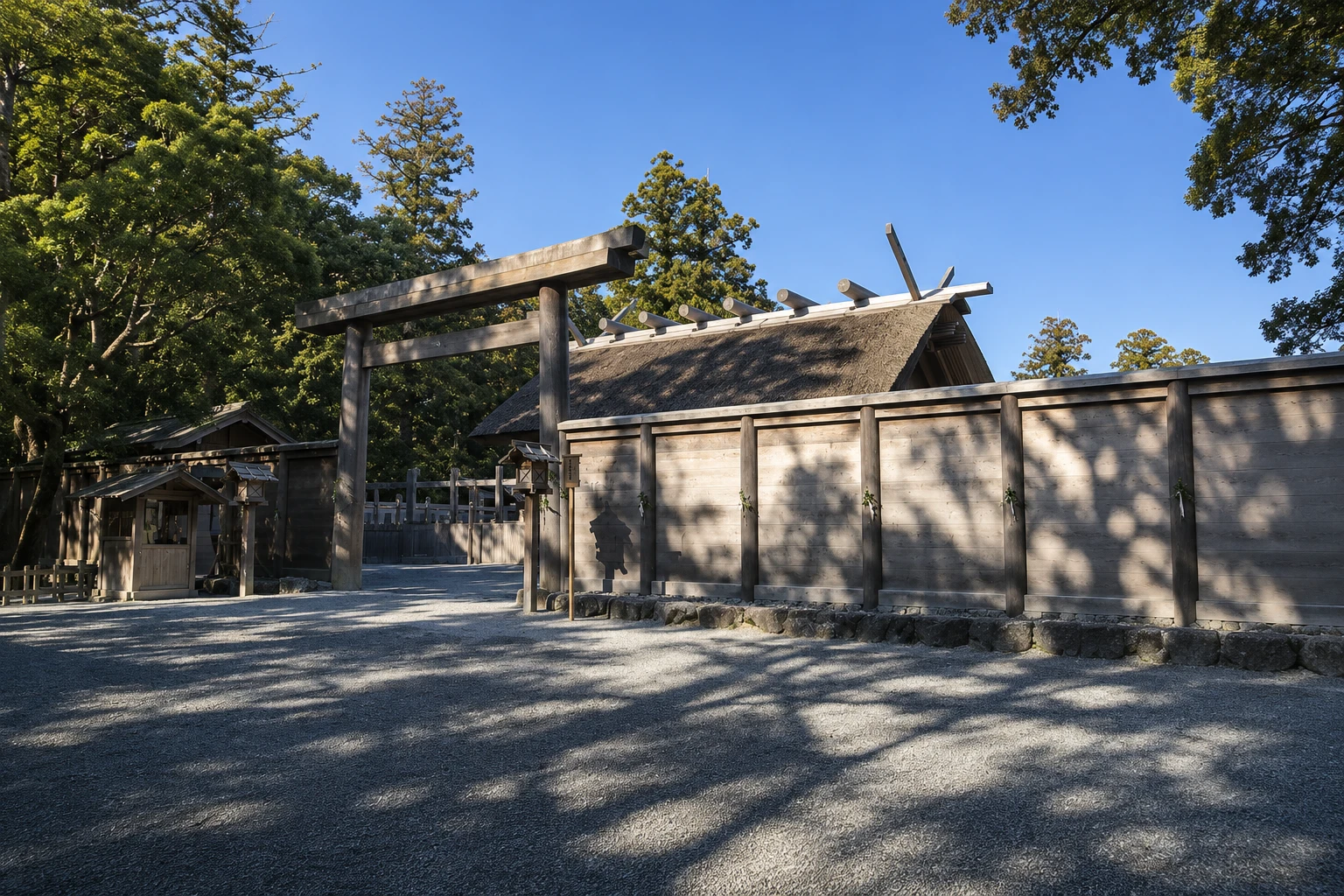
Discover
About Gekū (Outer Ise Shrine)
Geku, officially called Toyouke Daijingu, is the Outer Sanctuary of Ise. It is dedicated to Toyouke-Omikami, deity of food, clothing and housing, who, according to tradition, was brought to Ise about 1,500 years ago to prepare meals for Amaterasu. To this day, twice daily the priests prepare food offerings for the deities in a continuous ritual.
Tradition requires visiting Geku before Naiku. The approach starts a few minutes from Ise-shi station, crosses a bridge over a moat and follows a grove of cedars and camphor trees to the main shrine, built in the same unpainted cypress style with a thatched roof as Naiku. Here too the adjacent plot awaits the next reconstruction.
At the back of the precinct, stairways lead up the slope to three subsidiary shrines, including Takanomiya, dedicated to Toyouke’s active spirit. Geku is usually quieter than Naiku and takes about an hour.
At the entrance, the Sengukan museum displays the Shikinen Sengu: a life-size reproduction of part of the main shrine, the carpentry techniques and the sacred objects remade each cycle, such as textiles, weapons and utensils.
Before you go
Practical information
Cidade Turismo reviews its information regularly, but something may have changed. Check with the place before planning your trip.
How much time to set aside
About 1 hour; plus 1 hour for the Sengukan museum.
Best time
In the morning, before heading to Naiku. Check Sengukan museum closure days before you go.
How to get there
About a 5–10 minute walk from Ise-shi station via the street that leads from the south exit.
Tip
Start here in the morning and take a bus to Naiku. Keep to the left side of the path on the approach, as signs indicate, and do not photograph in front of the main shrine.
Official website
Get your questions answered
Frequently asked questions about Gekū (Outer Ise Shrine)
Why do people visit Geku before Naiku?
It is the traditional pilgrimage order, because the deity of Geku provides the offerings to Amaterasu, worshiped at Naiku.
What does the Sengukan museum show?
The ritual of Shikinen Sengu, including life-size reproductions of parts of the shrine, construction techniques and sacred objects remade every 20 years.
Is Geku near Ise-shi Station?
Yes, about a 5–10 minute walk.
Is there a fee to enter Geku?
The shrine does not charge admission. The Sengukan museum has a separate fee.
Beyond the guide


