

 Brazil
 Antarctica
 Argentina
 Bolivia
 Chile
 Colombia
 Ecuador
 Guyana
 French Guiana
 Falkland Islands (Malvinas)
 Paraguay
 Peru
 Suriname
 Uruguay
 Venezuela
 Germany
 Austria
 Belgium
 Croatia
 Denmark
 Slovakia
 Slovenia
 Spain
 Finland
 France
 Greece
 the Netherlands
 Hungary
 Ireland
 Iceland
 Italy
 Luxembourg
 Norway
 Poland
 Portugal
 the United Kingdom
 the Czech Republic
 Sweden
 Switzerland
 Turkey
 Bermuda
 Canada
 the United States
 Greenland
 Mexico
 Saint Pierre and Miquelon
 the Dominican Republic
 South Africa
 Egypt
 Australia
 Fiji
 New Zealand
 Papua New Guinea
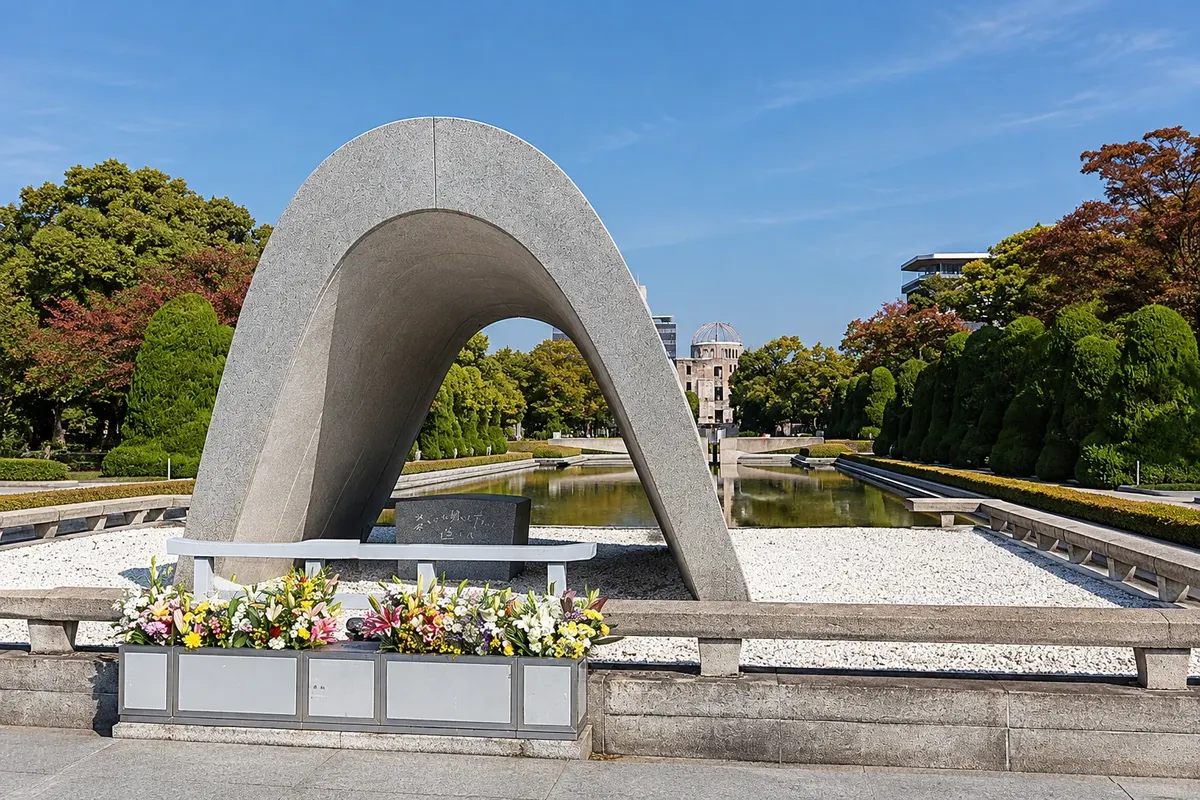
Park · Hiroshima, Hiroshima
Hiroshima Peace Memorial Park
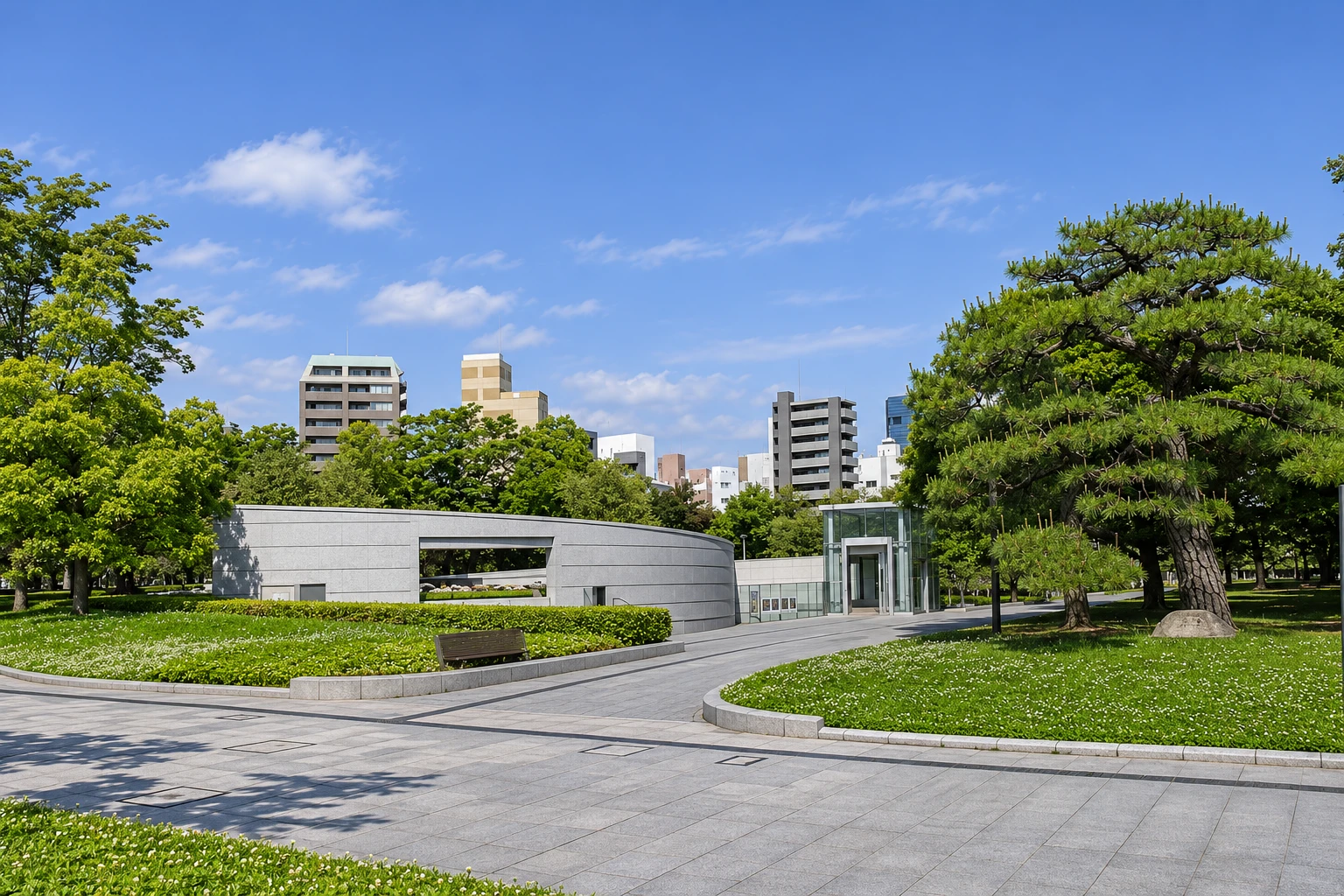
The park in Hiroshima’s former city center, near the bomb’s hypocenter, with the cenotaph, the flame of peace, the Children’s Monument and the museum.
Illustrative images. The pictures in this guide are illustrations based on the real place, not photographs, and may differ from it.

A look at the place
Hiroshima Peace Memorial Park in pictures
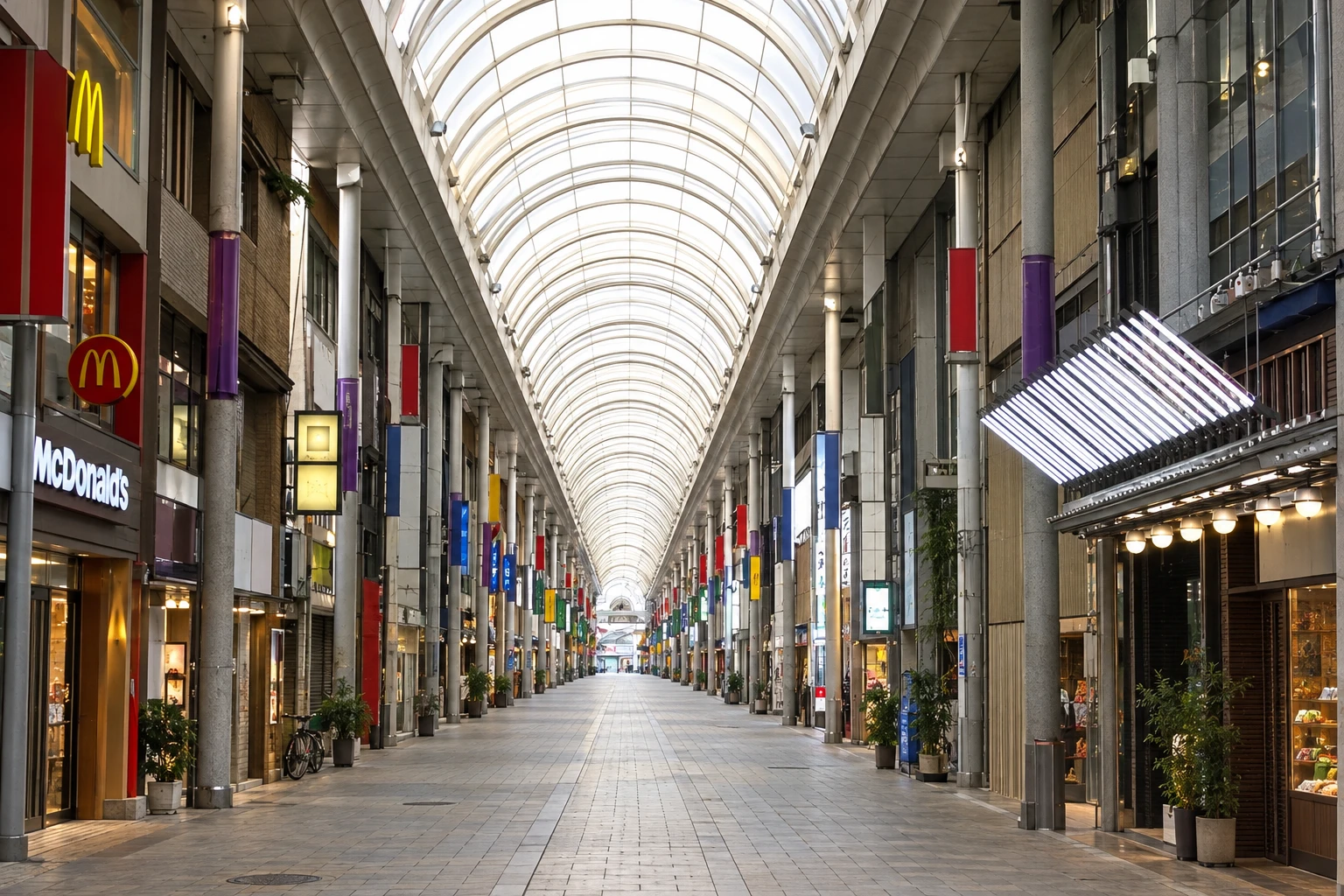
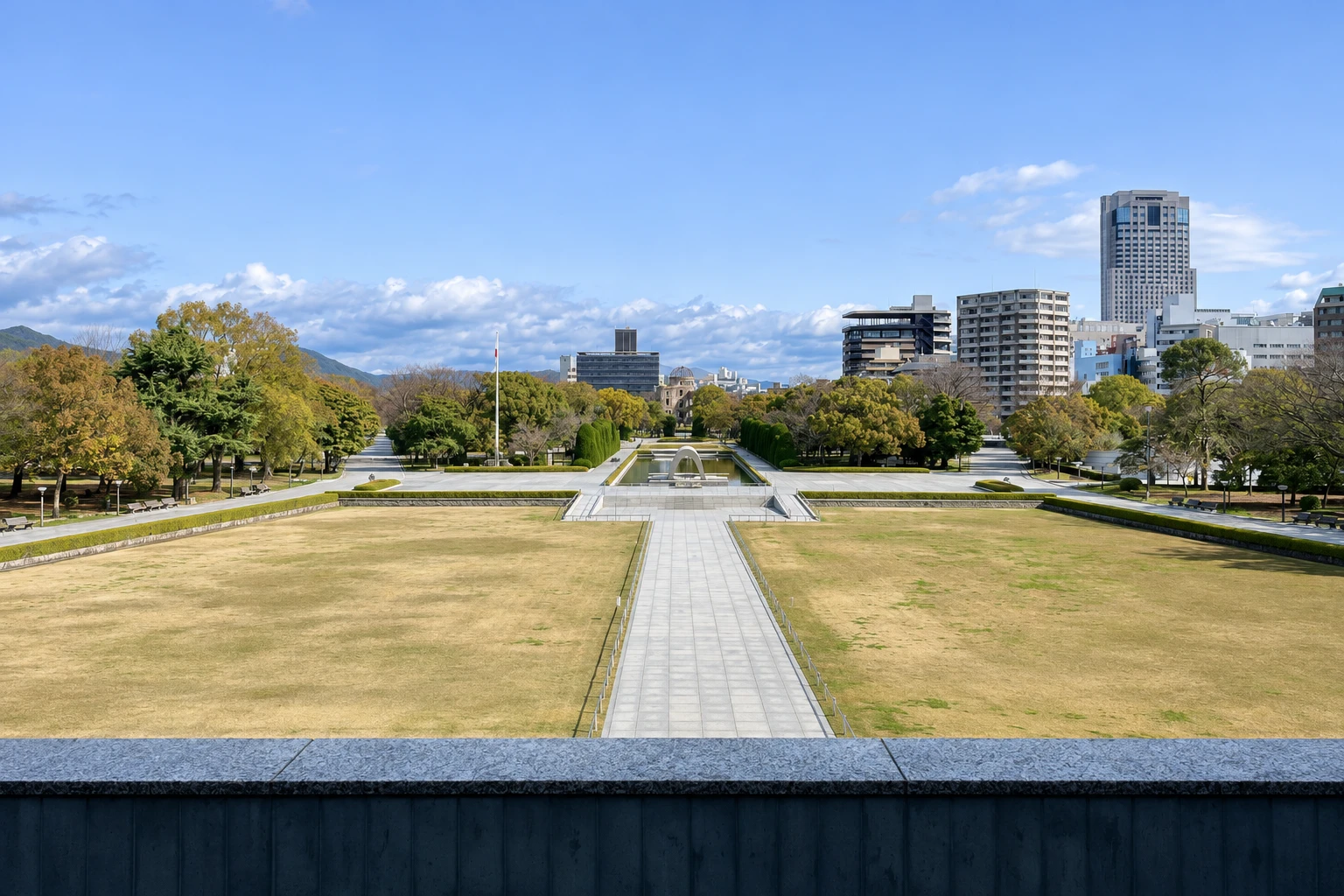
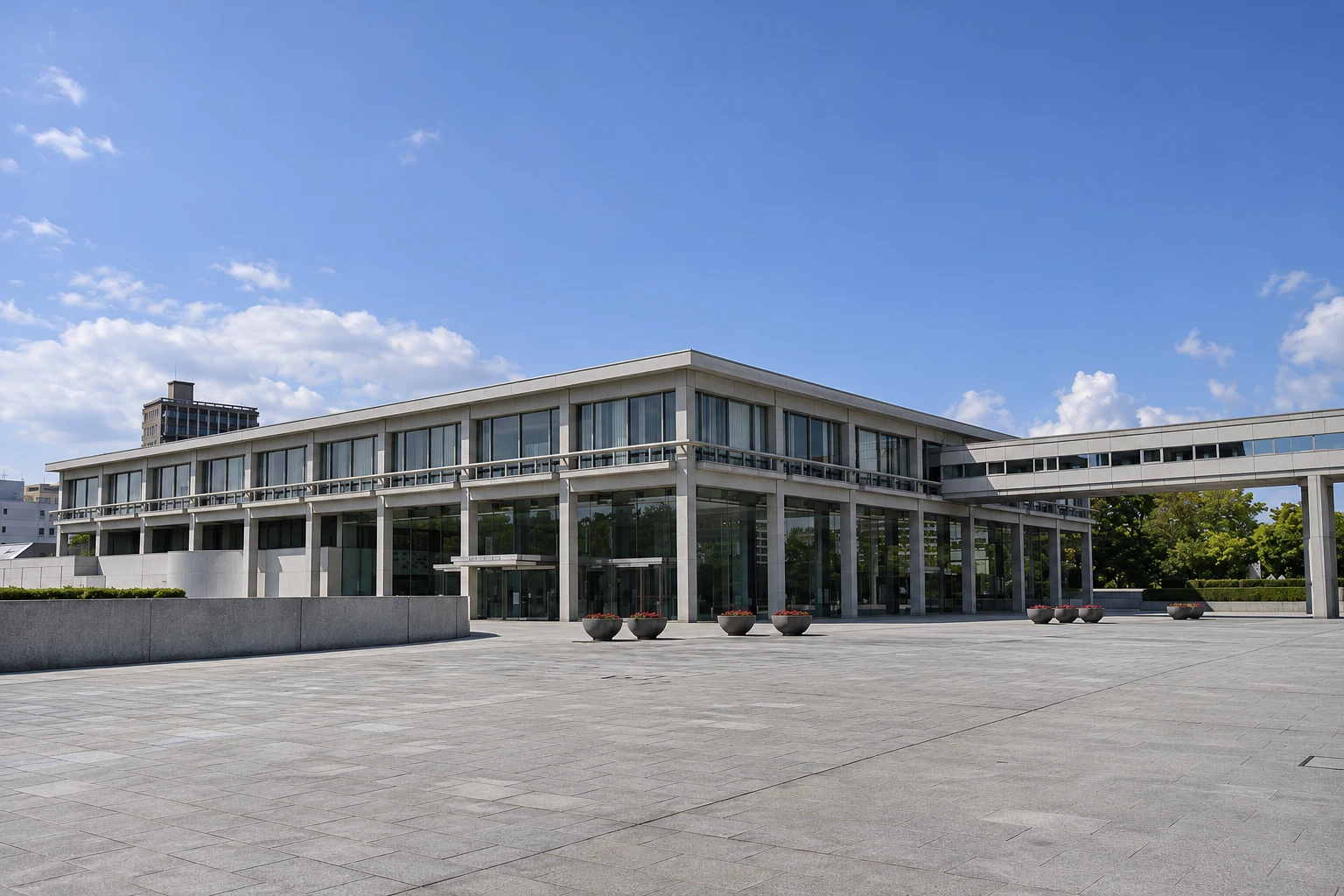
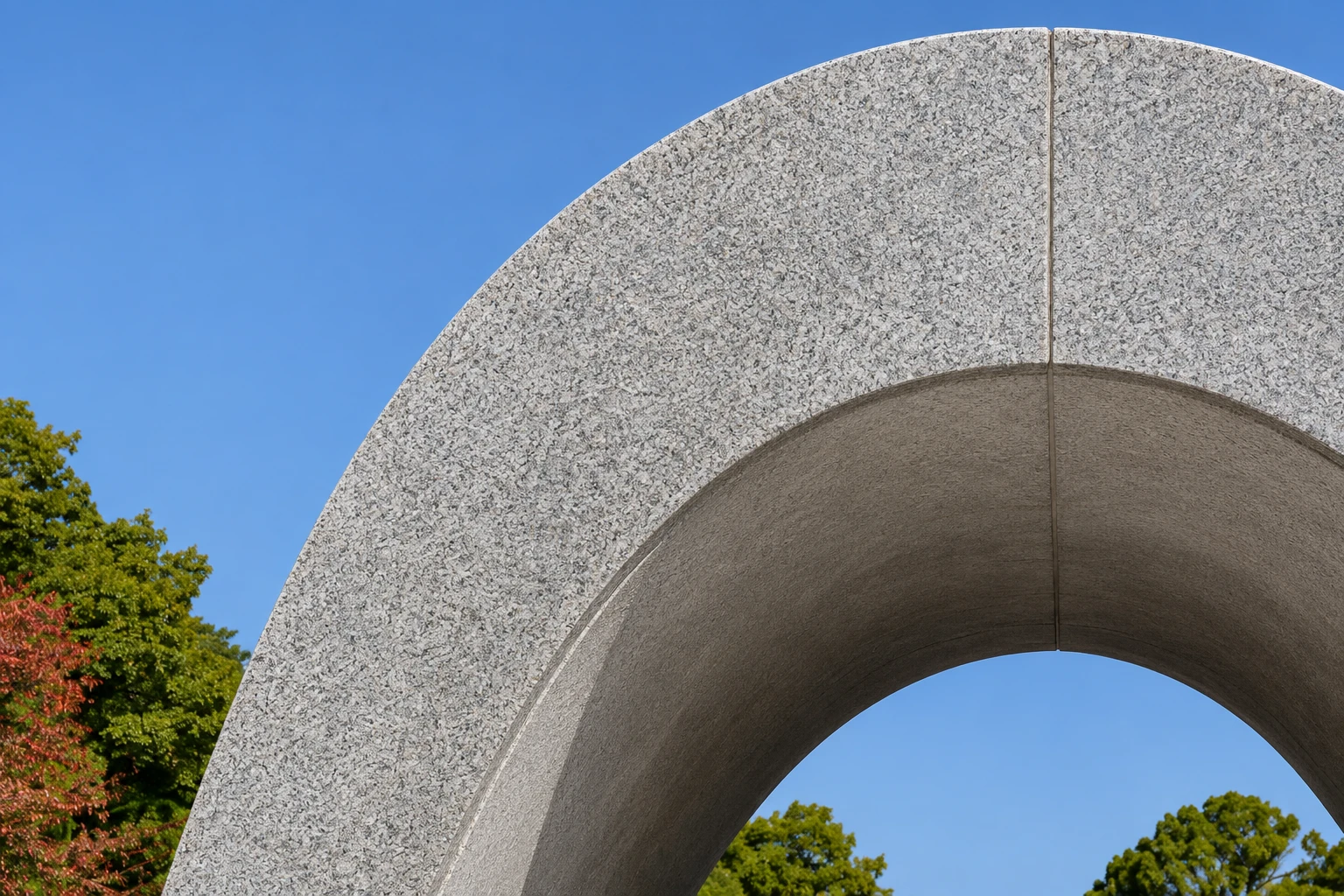
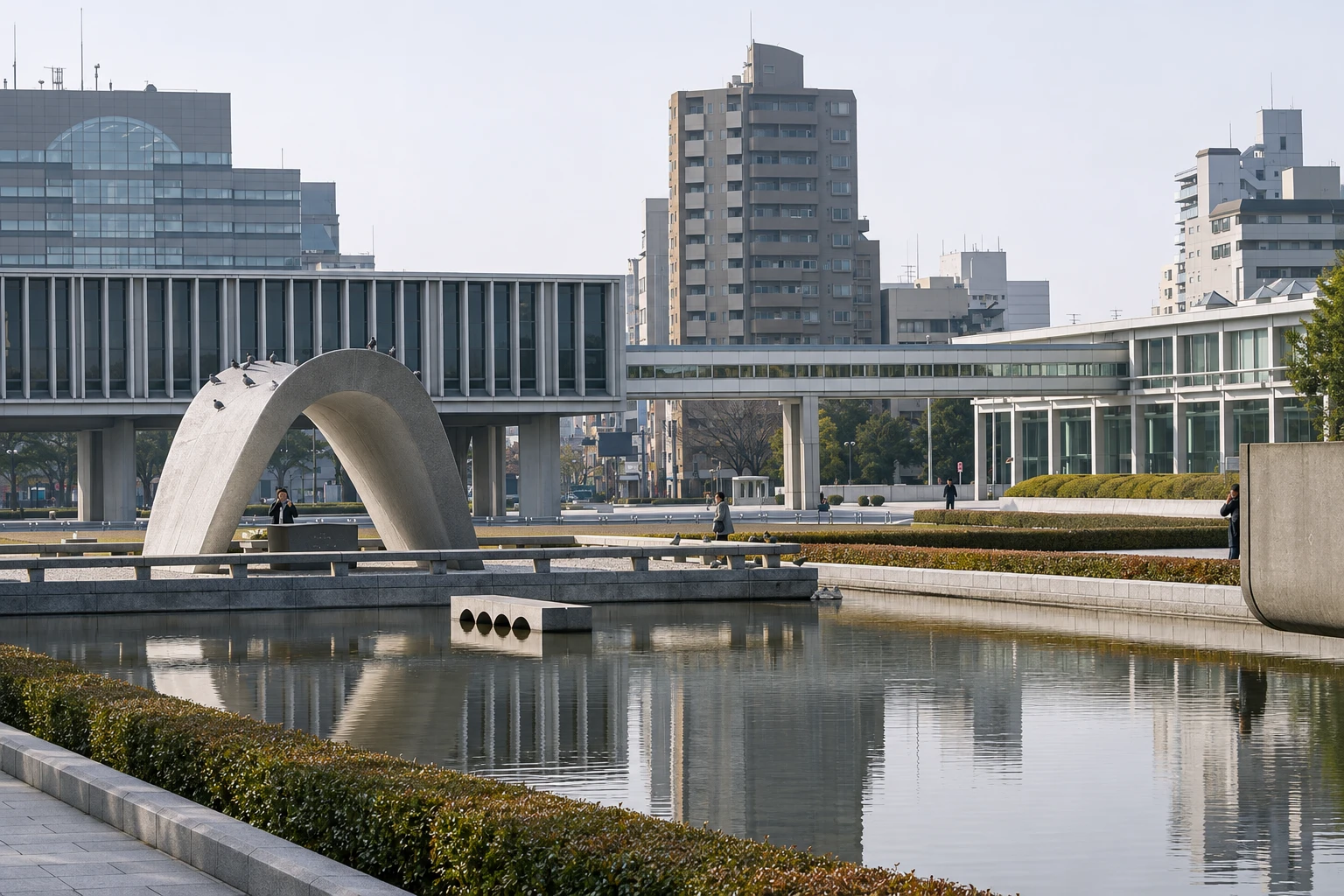
These pictures are illustrations based on the real place, not photographs. They may differ from the place.
Click the picture to enlarge it.
Discover
About Hiroshima Peace Memorial Park
The Peace Memorial Park (Heiwa Kinen Koen) occupies the northern tip of Nakajima Island, between the Motoyasu and Ota rivers. Before 1945 it was one of the city’s busiest commercial districts. The explosion of the atomic bomb, a few hundred meters away, destroyed everything, and the area was transformed into a park dedicated to the memory of the victims and to peace.
The project was designed by architect Kenzo Tange. An axis runs straight through the park: from the museum it passes the cenotaph, an arch-shaped monument that holds the names of the victims, continues by the Flame of Peace, lit in 1964 and meant to remain burning until nuclear weapons are abolished, and ends, on the other side of the river, at the Atomic Bomb Dome, framed by the arch.
There are dozens of monuments across the park. The Children’s Peace Monument commemorates Sadako Sasaki, a girl who fell ill after the bomb and folded paper cranes; visitors from around the world still send thousands of colorful cranes, displayed in glass cases nearby. There is also the Peace Bell, which visitors can ring, the Memorial Mound, which holds ashes of unidentified victims, and the underground National Peace Memorial Hall, with names and photographs.
Every year on August 6 the park hosts a morning ceremony in memory of the victims, and at night paper lanterns are floated on the Motoyasu River. On other days the park is a place for walks and quiet, with trees, lawns and benches by the river.
Before you go
Practical information
Cidade Turismo reviews its information regularly, but something may have changed. Check with the place before planning your trip.
How much time to set aside
From 1 to 1.5 hours to walk through the park and monuments; half a day including the museum.
Best time
In the morning, before school groups arrive, or late afternoon. The park does not close, and the monuments are illuminated at night. On August 6 the ceremony draws crowds and parts of the park have controlled access.
How to get there
Trams leaving Hiroshima Station stop at Genbaku Dome-mae, at the park’s northern tip, in about 15 minutes; some lines also stop at Chuden-mae, near the museum. Check the line number at the stop. The sightseeing loop bus also stops at the park.
Tip
Walk the park’s axis starting from the museum and stop at the cenotaph: from there the Dome appears framed by the arch, above the Flame of Peace. Visitors often bring paper cranes to leave at the Children’s Peace Monument.
Official website
Get your questions answered
Frequently asked questions about Hiroshima Peace Memorial Park
Is there an entrance fee for the Peace Memorial Park?
There is no charge to enter the park or the monuments. The museum has an admission fee.
What to see in Hiroshima Peace Memorial Park?
The cenotaph, the Flame of Peace, the Children’s Peace Monument, the Peace Bell, the National Peace Memorial Hall, the museum and, across the river, the Atomic Bomb Dome.
How to get to the Peace Memorial Park?
By tram, from Hiroshima Station to Genbaku Dome-mae or Chuden-mae, in about 15 minutes.
What happens in Hiroshima on August 6?
A morning ceremony commemorating the victims of the atomic bomb in the park, and at night paper lanterns are floated on the Motoyasu River.
What is the story of the paper cranes of Hiroshima?
Sadako Sasaki was a girl who became ill after the bombing and folded paper cranes during her treatment. The Children’s Peace Monument honors her, and thousands of cranes sent from around the world are displayed beside it.
Beyond the guide


