

 Brazil
 Antarctica
 Argentina
 Bolivia
 Chile
 Colombia
 Ecuador
 Guyana
 French Guiana
 Falkland Islands (Malvinas)
 Paraguay
 Peru
 Suriname
 Uruguay
 Venezuela
 Germany
 Austria
 Belgium
 Croatia
 Denmark
 Slovakia
 Slovenia
 Spain
 Finland
 France
 Greece
 the Netherlands
 Hungary
 Ireland
 Iceland
 Italy
 Luxembourg
 Norway
 Poland
 Portugal
 the United Kingdom
 the Czech Republic
 Sweden
 Switzerland
 Turkey
 Bermuda
 Canada
 the United States
 Greenland
 Mexico
 Saint Pierre and Miquelon
 the Dominican Republic
 South Africa
 Egypt
 Australia
 Fiji
 New Zealand
 Papua New Guinea
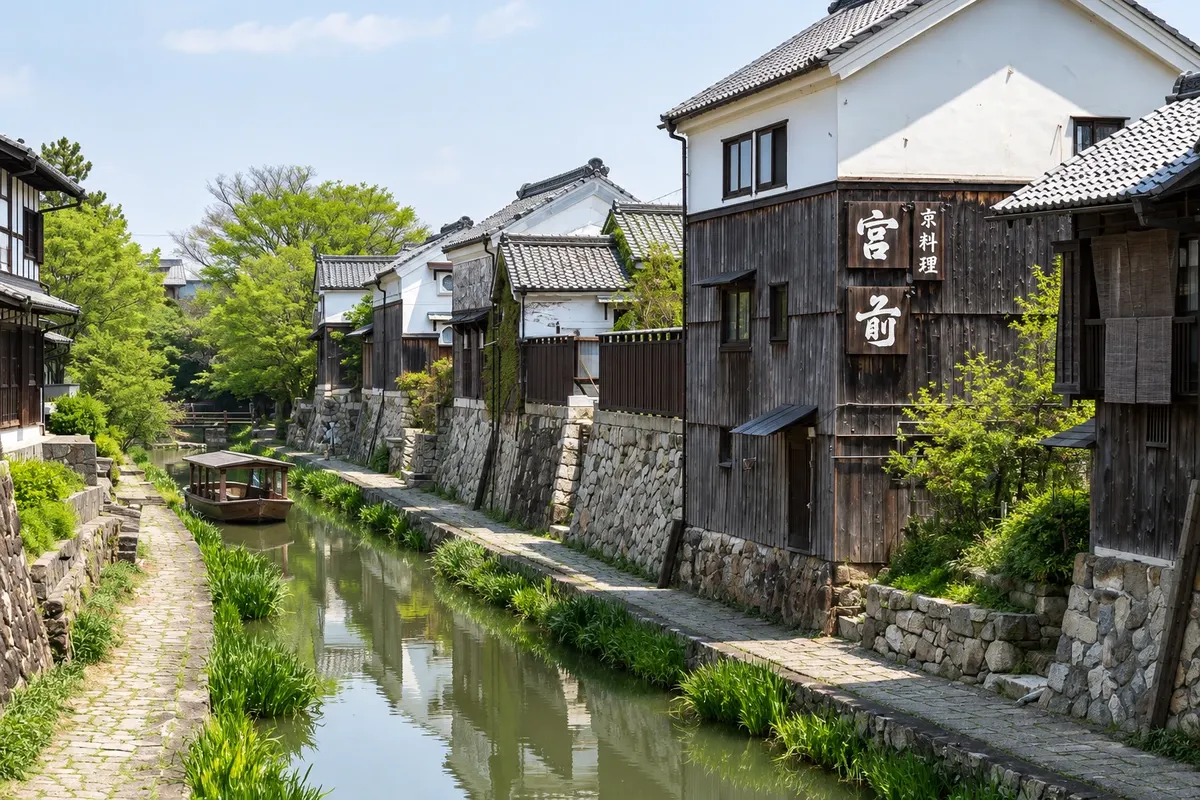
Historic center · Omihachiman, Shiga
Hachiman-bori Canal
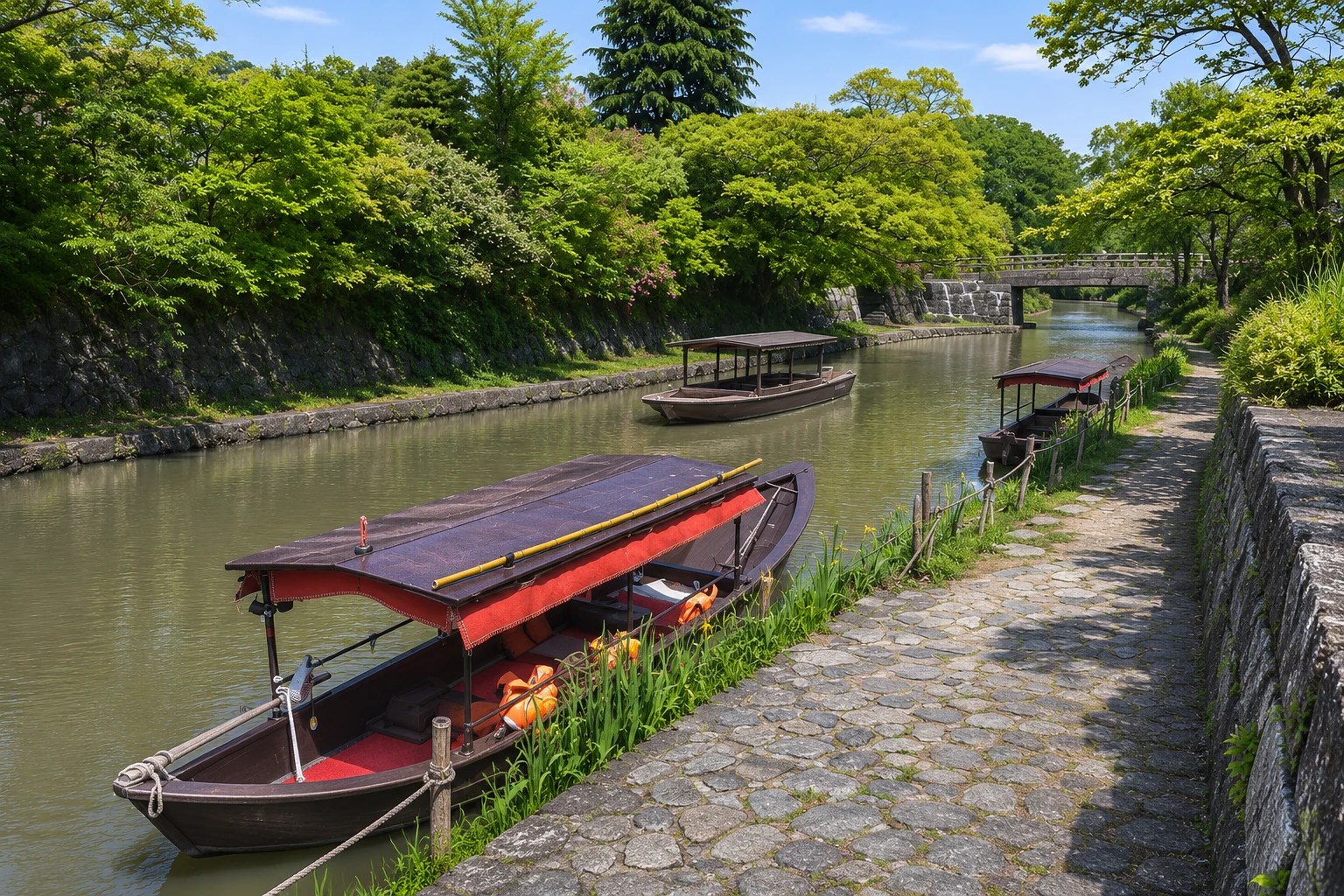
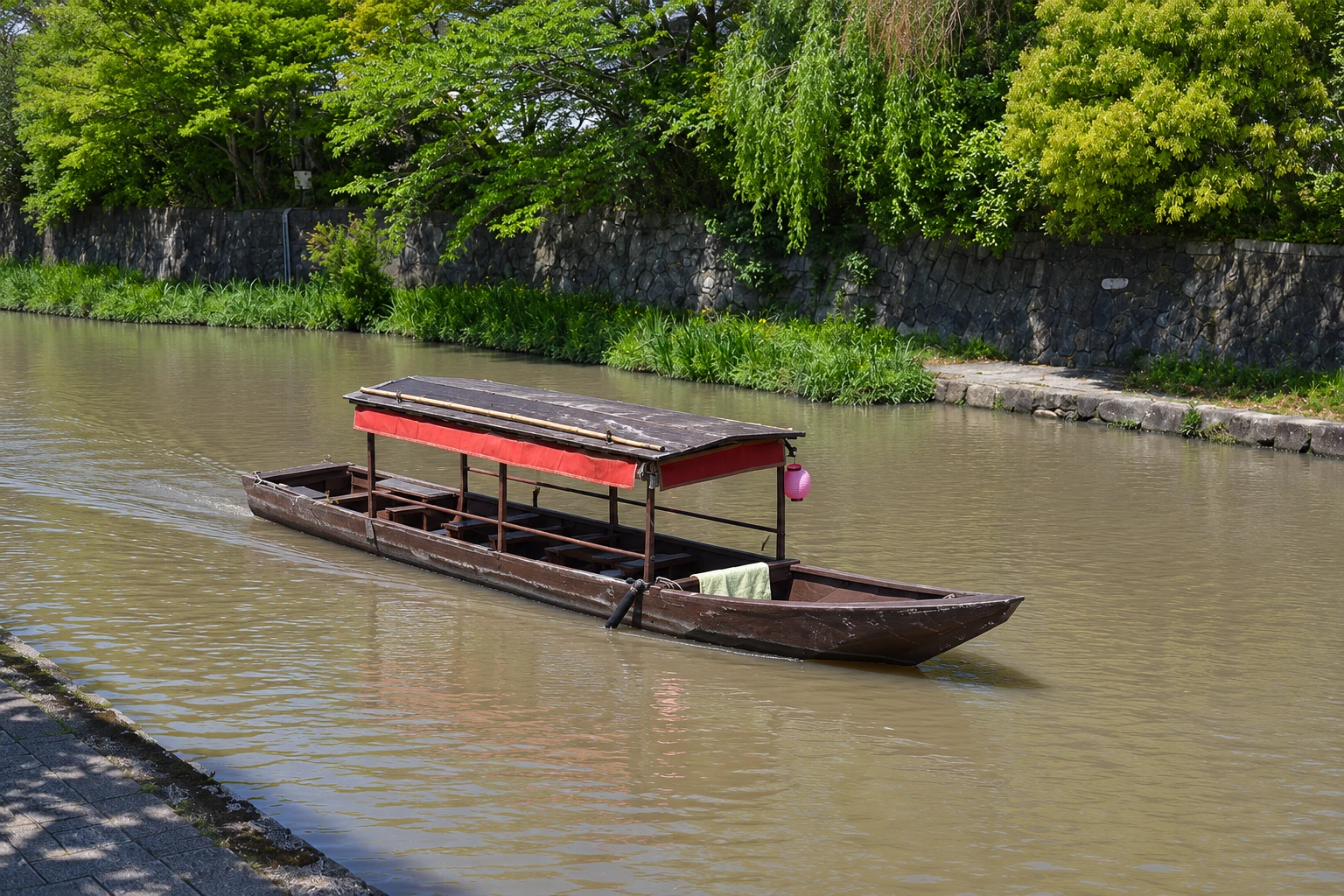
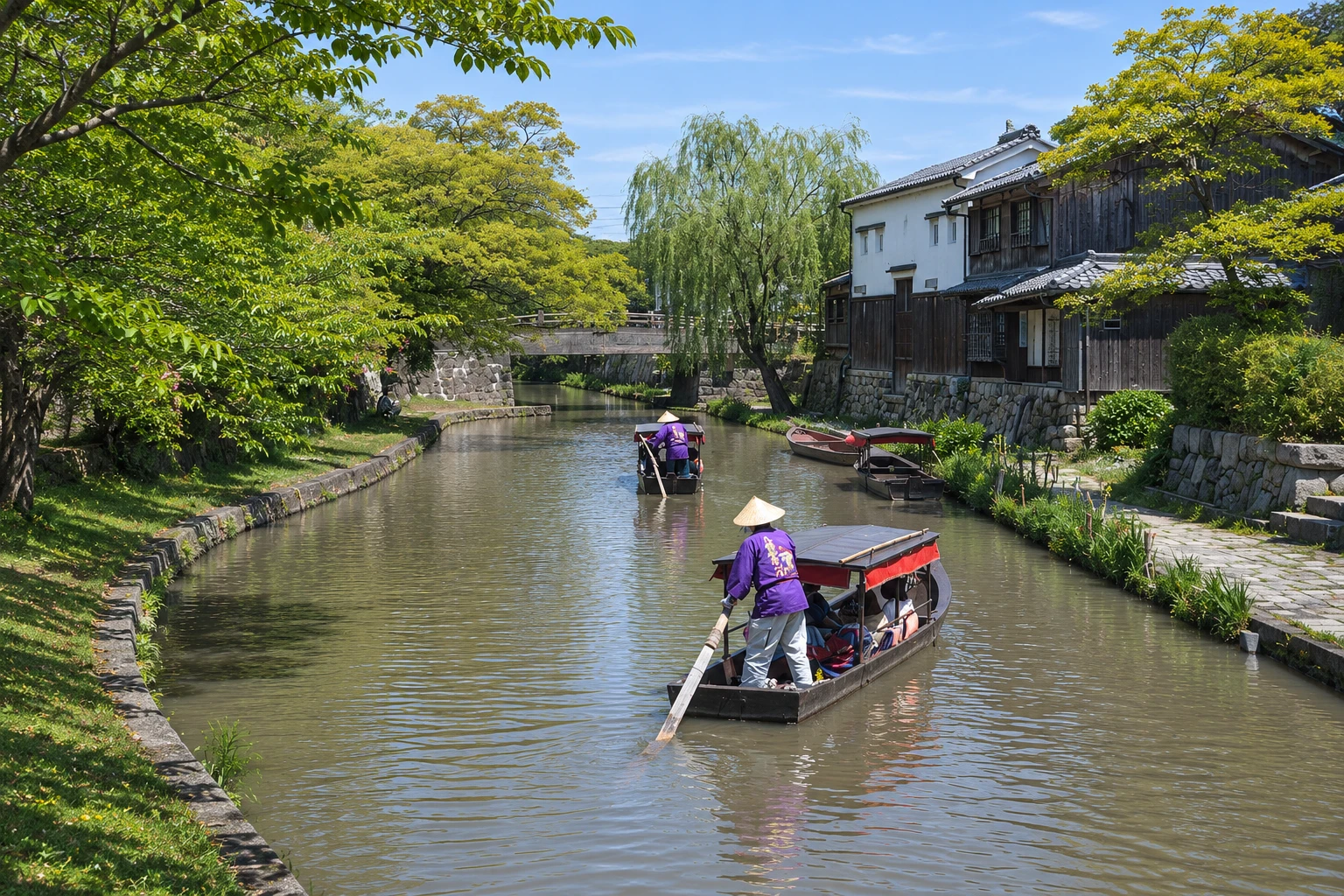
16th-century canal that connected Lake Biwa to Omihachiman’s center, lined with white-walled storehouses and willows, beside the preserved Omi merchants’ quarter and Himure Hachimangu shrine.
Illustrative images. The pictures in this guide are illustrations based on the real place, not photographs, and may differ from it.

A look at the place
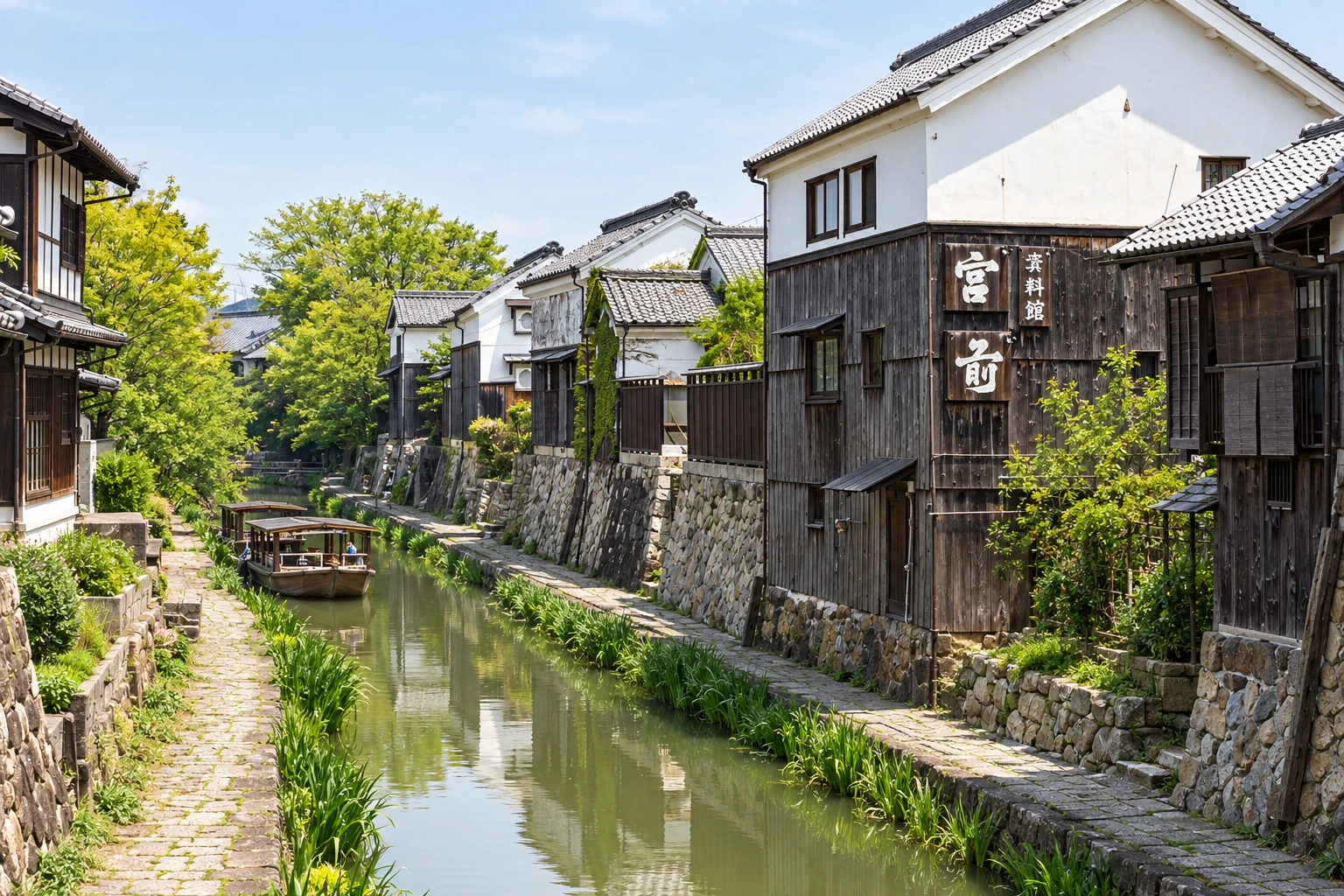
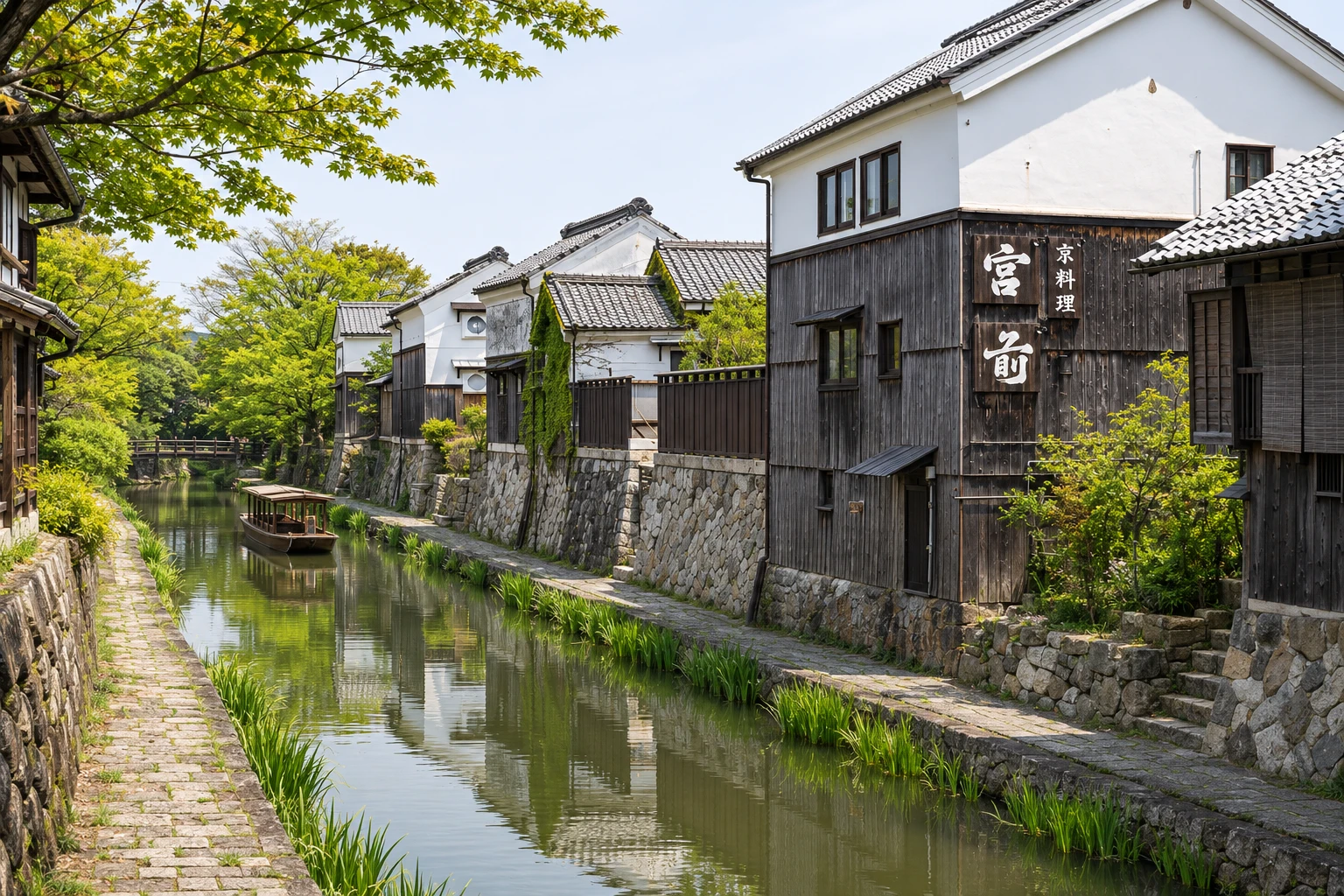
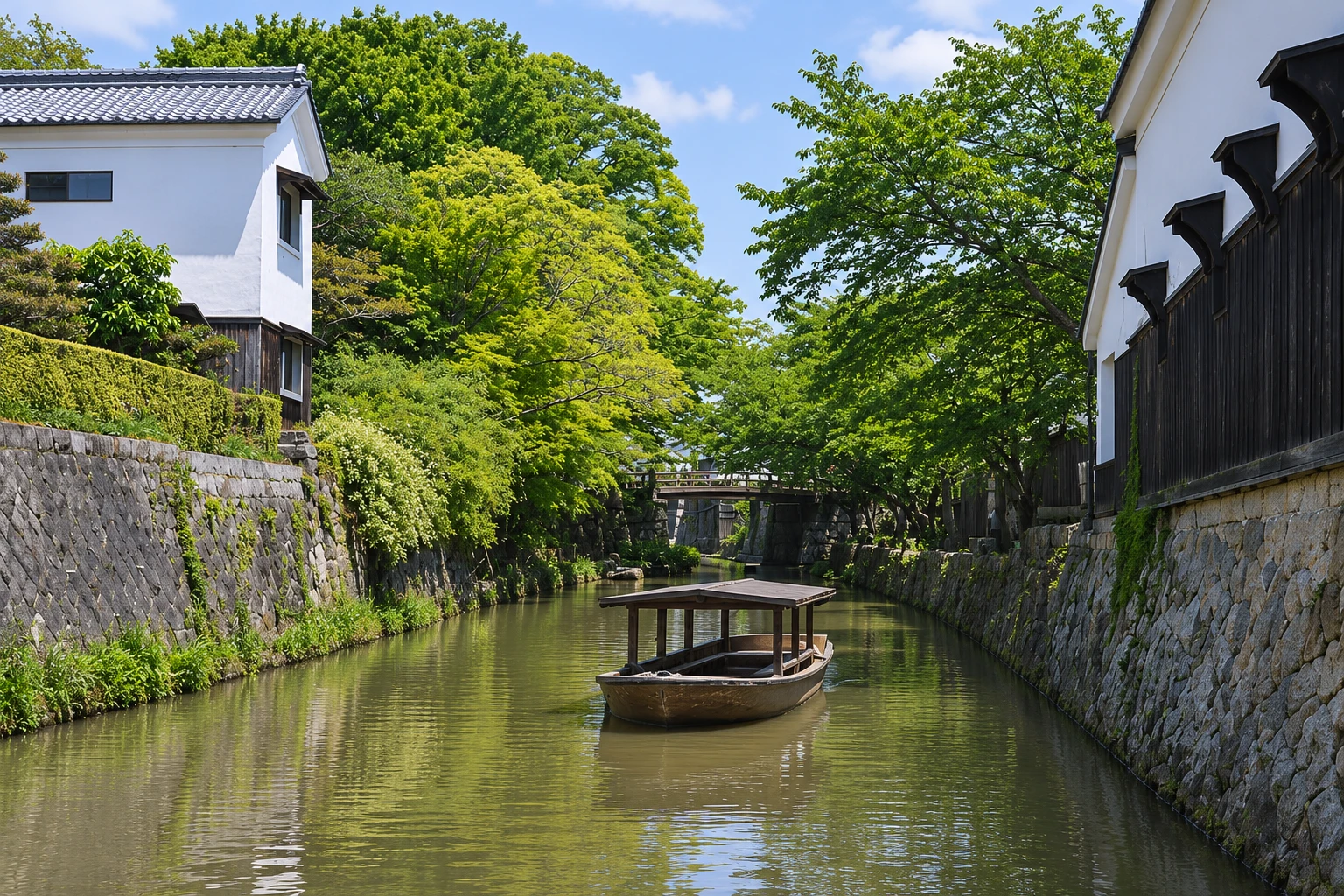
Hachiman-bori Canal in pictures
These pictures are illustrations based on the real place, not photographs. They may differ from the place.
Click the picture to enlarge it.
Discover
About Hachiman-bori Canal
Hachiman-bori was opened in 1585, when Toyotomi Hidetsugu, nephew of Toyotomi Hideyoshi, built a castle on Mount Hachiman and planned the town at its base. The roughly 6 km canal linked Lake Biwa to the town center and served as both moat and port: boats arrived with goods and left for the lake, and the town became a commercial hub.
Along the canal, white-walled storehouses, dark roofs and stone walls descend to the water, with stairs for boats. Willows and cherry trees line the banks, and rowing-boat tours run along the best-known stretch. In the 1970s the canal had been neglected and was cleaned and restored by local residents in a movement that became nationally known.
Next to it is the Omi merchants’ quarter on Shinmachi and Nagahara streets, a preservation area of traditional buildings with wooden houses, slatted fences and pines on top of the walls. Some houses open as museums, displaying the lifestyle and businesses of merchant families. Buildings by William Merrell Vories, an American architect who lived in the town in the early 20th century, also appear in the center.
At the canal’s end, Himure Hachimangu shrine, traditionally founded in the 2nd century, has a large torii and wooden halls, and hosts the Sagicho fire festival in March. The ropeway for Mount Hachiman departs just behind the shrine.
Before you go
Practical information
Cidade Turismo reviews its information regularly, but something may have changed. Check with the place before planning your trip.
How much time to set aside
About 1.5 to 2 hours, including the merchants’ quarter and the shrine.
Best time
In early April, when the canal’s cherry trees bloom; in March for the Sagicho festival. The canal is usually quieter early in the morning. Check the boat and house-museum schedules.
How to get there
Bus from Omihachiman Station to the Osugicho stop in about 7 minutes, then a short walk. By bicycle, about 10 minutes.
Tip
Walk both banks and cross the stone bridges. Take a rowing-boat ride to see the storehouses at water level.
Official website
Get your questions answered
Frequently asked questions about Hachiman-bori Canal
What is the Hachiman-bori?
A canal opened in 1585 to connect Lake Biwa with central Omihachiman, lined with white-walled warehouses along its banks.
Can you take a boat on the Hachiman-bori?
Yes. Rowboats and tour boats run along the canal and the lake; check the timetables.
Where are the Omi merchants’ houses located?
On Shinmachi and Nagahara streets beside the canal, in a preservation area. Some are open as museums.
How much time should I allow for the canal and historic center?
About 1½ to 2 hours, including Himure Hachimangu shrine and one house-museum.
Beyond the guide


