

 Brazil
 Antarctica
 Argentina
 Bolivia
 Chile
 Colombia
 Ecuador
 Guyana
 French Guiana
 Falkland Islands (Malvinas)
 Paraguay
 Peru
 Suriname
 Uruguay
 Venezuela
 Germany
 Austria
 Belgium
 Croatia
 Denmark
 Slovakia
 Slovenia
 Spain
 Finland
 France
 Greece
 the Netherlands
 Hungary
 Ireland
 Iceland
 Italy
 Luxembourg
 Norway
 Poland
 Portugal
 the United Kingdom
 the Czech Republic
 Sweden
 Switzerland
 Turkey
 Bermuda
 Canada
 the United States
 Greenland
 Mexico
 Saint Pierre and Miquelon
 the Dominican Republic
 South Africa
 Egypt
 Australia
 Fiji
 New Zealand
 Papua New Guinea
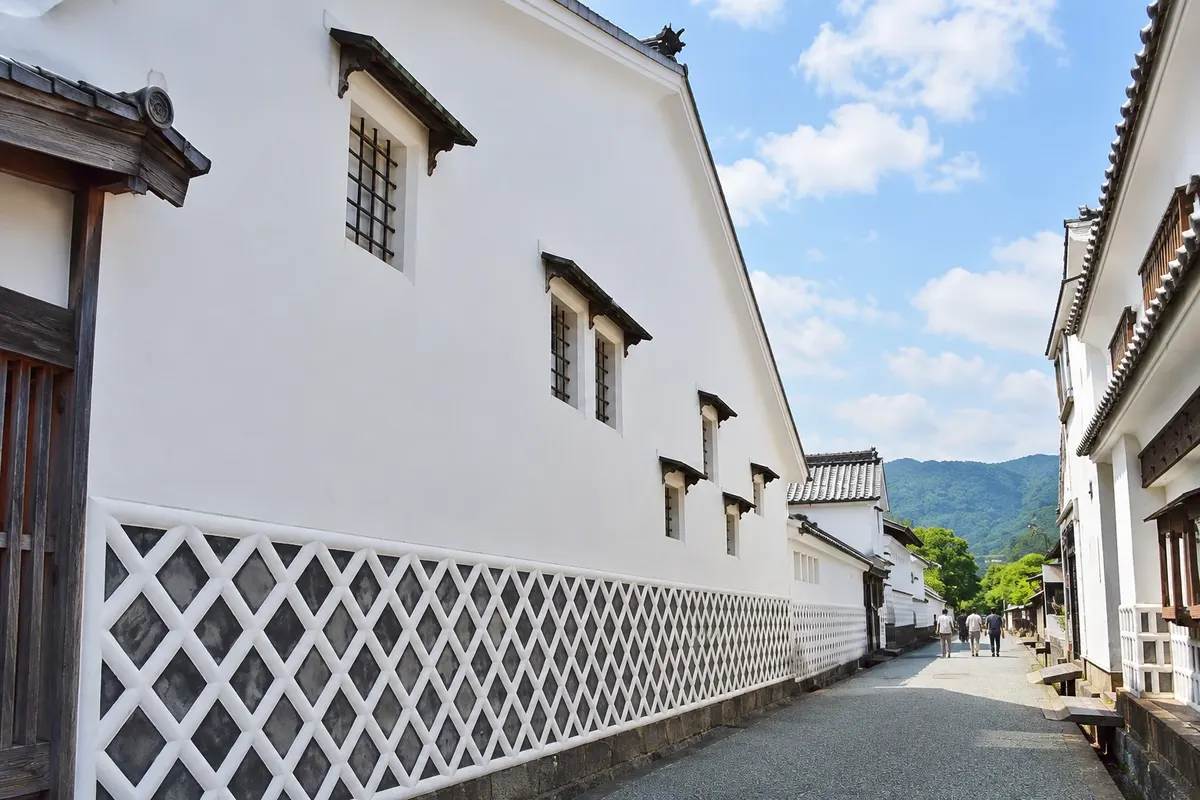
Historic center · Hagi, Yamaguchi
Hagi Castle Town
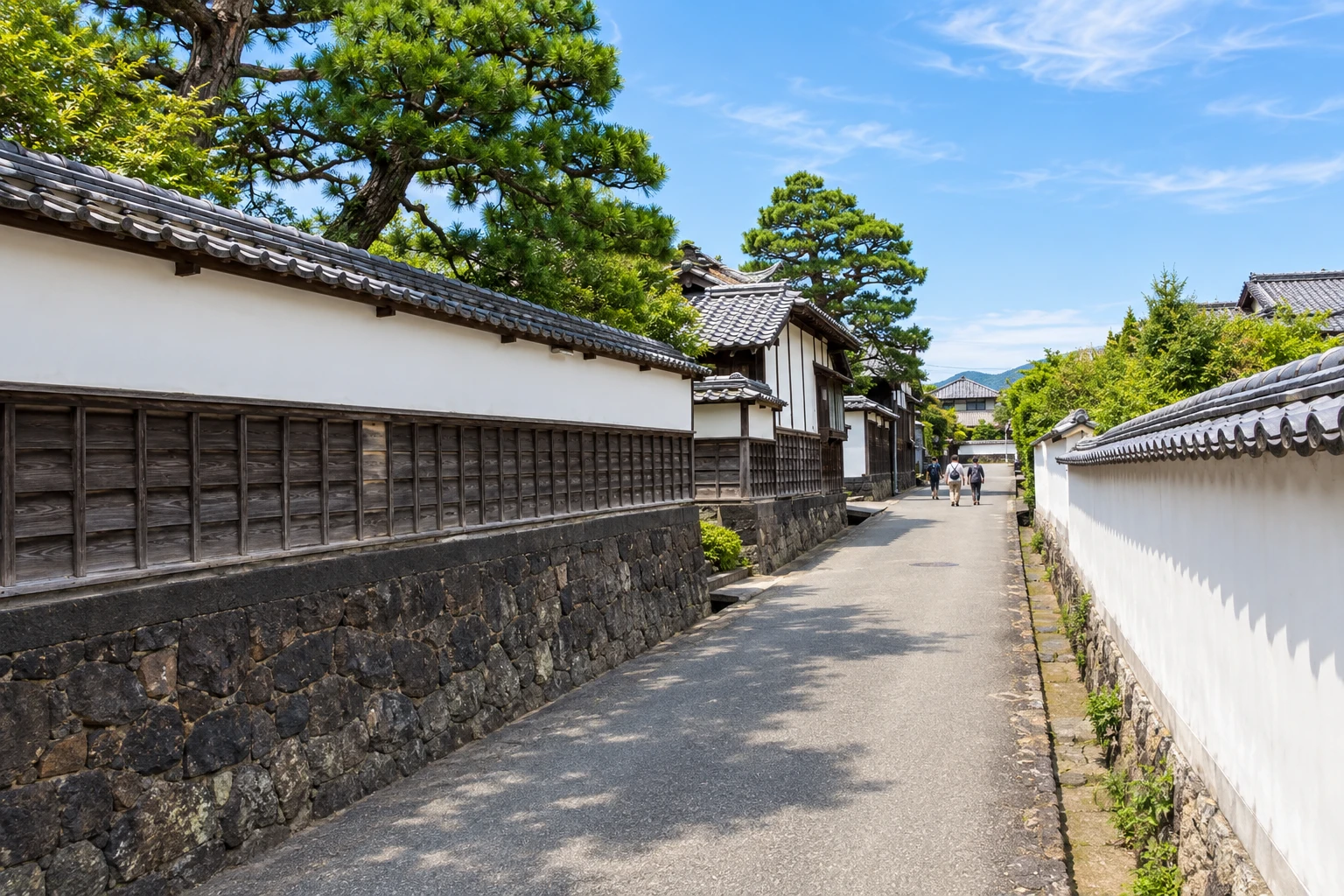
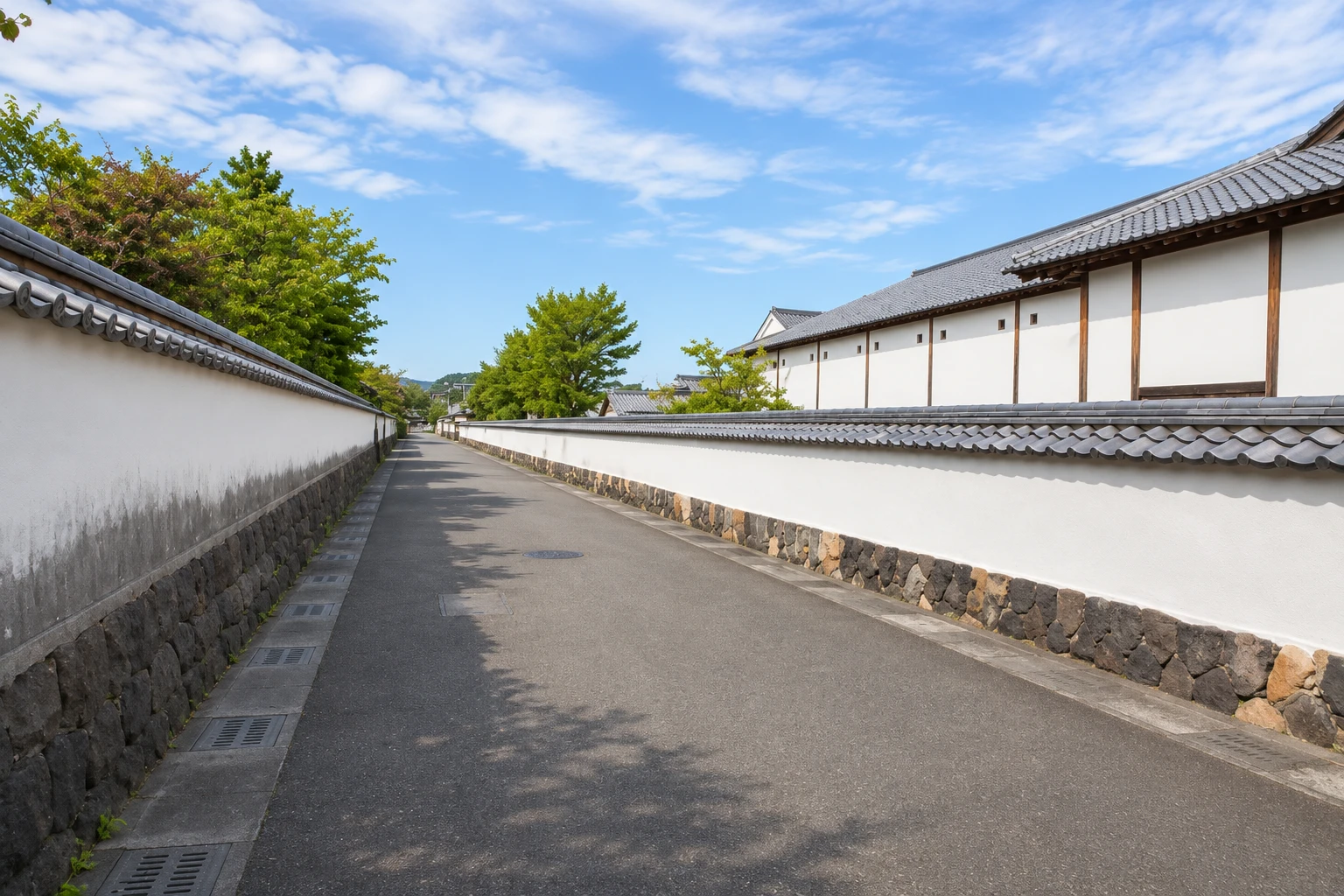
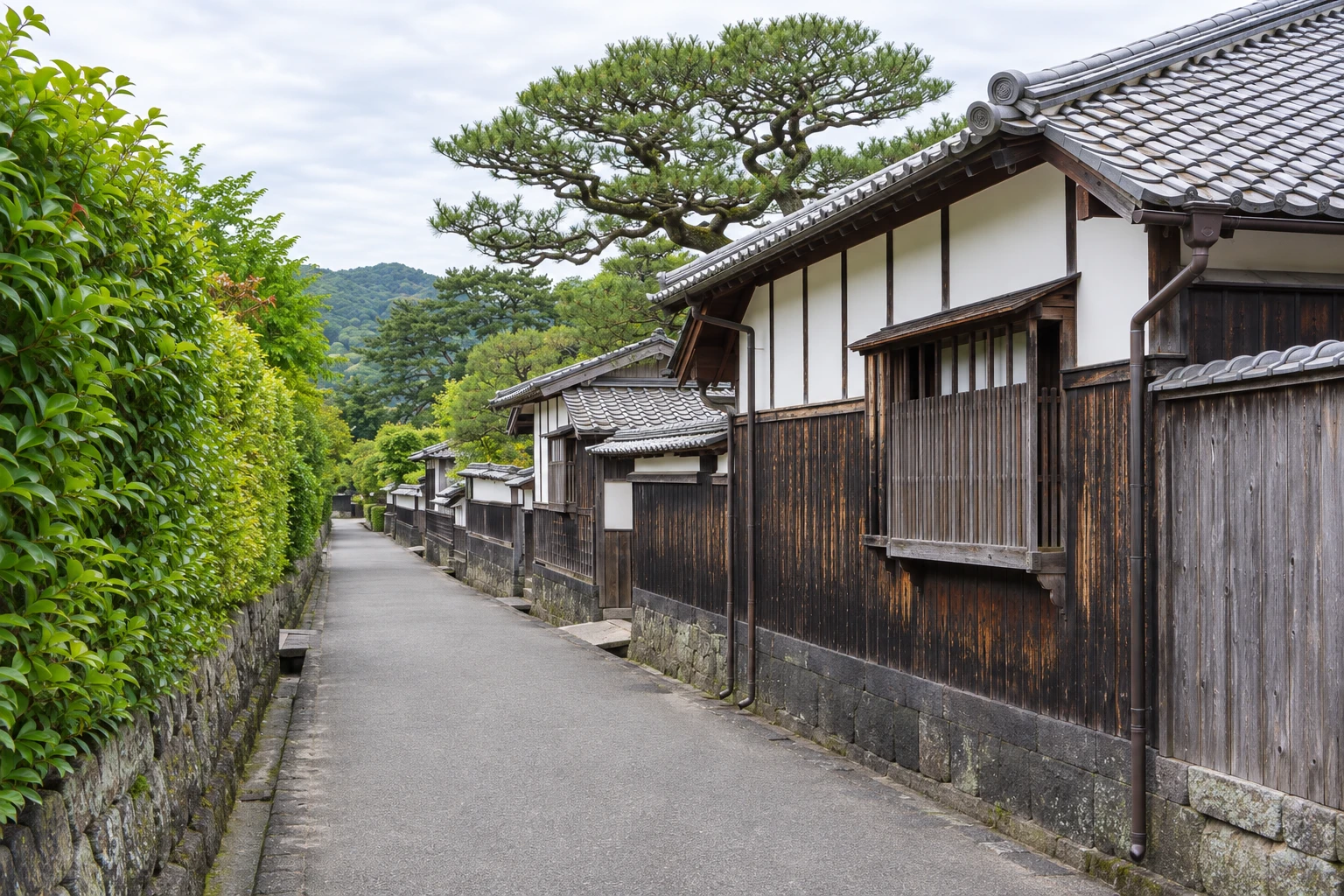
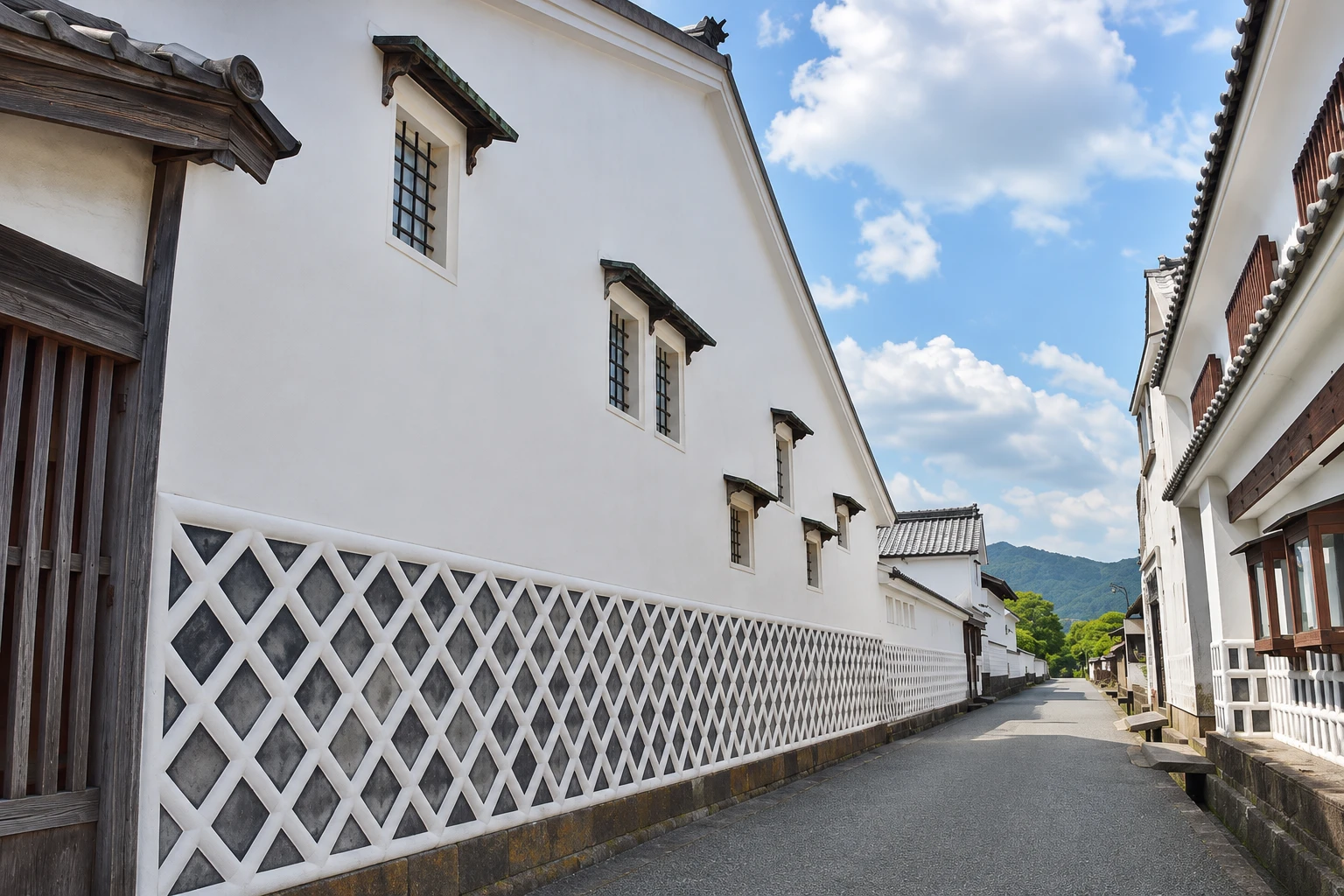
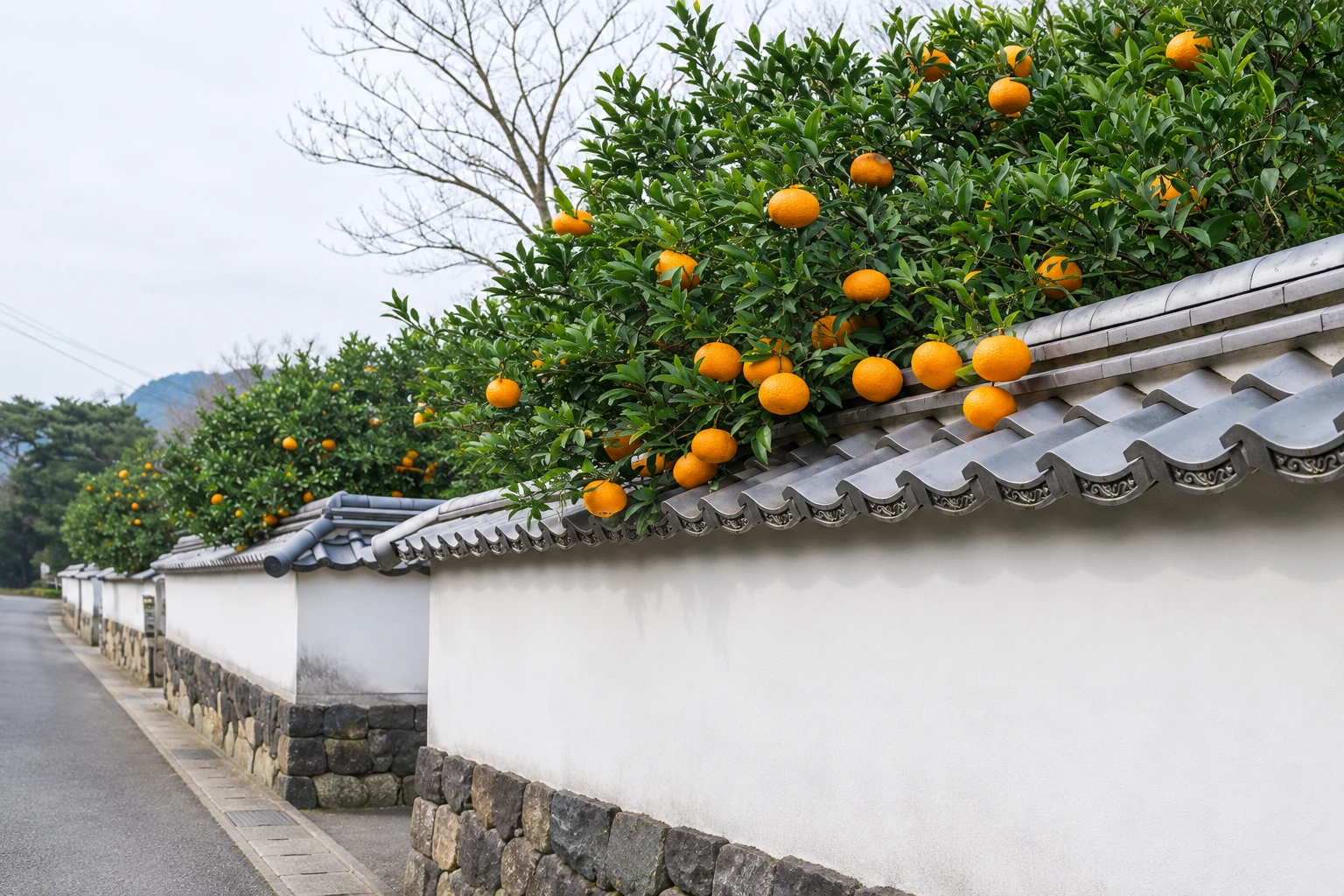
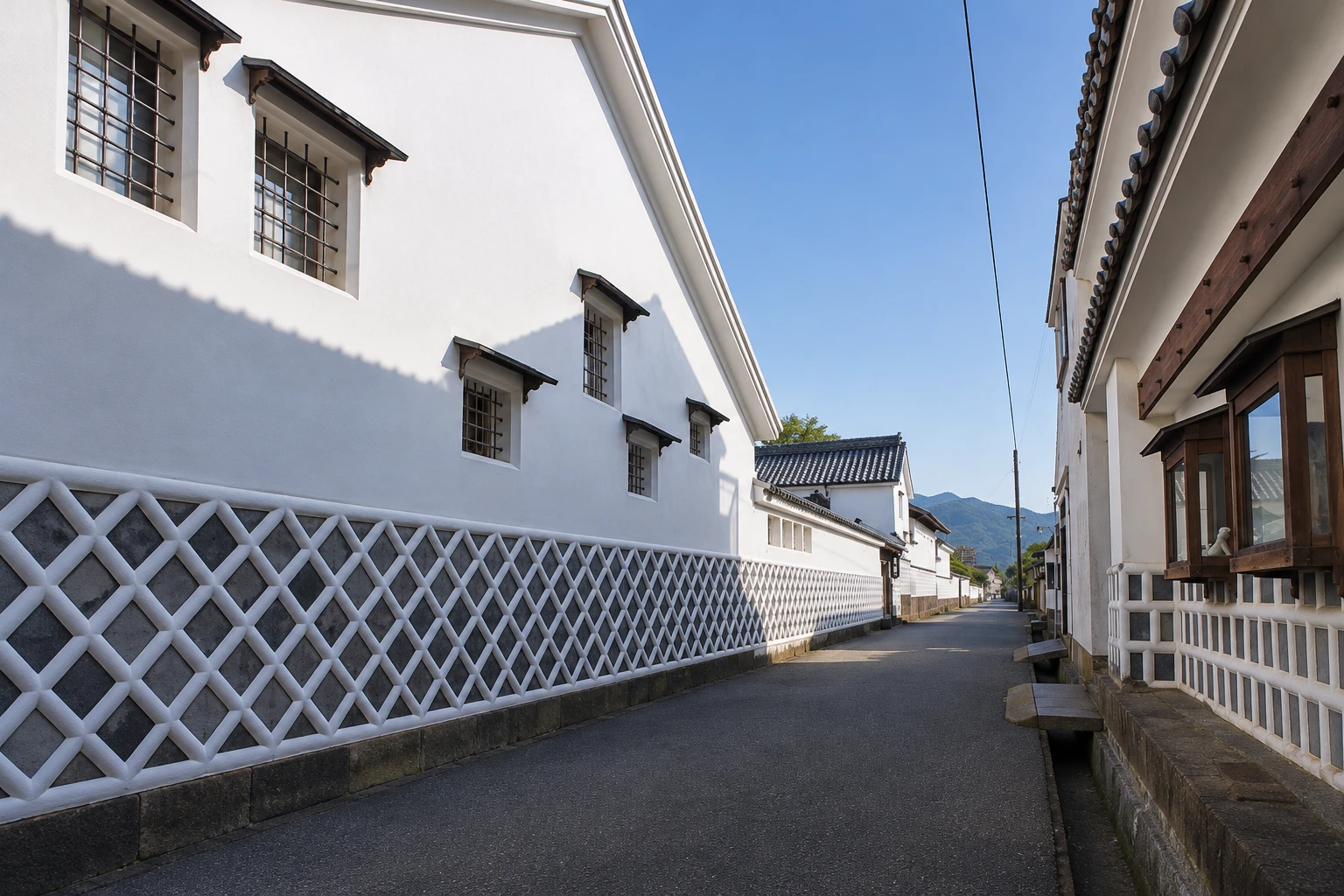
Hagi’s old quarter, with white plaster and earthen walls, samurai and merchant houses, wooden gates and orange trees, preserved in its 17th-century layout and part of the UNESCO Meiji sites.
Illustrative images. The pictures in this guide are illustrations based on the real place, not photographs, and may differ from it.

A look at the place
Hagi Castle Town in pictures
These pictures are illustrations based on the real place, not photographs. They may differ from the place.
Click the picture to enlarge it.
Discover
About Hagi Castle Town
The castle-town of Hagi, Hagi Jokamachi, is the old center that developed from 1604, when Mori Terumoto, lord of the Choshu domain, built the castle at the tip of the delta. The grid layout, the walls and many houses have survived almost unchanged, and the neighborhood is part of the UNESCO Meiji sites.
The Horiuchi district, closer to the castle, was home to high-ranking samurai. The streets feature white plaster and earthen walls topped with roof tiles, large wooden gates and gardens behind them, where natsumikan orange trees peek out. Some residences, such as the Kuchiba family home, are open to visitors, with tatami rooms and impressive gateways.
Further east, the merchant lanes—like Kikuya Yokocho, Iseya Yokocho and Edoya Yokocho—contain the Kikuya family house of wealthy merchants, with artifacts and a garden, and the houses where Kido Takayoshi and Takasugi Shinsaku, leaders of the Meiji Restoration, were born. Small museums and Hagi-yaki pottery shops occupy old houses.
The area is best explored on foot or by bicycle at an unhurried pace, using maps that indicate the homes open to visitors. A museum at the neighborhood’s entrance, the Hagi Museum, presents the city and domain history and serves as a starting point.
Before you go
Practical information
Cidade Turismo reviews its information regularly, but something may have changed. Check with the place before planning your trip.
How much time to set aside
About 2 to 3 hours on foot or by bicycle, with two or three houses open to visit.
Best time
In the morning, when the streets are quiet. In May, the natsumikan usually bloom and perfume the neighborhood. Houses and museums close on some days; check opening hours.
How to get there
The neighborhood is about 1 km from the Hagi Bus Center terminal, a 10-minute bike ride. The circular buses stop at the Hagi Museum and on nearby streets.
Tip
Buy the combined ticket for the houses open to visitors and follow a bicycle map. Try the natsumikan juice or sweet at one of the neighborhood shops.
Get your questions answered
Frequently asked questions about Hagi Castle Town
How long does a visit to Hagi’s castle town take?
2 to 3 hours by bike or on foot, with some houses open. With the castle ruins and Shōkasonjuku, plan for a full day.
Which historic houses can you visit in Hagi?
The Kuchiba samurai family house, the Kikuya merchant family house, and the birthhouses of Kido Takayoshi and Takasugi Shinsaku, among others.
Is Hagi’s castle town a World Heritage Site?
Yes. UNESCO included it in the Meiji Industrial Revolution sites, together with four other places in the city.
Can you rent a bicycle in Hagi?
Yes, near the stations, the bus terminal and several hotels. The city is flat and has little traffic in the old neighborhood.
Beyond the guide


