Hagi and Akiyoshidai

Yamaguchi · Japan

Hagi and Akiyoshidai

The former castle town of the Mori lords on the Sea of Japan coast, birthplace of leaders from the Meiji era, and the country’s largest limestone plateau, with the Akiyoshido cave.

Chugoku

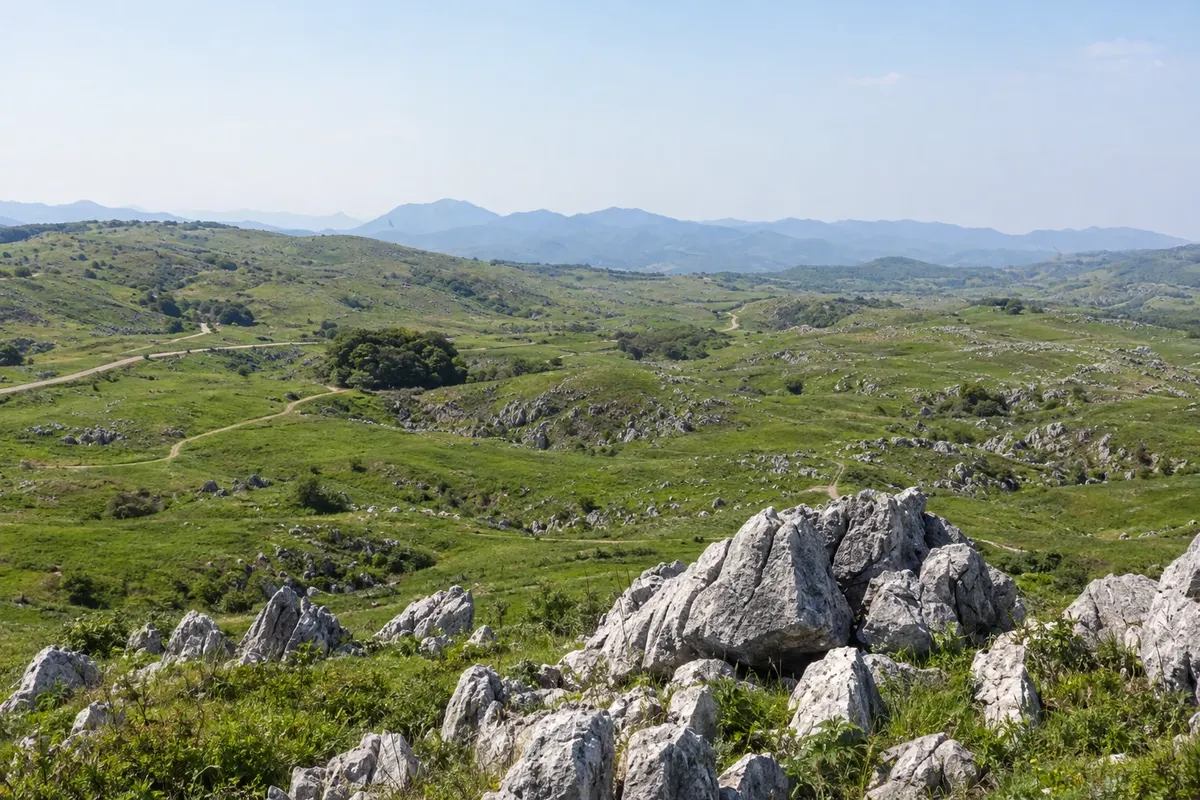
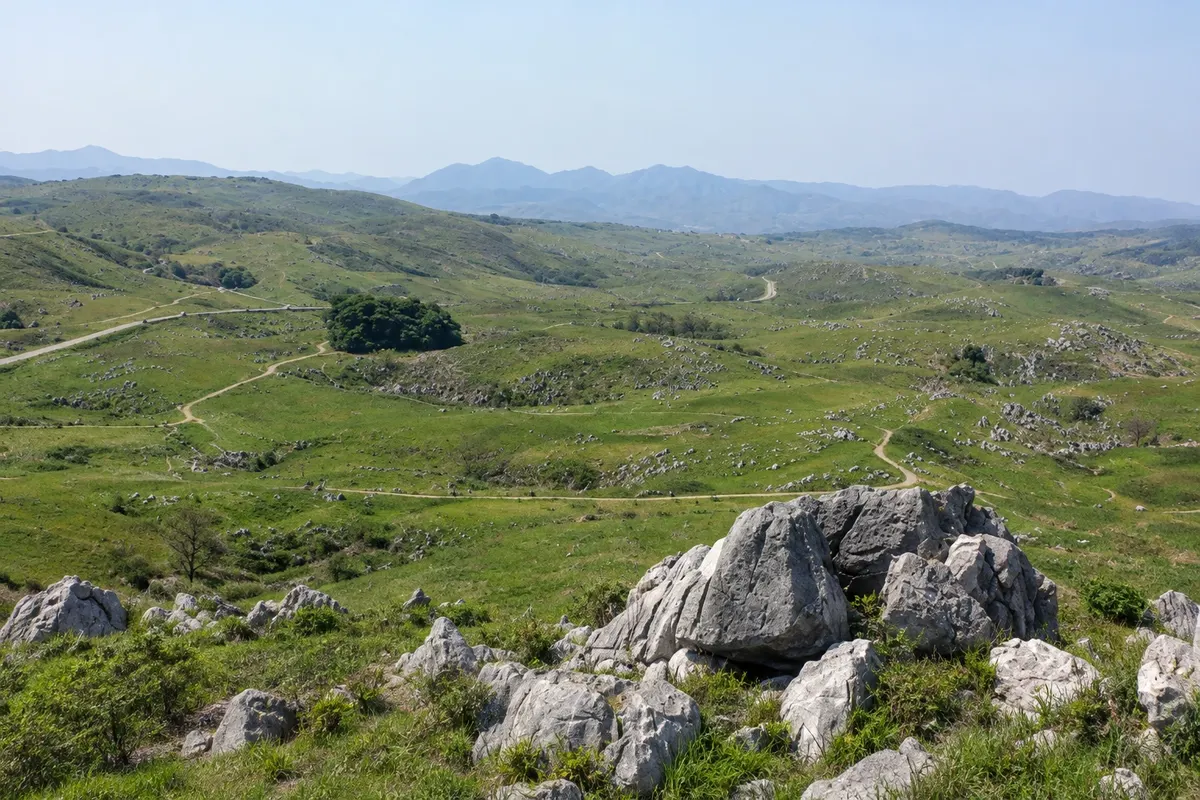
In the photo: Akiyoshidai karst plateau, in Mine.

Illustrative images. The pictures in this guide are illustrations based on the real place, not photographs, and may differ from it.

Get to know the place

A region to enjoy
at your own pace.

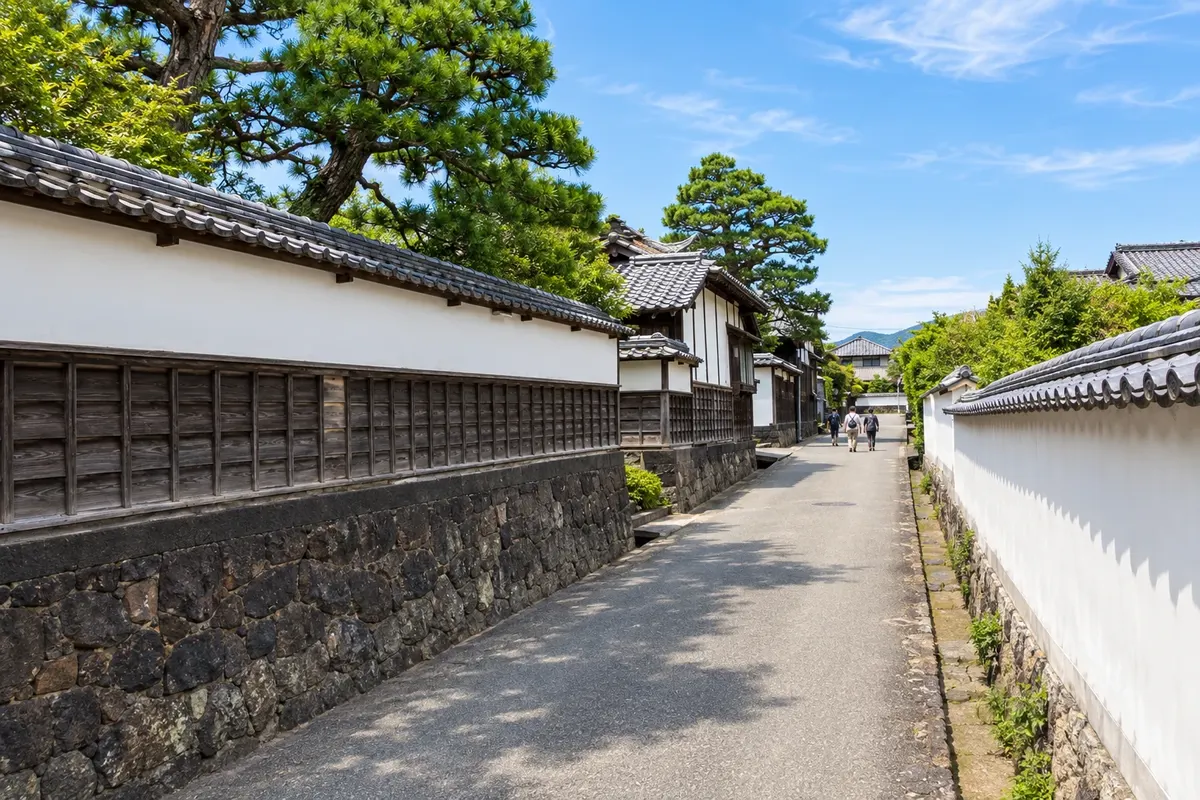
Hagi sits on the northern coast of Yamaguchi Prefecture, at the western end of Honshu, on a delta between two river branches and the Sea of Japan. It was the capital of the Choshu domain, ruled by the Mori family from the early 17th century until shortly before the Meiji Restoration. The castle-town layout has been preserved: narrow streets and old walls shelter samurai and merchant houses, with natsumikan orange trees appearing in the yards.

In the 19th century, Hagi produced many of the men who overthrew the shogunate and modernized Japan, such as Ito Hirobumi, the country’s first prime minister, and Takasugi Shinsaku. Many studied at the small school of Yoshida Shoin, the Shokasonjuku. The school, the castle-town layout, a reverberatory furnace, a shipyard and an old iron foundry are listed by UNESCO as part of the Meiji sites.

Hagi is also the home of one of the ceramics most valued in the tea ceremony, Hagi-yaki, known for soft tones that change with use. kilns and potters’ shops are spread through the town, and some workshops welcome visitors.

About 35 km to the south, in the city of Mine, is Akiyoshidai, a limestone plateau covered in grass and gray rocks, the largest of its kind in Japan. Beneath it lies Akiyoshido cave, one of the country’s largest, with a route of about 1 km among limestone pools and columns. The two sites combine well on a two- or three-day trip.

This destination brings together 2 cities: Hagi, Mine.

Share: WhatsApp
Traveler, share your experiences through photos Up to 5 photos of each place you visited.

One destination, many paths

The cities on this trip

Start with one city or combine several in your itinerary.

Where Hagi and Akiyoshidai is
MineHagi

Dados cartográficos: © OpenStreetMap contributors, via Wambacher / geoBoundaries (ODbL 1.0). Adapted by Cidade Turismo.

How to get there: Hagi and Akiyoshidai

✈ Aeroporto de Hagi-Iwami (IWJ), in Masuda · 60 km to Hagi

From Shin-Yamaguchi on the Sanyo shinkansen line, an express bus reaches Hagi in about 1 hour. San'in line trains that stop at Hagi are infrequent. Buses connect Shin-Yamaguchi and Hagi with Akiyoshido. The nearest airports are Hagi-Iwami and Yamaguchi Ube.

Suggested arrival point: Hagi

The local experience

Things to do in Hagi and Akiyoshidai

Akiyoshido Cave
Mine · Yamaguchi · Cave

Akiyoshido Cave

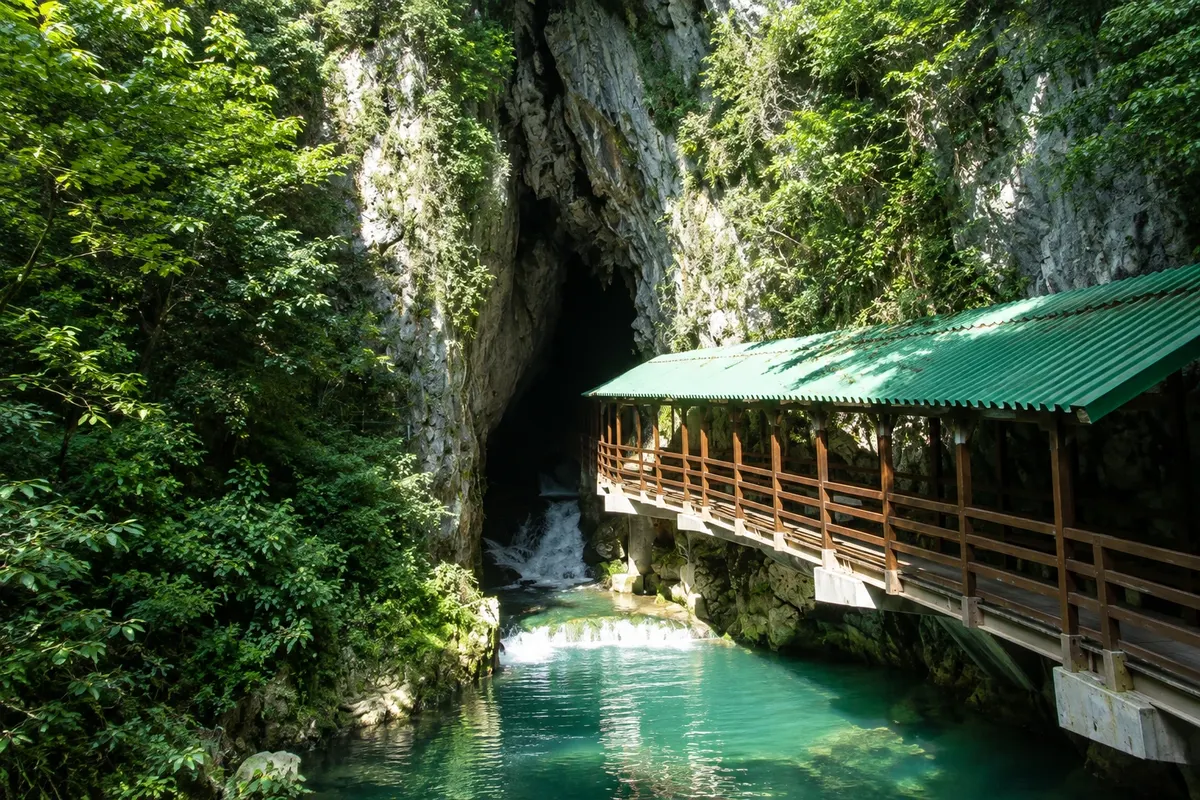
One of the largest limestone caves in Japan, beneath the Akiyoshidai plateau, with a route of about 1 km amid underground rivers, terraced calcite pools and the Golden Pillar; it stays at about 17 °C year-round.

Hagi Castle Town
Hagi · Yamaguchi · Historic center

Hagi Castle Town

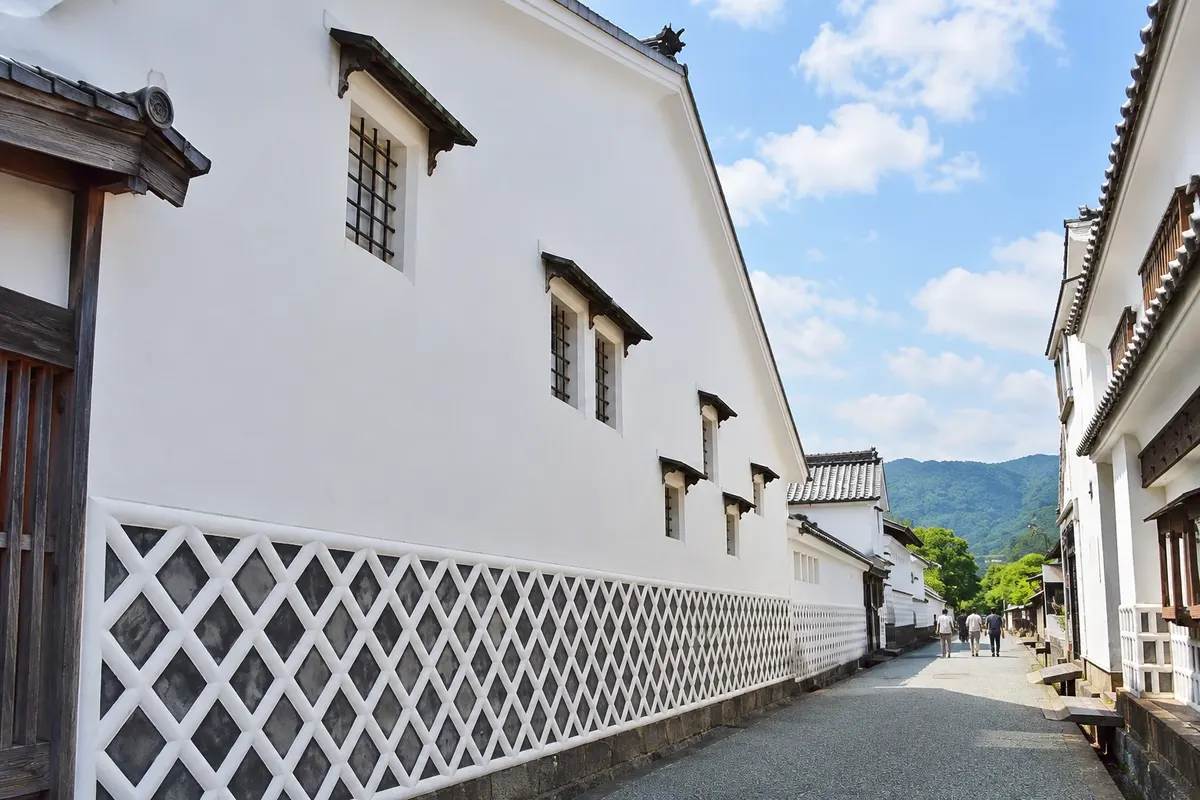
Hagi’s old quarter, with white plaster and earthen walls, samurai and merchant houses, wooden gates and orange trees, preserved in its 17th-century layout and part of the UNESCO Meiji sites.

Akiyoshidai
Mine · Yamaguchi · Natural scenery

Akiyoshidai

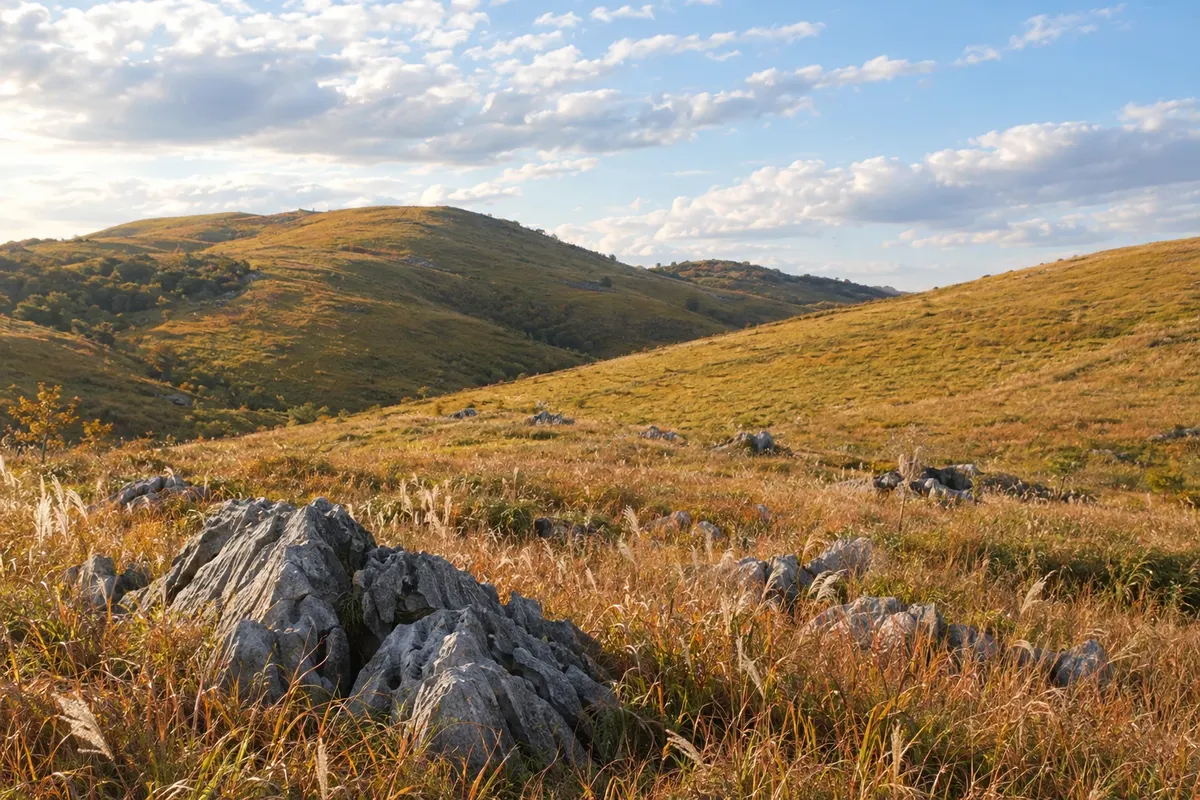
The largest limestone plateau in Japan, about 54 km² of grass fields dotted with gray rocks, a viewpoint, trails and a geology museum; the grass is burned every February.

Hagi Castle Ruins
Hagi · Yamaguchi · Castle

Hagi Castle Ruins

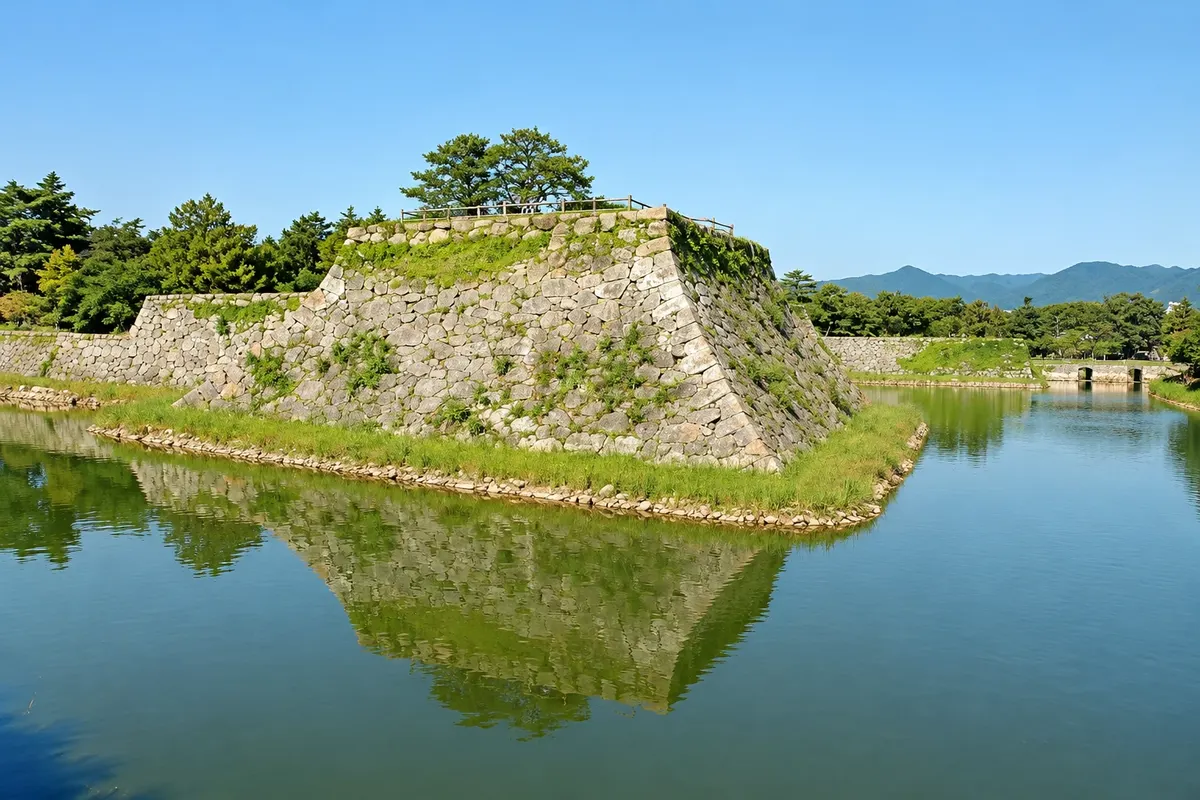
Stone walls, moat and the base of the Mori castle tower, in Shizuki Park at the foot of Mount Shizuki and on the Sea of Japan, with a tea house and cherry trees.

See 1 more place in Hagi and Akiyoshidai
Shokasonjuku
Hagi · Yamaguchi · Historic site

Shokasonjuku

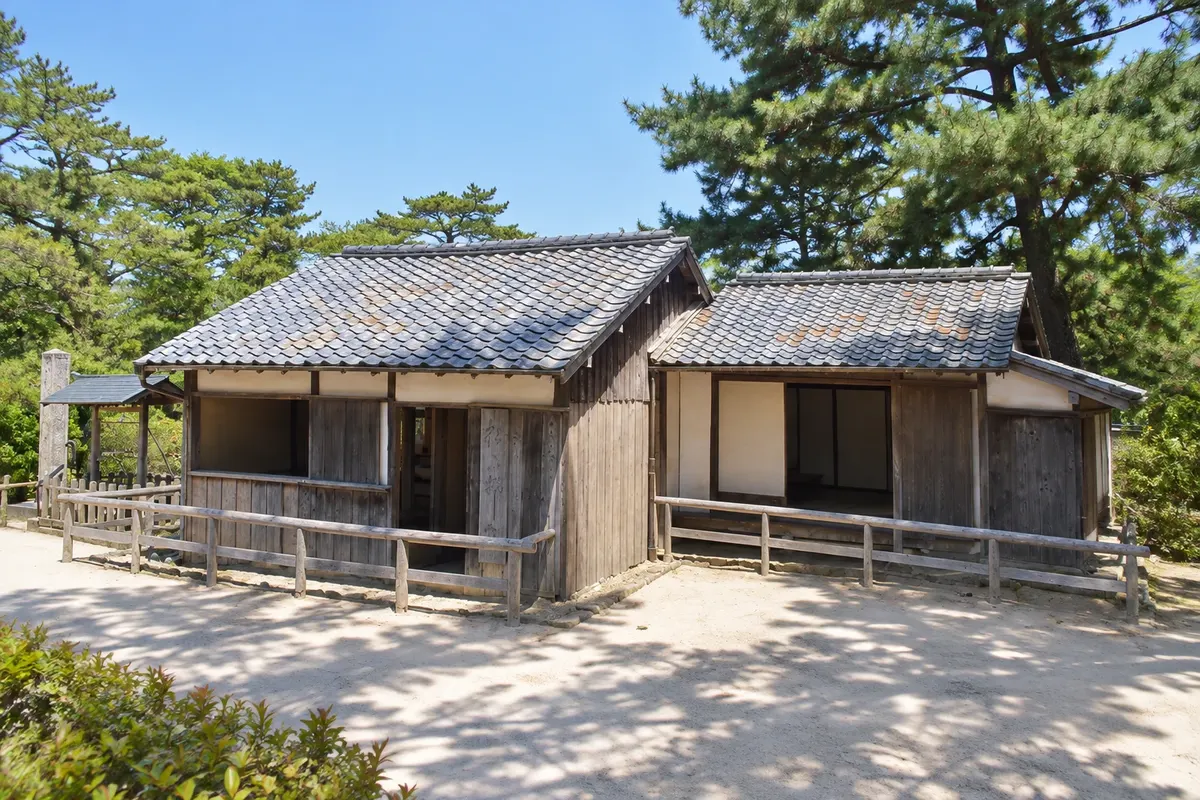
A small wooden school where Yoshida Shoin taught future Meiji leaders, on the grounds of Shoin Shrine in eastern Hagi; part of the UNESCO Meiji sites.

Before you go

Practical information

A little planning leaves more time to enjoy the journey.

When to go

March to May and October to November are the mildest seasons. Natsumikan orange trees bloom in May, scenting Hagi’s streets. On Akiyoshidai, the fields are green in midyear and turn golden in autumn; in February locals carry out the annual burn. The cave maintains about 17 °C year-round.

The seasons shown are the most usual ones; nature doesn't always follow the calendar.

How many days to stay

Two days allow a full day in Hagi by bicycle and another day on Akiyoshidai and in the cave, en route to Shin-Yamaguchi. With three days, you can see more of Hagi, including the ceramics, the shipyard and Kasa Island.

Which city to stay in

In Hagi there are ryokan and hot-spring hotels on the waterfront and near the center, and guesthouses in old homes in the castle-town district. In Mine there are few lodgings near Akiyoshido, and many people sleep in Hagi or in Yamaguchi and visit the cave on the way.

Respect the place

Take your trash with you, follow the signs and support local businesses. In natural areas, follow the visiting guidelines.

Get your questions answered

Frequently asked questions about Hagi and Akiyoshidai

How do I get to Hagi by shinkansen?

Get off at Shin-Yamaguchi on the Sanyo line and take the express bus to Hagi, which takes about 1 hour. San'in line trains have few departures.

Can you see Hagi and Akiyoshidai in the same day?

You can, but it’s rushed. Ideally spend one day in Hagi and another on the plateau and in the cave, which lie on the route between Hagi and Shin-Yamaguchi.

Do I need a car in Hagi and Akiyoshidai?

No. Hagi is easy to get around by bicycle or on circular local buses, and there are buses to Akiyoshido from Hagi and Shin-Yamaguchi. A car makes it easier to combine viewpoints on the plateau.

Why is Hagi important in Japanese history?

It was the capital of the Choshu domain, which produced many leaders who toppled the shogunate and modernized the country in the 19th century. Many studied at Yoshida Shoin’s school in Hagi.

What is Hagi pottery?

It is a traditional local pottery prized in the tea ceremony, with gentle colors and glaze that changes tone with use. There are kilns and shops in several neighborhoods.

Explore other destinations Search by state and city

Beyond the guide