

 Brazil
 Antarctica
 Argentina
 Bolivia
 Chile
 Colombia
 Ecuador
 Guyana
 French Guiana
 Falkland Islands (Malvinas)
 Paraguay
 Peru
 Suriname
 Uruguay
 Venezuela
 Germany
 Austria
 Belgium
 Croatia
 Denmark
 Slovakia
 Slovenia
 Spain
 Finland
 France
 Greece
 the Netherlands
 Hungary
 Ireland
 Iceland
 Italy
 Luxembourg
 Norway
 Poland
 Portugal
 the United Kingdom
 the Czech Republic
 Sweden
 Switzerland
 Turkey
 Bermuda
 Canada
 the United States
 Greenland
 Mexico
 Saint Pierre and Miquelon
 the Dominican Republic
 South Africa
 Egypt
 Australia
 Fiji
 New Zealand
 Papua New Guinea
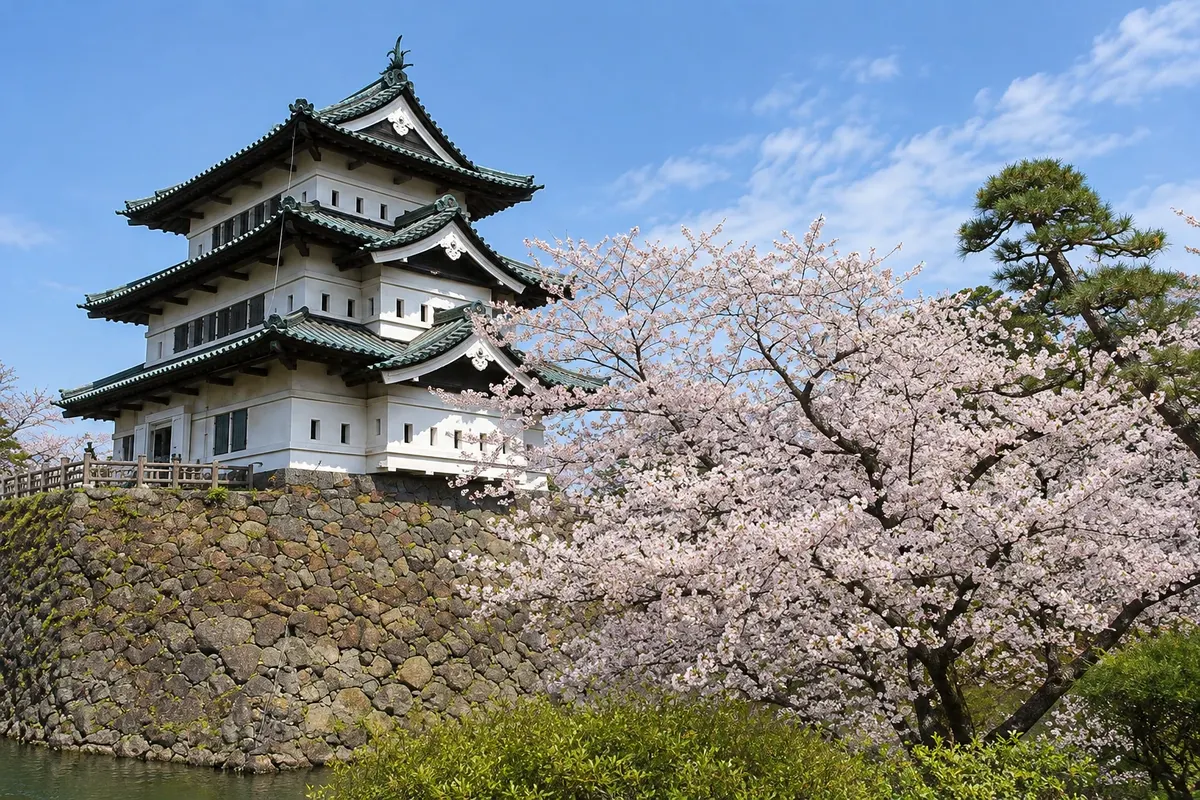
Castle · Hirosaki, Aomori
Hirosaki Castle and Park
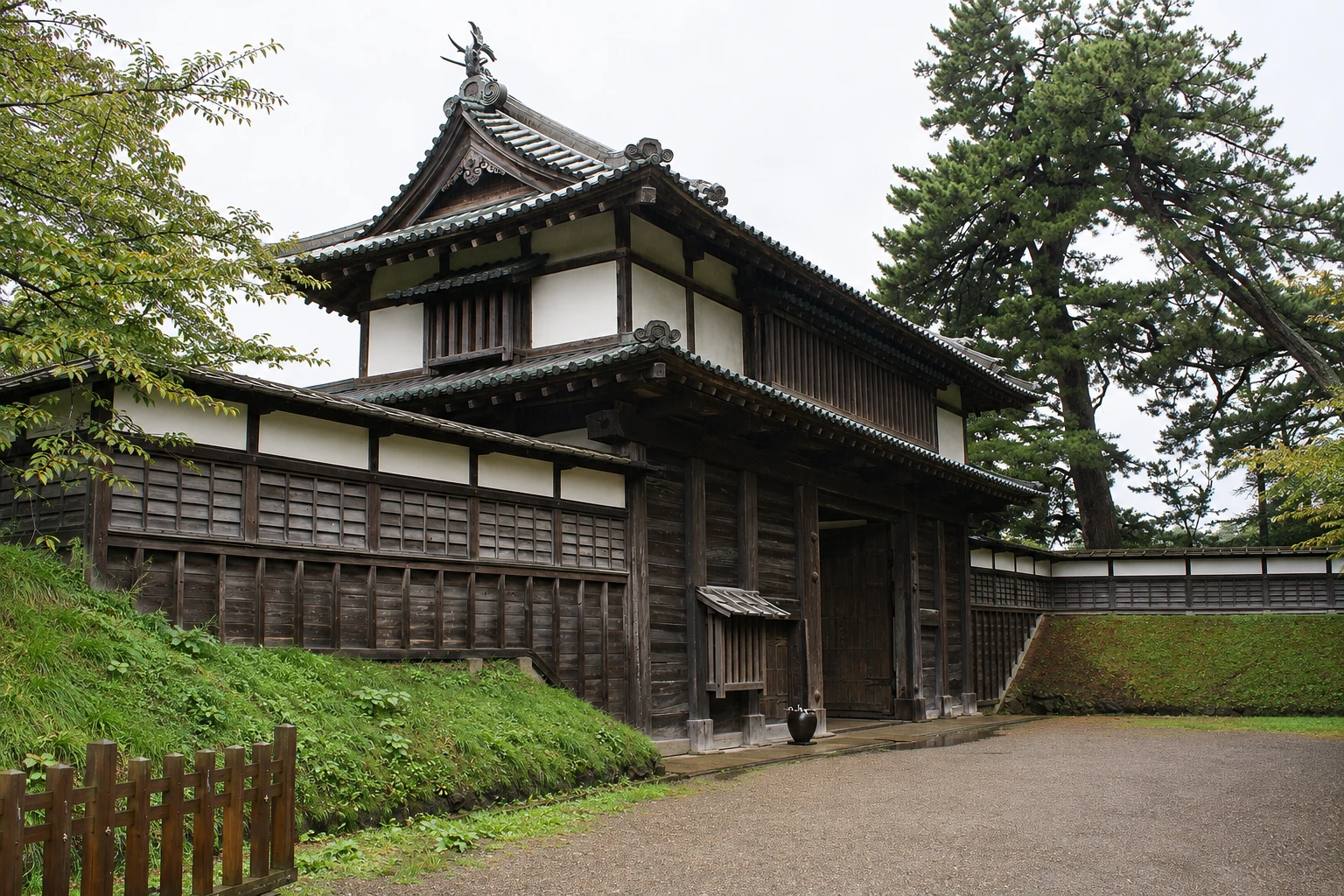
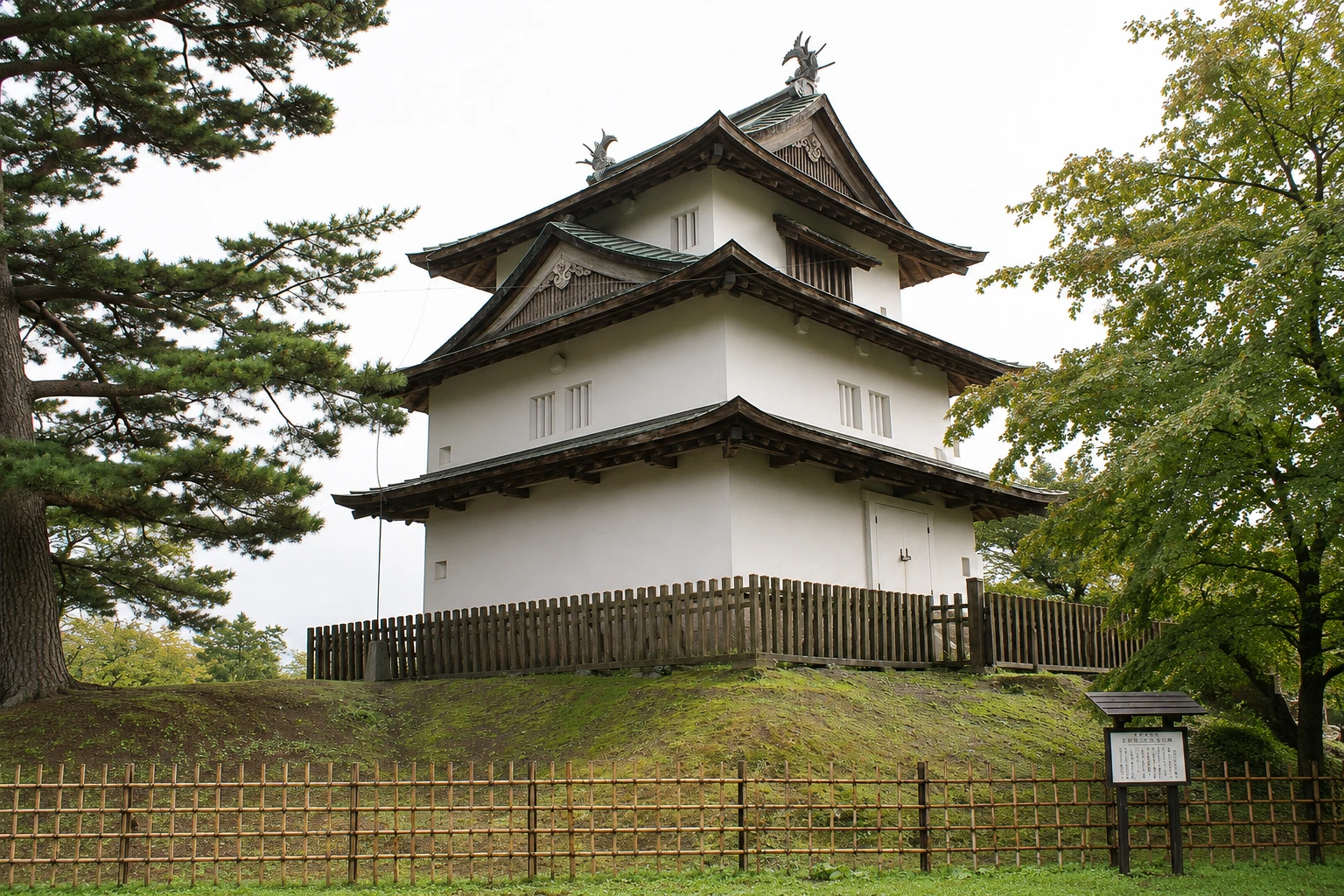
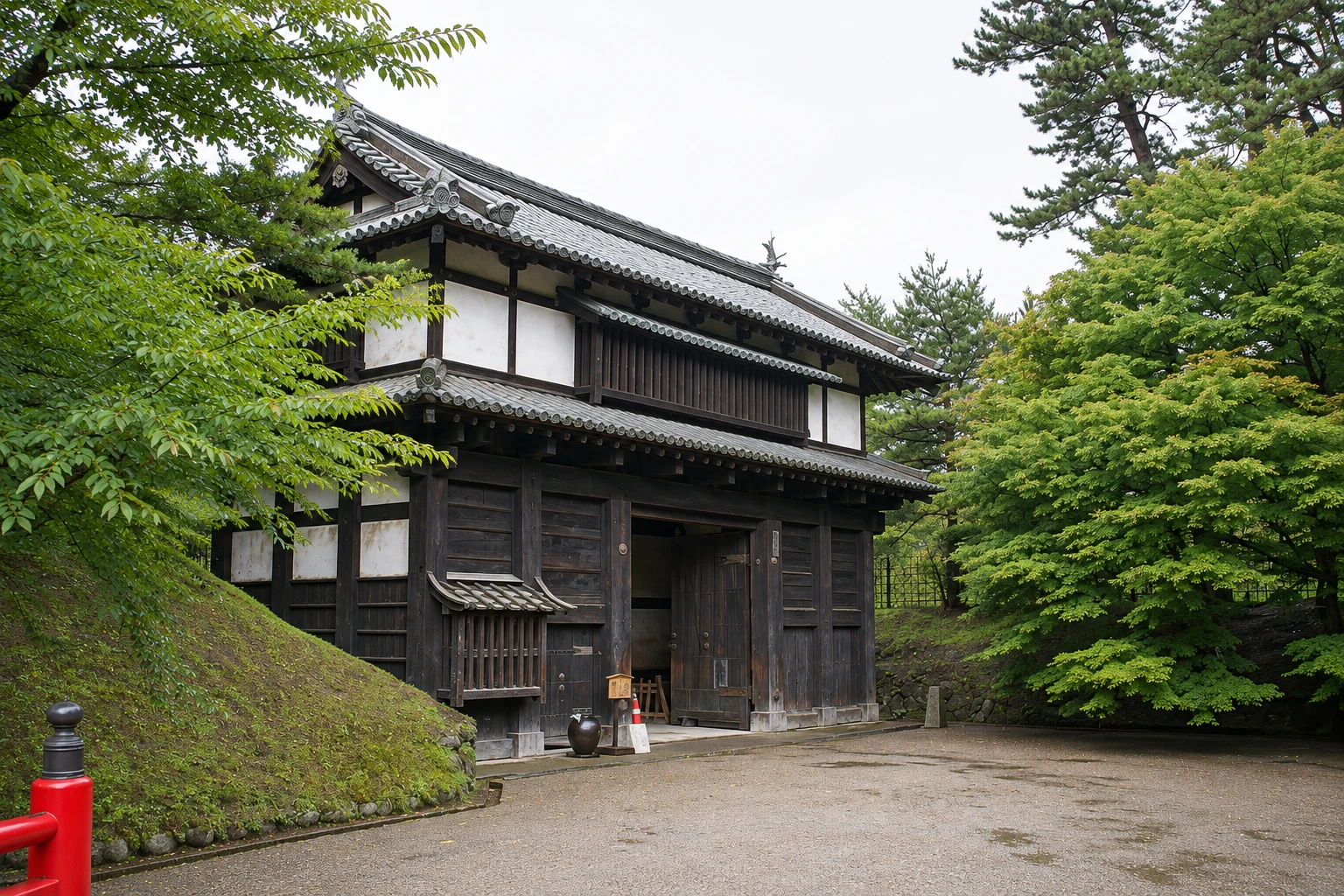
The Tsugaru clan castle, with an original 1810 keep, gates, moats and Edo-period walls, set in a park of about 50 hectares with more than 2,500 cherry trees and the Fujita Garden beside it.
Illustrative images. The pictures in this guide are illustrations based on the real place, not photographs, and may differ from it.

A look at the place
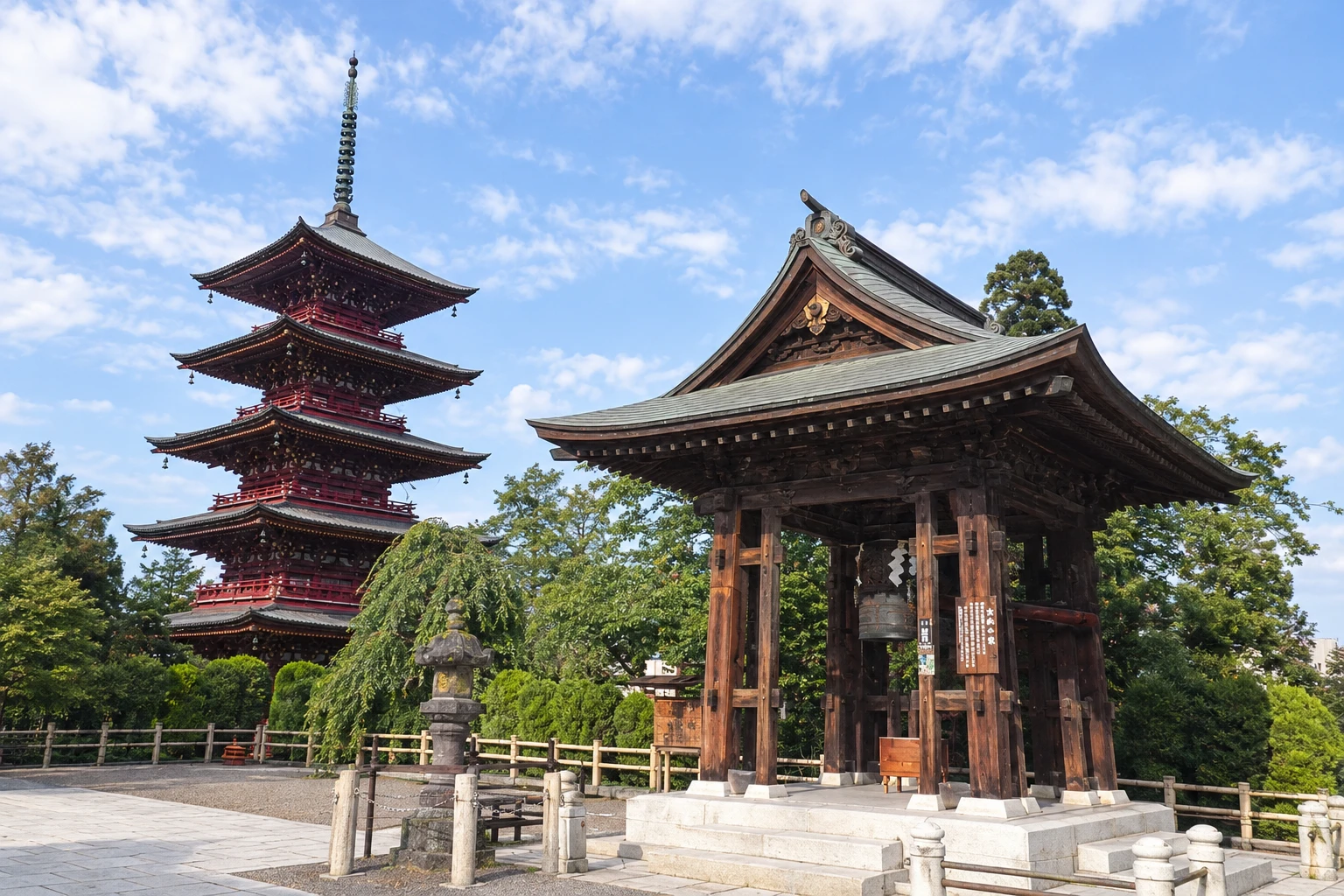
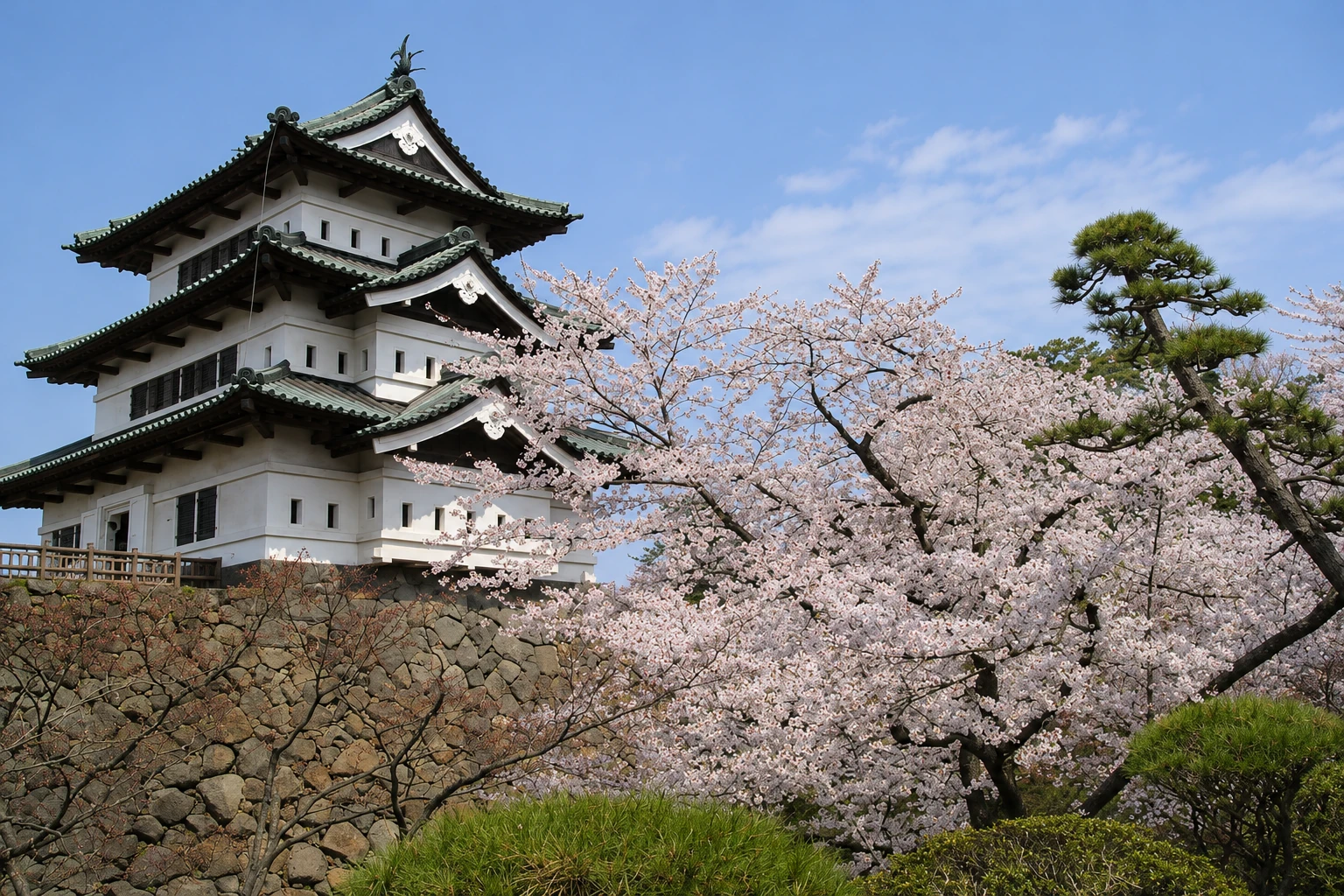
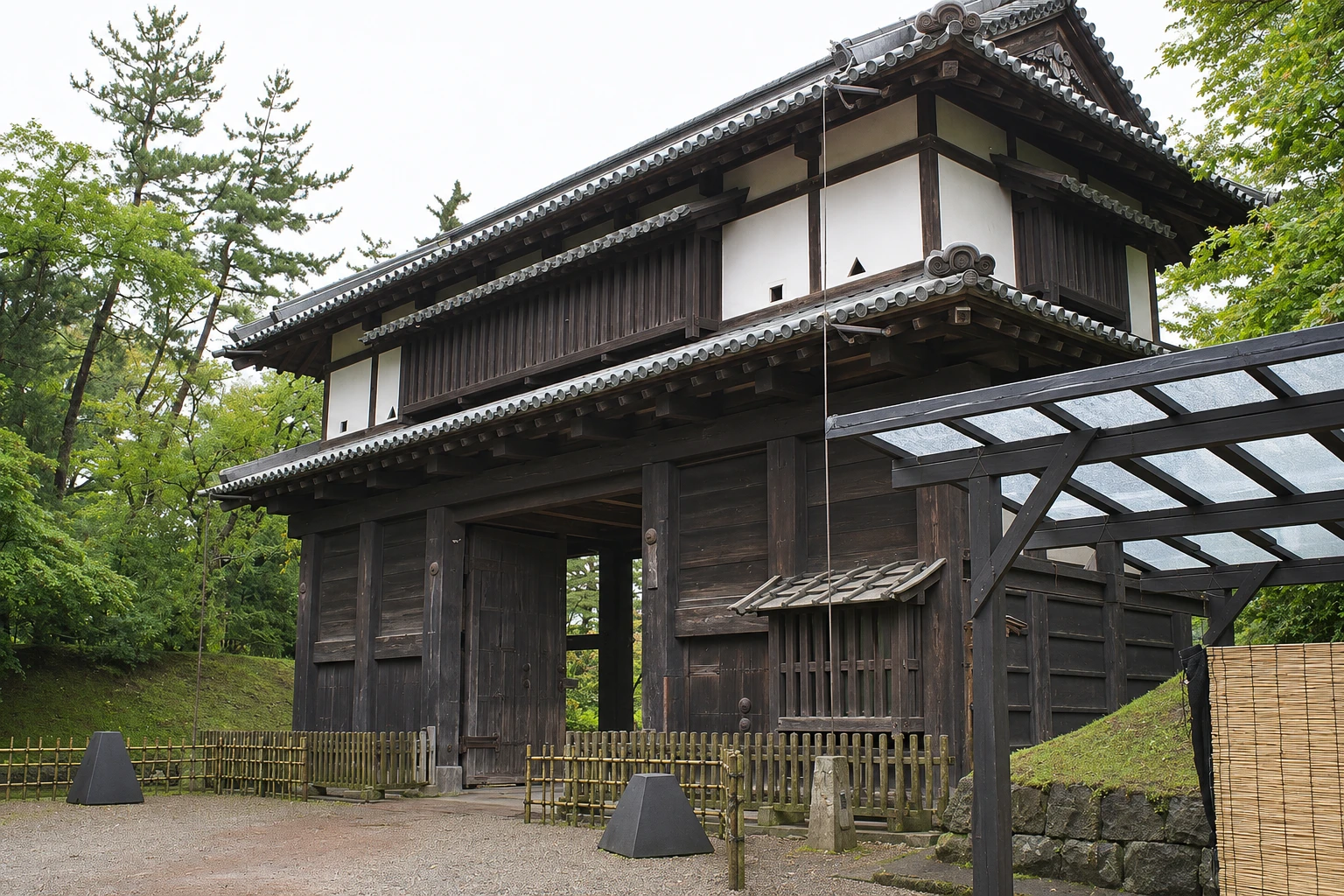
Hirosaki Castle and Park in pictures
These pictures are illustrations based on the real place, not photographs. They may differ from the place.
Click the picture to enlarge it.
Discover
About Hirosaki Castle and Park
Hirosaki Castle was built in the early 17th century by the Tsugaru clan, which ruled western present-day Aomori throughout the Edo period. The original five-story main keep was destroyed by lightning in 1627; the current three-story keep was constructed in 1810 from a corner tower. It is one of the twelve original castle keeps still standing in Japan.
The complex retains three layers of moats, stone walls, five gates and three Edo-period corner towers, designated Important Cultural Properties. In the 2010s and 2020s the keep was moved to allow reconstruction of a section of stone wall and then returned; conservation work can limit access to the interior. Inside are weapons, armor and Tsugaru artifacts, and from the top you can see Mount Iwaki.
The Hirosaki park, occupying the castle’s former grounds, has more than 2,500 cherry trees of dozens of varieties, some over a hundred years old, tended with pruning techniques used in apple orchards. At bloom time, petals carpet the moat water like a rug, and the cherry festival draws crowds. In autumn the maples turn red; in winter the park hosts a snow-lantern festival.
Next to the park, the Fujita Garden, opened in 1919, combines a higher garden with views of Mount Iwaki and a lower garden with a pond and waterfall, plus a Western-style house with a café. The park is visited on foot, with no general admission for most areas; the central keep area and Fujita Garden have separate fees.
Before you go
Practical information
Cidade Turismo reviews its information regularly, but something may have changed. Check with the place before planning your trip.
How much time to set aside
About 2 hours for the park and keep area; an additional 45 minutes for the Fujita Garden.
Best time
From late April to early May, when the cherry trees typically bloom; the exact date varies each year. Late October to early November for foliage. In February, the snow-lantern festival. Check opening hours and access to the keep before you go.
How to get there
From Hirosaki Station, circular buses take about 15 minutes to the park; on foot it is about 30 minutes. The Fujita Garden is next to the park’s south gate.
Tip
During cherry season, go early before the crowds and look for the rental boats in the west moat. Outside bloom season, the park is peaceful and the Fujita Garden offers wide views of Mount Iwaki.
Official website
Get your questions answered
Frequently asked questions about Hirosaki Castle and Park
Is Hirosaki Castle’s keep original?
Yes. The three-story keep was built in 1810 and is one of the twelve original keeps remaining in Japan. Gates, corner turrets and walls are also from the Edo period.
When is the Hirosaki cherry blossom festival?
It coincides with the cherry bloom, which usually occurs around the turn from April to May. Dates vary year to year; check before you go.
Is there an admission fee for Hirosaki Park?
Most of the park is free. The central area, including the keep, and the Fujita Garden require separate admission, with a combined ticket available.
Can you go inside Hirosaki Castle keep?
Generally yes, with exhibits about the Tsugaru clan, but conservation work can limit access to the interior. Confirm before you go.
Beyond the guide


