

 Brazil
 Antarctica
 Argentina
 Bolivia
 Chile
 Colombia
 Ecuador
 Guyana
 French Guiana
 Falkland Islands (Malvinas)
 Paraguay
 Peru
 Suriname
 Uruguay
 Venezuela
 Germany
 Austria
 Belgium
 Croatia
 Denmark
 Slovakia
 Slovenia
 Spain
 Finland
 France
 Greece
 the Netherlands
 Hungary
 Ireland
 Iceland
 Italy
 Luxembourg
 Norway
 Poland
 Portugal
 the United Kingdom
 the Czech Republic
 Sweden
 Switzerland
 Turkey
 Bermuda
 Canada
 the United States
 Greenland
 Mexico
 Saint Pierre and Miquelon
 the Dominican Republic
 South Africa
 Egypt
 Australia
 Fiji
 New Zealand
 Papua New Guinea
Temple · Hirosaki, Aomori
Chōshō-ji
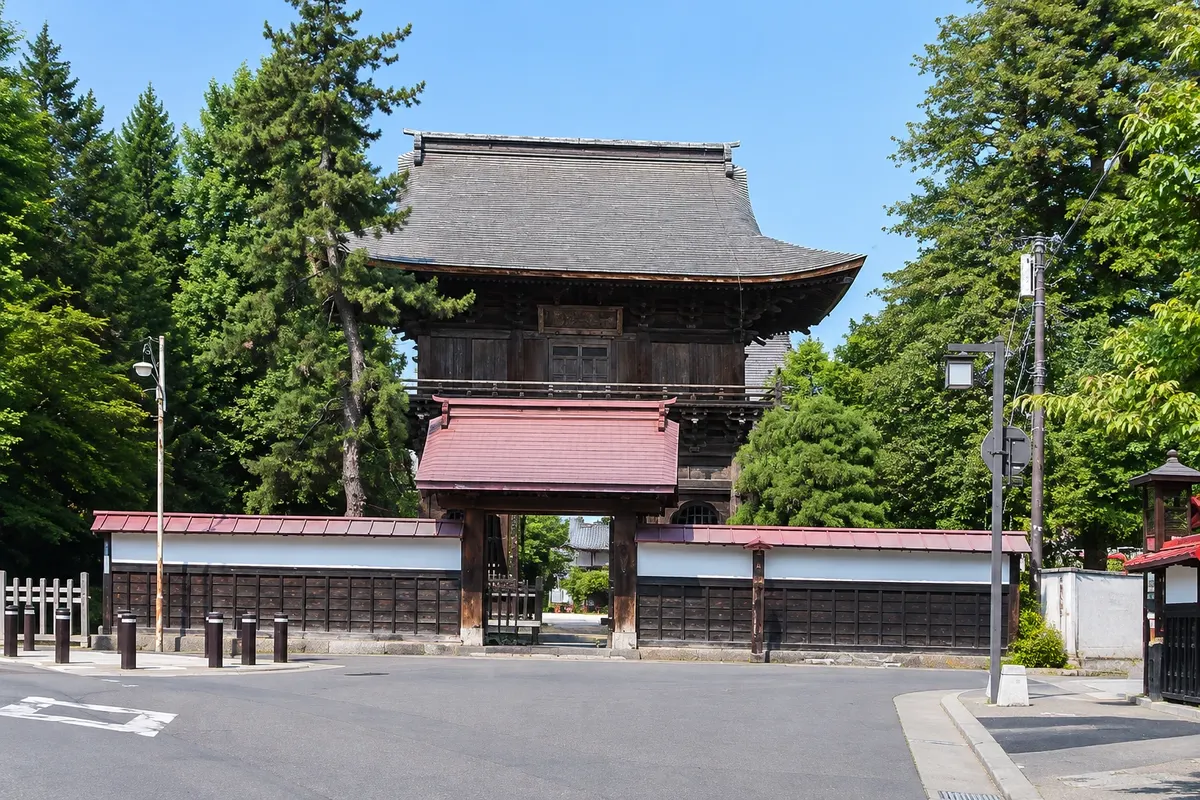
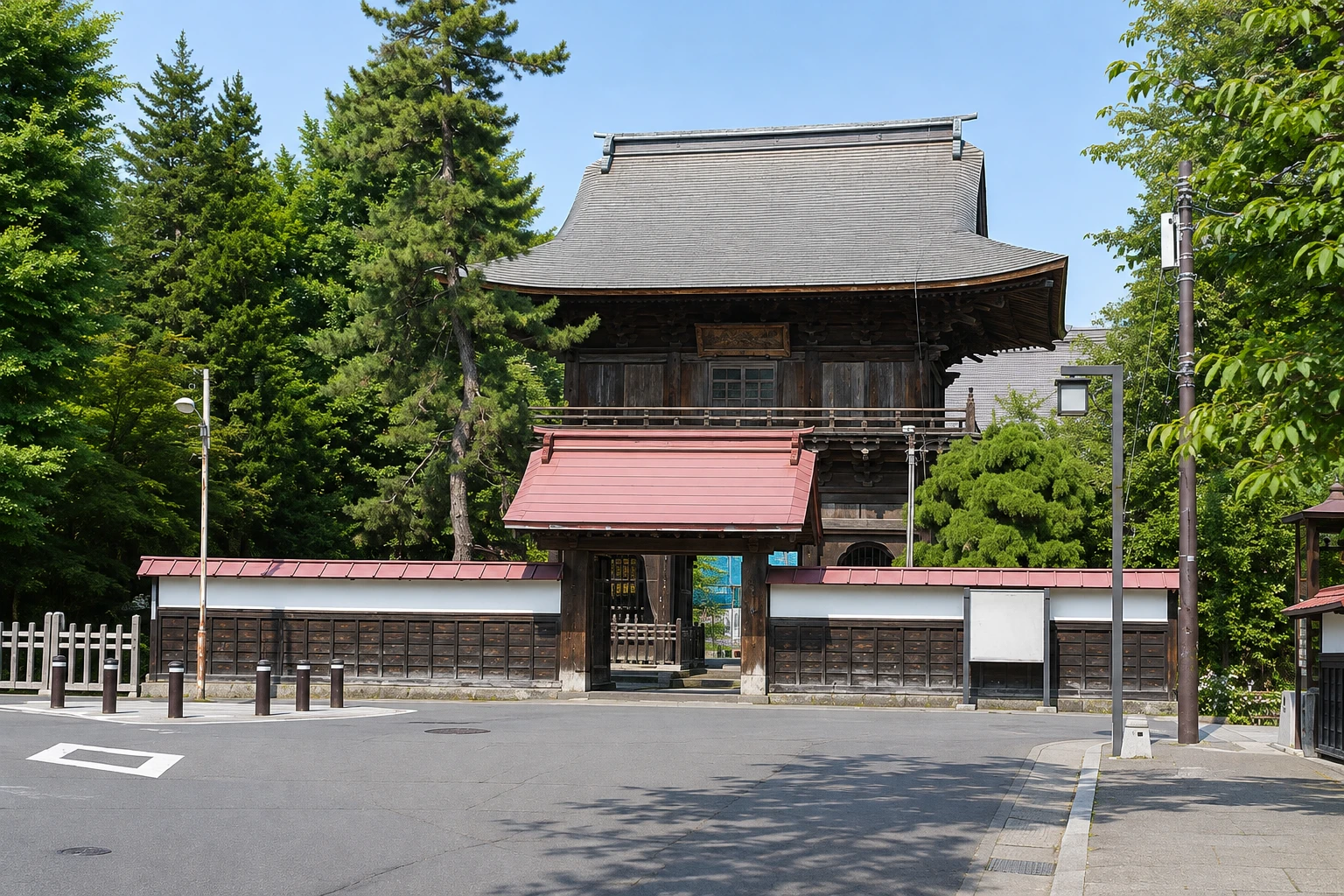
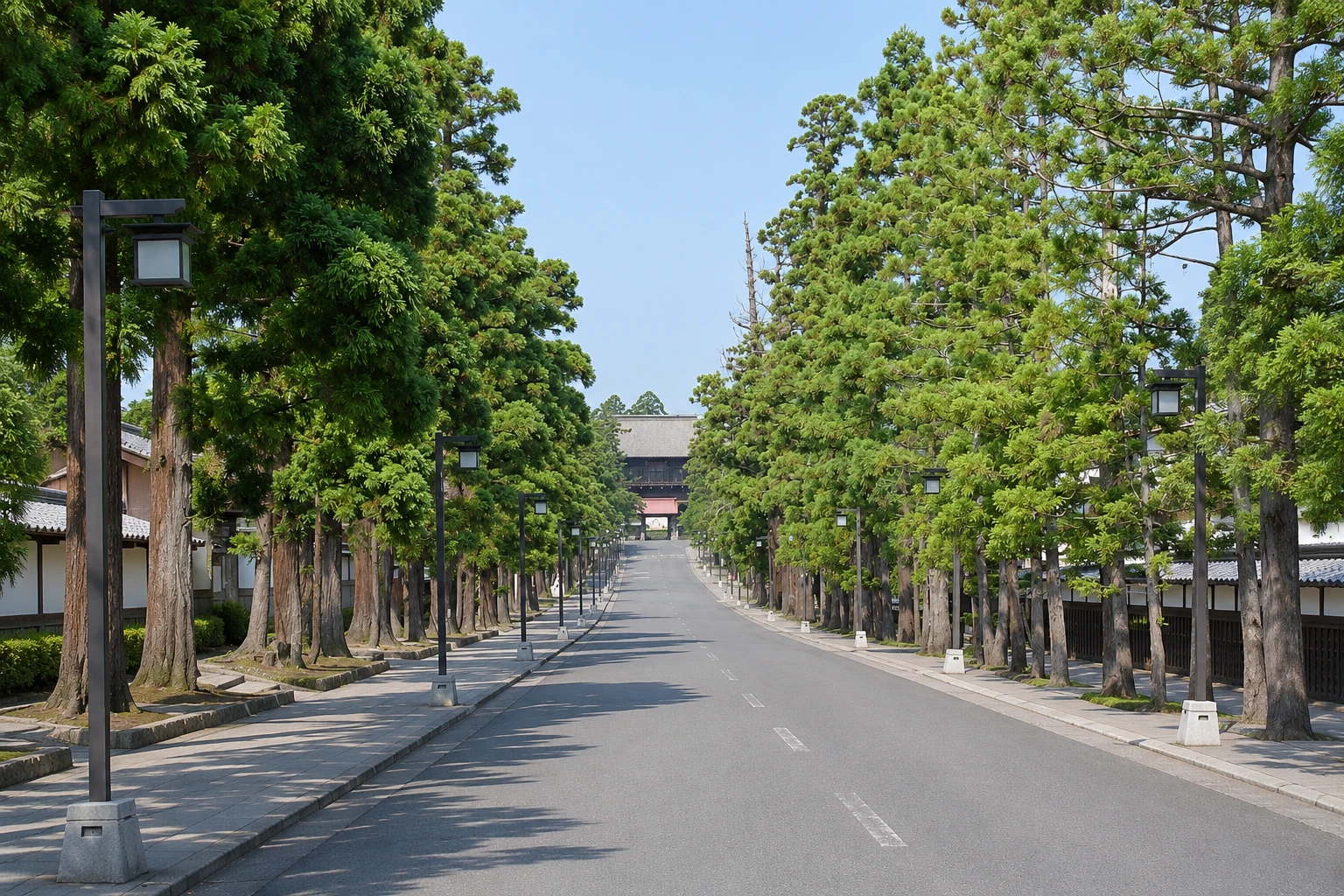
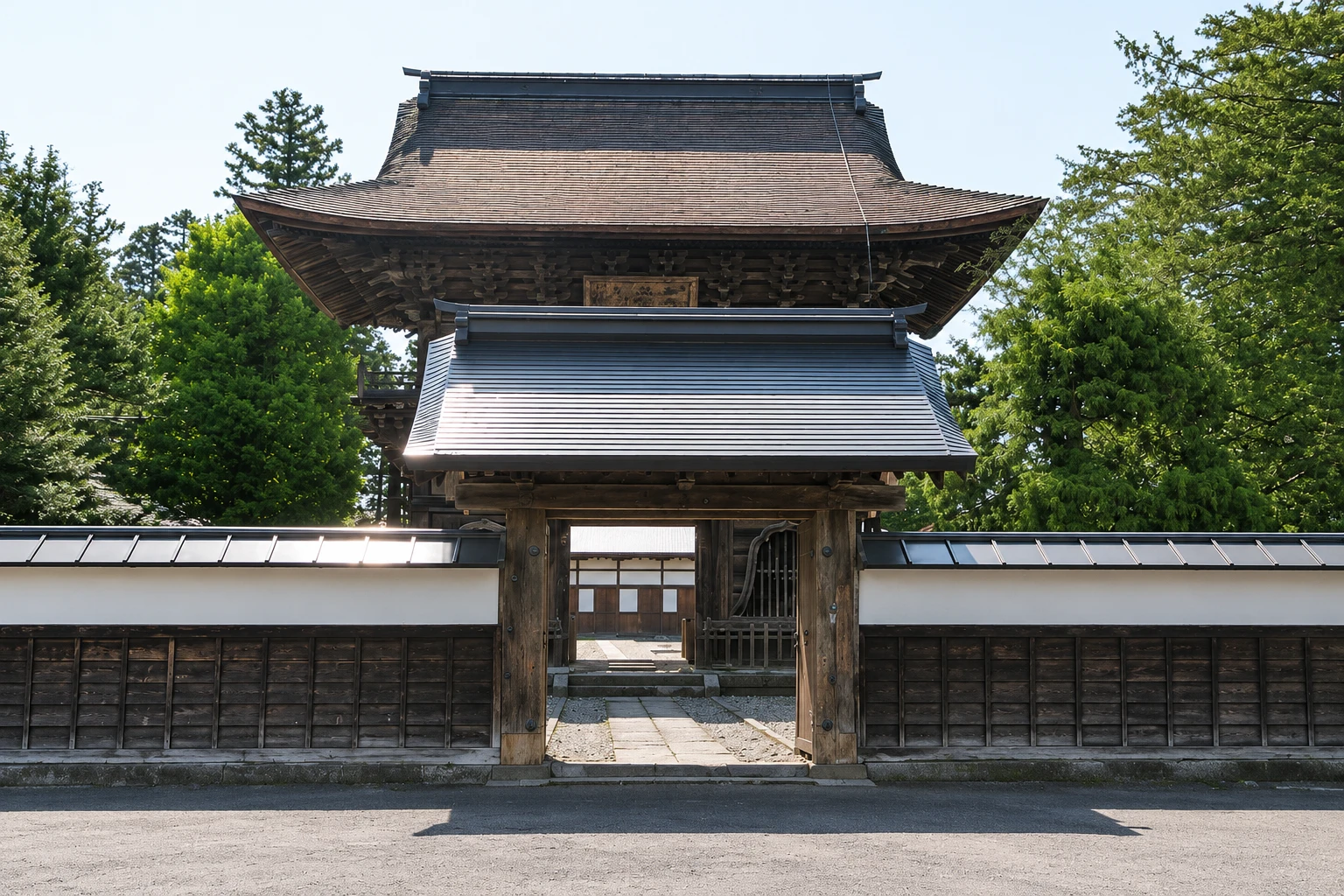
The Tsugaru family’s Zen temple at the end of Zenrin Street, with a two-story gate from 1629 and mausoleums of the clan lords, on a street with thirty-three Soto school temples.
Illustrative images. The pictures in this guide are illustrations based on the real place, not photographs, and may differ from it.

A look at the place
Chōshō-ji in pictures
These pictures are illustrations based on the real place, not photographs. They may differ from the place.
Click the picture to enlarge it.
Discover
About Chōshō-ji
Chosho-ji is the Tsugaru family temple of the Soto Zen school, southwest of Hirosaki’s center. It was moved there in the early 17th century, when the Tsugaru gathered the city’s temples into a single area along a street that leads to Chosho-ji. It is the most important of the thirty-three temples on that street, Zenrin-gai.
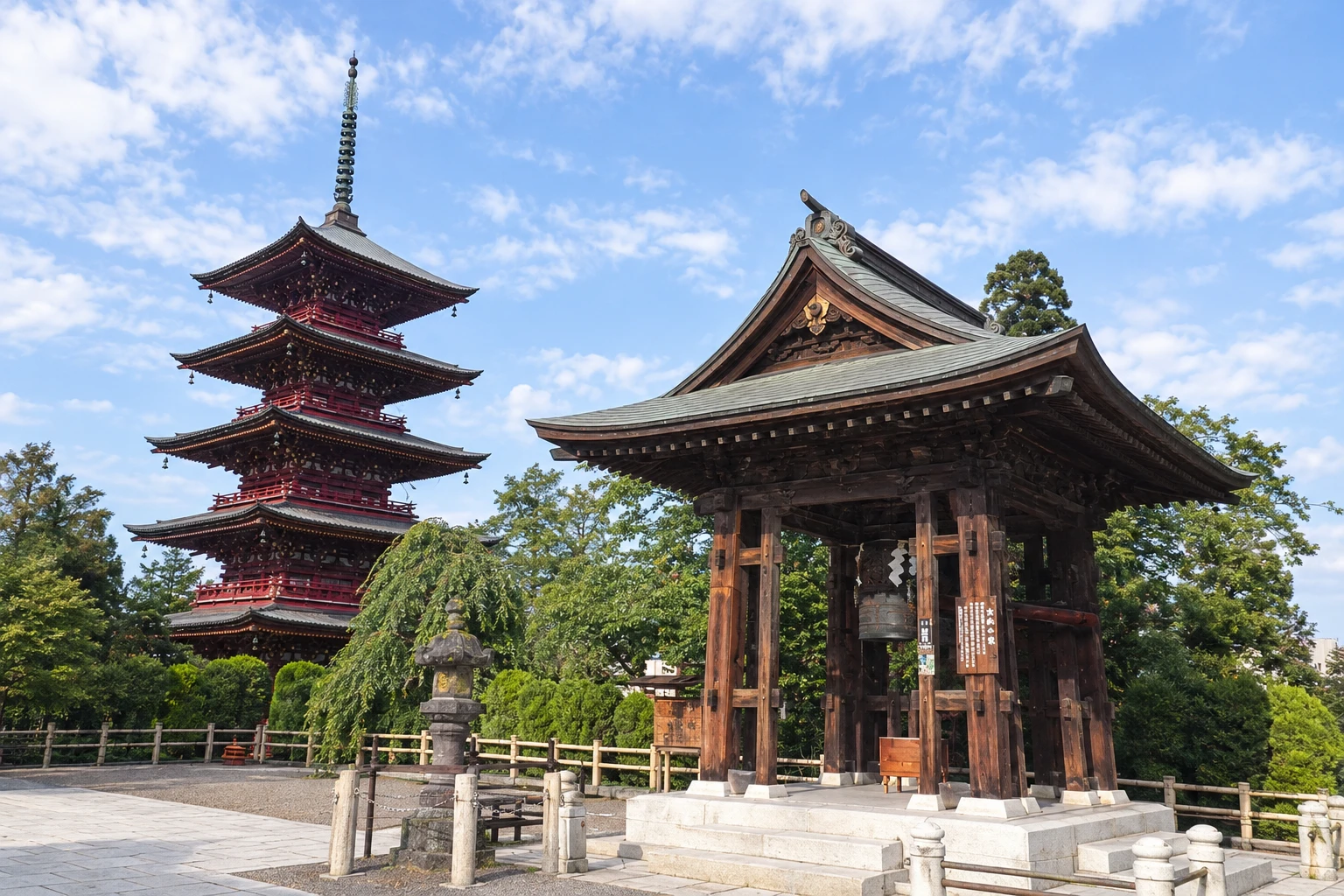
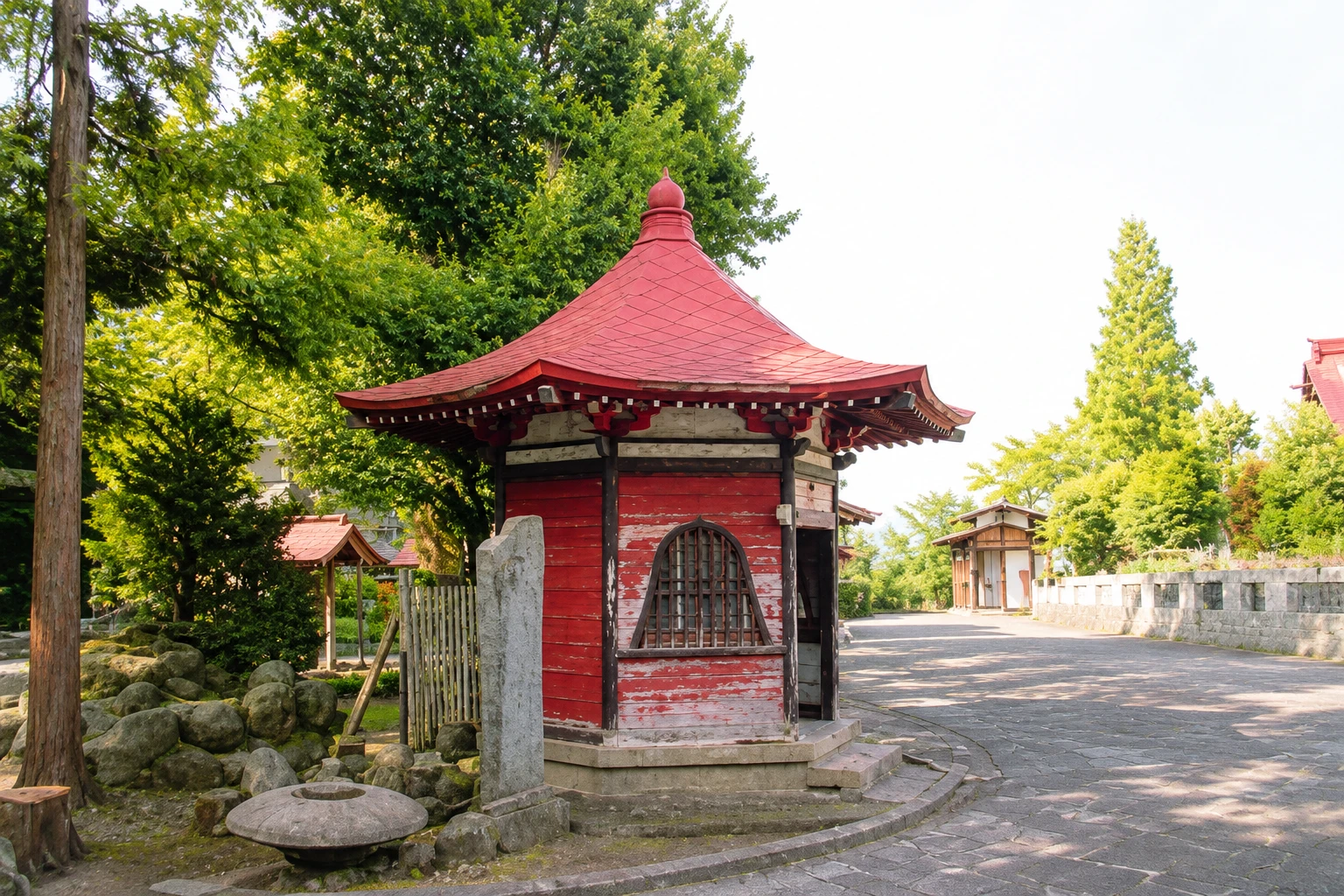
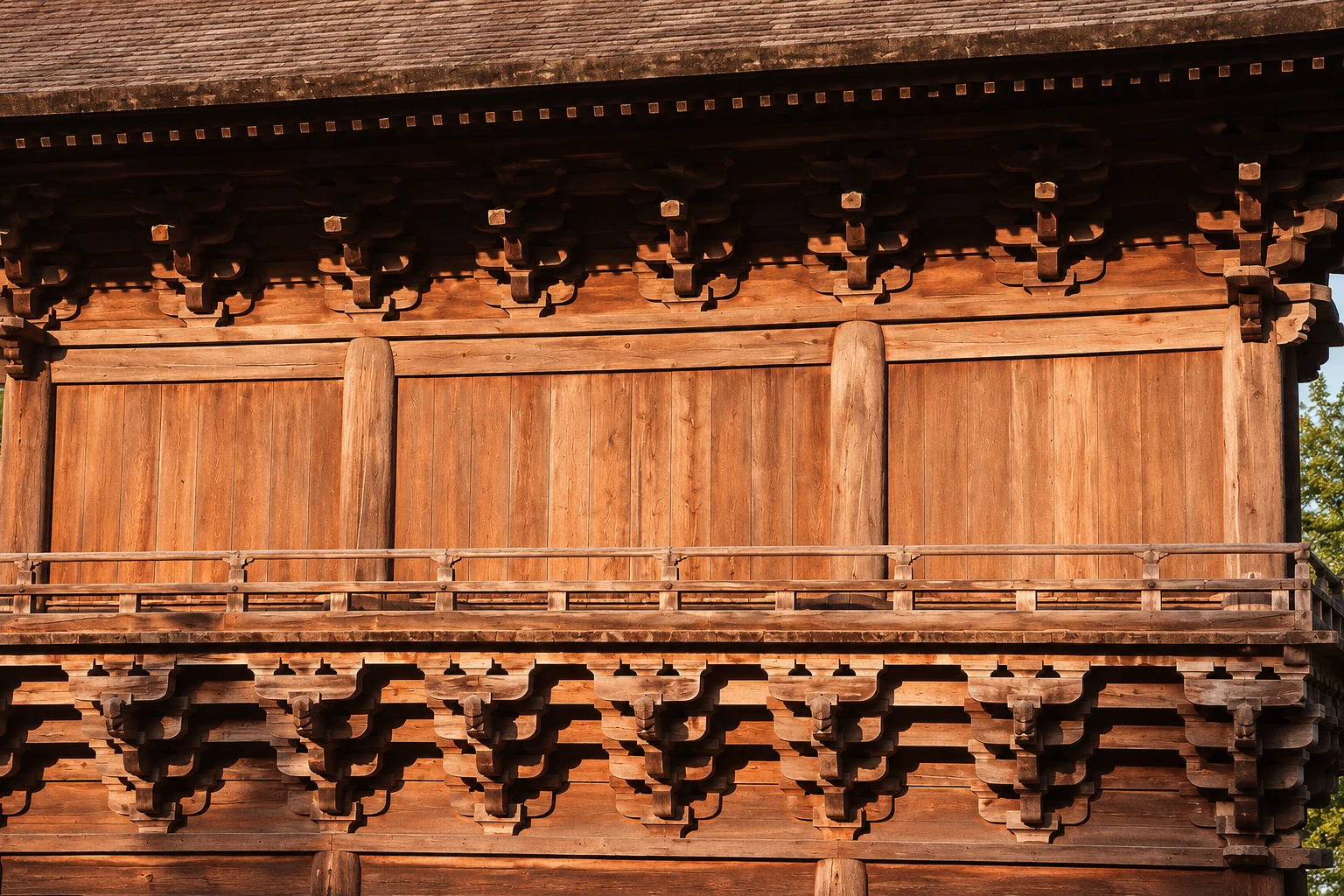
The main gate (sanmon), a two-story dark wooden structure, was built in 1629 and is registered as an Important Cultural Property. Inside the grounds, the main hall, the kitchen and the meditation hall follow the design of Zen temples, and a room houses statues of five hundred of Buddha’s disciples (rakan). At the rear are the mausoleums of some Tsugaru clan lords, small wooden buildings set in a grove.
Zenrin-gai is a straight avenue with cedars and low walls, where temple gates follow one another on both sides. The parallel street, Kayamachi, has other temples from various schools. The ensemble is protected and forms one of the largest concentrations of Zen temples in northern Japan, with a contemplative atmosphere even on the city’s busiest days.
Visiting Chosho-ji includes the main hall and the mausoleums, with paid admission; walking along the temple street is free. The site is about a 15-minute walk from the castle park and pairs well with Nakacho on a walking tour of the old city.
Before you go
Practical information
Cidade Turismo reviews its information regularly, but something may have changed. Check with the place before planning your trip.
How much time to set aside
About 45 minutes for Chosho-ji; an hour including the walk along the temple street.
Best time
Late afternoon, when the low light filters through the cedars of Zenrin Street. In autumn, the temple trees often turn color; in winter, snow covers the roofs. Confirm opening hours before you go.
How to get there
From Hirosaki Station, buses run to the Shigemori area at the start of Zenrin Street in about 15 minutes; from the castle park it is about a 15-minute walk. The temple is at the end of the street.
Tip
Walk the entire Zenrin Street on foot, from its start to the gate of Chosho-ji, to understand the layout of the area. The smaller temples are generally closed inside, but their gates can be seen from the street.
Get your questions answered
Frequently asked questions about Chōshō-ji
What is Zenrin Street in Hirosaki?
A street with thirty-three Soto Zen temples, gathered there by the Tsugaru clan in the early 17th century. At its end is Chosho-ji, the family temple.
What to see at Chosho-ji?
The two-story gate from 1629, the main hall, the room of five hundred disciples of Buddha and the mausoleums of Tsugaru clan lords.
Is there an admission fee to visit Chosho-ji?
There is an entrance fee for the hall and the mausoleums; walking along Zenrin Street is free. Check the current rates.
Is Chosho-ji near Hirosaki Castle?
It’s about a 15-minute walk from the castle park, to the southwest. There are also buses from the station.
Beyond the guide


