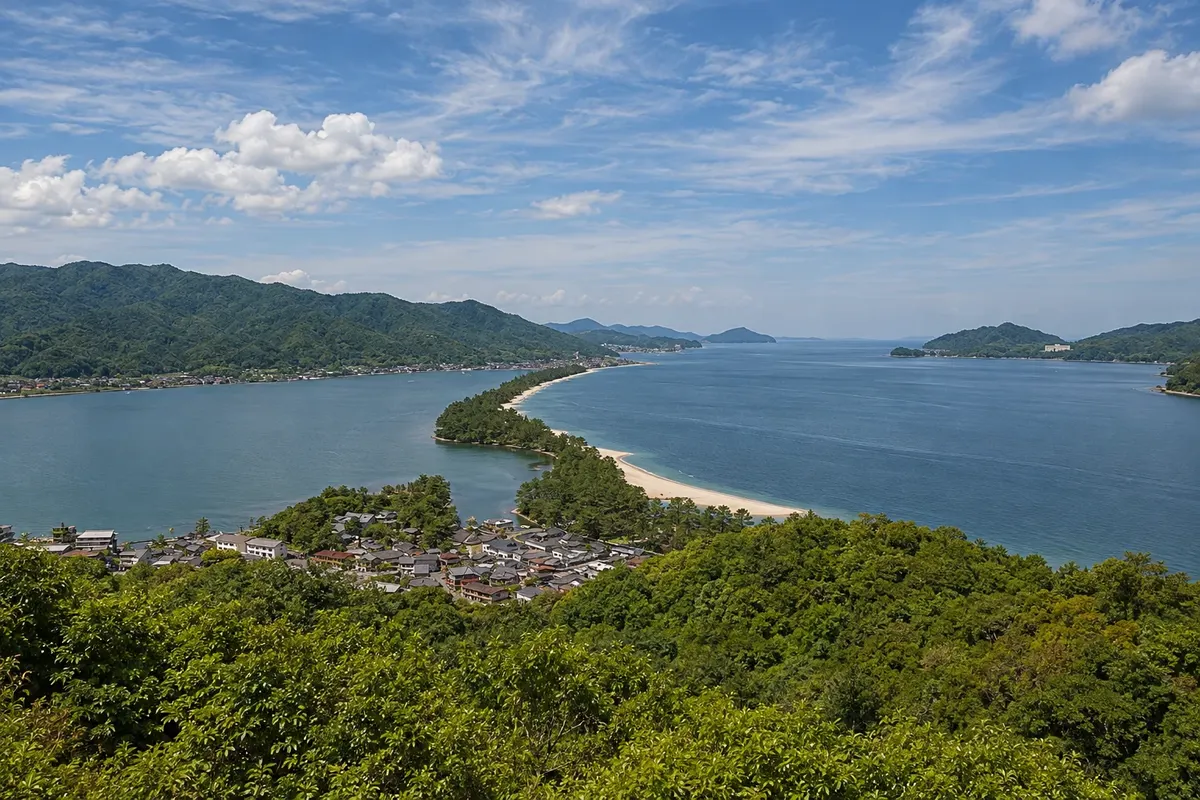
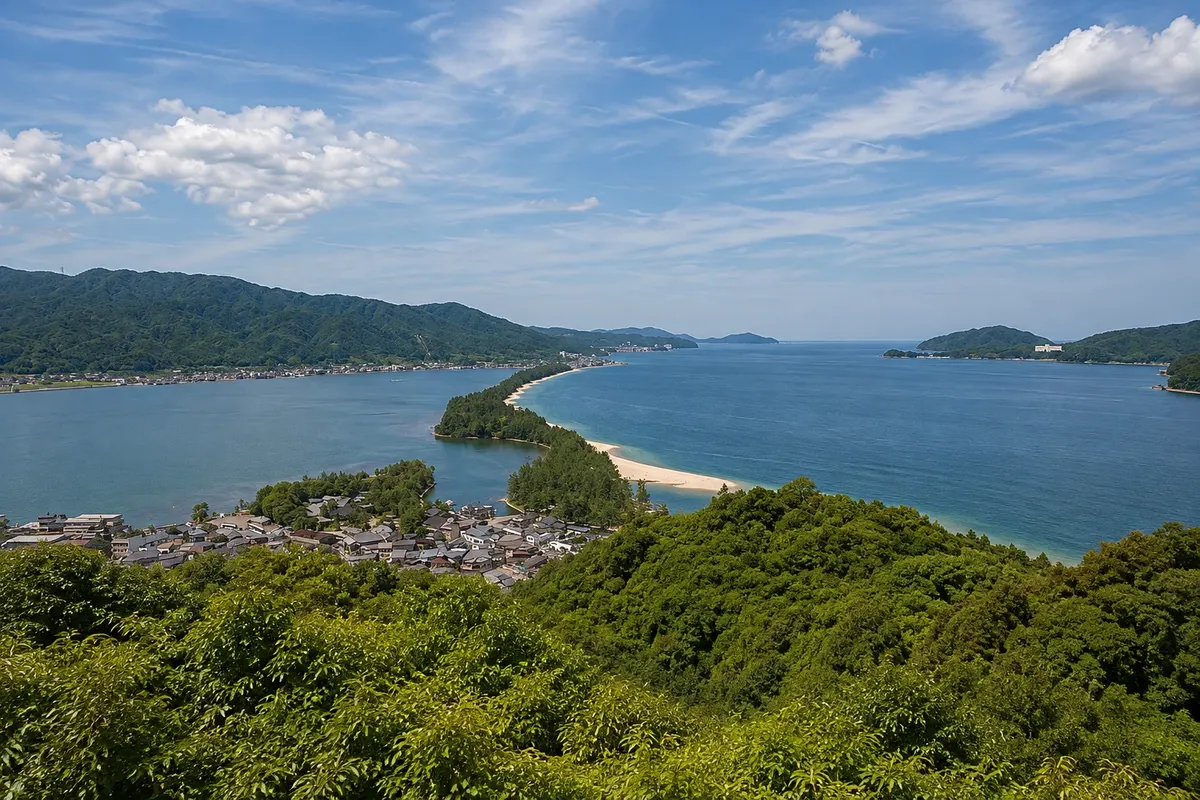
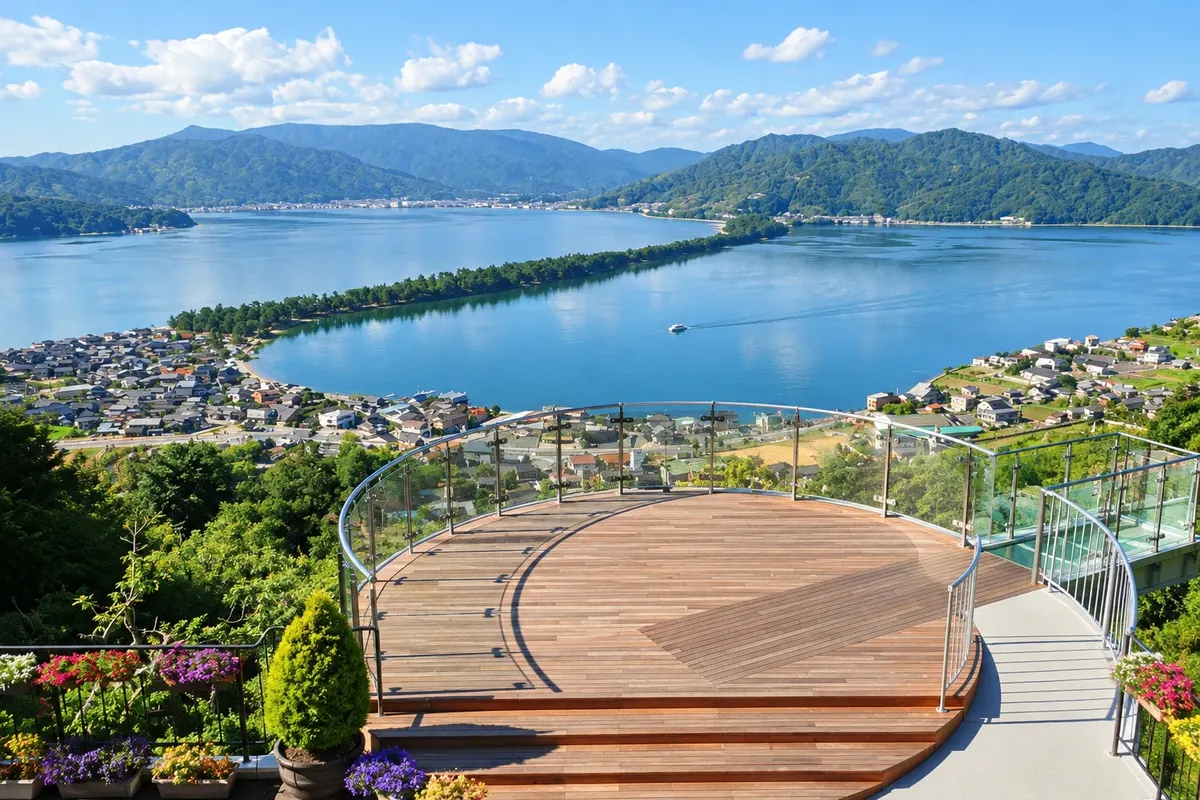
In the northern part of Kyoto Prefecture, on the Sea of Japan coast, the Tango Peninsula holds two landscapes very different from Kyoto’s temples. In Miyazu, Amanohashidate is a roughly 3.6 km sandbar covered in pine trees that nearly closes the bay, like a bridge. Since the 17th century it has been counted among Japan’s three most famous views, alongside Matsushima and Miyajima.
The bridge shape is best seen from above. On the north side, a cable car and a chairlift climb to Kasamatsu Park, the origin of the custom of viewing the landscape upside down, bent over so the sandbar looks like a dragon rising to the sky. On the south side, the Amanohashidate View Land observation deck offers the opposite view. Between them you can walk or cycle across the sandbar under the pines, or take a boat through the bay.
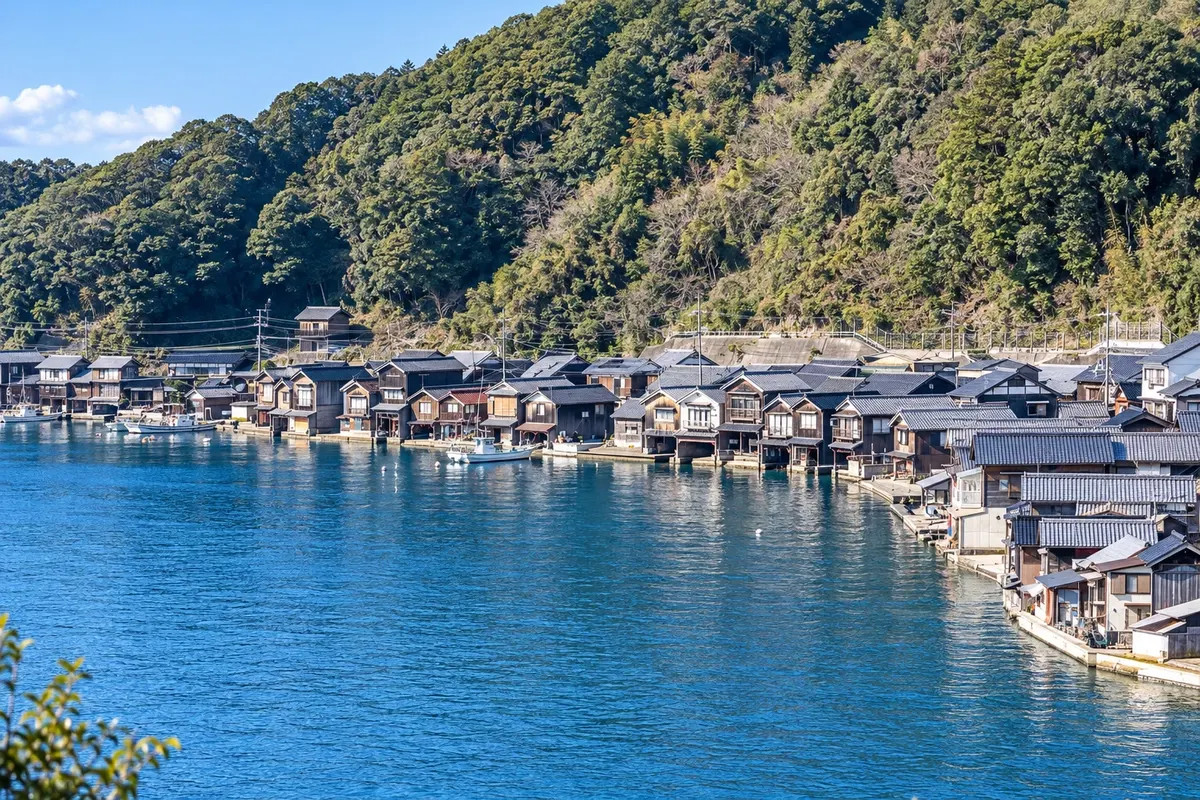
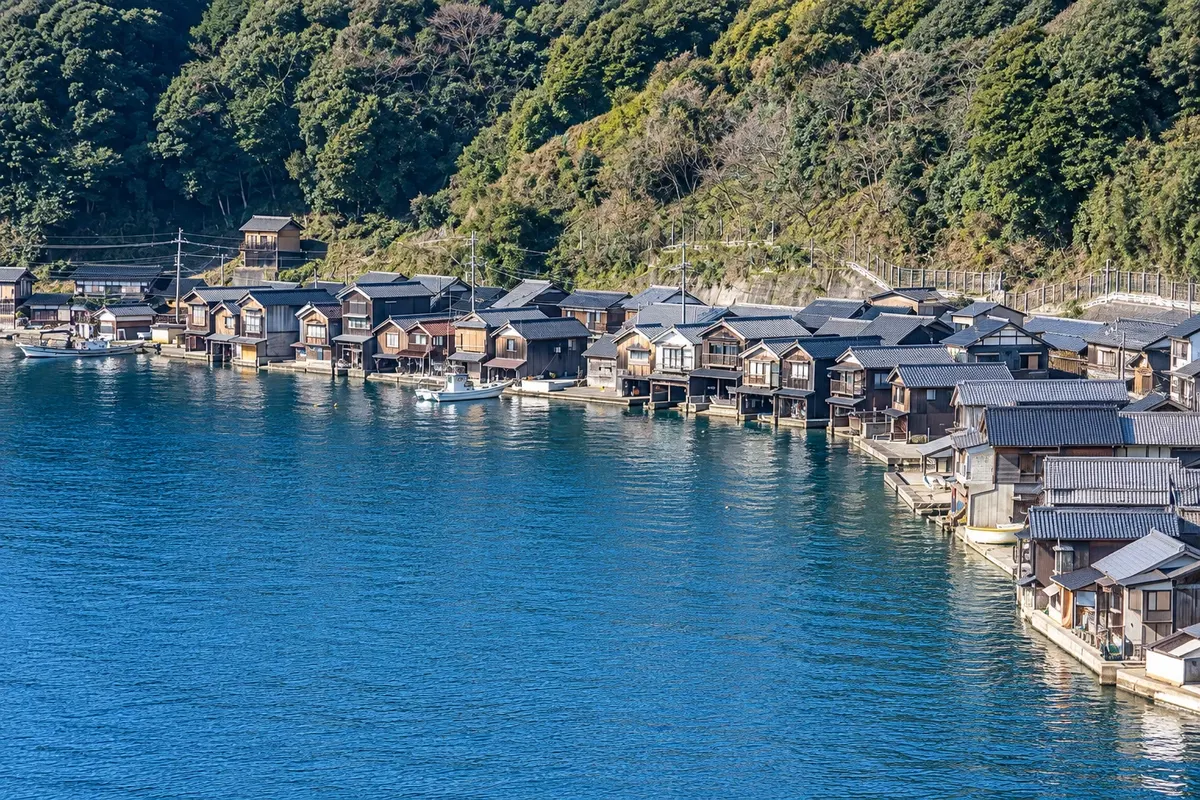
About 20 km to the north, the village of Ine stretches along a sheltered bay, with roughly 230 funaya — fishermen’s boathouses that store the boat on the ground floor over the water and have the living quarters above. It is the first fishing village designated as a preserved group of traditional buildings in Japan. Sightseeing boats circle the bay, and some funaya have been converted into cafés and lodgings.
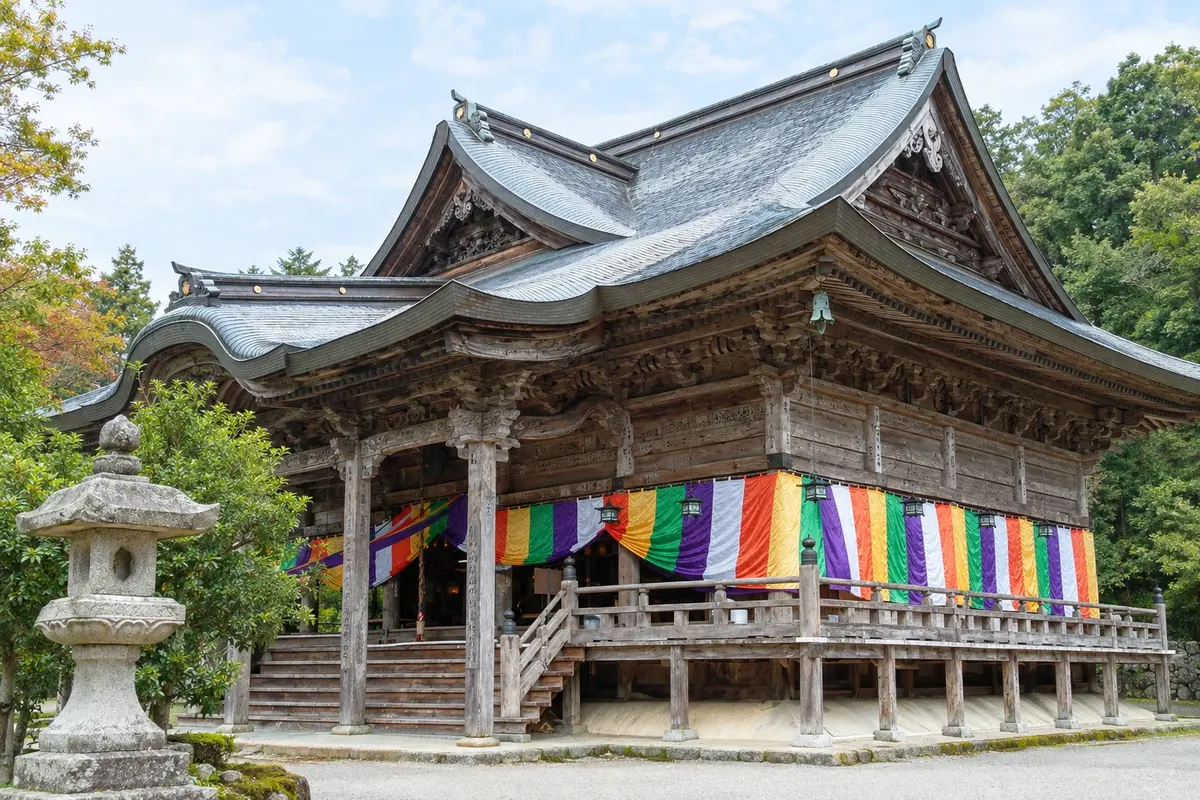
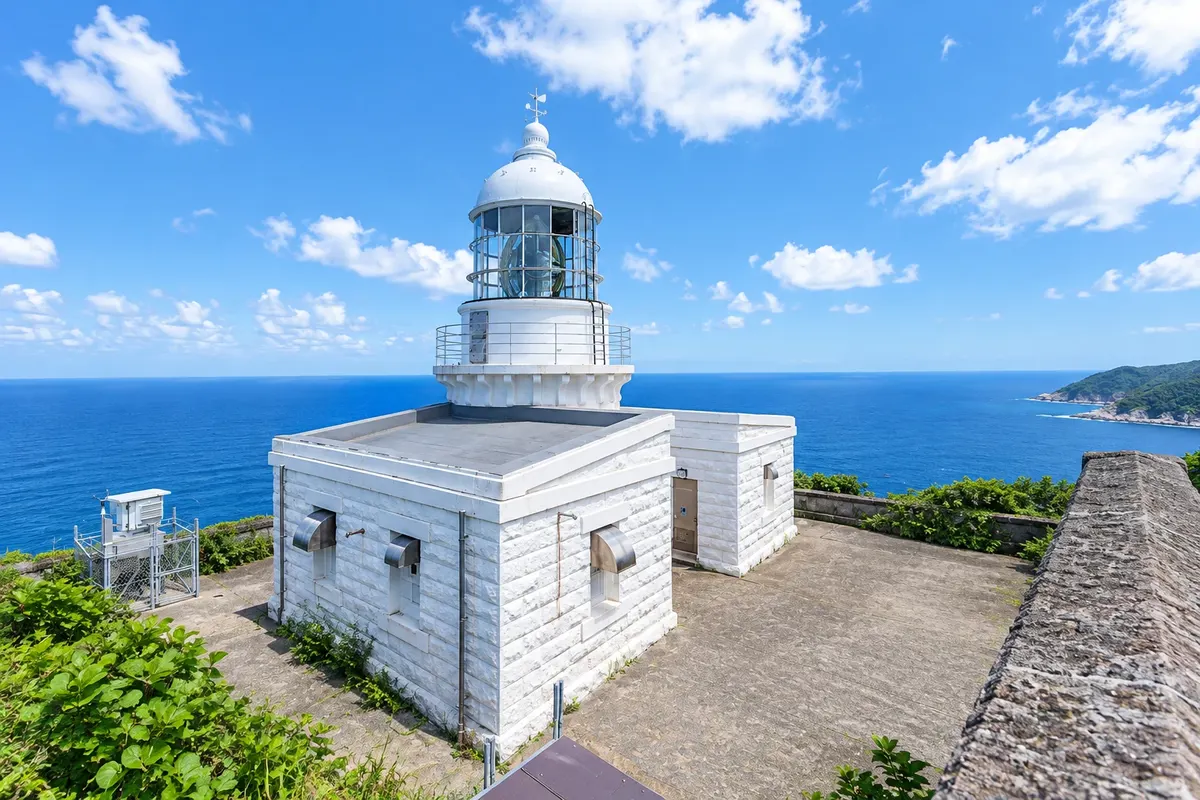
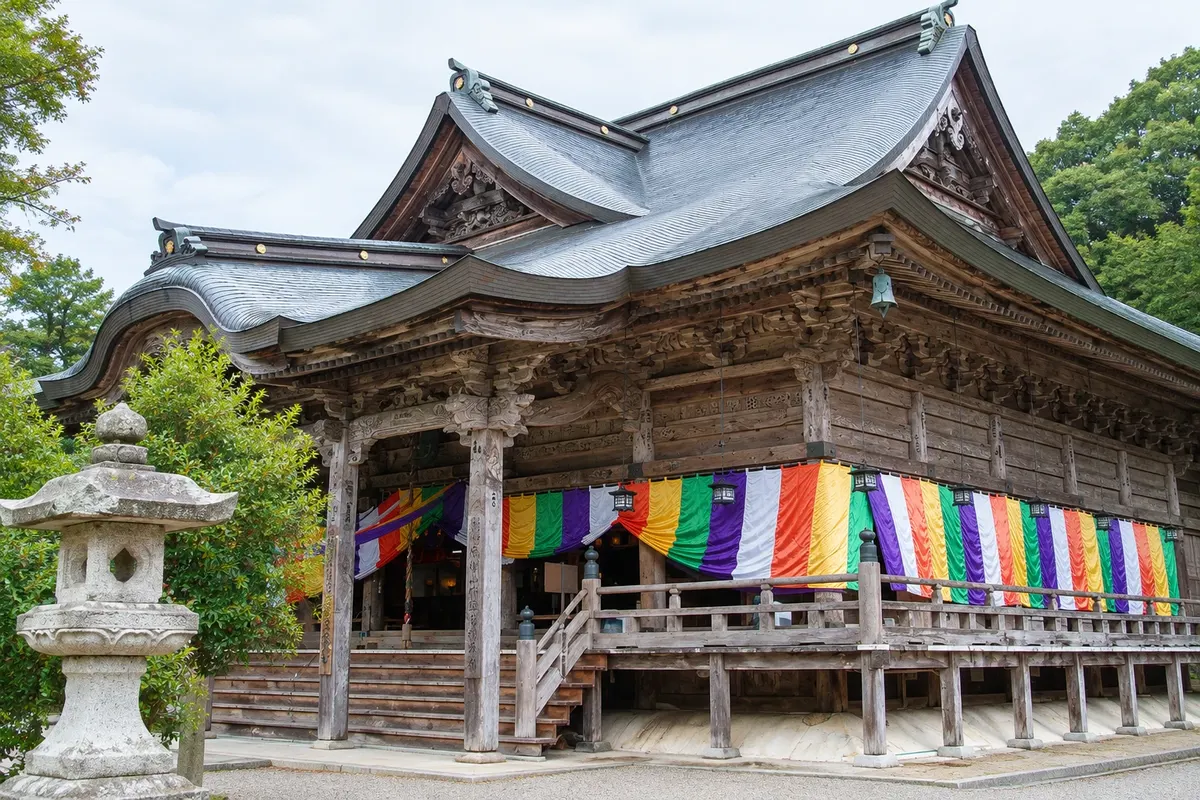
The region offers Sea of Japan seafood such as winter crab and yellowtail, the Nariai-ji temple up on the mountain, the Kono shrine at the foot of Kasamatsu Park, and, at the tip of the peninsula, the Kyogamisaki lighthouse.
This destination brings together 2 cities: Miyazu, Ine.


 Brazil
 Antarctica
 Argentina
 Bolivia
 Chile
 Colombia
 Ecuador
 Guyana
 French Guiana
 Falkland Islands (Malvinas)
 Paraguay
 Peru
 Suriname
 Uruguay
 Venezuela
 Germany
 Austria
 Belgium
 Croatia
 Denmark
 Slovakia
 Slovenia
 Spain
 Finland
 France
 Greece
 the Netherlands
 Hungary
 Ireland
 Iceland
 Italy
 Luxembourg
 Norway
 Poland
 Portugal
 the United Kingdom
 the Czech Republic
 Sweden
 Switzerland
 Turkey
 Bermuda
 Canada
 the United States
 Greenland
 Mexico
 Saint Pierre and Miquelon
 the Dominican Republic
 South Africa
 Egypt
 Australia
 Fiji
 New Zealand
 Papua New Guinea