

 Brazil
 Antarctica
 Argentina
 Bolivia
 Chile
 Colombia
 Ecuador
 Guyana
 French Guiana
 Falkland Islands (Malvinas)
 Paraguay
 Peru
 Suriname
 Uruguay
 Venezuela
 Germany
 Austria
 Belgium
 Croatia
 Denmark
 Slovakia
 Slovenia
 Spain
 Finland
 France
 Greece
 the Netherlands
 Hungary
 Ireland
 Iceland
 Italy
 Luxembourg
 Norway
 Poland
 Portugal
 the United Kingdom
 the Czech Republic
 Sweden
 Switzerland
 Turkey
 Bermuda
 Canada
 the United States
 Greenland
 Mexico
 Saint Pierre and Miquelon
 the Dominican Republic
 South Africa
 Egypt
 Australia
 Fiji
 New Zealand
 Papua New Guinea
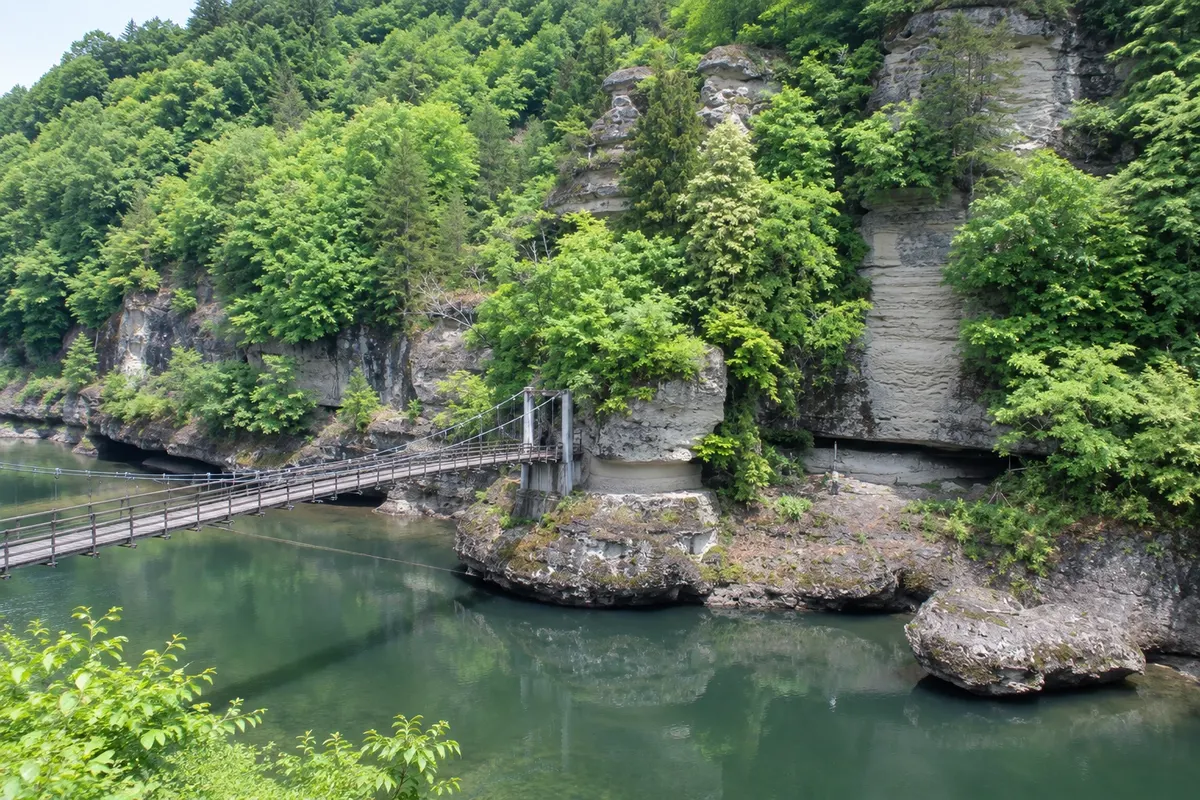
Rock formation · Shimogo, Fukushima
Tōnohetsuri
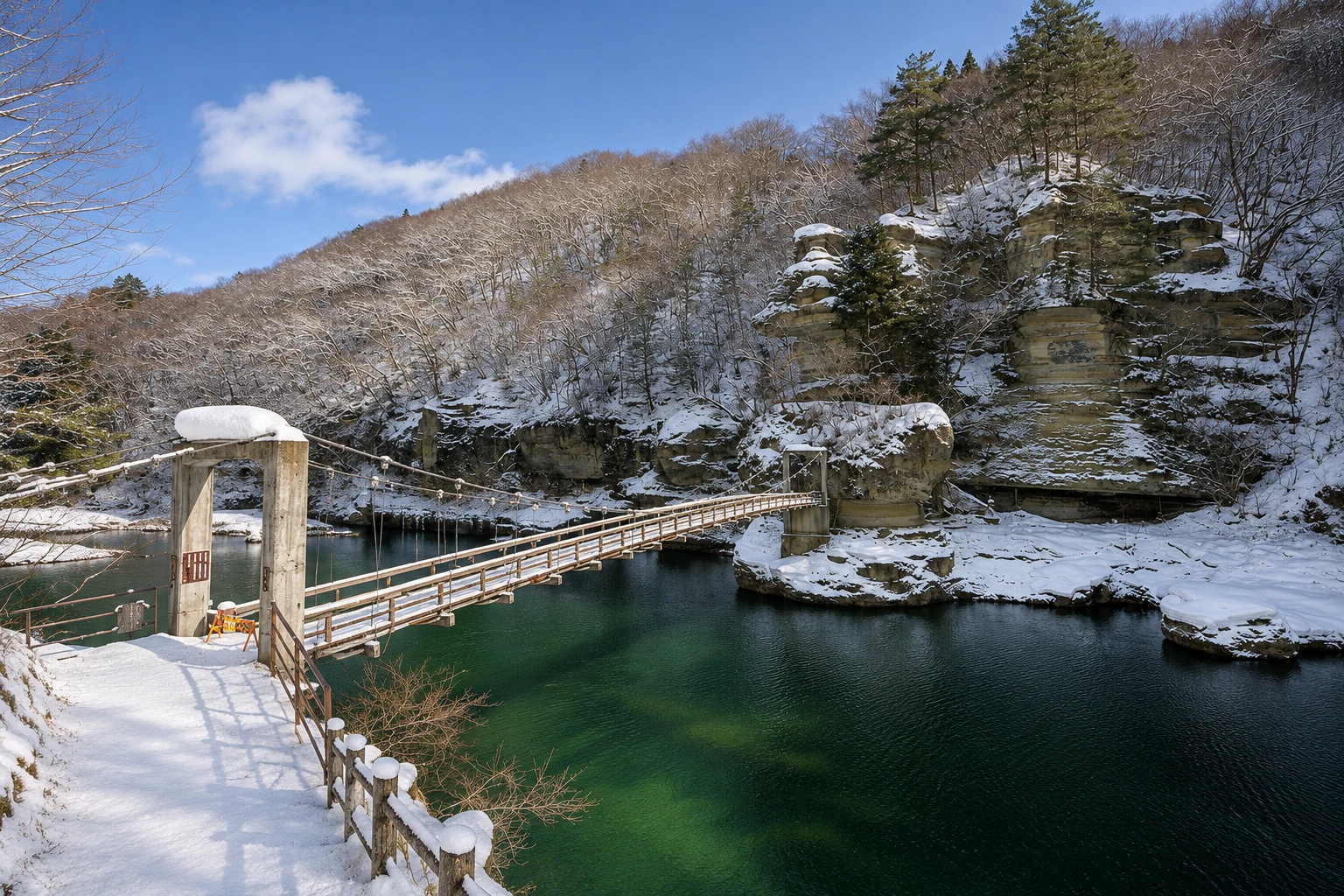
Rock cliffs on the bank of the Okawa River, carved by water and wind into tower-like shapes, with cut-through passages and a suspension bridge, next to the station of the same name.
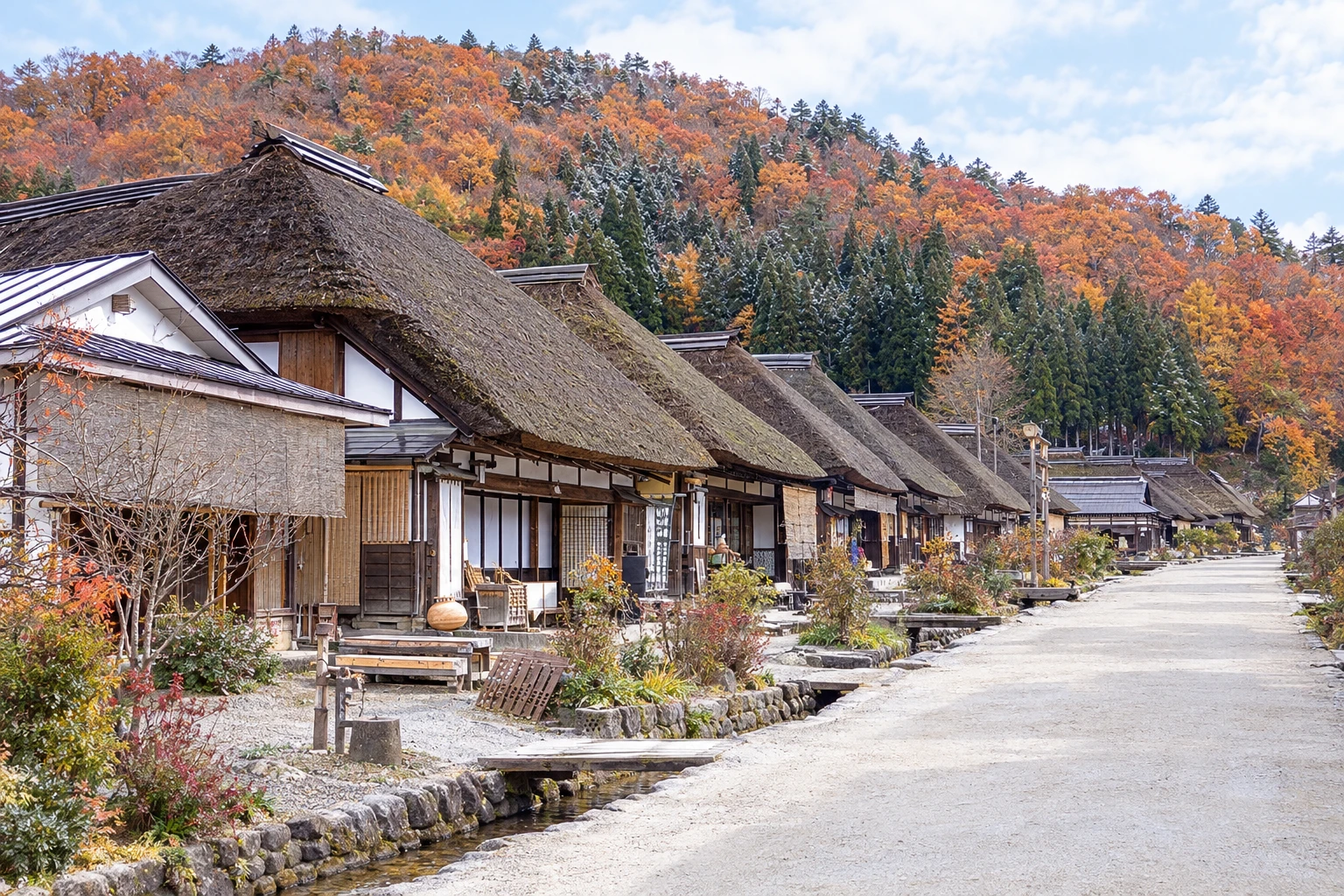
Illustrative images. The pictures in this guide are illustrations based on the real place, not photographs, and may differ from it.

A look at the place
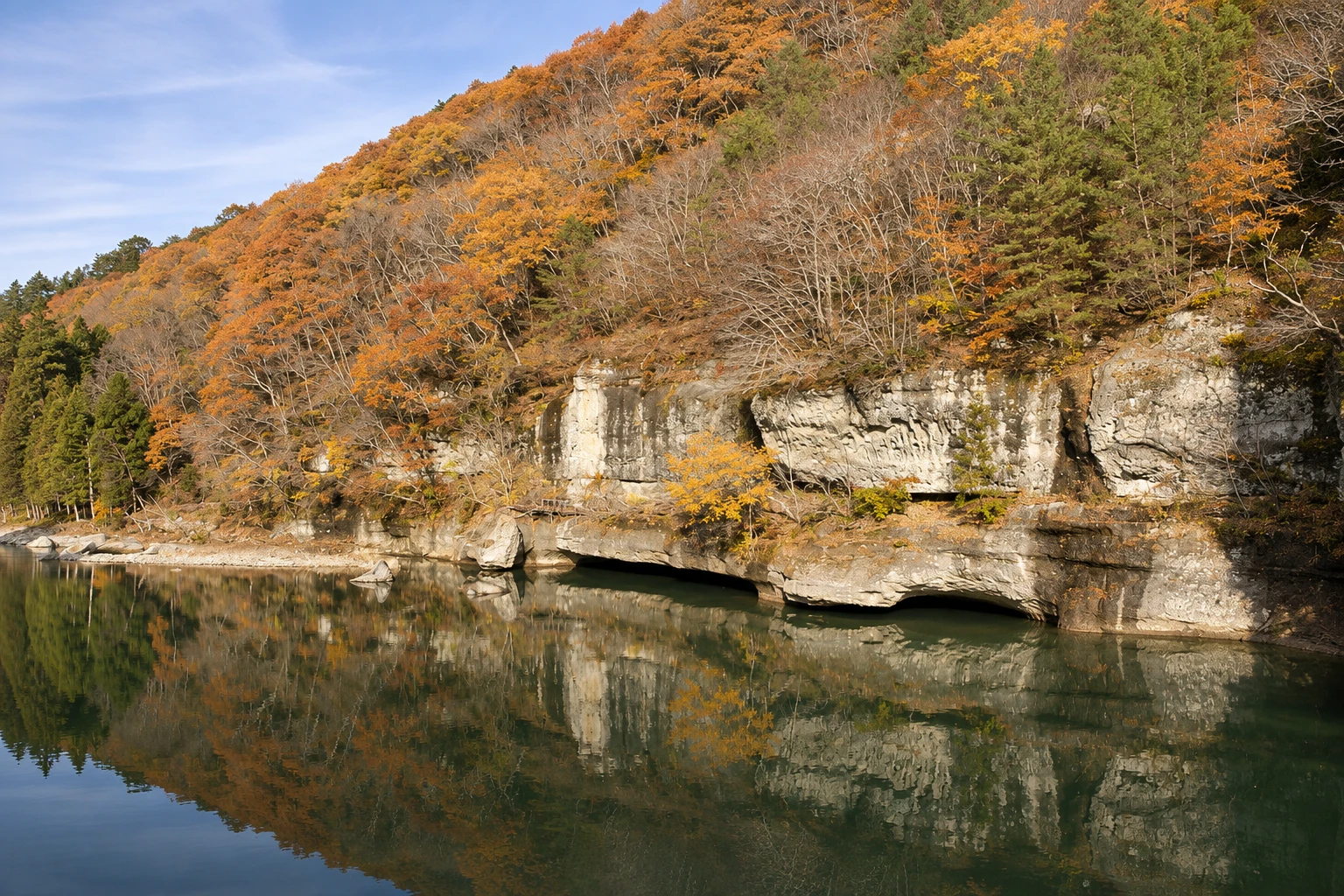
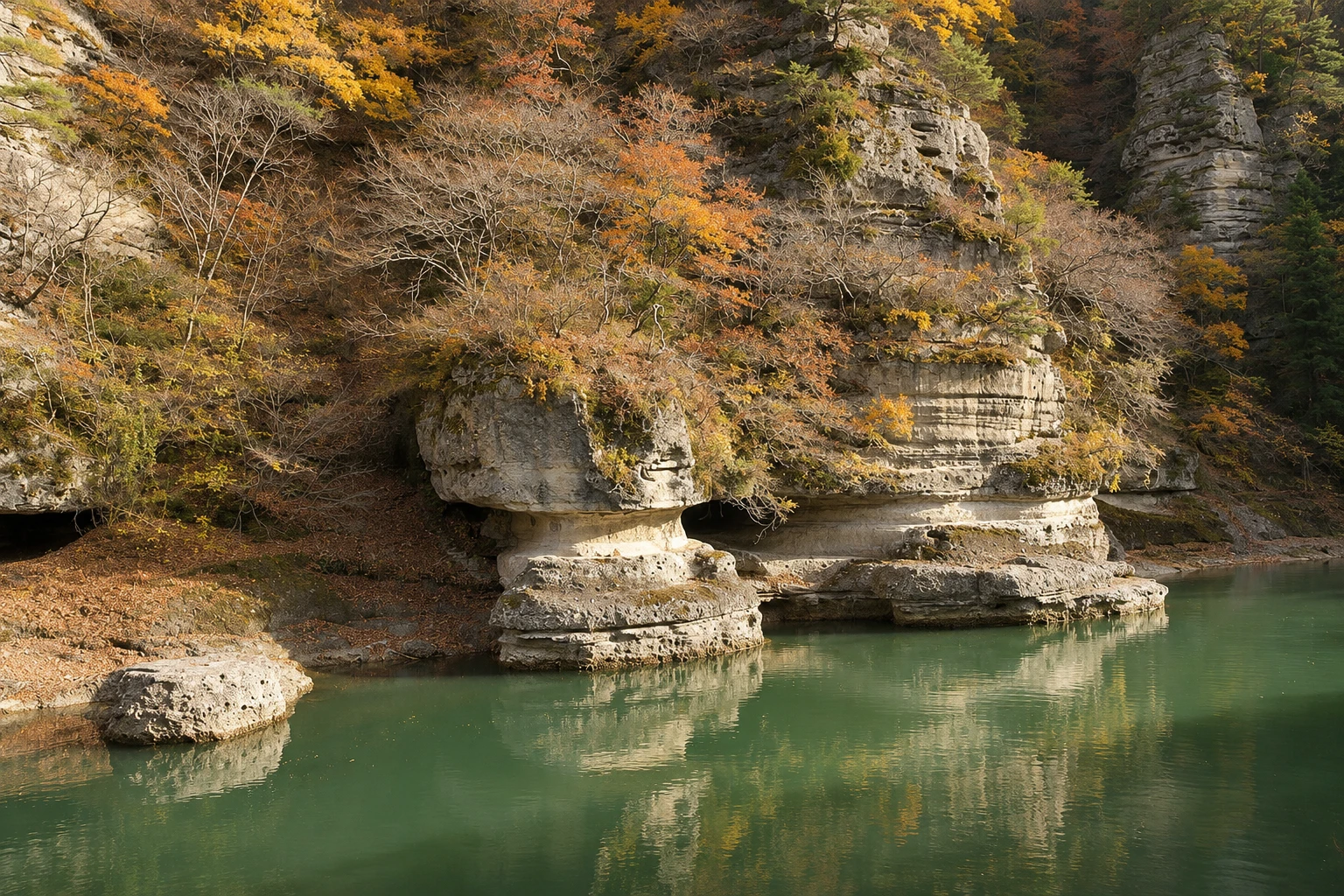
Tōnohetsuri in pictures
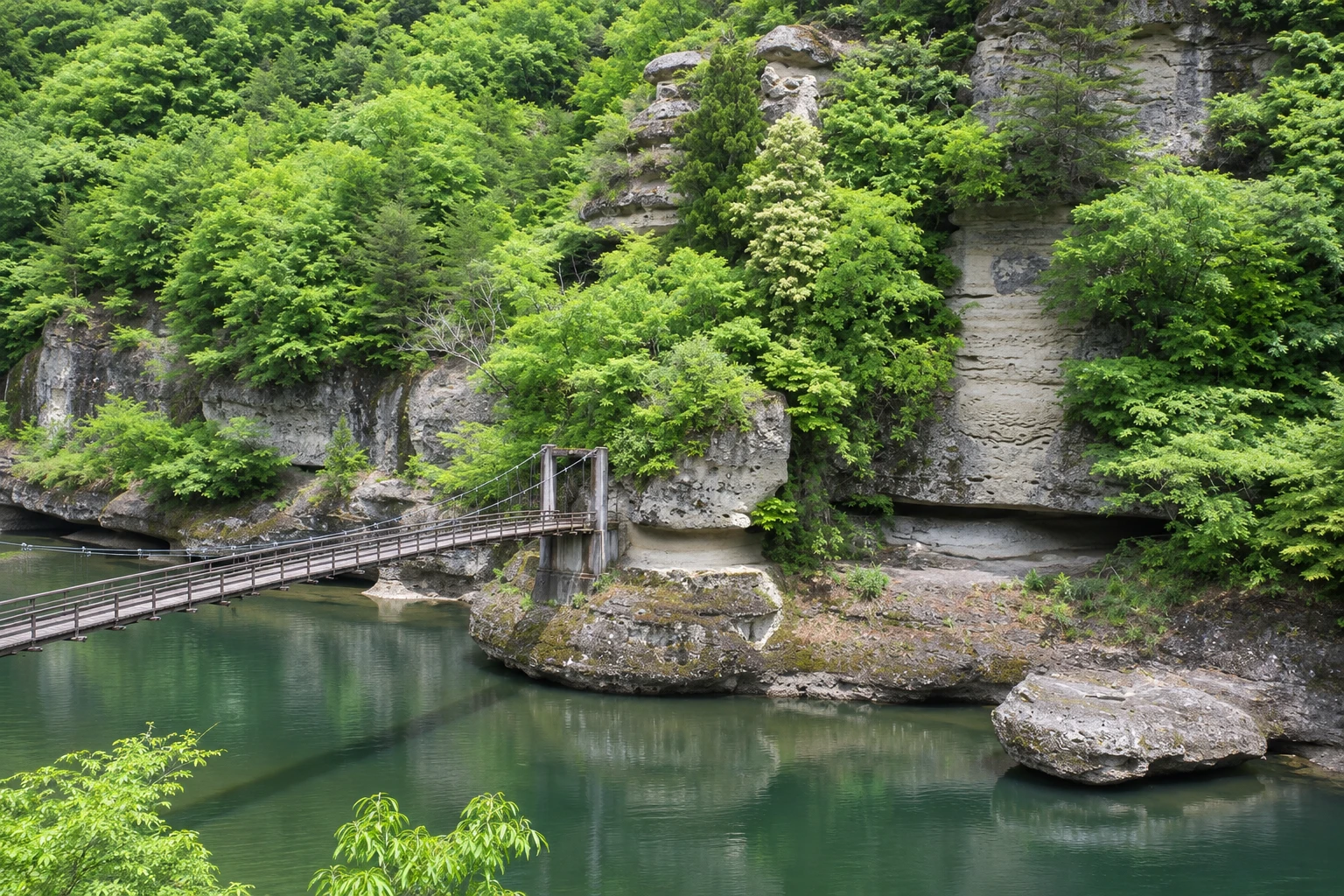
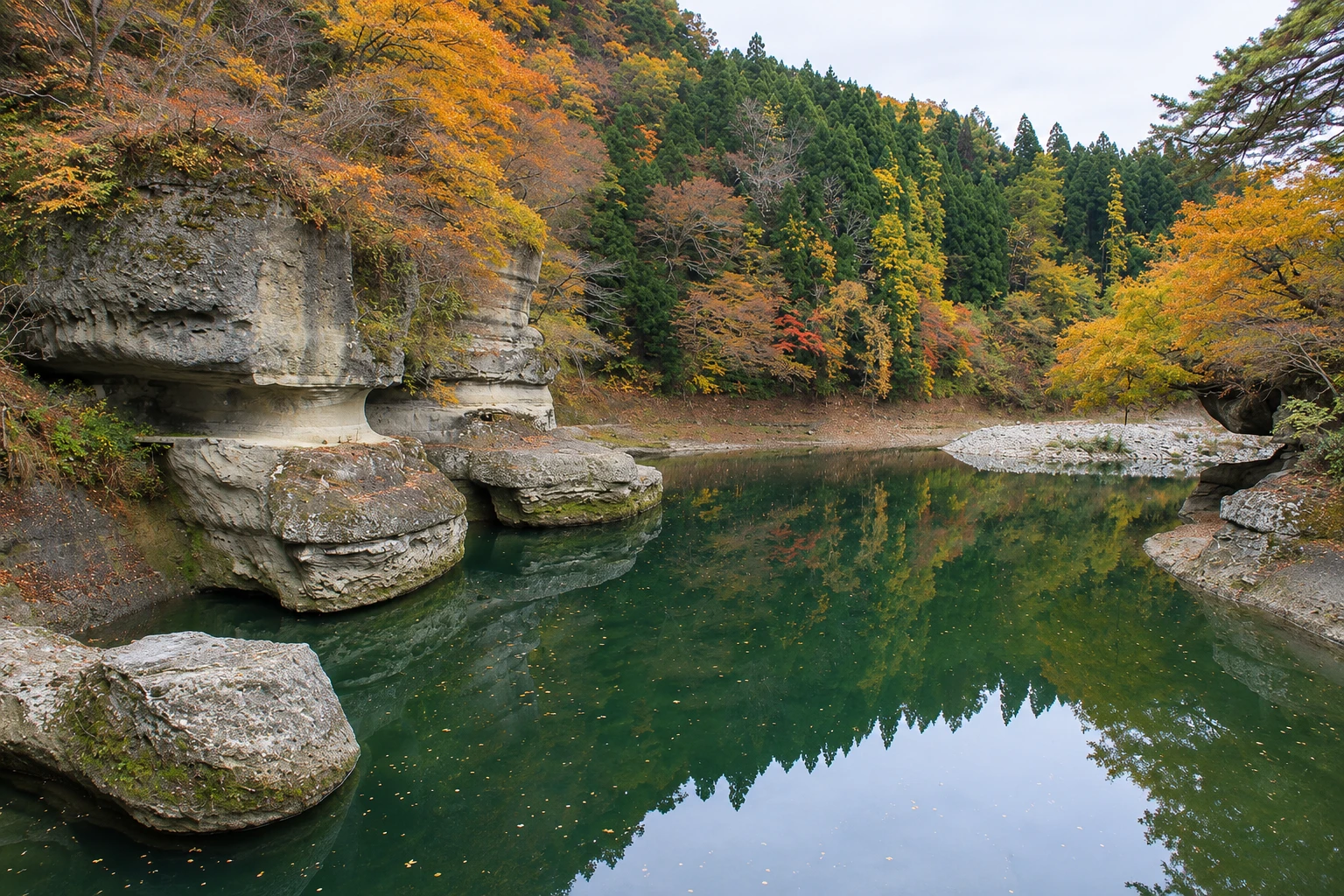
These pictures are illustrations based on the real place, not photographs. They may differ from the place.
Click the picture to enlarge it.
Discover
About Tōnohetsuri
Tonohetsuri is a stretch of the Okawa River bank in Shimogo where water and wind erosion over millions of years carved rock cliffs into shapes of towers, columns and overhangs. The name blends “to,” meaning tower, and “hetsuri,” a local-dialect word for a steep slope by a river. It is designated a National Natural Monument.
The rocks are layers of volcanic tuff and sandstone, with colors ranging from gray to yellowish and distinct horizontal banding. For about 200 meters the river has undercut the base of the cliffs, creating ledges and small caves, and above them pines and shrubs grow.
A wooden suspension bridge crosses the river and leads to the rock edge, where narrow passages let you walk beneath the overhangs, close to the water. On top of one of the towers stands a small shrine dedicated to Kokuzo Bosatsu. The bridge sways a little, and the passages are narrow and damp.
The visit is short and there is no admission fee. Tonohetsuri Station on the Aizu Railway is a few minutes’ walk away, and the site is often combined with Ouchi-juku and Yunokami Onsen, two stations distant. In autumn, the foliage on the slopes above the rocks colors the valley.
Before you go
Practical information
Cidade Turismo reviews its information regularly, but something may have changed. Check with the place before planning your trip.
How much time to set aside
About 30 to 45 minutes.
Best time
Late October to early November, when the foliage usually colors the valley; in the morning, when the light hits the cliffs. In winter, the riverside passages may close because of snow and ice. Check before you go.
How to get there
From Tonohetsuri Station on the Aizu Railway it’s about a 5-minute walk. From Yunokami-Onsen Station it’s two train stops or about 10 minutes by car. There is parking by the shops at the entrance.
Tip
Cross the bridge and walk the passages under the rocks with sturdy footwear, as the ground is damp. Combine the visit with Ouchi-juku on the same day by taxi or car.
Get your questions answered
Frequently asked questions about Tōnohetsuri
What does Tonohetsuri mean?
“To” means tower, and “hetsuri” is a local-dialect word for a steep riverbank. The name describes the tower-like cliffs.
Can you walk under the rocks at Tonohetsuri?
Yes, by crossing the suspension bridge and using narrow riverside passages. In winter they may close due to snow and ice.
Is there a fee to visit Tonohetsuri?
There is no admission fee. Parking at the shops by the entrance may be paid.
How to get to Tonohetsuri by train?
Take the Aizu Railway to Tonohetsuri Station, about a 5-minute walk from the rocks.
Beyond the guide


