

 Brazil
 Antarctica
 Argentina
 Bolivia
 Chile
 Colombia
 Ecuador
 Guyana
 French Guiana
 Falkland Islands (Malvinas)
 Paraguay
 Peru
 Suriname
 Uruguay
 Venezuela
 Germany
 Austria
 Belgium
 Croatia
 Denmark
 Slovakia
 Slovenia
 Spain
 Finland
 France
 Greece
 the Netherlands
 Hungary
 Ireland
 Iceland
 Italy
 Luxembourg
 Norway
 Poland
 Portugal
 the United Kingdom
 the Czech Republic
 Sweden
 Switzerland
 Turkey
 Bermuda
 Canada
 the United States
 Greenland
 Mexico
 Saint Pierre and Miquelon
 the Dominican Republic
 South Africa
 Egypt
 Australia
 Fiji
 New Zealand
 Papua New Guinea
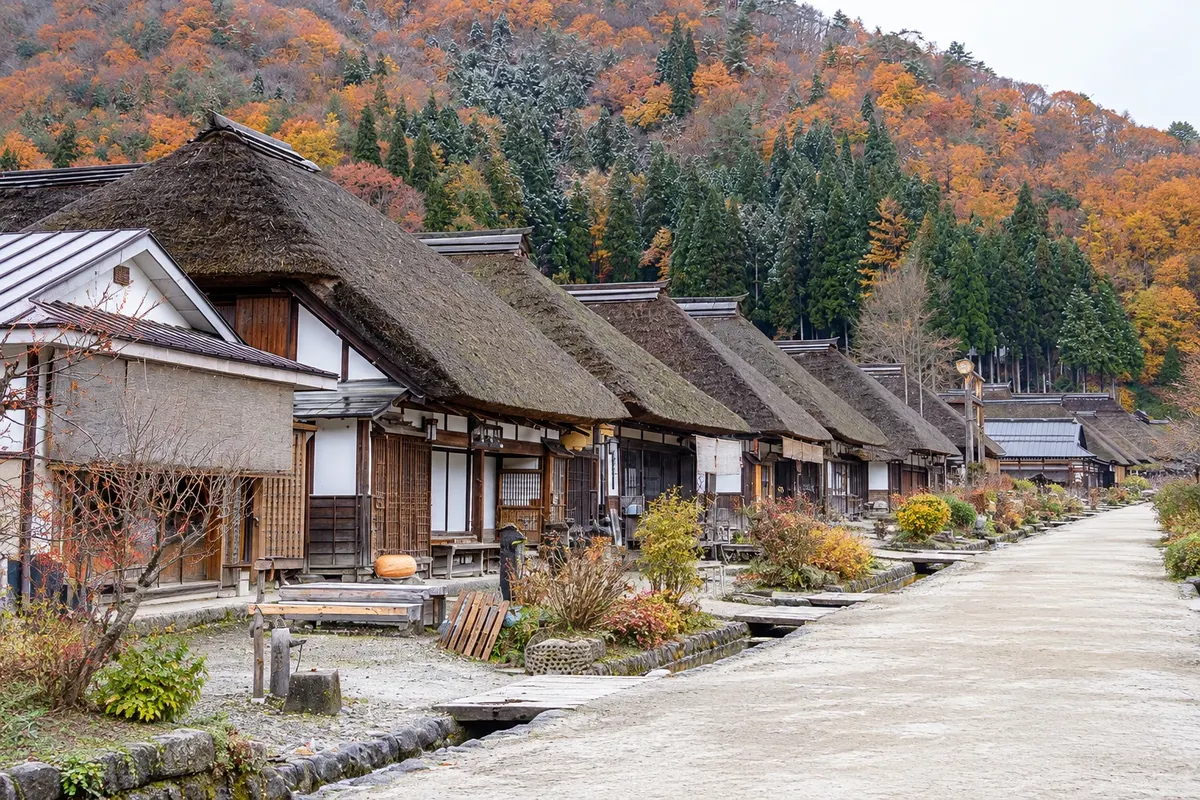
Historic village · Shimogo, Fukushima
Ouchi-juku
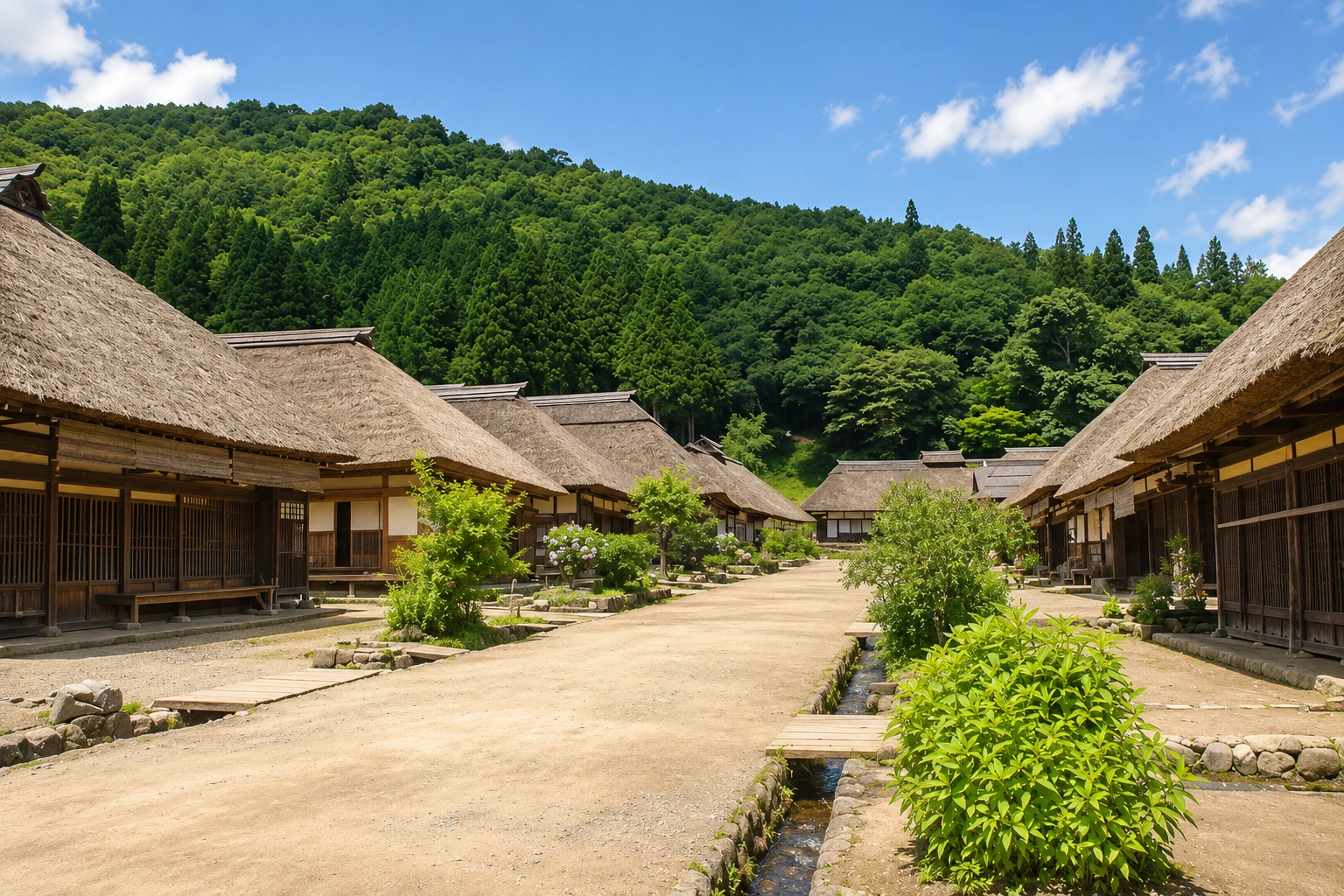
An old post-town on the road between Aizu and Nikko, with dozens of thatched-roof houses lined along a wide dirt street, water channels and a lookout at the end, in the mountains of Shimogo.
Illustrative images. The pictures in this guide are illustrations based on the real place, not photographs, and may differ from it.

A look at the place
Ouchi-juku in pictures
These pictures are illustrations based on the real place, not photographs. They may differ from the place.
Click the picture to enlarge it.
Discover
About Ouchi-juku
Ouchi-juku was one of the post stations on the Aizu-Nishi Kaido, also called the Shimotsuke Road, which connected Aizu to Nikko and the Edo area during the Edo period. The lords of Aizu and their retinues passed through on their way to the capital, and the village provided inns, horses and porters. When the main route was realigned at the end of the 19th century, Ouchi-juku became isolated, which helped preserve its buildings.
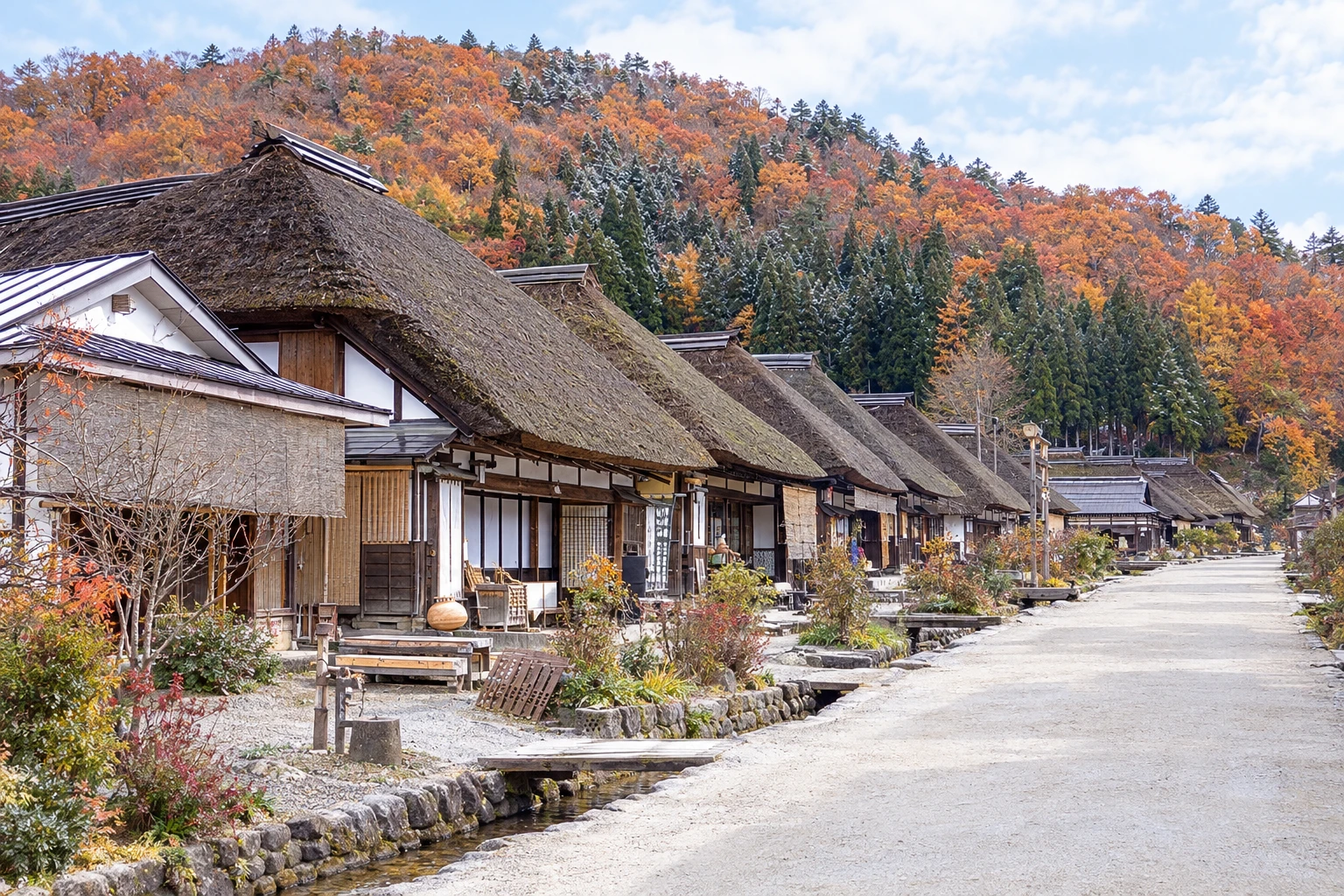
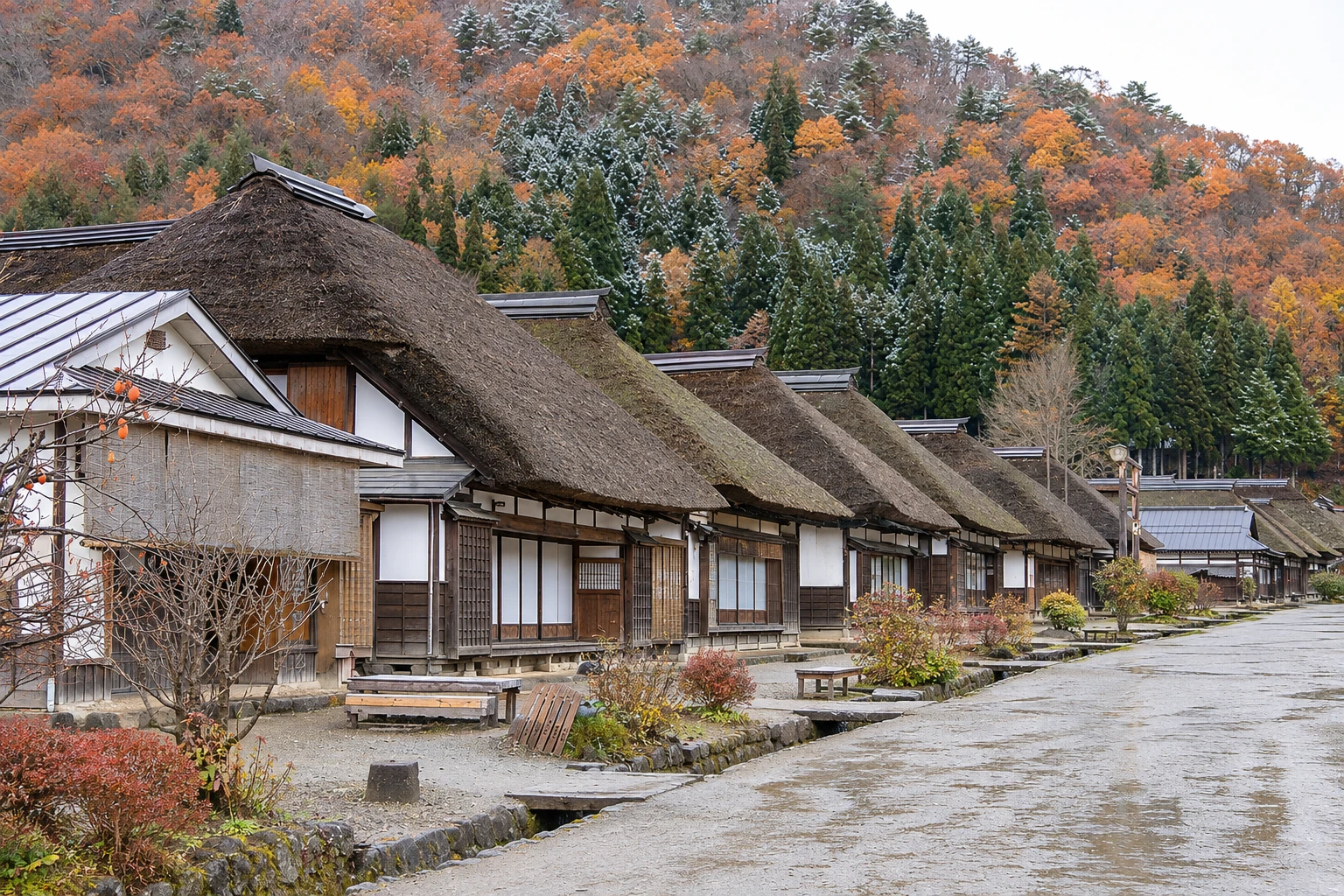
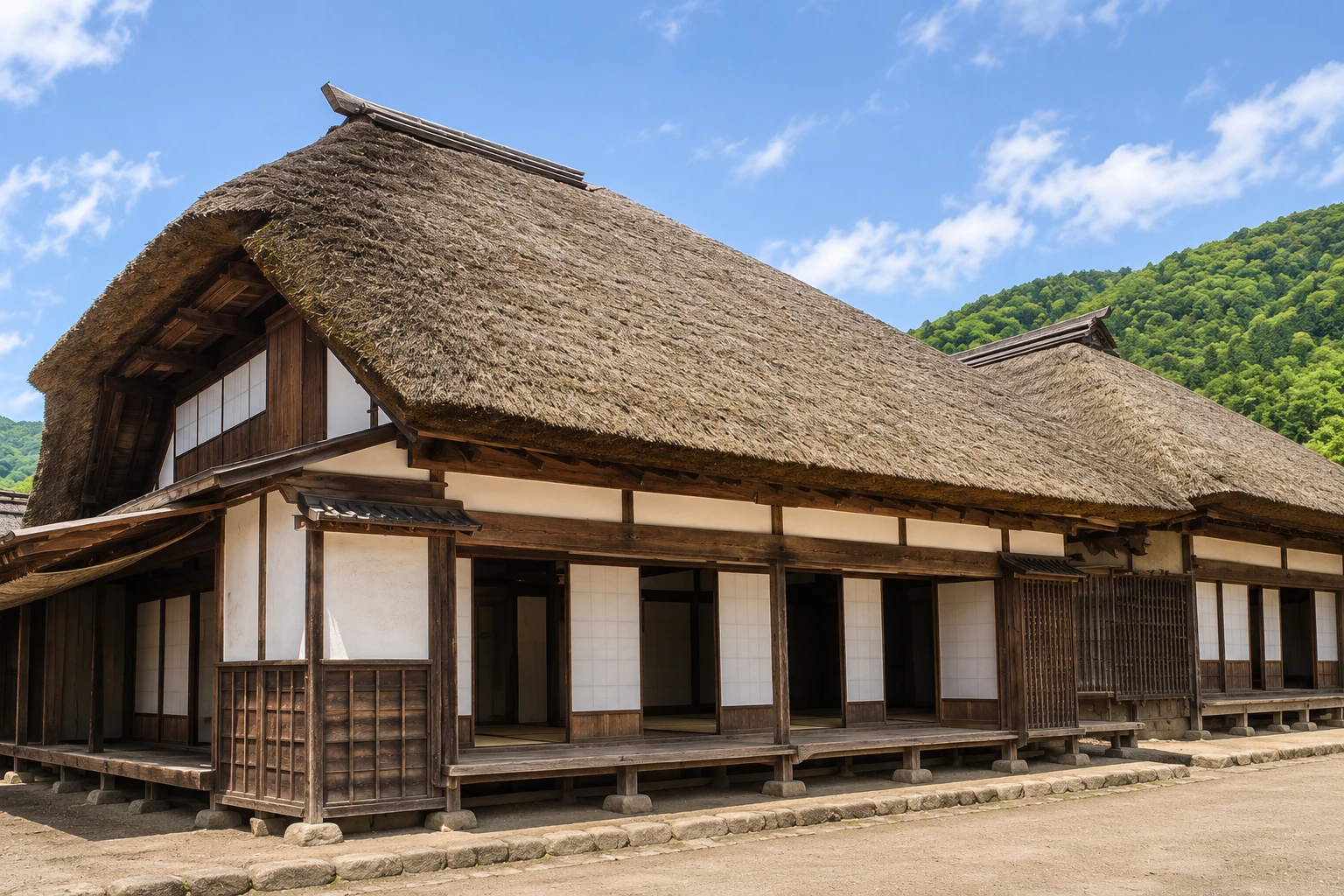
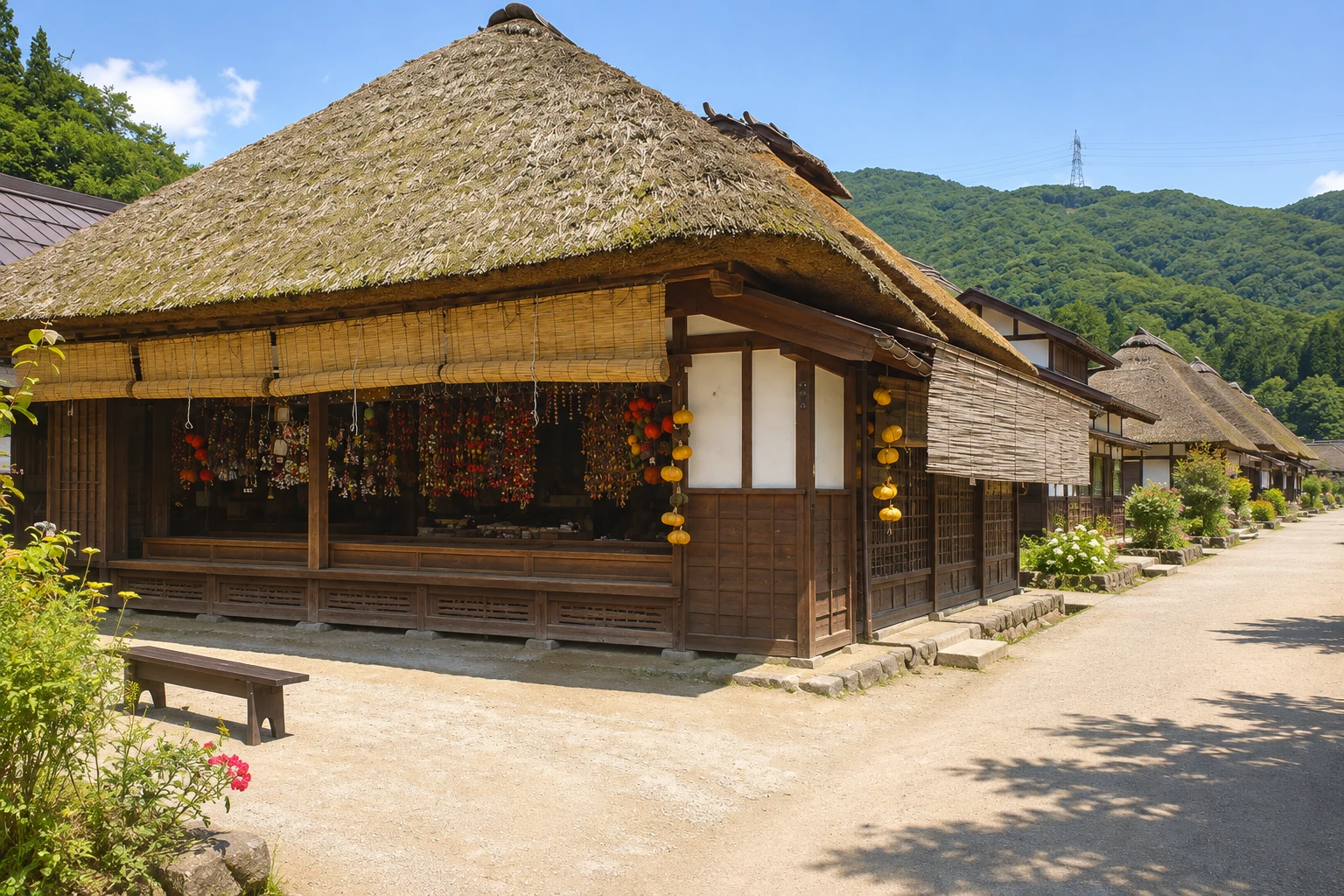
The village is a straight street of about 450 meters, unpaved, with water channels running on both sides. More than forty wooden houses with thick thatched roofs face the street, with their long sides turned toward it, as was common for roadside inns. Ouchi-juku is protected as an Area of Preservation for Traditional Buildings.
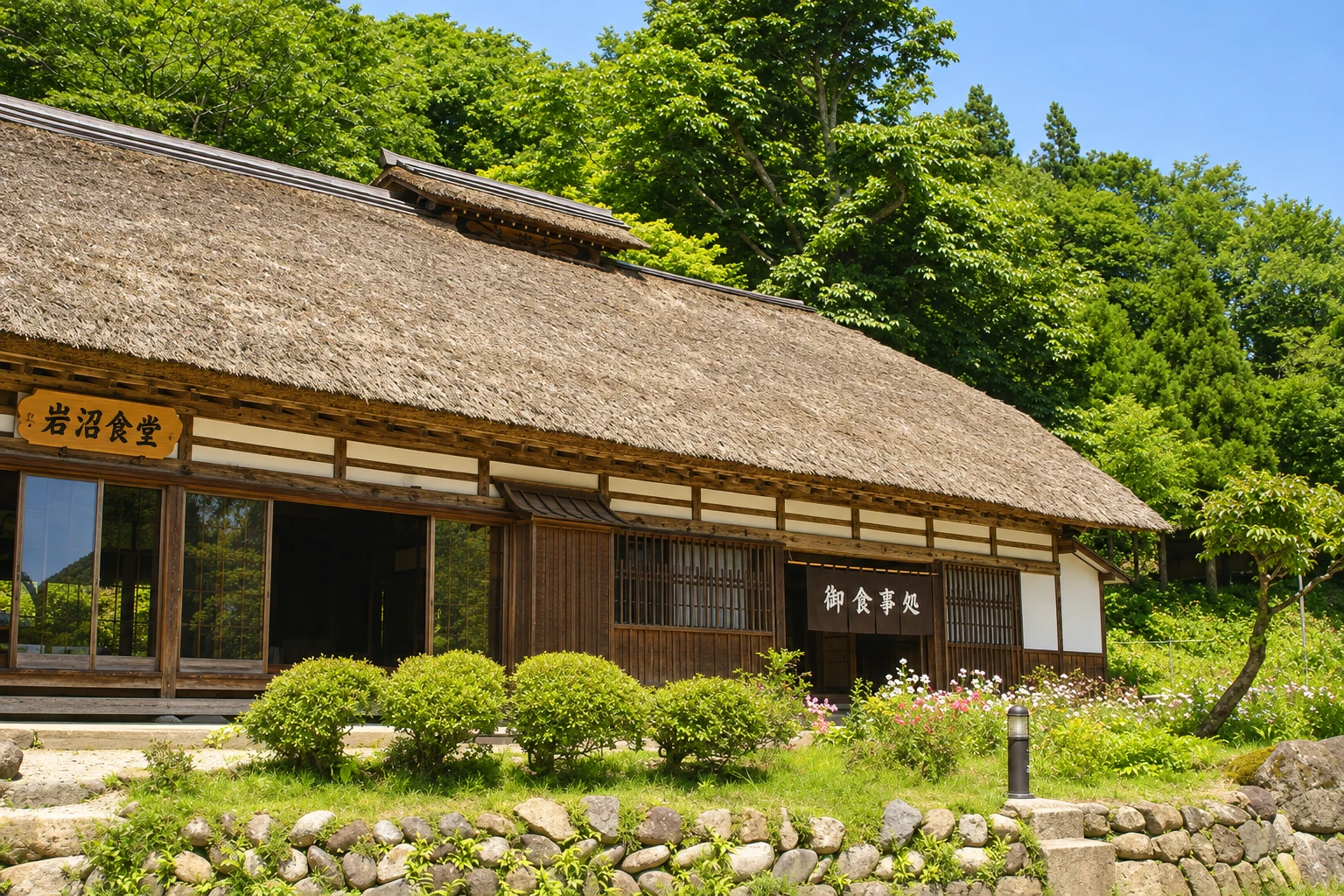
Today the houses function as craft shops, restaurants and some family-run inns, and residents maintain the periodic replacement of the thatch roofs. The old honjin (official post house) has been reconstructed and operates as a road museum. At the end of the street, a stairway leads up to a small temple and a lookout from which the entire row of roofs can be seen.
The local specialty is negi soba, buckwheat noodles eaten with a whole scallion stalk in place of chopsticks. The village receives many coach tour groups at midday. In February the snow festival lights lanterns and fills the street with lights; in summer the mossy green roofs contrast with the mountains.
Before you go
Practical information
Cidade Turismo reviews its information regularly, but something may have changed. Check with the place before planning your trip.
How much time to set aside
From 1 hour 30 minutes to 2 hours, including the lookout and lunch.
Best time
Early morning or late afternoon, before and after tour buses. October brings foliage on the slopes; in winter the roofs are covered in snow, and in February there is the snow festival. Check road conditions before going.
How to get there
From Yunokami-Onsen Station on the Aizu Railway, buses and taxis go up to Ouchi-juku in about 15 minutes; the bus runs part of the year. From Aizuwakamatsu by car it is about 35 km. There are paid parking lots at the village entrance.
Tip
Climb to the lookout at the end of the street for the classic view of the roofs. Staying overnight in one of the village inns lets you see the street empty in the early morning. Respect inhabited houses and do not enter private areas.
Official website
Get your questions answered
Frequently asked questions about Ouchi-juku
What is Ouchi-juku?
It is an old post town of inns on the road between Aizu and Nikko, with more than forty thatched-roof houses lined along a dirt street. It is a preserved area.
How long to stay in Ouchi-juku?
1.5 to 2 hours for the street, the viewpoint and lunch. One night at a family inn lets you see the village without the day-trip groups.
Where is the Ouchi-juku viewpoint?
At the end of the street, up a staircase beside a small temple. From there you can see the entire row of thatched roofs.
Is there a bus to Ouchi-juku?
A bus links Yunokami-Onsen Station to the village for part of the year, in about 15 minutes. Outside that period, use a taxi. Check schedules.
Beyond the guide


