

 Brazil
 Antarctica
 Argentina
 Bolivia
 Chile
 Colombia
 Ecuador
 Guyana
 French Guiana
 Falkland Islands (Malvinas)
 Paraguay
 Peru
 Suriname
 Uruguay
 Venezuela
 Germany
 Austria
 Belgium
 Croatia
 Denmark
 Slovakia
 Slovenia
 Spain
 Finland
 France
 Greece
 the Netherlands
 Hungary
 Ireland
 Iceland
 Italy
 Luxembourg
 Norway
 Poland
 Portugal
 the United Kingdom
 the Czech Republic
 Sweden
 Switzerland
 Turkey
 Bermuda
 Canada
 the United States
 Greenland
 Mexico
 Saint Pierre and Miquelon
 the Dominican Republic
 South Africa
 Egypt
 Australia
 Fiji
 New Zealand
 Papua New Guinea
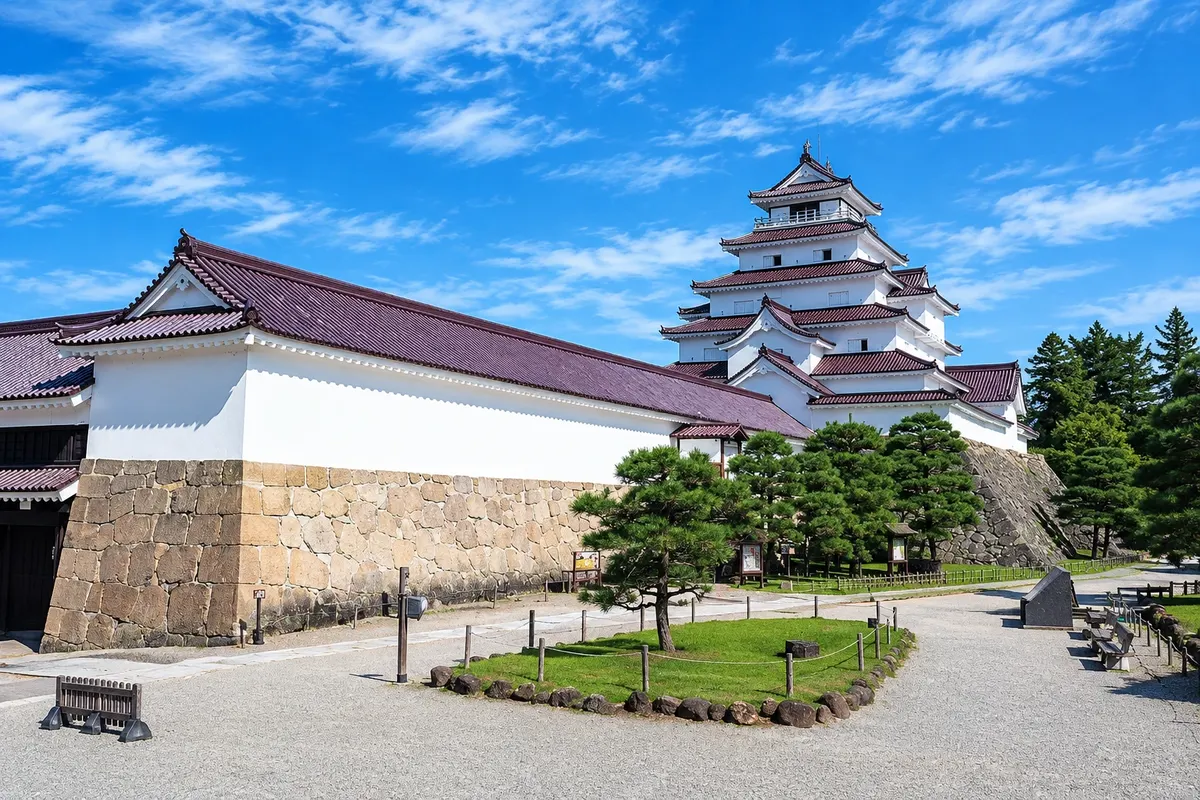
Castle · Aizuwakamatsu, Fukushima
Tsuruga Castle (Aizuwakamatsu)
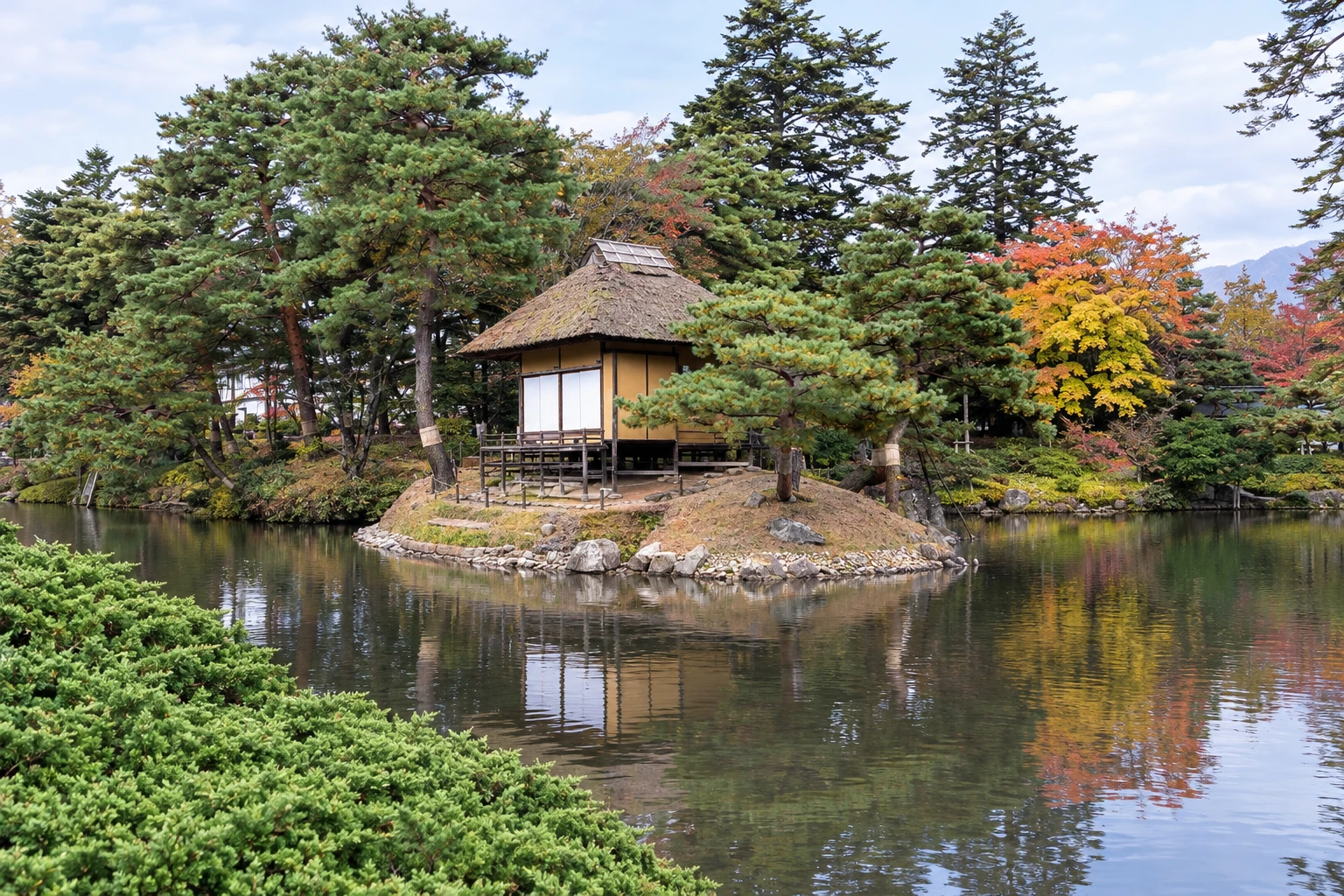
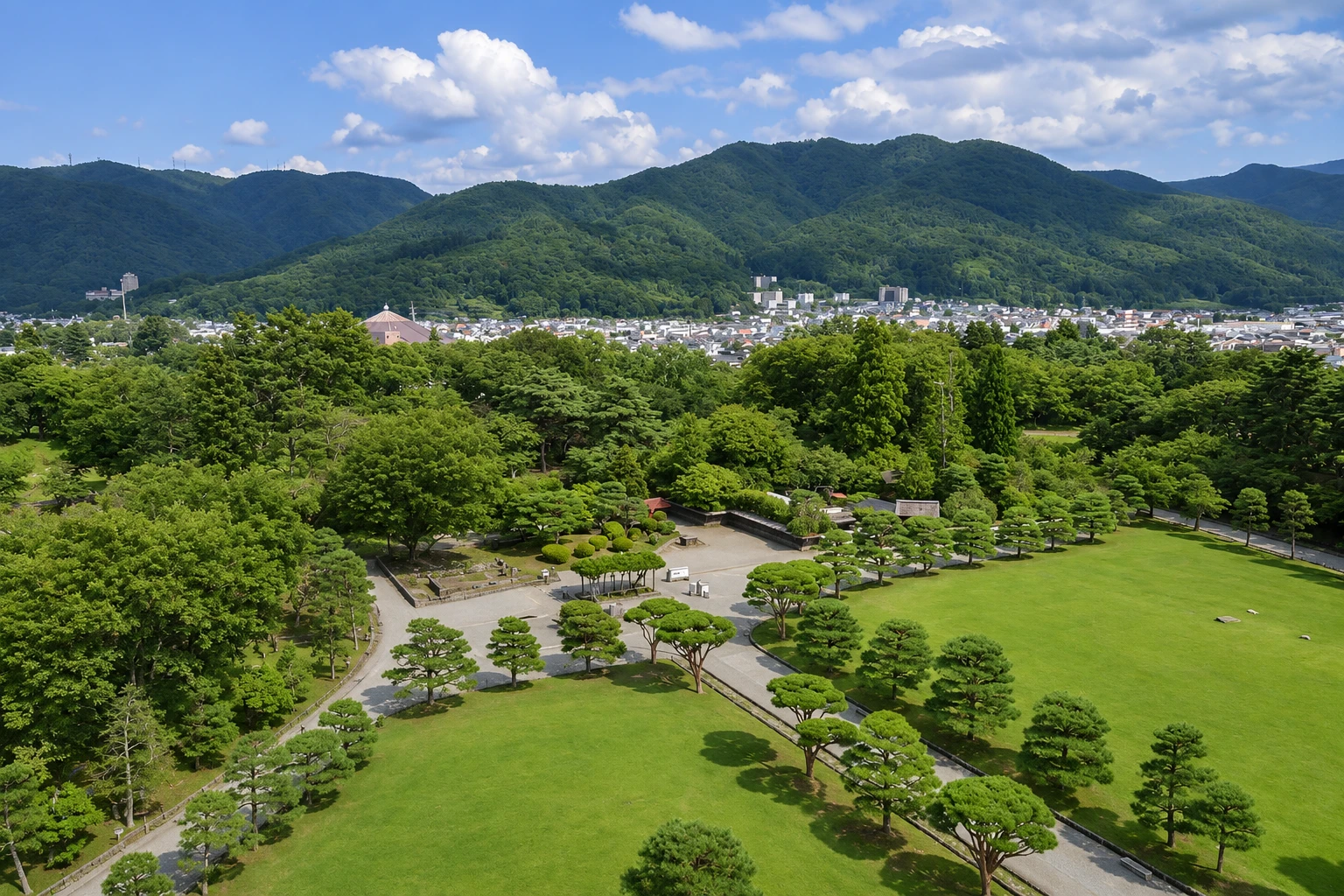
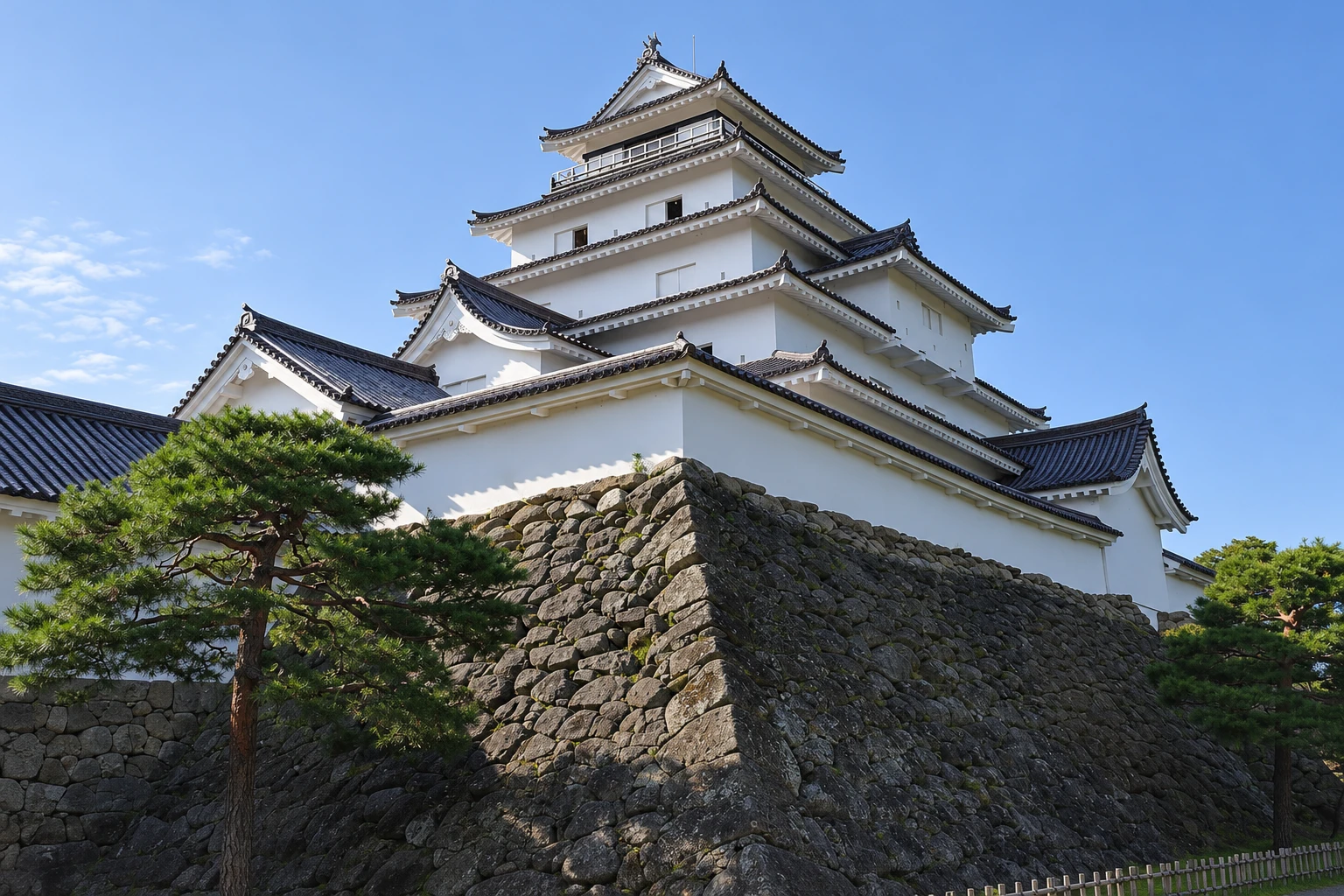
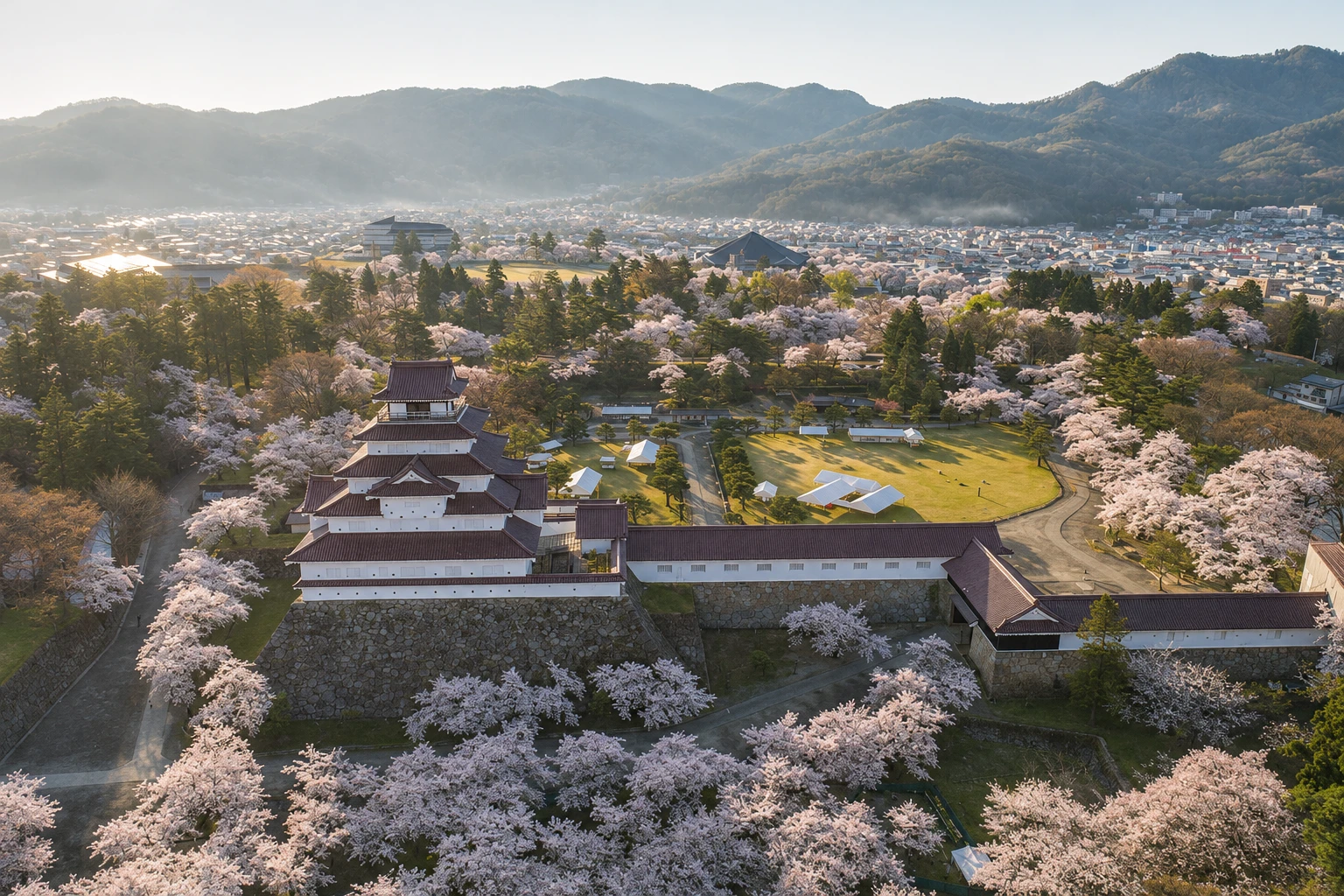
The castle of the Matsudaira clan of Aizu, besieged in the Boshin War of 1868, with a reconstructed keep covered in red tiles, a museum, stone walls and the Rinkaku tea house, set in a park with cherry trees.
Illustrative images. The pictures in this guide are illustrations based on the real place, not photographs, and may differ from it.

A look at the place
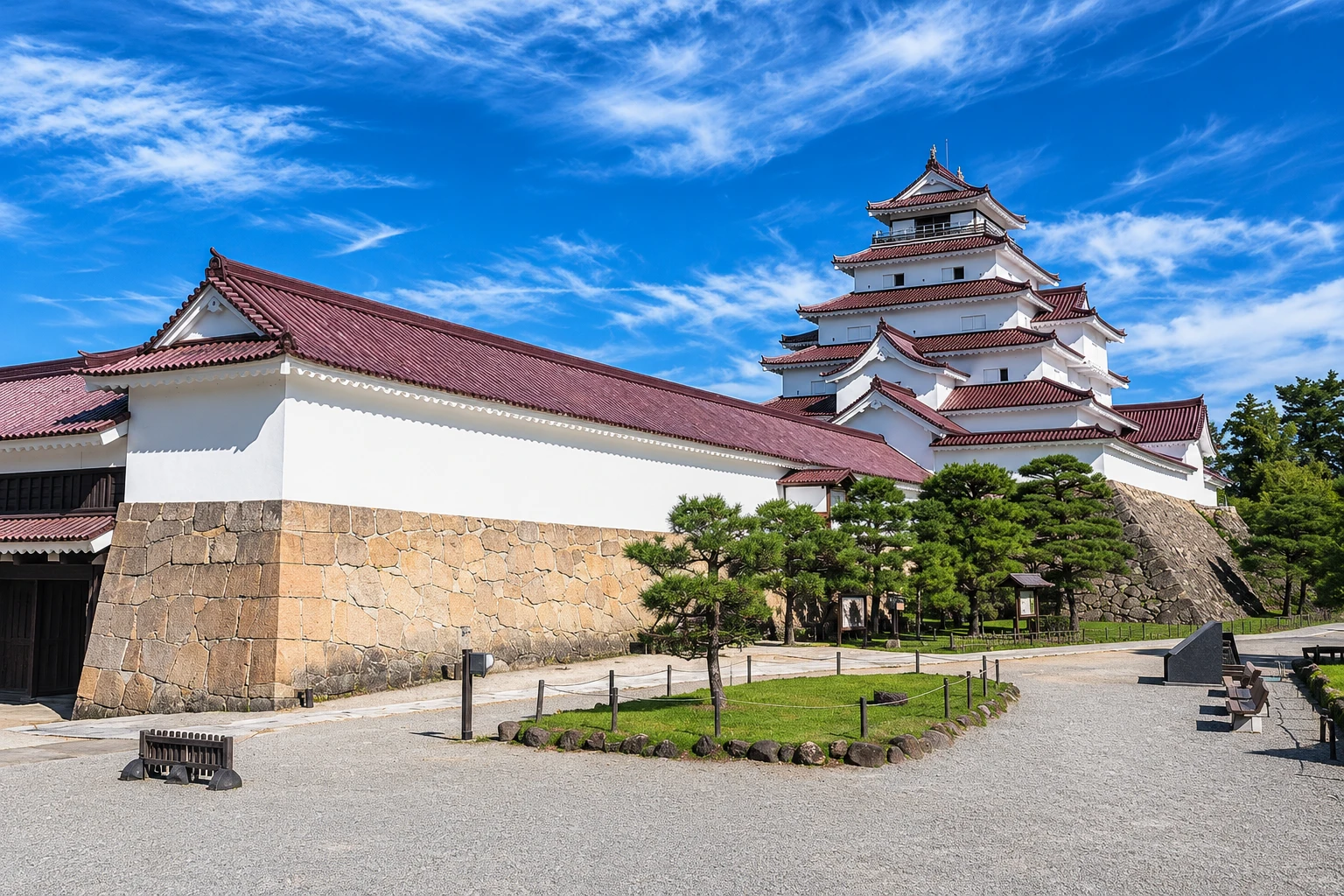
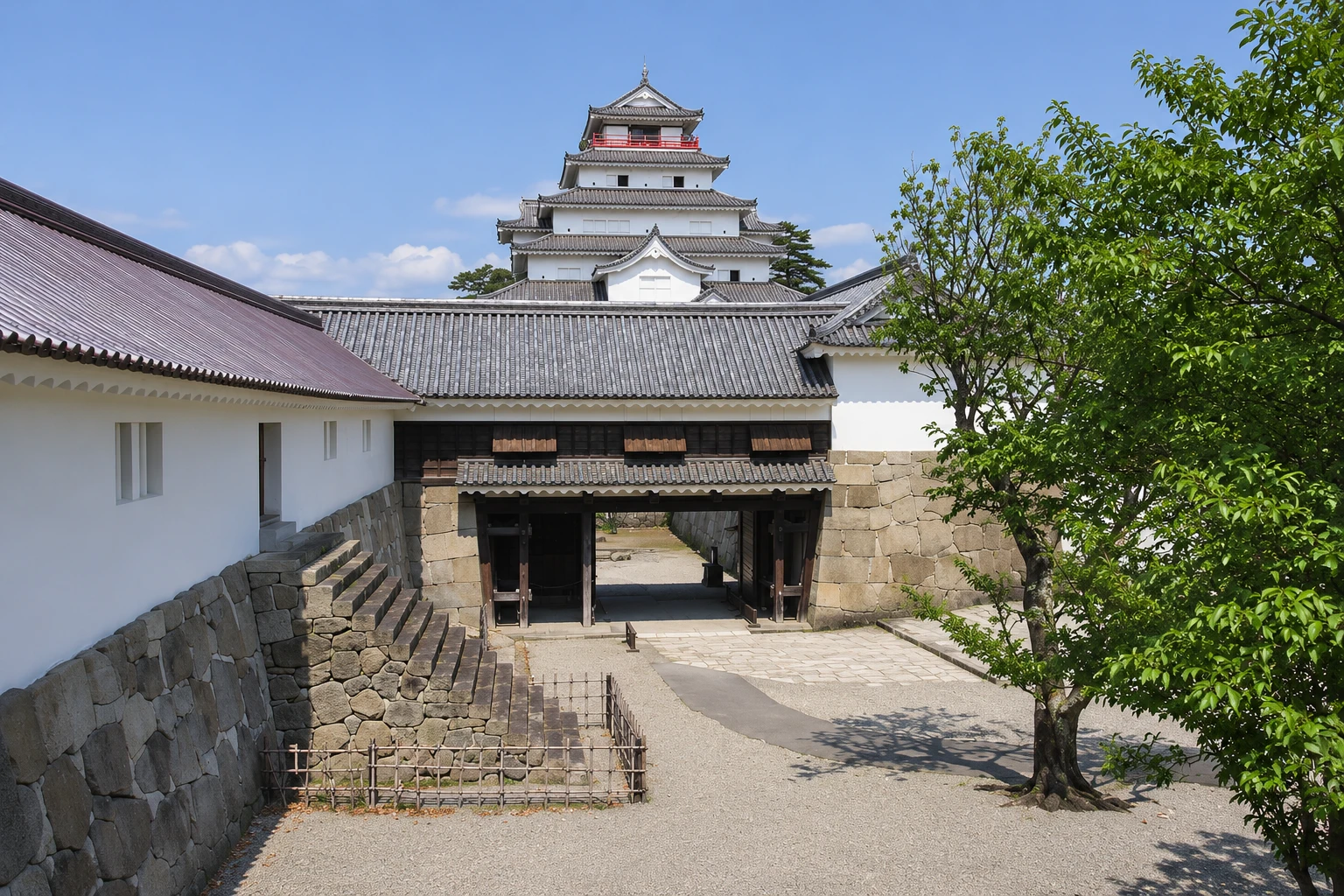
Tsuruga Castle (Aizuwakamatsu) in pictures
These pictures are illustrations based on the real place, not photographs. They may differ from the place.
Click the picture to enlarge it.
Discover
About Tsuruga Castle (Aizuwakamatsu)
Tsuruga Castle, also called Aizuwakamatsu Castle, was the seat of the Aizu domain. The first fortress on the site dates to the 14th century; the Edo-period form, with the five-story keep, took shape at the end of the 16th and start of the 17th centuries. From 1643 the castle belonged to the Matsudaira clan, relatives of the Tokugawa shoguns.
In 1868, during the Boshin War, forces of the new imperial government besieged the castle for about a month. It withstood bombardment, but Aizu surrendered, and the buildings were demolished a few years later. The present keep is a concrete reconstruction from 1965. In 2011 the roof received glazed red tiles, like those that covered the castle in the 19th century, a unique case among Japanese castle keeps.
Inside the keep, the museum tells the story of the domain, the Boshin War and the Byakkotai, with armor, weapons and clan artifacts. From the top floor you can see the whole Aizu basin and Mount Bandai in the distance. The stone walls, moats and bridges are original and designated a National Historic Site.
On the grounds is the Rinkaku tea house, connected to the family of the tea master Sen no Rikyu, where you can have matcha with sweets. The park has about a thousand cherry trees, which usually bloom in mid-April and are lit at night. Entry to the keep is paid; the park has no admission fee.
Before you go
Practical information
Cidade Turismo reviews its information regularly, but something may have changed. Check with the place before planning your trip.
How much time to set aside
About 1 hour 30 minutes, including the keep, the museum and the tea house.
Best time
In mid-April, when the cherry trees usually bloom; in late October and early November for the autumn foliage. In winter the red-tiled keep contrasts with the snow. Check opening hours before you go.
How to get there
From Aizuwakamatsu Station, the Haikara-san and Akabe loop buses reach the castle in about 20 minutes. On foot it’s about 40 minutes. There is parking next to the park.
Tip
Buy the combined ticket for the keep and the Rinkaku tea house. Go up to the top floor to understand the basin’s geography and locate Mount Iimori to the northeast.
Official website
Get your questions answered
Frequently asked questions about Tsuruga Castle (Aizuwakamatsu)
Why does Tsuruga Castle have red roof tiles?
In the Edo period the castle was covered with red glazed tiles, resistant to the cold. In 2011, the roof of the reconstructed tower was again fitted with that type of tile.
What can you see inside Tsuruga Castle?
A museum about the Aizu domain, the Boshin War and the Byakkotai, with armor and clan artifacts, and an observation deck on the top floor.
Is there an entrance fee for Tsuruga Castle?
The tower and the Rinkaku teahouse are ticketed, with a combined ticket. The surrounding park has no entry fee.
When do the cherry trees at Tsuruga Castle bloom?
Generally around mid-April. The park has about a thousand cherry trees, with nighttime illumination during the season.
Beyond the guide


