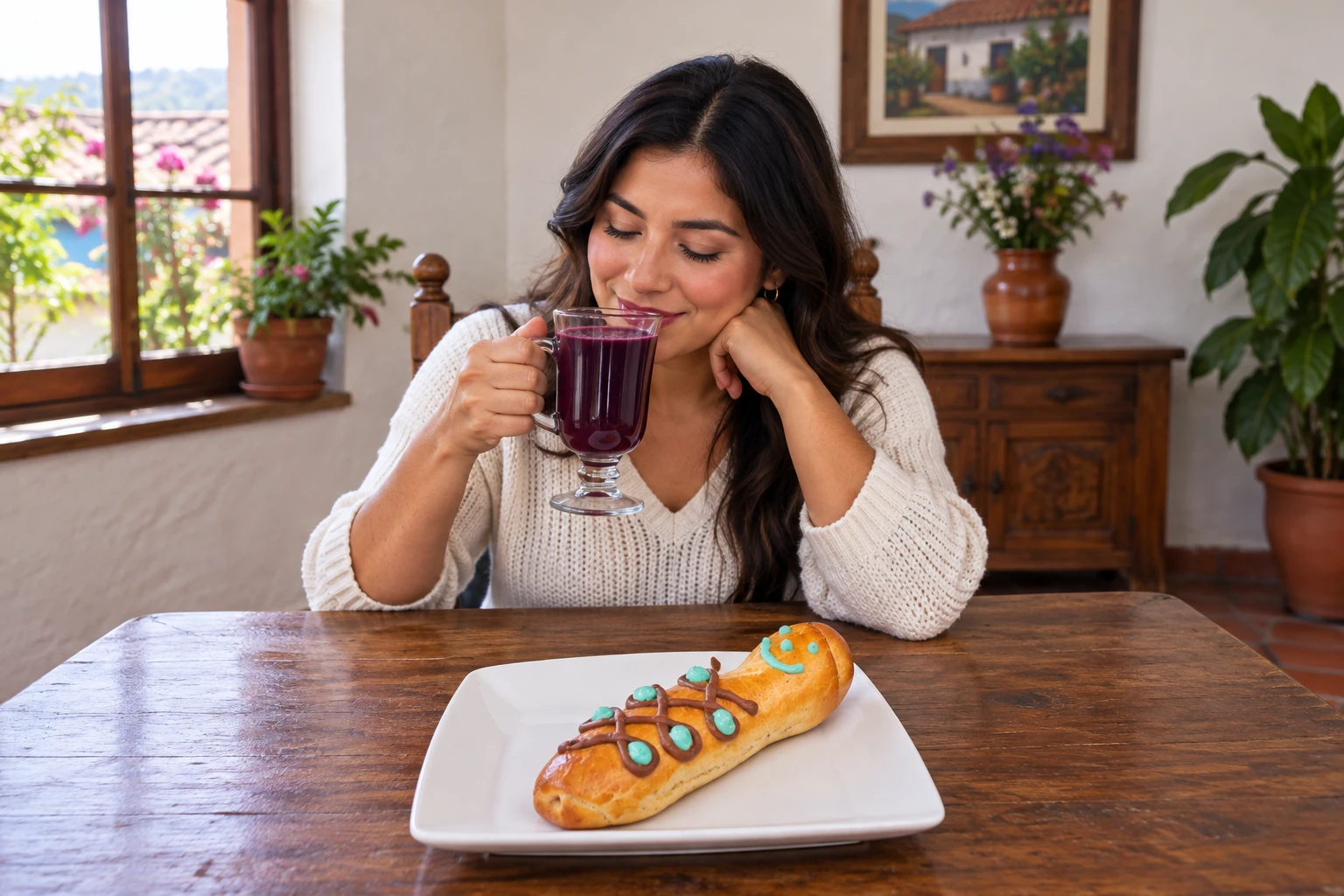
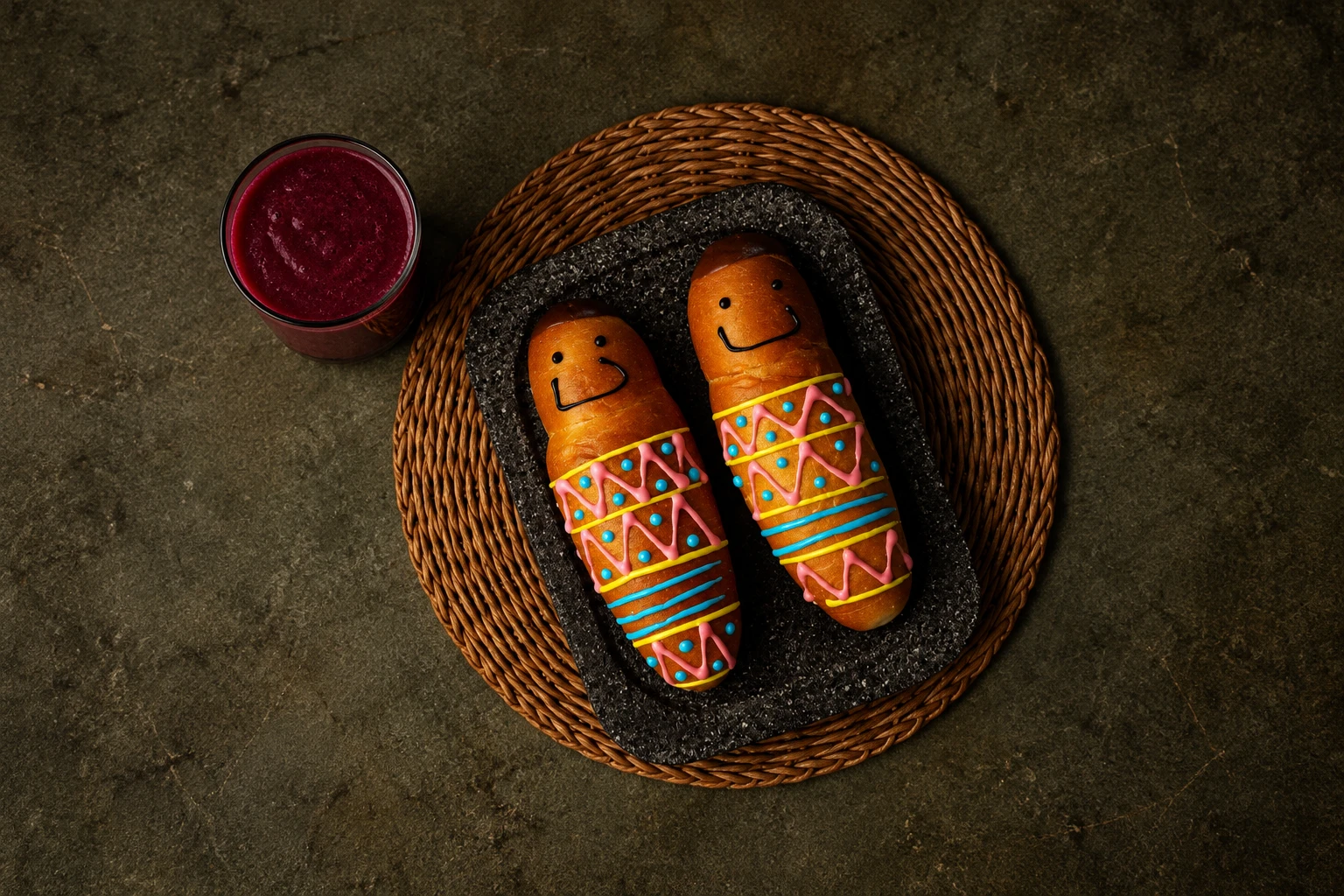
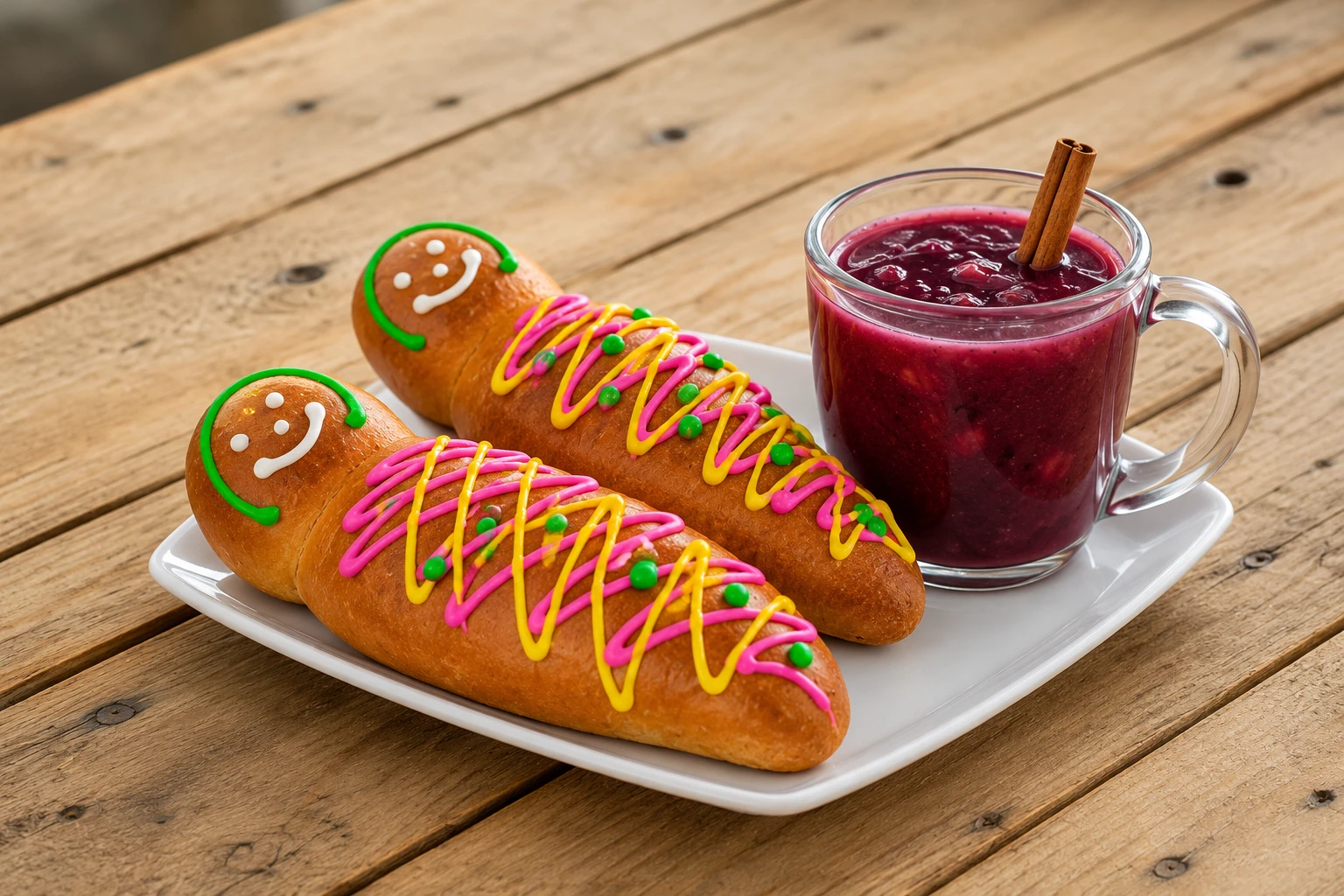
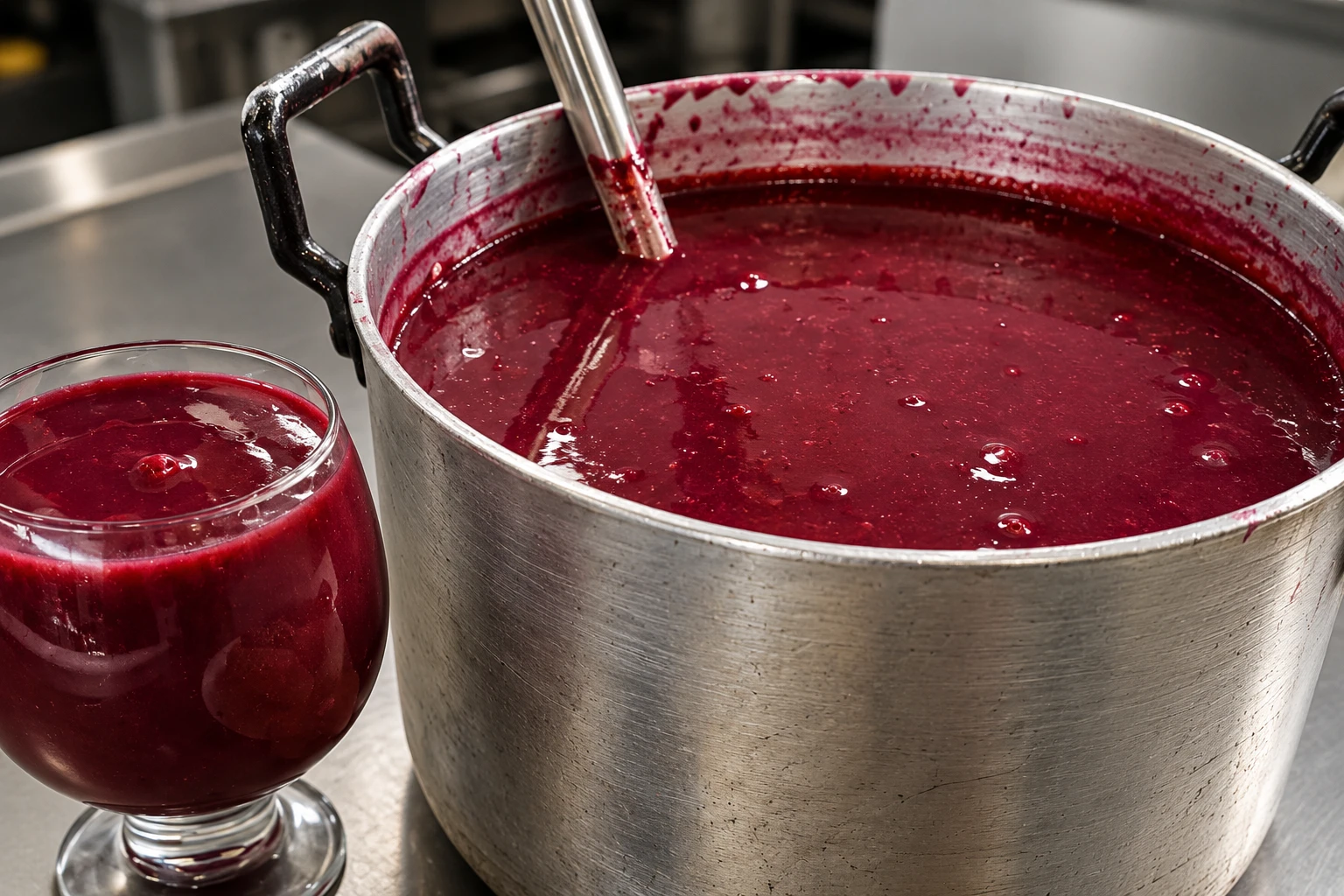
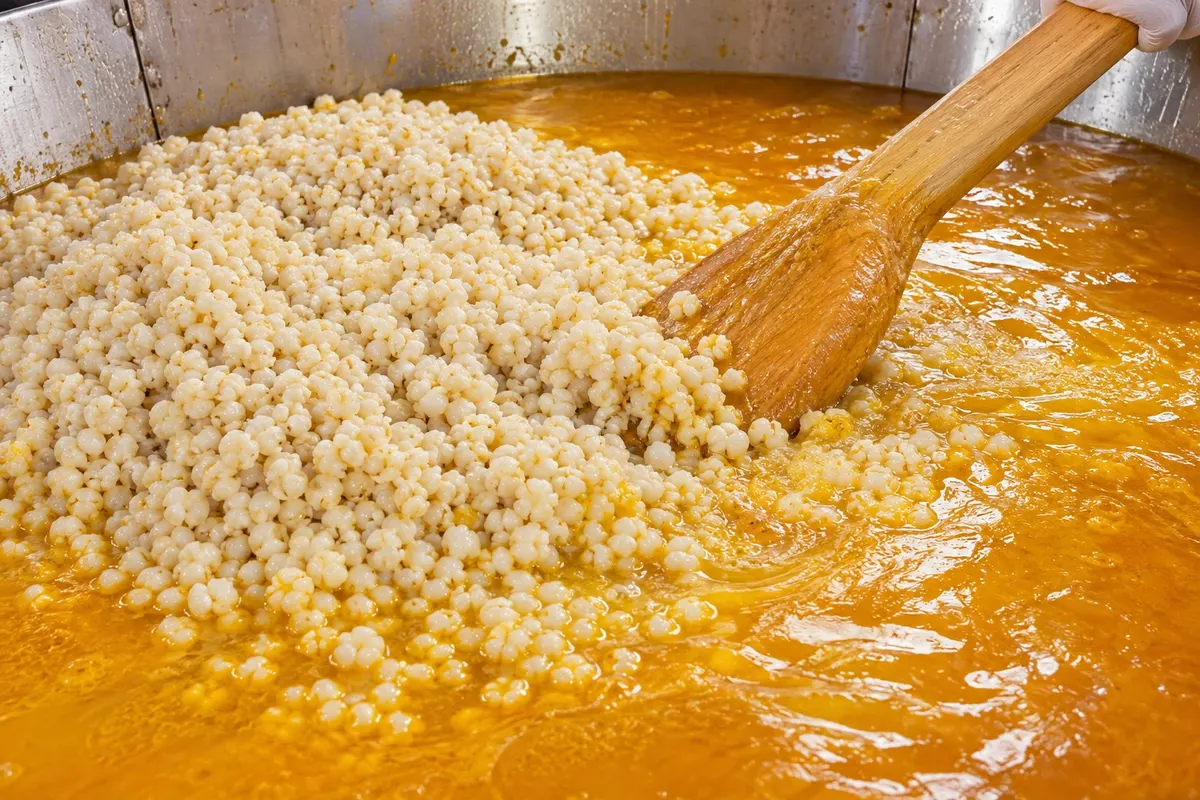
Colada morada is a thick, hot drink with a deep purple color. Its base is purple or black corn flour, dissolved and cooked in water flavored with cinnamon, clove, allspice and herbs such as lemon verbena, cidró, orange leaves and myrtle leaves. Fruits add color and flavor: mortiño (an Andean blueberry), blackberry, strawberry, pineapple, naranjilla and, in many recipes, babaco. It is sweetened with sugar or panela. Each family has its own list of ingredients, and the preparation takes hours.
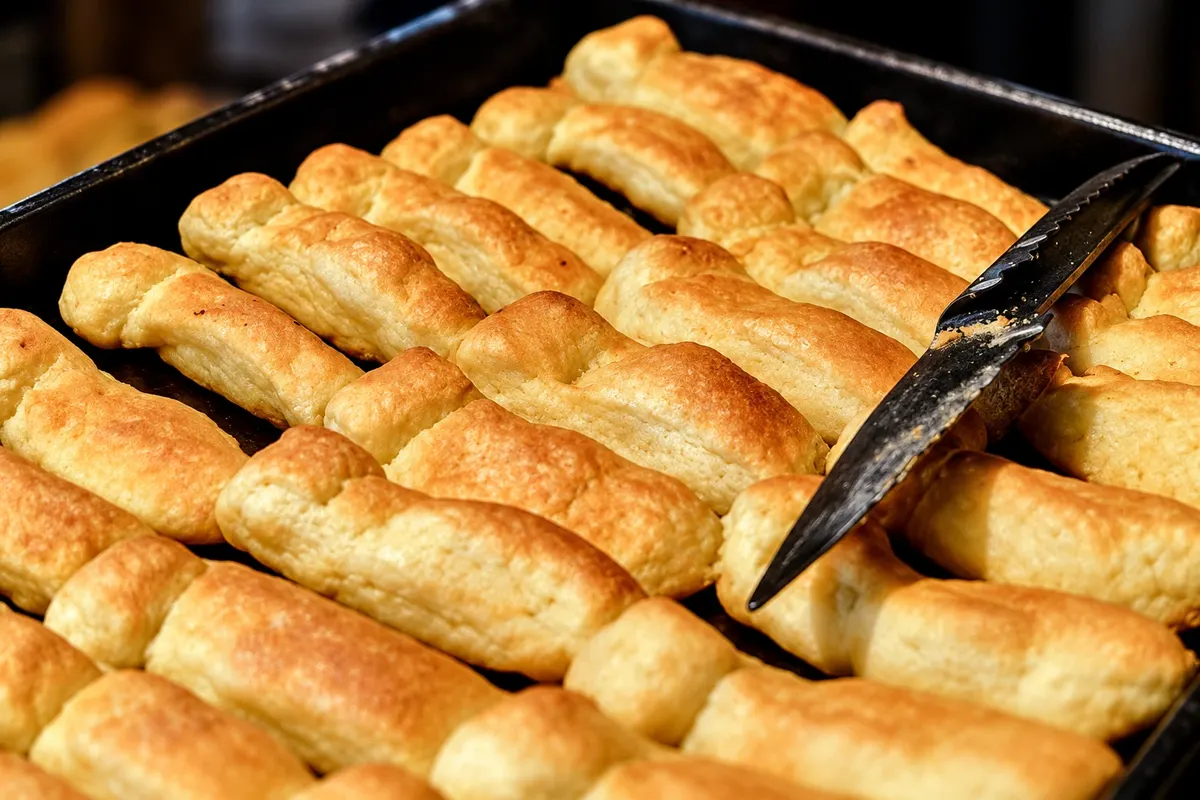
Colada is not served alone. It is accompanied by guaguas de pan, sweet breads shaped like swaddled children; guagua means child in kichwa. The guaguas are decorated with colored icing and painted faces, and many are filled with jam or guava paste. Bakeries across the country fill their display cases with them in the weeks of October and November.
The tradition comes from the meeting of Andean rites and colonization. According to records from the National Institute of Cultural Heritage (INPC) and the National Museum of Ecuador (MUNA) cited in the Ecuadorian press, Andean peoples used to bring food and drink to the dead, and colada and guaguas arose to replace those offerings after the Church prohibited them during the colonial period. Historian Julio Pazos Barrera, of the Ecuadorian Academy of Language, studied this transition, and a 2023 article published by the Pontifical Catholic University of Peru reconstructs the drink’s history from archives and shows how it became an element of national identity, including among Ecuadorians living abroad.
November 2 is the Day of the Dead. Many families visit cemeteries, bring flowers and, in some Andean communities, still eat beside the graves. At home, colada is prepared in large pots and shared with relatives and neighbors. The drink is consumed throughout the country, from the highlands to the coast and the Amazon, and starts appearing in cafés and bakeries weeks before the date.


 Brazil
 Argentina
 Bolivia
 Chile
 Colombia
 Guyana
 French Guiana
 Falkland Islands (Malvinas)
 Paraguay
 Peru
 Suriname
 Uruguay
 Venezuela
 Germany
 Austria
 Belgium
 Croatia
 Denmark
 Spain
 Finland
 France
 Greece
 the Netherlands
 Hungary
 Ireland
 Iceland
 Italy
 Luxembourg
 Norway
 Poland
 Portugal
 the United Kingdom
 the Czech Republic
 Sweden
 Switzerland
 Turkey
 Canada
 the United States
 Mexico
 the Dominican Republic
 South Africa
 Australia
 Fiji
 New Zealand
 Papua New Guinea