1 city

 Search
 Brazil
 Argentina
 Bolivia
 Chile
 Colombia
 Ecuador
 Guyana
 French Guiana
 Falkland Islands (Malvinas)
 Paraguay
 Peru
 Suriname
 Uruguay
 Venezuela
 Germany
 Austria
 Belgium
 Croatia
 Denmark
 Slovakia
 Slovenia
 Spain
 Finland
 France
 Greece
 the Netherlands
 Hungary
 Ireland
 Iceland
 Italy
 Luxembourg
 Norway
 Poland
 Portugal
 the United Kingdom
 the Czech Republic
 Sweden
 Switzerland
 Turkey
 Canada
 the United States
 Mexico
 the Dominican RepublicTurkey
 South AfricaEgypt
 Australia
 Fiji
 New Zealand
 Papua New Guinea
Province · Upper Egypt
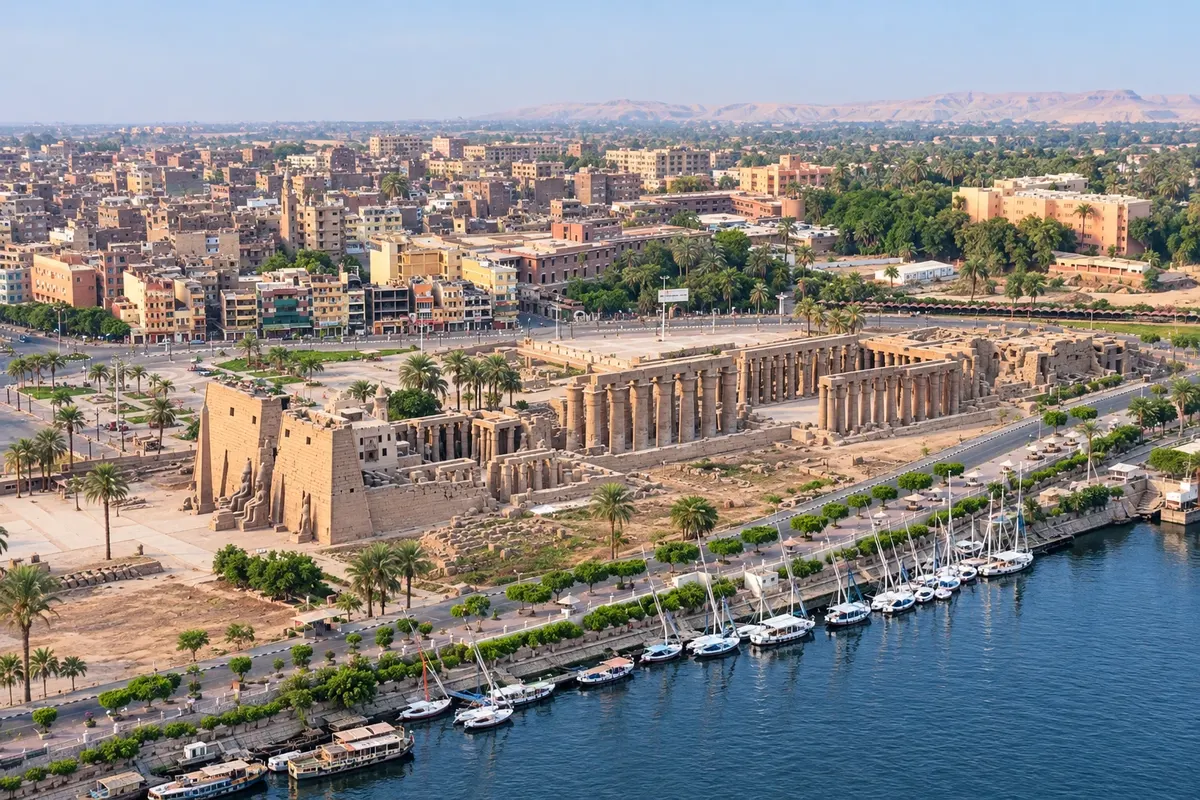
Luxor, ancient Thebes: the temples of Karnak and Luxor, the Avenue of the Sphinxes and, on the west bank, the Valley of the Kings, the temple of Hatshepsut and the Colossi of Memnon.
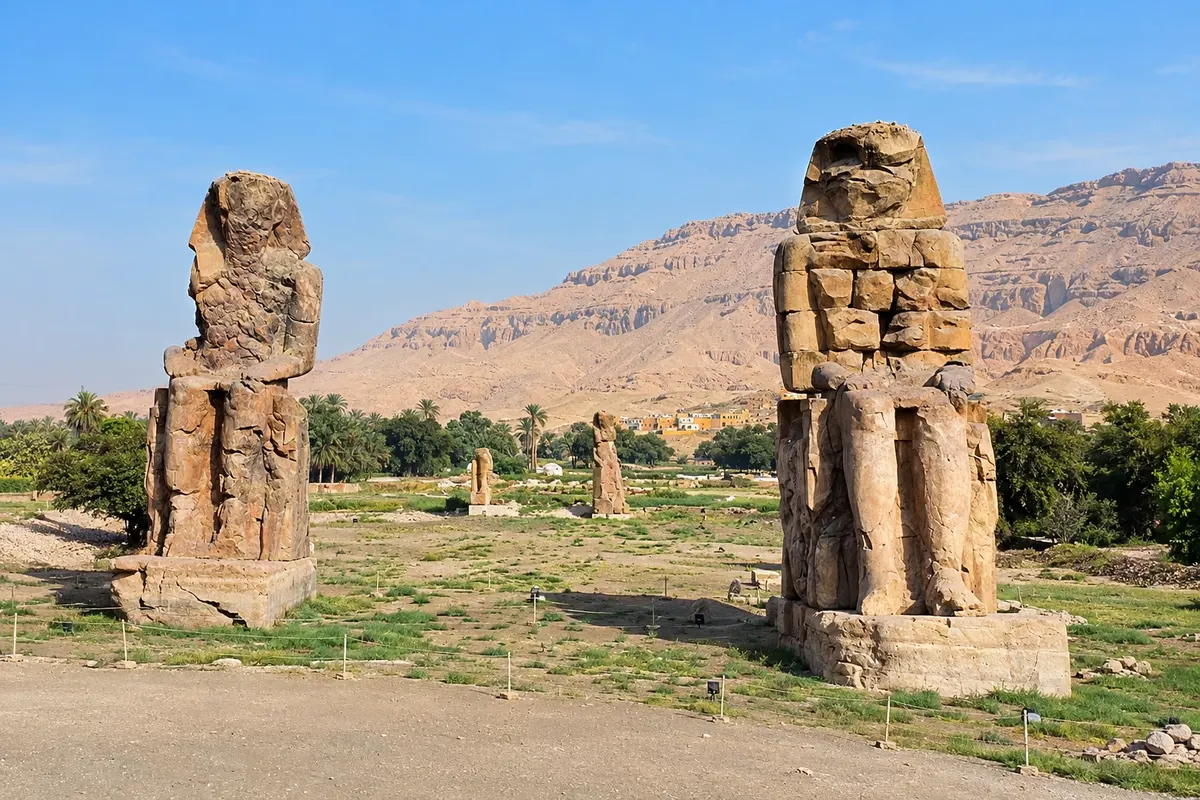
In the photo: The Colossi of Memnon in front of the Theban mountain, in Luxor.
Illustrative images. The pictures in this guide are illustrations based on the real place, not photographs, and may differ from it.
The province
Luxor lies in Upper Egypt, on the banks of the Nile, on the site of Thebes, the capital of Egypt in the New Kingdom. The modern city occupies the east bank, with the great temples, while the west bank holds the necropolises of kings and nobles. The whole ensemble is a UNESCO World Heritage Site as Ancient Thebes and its Necropolis.
On the east bank, the Karnak complex, dedicated to the god Amun, brings together temples, obelisks, sacred lakes and the hypostyle hall with 134 columns. The Avenue of the Sphinxes, about 2.7 km long, links Karnak to the Luxor Temple in the center, which is lit up at night. The Luxor Museum and the Mummification Museum are on the riverside avenue.
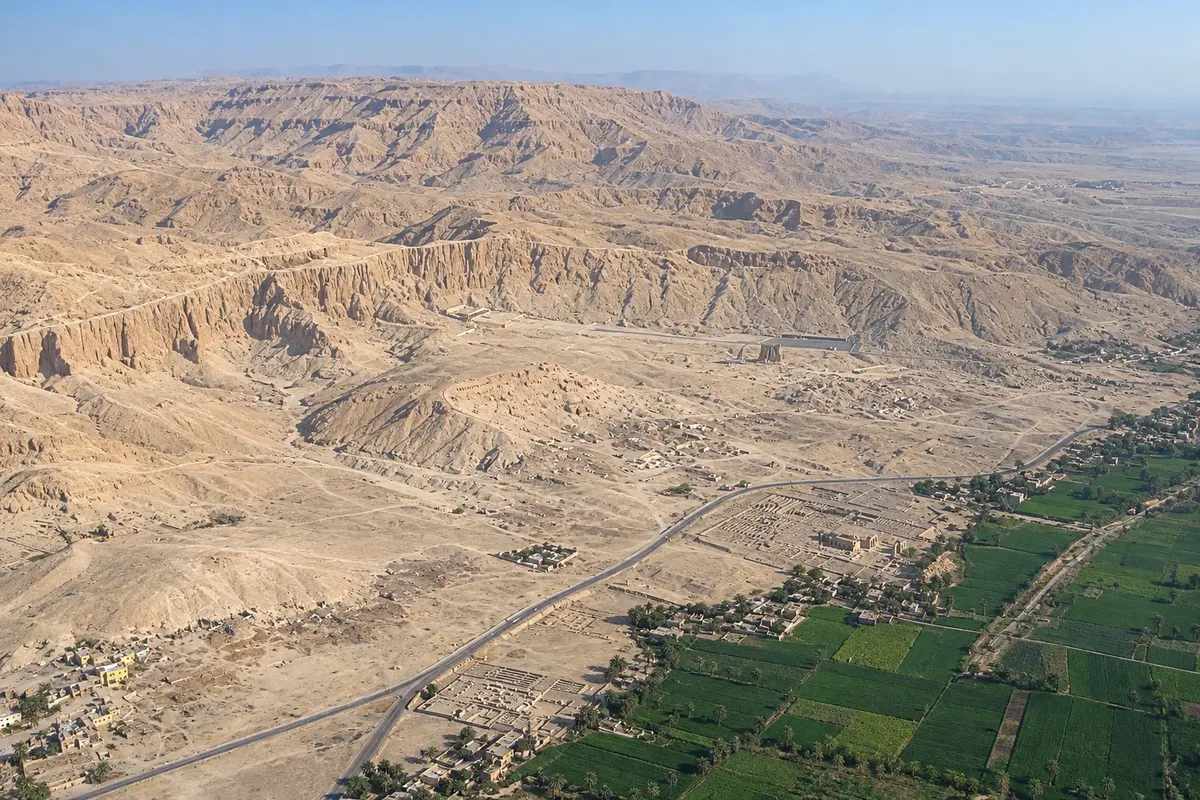
On the west bank, the Valley of the Kings contains rock-cut tombs of New Kingdom pharaohs, such as those of Tutankhamun, Seti I and Ramesses VI; the Valley of the Queens includes Nefertari’s tomb, with separate admission. Deir el-Bahari, Hatshepsut’s terraced temple at the foot of the mountain, Medinet Habu, the Ramesseum, the artisans’ village of Deir el-Medina and the Colossi of Memnon complete the west bank.
At sunrise, balloons rise over the west bank when the wind allows. Luxor is the departure point for Nile cruises to Aswan, with stops at Esna, Edfu and Kom Ombo; the temple of Esna, to the south, belongs to the governorate and has restored colors on its ceiling.
Destinations
Cities
From October to April the days are milder, and this is the busiest season; nights in December and January can be cold. From May to September, daytime highs frequently exceed 40 °C; visit the sites at sunrise and reserve the hottest hours for rest. Balloon flights depend on wind and can be canceled.
Luxor International Airport (LXR) is about 7 km from the center, with flights from Cairo and cities in Europe and the Middle East. The train station in the center receives trains from Cairo, including the overnight sleeper, and from Aswan. By road, Aswan is about 210 km away and Hurghada about 290 km. Nile cruises connect Luxor to Aswan in three to four nights.
Your questions
Three days allow seeing the east bank (Karnak, Luxor Temple and the museums) in one day and the west bank (Valley of the Kings, Deir el-Bahari, Medinet Habu and the Colossi) in one or two days. With Dendera, Abydos or Esna, allow four days.
By the bridge, by car or taxi, about 7 km south of the center, or by boat: ferries and motorboats cross the Nile in a few minutes from the riverside avenue.
The Valley of the Kings ticket includes a limited number of tombs, which change throughout the year. Those of Tutankhamun, Seti I and Ramesses VI often require separate tickets: check the current list and choose before you go.
Both directions have the same stops: Esna, Edfu and Kom Ombo. Departing from Luxor, the cruise typically lasts four nights; departing from Aswan, three. Choose according to how the rest of your trip fits together.
From October to April, when the days are milder. In summer, highs exceed 40 °C, and the sites should be visited very early.