

 Antarctica
 Argentina
 Bolivia
 Chile
 Colombia
 Ecuador
 Guyana
 French Guiana
 Falkland Islands (Malvinas)
 Paraguay
 Peru
 Suriname
 Uruguay
 Venezuela
 Germany
 Austria
 Belgium
 Croatia
 Denmark
 Slovakia
 Slovenia
 Spain
 Finland
 France
 Greece
 the Netherlands
 Hungary
 Ireland
 Iceland
 Italy
 Luxembourg
 Norway
 Poland
 Portugal
 the United Kingdom
 the Czech Republic
 Sweden
 Switzerland
 Turkey
 Bermuda
 Canada
 the United States
 Greenland
 Mexico
 Saint Pierre and Miquelon
 the Dominican Republic
 Japan
 South Africa
 Egypt
 Australia
 Fiji
 New Zealand
 Papua New Guinea
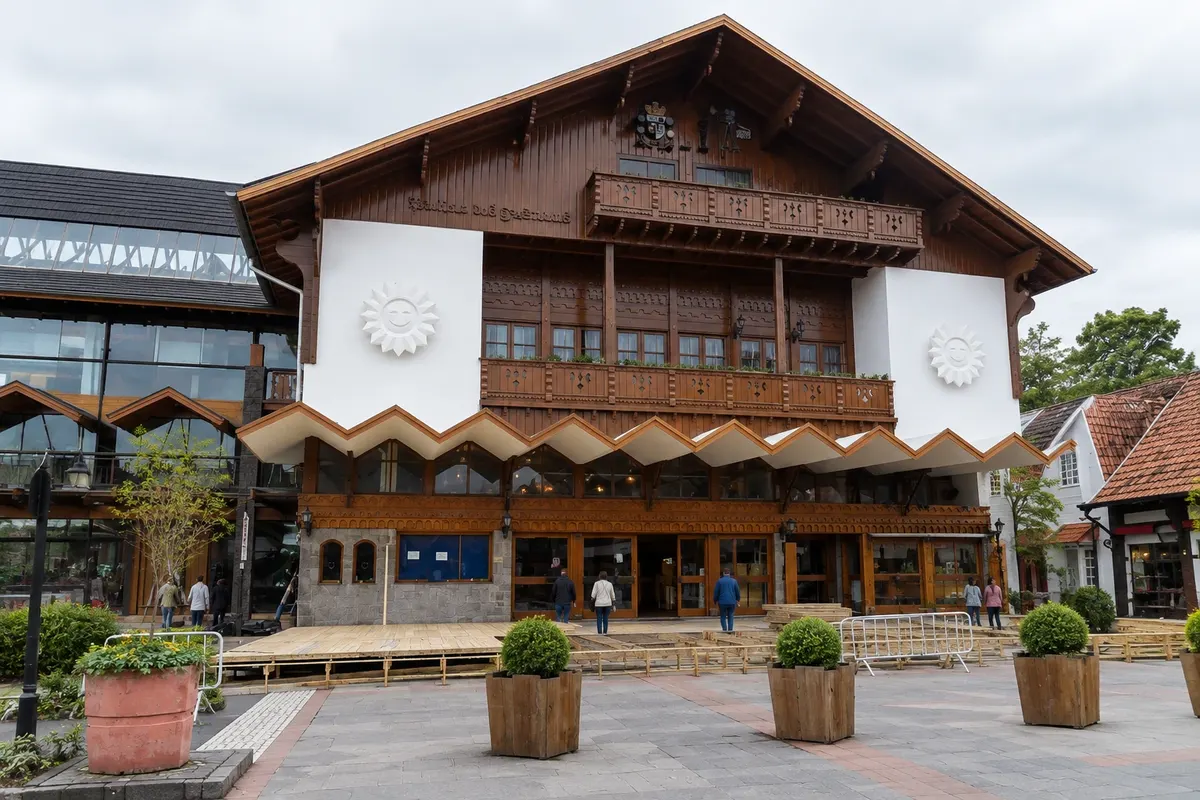
Cultural center · Gramado, RS
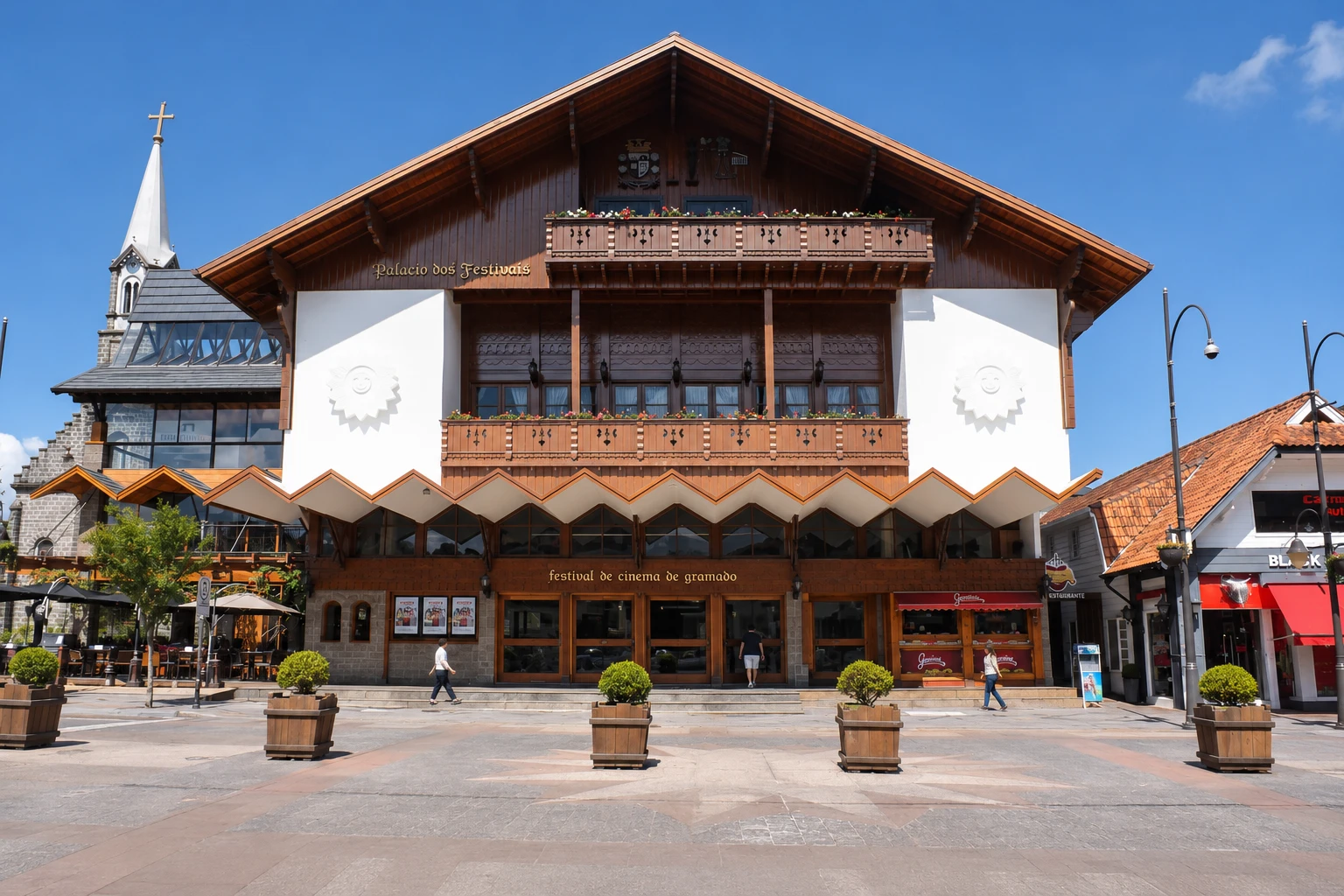
Palace of Festivals of Gramado
Headquarters of the Gramado Film Festival on Avenida Borges de Medeiros, with the Kikito on the façade and, on the sidewalk in front, plaques with the hands and signatures of the honorees.
Illustrative images. The pictures in this guide are illustrations based on the real place, not photographs, and may differ from it.

A look at the place
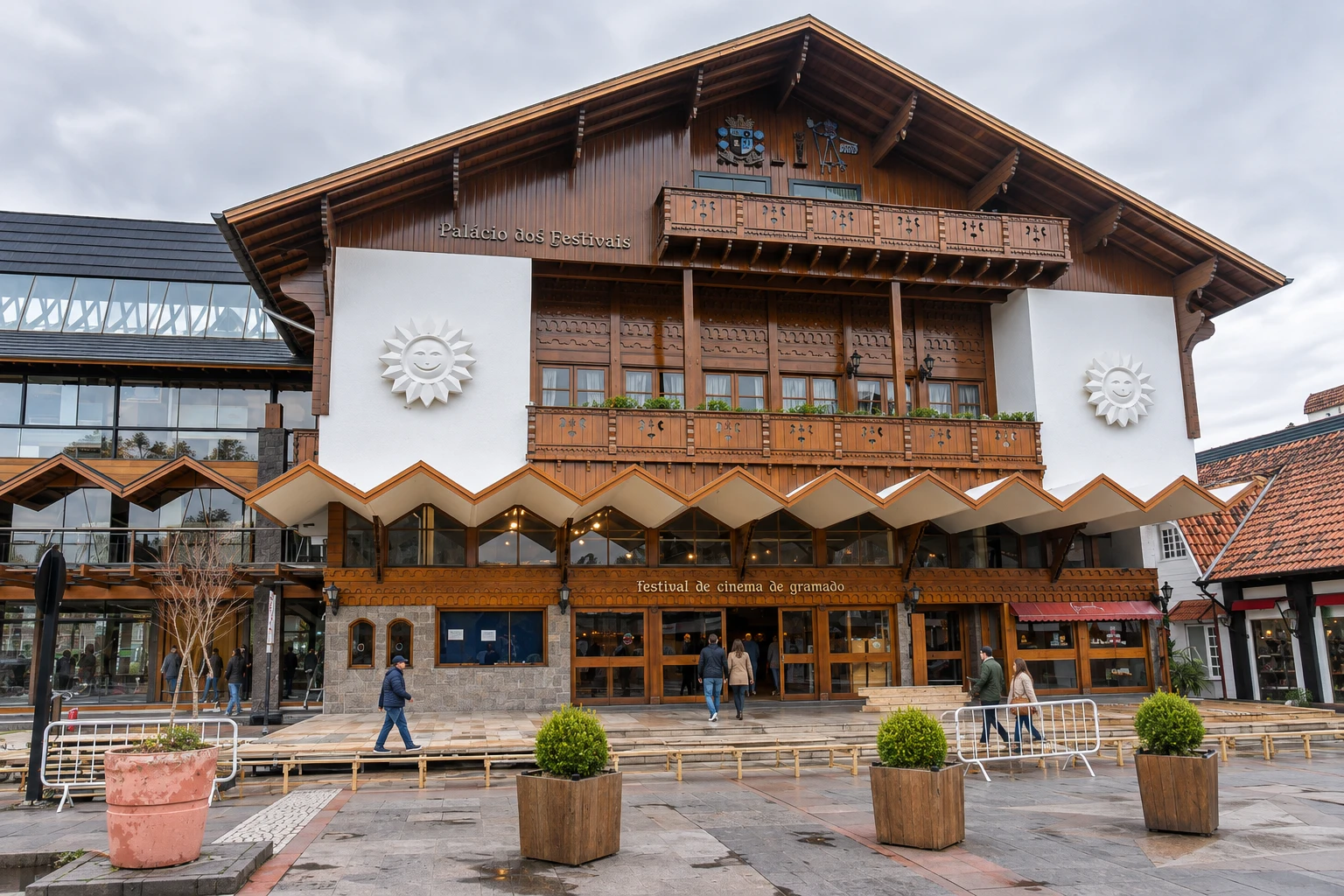
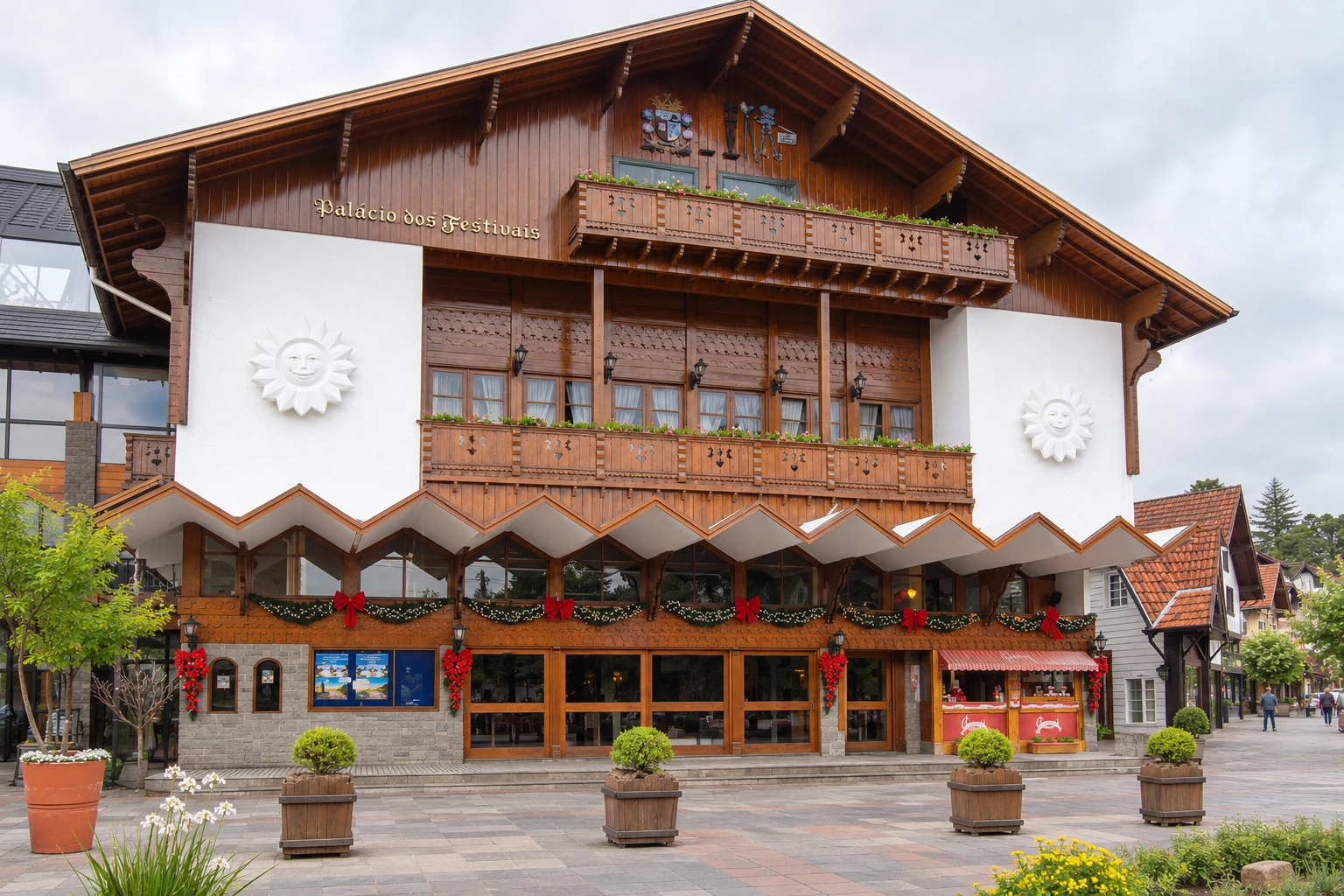
Palace of Festivals of Gramado in pictures
These pictures are illustrations based on the real place, not photographs. They may differ from the place.
Click the picture to enlarge it.
Discover
About Palace of Festivals of Gramado
The Palácio dos Festivais is the building on Avenida Borges de Medeiros that hosts the Gramado Film Festival every August, held since 1973. It is where the screenings of the competitive selection take place and where the Kikito, the festival’s trophy, is awarded.
The building, in a colonial style, sits on the busiest stretch of downtown. The façade is ornamented by the Kikito, the smiling figure created by visual artist Elisabeth Rosenfeld and treated as the god of good humor, which became a symbol of the festival and of Gramado.
On the sidewalk in front is Gramado’s Walk of Fame. At each edition, actors, directors and other honorees leave their hands and signatures on plaques that are later cast in bronze and fixed to the pavement. Strolling there looking for familiar names from film and television is what most visitors do outside the festival period.
The interior is open to the public during screenings and scheduled events throughout the year, not for free visits. During the festival, the avenue in front receives the red carpet, the arrival of guests and crowds on the sidewalk, and screenings are sold through their own ticketing; check the schedule and sales method in advance.
Next to the Palácio dos Festivais is the Palácio do Kikito, also called the Gramado Film Festival Museum, with costumes, trophies, photos and interactive areas about the festival’s history; admission is charged separately. A few steps away are the Igreja Matriz São Pedro Apóstolo and Rua Coberta.
Before you go
Practical information
Cidade Turismo reviews its information regularly, but something may have changed. Check with the place before planning your trip.
How much time to set aside
15 to 30 minutes to see the façade and the Walk of Fame; about one additional hour if you visit the museum next door.
Best time
The façade and the sidewalk can be seen at any time, day or night. In August, during the Film Festival, the surroundings are livelier and crowded; outside that period you can read the plaques at leisure.
How to get there
It’s on Avenida Borges de Medeiros, in downtown Gramado, a few steps from Igreja Matriz São Pedro Apóstolo and Rua Coberta. From the center, it’s within walking distance.
Tip
To see the plaques without people around, go early in the morning. If you want to attend a festival screening, follow the ticket sale openings in advance. Combine your visit with the Palácio do Kikito next door.
Get your questions answered
Frequently asked questions about Palace of Festivals of Gramado
Where is Gramado’s Walk of Fame located?
On the sidewalk in front of the Palácio dos Festivais, on Avenida Borges de Medeiros in downtown Gramado, near the Igreja Matriz and Rua Coberta.
Can you enter the Palácio dos Festivais?
The interior is open for screenings and scheduled events, such as the Gramado Film Festival, and not for free visits. The façade and the Walk of Fame can be seen at any time.
When does the Gramado Film Festival take place?
The festival usually takes place in August, with screenings and the Kikito awards at the Palácio dos Festivais. Check the dates and program for each edition.
What is the Kikito?
It is the trophy of the Gramado Film Festival, a smiling figure created by visual artist Elisabeth Rosenfeld and treated as the god of good humor. It appears on the façade of the Palácio dos Festivais.
Where is the Gramado Film Festival museum located?
Next to the Palácio dos Festivais, in the Palácio do Kikito, with costumes, trophies and interactive areas about the festival’s history. Admission is charged separately.
Beyond the guide


