Dish · Split
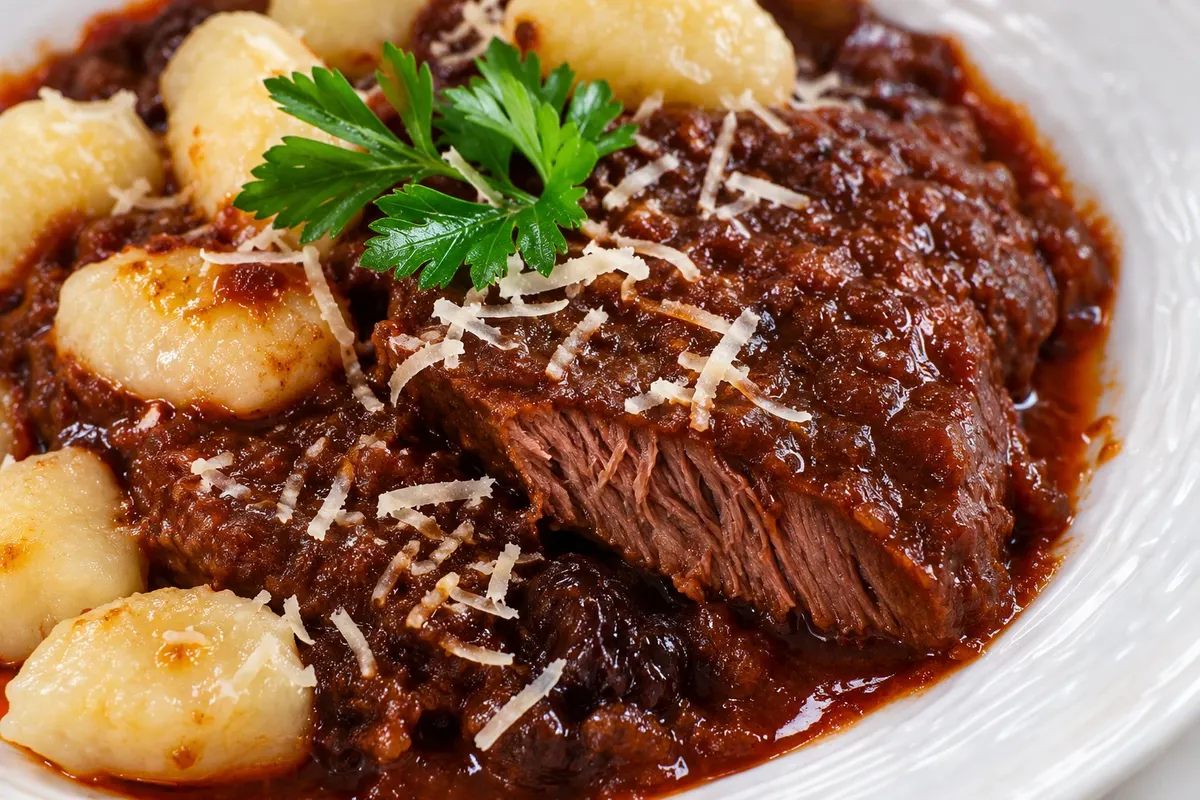
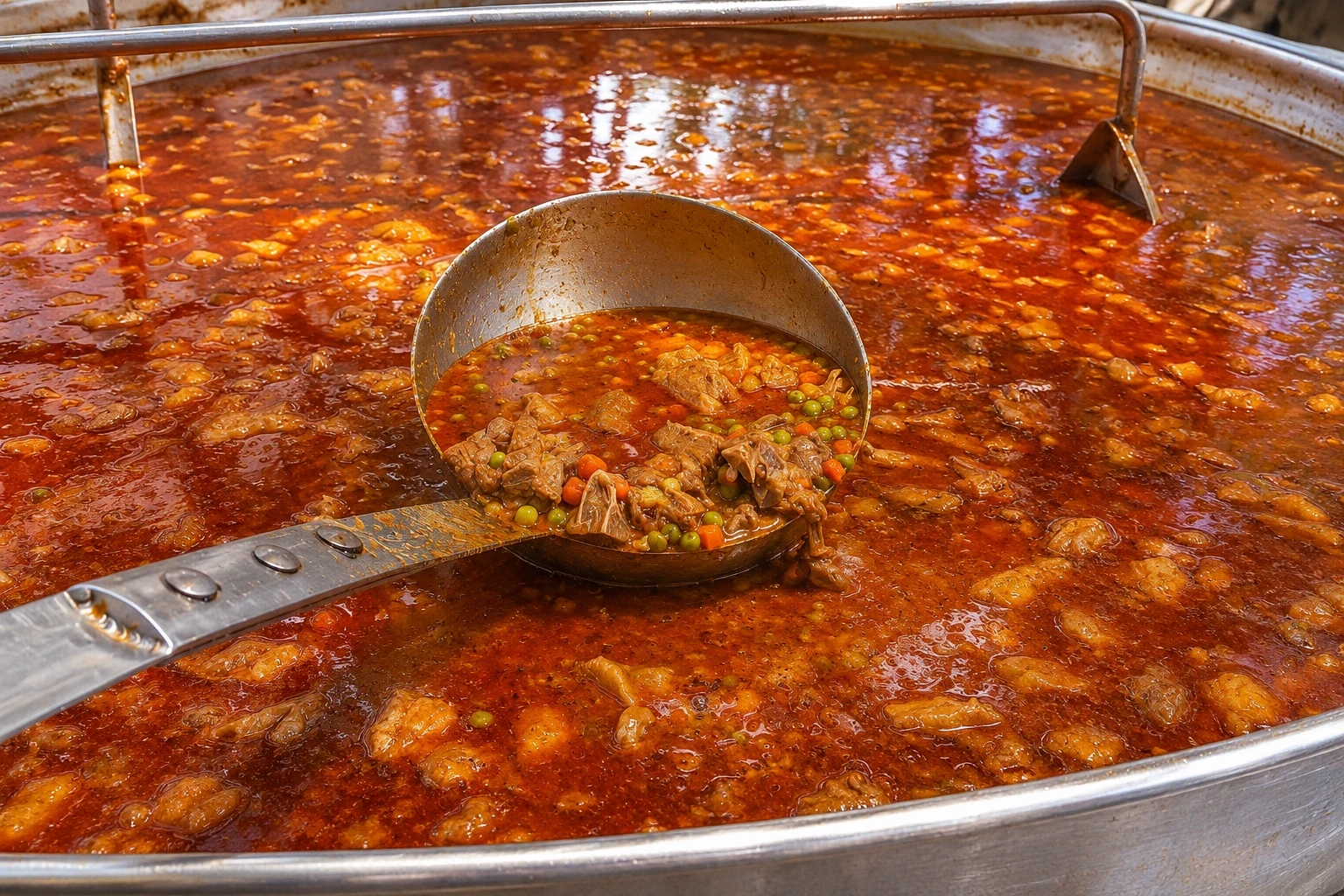
Pašticada
Beef larded with garlic, clove and bacon, marinated in wine and vinegar and cooked for hours in a dark sauce with dried plum and prošek. In Split, it’s served with gnocchi or pasta.

 Search
 Brazil
 Antarctica
 Argentina
 Bolivia
 Chile
 Colombia
 Ecuador
 Guyana
 French Guiana
 Falkland Islands (Malvinas)
 Paraguay
 Peru
 Suriname
 Uruguay
 Venezuela
 Germany
 Austria
 BelgiumCroatia
 Denmark
 Slovakia
 Slovenia
 Spain
 Finland
 France
 Greece
 the Netherlands
 Hungary
 Ireland
 Iceland
 Italy
 Luxembourg
 Norway
 Poland
 Portugal
 the United Kingdom
 the Czech Republic
 Sweden
 Switzerland
 Turkey
 Bermuda
 Canada
 the United States
 Greenland
 Mexico
 Saint Pierre and Miquelon
 the Dominican Republic
 JapanTurkey
 South Africa
 Egypt
 Australia
 Fiji
 New Zealand
 Papua New Guinea
Popular festival · Split
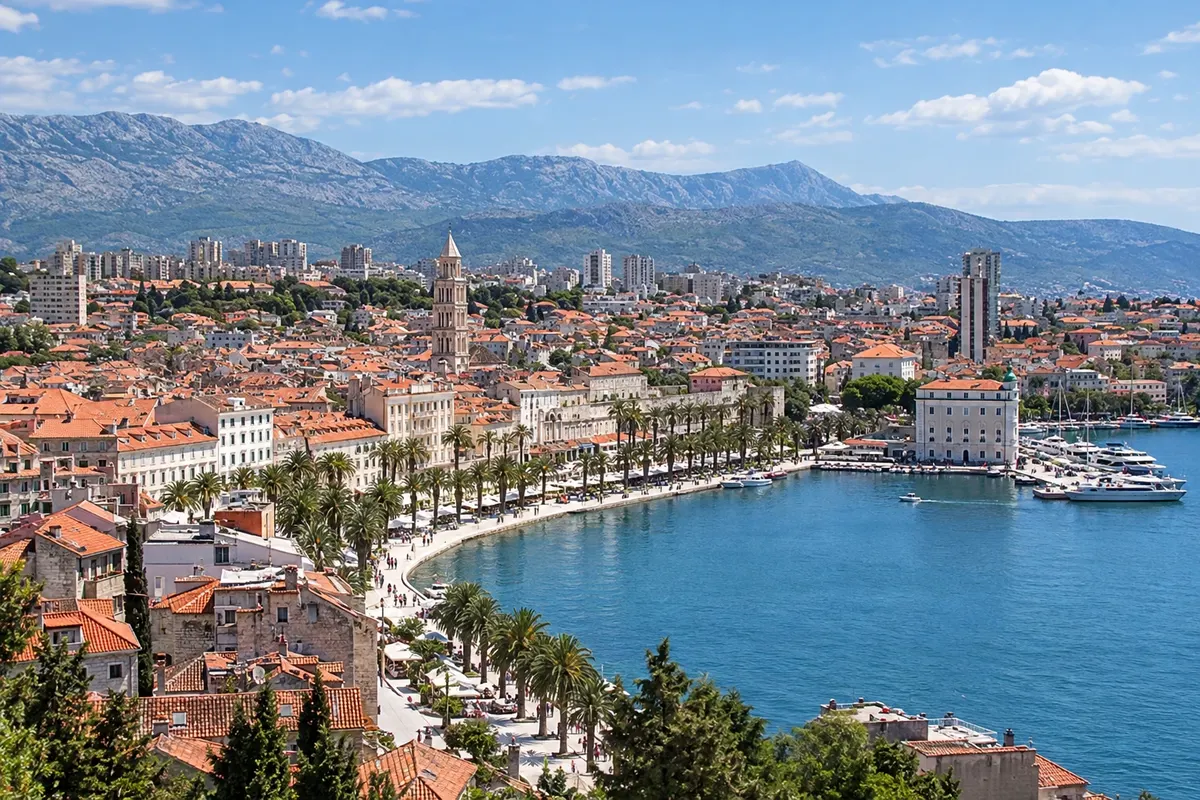
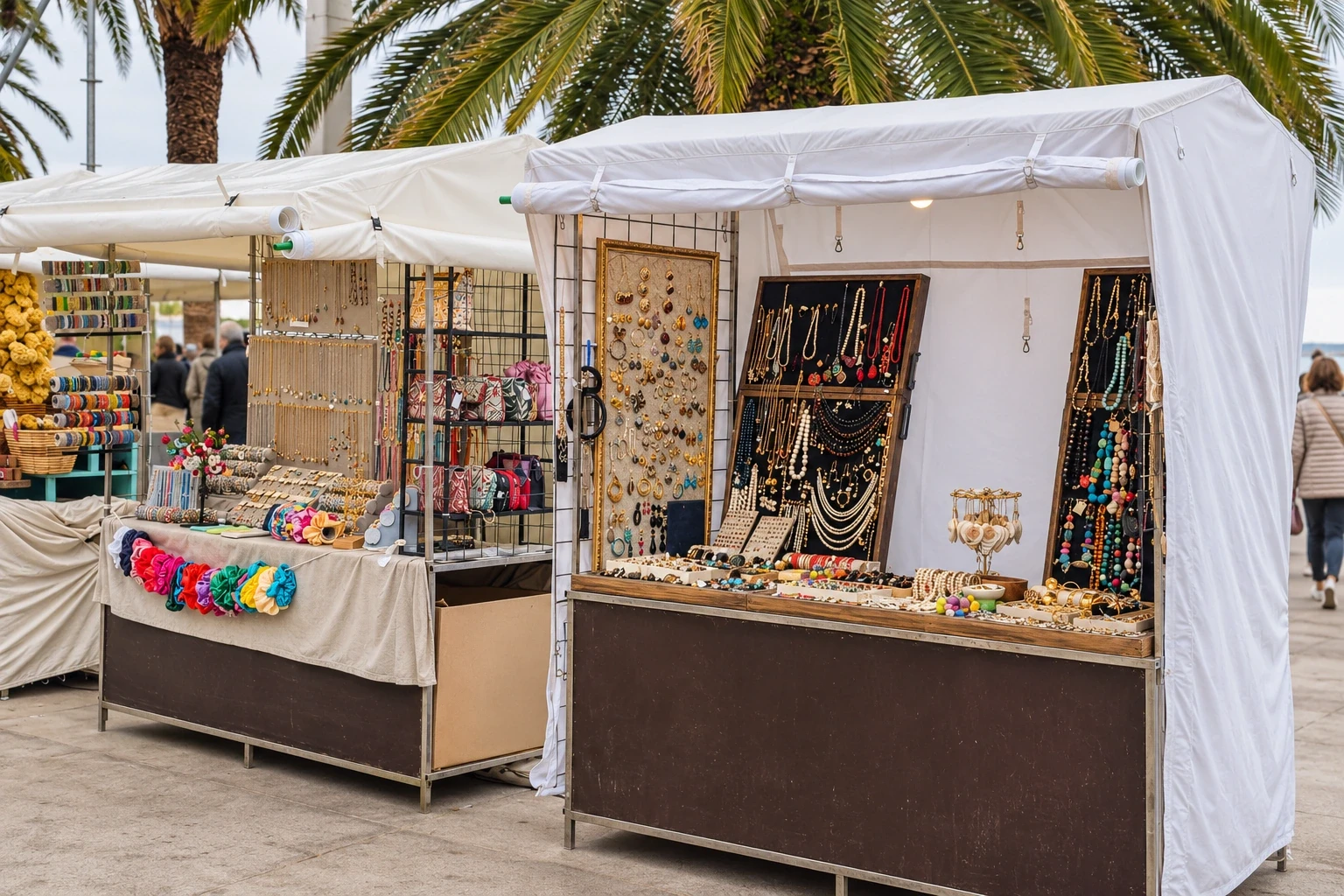
On May 7, Split honors its patron saint, Saint Domnius, and celebrates City Day. A procession carries the saint’s relics from the cathedral to the Riva for an outdoor Mass. A traditional woodcraft fair and concerts are also part of the week of festivities.
In the photo: Split
Illustrative images. The pictures in this guide are illustrations based on the real place, not photographs, and may differ from it.

Click the picture to enlarge it.
Sudamja, the Feast of Saint Domnius — Split
May 7, with events in the week leading up to the feast and in the days that follow.
May
Dates change every year: check this year's date before you travel.
The festival
Split grew up within the palace of the Roman emperor Diocletian, and its cathedral occupies the emperor’s own mausoleum. In a twist of history, the city’s patron saint, Saint Domnius, or sveti Duje, was a bishop of Salona who was executed in 304 during Diocletian’s persecutions.
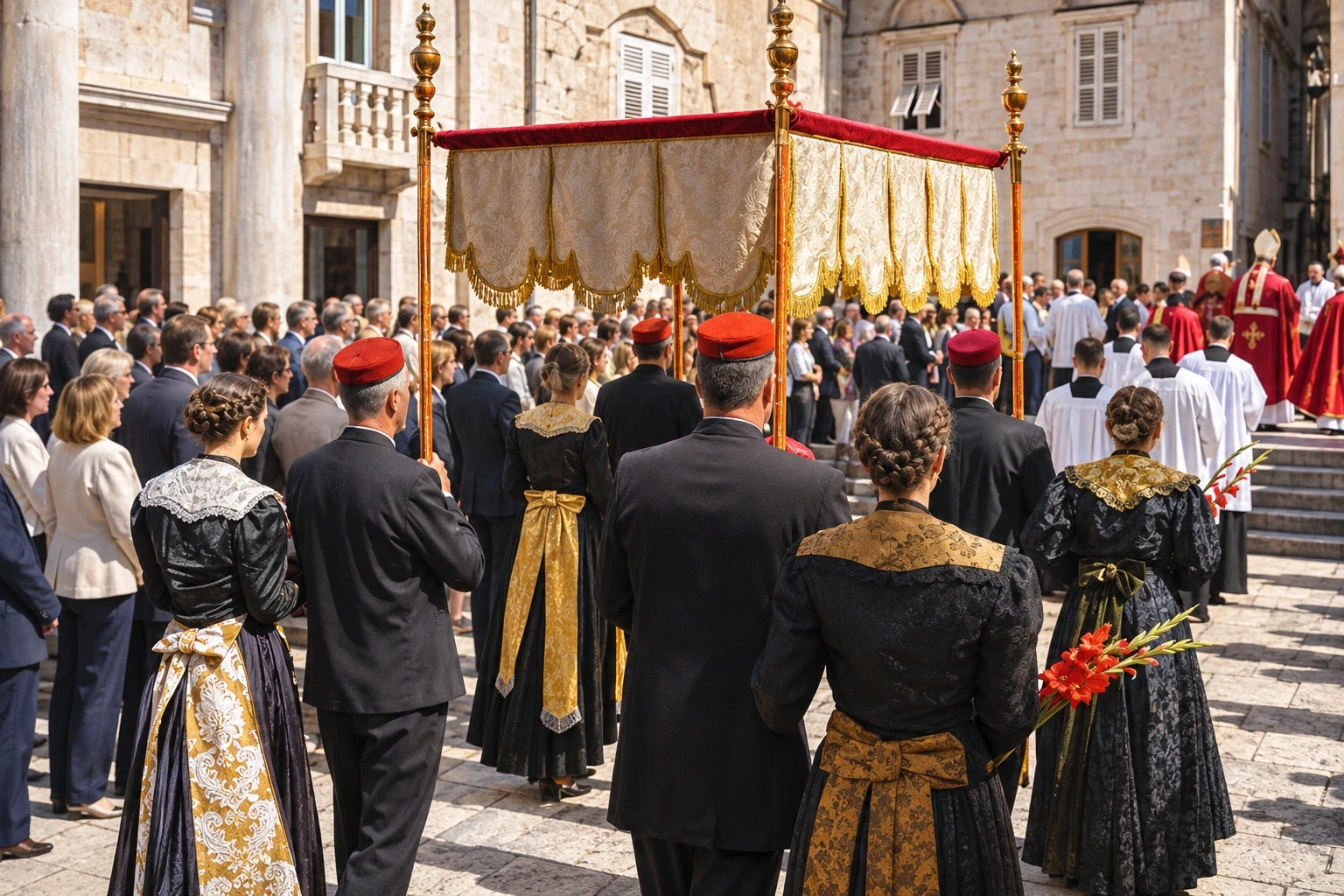
For centuries, Split has celebrated Sudamja, the feast of its patron saint, on May 7. For locals, it marks the city’s birthday. On the eve of the feast, the saint’s sarcophagus is opened in the cathedral and his relics are prepared for the procession.
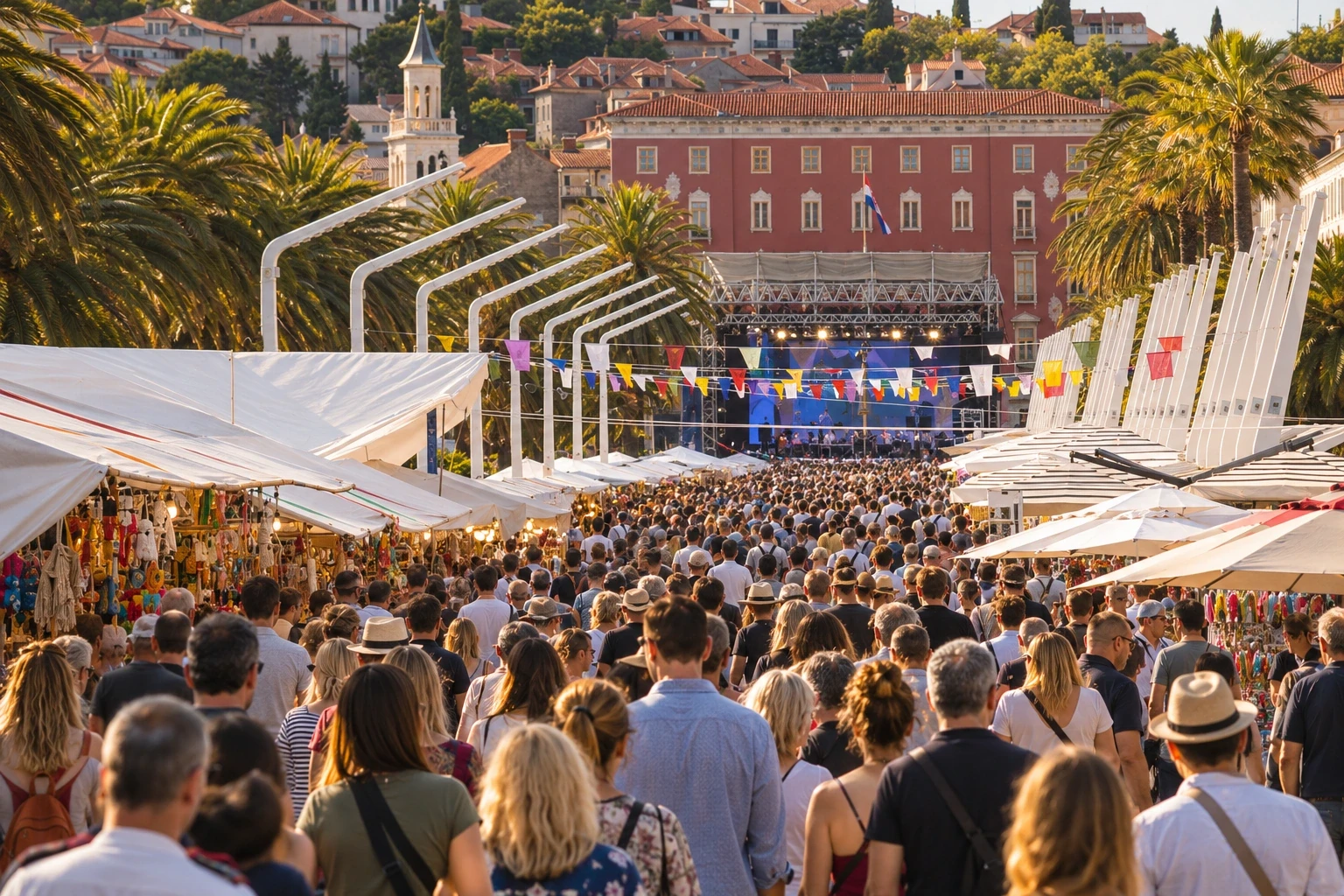
On May 7, the clergy, officials, and residents accompany the relics in a procession from the cathedral on the Peristyle to the Riva, the waterfront promenade, where an outdoor Mass is held. The Sudamja fair takes place in and around the Riva in the days around May 7. Tradition calls for taking home something made of wood, even if it’s just a spoon.
Around the saint’s feast day, the city puts on a week of events. Depending on the year’s program, these include concerts on the Riva, klapa singing and folk performances, exhibitions, guided tours, and sporting events.
It’s worth the trip to see Split on its most important day, before the summer crowds arrive, when Diocletian’s Palace and the Riva are full of locals celebrating.
The procession carrying the relics from the Peristyle to the Riva on May 7. The Sudamja fair and the tradition of buying something made of wood. Evening concerts on the Riva. Performances of klapa, Dalmatia’s traditional a cappella singing.
Get to the Riva early on May 7 to see the procession and attend Mass. At the fair, buy a wooden spoon or toy, as the locals do. Check the week’s schedule for events around the city.
Look for Sudamja’s food events and the local producers’ market. Dalmatian dishes featured at past celebrations include soparnik, a thin Swiss chard pie, and janjetina s bižima, lamb with peas.
Check with the Split tourist office for the Sudamja schedule. Book your accommodations in advance if you plan to attend the procession and the fair.
Flavors of Croatia
Your questions
May 7, the feast day of Saint Domnius and Split’s City Day. Events begin several days before the feast and continue afterward.
It’s a traditional craft fair in and around the Riva. The custom is to take home something made of wood.
It starts at the cathedral on the Peristyle of Diocletian’s Palace and ends at the Riva, where an outdoor Mass is held.
Festivals and events in Croatia
 January/February/March
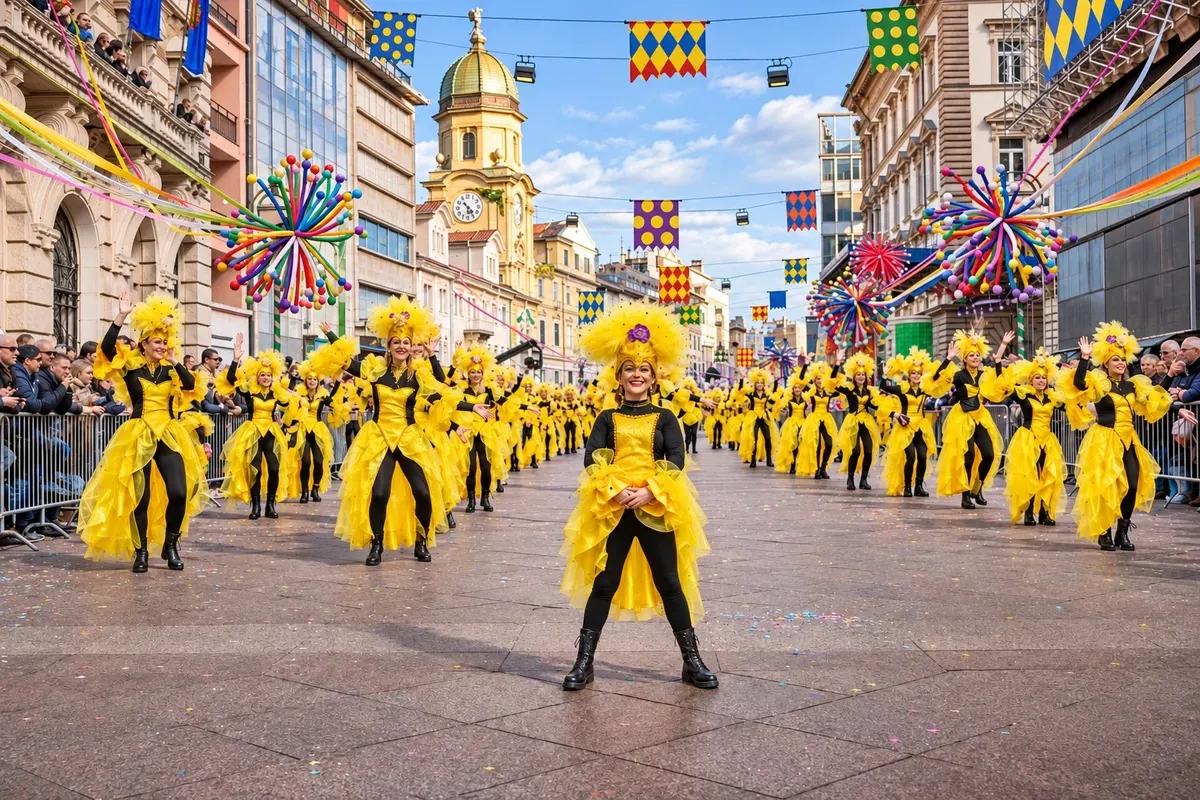
In the weeks leading up to Lent. The main parade takes place on the Sunday before Ash Wednesday.
In the weeks leading up to Lent, Rijeka hosts Croatia’s largest carnival, with masked groups, a children’s parade, and a grand international parade. The zvončari, bell ringers from nearby villages, close the parade in a tradition recognized by UNESCO.
 February
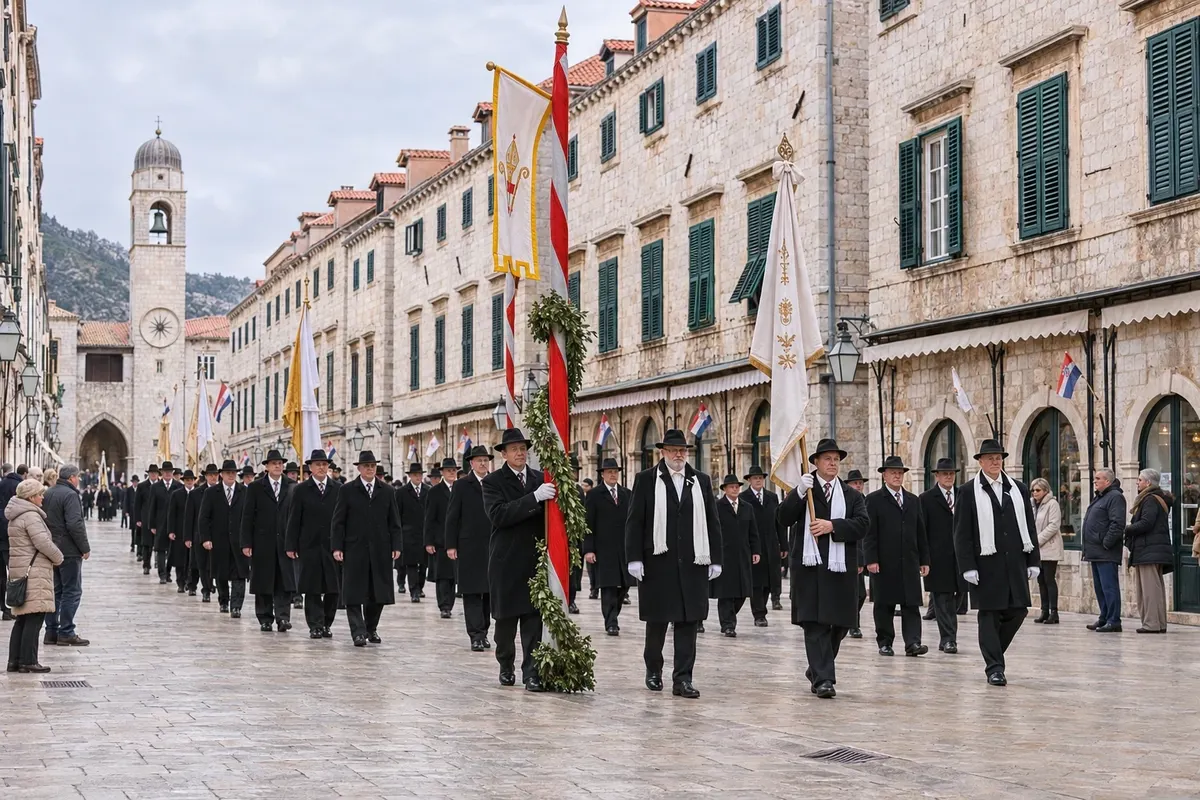
 3, with festivities beginning the day before, on February 2.
On February 3, Dubrovnik honors its patron saint, St. Blaise, with an outdoor Mass and a procession carrying his relics along the Stradun. People in traditional dress and banners from neighboring parishes accompany the procession as part of this UNESCO-listed celebration.
 March/April
Overnight from Holy Thursday into Good Friday.
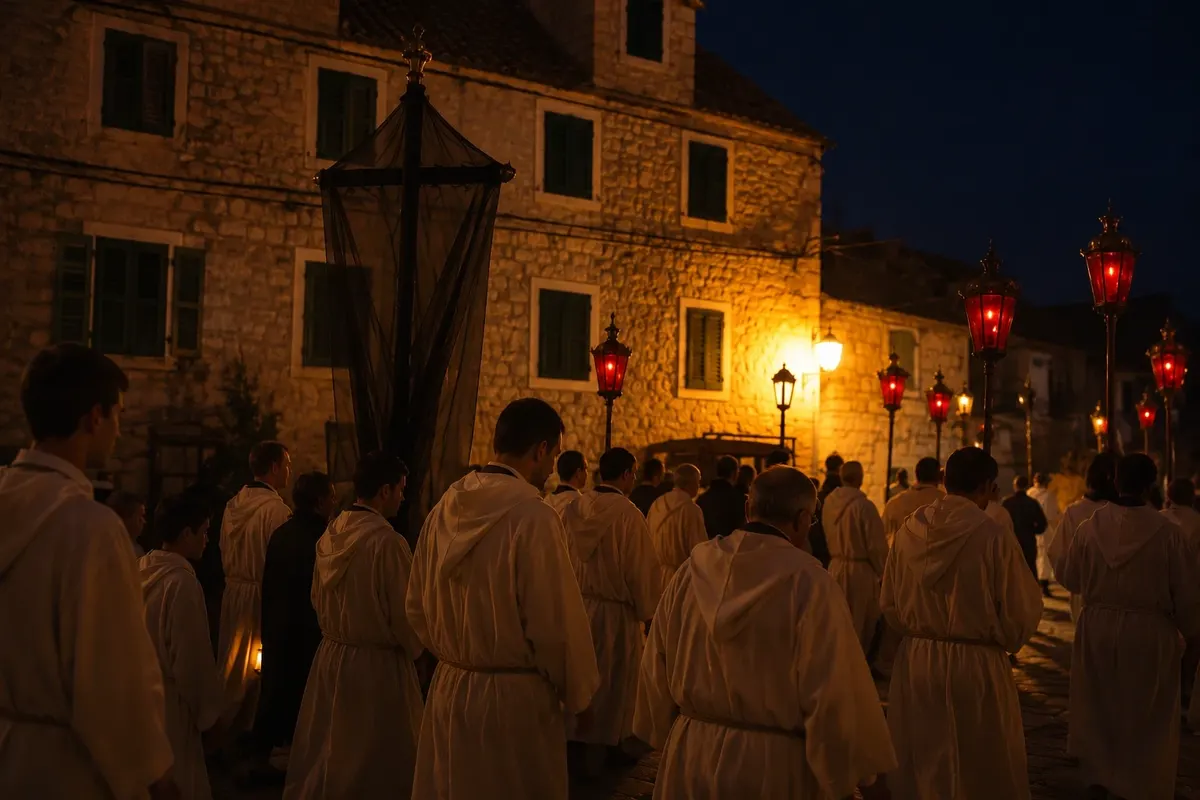
On Holy Thursday night, six villages in the central part of the island of Hvar set out in procession at the same time. Each follows its own cross on a 25-kilometer route through the other villages until dawn, in a five-century-old tradition recognized by UNESCO.
 June
Three days in late June.
In late June, the islands of Lake Jarun in Zagreb host INmusic, Croatia’s largest outdoor music festival, with three days of rock and contemporary music, Croatian and international bands, and lakeside camping.
 July
July 25 to 27 every year.
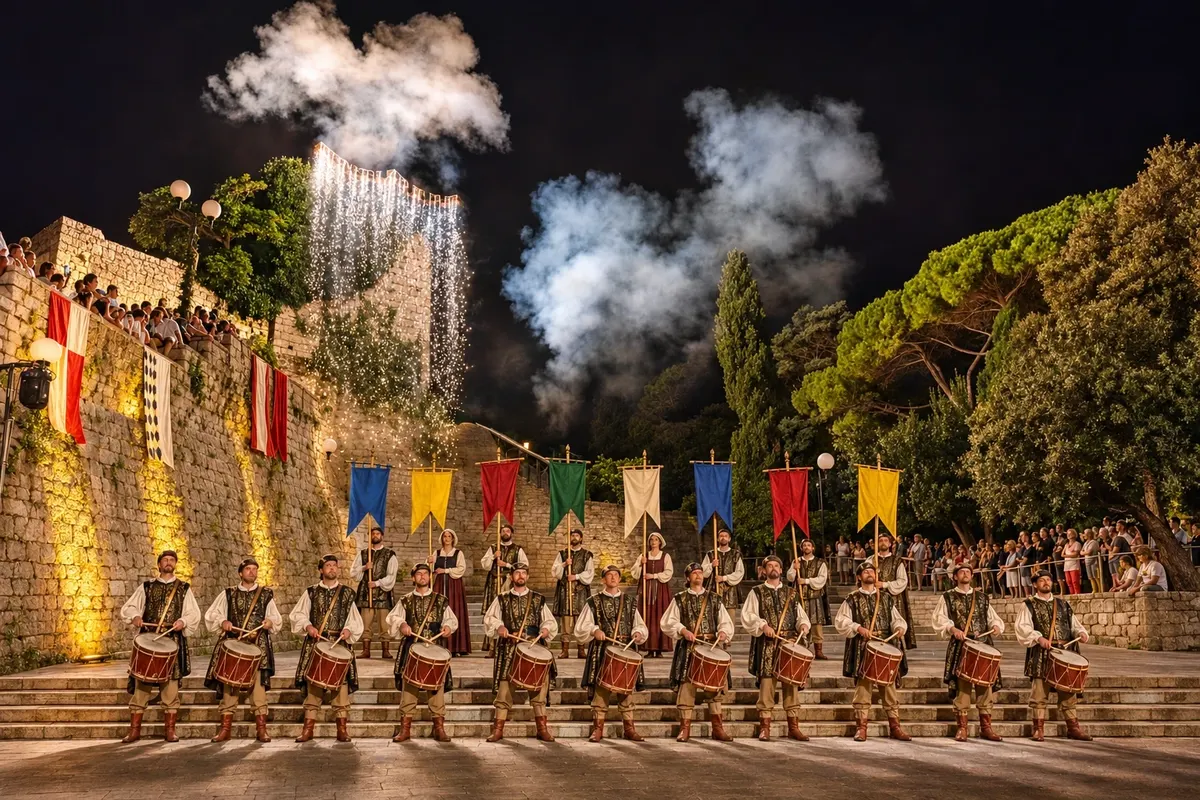
From July 25 to 27, the town of Rab returns to the Middle Ages. Craftspeople practice traditional trades in the streets, people dress in period clothing, a procession honors St. Christopher, the town’s patron saint, and crossbowmen hold their tournament in the square. The celebration recalls a decision made by the town council in 1364.
 July
For about a week in July.
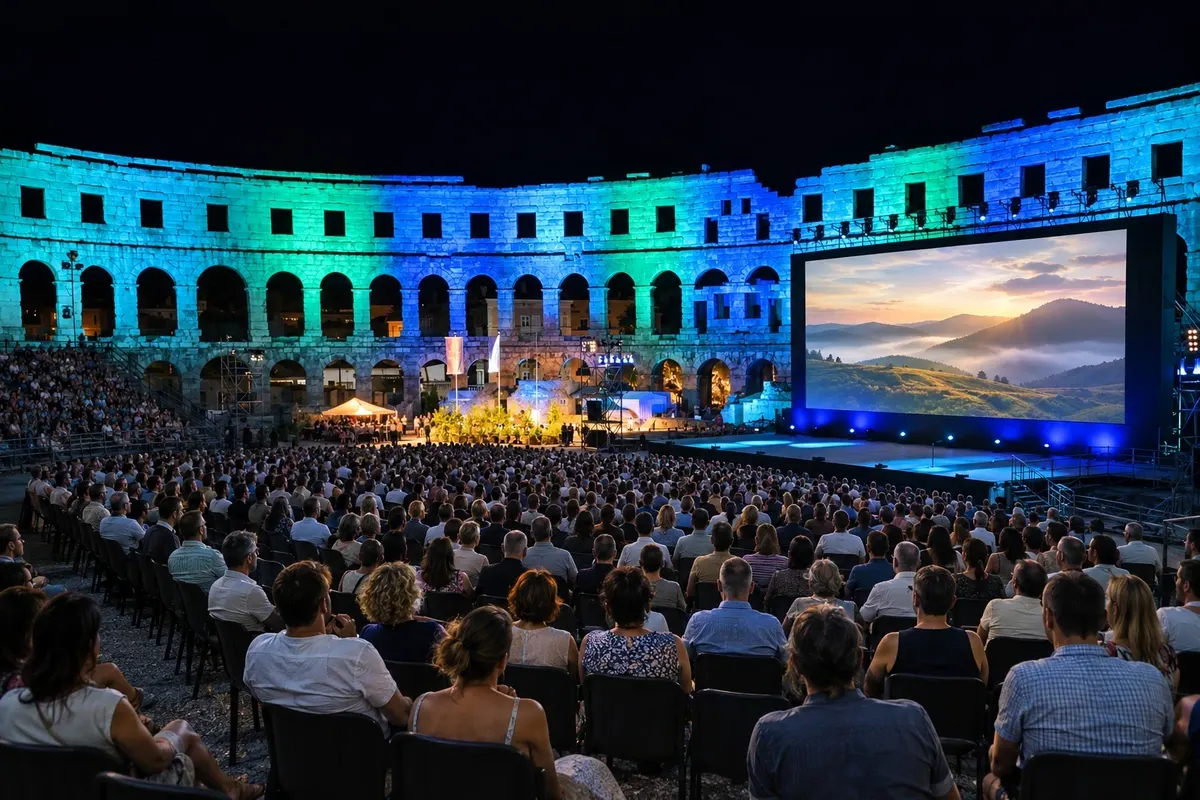
Every July, Pula’s Roman arena becomes an open-air cinema for Croatia’s oldest film festival. Founded in 1954, the festival is where the Golden Arenas, Croatia’s national film awards, are presented.
Beyond the guide


