

 Antarctica
 Argentina
 Bolivia
 Chile
 Colombia
 Ecuador
 Guyana
 French Guiana
 Falkland Islands (Malvinas)
 Paraguay
 Peru
 Suriname
 Uruguay
 Venezuela
 Germany
 Austria
 Belgium
 Croatia
 Denmark
 Slovakia
 Slovenia
 Spain
 Finland
 France
 Greece
 the Netherlands
 Hungary
 Ireland
 Iceland
 Italy
 Luxembourg
 Norway
 Poland
 Portugal
 the United Kingdom
 the Czech Republic
 Sweden
 Switzerland
 Turkey
 Bermuda
 Canada
 the United States
 Greenland
 Mexico
 Saint Pierre and Miquelon
 the Dominican Republic
 Japan
 South Africa
 Egypt
 Australia
 Fiji
 New Zealand
 Papua New Guinea
Illustrative images. The pictures in this guide are illustrations based on the real place, not photographs, and may differ from it.



Business and events travel
Convention centers
Pavilions and auditoriums for congresses, fairs and exhibitions, with lodging nearby.
A convention center is a building built to host gatherings: congresses, conventions, fairs, exhibitions, graduations, and corporate events. It brings together at one address auditoriums, rooms of various sizes, and open areas to set up booths, as well as services an event needs, such as food service, parking, and technical staff.
For organizers, it’s the facility that defines the event city. For participants, it’s the focal point around which the trip is arranged: where to stay, how to get there each morning and what to do when the program ends.
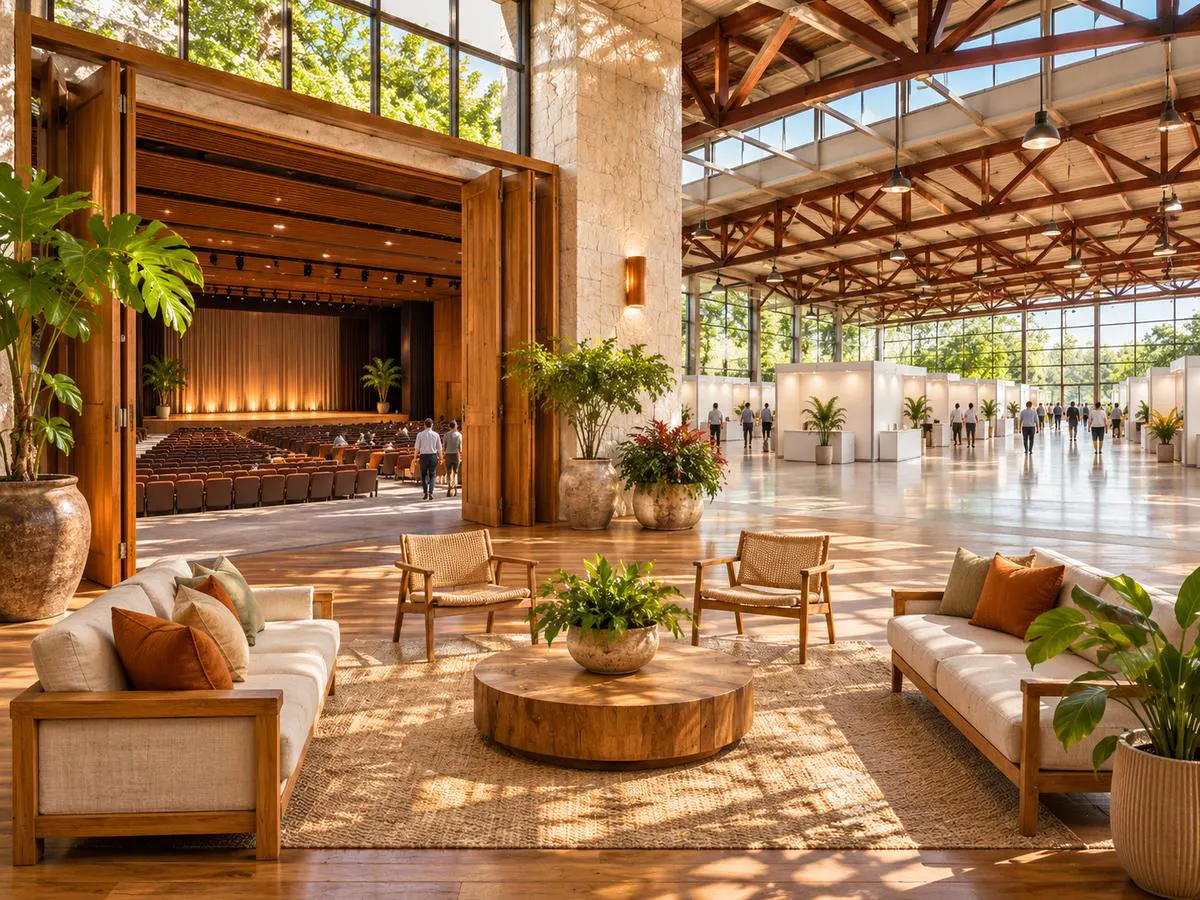
Convention center and exhibition hall: what's the difference
The two names often appear together but refer to different uses. A convention center is designed for seated audiences who listen and debate: it has auditoriums, support rooms, and social areas. An exhibition hall is a large covered space with a flat floor and high ceiling, made to host booths, machinery, and vehicles at fairs and exhibitions.
Many venues combine both in the same complex, so a congress can have lectures on one side and an exhibitors’ fair on the other. There is also the event center, a name used for spaces that host both professional meetings and concerts or graduations, and the exhibition park, with pavilions and open areas, common in cities that hold agricultural and industrial fairs.
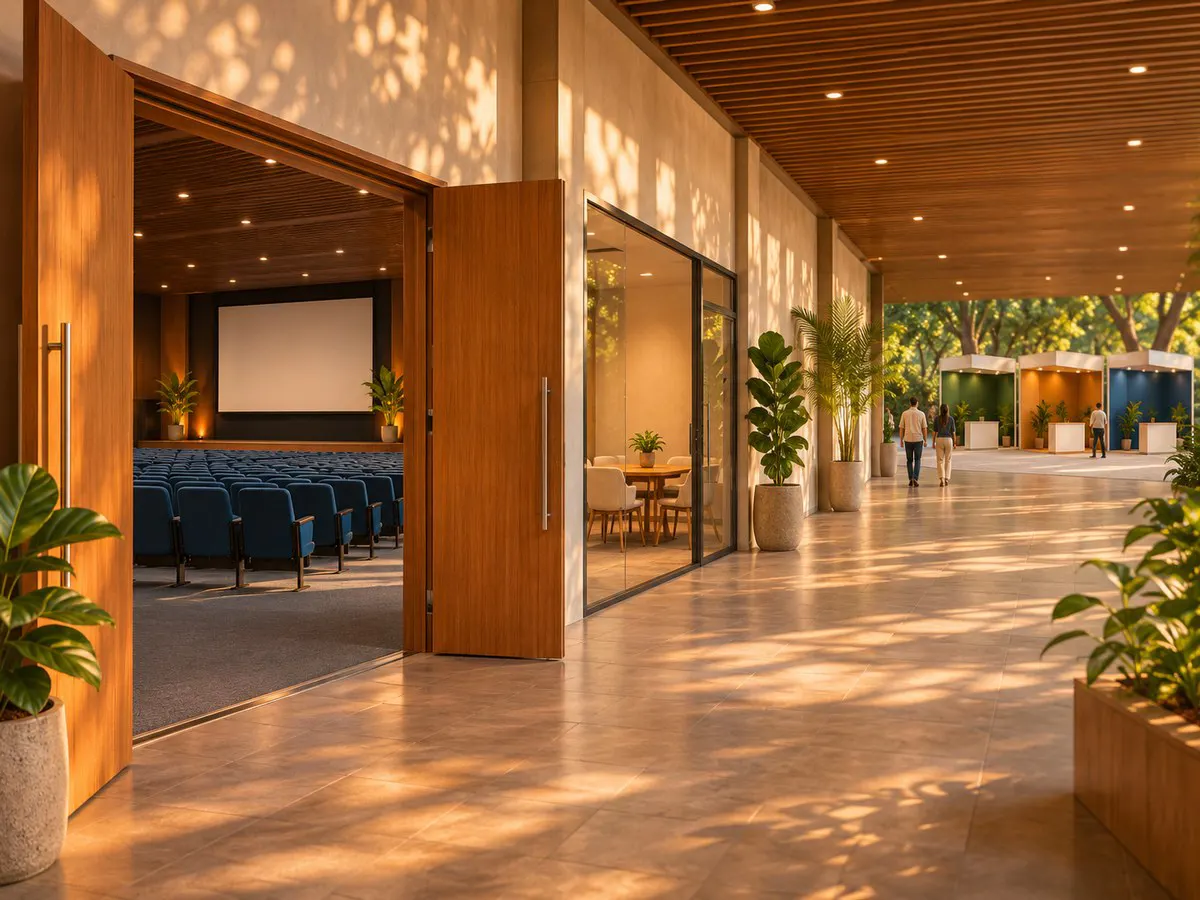
The spaces: auditorium, meeting rooms, and exhibition area
The auditorium is the space for openings and keynote lectures. It may have fixed seats in a sloped auditorium layout, or a flat floor with movable chairs that allows rearranging. The largest rooms can be divided with movable walls, turning one hall into two or three rooms.
Smaller rooms host parallel sessions of a congress, courses, board meetings, and the press room. They are usually on the same floor or corridor so attendees can switch sessions in a few minutes.
The exhibition area houses the booths. Important features there are ceiling height, floor load capacity, wide doors, and loading docks for truck access during set-up. Complementing the complex are the foyer—where registration and breaks take place—support kitchens, food service areas, and parking.
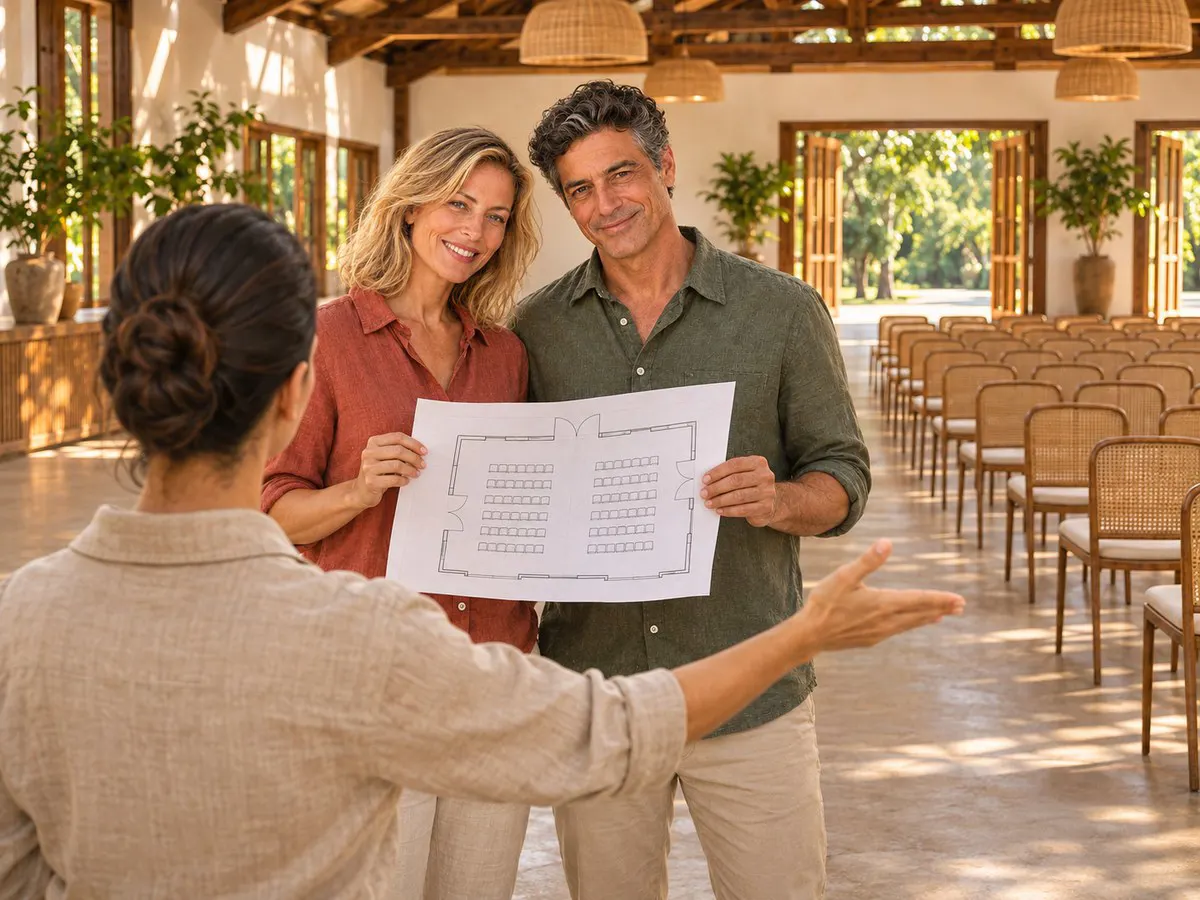
How to choose a convention center
The first question is size: how many people, how many simultaneous rooms, and how much exhibition area. A space that’s too large makes the event look empty; a space that’s too small impedes circulation and creates coffee lines. Ask for the floor plan, the capacity of each room in each seating format, and available dates.
Next comes access. For a national event, distance from the airport and the city’s flight connections matter; for a regional event, highways and the bus station weigh more. Within the city, consider the route between the convention center and lodging: whether participants walk, use public transit, ride-hail services, or board buses hired by the organizer.
Nearby lodging is what most affects participants’ experience. A convention center surrounded by hotels and guesthouses removes the need for transfers and lets groups go out to dinner and walk back. When the venue is remote, organizers must provide transportation at the start and end of each day.
Finally, what’s included. Sound, projection, internet, cleaning, air conditioning, and set-up may be part of the rental or contracted separately. Costs vary by date and space: check the current rate sheet with management and, if possible, visit the venue before signing.
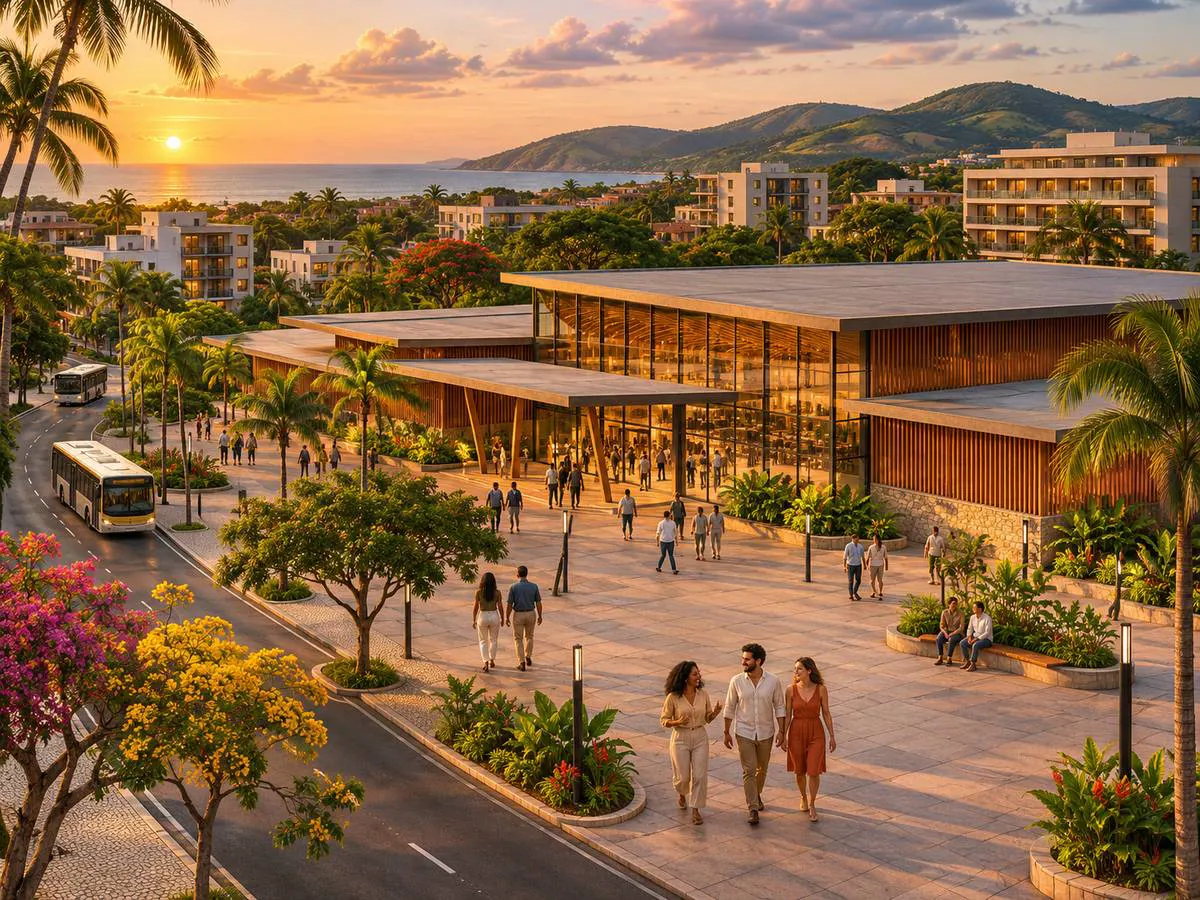
Cities with convention centers in Brazil
São Paulo concentrates several exhibition pavilions and is the country’s main host of business fairs. Rio de Janeiro has convention centers that host international congresses, and Brasília, the federal capital, gathers institutional and association meetings.
On the coast, Salvador has a seaside convention center and Florianópolis has one in the city center. Among other state capitals, Fortaleza, Recife, Belo Horizonte, Curitiba, and Porto Alegre also have event centers and pavilions that host fairs and congresses throughout the year.
Outside the capitals, Gramado hosts congresses, conventions, and fairs in its event centers, and Foz do Iguaçu combines convention centers with visits to the Cataratas do Iguaçu. Petrópolis has dozens of meeting venues, among them the halls of Palácio Quitandinha.
In Santa Catarina, Balneário Camboriú and Joinville have event centers with fair pavilions. In the Serra Gaúcha, Bento Gonçalves maintains an events park that hosts industry and wine fairs. Campos do Jordão, in the Serra da Mantiqueira, has a convention center and lodgings with meeting rooms.
Frequently asked questions
What is a convention center?
It is a building designed to host congresses, conventions, fairs, and other gatherings. It brings together auditoriums, rooms of various sizes, and exhibition areas, with support services such as food service and parking.
What is the difference between a convention center and an exhibition hall?
A convention center has auditoriums and rooms for lectures and meetings. An exhibition hall is a large covered, open space with a high ceiling where fair booths are assembled. Many venues have both in the same complex.
How to choose a convention center for a congress?
Start with the number of attendees and simultaneous rooms. Then compare access from the airport and bus station, the number of lodgings within short distance, local transport, and what is included in the rental.
What is the foyer of a convention center?
It is the lobby that gives access to auditoriums and rooms. It houses registration, coffee breaks, and often sponsor booths.
Is it more practical to stay near the convention center?
Generally, yes: those staying nearby can walk and do not depend on traffic or transfers. In weeks with large events, these lodgings are usually the first to fill up, so it’s wise to book early.
Where to go: Convention centers
Pick a region or a state on the map, or type what you are looking for, to see the cities and who offers it in each.
-
Salvador BA
Centro de Convenções Salvador, na Boca do Rio.
-
Fortaleza CE
Centro de convenções: 30000.
-
Olinda PE
Pernambuco Centro de Convenções, com pavilhão de feiras de 20 mil m².
-
Recife PE
Recife Expo Center, com auditório de 1.300 lugares, cinco salas e pavilhão de 4.100 m².
-
Brasília DF
Ulysses Centro de Convenções, com 13 salas modulares, cinco teatros e duas alas de exposições.
-
Belo Horizonte MG
Expominas BH, centro de eventos com espaços moduláveis.
-
Petrópolis RJ
Palácio Quitandinha, para até mil pessoas, e centro de convenções em Itaipava.
-
Rio de Janeiro RJ
Riocentro: quatro pavilhões e centro de convenções com 20 salas modulares.
-
Campos do Jordão SP
Convention Center de 7,2 mil m², com salão e andar para feiras de até 1,3 mil pessoas.
-
São Paulo SP
Distrito Anhembi, com 34 salas, entre vários pavilhões e centros de convenções da cidade.
-
Foz do Iguaçu PR
Complexo de eventos de 18 mil m² em hotel de convenções, divisível em até 44 ambientes.
-
Bento Gonçalves RS
Complexo multieventos da Fundaparque.
-
Gramado RS
Serra Park, espaço de eventos com 28 mil m² de área coberta.
-
Balneário Camboriú SC
Expocentro, centro de eventos com torre e pavilhão.
-
Florianópolis SC
CentroSul, centro de convenções na área central, com sete espaços.
-
Joinville SC
Expoville, com 13 auditórios e pavilhão de feiras.
More activities in Business and events travel





Beyond the guide


