
 Brazil
 Antarctica
 Argentina
 Bolivia
 Chile
 Colombia
 Ecuador
 Guyana
 French Guiana
 Falkland Islands (Malvinas)
 Paraguay
 Peru
 Suriname
 Uruguay
 Venezuela
 Germany
 Austria
 Belgium
 Croatia
 Denmark
 Slovakia
 Slovenia
 Spain
 Finland
 France
 Greece
 the Netherlands
 Hungary
 Ireland
 Iceland
 Luxembourg
 Norway
 Poland
 Portugal
 the United Kingdom
 the Czech Republic
 Sweden
 Turkey
 Bermuda
 Canada
 the United States
 Greenland
 Mexico
 Saint Pierre and Miquelon
 the Dominican Republic
 Japan
 South Africa
 Egypt
 Australia
 Fiji
 New Zealand
 Papua New Guinea
Cross-border route · Europe
Bernina Express: Chur–St. Moritz–Tirano
The red train that crosses the Alps from Switzerland to Italy: viaducts, spiral tunnels, glaciers and Lake Bianco, from Chur to Tirano in about four hours, with a bus onward to Lugano.
 Switzerland
 Italy
4 cities 2 countries
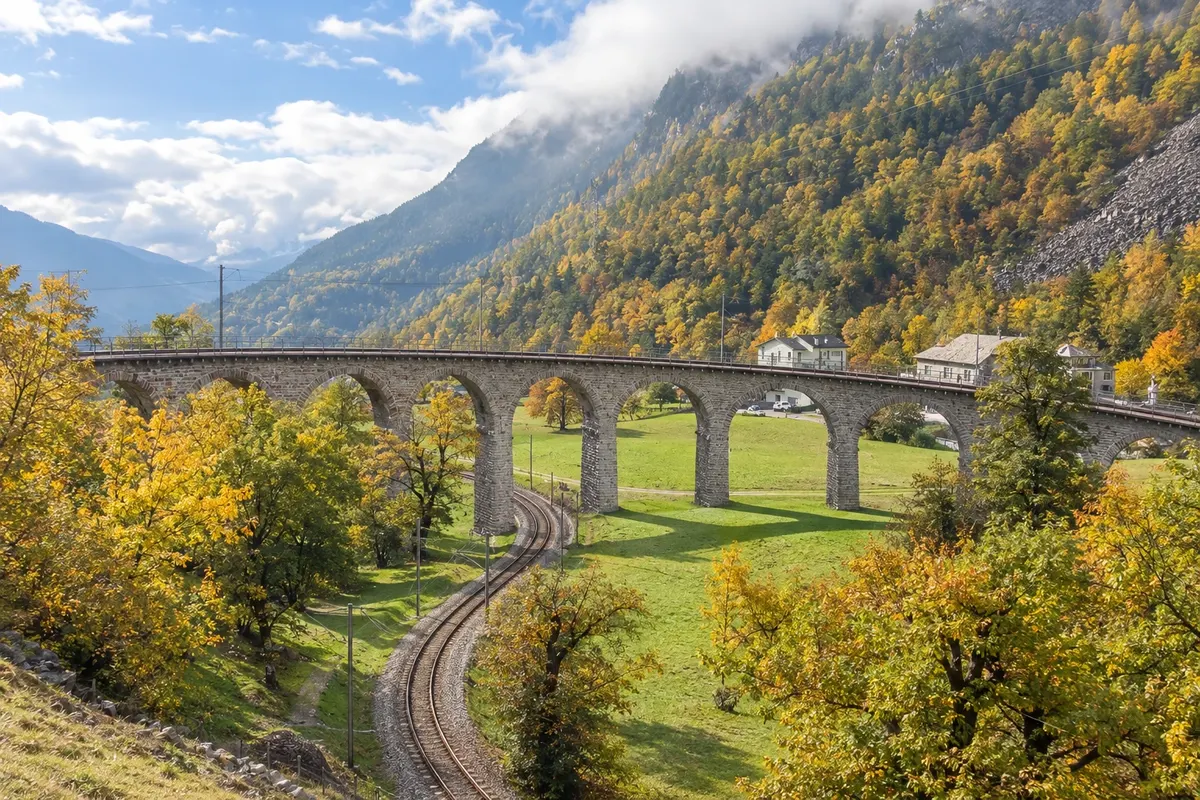
In the photo: Brusio circular viaduct
Illustrative images. The pictures in this guide are illustrations based on the real place, not photographs, and may differ from it.

The route
What the Bernina Express: Chur–St. Moritz–Tirano is
The Bernina Express is the panoramic train of the Rhaetian Railway (RhB) that links Chur, in Graubünden, to Tirano in Italy via the Albula and Bernina lines, recognized by UNESCO as a World Heritage Site. The journey takes 4 to 4.5 hours and has carriages with windows that extend to the ceiling. There are also departures from Davos and from St. Moritz.
From Chur the train climbs the Albula valley, passes the Landwasser viaduct near Filisur, and goes through spiral tunnels to the Engadine and St. Moritz. It then crosses the Bernina Pass at the Ospizio Bernina, at 2,253 meters, the highest point on the line, beside Lake Bianco and with views of the Morteratsch Glacier. On the descent it goes past Alp Grüm, through the Poschiavo valley and the circular Brusio viaduct, a full spiral loop, until it reaches Tirano, already in Italy.
In season a panoramic bus, the Bernina Express Bus, continues from Tirano to Lugano in Italian-speaking Switzerland via the Valtellina and the shore of Lake Como in about 3 hours. Switzerland is in the Schengen area but not in the European Union, and uses the Swiss franc; Italy uses the euro.
The map
4 cities in 2 countries
Outlines: Natural Earth, public domain. Adapted by Cidade Turismo.
The journey
City by city
Distances and times are approximate: check before you set off.
-
 1 · Switzerland
Chur
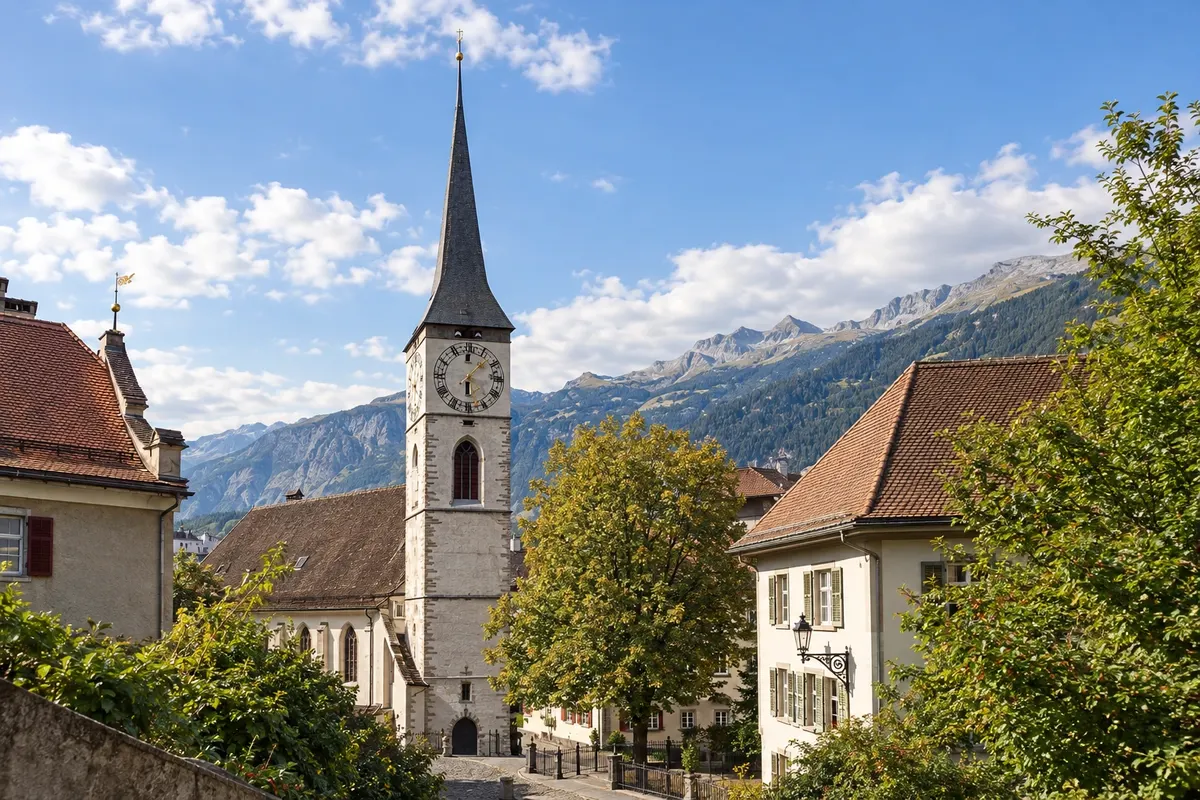
Chur is the capital of Graubünden and one of the oldest towns in Switzerland, with an old town of cobbled streets, the cathedral and the Bündner Kunstmuseum. It is the starting point of the Bernina Express, which departs from the station next to the town centre.
→ St. Moritz about 2h Bernina Express via the Albula line: Thusis, Tiefencastel, the Landwasser viaduct near Filisur, Bergün, the spiral tunnels and Samedan.
-
 2 · Switzerland
St. Moritz
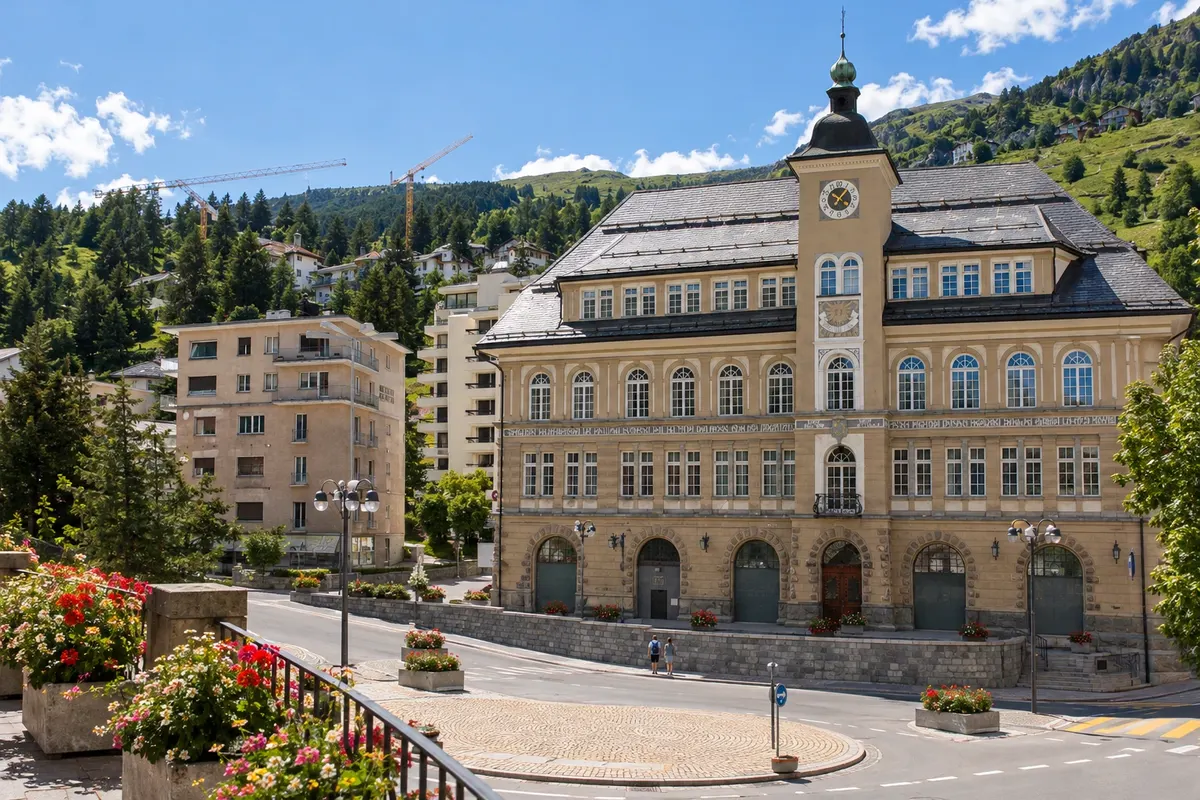
After the Landwasser viaduct and the Albula spirals, passing Filisur, Bergün and Samedan, the train reaches the Engadine and St. Moritz, a town of the lake and ski resorts. From here Bernina Express services also depart for those who want to do only the Bernina Pass section, in about 2.5 hours.
→ Tirano about 2h30 Bernina Express via the Bernina line: Pontresina, Ospizio Bernina (2,253 m), Alp Grüm, Poschiavo, the Brusio circular viaduct and Tirano.
-
 3 · Italy
Tirano
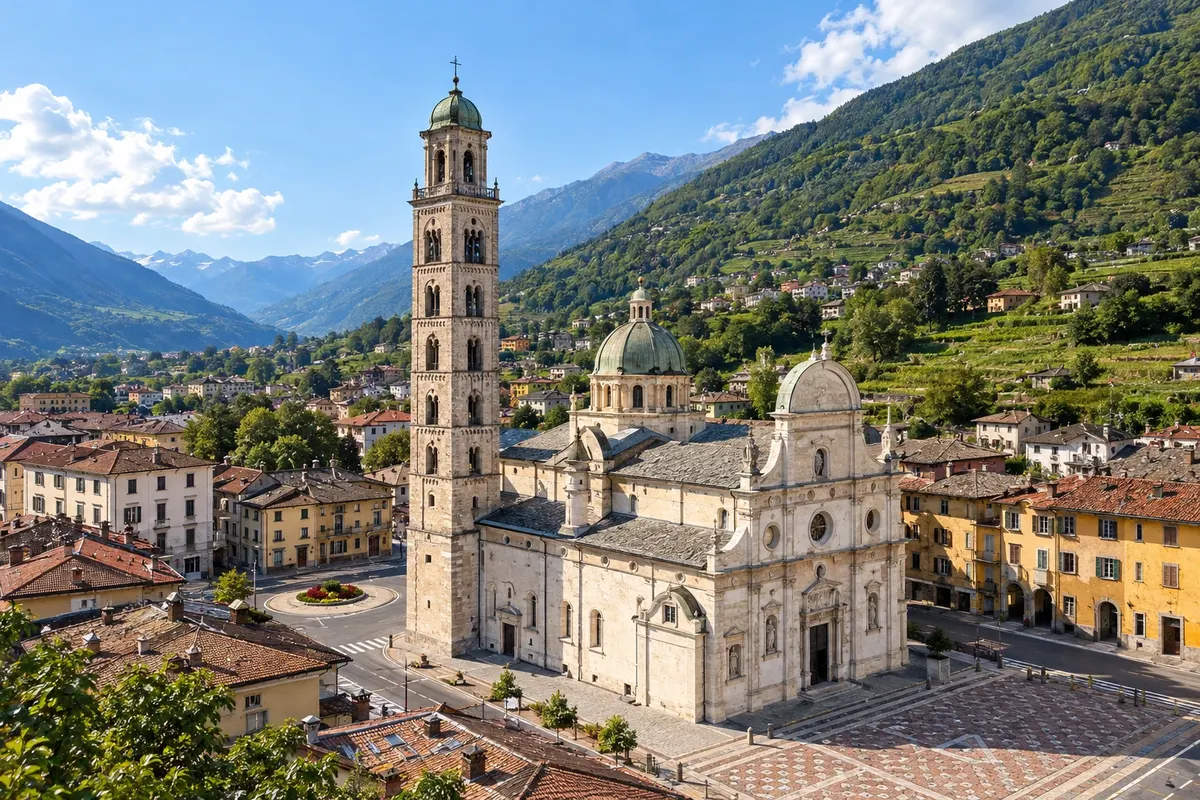
After the Ospizio Bernina, Alp Grüm, Poschiavo and the Brusio circular viaduct, the train reaches Tirano in the Italian Valtellina, where it runs along the middle of the street before entering the station. The town has the Sanctuary of the Madonna di Tirano and is the end of the line.
→ Lugano about 3h Bernina Express Bus via the Valtellina and the shore of Lake Como, with its own reservation and running only part of the year. Out of season the route is made by train, with changes, via Italy.
-
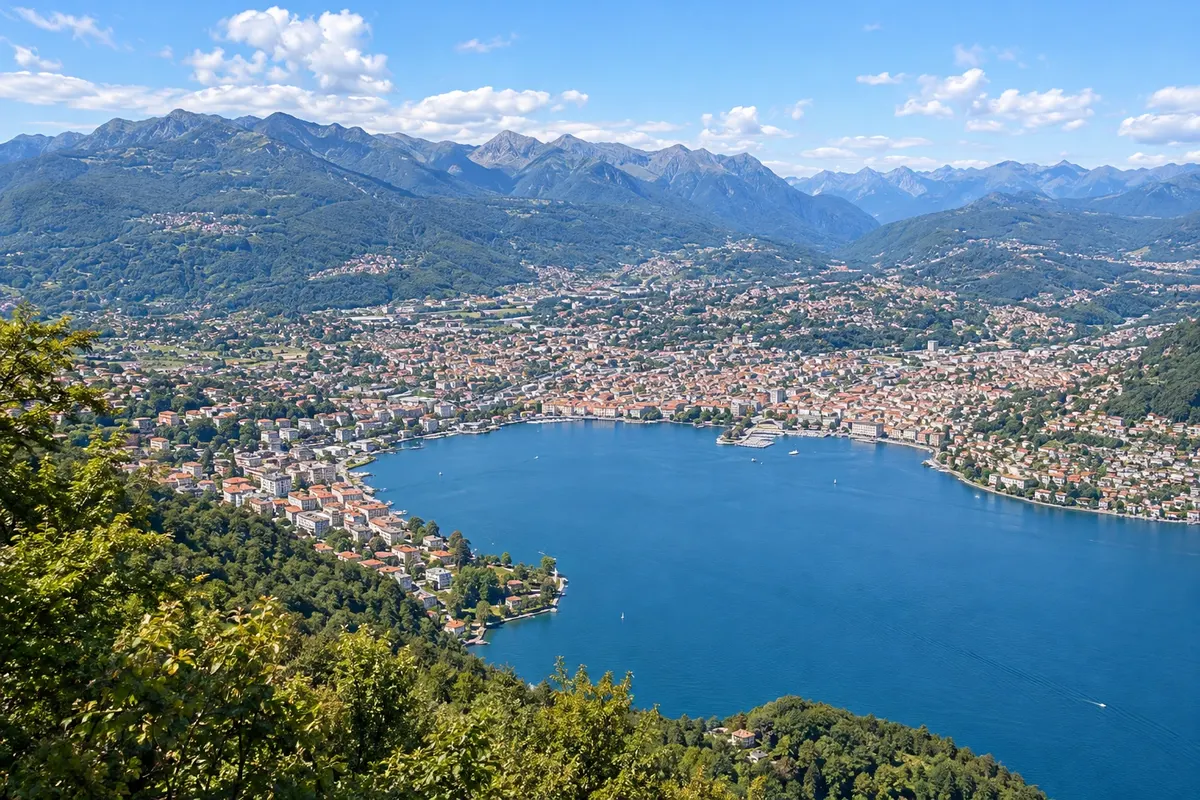 4 · Switzerland
Lugano
In season the Bernina Express Bus continues from Tirano to Lugano via the Valtellina and the shore of Lake Como in about 3 hours. Lugano sits on the shore of the lake of the same name in Italian-speaking Switzerland, with a centre of squares and arcades, Ciani Park and the San Salvatore and Brè hills.
How to travel
The way and the tickets
By train, with a ticket and seat reservation on the Bernina Express. Reservation is compulsory and charged separately, including for holders of passes. RhB regional trains follow the same route without mandatory reservation and without panoramic carriages, but they require at least one change between Chur and Tirano. To continue to Lugano the bus has its own reservation system.
Tickets and seat reservations for the Bernina Express are sold on the RhB website, on the Swiss Federal Railways (SBB) website and app, and at stations. In high season, seats often sell out: book as soon as your dates are fixed. If you have a Swiss Travel Pass, Interrail, or Eurail, you use the pass for the journey but pay the seat reservation separately.
The Bernina Express Bus from Tirano to Lugano requires a separate mandatory reservation sold by RhB, and it runs only part of the year, with reduced days at the start and end of the season.
Coaches have first and second class, panoramic windows, and onboard information about the line. Bring water and a snack: onboard options are limited.
From one country to the next
The borders along the way
Documents, currency, language and phone service change from one side to the other. Entry requirements can change: check before you travel.
Switzerland → Italy
Between Campocologno and Tirano, at the end of the Poschiavo valley
There are no fixed passport controls: both countries are in the Schengen area. Switzerland, however, is not in the European Union, and there may be customs checks. The currency changes from the Swiss franc to the euro, and the language remains Italian, already spoken in the Poschiavo valley. On the route to Lugano the bus re-enters Switzerland.
Day by day
Itineraries of 3 and 4 and 5 days
Suggestions to plan the trip. Change the order of the days to suit the schedules and ticket availability.
3 days · Chur, the train, and Lugano
To For those who want the full journey including the bus to Lugano.Day 1 · Chur
Old town, cathedral, and a ride up to Brambrüesch by cable car.
Day 2 · Bernina Express and bus
Morning train to Tirano and bus to Lugano in the afternoon.
Day 3 · Lugano
Town center, Parco Ciani, and Monte San Salvatore.
4 days · With one night in St. Moritz
Day 1 · Chur to St. Moritz
Bernina Express via the Albula line and an afternoon by Lake St. Moritz.
Day 2 · Engadine
Train to Pontresina and a walk to the Morteratsch Glacier, or a ride up to Diavolezza.
Day 3 · St. Moritz to Tirano
Bernina Express over the Bernina Pass to Tirano and bus to Lugano.
Day 4 · Lugano
Town center, the lake, and Monte Brè.
5 days · Return trip by train through the Alps
Day 1 · Chur
Old town and cathedral.
Day 2 · Chur to St. Moritz
Bernina Express via the Albula line. Afternoon in St. Moritz.
Day 3 · Bernina Pass
Regional train to Ospizio Bernina and Alp Grüm, with a walk along Lago Bianco.
Day 4 · St. Moritz to Tirano
Bernina Express to Tirano, lunch in Italy, and return by regional train to St. Moritz.
Day 5 · St. Moritz to Zurich
Return train via Chur to Zurich.
Best time to go
When to go: month by month
The train runs year-round. From June to September the valleys are green, days are long and Lake Bianco is often ice-free. From December to March the landscape is covered in snow and the service runs on a winter timetable. The bus to Lugano operates on its own seasonal schedule and does not run every month: check in advance.
The seasons shown are the most usual ones; nature doesn't always follow the calendar.
January
Winter · Snow
A completely white landscape and ski season in the Engadine. Winter timetable.
February
Winter · Snow
Still a lot of snow. St. Moritz often hosts winter events on the frozen lake.
March
Late winter
Snow on the mountains and longer days. The bus to Lugano often resumes on certain days of the week.
April
Spring · Transition
Snow on the high peaks and spring in Tirano and Lugano. Many mountain attractions are still closed.
May
Spring · Thaw
The summer timetable for the train begins. Lago Bianco may still have ice.
June
Early summer
Green valleys, meltwater waterfalls, and long days.
July
Summer · High season
Trains are full. Book well in advance.
August
Summer · High season
Good for hikes on the Bernina Pass and in the Engadine. Trains are crowded.
September
Late summer · Fewer people
Still good weather and fewer tourists. One of the best months for the trip.
October
Autumn · Golden larches
The Engadine larches turn yellow. The train switches to the winter timetable.
November
Autumn · First snows
First snowfalls on the high peaks. A quieter month with possible track works: check in advance.
December
Winter · Christmas
Snowy landscapes and Christmas markets in Chur and Lugano. The bus to Lugano is often not running.
Planning
Planning the trip
How many days
The train covers the full route in 4 to 4.5 hours. To visit the towns, allow 3 to 5 days: one in Chur, one or two in St. Moritz and one in Lugano, or return from Tirano the same day.
Who it's for
For those who want to cross the Alps by train, who enjoy mountain scenery and railway engineering, and who want to combine Switzerland and Italy in a single trip.
Before you go
Practical tips
Book early for summer
Seats on the Bernina Express often sell out from June to September. Book as soon as you have your dates.
Consider the regional train
The regional train follows the same route without mandatory reservations and with windows that open—good for photos—but it requires changes along the way.
Bring francs and euros
The trip starts in Switzerland and ends in Italy. cards are accepted in most places, but carry some of both currencies.
Warm layers even in summer
At Ospizio Bernina, above 2,200 meters, it can be cold even in July if you get off the train.
Check the bus to Lugano
The bus does not run year-round and does not wait for every train. Book it together with your train and check the connection time in Tirano.
Your questions
Frequently asked questions about Bernina Express: Chur–St. Moritz–Tirano
How long does the Bernina Express journey take?
From Chur to Tirano, 4 to 4.5 hours. From St. Moritz to Tirano, about 2.5 hours. The bus from Tirano to Lugano takes about 3 hours.
Is a reservation required?
Yes. Seat reservation on the Bernina Express is compulsory and charged separately, including for Swiss Travel Pass, Interrail or Eurail holders. The bus to Lugano has its own reservation.
Can you make the same route without the Bernina Express?
Yes. RhB regional trains follow the same route without mandatory reservation, but without panoramic carriages and with at least one change. In some summers there are open‑air coaches on regional trains between St. Moritz and Tirano.
Which side should you sit on?
From Chur to Pontresina sit on the right to see the Landwasser viaduct. From Pontresina to Tirano also on the right for views of the Morteratsch Glacier and Lake Bianco. With reservation it is not always possible to choose the side.
Do you need to show your passport between Switzerland and Italy?
Switzerland is in the Schengen area and there are no fixed passport controls. However it is not part of the European Union and there may be customs checks at the border. Carry your passport with you.
Does the train run in winter?
Yes, year‑round on a winter timetable. The landscape is covered in snow. At times there may be engineering work with some sections replaced by buses: check in advance.
Beyond the guide


