
 Brazil
 Antarctica
 Argentina
 Bolivia
 Chile
 Colombia
 Ecuador
 Guyana
 French Guiana
 Falkland Islands (Malvinas)
 Paraguay
 Peru
 Suriname
 Uruguay
 Venezuela
 Germany
 Austria
 Belgium
 Croatia
 Denmark
 Slovakia
 Slovenia
 Spain
 Finland
 France
 the Netherlands
 Hungary
 Ireland
 Iceland
 Luxembourg
 Norway
 Poland
 Portugal
 the United Kingdom
 the Czech Republic
 Sweden
 Switzerland
 Turkey
 Bermuda
 Canada
 the United States
 Greenland
 Mexico
 Saint Pierre and Miquelon
 the Dominican Republic
 Japan
 South Africa
 Egypt
 Australia
 Fiji
 New Zealand
 Papua New Guinea
Cross-border route · Europe
Italy–Greece ferry across the Adriatic
From Puglia to Greece by sea: overnight ferries depart Bari and Brindisi and arrive in the morning at Igoumenitsa, in Epirus, or continue to Patras, the gateway to the Peloponnese.
 Italy
 Greece
5 cities 2 countries
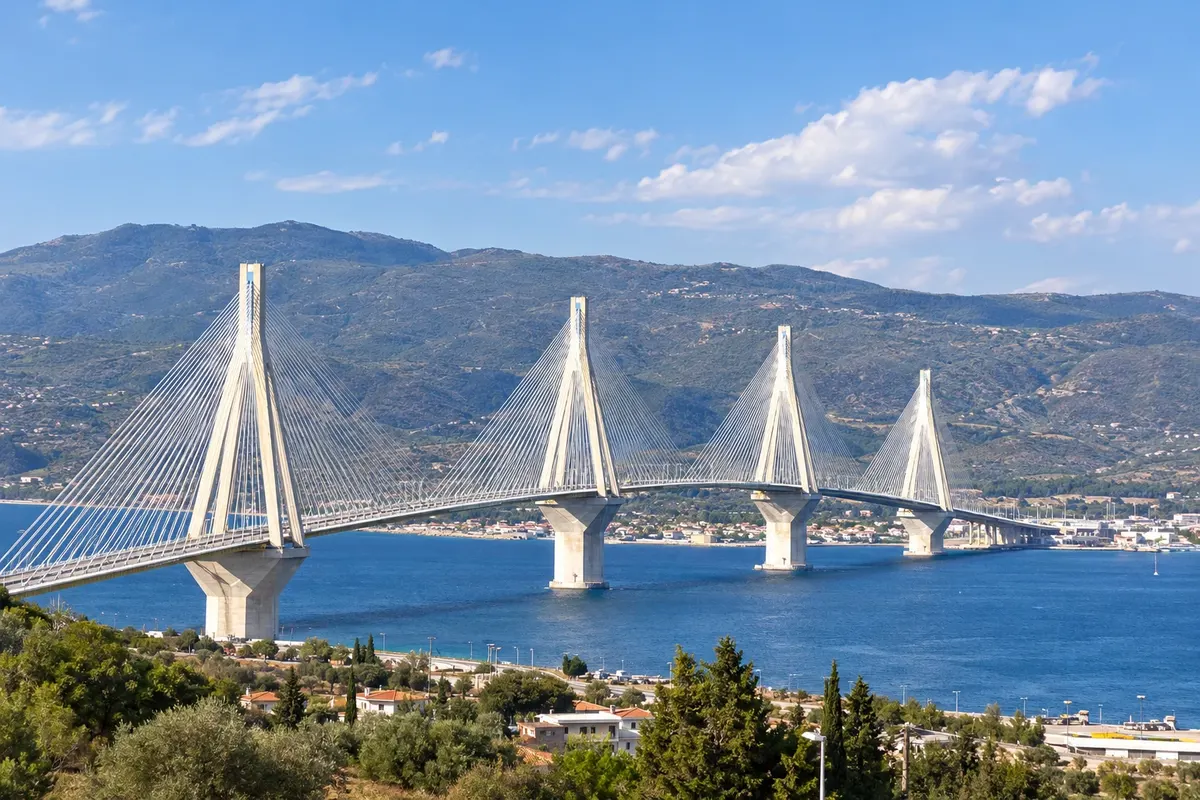
In the photo: Rio–Antirrio Bridge
Illustrative images. The pictures in this guide are illustrations based on the real place, not photographs, and may differ from it.

The route
What the Italy–Greece ferry across the Adriatic is
Between the Italian boot and the west coast of Greece, crossings of the Adriatic Sea and the Ionian Sea are operated by large ferries carrying passengers, cars and trucks. Departing Bari, ferries usually go to Igoumenitsa in Epirus, and some continue to Patras in the northern Peloponnese. From Brindisi, the most common connection is to Igoumenitsa. In summer there are also departures that call at Corfu.
The trip is usually overnight: boarding in the afternoon or evening in Italy and arrival in Greece in the morning. To Igoumenitsa it takes about 9 to 11 hours; to Patras, about 16 hours. Ships have cabins, seats and deck areas, a restaurant and a snack bar.
The crossing is an alternative to flying for those traveling by car through Italy who want to continue in Greece, or for those who want to reach Greece by sea. Schedules, departure days and stops change with the season: check before you buy. Italy and Greece are in the Schengen area and use the euro, but Greece is one hour ahead of Italy.
The map
5 cities in 2 countries
Outlines: Natural Earth, public domain. Adapted by Cidade Turismo.
The journey
City by city
Distances and times are approximate: check before you set off.
-
 1 · Italy
Bari
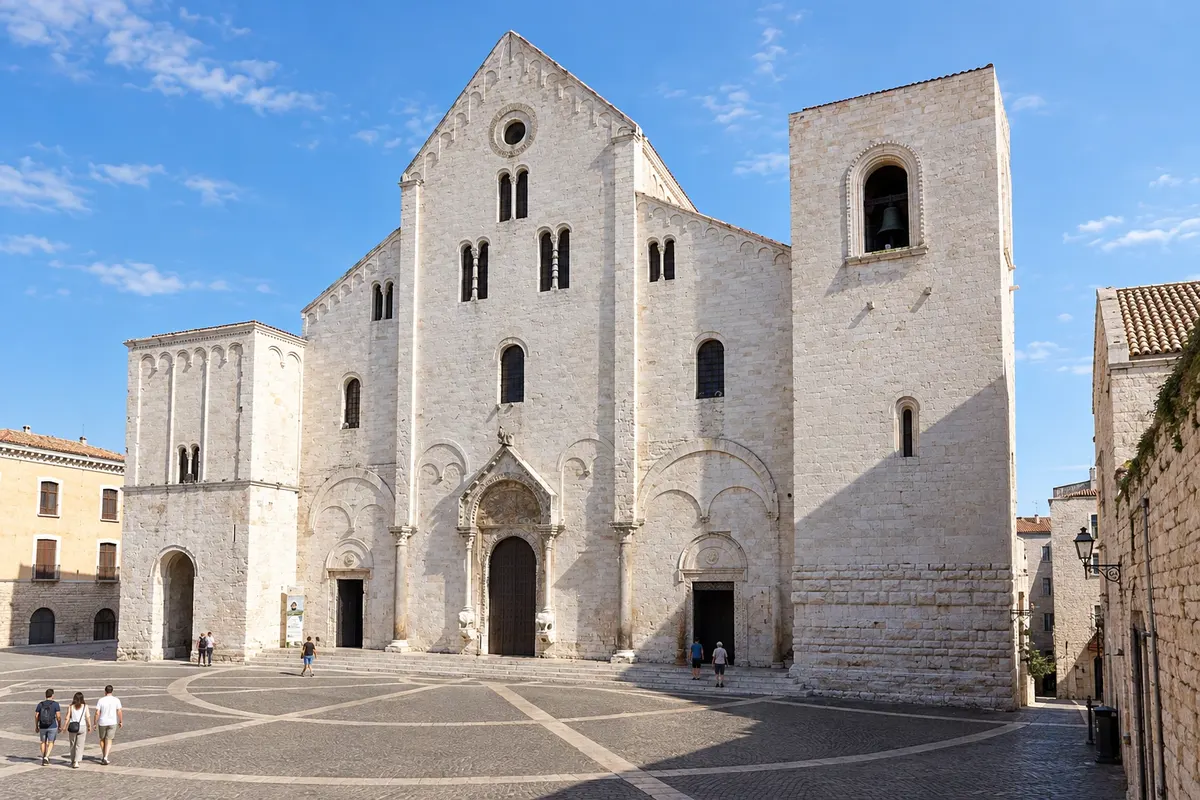
Bari is the capital of Puglia, with the old town (Bari Vecchia) of narrow streets, the Basilica of Saint Nicholas and the seafront. The port is close to the centre, within walking distance of the old town. Ferries to Igoumenitsa and Patras depart from here.
→ Brindisi about 1h to 1h30 By land: regional or high-speed train along the Puglia coast, or about 115 km by car. Necessary only for those embarking in Brindisi; ferries to Greece also depart from Bari.
-
 2 · Italy
Brindisi
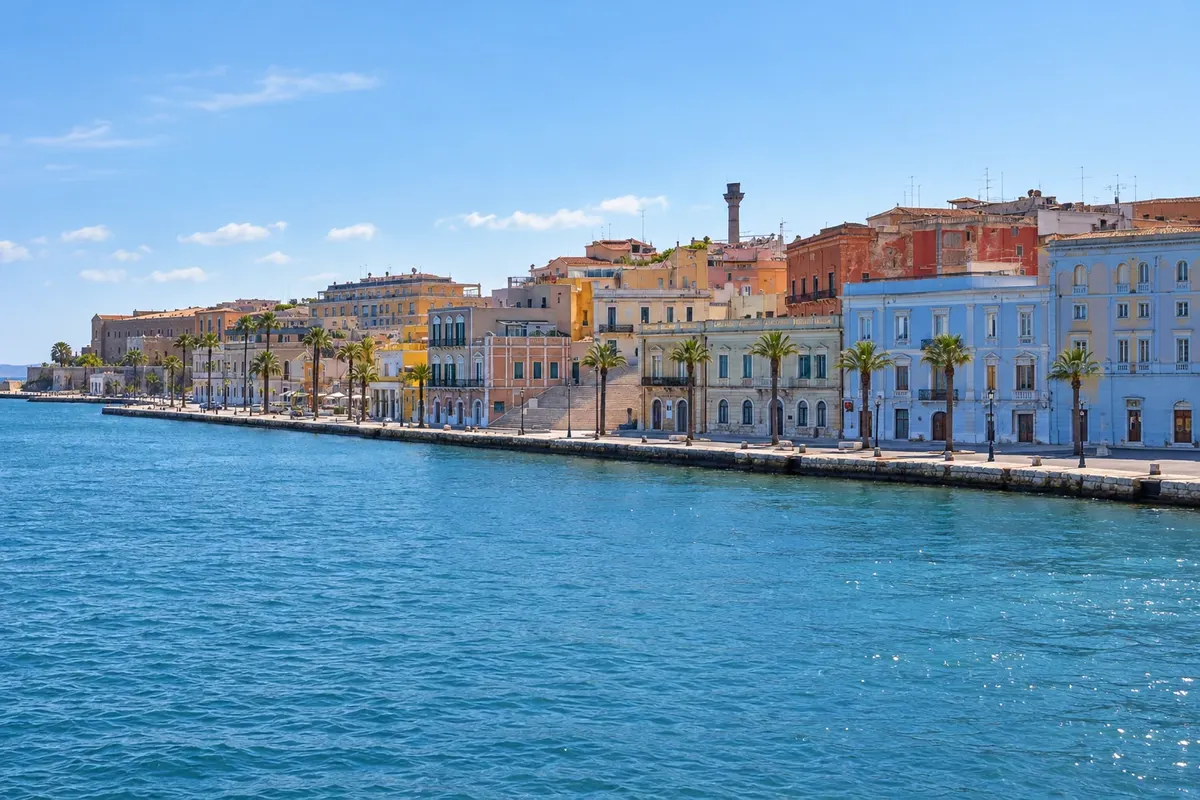
Brindisi is about 1 hour by train south of Bari, at the end of the Via Appia, marked by a Roman column in front of the port. The harbour, located in a natural inlet, is the departure point for ferries to Igoumenitsa. Polignano a Mare, Alberobello and Lecce are nearby for those who want to stop in Puglia before boarding.
→ Igoumenitsa about 9 to 11 hours Overnight ferry across the Adriatic and the Ionian Sea, from Brindisi (or Bari) to Igoumenitsa. In summer some sailings call at Corfu. Confirm schedules and stops beforehand.
-
 3 · Greece
Igoumenitsa
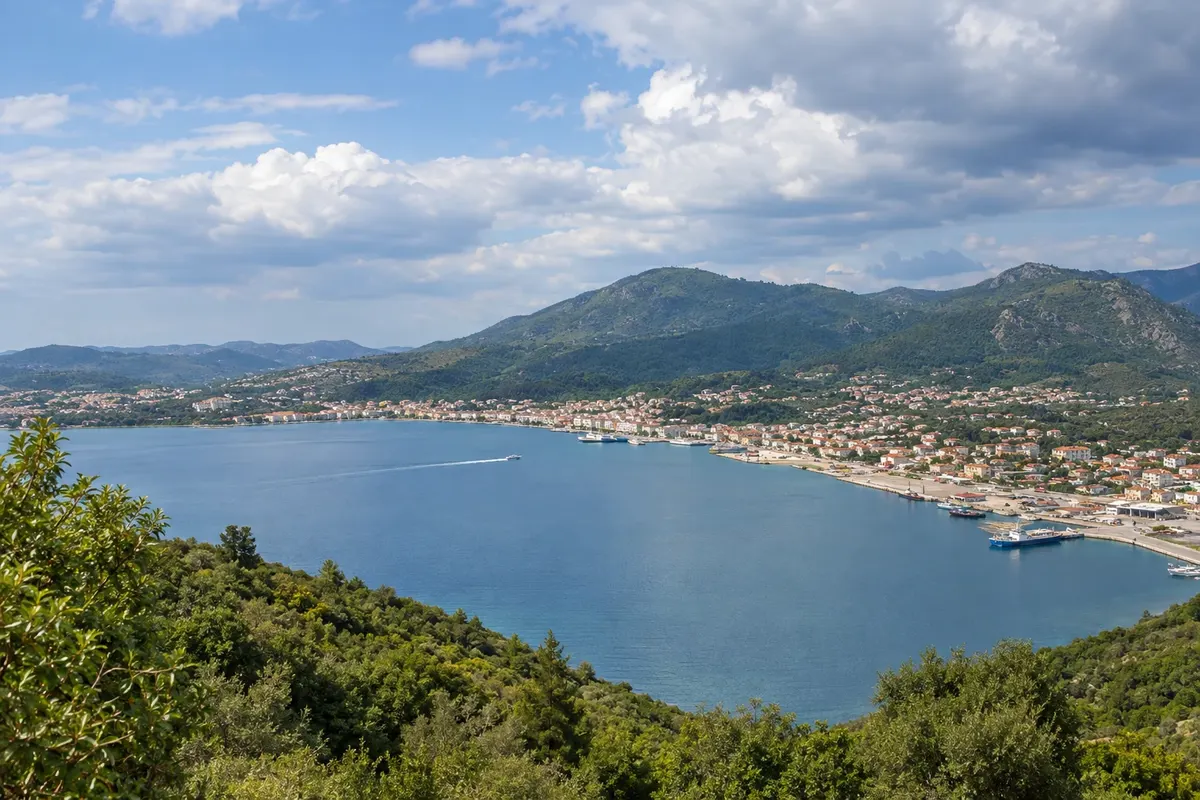
The ferry arrives in Igoumenitsa in the morning. The town is the main port of Epirus and the departure point for short ferries to Corfu, about 1h45 crossing. From here, the road leads inland toward the monasteries of Meteora, and south toward Patras.
→ Patras about 3h by car or about 6h by ferry By car, about 270 km via the west coast road and the Rio–Antirrio Bridge. Some ferries departing Bari continue from Igoumenitsa to Patras; the full Bari–Patras crossing usually takes about 16 hours.
-
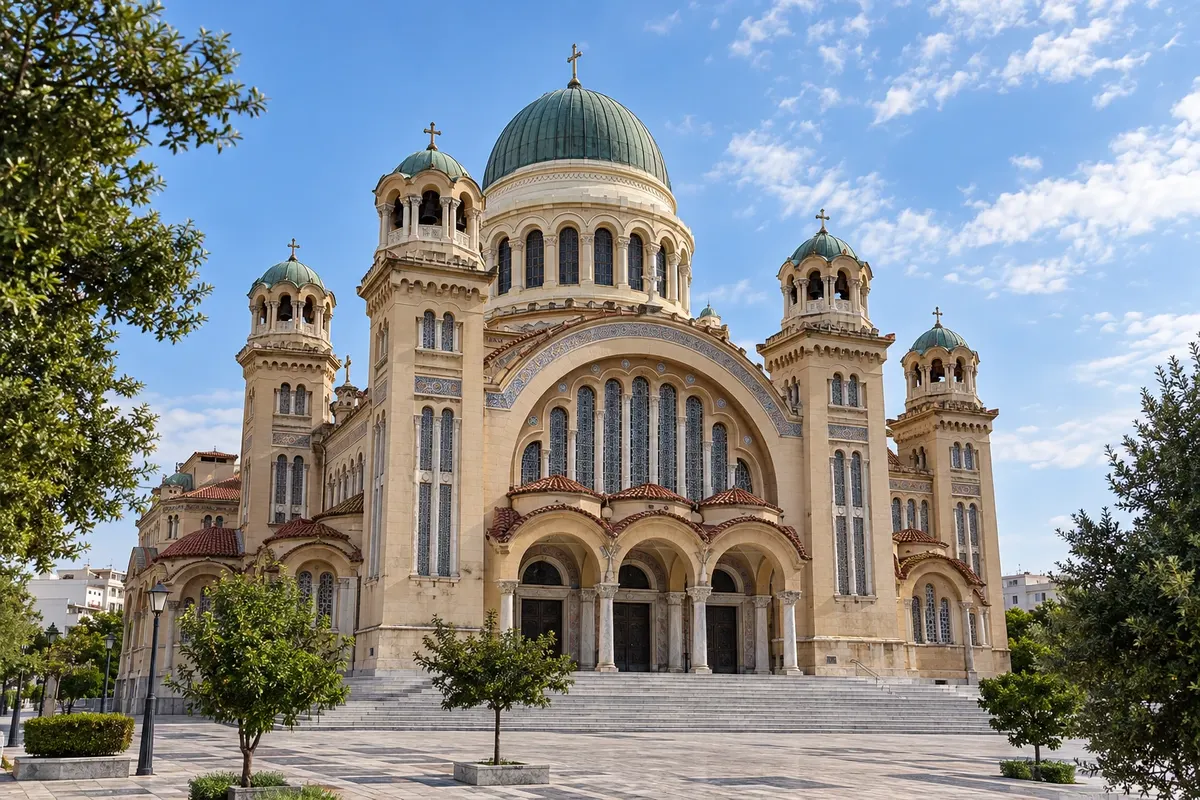 4 · Greece
Patras
Patras is the third largest city in Greece and the gateway to the Peloponnese. It has a castle overlooking the town, the Church of Saint Andrew, a Roman odeon and one of the country’s best-known carnivals. Next to the city, the Rio–Antirrio Bridge spans the Gulf of Corinth.
→ Ancient Olympia about 2h About 120 km by car along the Peloponnese coastal road to the south. There are also regional buses, with a transfer in Pyrgos.
-
 5 · Greece
Ancient Olympia
About 2 hours by car from Patras, Olympia preserves the archaeological site where the Olympic Games were born, with the ancient stadium, the Temple of Zeus and the archaeological museum. It is a good first destination in the Peloponnese for those arriving by sea.
How to travel
The way and the tickets
By ferry, with a ticket bought in advance and a cabin reserved for sleeping. Those taking a car must declare the vehicle when buying. To go from Bari to Brindisi there are regional trains and the coastal road; from Igoumenitsa to Patras, those disembarking in Epirus follow the west coast road, crossing the Rio–Antirrio Bridge.
Tickets are sold on the ferry companies’ websites, on sites that list the region’s ferries and at port agencies. Prices change depending on the season, the type of accommodation (seat, deck or cabin) and the vehicle. Buy in advance in summer, especially if you have a car.
Arrive at the port with plenty of time, 2 to 3 hours before departure when you’re traveling by car, for check-in and boarding. Some ports have separate terminals for each company: check your ticket for where to check in.
On board there is a restaurant and a snack bar, but it’s worth bringing water and something to eat. Schedules, stops and even departure ports change with the season.
From one country to the next
The borders along the way
Documents, currency, language and phone service change from one side to the other. Entry requirements can change: check before you travel.
Italy → Greece
At sea during the crossing, arriving at the ports of Igoumenitsa or Patras
Both countries are in the Schengen area and the currency remains the euro. Even so, boarding requires photo ID, checked together with the ticket, and there may be police checks at ports. On arrival in Greece, set your clock forward one hour. Road signs switch to the Greek alphabet, almost always with a Latin-letter version.
Day by day
Itineraries of 5 and 6 and 8 days
Suggestions to plan the trip. Change the order of the days to suit the schedules and ticket availability.
5 days · Bari, the sea and Corfu
To For those who want a short crossing and a Greek island.Day 1 · Bari
Bari Vecchia, the Basilica of Saint Nicholas and the waterfront.
Day 2 · Polignano a Mare and boarding
Morning in Polignano a Mare and night boarding in Bari to Igoumenitsa.
Day 3 · Igoumenitsa to Corfu
Morning arrival and short ferry to Corfu. Afternoon in the old town.
Day 4 · Corfu
Venetian fortresses and Paleokastritsa beach.
Day 5 · Corfu
Achilleion Palace and the island’s northern coast.
6 days · From Puglia to the Peloponnese
Day 1 · Bari
Old town and the Basilica of Saint Nicholas.
Day 2 · Alberobello and boarding
Return trip to the trulli of Alberobello and boarding in Bari to Patras.
Day 3 · At sea
Day on board, with a stop at Igoumenitsa, and arrival in Patras.
Day 4 · Patras
Castle, the Church of Saint Andrew and the Rio–Antirrio bridge.
Day 5 · Patras to Olympia
Road to Olympia and visit to the archaeological site.
Day 6 · Olympia
Archaeological museum and departure for Nafplio or Athens.
8 days · From Brindisi to Meteora
Day 1 · Lecce
The Baroque city of Puglia, about 40 minutes from Brindisi.
Day 2 · Brindisi and boarding
Roman column and Brindisi waterfront. Night boarding to Igoumenitsa.
Day 3 · Igoumenitsa to Meteora
Morning arrival and road through Epirus to Kalambaka.
Day 4 · Meteora
The monasteries atop the rocks.
Day 5 · Meteora to Delphi
Road to Delphi and the archaeological site.
Day 6 · Delphi to Patras
Along the Gulf of Corinth coast and the Rio–Antirrio bridge to Patras.
Day 7 · Olympia
Archaeological site and museum of Olympia.
Day 8 · Olympia to Nafplio
Crossing the Peloponnese to Nafplio.
Best time to go
When to go: month by month
From May to September, when there are more departures, the sea is usually calmer and there are summer calls at Corfu. July and August are high season, with crowded ships, especially with cars: book in advance. In winter there are fewer departures and the sea can delay or cancel sailings.
The seasons shown are the most usual ones; nature doesn't always follow the calendar.
January
Winter · Fewer departures
Fewer departures and rougher seas, which can delay trips. Confirm in advance.
February
Winter · Patras Carnival
The Patras carnival usually takes place between February and March, with the city very busy.
March
Early spring
Days get longer and the number of departures begins to increase.
April
Spring · Easter
Mild temperatures. Orthodox Easter, Greece’s main holiday, may fall on a different date than the Catholic one.
May
Spring · Long days
More departures, calmer seas and still-moderate warmth. A good month for the crossing.
June
Early summer
The beach season begins and summer stops in Corfu usually resume.
July
Summer · High season
Ships are full, especially of cars. Book a cabin and vehicle in advance.
August
Summer · High season
The most sought-after month, with Italians and Greeks on holiday. Arrive at the port well ahead of time.
September
End of summer · Warm sea
Sea still warm and fewer people. A good month for the crossing and the beaches.
October
Autumn · Fewer departures
Mild weather at the start of the month. Departures decrease and summer stops end.
November
Autumn · Rain
More rain and rougher seas. Confirm schedules the day before.
December
Winter · Holidays
Fewer departures and busier ships around Christmas and New Year’s.
Planning
Planning the trip
How many days
The crossing takes one night. To see towns on both sides, allow 5 to 8 days: one or two in Bari, one night on the ship and the rest between Patras and Olympia, or between Igoumenitsa and Corfu.
Who it's for
For those traveling by car who want to continue from Italy to Greece, for those who want to reach the Ionian Islands or the Peloponnese by sea, and for those who enjoy sea travel.
Before you go
Practical tips
Book a cabin in summer
In July and August cabins usually sell out early. If you plan to sleep on the ship, book as soon as you have the date.
Check with the rental company
Many rental companies do not allow the car to leave Italy or to be taken on a ferry. Ask before you book.
Set your clock ahead
Greece is one hour ahead of Italy. The arrival time on the ticket is usually given in Greek time.
Bring a jacket
Even in summer, the ship’s air conditioning and the wind on deck at night can be chilly.
Confirm the port and terminal
In Bari and Brindisi, each company may use a different terminal. Check your ticket and arrive with time to spare.
Your questions
Frequently asked questions about Italy–Greece ferry across the Adriatic
How long is the ferry from Italy to Greece?
From Bari or Brindisi to Igoumenitsa, about 9 to 11 hours. From Bari to Patras, about 16 hours. Times vary by ship and stops: check your ticket.
What is the difference between Igoumenitsa and Patras?
Igoumenitsa is in northwestern Greece, close to Corfu and on the route to Meteora, and the crossing is shorter. Patras is in the northern Peloponnese, closer to Olympia and Athens, but the ferry voyage is much longer.
Is it worth booking a cabin?
For the overnight crossing, yes, if you want to sleep in a bed. There are also seats and deck areas. In summer cabins often sell out: book in advance.
Can you take a rental car on the ferry?
It depends on the rental company. Many do not allow the car to leave the country or charge a special authorization. Check before booking the car and the ferry.
Do you need to show a passport?
Italy and Greece are in the Schengen area, but companies require ID at boarding and there may be checks at ports. Keep your passport to hand.
Does the ferry stop at Corfu?
Some summer sailings usually call at Corfu. Otherwise, go to Igoumenitsa and take one of the short ferries to the island, which run several times a day.
Beyond the guide


