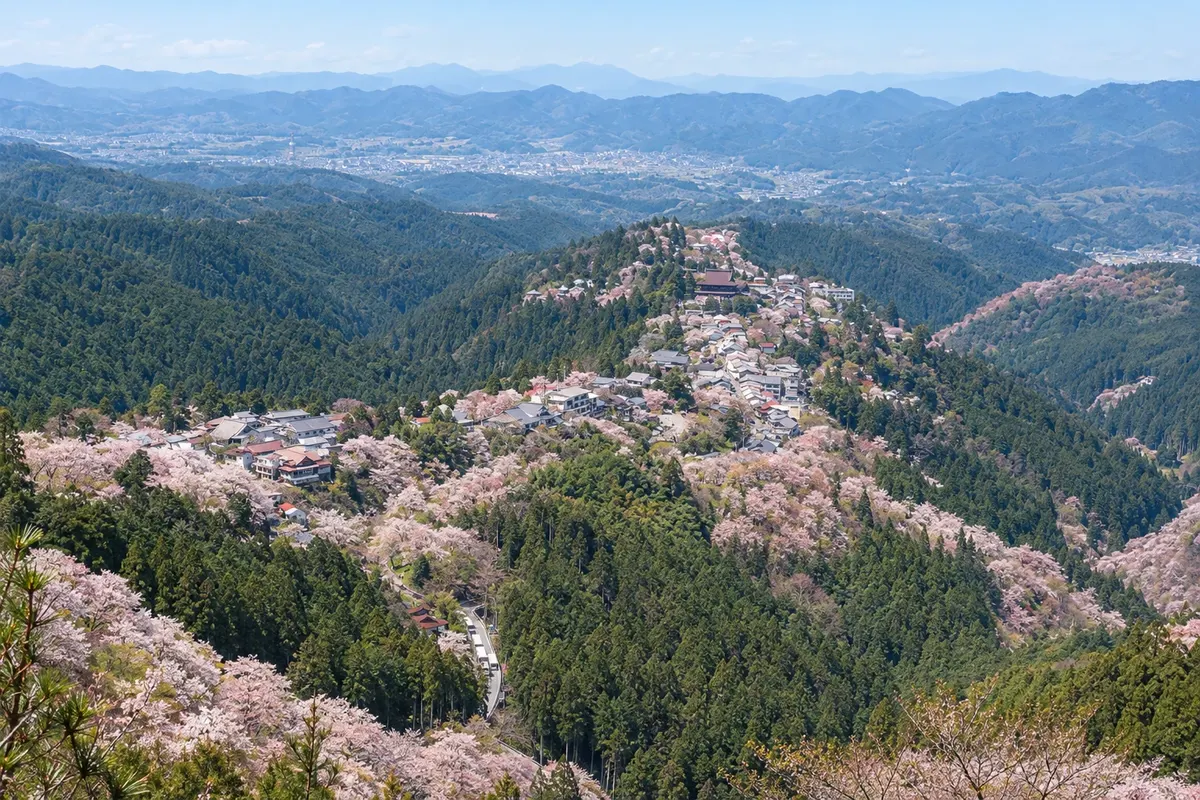
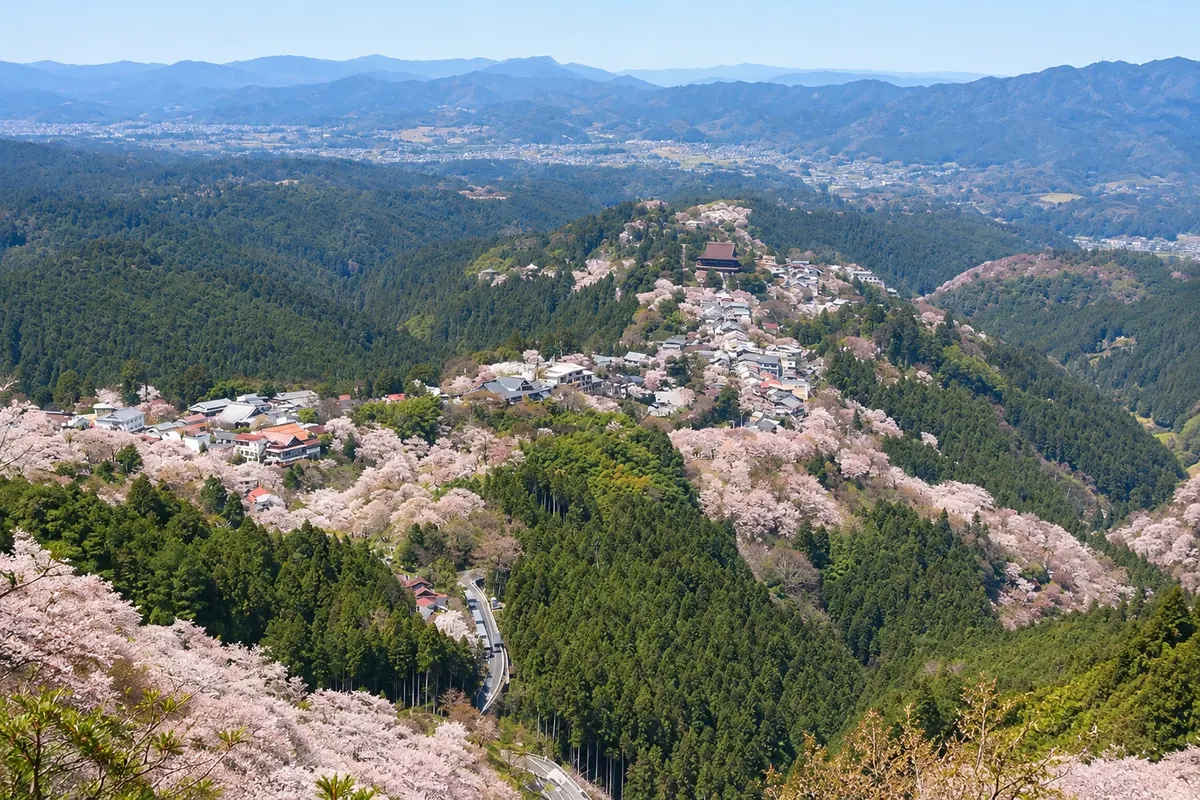
Mount Yoshino sits in the southern part of Nara Prefecture, on a mountain ridge that stretches about 8 km above the Yoshino River. For more than a thousand years it has been a sacred place: here begins the Omine Okugake trail, part of the Shugendo pilgrimages, a religious practice of monks and laypeople who retreat into the mountains, combining Buddhism with devotion to local deities. The temples and shrines of Yoshino are part of the Sacred Sites and Pilgrimage Routes of the Kii Mountain Range, a UNESCO World Heritage Site.
Yoshino is known throughout Japan for its cherry trees. There are about 30,000 trees, mostly the wild yamazakura species, planted over centuries as offerings to the mountain’s deity. They are grouped into four areas, from lower to upper: Shimo, Naka, Kami and Oku Senbon, and flowering usually moves up the mountain over a few weeks in April.
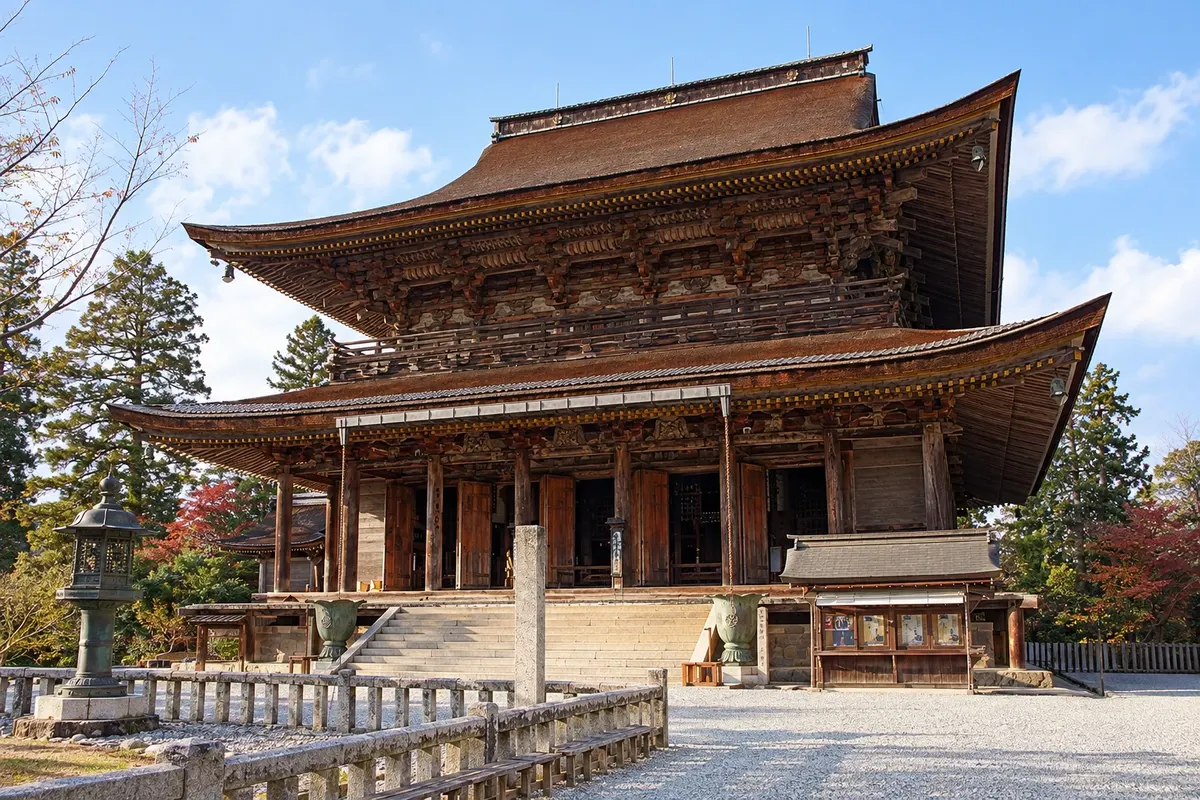
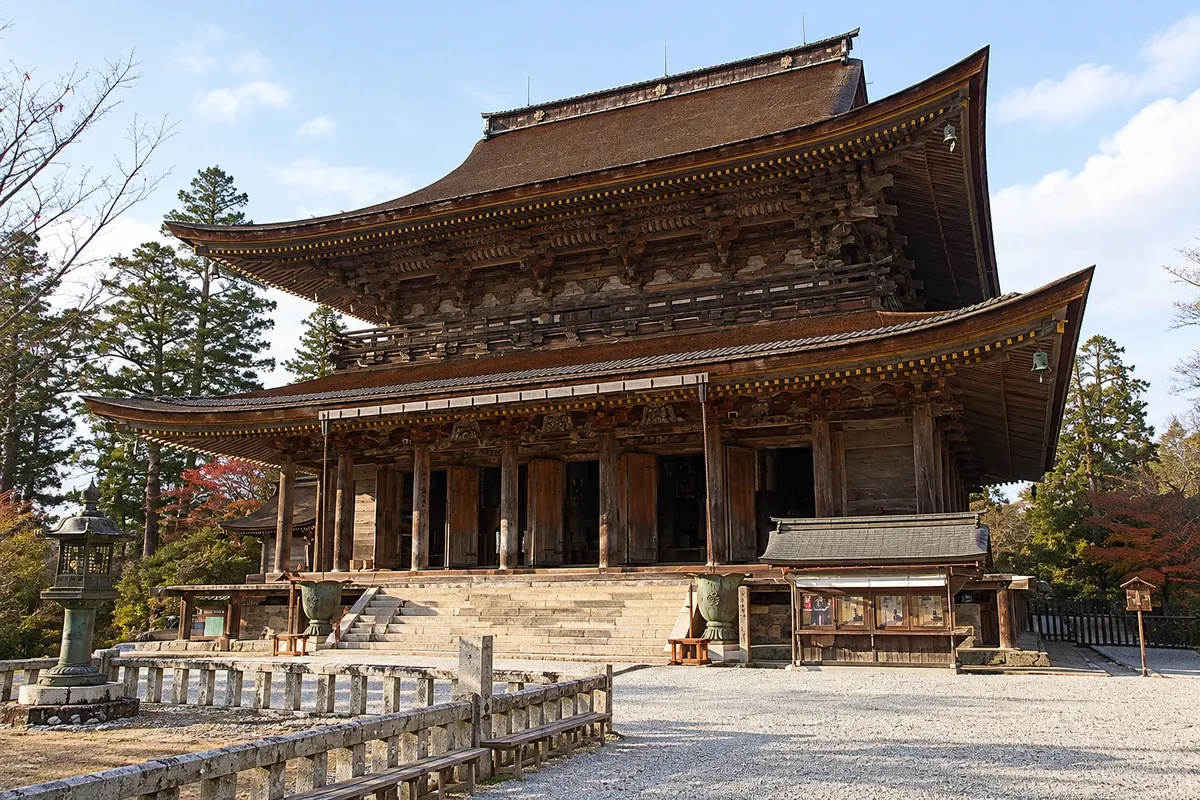
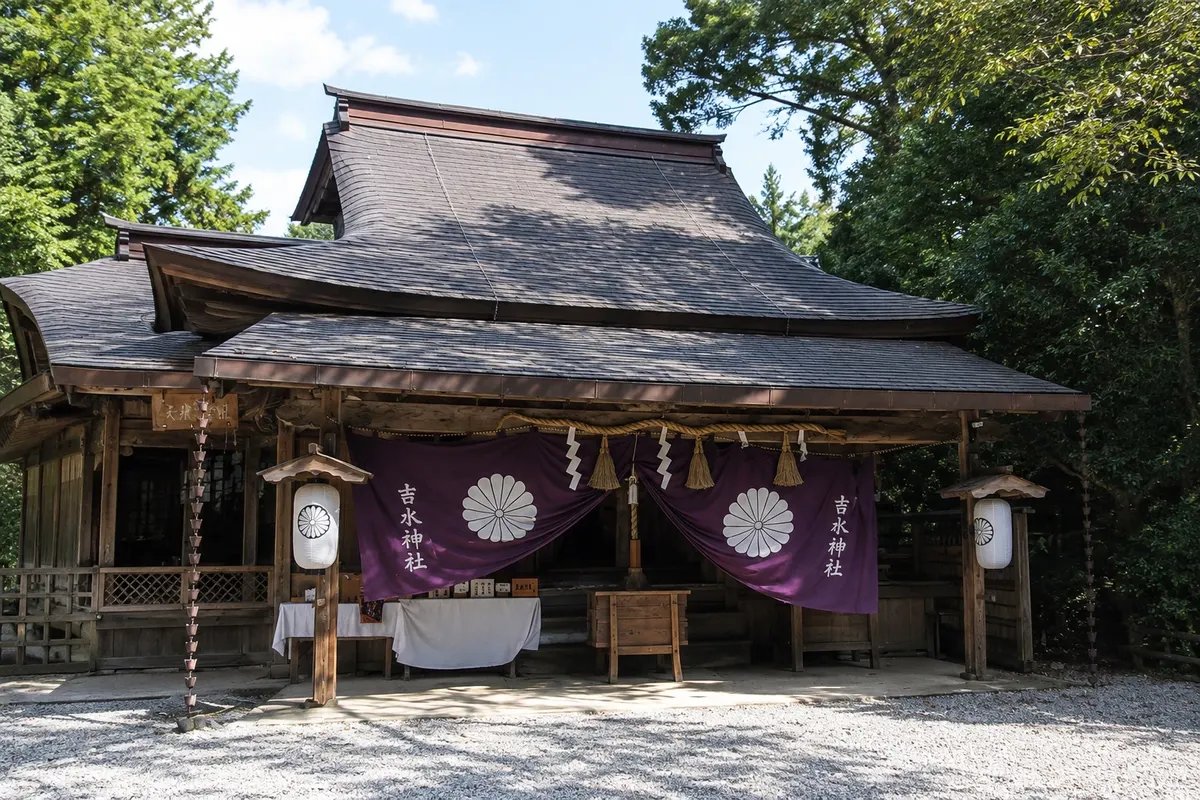
On the ridge, Yoshinoyama’s main street connects temples, shrines, teahouses and guesthouses. Kinpusen-ji, with the large wooden Zao-do hall, is the mountain’s religious center. Yoshimizu Shrine preserves memories of the warrior Minamoto no Yoshitsune, of Emperor Go-Daigo, who established his court there in the 14th century, and of Toyotomi Hideyoshi, who held a great cherry-viewing party in 1594. Higher up, Yoshino Mikumari Shrine and the hermitage of the poet Saigyo lie amid cedar forests.
Outside the blossom season, the mountain is peaceful, with red leaves in November and forest trails. Local cuisine includes kakinoha-zushi, sushi wrapped in persimmon leaf, and kuzu sweets made from the starch of a regional root.
This destination brings together 1 city: Yoshino.


 Brazil
 Antarctica
 Argentina
 Bolivia
 Chile
 Colombia
 Ecuador
 Guyana
 French Guiana
 Falkland Islands (Malvinas)
 Paraguay
 Peru
 Suriname
 Uruguay
 Venezuela
 Germany
 Austria
 Belgium
 Croatia
 Denmark
 Slovakia
 Slovenia
 Spain
 Finland
 France
 Greece
 the Netherlands
 Hungary
 Ireland
 Iceland
 Italy
 Luxembourg
 Norway
 Poland
 Portugal
 the United Kingdom
 the Czech Republic
 Sweden
 Switzerland
 Turkey
 Bermuda
 Canada
 the United States
 Greenland
 Mexico
 Saint Pierre and Miquelon
 the Dominican Republic
 South Africa
 Egypt
 Australia
 Fiji
 New Zealand
 Papua New Guinea