

 Brazil
 Antarctica
 Argentina
 Bolivia
 Chile
 Colombia
 Ecuador
 Guyana
 French Guiana
 Falkland Islands (Malvinas)
 Paraguay
 Peru
 Suriname
 Uruguay
 Venezuela
 Germany
 Austria
 Belgium
 Croatia
 Denmark
 Slovakia
 Slovenia
 Spain
 Finland
 France
 Greece
 the Netherlands
 Hungary
 Ireland
 Iceland
 Italy
 Luxembourg
 Norway
 Poland
 Portugal
 the United Kingdom
 the Czech Republic
 Sweden
 Switzerland
 Turkey
 Bermuda
 Canada
 the United States
 Greenland
 Mexico
 Saint Pierre and Miquelon
 the Dominican Republic
 South Africa
 Egypt
 Australia
 Fiji
 New Zealand
 Papua New Guinea
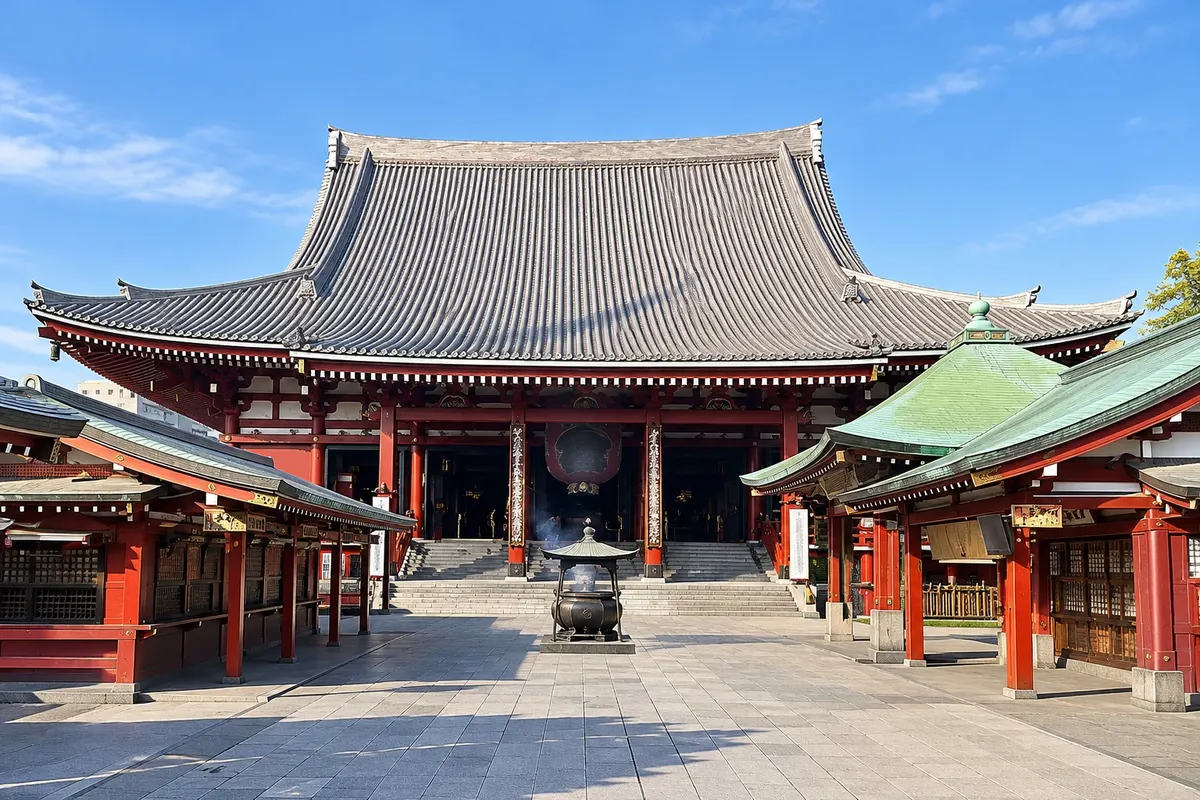
Temple · Tokyo, Tokyo
Senso-ji Temple
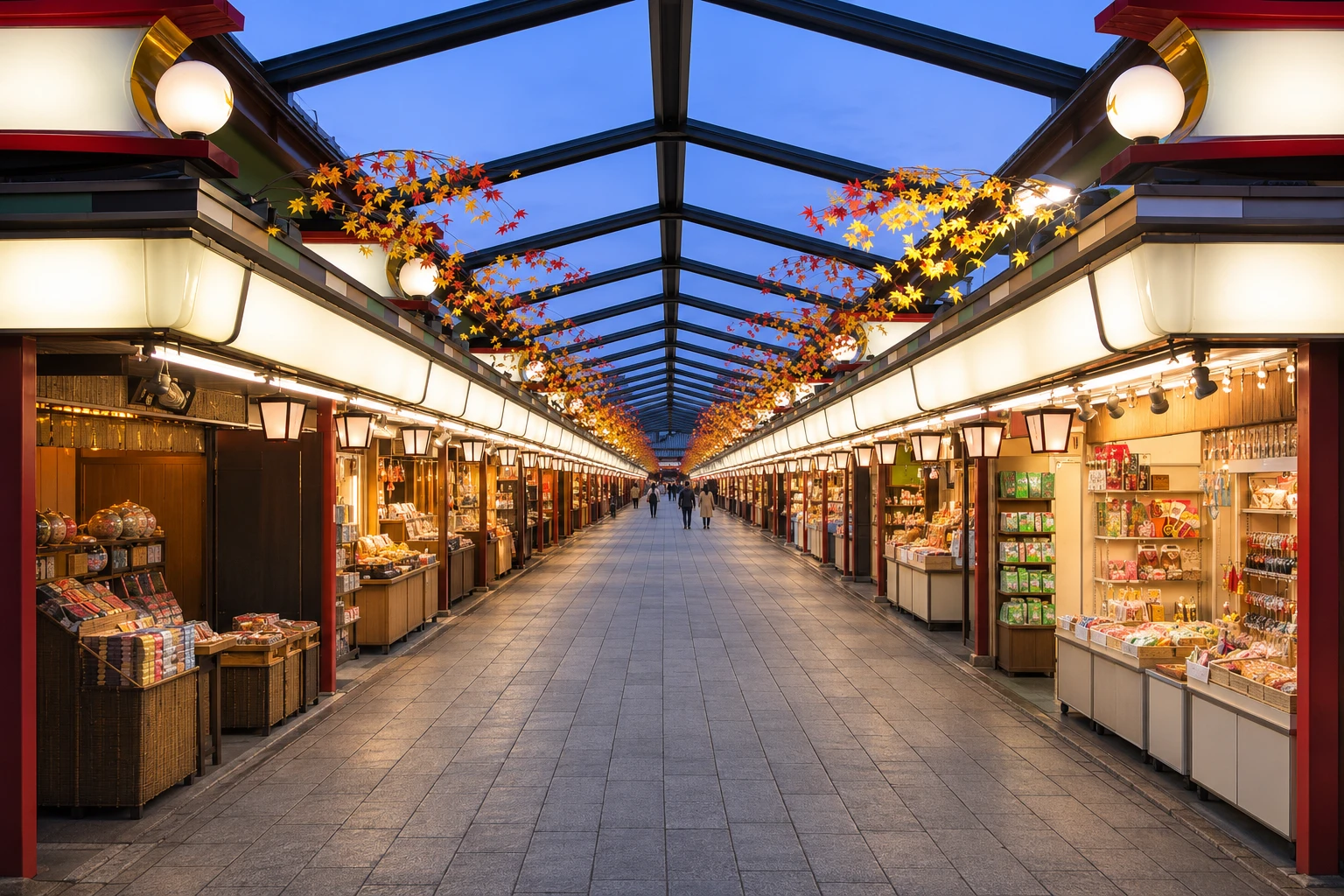
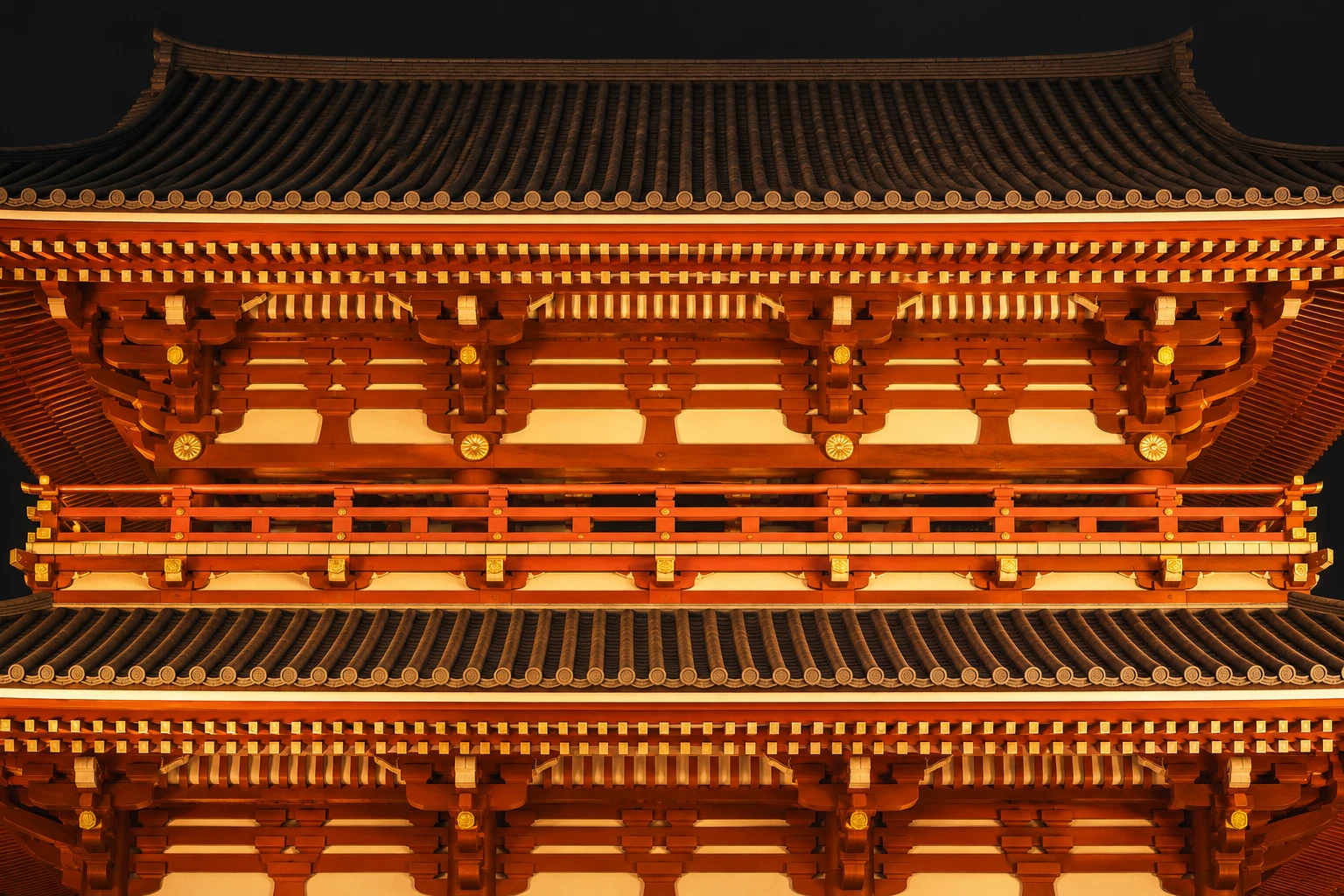
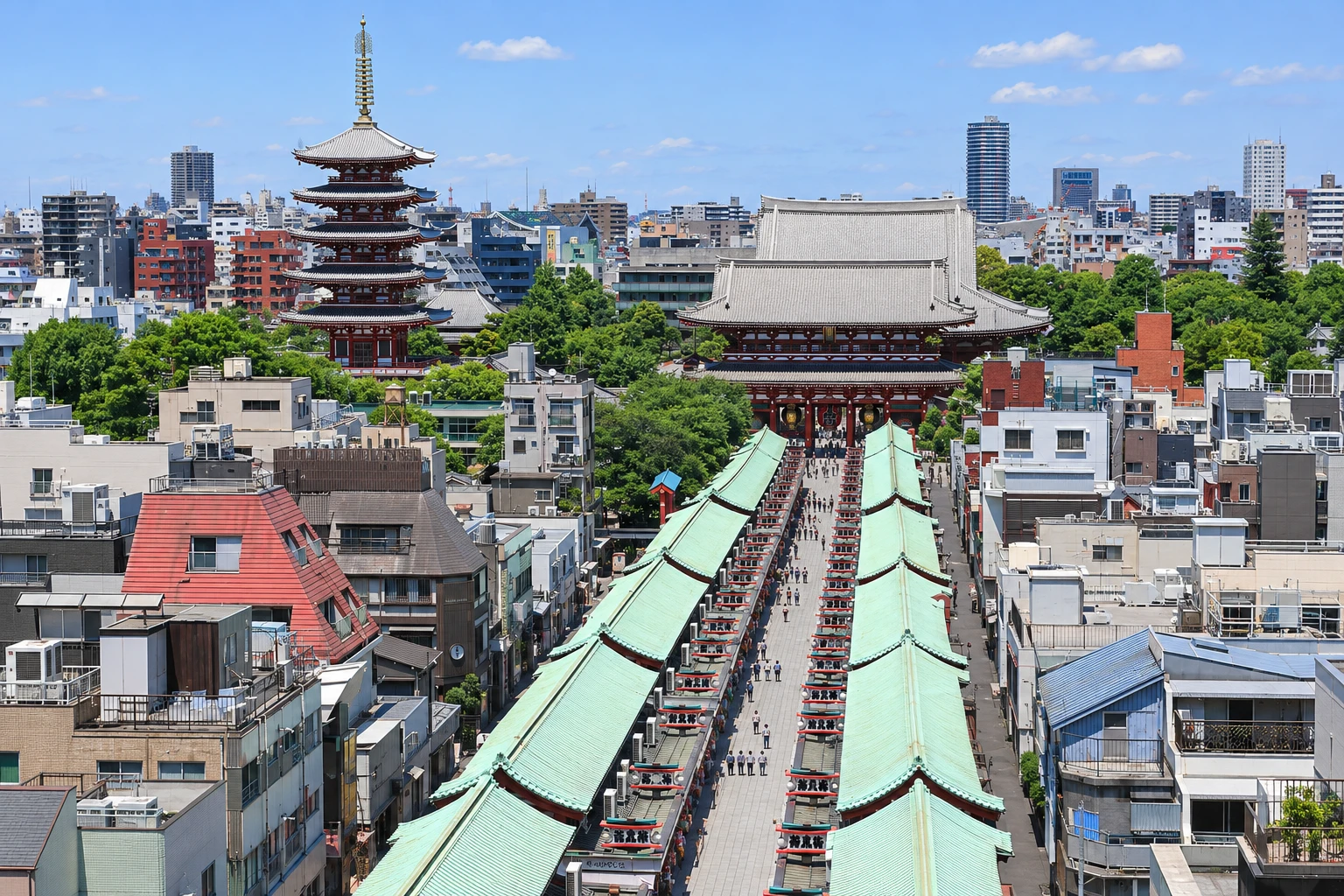
Tokyo’s oldest temple, in Asakusa: the Kaminarimon gate with its large red lantern, the Nakamise shopping street, the Kannon hall and the five-story pagoda.
Illustrative images. The pictures in this guide are illustrations based on the real place, not photographs, and may differ from it.

A look at the place
Senso-ji Temple in pictures
These pictures are illustrations based on the real place, not photographs. They may differ from the place.
Click the picture to enlarge it.
Discover
About Senso-ji Temple
Senso-ji is Tokyo’s oldest Buddhist temple and the focal point of the Asakusa neighborhood. According to tradition, it was founded in the 7th century after two fishermen found a small image of Kannon, the deity of mercy, in the Sumida River. The image is never shown to the public, but the temple grew around it and became the city’s most visited place of devotion.
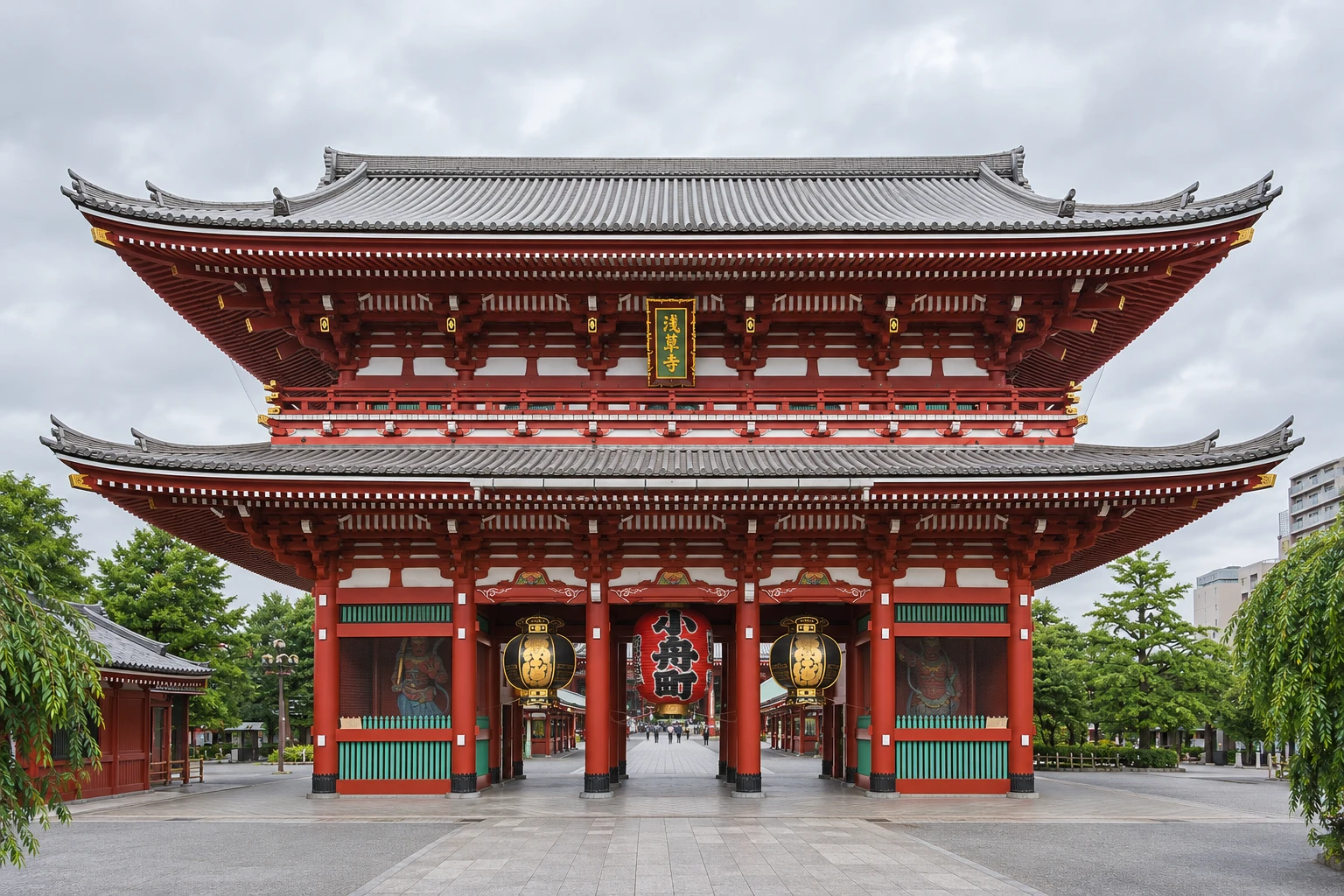
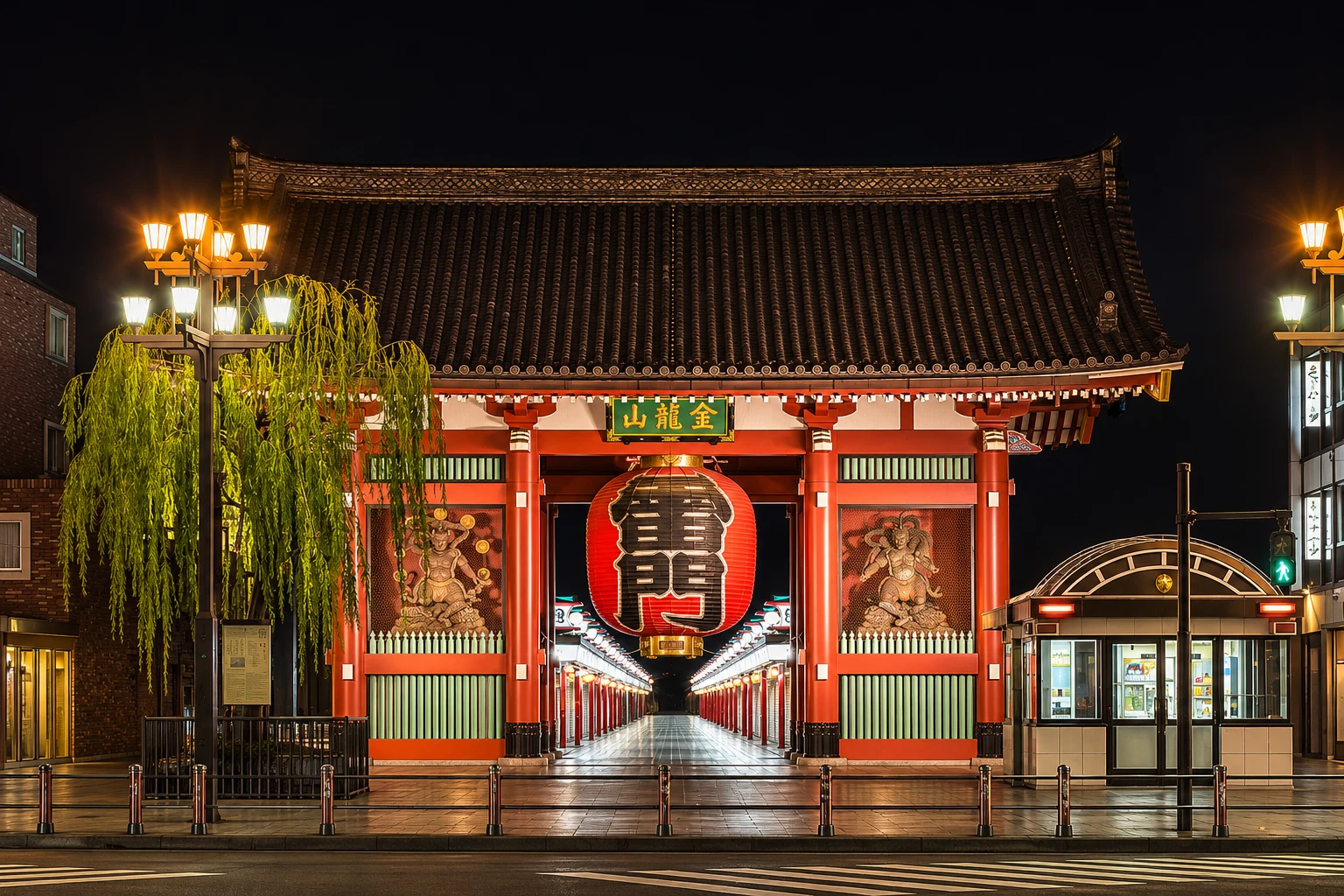
The entrance is through the Kaminarimon, the Thunder Gate, with a giant red lantern and statues of the wind and thunder gods. From there begins Nakamise-dori, a roughly 250-meter street lined with stalls selling sweets, fans, dolls and souvenirs, which ends at the Hozomon, the second gate. Beyond it are the main hall, dedicated to Kannon, and the five-story pagoda.
In front of the main hall, worshippers pass the smoke from the large incense burner over their bodies seeking health, and draw omikuji, strips of paper with fortunes. Those who draw a bad fortune often tie it to the temple’s racks to leave it behind. Beside the temple is the Shinto Asakusa Shrine, which hosts the Sanja Festival in May.
The main buildings were rebuilt after World War II, when the neighborhood was destroyed by bombing. The complex is illuminated at night, and the outer area remains open after the main hall closes. Around the temple there are tempura restaurants, shops for kitchenware in Kappabashi and the riverside promenade along the Sumida, with views of the Tokyo Skytree.
Before you go
Practical information
Cidade Turismo reviews its information regularly, but something may have changed. Check with the place before planning your trip.
How much time to set aside
1 to 2 hours for the gates, Nakamise, the main hall and the pagoda; more time to stroll around Asakusa.
Best time
Early in the morning Nakamise is still closed and the courtyard is quieter; in the late afternoon and evening, with the lights on, the crowds thin. The main hall has its own hours, shorter than the outer area: check before you go. In May, the Sanja Festival fills the neighborhood.
How to get there
Asakusa Station, on the Ginza and Asakusa subway lines and the Tobu Railway, is a few minutes’ walk from the Kaminarimon. From Ueno, the Ginza Line reaches it in a few minutes. There are also boats on the Sumida River that stop near the temple.
Tip
Enter through the Kaminarimon, but return via one of the streets parallel to Nakamise, which are calmer and have older shops. From the terrace of the Asakusa Tourist Information Center opposite the gate you can see the street up to the temple and the Skytree from above.
Official website
Get your questions answered
Frequently asked questions about Senso-ji Temple
Do you have to pay to enter Senso-ji?
There is no entrance fee for the temple or the precinct. Omikuji, incense, and purchases on Nakamise are paid separately.
What is the best time to visit Senso-ji to avoid crowds?
Early in the morning, before the Nakamise shops open, or at night when it’s lit up. Midday and weekends are usually the busiest times.
How do I get to Senso-ji?
Via Asakusa Station, served by the Ginza and Asakusa subway lines and Tobu, a few minutes’ walk from the Kaminarimon. There are also boat services on the Sumida River.
What is Nakamise-dori?
It’s the shopping street between the Kaminarimon and the Hozomon, about 250 meters long, where sweets like ningyo-yaki, fans, dolls and souvenirs are sold. It’s one of the oldest shopping streets in Japan.
What to do near Senso-ji?
Visit the Asakusa shrine next door, stroll along Kappabashi street with its kitchenware shops, walk along the Sumida River and go on foot or by train to the Tokyo Skytree.
Beyond the guide


