

 Brazil
 Antarctica
 Argentina
 Bolivia
 Chile
 Colombia
 Ecuador
 Guyana
 French Guiana
 Falkland Islands (Malvinas)
 Paraguay
 Peru
 Suriname
 Uruguay
 Venezuela
 Germany
 Austria
 Belgium
 Croatia
 Denmark
 Slovakia
 Slovenia
 Spain
 Finland
 France
 Greece
 the Netherlands
 Hungary
 Ireland
 Iceland
 Italy
 Luxembourg
 Norway
 Poland
 Portugal
 the United Kingdom
 the Czech Republic
 Sweden
 Switzerland
 Turkey
 Bermuda
 Canada
 the United States
 Greenland
 Mexico
 Saint Pierre and Miquelon
 the Dominican Republic
 South Africa
 Egypt
 Australia
 Fiji
 New Zealand
 Papua New Guinea
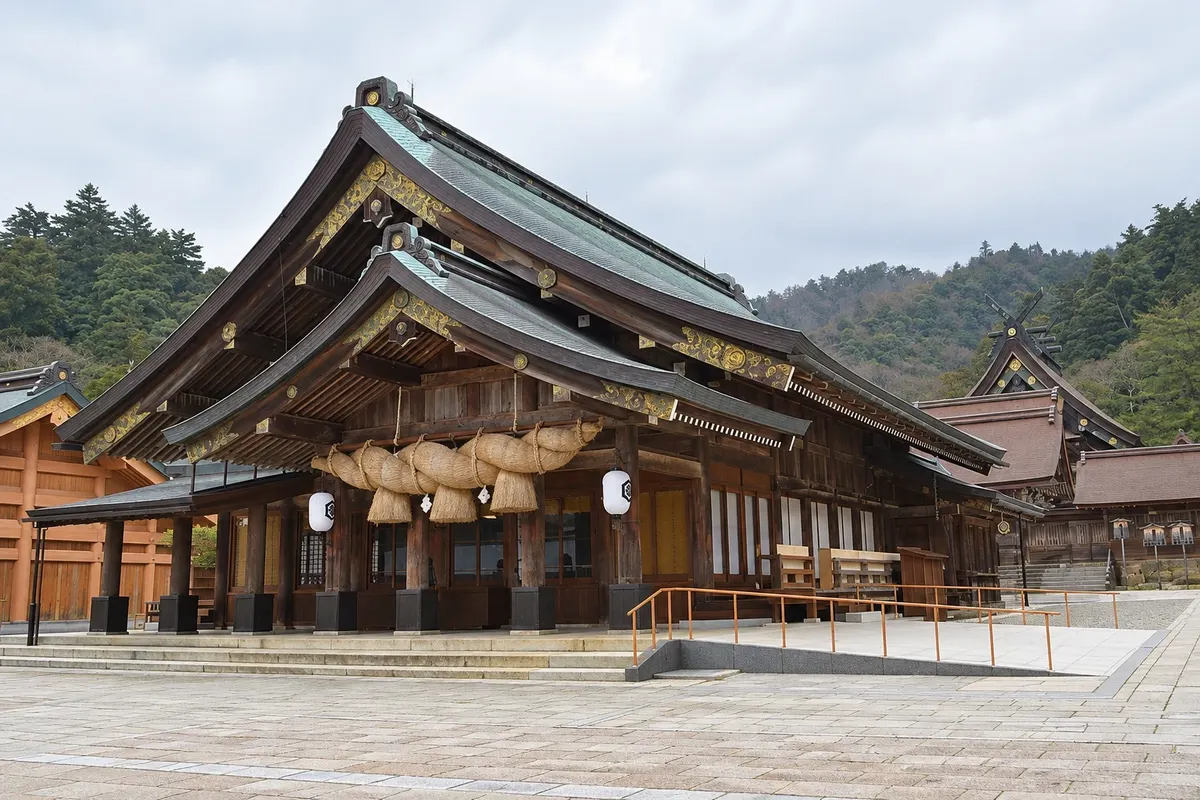
Shrine · Izumo, Shimane
Izumo Taisha (Izumo Grand Shrine)
One of Japan’s oldest and most important shrines, dedicated to Okuninushi, deity of bonds and marriage; the main hall is a National Treasure, and the Kaguraden has an enormous sacred rope.
Illustrative images. The pictures in this guide are illustrations based on the real place, not photographs, and may differ from it.

A look at the place
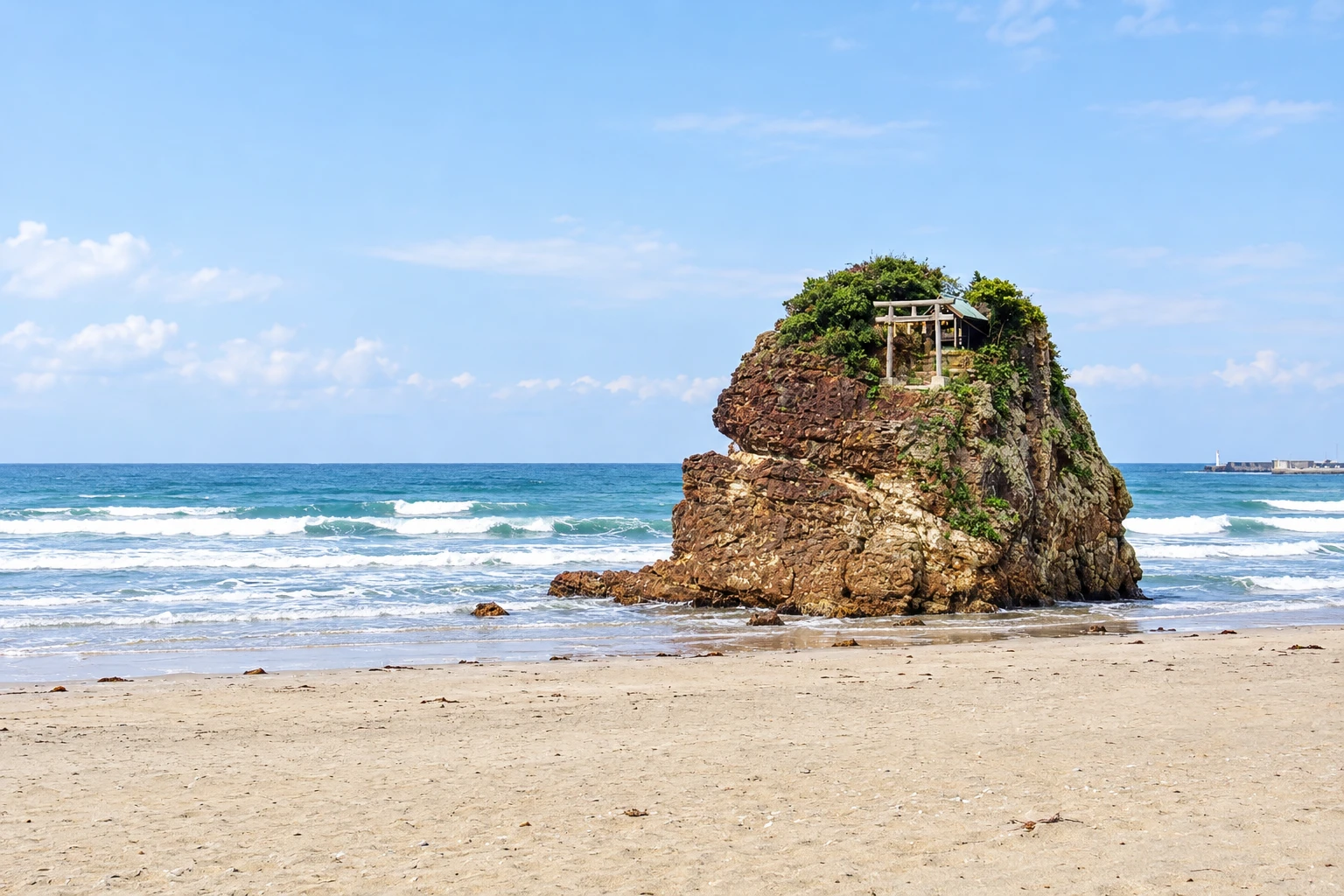
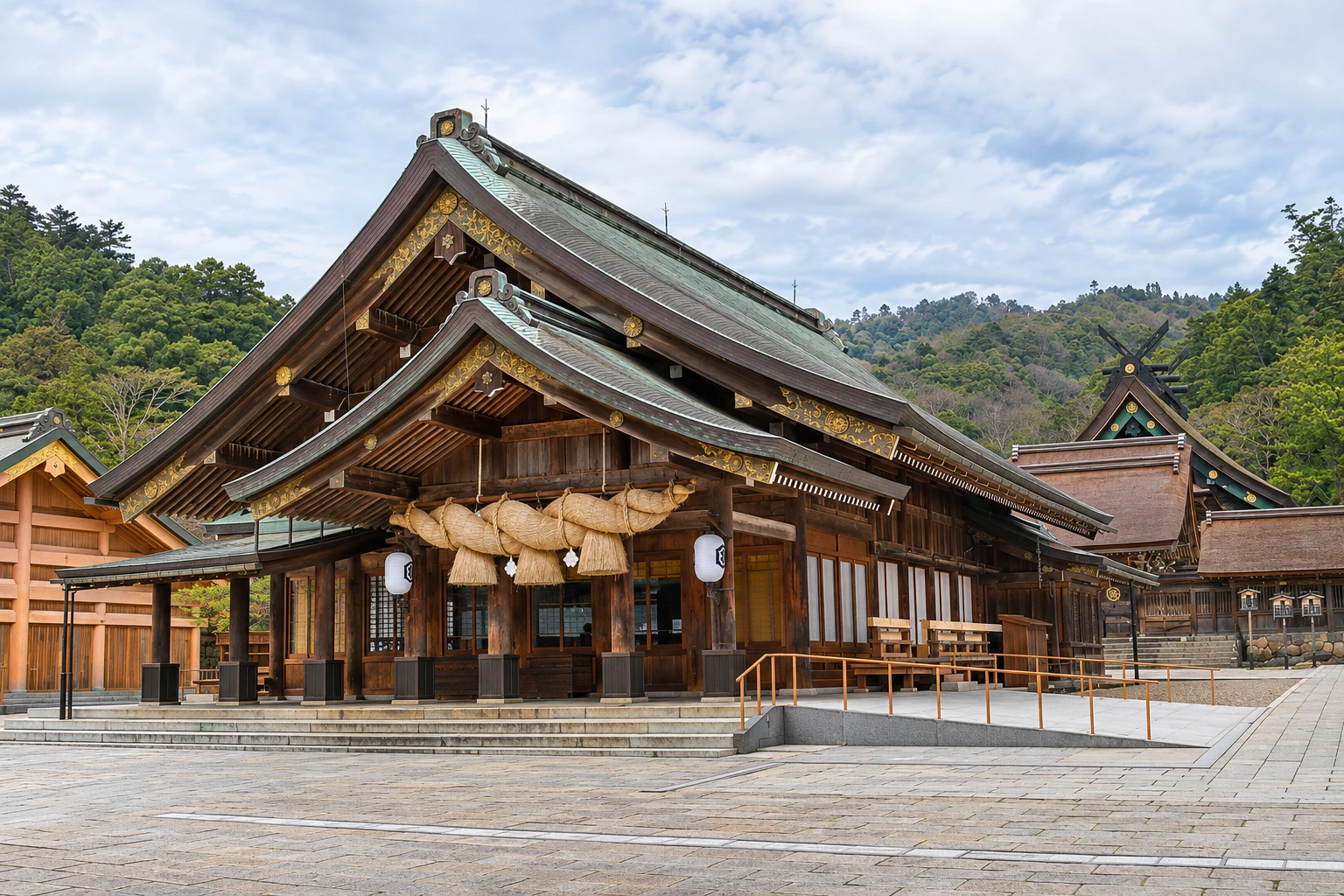
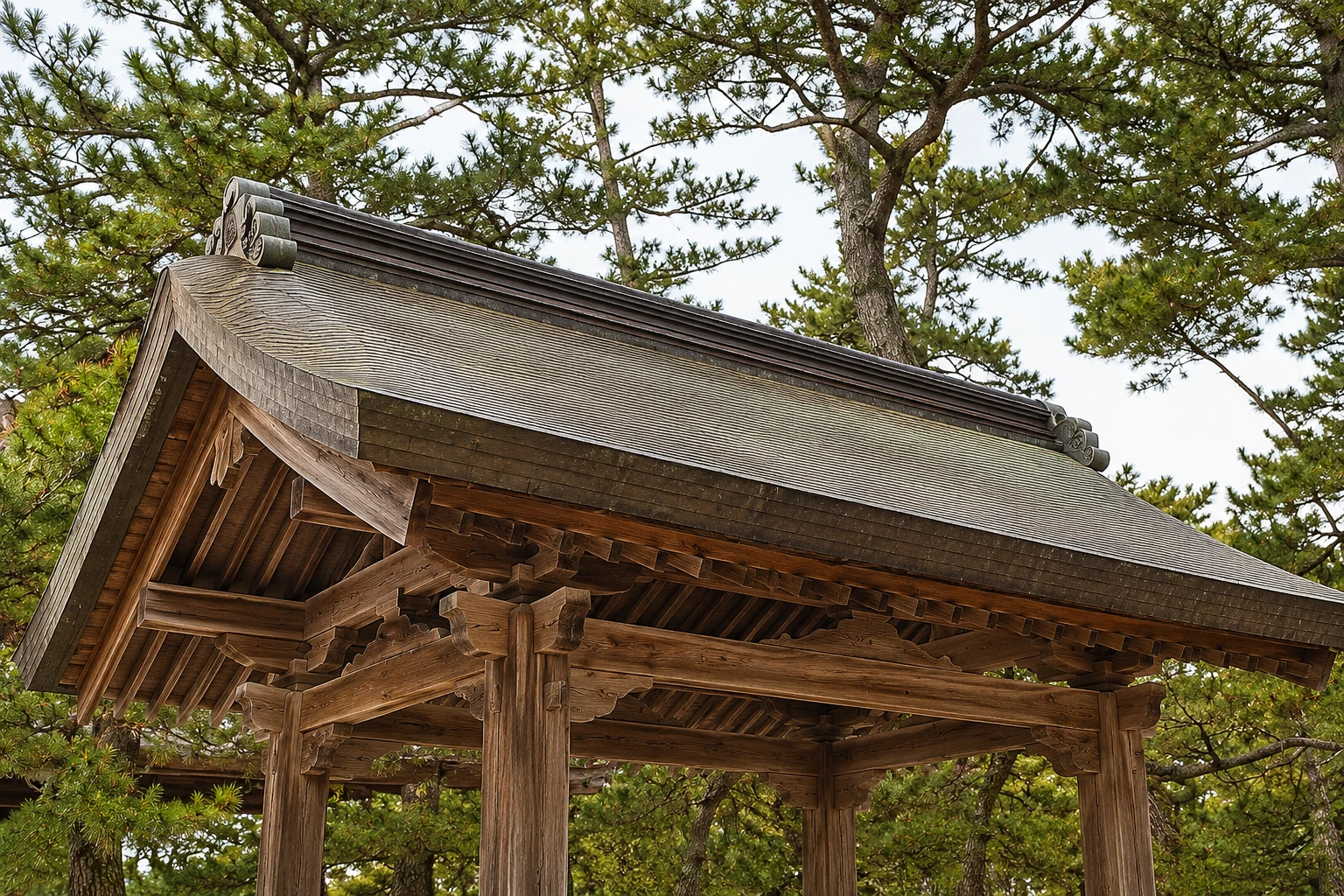
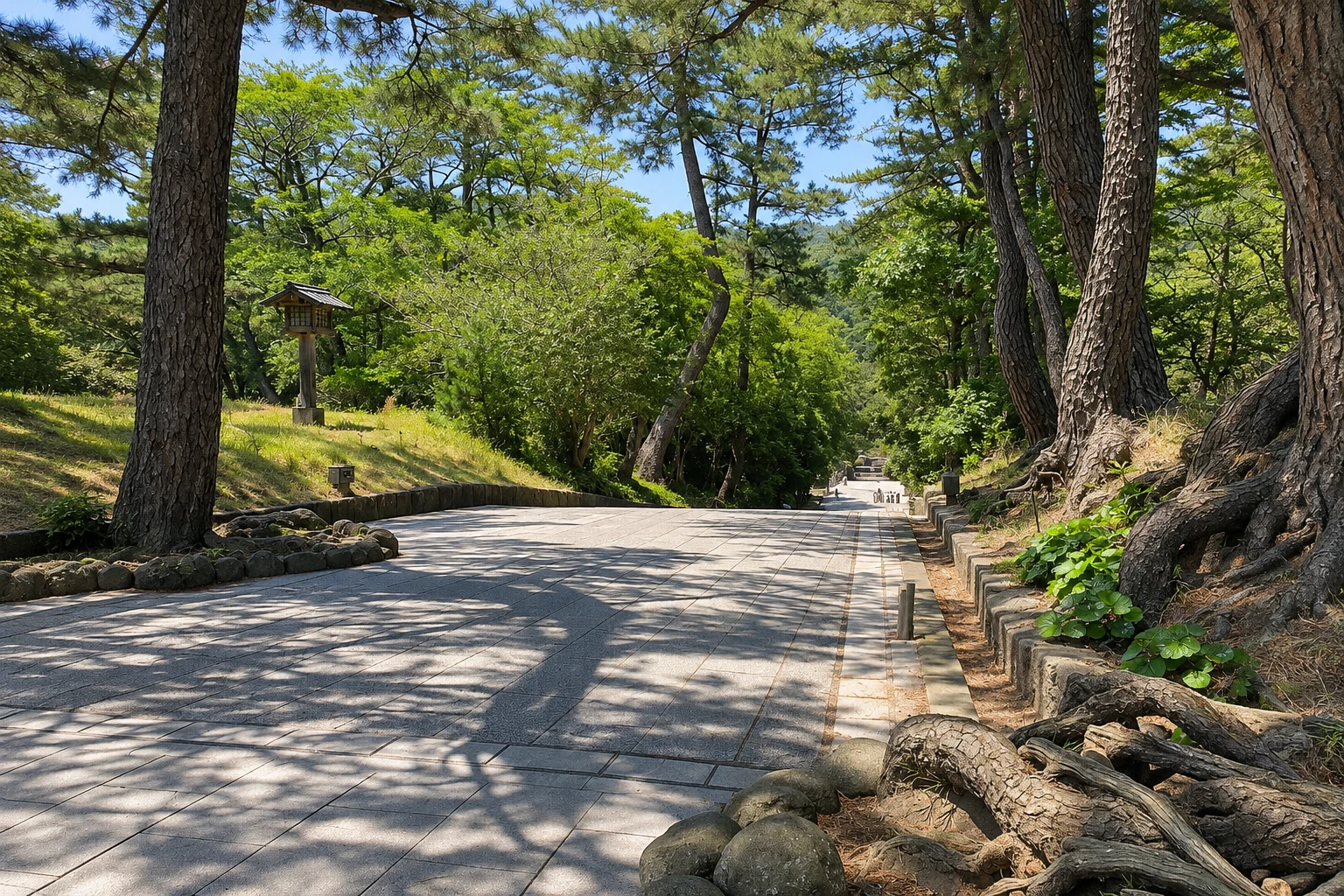
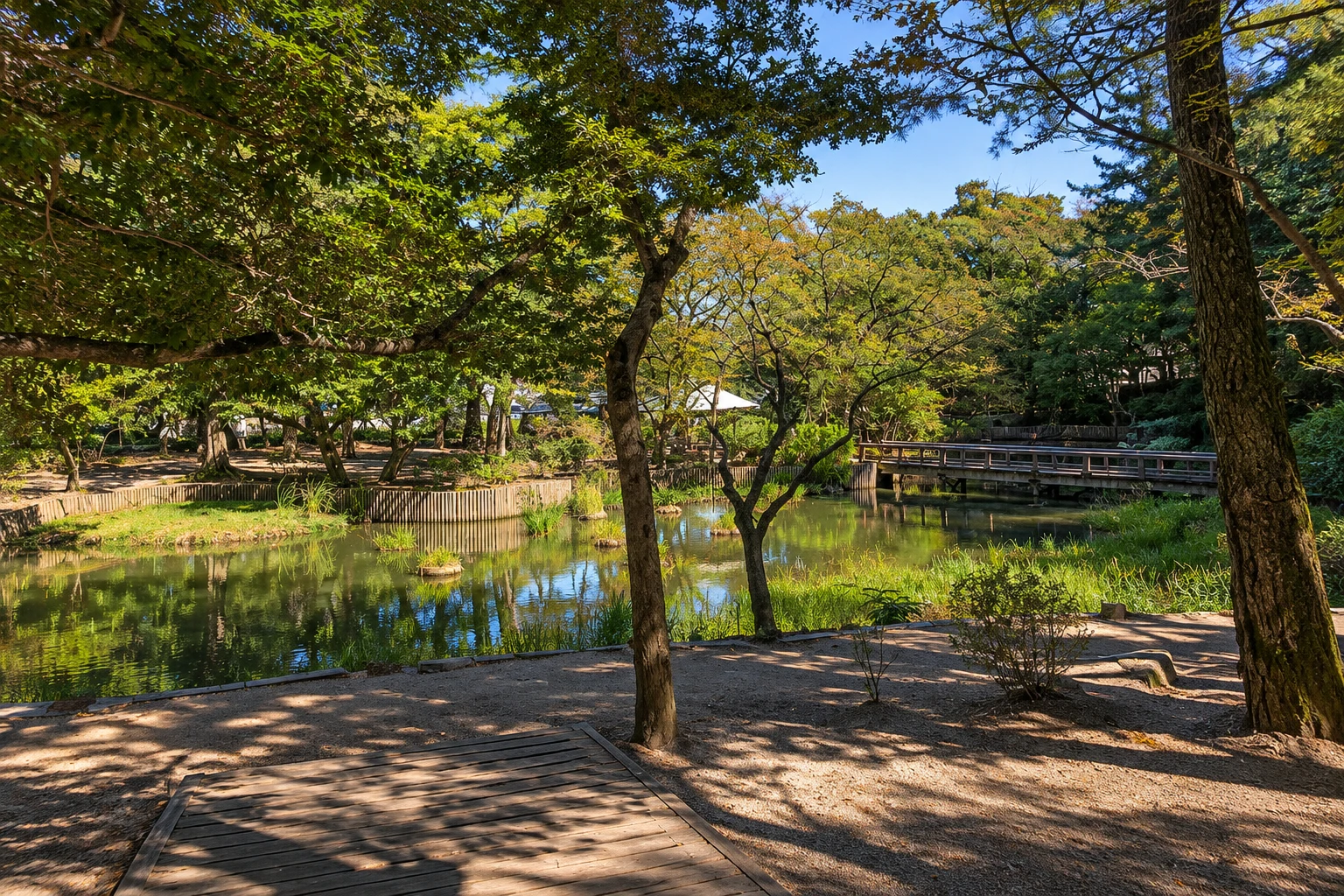
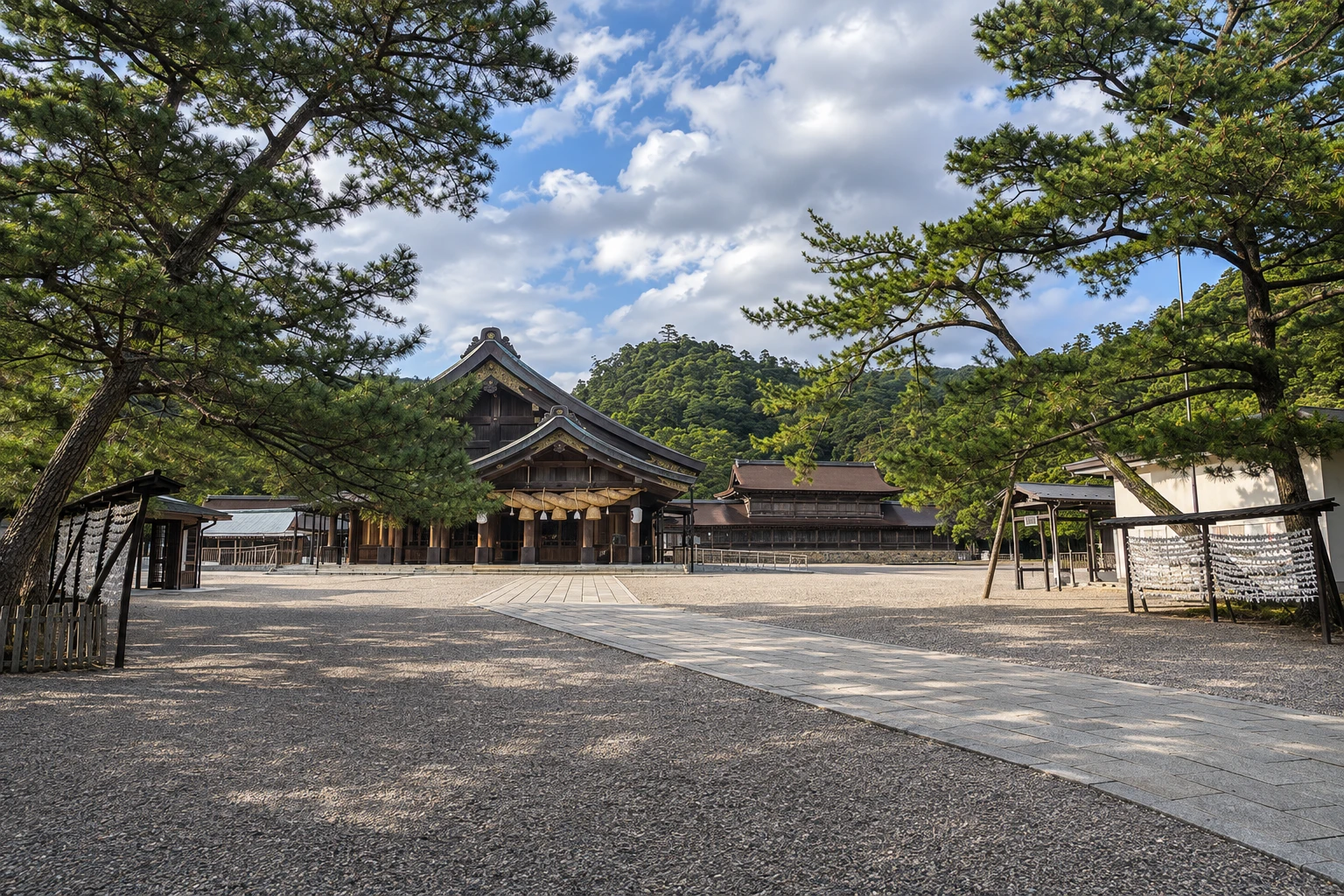
Izumo Taisha (Izumo Grand Shrine) in pictures
These pictures are illustrations based on the real place, not photographs. They may differ from the place.
Click the picture to enlarge it.
Discover
About Izumo Taisha (Izumo Grand Shrine)
Izumo Taisha, or Izumo Oyashiro, lies at the foot of the mountains on Shimane’s west coast and is one of Shinto’s oldest shrines, mentioned in 8th‑century chronicles. It is dedicated to Okuninushi, a deity associated with the nation’s creation, agriculture and human bonds. For that reason many visitors come to pray for good marriages and fortunate encounters.
Entrance is via a pine‑lined avenue that descends to the courtyard. The main hall, rebuilt in 1744, is about 24 meters high and built in the taisha‑zukuri style, one of the oldest shrine architectures; it is a National Treasure. Excavations found the bases of giant columns made from three trunks joined together, confirming accounts that the shrine was once much taller.
The Kaguraden, the hall for ceremonies and weddings, displays one of Japan’s largest shimenawa (sacred ropes) at its front, over 13 meters long and weighing about 5 tons. Unlike many other shrines, the reverence there is performed with two bows, four claps and one bow. Smaller shrines surround the main hall, including lodgings for visiting deities.
In the tenth month of the old calendar, usually in November, tradition holds that the deities of Japan gather in Izumo. The shrine holds welcoming and farewell ceremonies on Inasa Beach. Beside the shrine is the Shimane Old Izumo Museum, which exhibits the giant column bases found on site and ancient bronze swords and bells.
Before you go
Practical information
Cidade Turismo reviews its information regularly, but something may have changed. Check with the place before planning your trip.
How much time to set aside
Allow 1–2 hours to see the courtyard, the Kaguraden and the entrance avenue; add about 1 hour to visit the Old Izumo Museum.
Best time
Visit early in the morning, before day‑trip buses arrive. In November, the month of the deities in the old calendar, there are ceremonies and larger crowds; dates change yearly. Check the shrine calendar.
How to get there
Izumo Taisha‑mae Station on the Ichibata Line is about a 5‑minute walk from the entrance. From Izumoshi JR Station, buses take about 25 minutes.
Tip
Enter through the large concrete gate on Shinmon Avenue and walk to the wooden gate like the worshippers. At the shrine, clap four times as the custom prescribes.
Official website
Get your questions answered
Frequently asked questions about Izumo Taisha (Izumo Grand Shrine)
Why do people clap four times at Izumo Taisha?
It is the shrine’s own custom: two bows, four claps and one bow. At most shrines, the practice is two claps.
Is Izumo Taisha a place to pray for marriage?
The deity Okuninushi is associated with bonds between people, and the shrine is visited to ask for good encounters, marriages and good relationships in general.
How big is the sacred rope at Izumo Taisha?
The shimenawa at the Kaguraden is over 13 meters long and weighs about 5 tons. It is one of the largest in Japan.
When do the gods gather at Izumo?
Generally in November, which corresponds to the tenth lunar month; the dates of the ceremonies change each year and are announced by the shrine.
Beyond the guide


