

 Brazil
 Antarctica
 Argentina
 Bolivia
 Chile
 Colombia
 Ecuador
 Guyana
 French Guiana
 Falkland Islands (Malvinas)
 Paraguay
 Peru
 Suriname
 Uruguay
 Venezuela
 Germany
 Austria
 Belgium
 Croatia
 Denmark
 Slovakia
 Slovenia
 Spain
 Finland
 France
 Greece
 the Netherlands
 Hungary
 Ireland
 Iceland
 Italy
 Luxembourg
 Norway
 Poland
 Portugal
 the United Kingdom
 the Czech Republic
 Sweden
 Switzerland
 Turkey
 Bermuda
 Canada
 the United States
 Greenland
 Mexico
 Saint Pierre and Miquelon
 the Dominican Republic
 South Africa
 Egypt
 Australia
 Fiji
 New Zealand
 Papua New Guinea
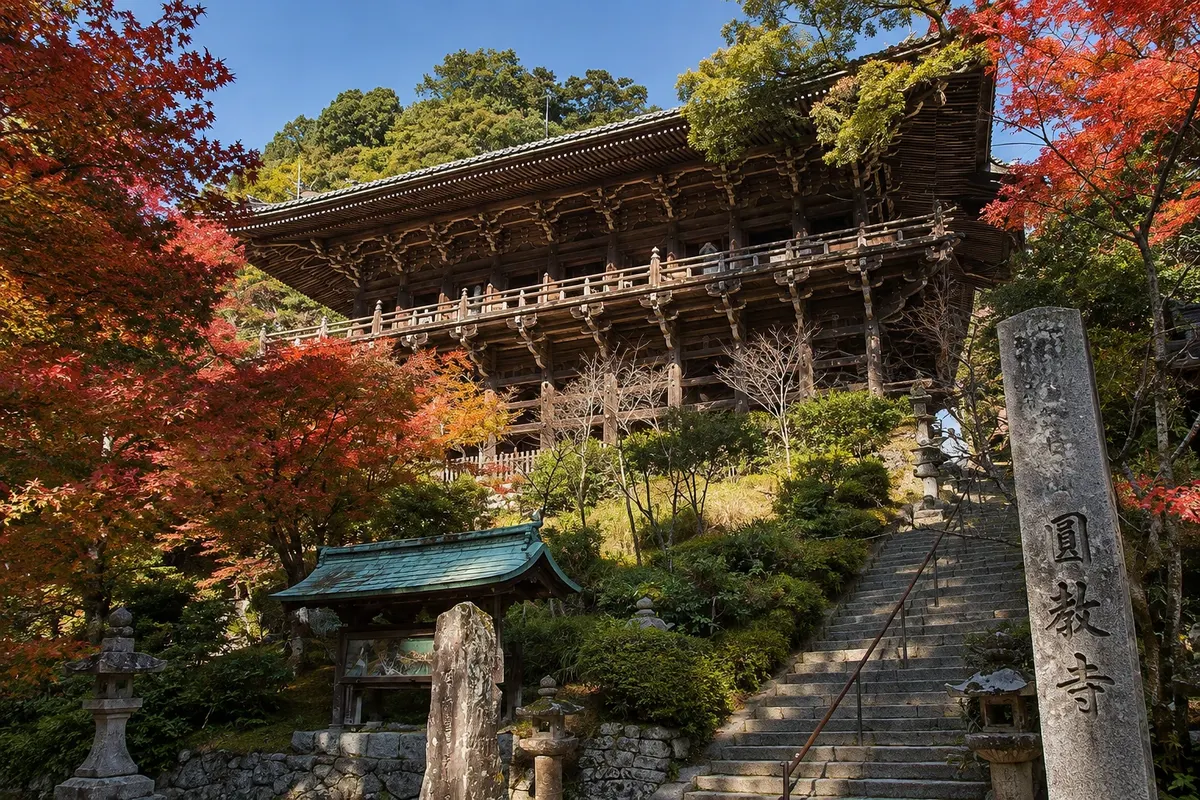
Temple · Himeji, Hyogo
Engyō-ji
A 10th-century Buddhist temple on top of Mount Shosha, north of Himeji, featuring the Maniden hall on wooden pillars and three large wooden halls in the forest.
Illustrative images. The pictures in this guide are illustrations based on the real place, not photographs, and may differ from it.

A look at the place
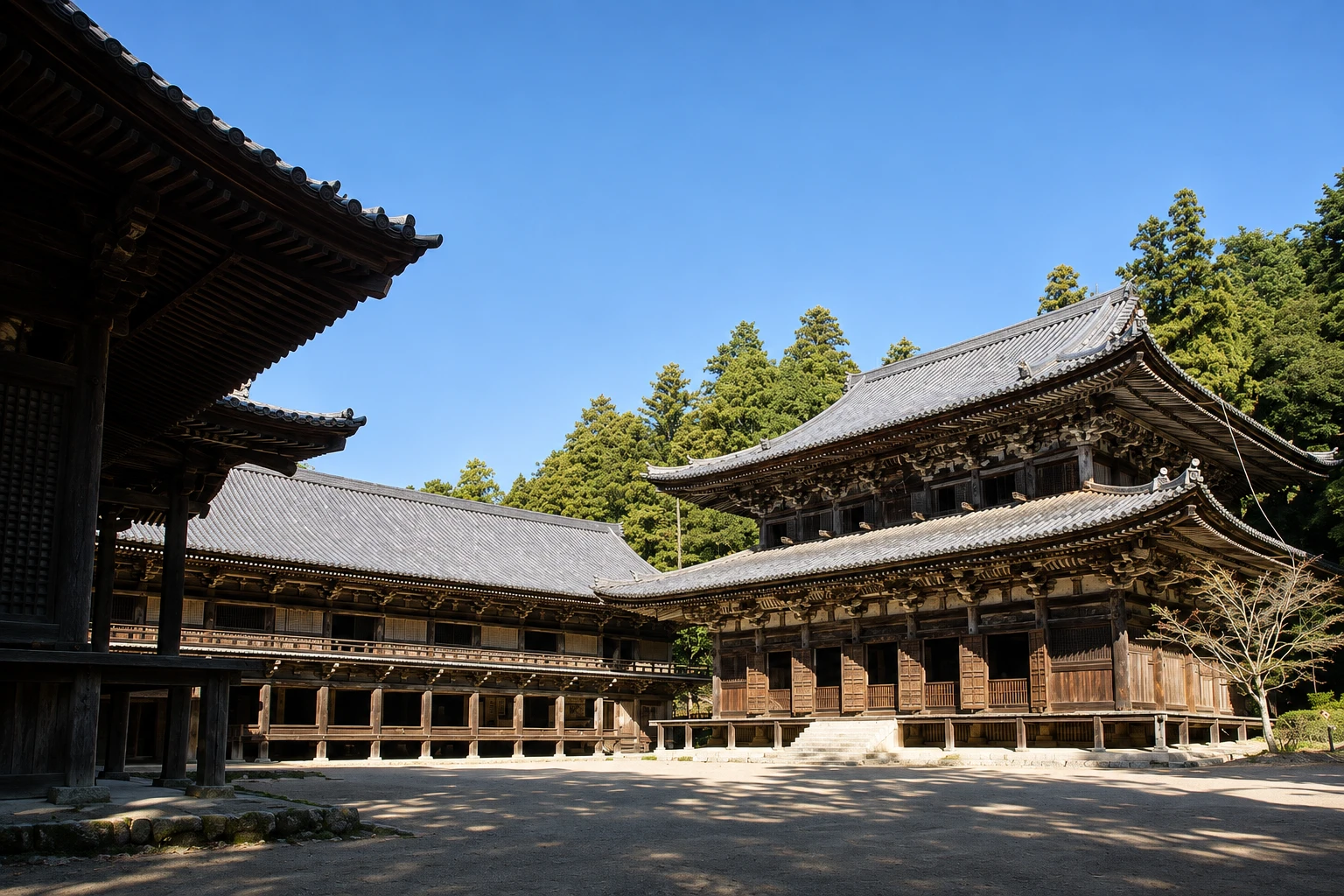
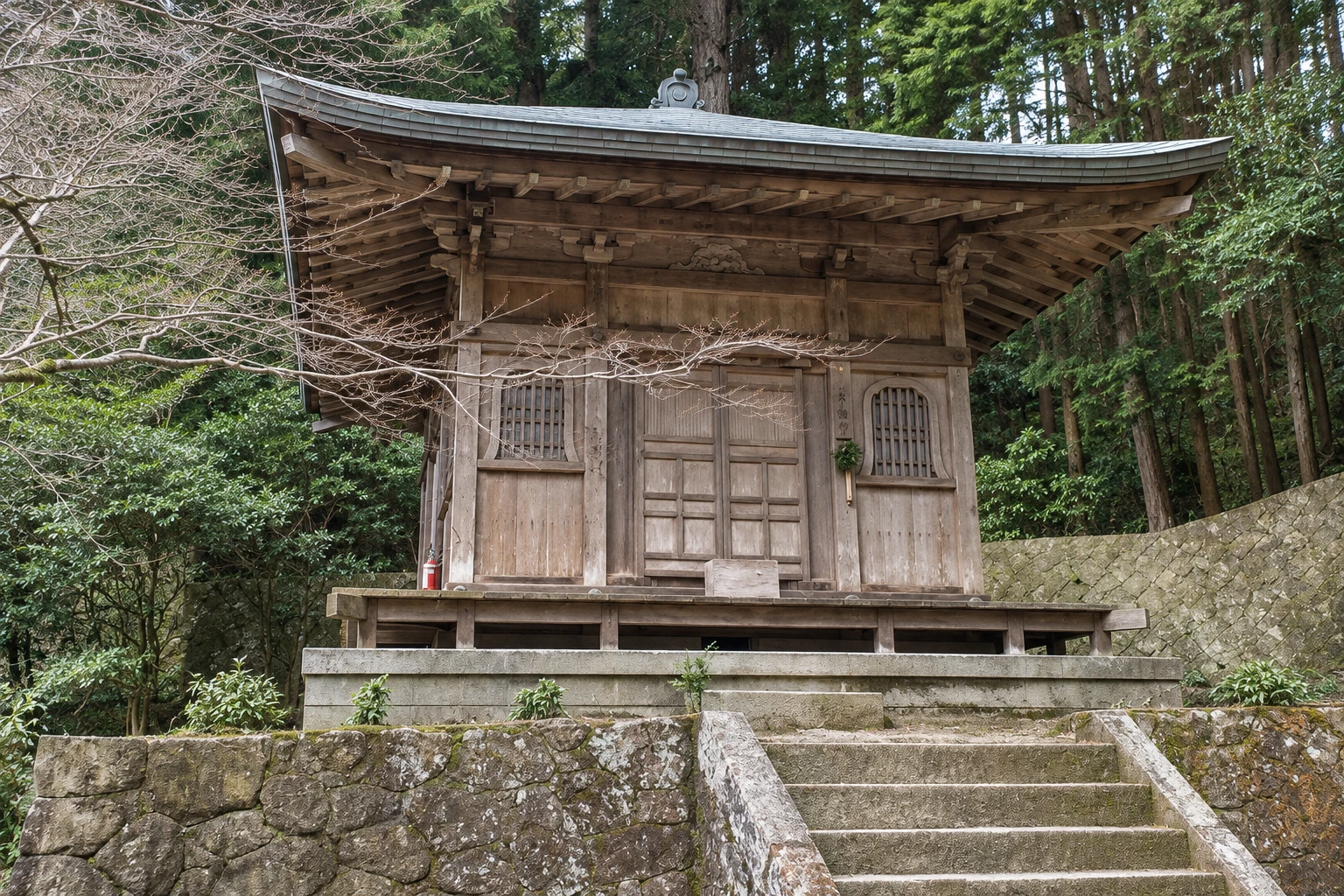
Engyō-ji in pictures
These pictures are illustrations based on the real place, not photographs. They may differ from the place.
Click the picture to enlarge it.
Discover
About Engyō-ji
Engyo-ji is a Tendai-sect temple on Mount Shosha, about 8 km north of central Himeji. It was founded in 966 by the monk Shoku and became one of the major pilgrimage centers of western Japan, visited by emperors. The mountain’s name comes from the word for copying sutras.
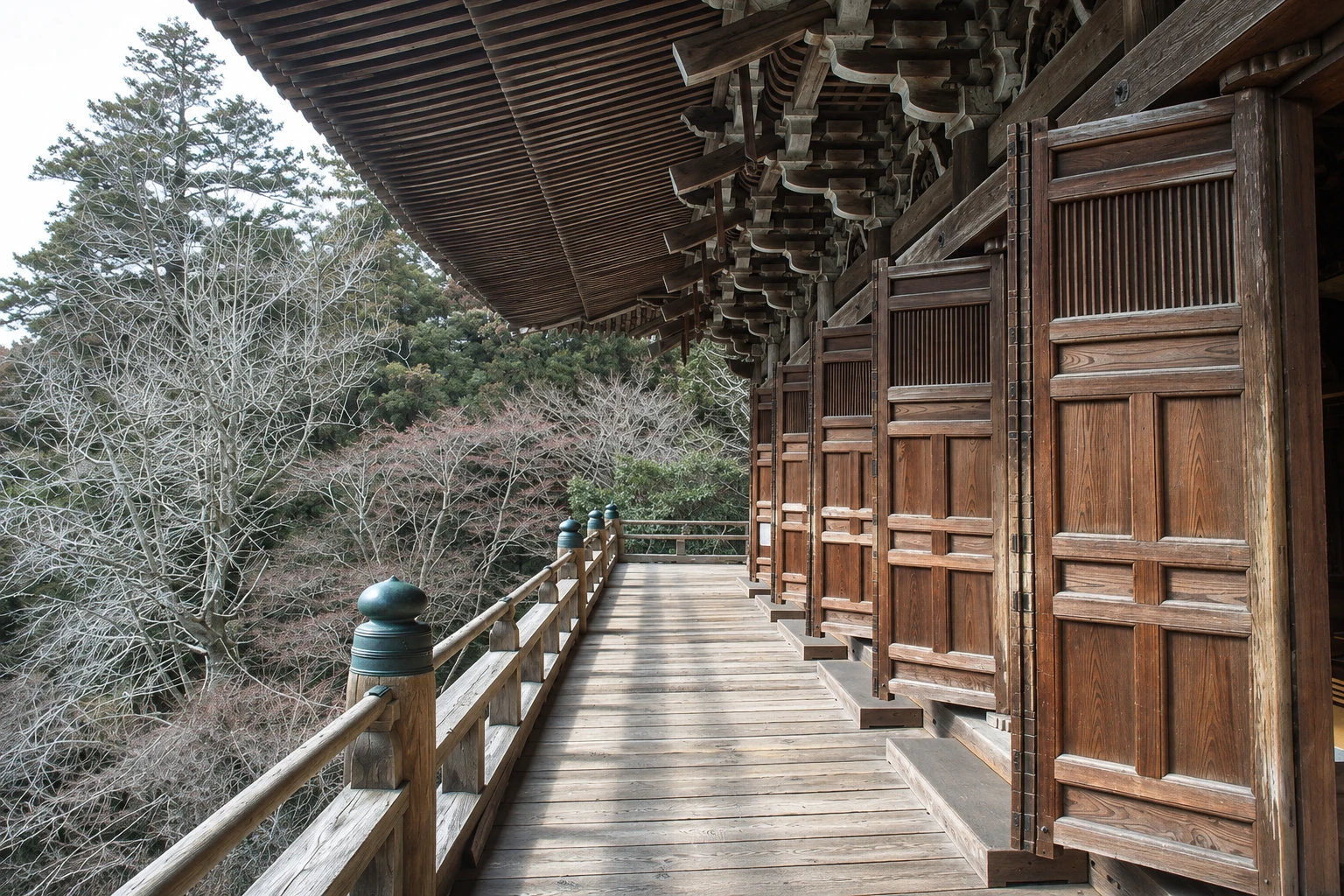
Access is by a cable car, the Shosha Ropeway, which climbs the slope, followed by a walk through the forest to the halls. The first large building is the Maniden, a hall built on wooden pillars at the edge of a cliff, in a style similar to Kiyomizu-dera in Kyoto, dedicated to Kannon.
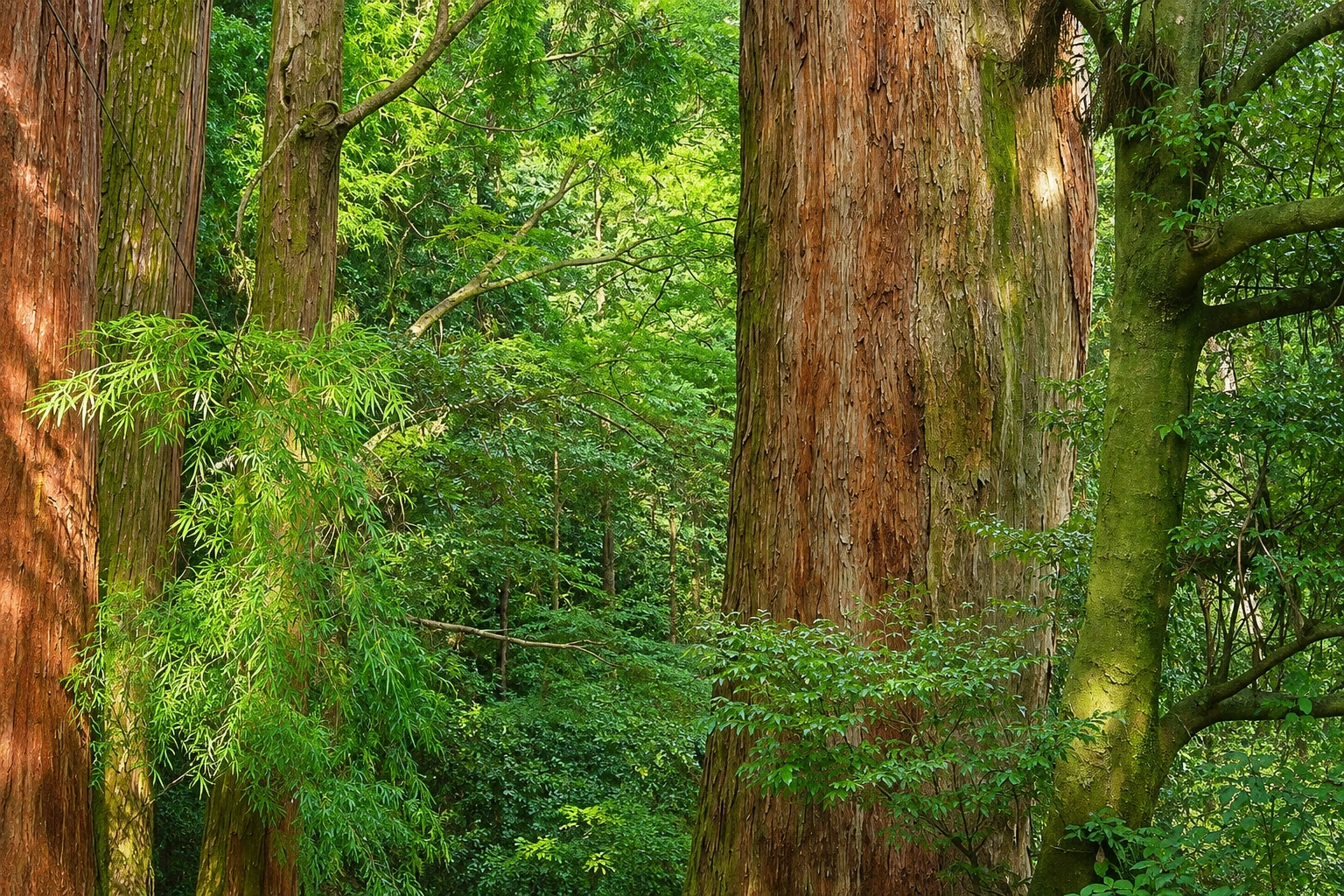
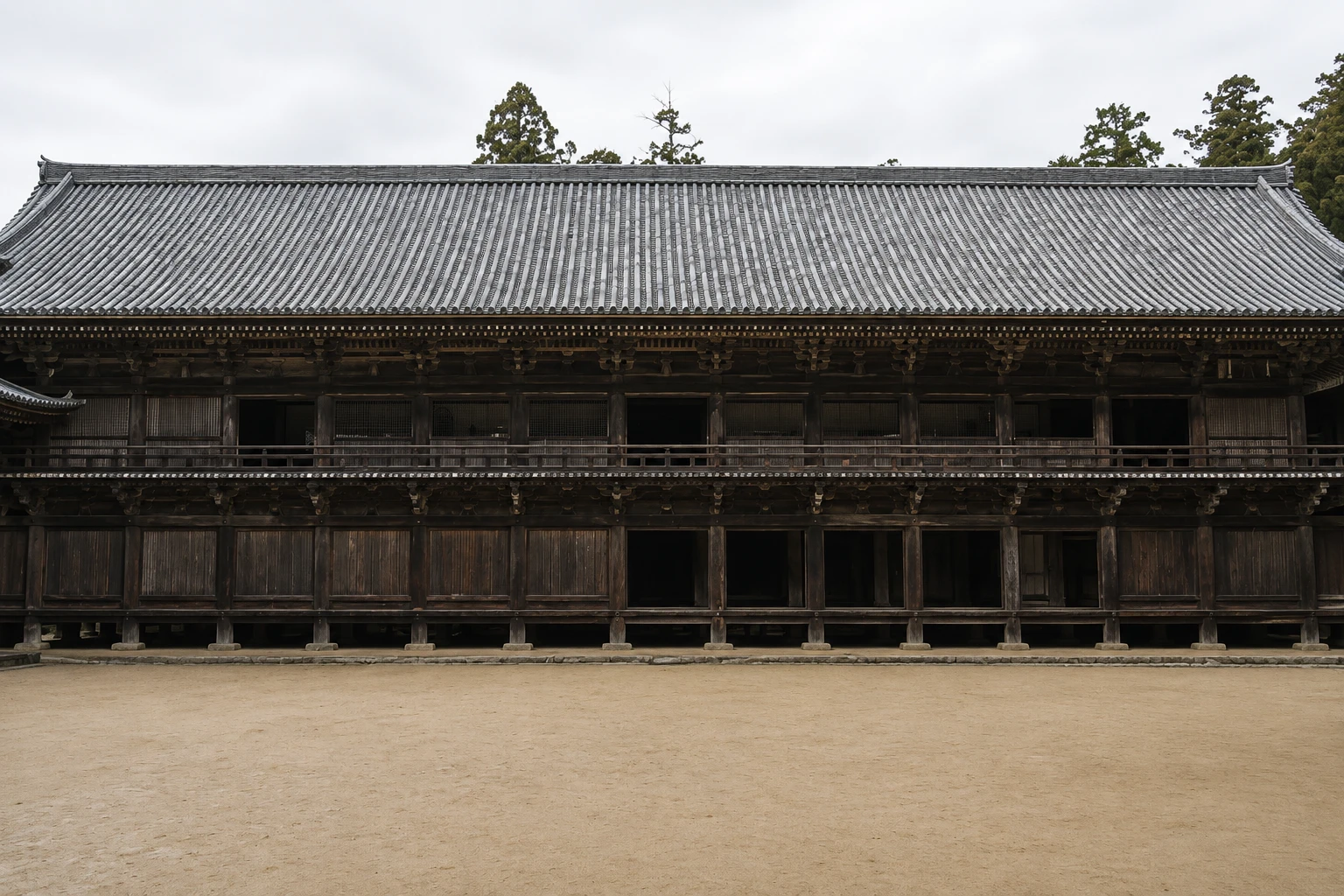
Further on, in a cedar-surrounded clearing, are the three large halls, the Mitsunodo: the Daikodo, a lecture hall; the Jikido, the monks’ refectory, a two-story building; and the Jogyodo. The complex has served as a setting for period films and international productions. The Jikido houses an exhibition of temple objects, and the path continues to the founder’s mausoleum in a more secluded part of the forest.
The temple is surrounded by woodland, with maples that change color in November and stone paths between buildings. There is also a pilgrimage route with statues of Kannon along the trail for those who prefer to climb on foot from the base, which takes about 1 hour. The temple offers sutra-copying experiences on certain days.
Before you go
Practical information
Cidade Turismo reviews its information regularly, but something may have changed. Check with the place before planning your trip.
How much time to set aside
Half a day, including bus, cable car and walking between the halls.
Best time
Autumn, when the maples generally change color in November, is the most popular time. In spring the fresh green and cherry trees are attractive. The ropeway has its own schedule and may close for maintenance: check before you go.
How to get there
From Himeji Station, buses run to the lower station of the Shosha Ropeway in about 30 minutes; the cable car ride takes about 4 minutes. From the top, the halls are roughly a 20–30 minute walk away, with a minibus covering part of the route.
Tip
Combine Engyo-ji with the castle on the same day: the castle in the morning and the temple in the afternoon. Wear comfortable shoes, because the paths between the halls include uphill sections and stone steps.
Official website
Get your questions answered
Frequently asked questions about Engyō-ji
How do you get to Engyo-ji from Himeji?
By bus from Himeji Station to the Shosha Ropeway lower station in about 30 minutes, then by cable car to the summit. The halls are roughly a 20–30 minute walk.
What is there to see at Engyo-ji?
The Mani-den hall, on stilts at the cliff edge, and the three large halls of Mitsunodo in a cedar-cleared glade.
How long does a visit to Engyo-ji take?
Half a day, including the bus, the cable car and the walks between the halls.
When is the best time to visit Engyo-ji?
In November for the red maples, and in spring for the fresh green foliage.
Can you visit Engyo-ji and Himeji Castle on the same day?
Yes: the castle in the morning and the temple in the afternoon.
Beyond the guide


