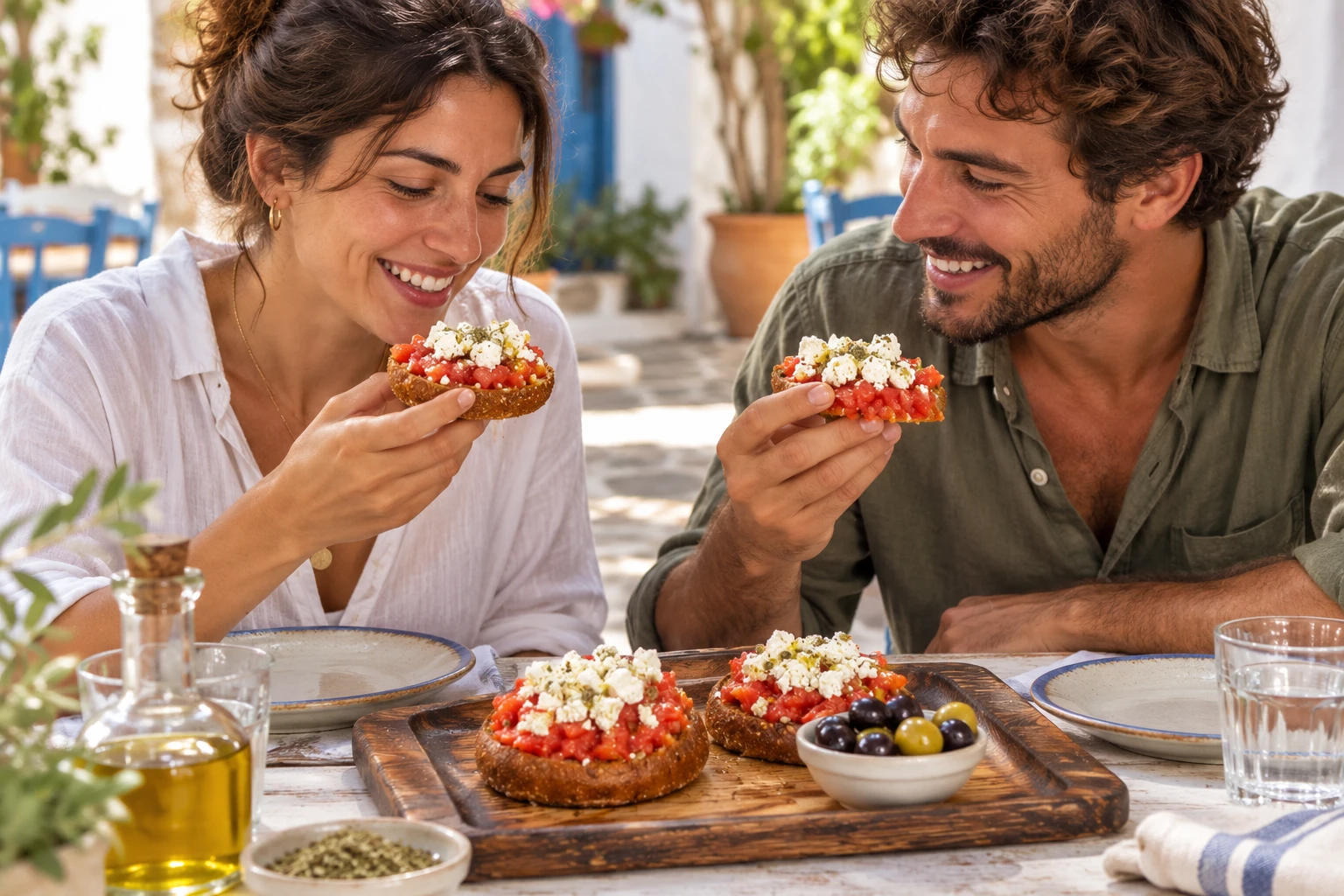
Dakos starts from paximadi, a baked barley bread that is sliced and baked again until completely dry. In Crete, where fresh bread wasn’t always available in the countryside and mountains, these hard rusks were kept for months. The culinary portal of Greek broadcaster SKAI describes the barley rusk as an ancient survival food of Cretans.
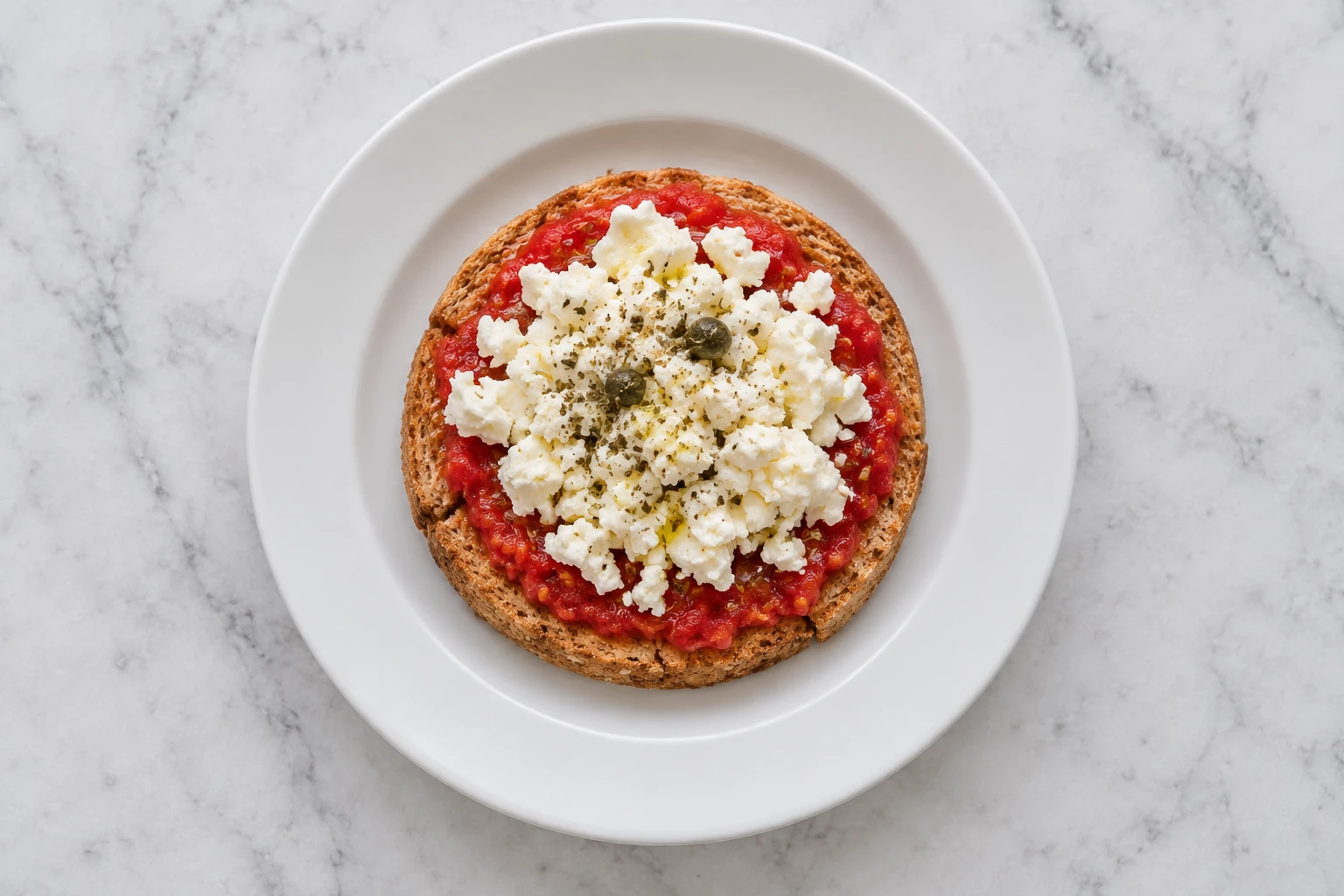
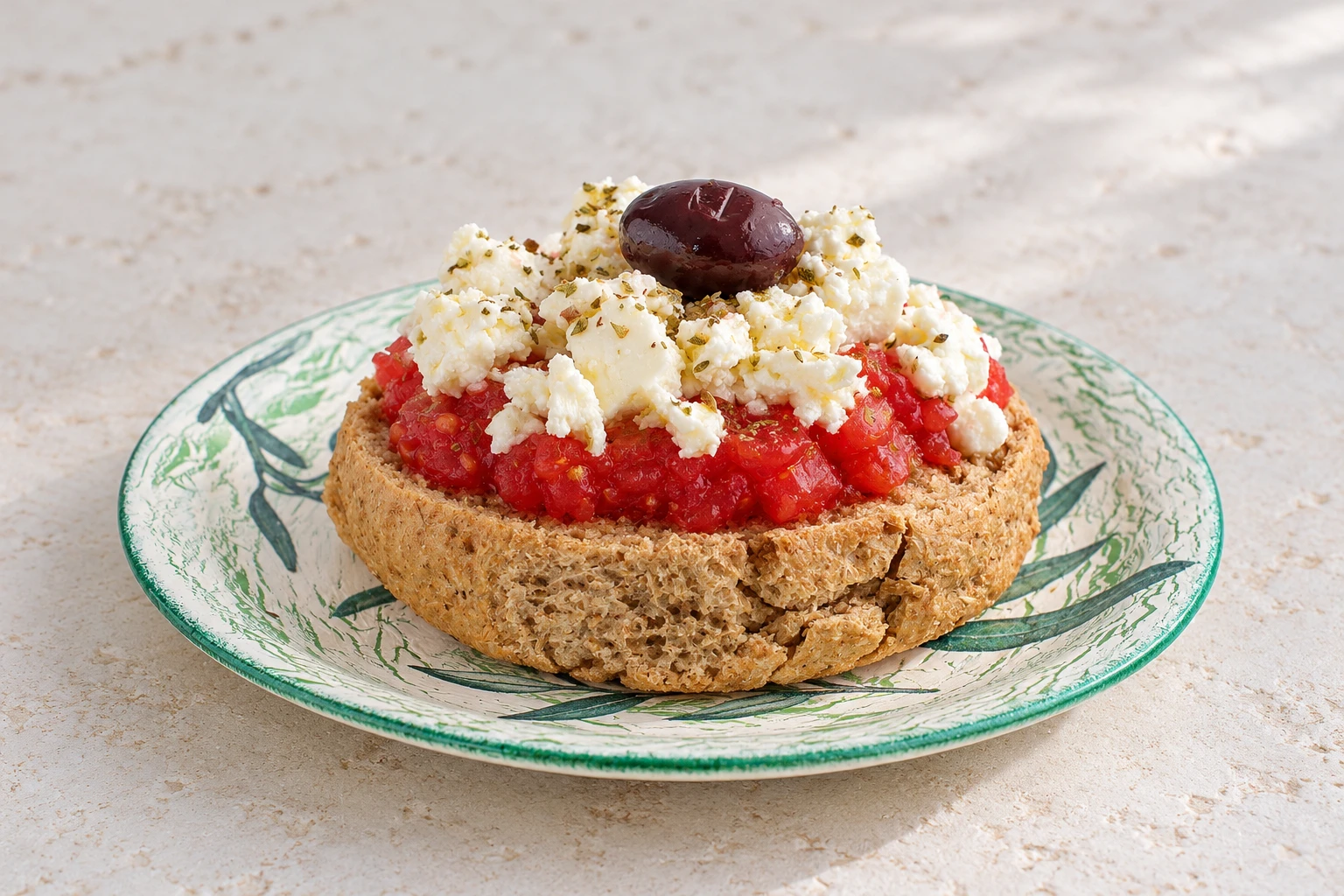
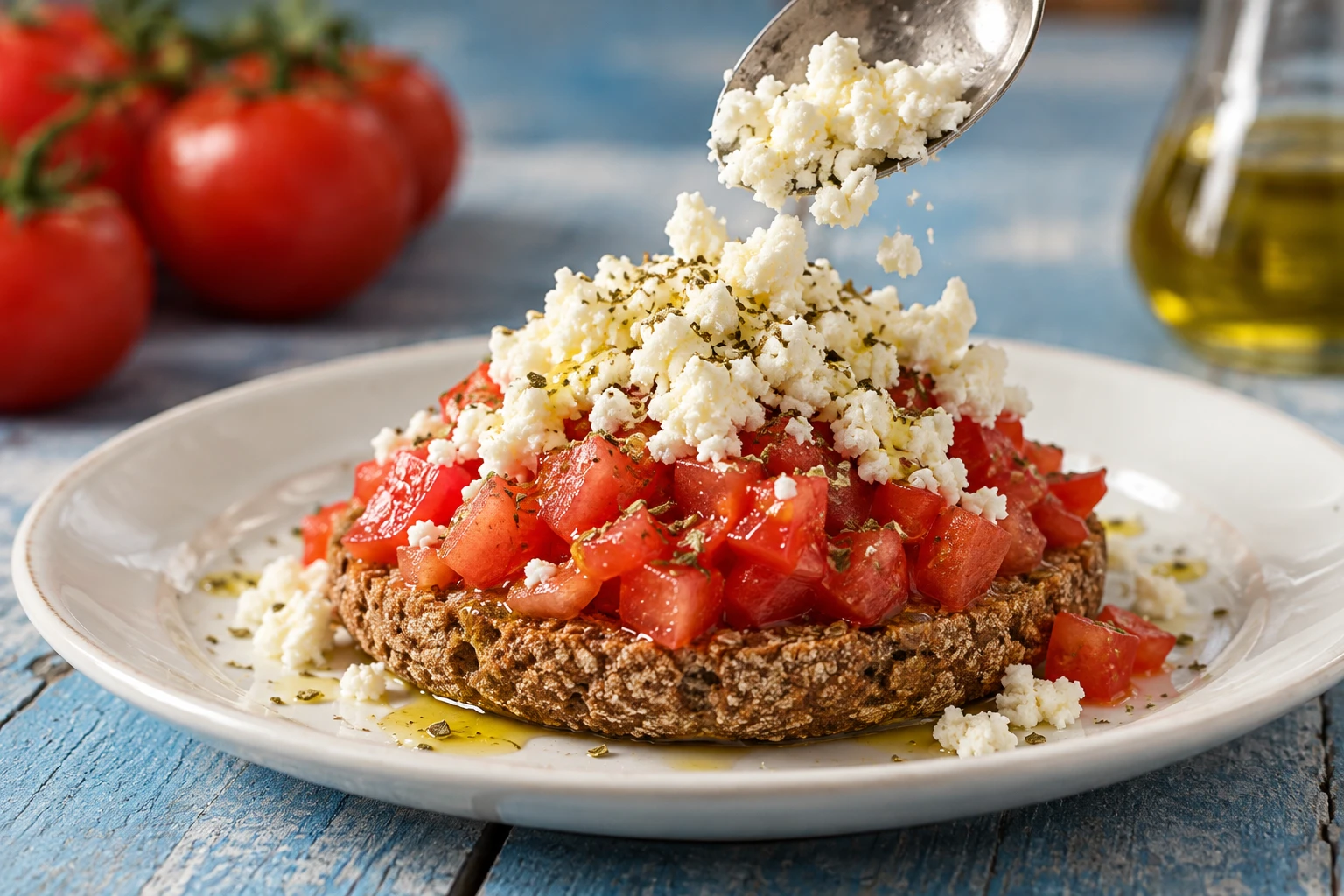
To make dakos, the rusk is quickly passed under water, just to soften the surface, and topped with grated ripe tomato, including the juice. Over that goes fresh mizithra (or crumbled feta), dried oregano and plenty of olive oil. Black olives and capers complete the dish in many versions. The rusk soaks up the tomato and oil and becomes soft on top while still crunchy underneath.
The name varies across the island. Dakos or ntakos is the most common form; koukouvagia, “owl,” is another name used in Crete, and in the eastern part of the island the rusk is also called kouloukopsomo.
Dakos is served as meze with tsikoudia or wine, and also as a light summer meal (June to August), when tomatoes are at their best.


 Brazil
 Argentina
 Bolivia
 Chile
 Colombia
 Ecuador
 Guyana
 French Guiana
 Falkland Islands (Malvinas)
 Paraguay
 Peru
 Suriname
 Uruguay
 Venezuela
 Germany
 Austria
 Belgium
 Croatia
 Denmark
 Spain
 Finland
 France
 the Netherlands
 Hungary
 Ireland
 Iceland
 Italy
 Luxembourg
 Norway
 Poland
 Portugal
 the United Kingdom
 the Czech Republic
 Sweden
 Switzerland
 Turkey
 Canada
 the United States
 Mexico
 the Dominican Republic
 South Africa
 Australia
 Fiji
 New Zealand
 Papua New Guinea