Sweet · New York
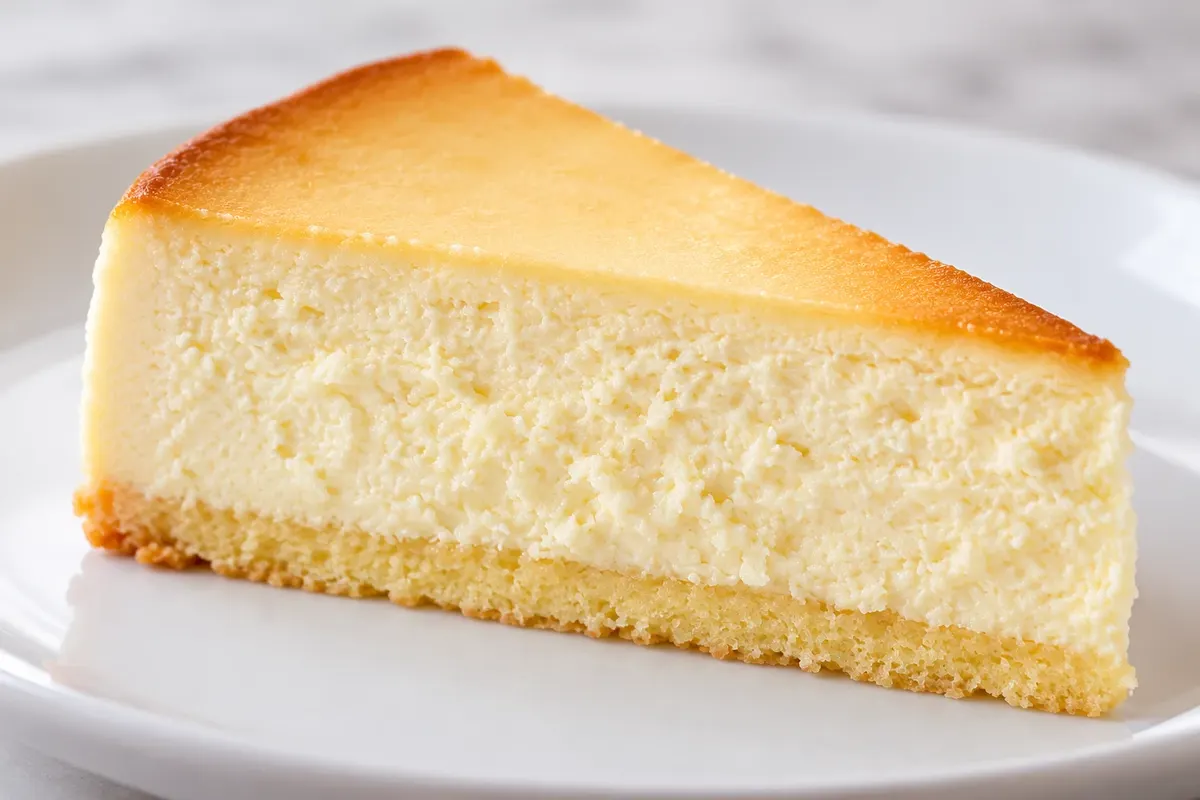
New York cheesecake
Dense, creamy tart made with cream cheese, eggs and cream on a cookie crust, served without topping.

 Search
 Brazil
 Argentina
 Bolivia
 Chile
 Colombia
 Ecuador
 Guyana
 French Guiana
 Falkland Islands (Malvinas)
 Paraguay
 Peru
 Suriname
 Uruguay
 Venezuela
 Germany
 Austria
 Belgium
 Croatia
 Denmark
 Spain
 Finland
 France
 Greece
 the Netherlands
 Hungary
 Ireland
 Iceland
 Italy
 Luxembourg
 Norway
 Poland
 Portugal
 the United Kingdom
 the Czech Republic
 Sweden
 Switzerland
 Turkey
 Canadathe United States
 Mexico
 the Dominican RepublicTurkey
 South Africa
 Australia
 Fiji
 New Zealand
 Papua New Guinea
Popular festival · New York
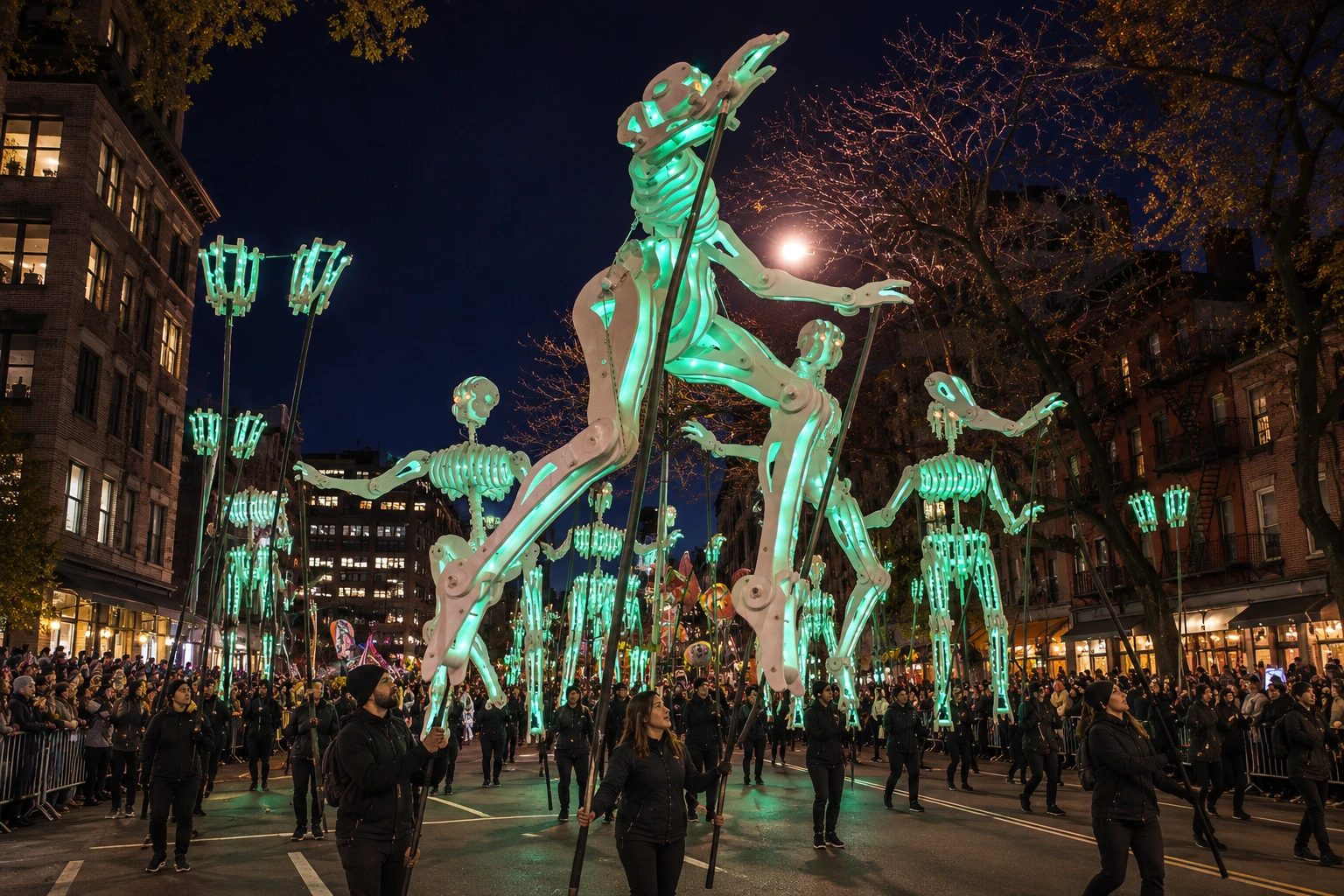
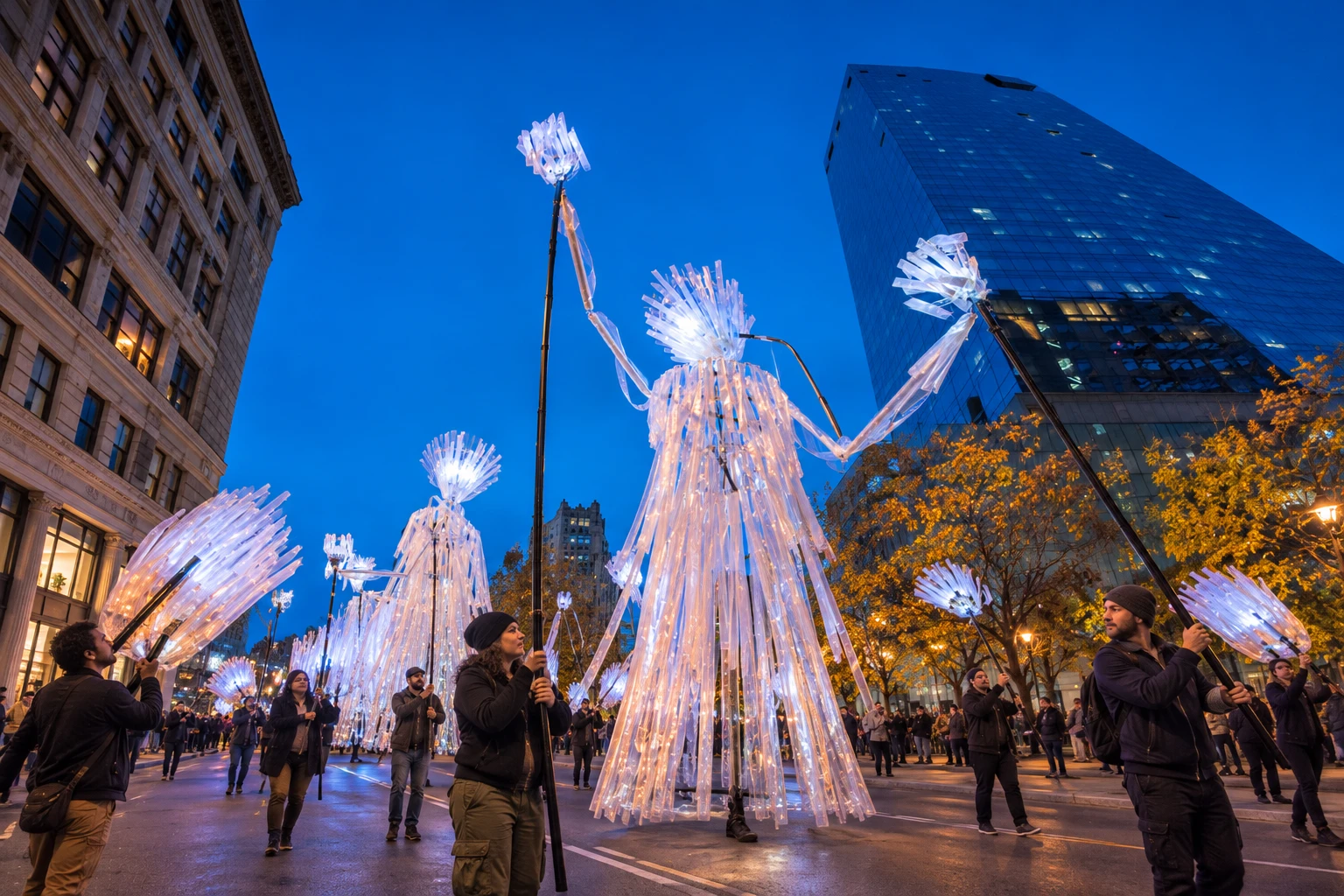
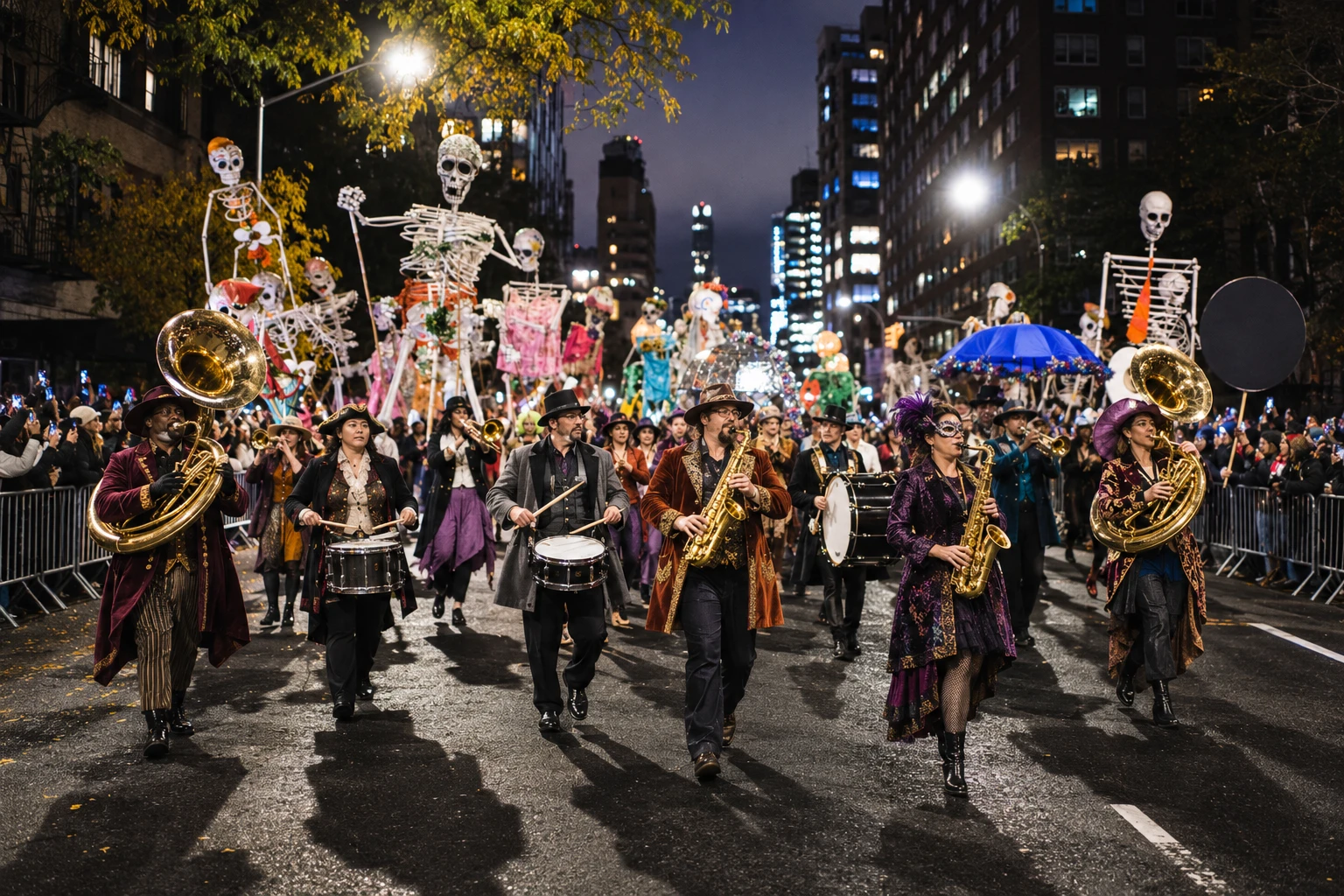
On October 31, after dark, Sixth Avenue in Manhattan hosts a nighttime parade of giant illuminated puppets, bands, dancers and thousands of costumed people; anyone in costume may join the procession.
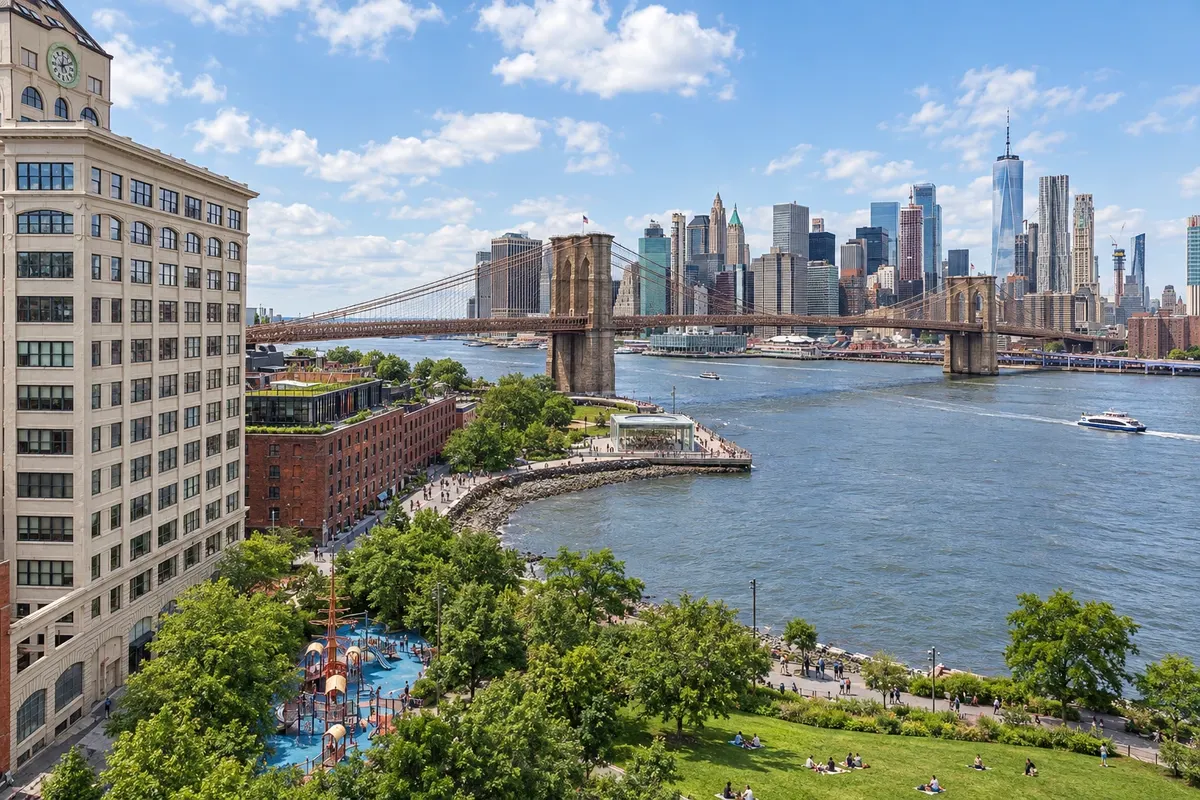
In the photo: New York
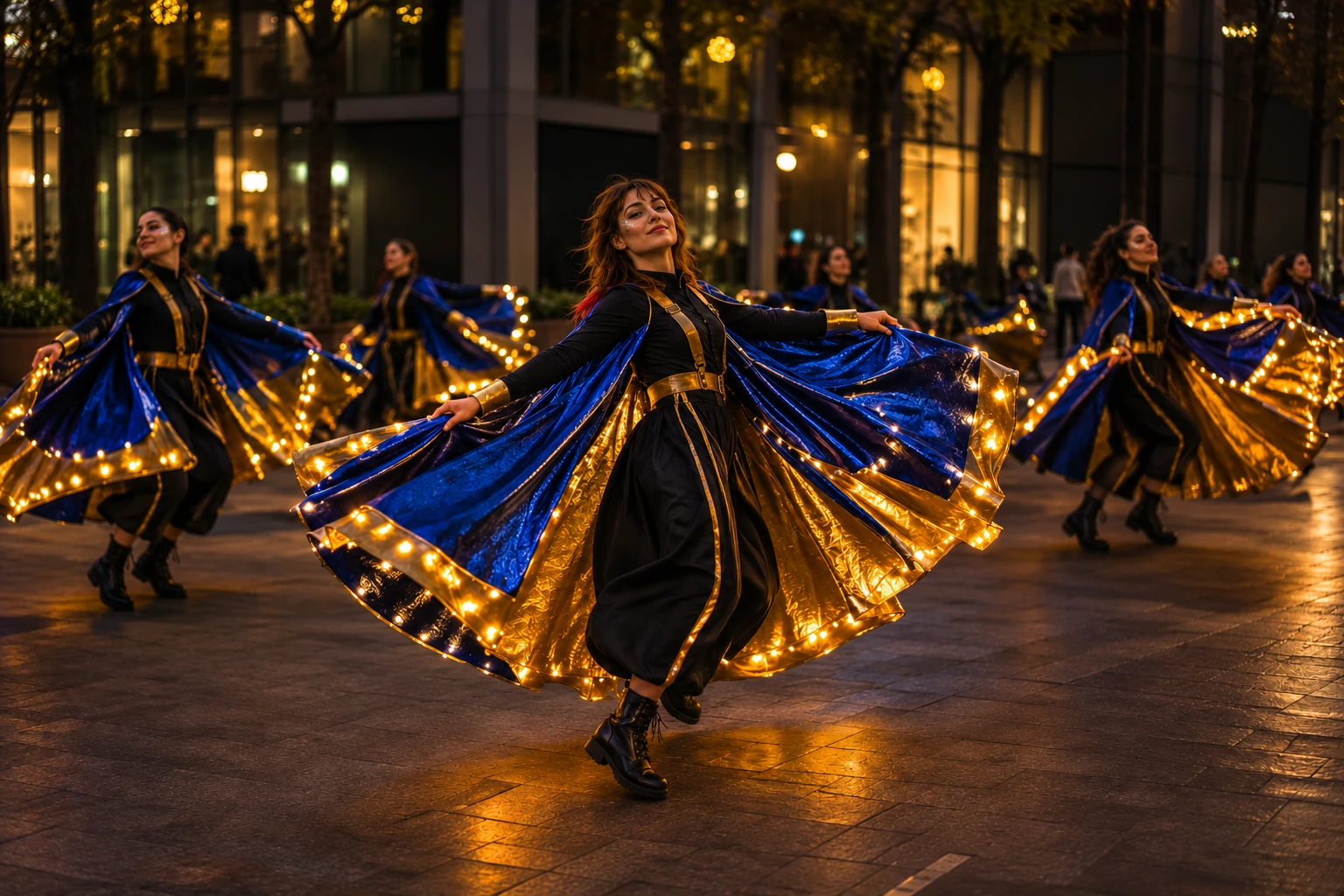
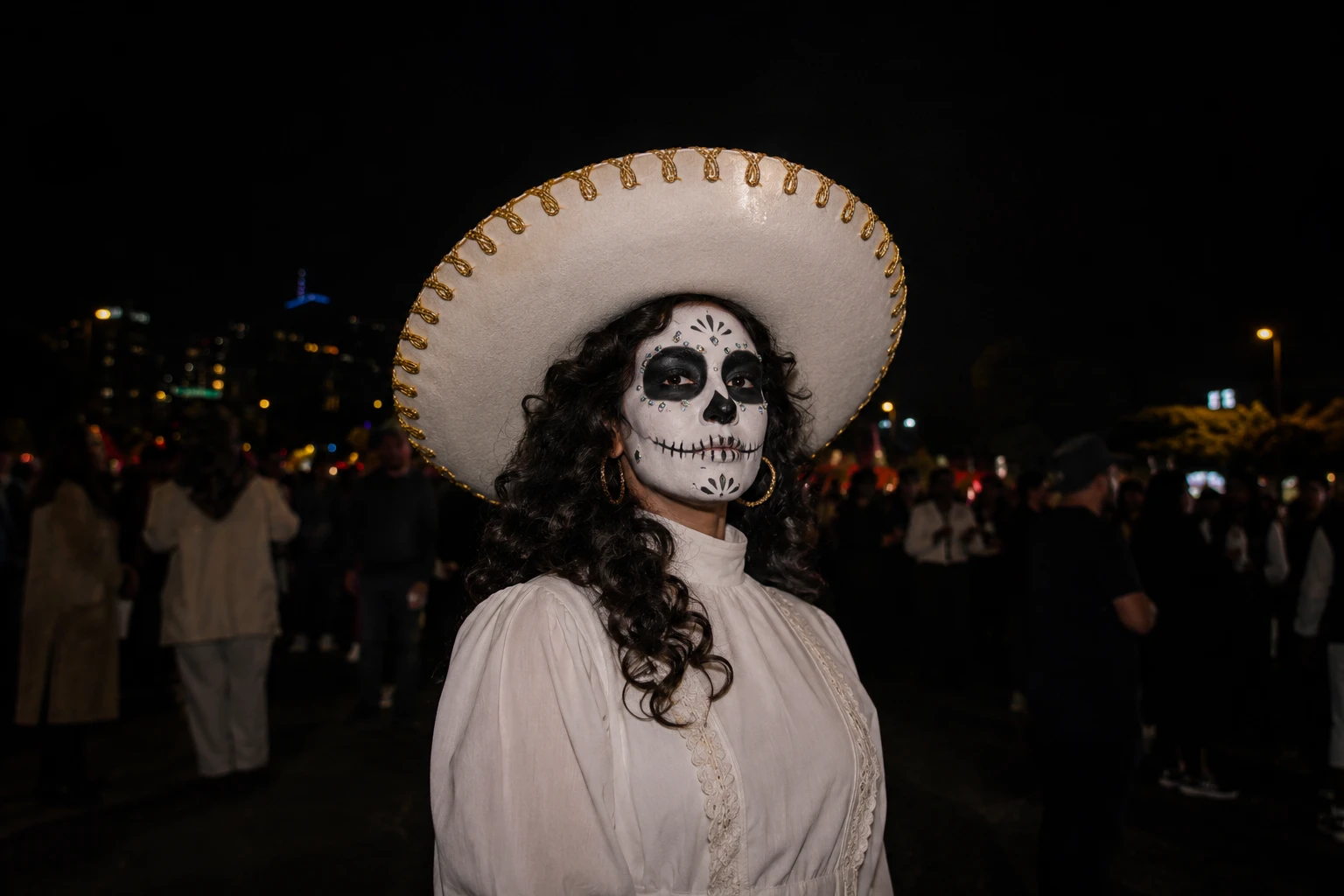
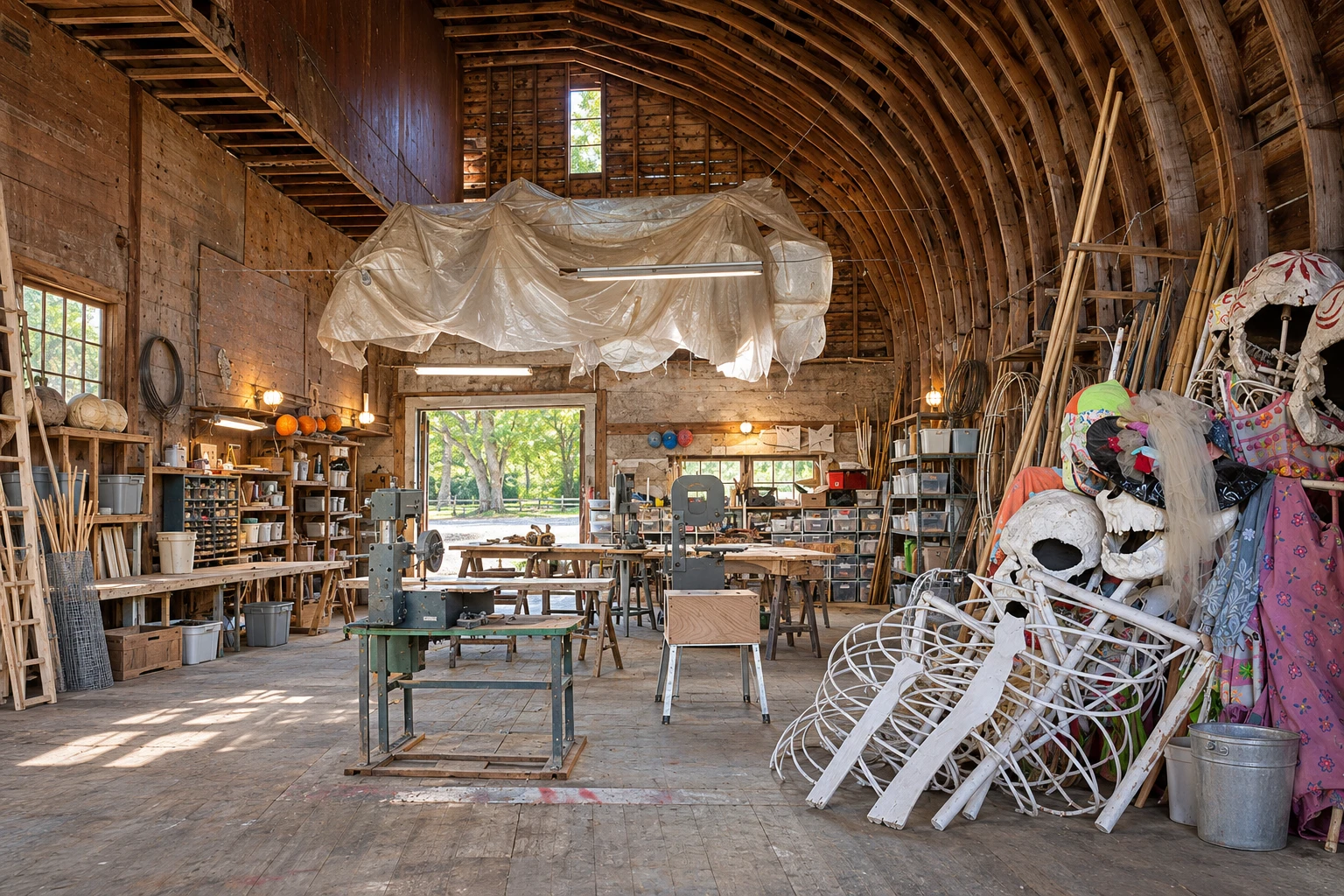
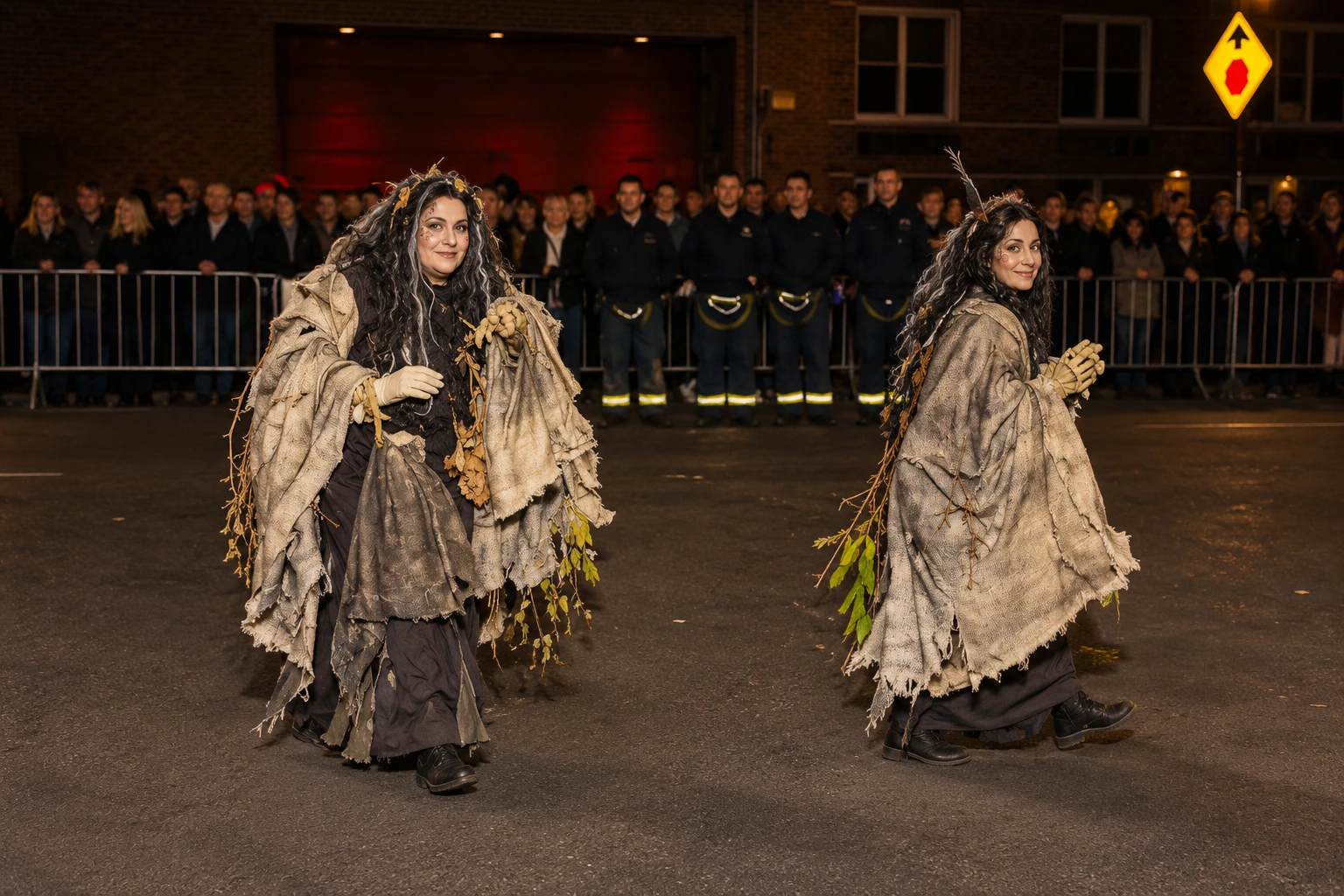
Illustrative images. The pictures in this guide are illustrations based on the real place, not photographs, and may differ from it.

Click a photo to enlarge it.
Village Halloween Parade — New York
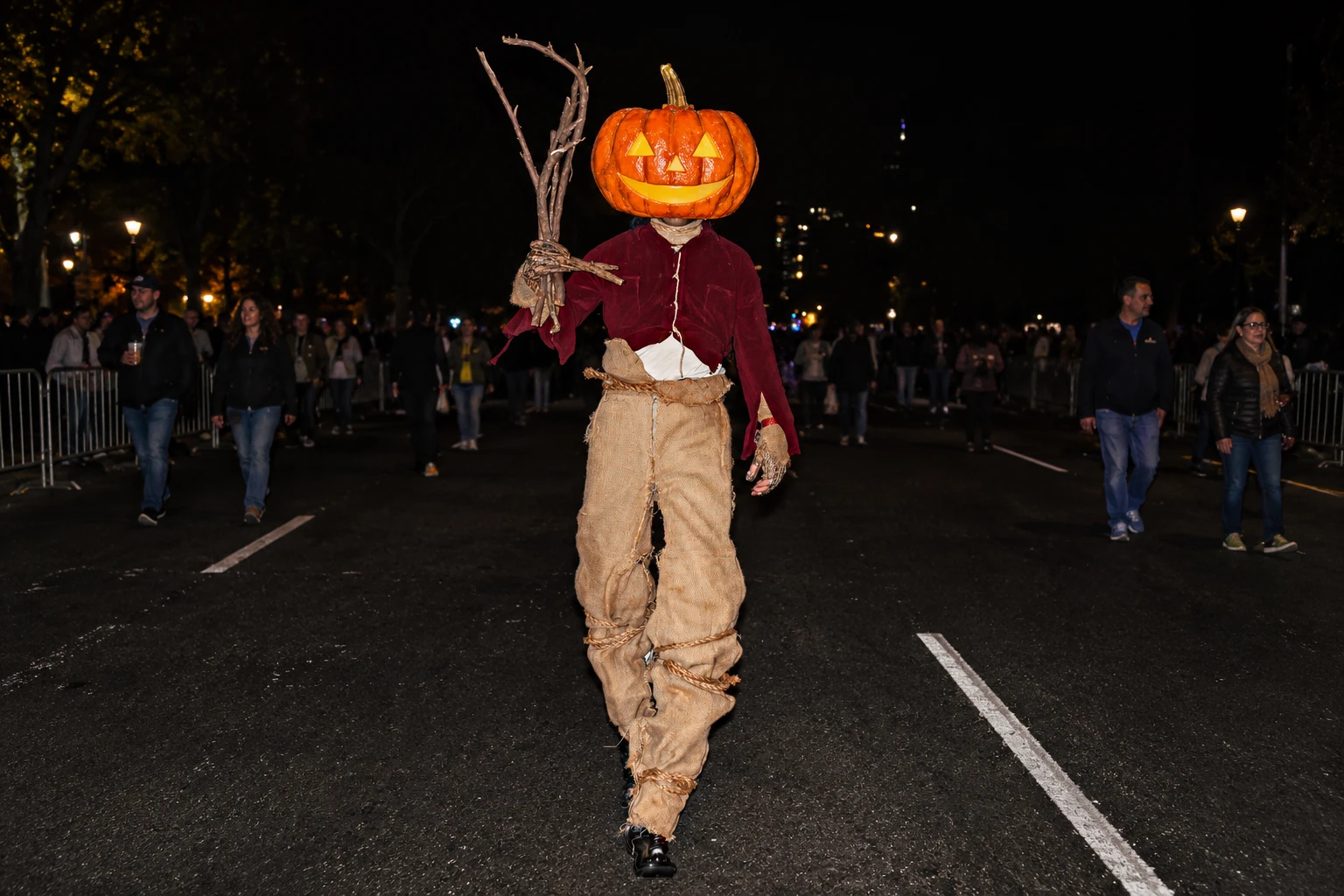
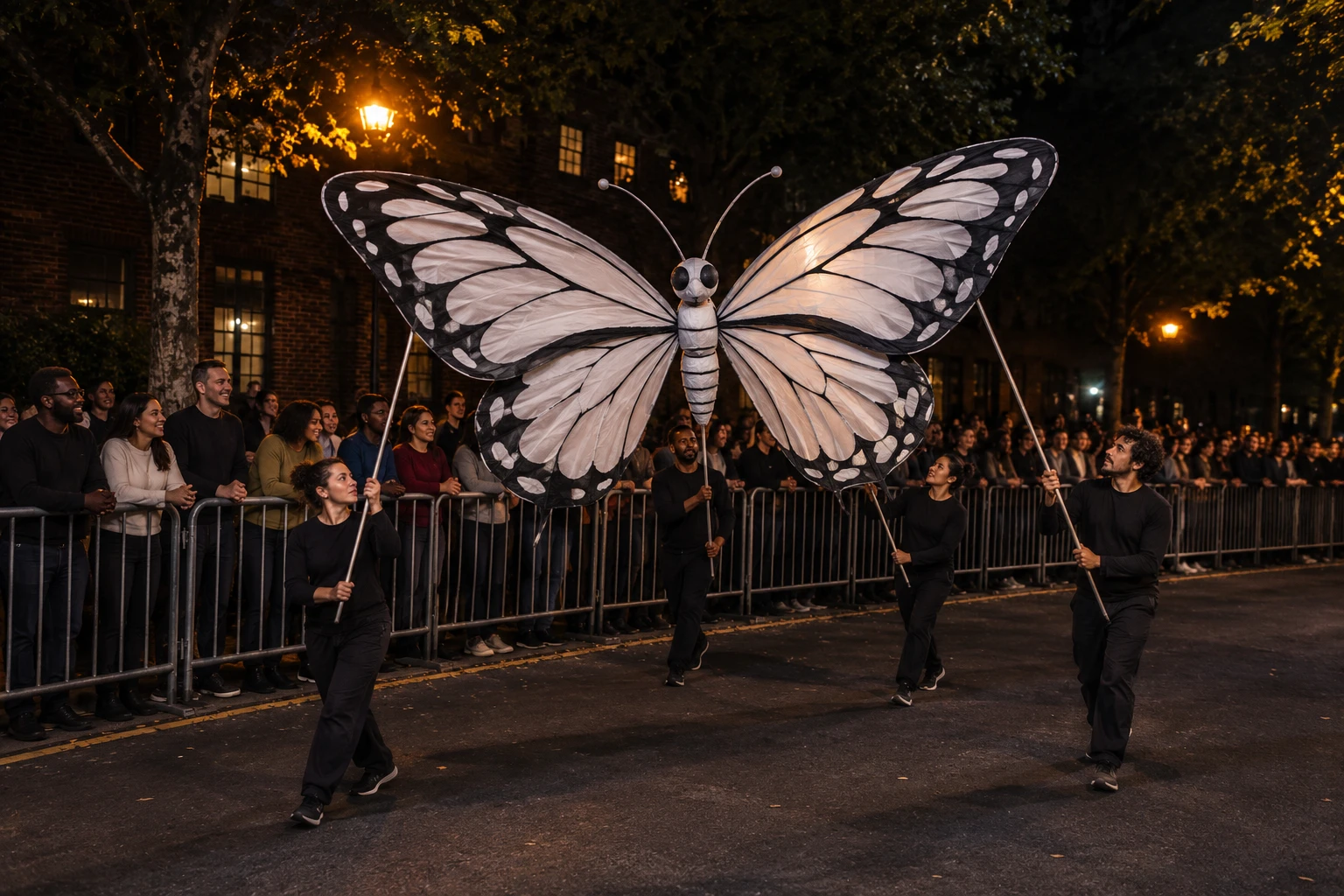
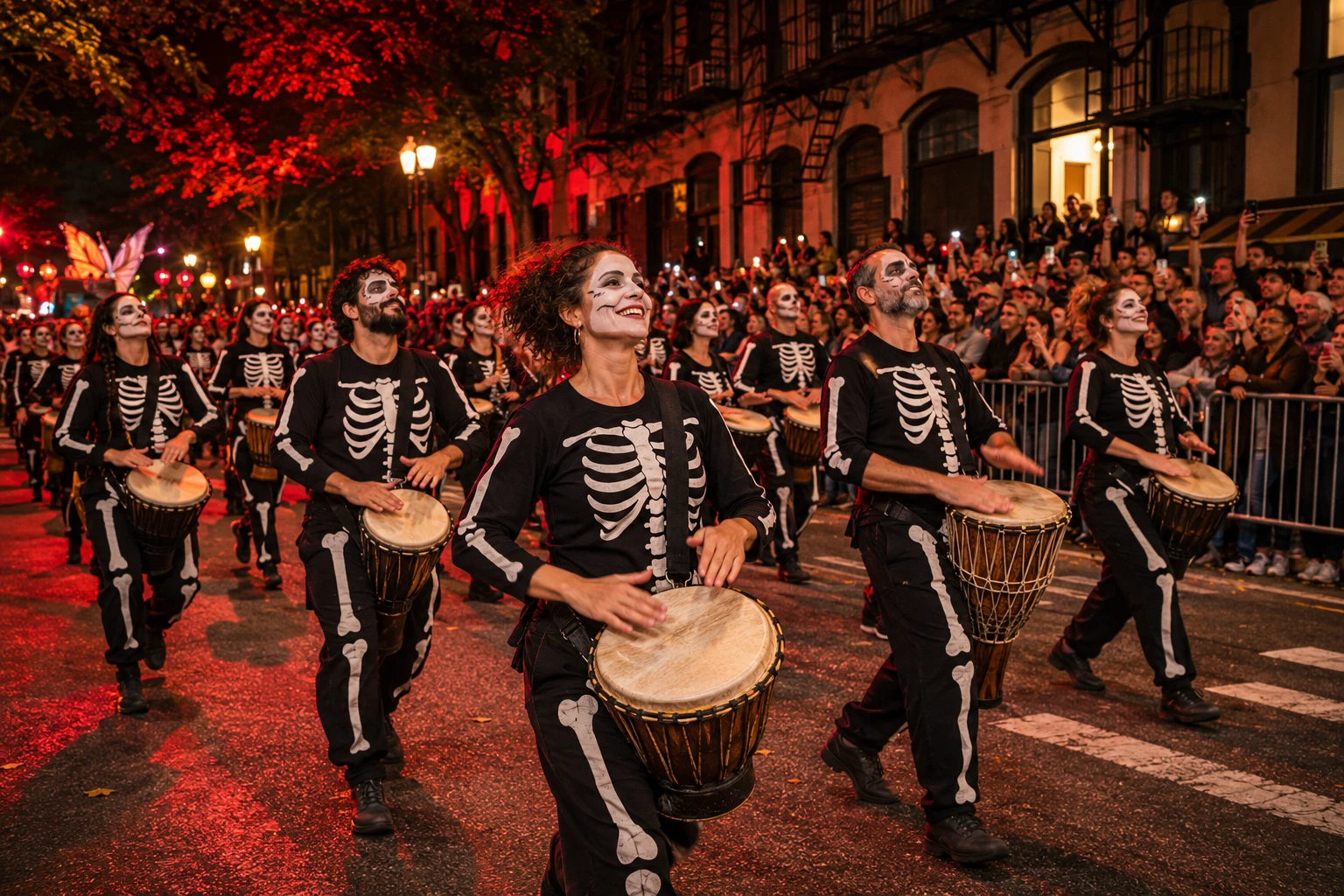
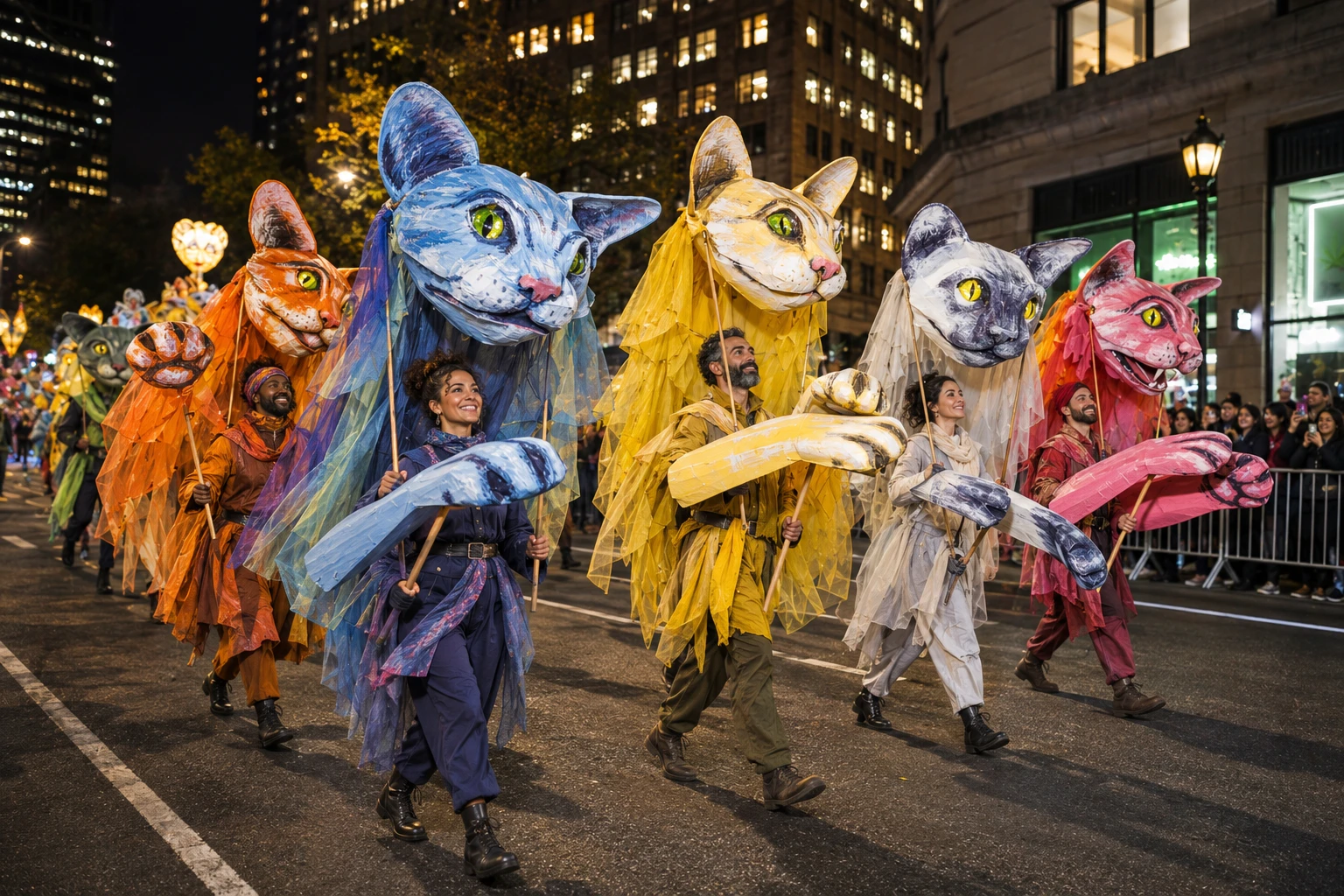
On October 31, Halloween night, rain or shine.
October
Dates change every year: check this year's date before you travel.
The festival
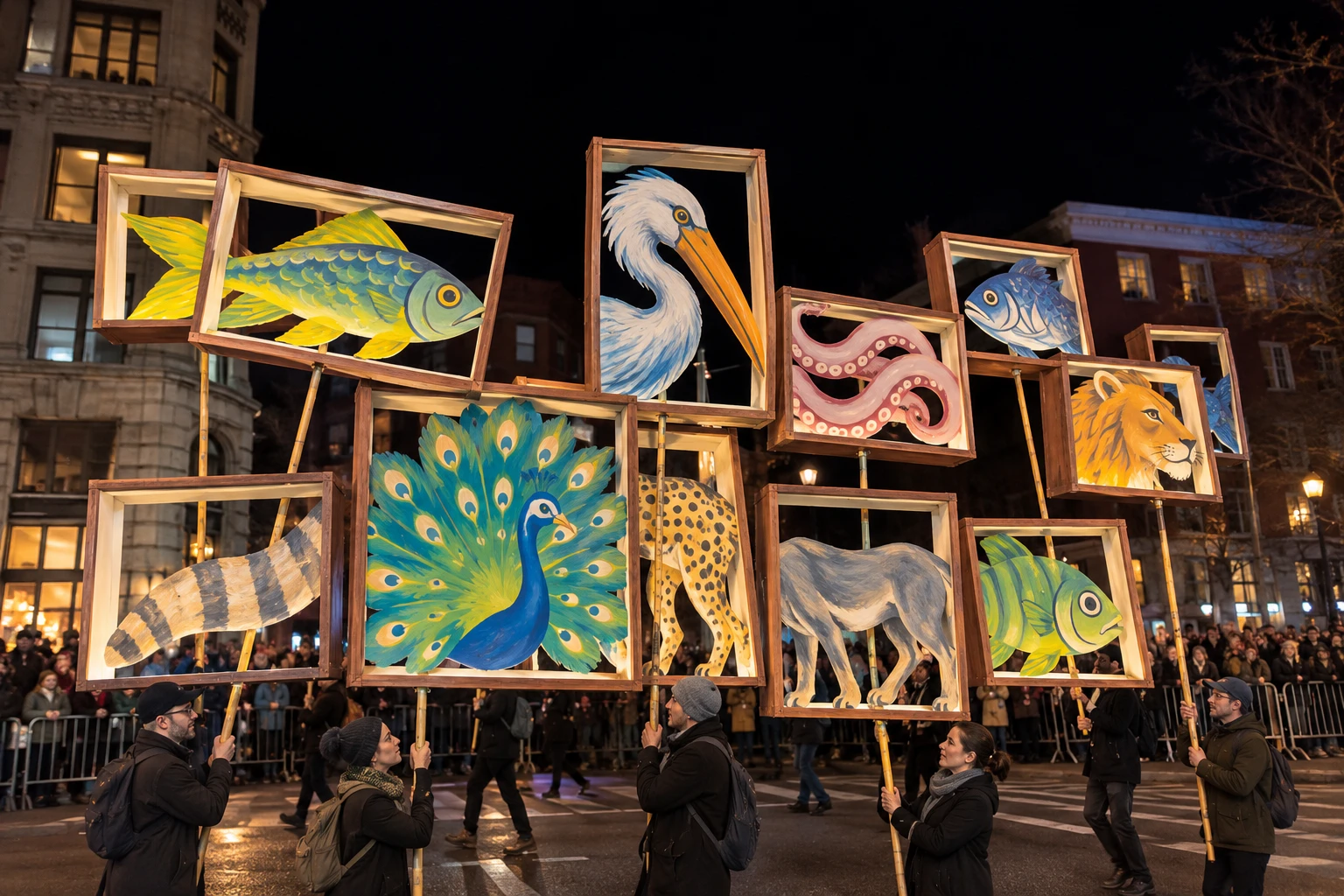
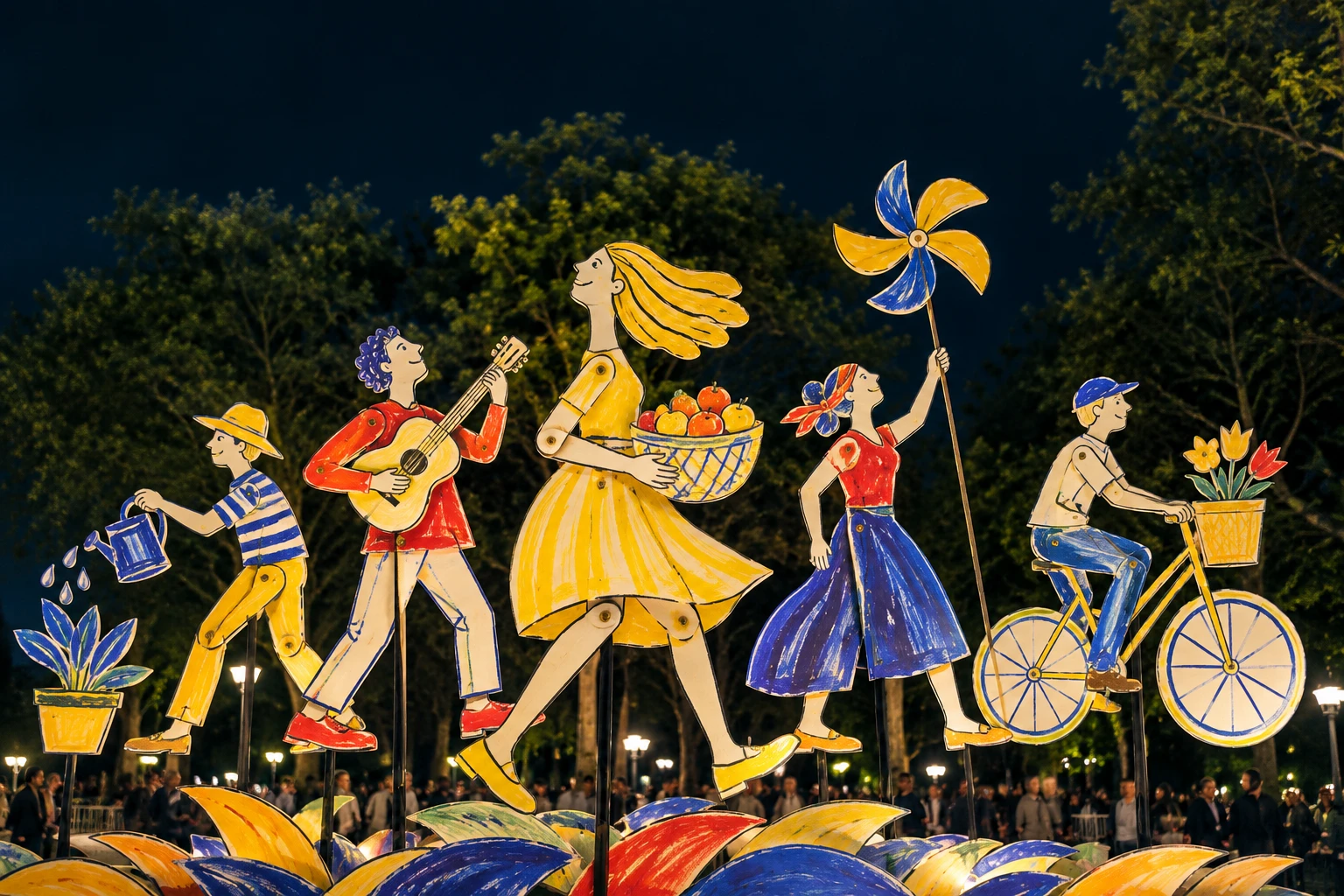
On Halloween, New York has a parade in which the public also marches. The Village Halloween Parade travels up Sixth Avenue in Manhattan from SoHo to around 15th Street, passing through Greenwich Village, with giant puppets lit from within, bands, dance groups, floats with music and a costumed crowd. Anyone in costume can simply join the procession without registration.
The parade began in the 1970s, when puppeteer and maskmaker Ralph Lee organized a puppet walk for his children and their friends on the far west side of Greenwich Village, starting from the artists’ housing complex where he lived. People passing by joined in, and the procession grew each year. By the mid-1980s, with attendance already in the hundreds of thousands, the route moved from the neighborhood’s narrow streets to Sixth Avenue.
The giant puppets remain the heart of the parade. Handcrafted from papier-mâché and fabric, lit from within and operated by teams of puppeteers, they follow a theme chosen each year and lead the costumed groups. Marching bands from across the city, dancers, music floats with DJs and thousands of people in all kinds of costumes—skulls and witches to characters created for the event—follow; many costumes include lights, since everything happens at night.
The parade is organized by a nonprofit cultural organization and takes place in rain, wind or cold. Along the avenue, spectators press in on both sides, and the stretches between Bleecker Street and 14th Street are usually the most crowded. For a visitor arriving in the city at the end of October, it’s New York’s way of celebrating Halloween: watch up close, or put on a costume and march in a procession open to anyone who wants to participate.
Each edition has a theme that guides the puppets and inspires some costumes, and a grand marshal, a guest personality who opens the procession. The parade is broadcast live by a local television station, but people on the street hear the bands, the fog from effect machines and the puppets passing within feet. Many families bring costumed children for the first blocks, and groups of friends prepare collective costumes for weeks.
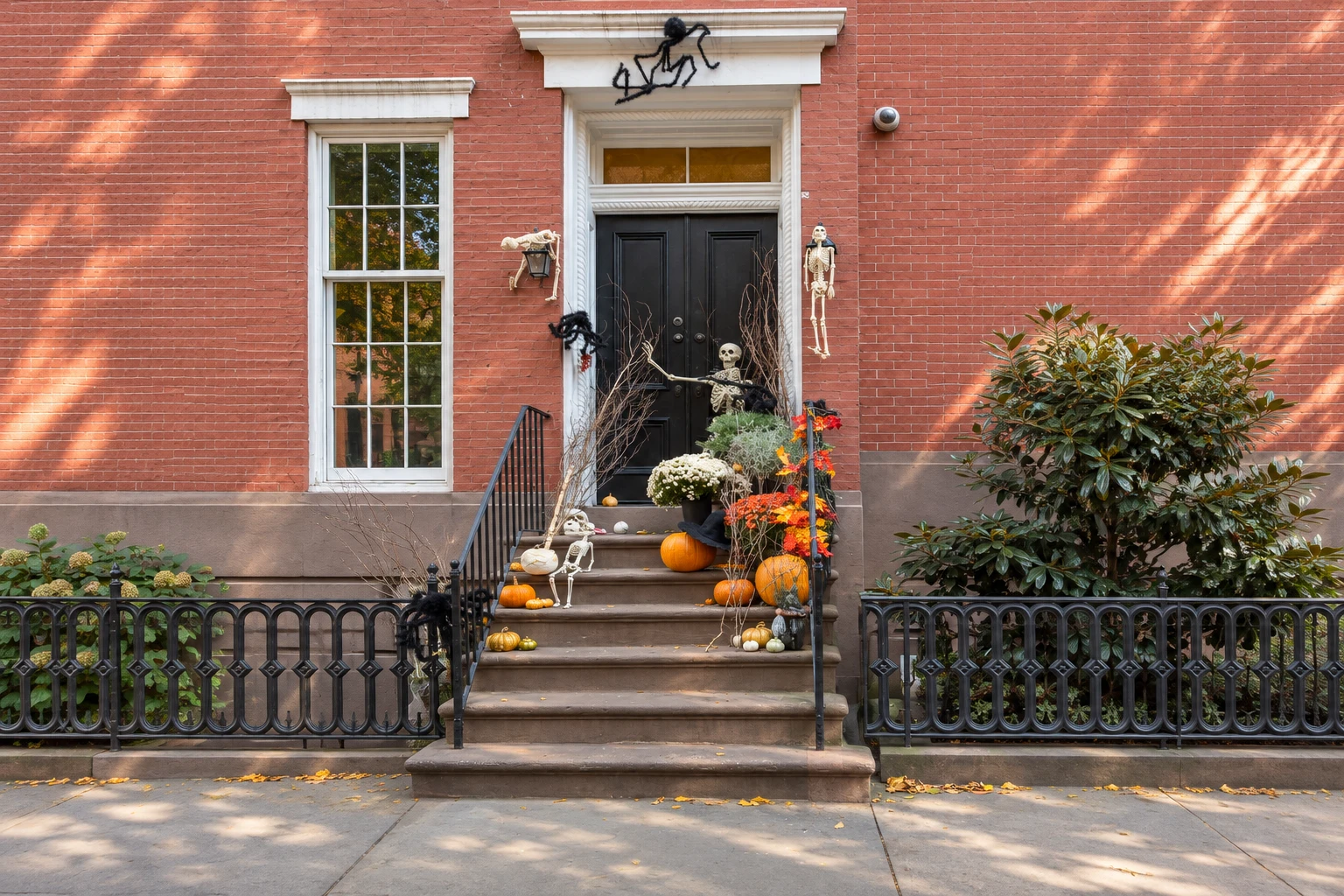
The giant illuminated puppets that open the parade and follow the year’s theme. The bands and dance groups along Sixth Avenue. The audience’s costumes, many with lights, made specially for the night. The section that passes through Greenwich Village, where the parade began. For those who want to join, the assembly of costumed participants at the start of the route in SoHo. Before or after, the Village streets decorated for Halloween, with pumpkins and decorations on house stoops.
To watch, pick a spot on Sixth Avenue between King Street and 15th Street and arrive early: the procession leaves soon after dark and the sidewalks fill quickly. The avenue is closed during the parade, and it’s not possible to cross it for much of the route; choose your side in advance. To march, you must be in costume and enter through the assembly area on Sixth Avenue near Canal Street at the start of the evening; groups are released gradually, and the wait can be long. Use the subway, which has several stations near the route, because nearby streets are closed to traffic. Late October nights are usually cool; wear a warm layer over your costume and comfortable shoes. Arrange a meeting point off the avenue with the people you’re with.
The parade always takes place on October 31, whatever day of the week. Halloween week is busy in New York, especially when the date falls on a weekend; book accommodation in advance, preferably near a Sixth Avenue subway station. Check the official website for the year’s theme, the schedule and instructions for those who wish to march.
In the city
Flavors of the United States
Dense, creamy tart made with cream cheese, eggs and cream on a cookie crust, served without topping.
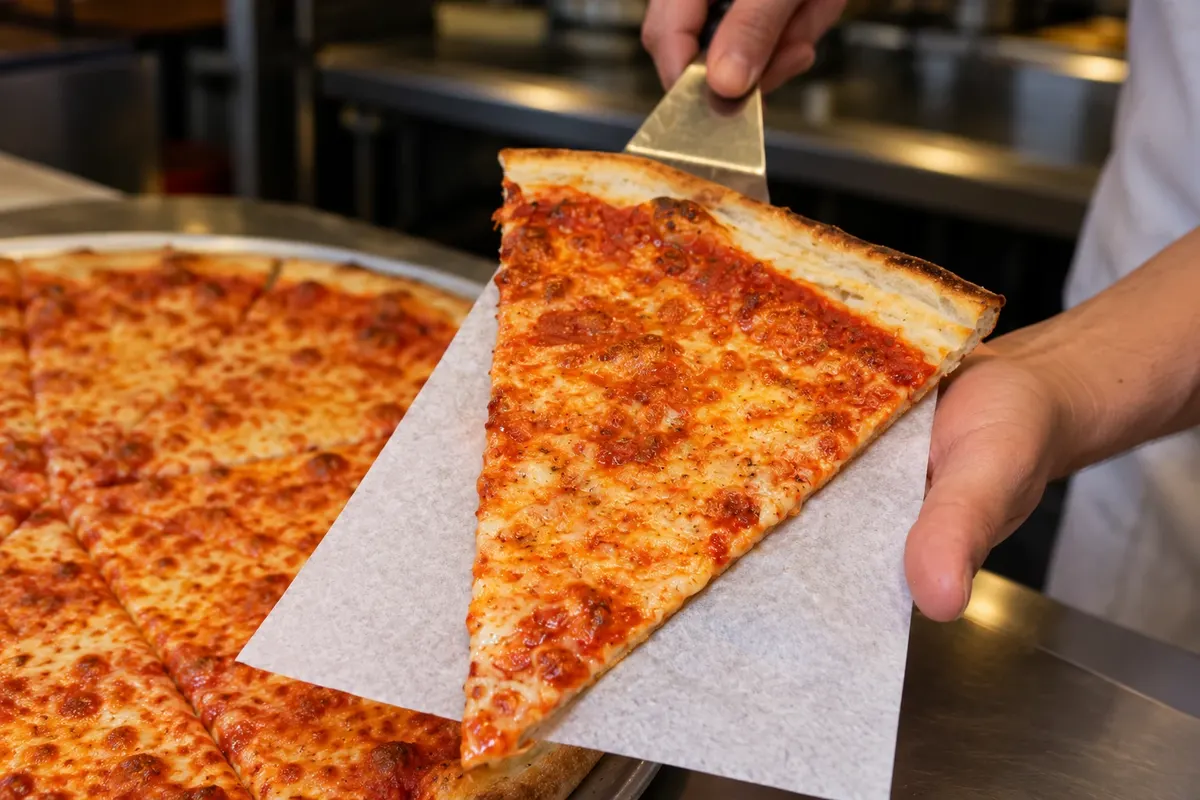
Large pizza with a thin, crisp yet flexible crust, thin enough to fold a slice in half. It originated among Neapolitan bakers in New York and is sold by the slice throughout the city.
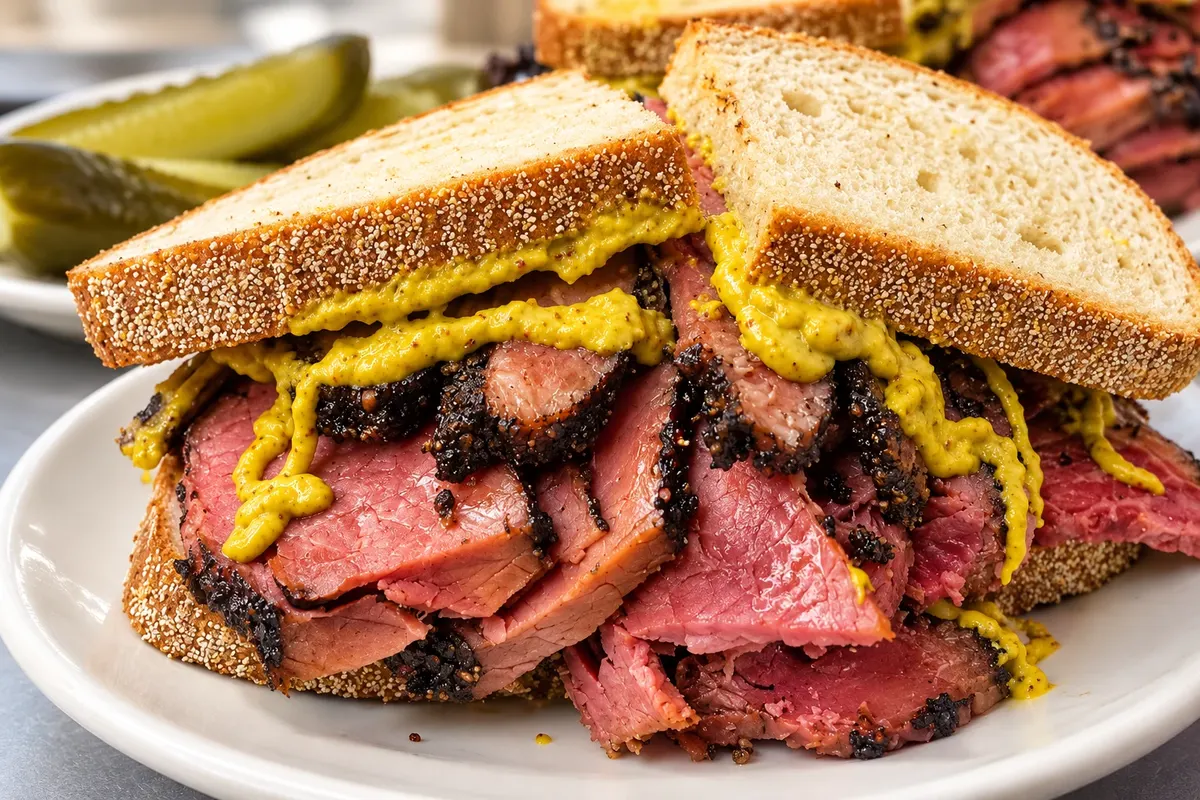
Pastrami sandwich: cured, seasoned and smoked beef, hot-sliced on rye bread with mustard. It’s the sandwich of New York’s Jewish delicatessens.
Your questions
Every year on October 31, at night, whatever day of the week, rain or shine.
Yes, provided you are in costume. Just enter through the assembly on Sixth Avenue near Canal Street at the start of the evening, with no registration.
At any point on Sixth Avenue between King Street and 15th Street. Secure your spot early and stand on the correct side, because crossings of the avenue are blocked during the procession.
Festivals and events in the United States
 January
On the last Saturday in January; the children’s parade takes place on the previous Saturday.
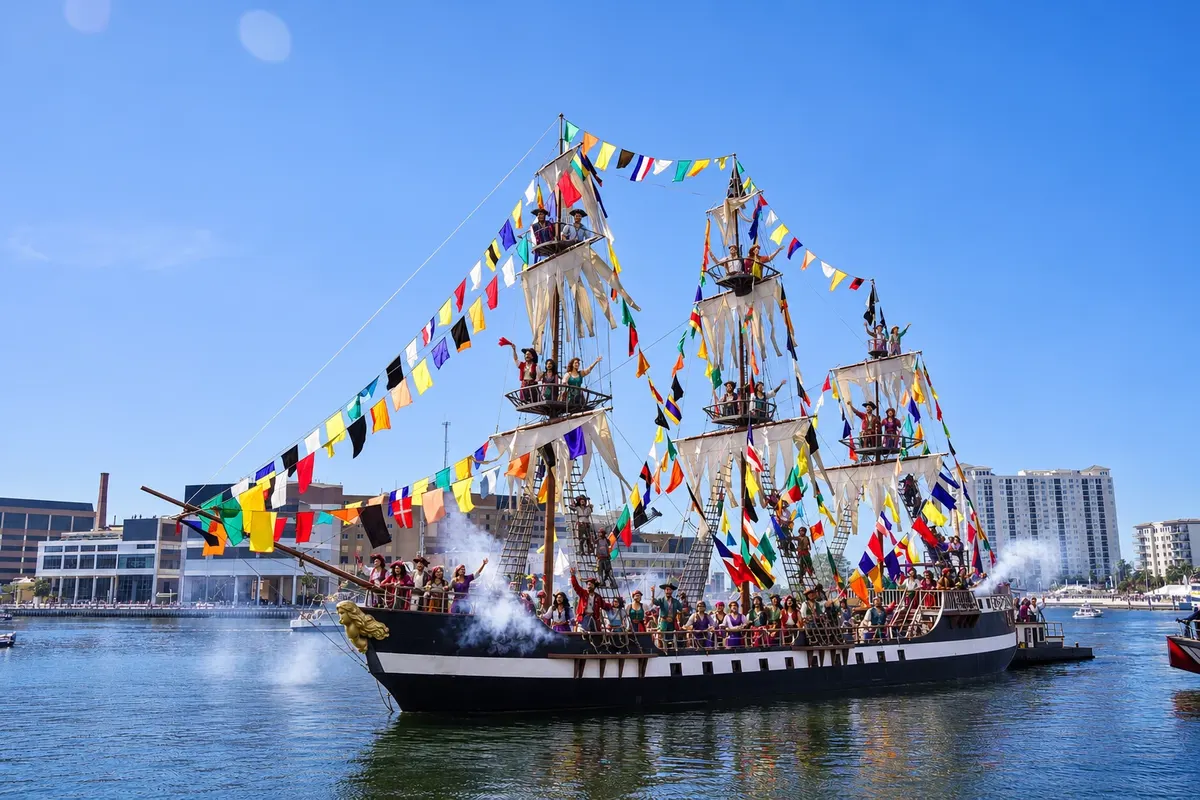
Tampa’s pirate festival in Florida: a pirate ship sails into the bay with hundreds of boats, the pirates take the key to the city and march along Bayshore Boulevard, throwing beaded necklaces to the costumed crowd.
 January
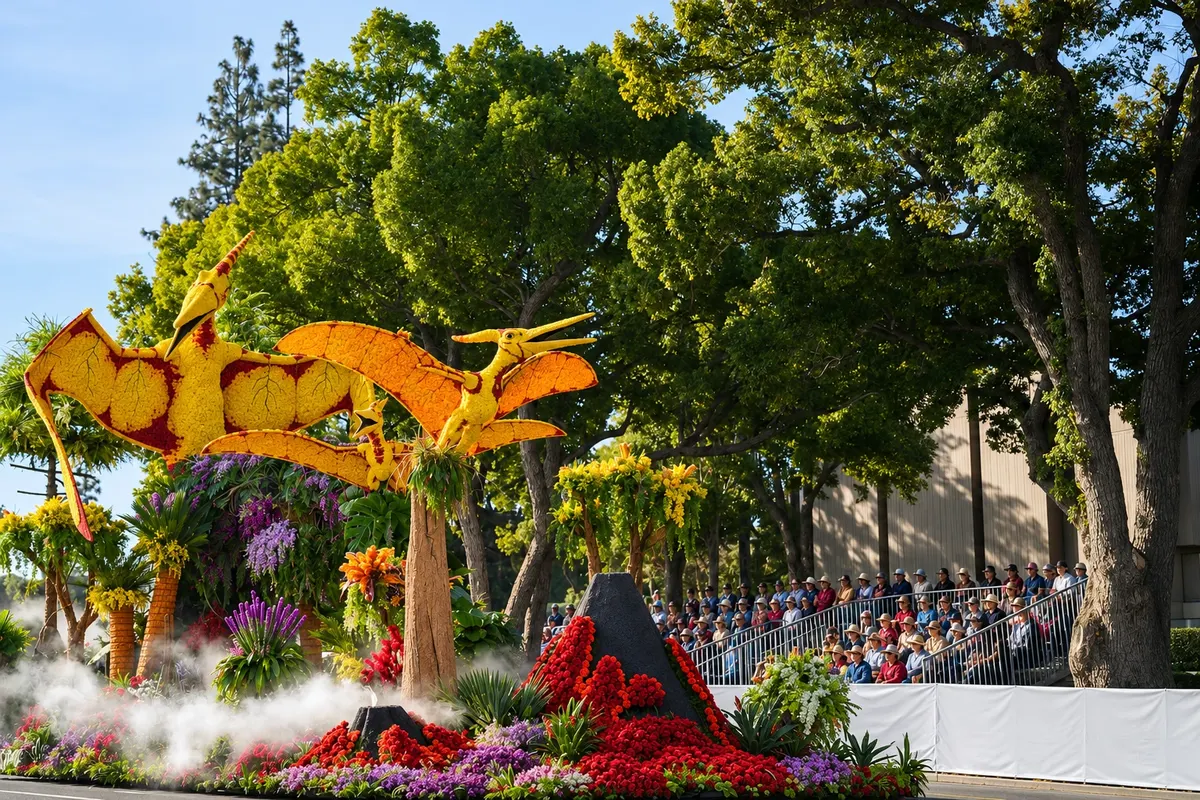
On the morning of January 1; if the 1st falls on a Sunday, the parade is held on Monday, January 2.
New Year’s Day parade in Pasadena, near Los Angeles, featuring floats completely covered with flowers, seeds and other natural materials, marching bands and mounted units along Colorado Boulevard. On the same day, the Rose Bowl stadium hosts the college football game of the same name.
 February/March
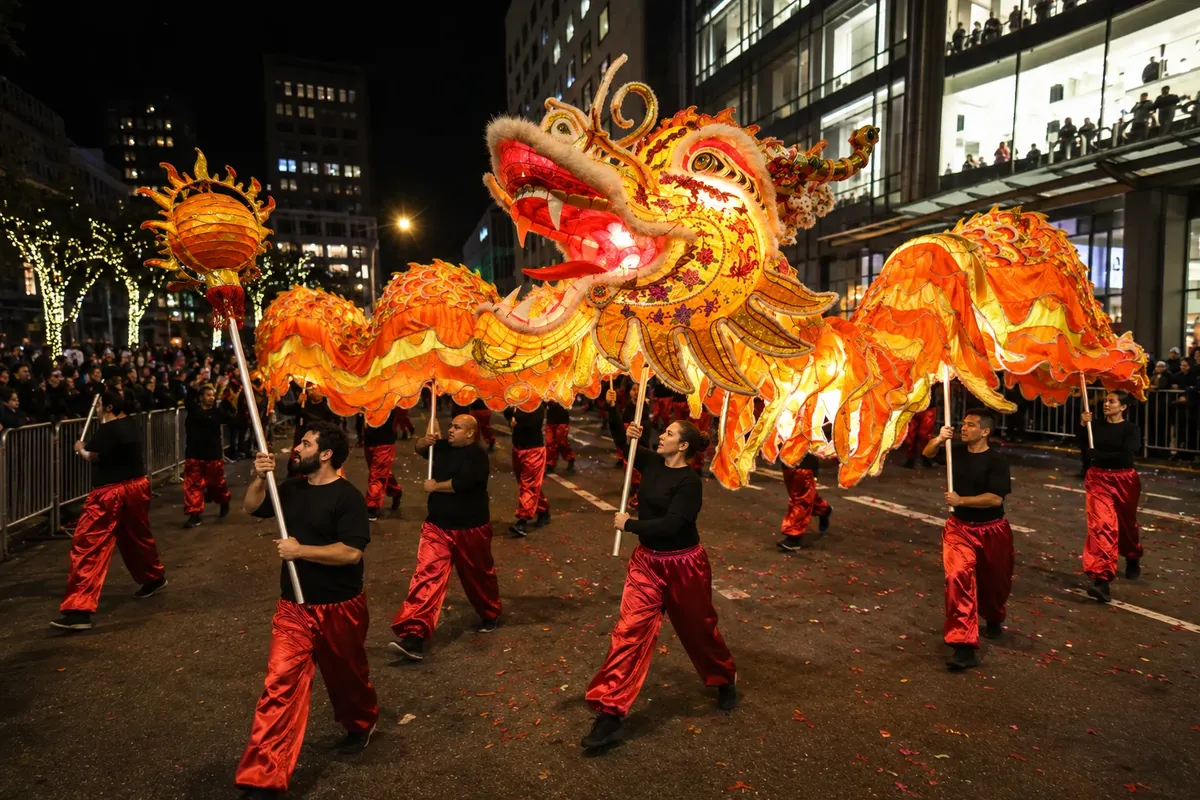
On a Saturday night, a few weeks after Lunar New Year, between February and early March; the celebration in Chinatown lasts several days.
San Francisco Lunar New Year nighttime illuminated parade organized by the Chinese Chamber of Commerce: floats, lion dance, acrobats, bands and, at the end, the Golden Dragon carried by dozens of people, amid firecrackers and lanterns.
 March
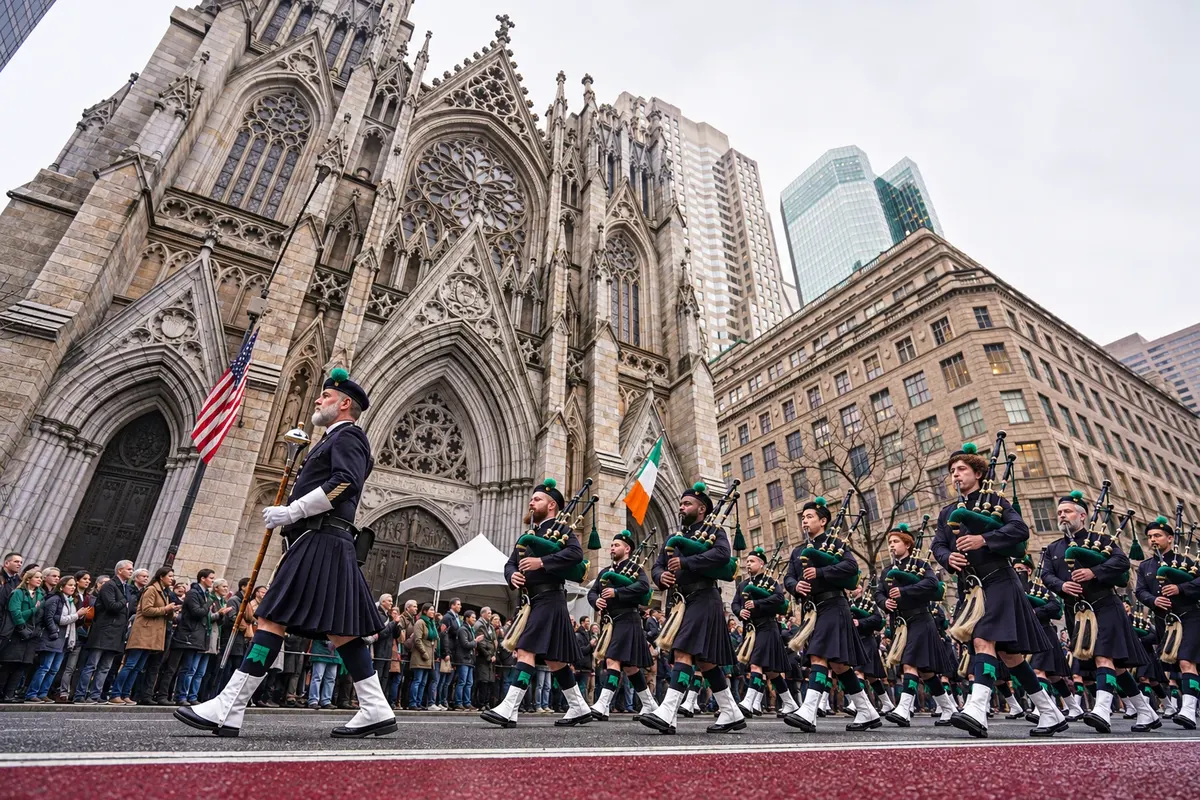
On March 17, St. Patrick’s Day; if the date falls on a Sunday, the parade is moved to Saturday, March 16.
Irish parade along Fifth Avenue in Manhattan on St. Patrick’s Day: bagpipers, bands, Irish associations and groups from across the country march on foot, with no floats, passing in front of St. Patrick’s Cathedral.
 March/April
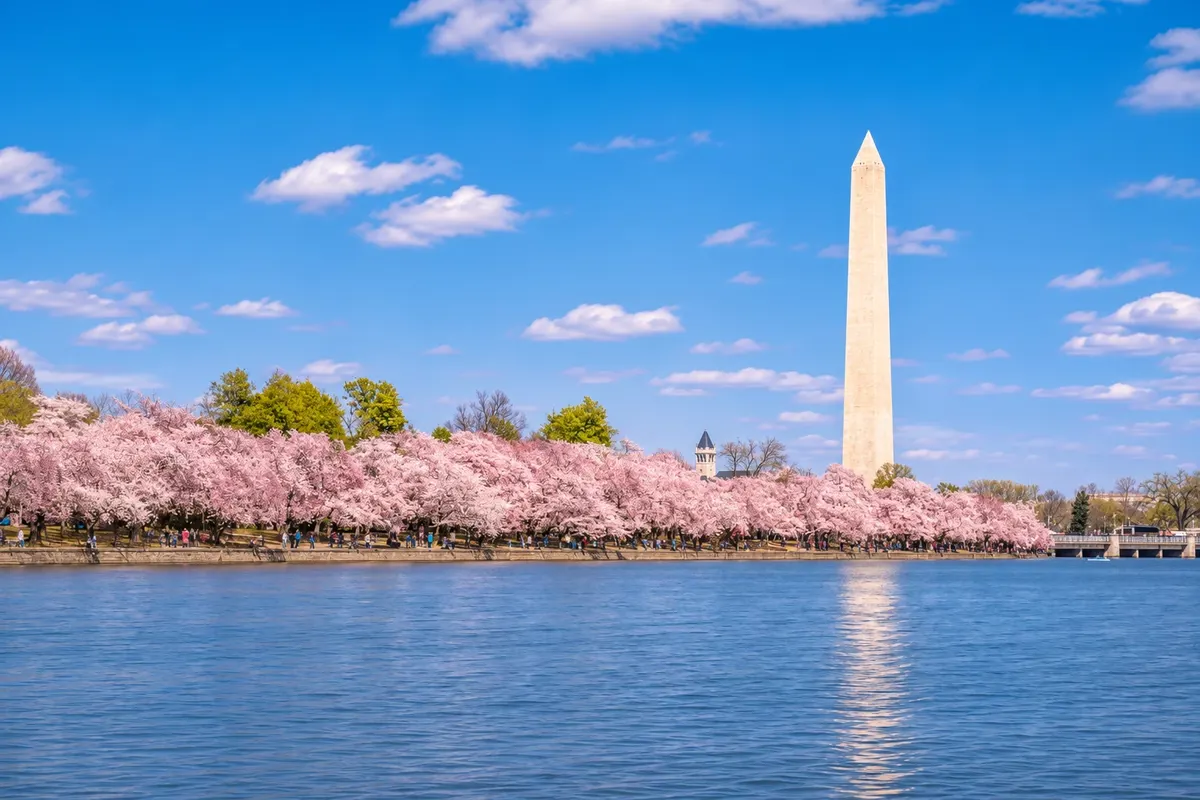
From mid or late March to mid April, lasting about four weeks, following the blooming of the cherry trees in Washington.
Spring festival in Washington that celebrates the cherry trees donated by Tokyo in 1912: weeks of events around the Tidal Basin and the National Mall, including a kite festival, a parade on Constitution Avenue, fireworks and a big Japanese street festival.
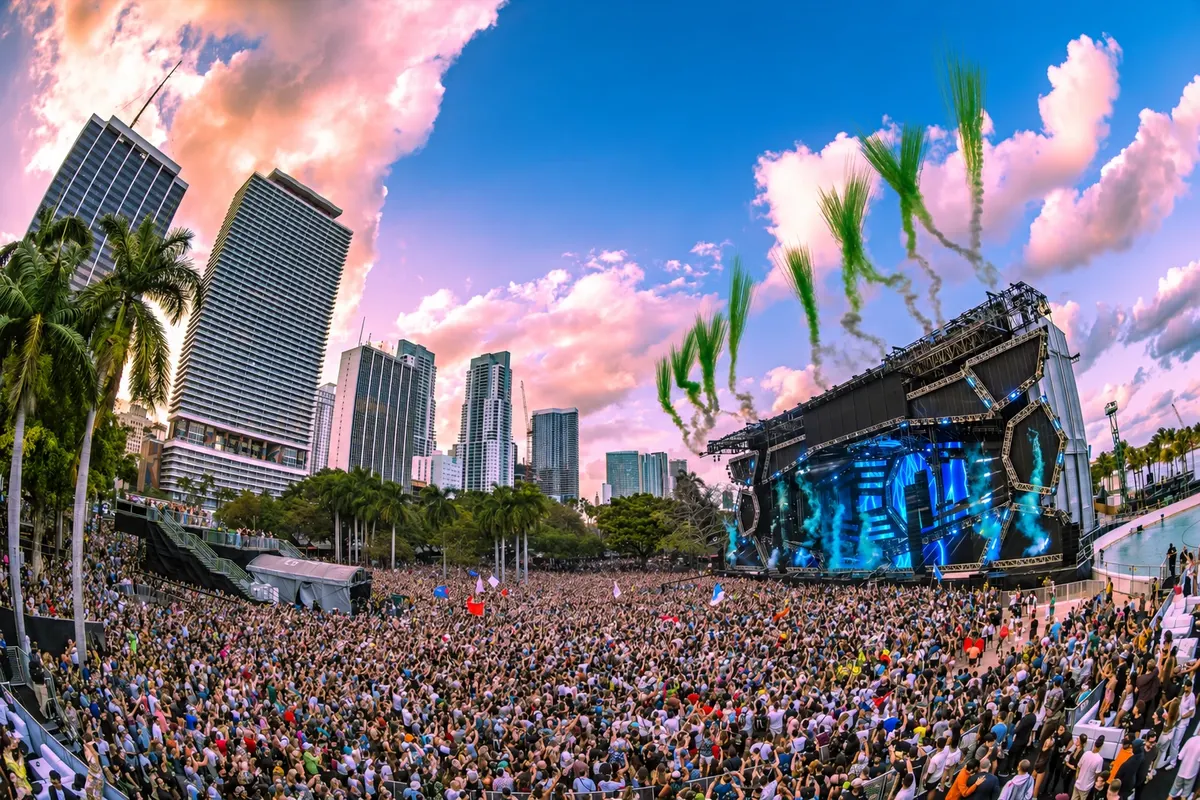 March
Over three consecutive days in March, from Friday to Sunday, usually in the last week of the month.
A three-day electronic music festival at Bayfront Park, beside Biscayne Bay in downtown Miami; the highlight of a week when the city hosts parties and DJ shows from around the world.