

 Brazil
 Argentina
 Bolivia
 Chile
 Colombia
 Ecuador
 Guyana
 French Guiana
 Falkland Islands (Malvinas)
 Paraguay
 Peru
 Suriname
 Uruguay
 Venezuela
 Germany
 Austria
 Belgium
 Croatia
 Denmark
 Slovakia
 Slovenia
 Spain
 Finland
 France
 Greece
 the Netherlands
 Hungary
 Ireland
 Iceland
 Italy
 Luxembourg
 Norway
 Poland
 Portugal
 the United Kingdom
 the Czech Republic
 Sweden
 Switzerland
 Turkey
 Canada
 Mexico
 the Dominican Republic
 South Africa
 Australia
 Fiji
 New Zealand
 Papua New Guinea
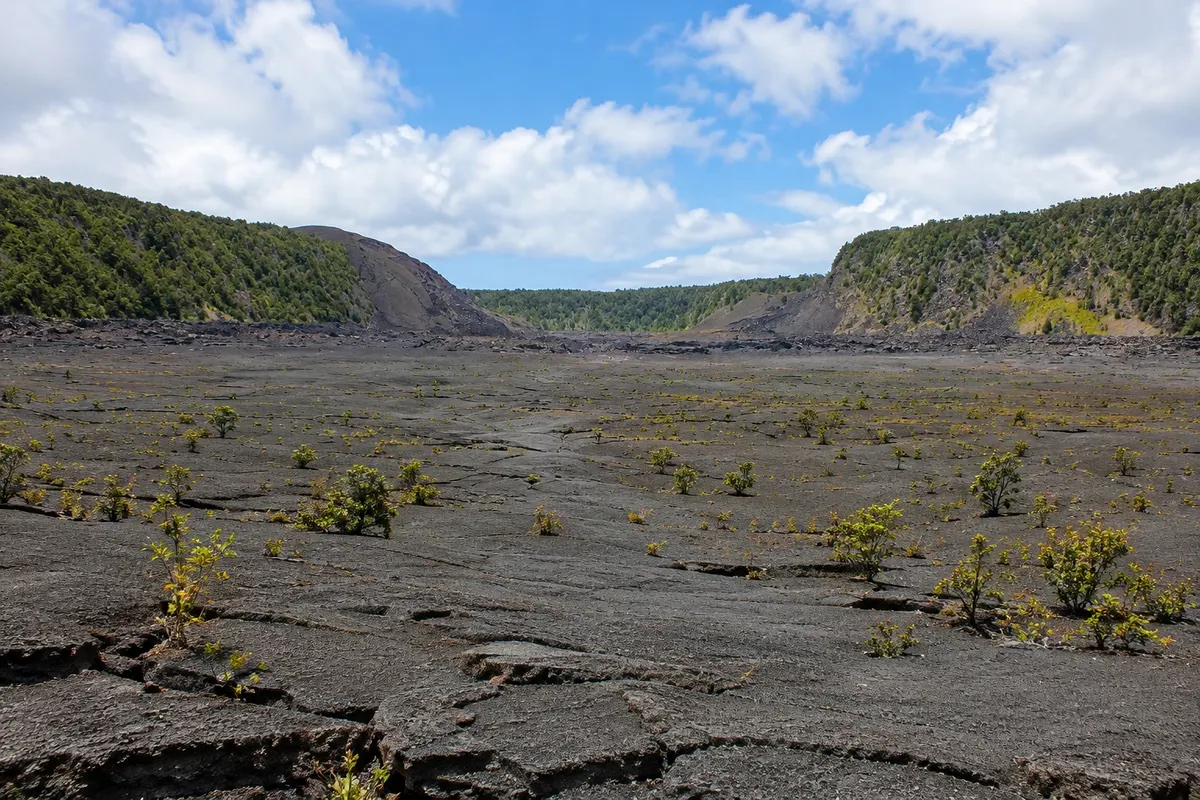
National park · Volcano, Hawaii
Hawaii Volcanoes National Park
The park of Kīlauea and part of Mauna Loa, a UNESCO World Heritage site, with the caldera and the Halemaʻumaʻu crater, steam fields, trails over solidified lava and the road that descends to the sea. When the volcano is erupting, the rim viewpoints gather visitors.
Illustrative images. The pictures in this guide are illustrations based on the real place, not photographs, and may differ from it.



Discover
About Hawaii Volcanoes National Park
Hawaiʻi Volcanoes National Park was established in 1916 and has been on the UNESCO World Heritage list since 1987. It protects Kīlauea, one of the most active volcanoes in the world, and the slopes of Mauna Loa, the largest active volcano on Earth by volume. For Hawaiians, the Halemaʻumaʻu crater is the home of Pele, the goddess of volcanoes.
The Crater Rim Drive circles part of the Kīlauea caldera, with viewpoints such as Uēkahuna and Keanakākoʻi, from which the Halemaʻumaʻu crater can be seen. Kīlauea erupts frequently; during active periods, lava often stays within the crater, and the rim viewpoints receive visitors day and night. Near the visitor center are the Wahinekapu steam fields and sulfur rocks.
The Kīlauea Iki trail, about 6.4 km, descends through forest and crosses the floor of a solidified 1959 lava crater. The Chain of Craters Road drops about 30 km, passing craters and lava fields, down to the coast where the Hōlei lava arch, carved by the sea, stands.
Weather changes quickly in the park, which is around 1,200 meters in elevation in the caldera area: it can rain and be cold on the same sunny day. Volcanic gases can affect people with respiratory or heart conditions, pregnant people and children.
Before you go
Practical information
Cidade Turismo reviews its information regularly, but something may have changed. Check with the place before planning your trip.
How much time to set aside
A full day for Crater Rim Drive, the lava tube, a trail and the Chain of Craters Road; two days to also see the park at night.
Best time
The park is open all day. When there is an eruption, night and early morning best reveal the lava glow; check the volcano status on the park website before you go. Early in the day, haze is usually lower and viewpoint parking lots have spaces.
How to get there
The entrance is on Highway 11, near the village of Volcano; Hilo is about 45 km and Kailua‑Kona about 150 km away. The entrance fee is charged per vehicle and is valid for several days; check the park website.
Tip
Stop first at the visitor center to check daily conditions and closed areas. Bring a jacket and rain cover, and obey closed areas: cracks and crater edges can give way without warning.
Official website
Get your questions answered
Frequently asked questions about Hawaii Volcanoes National Park
Can you see lava in Hawaiʻi Volcanoes National Park?
It depends on Kīlauea’s activity. During eruptive periods, lava is often within the Halemaʻumaʻu crater and can be seen from rim viewpoints. Check the park’s website for current conditions before you go.
How much time should I set aside for the Volcanoes Park?
A full day for the main stops; two days to also visit the park at night and do hikes.
How far is Hilo from the Volcanoes Park?
About a 45-minute drive from Hilo, to the northeast, roughly 45 km.