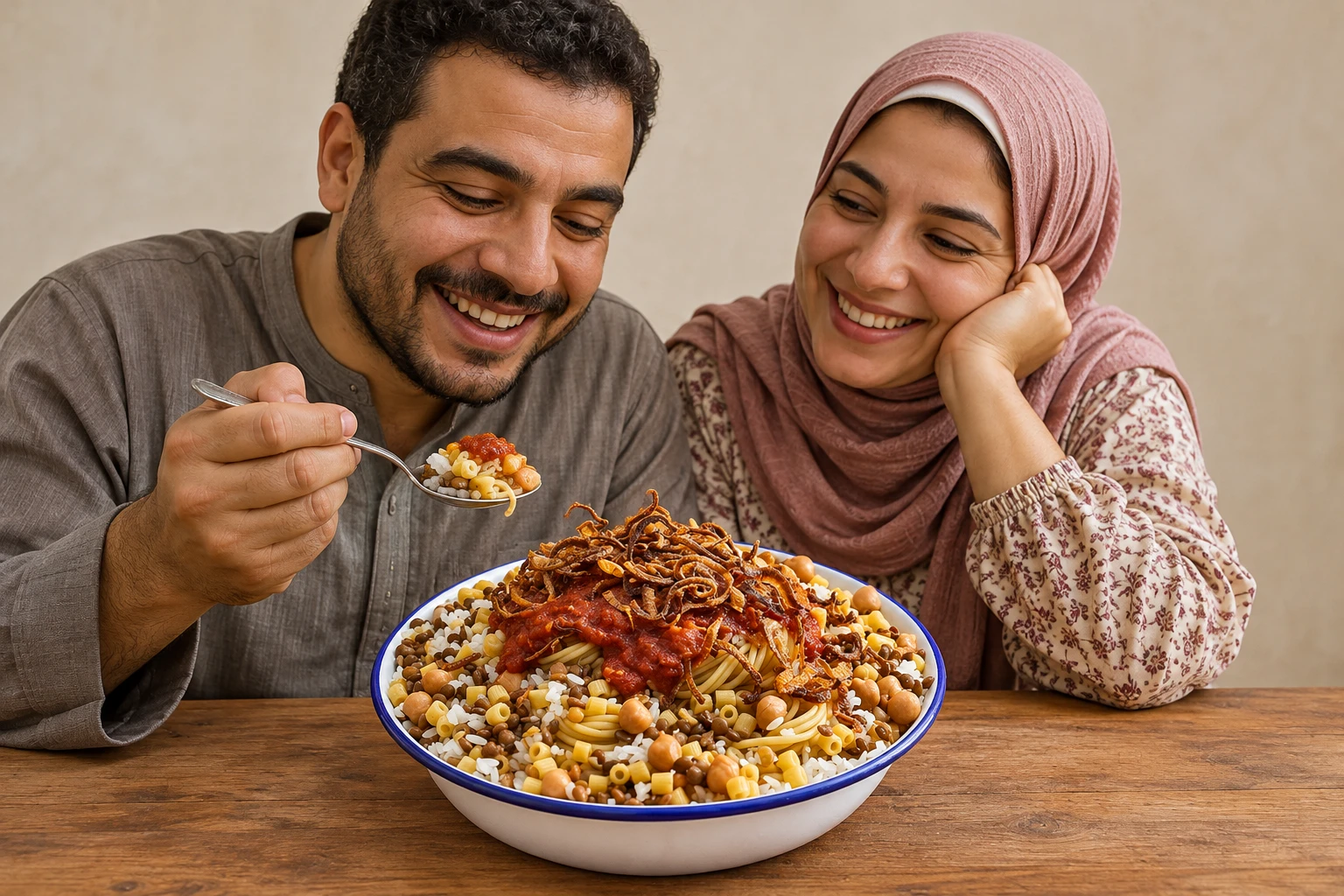
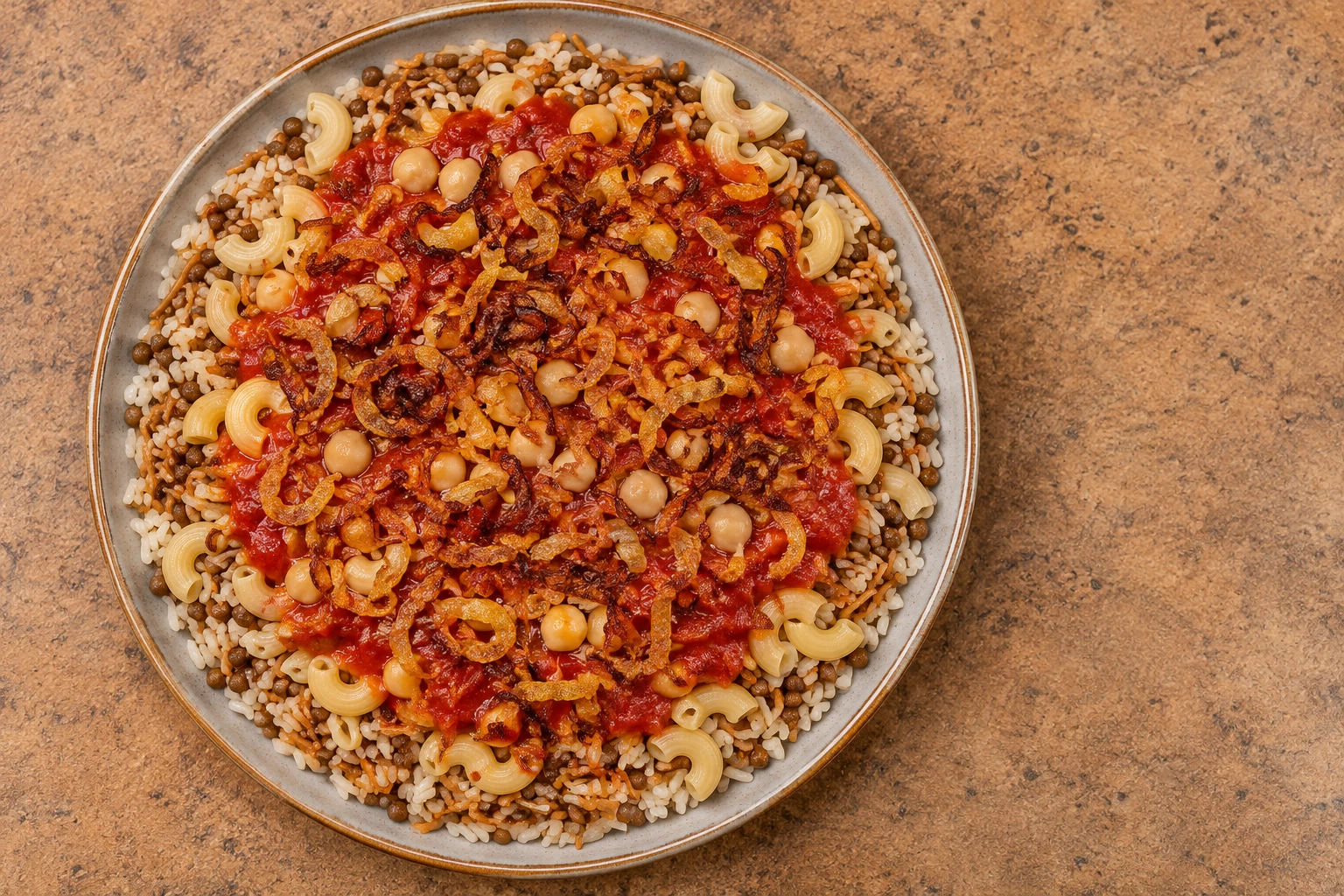
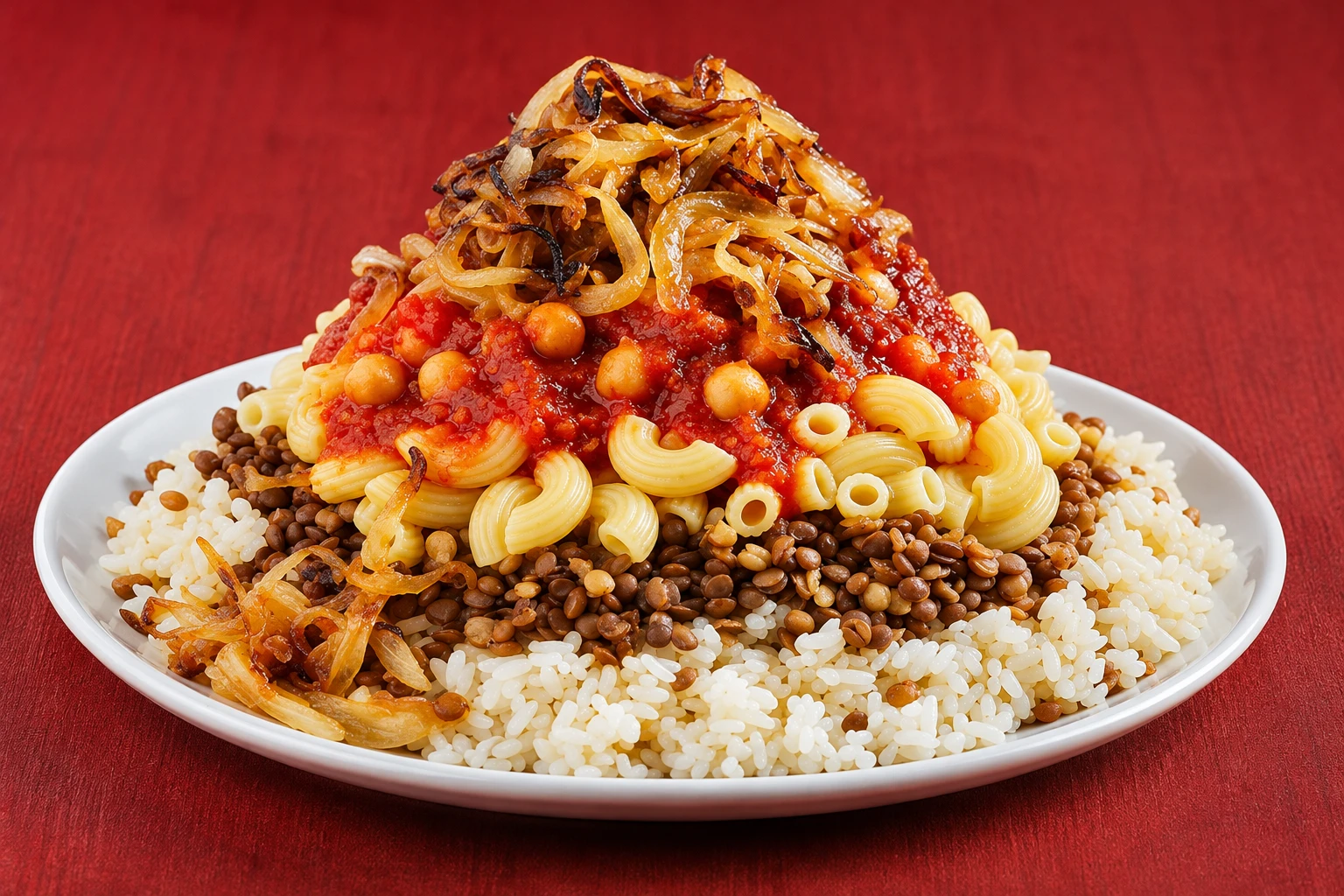
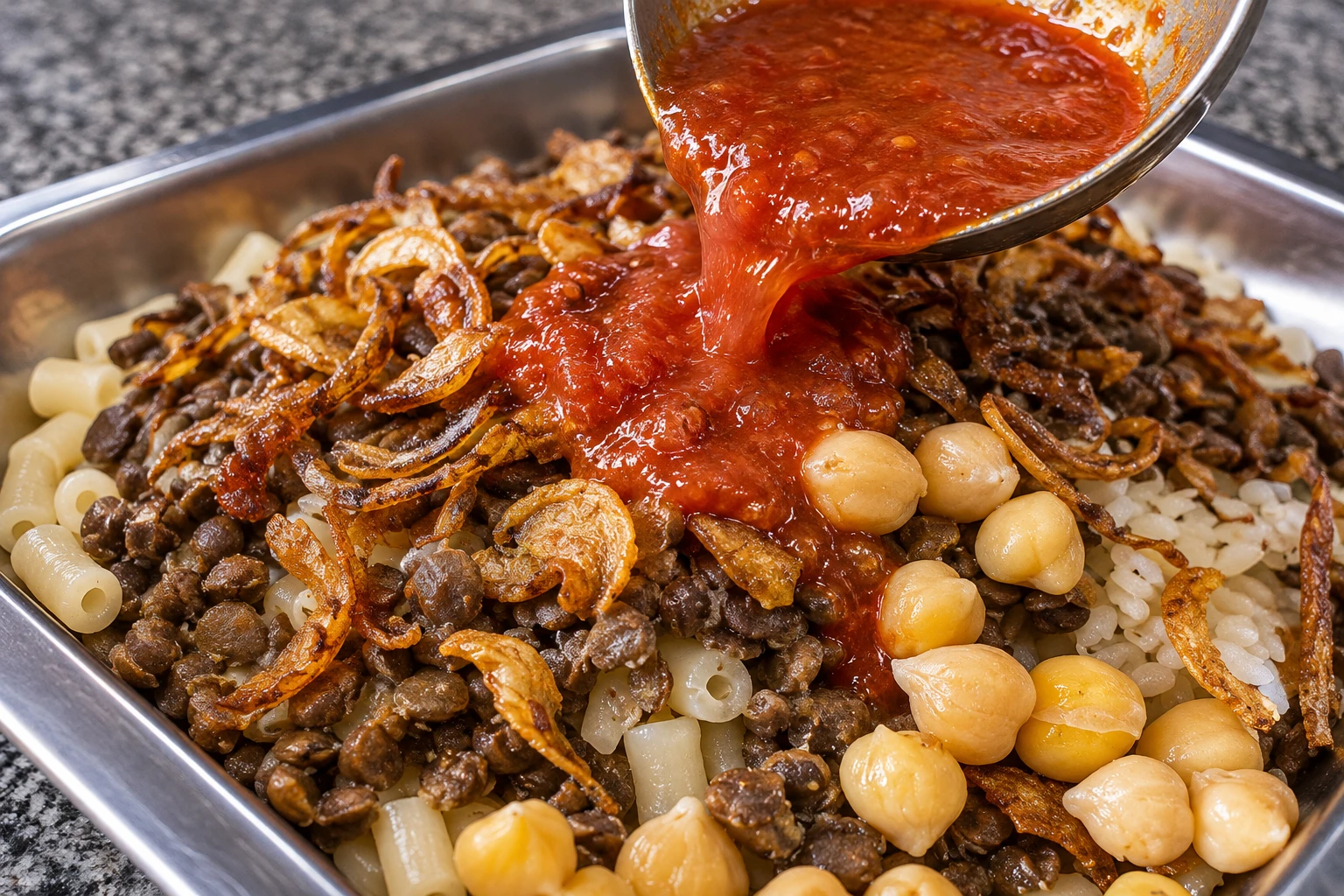
Koshary brings simple ingredients together in a single bowl: rice, short pasta, lentils, chickpeas and onions fried until dark and crispy. A seasoned tomato sauce is spooned on top, and garlic vinegar and a spicy sauce are left on the table for each person to add to taste. The result is a hearty, meatless dish eaten at lunch, dinner or as a quick meal.
In December 2025, UNESCO inscribed “Koshary, everyday dish and associated practices” on the Representative List of the Intangible Cultural Heritage of Humanity. It was the first Egyptian dish to join the list. The decision highlights that koshary is eaten by people of all ages and backgrounds, in rural areas, cities and coastal regions, and that many people take part in its culture: home cooks, restaurant owners and staff, street vendors, farmers and the artisans who build and decorate koshary carts.
The dish is prepared at home and sold in restaurants dedicated to it and from street carts, often near schools and busy places. According to UNESCO, the way of making koshary is passed down within families, especially from mother to daughter, and also through cooking shows, social media and professional courses. Near places where koshary is prepared, confectioners often offer rice pudding afterwards.
The basic recipe is the same across the country, but there are regional variations: on the coast there are versions with yellow lentils, and some households add a boiled egg. Regarding its origin, a widely repeated explanation links koshary to khichdi, the Indian rice-and-lentil dish, which is said to have reached Egypt in the 19th century; this is a hypothesis without confirmation. Its popularity grew in the 20th century with the spread of restaurants and colorful street carts across cities.


 Brazil
 Argentina
 Bolivia
 Chile
 Colombia
 Ecuador
 Guyana
 French Guiana
 Falkland Islands (Malvinas)
 Paraguay
 Peru
 Suriname
 Uruguay
 Venezuela
 Germany
 Austria
 Belgium
 Croatia
 Denmark
 Slovakia
 Slovenia
 Spain
 Finland
 France
 Greece
 the Netherlands
 Hungary
 Ireland
 Iceland
 Italy
 Luxembourg
 Norway
 Poland
 Portugal
 the United Kingdom
 the Czech Republic
 Sweden
 Switzerland
 Turkey
 Canada
 the United States
 Mexico
 the Dominican Republic
 South Africa
 Australia
 Fiji
 New Zealand
 Papua New Guinea