

 Brazil
 Argentina
 Bolivia
 Chile
 Colombia
 Ecuador
 Guyana
 French Guiana
 Falkland Islands (Malvinas)
 Paraguay
 Peru
 Suriname
 Uruguay
 Venezuela
 Germany
 Austria
 Belgium
 Croatia
 Denmark
 Slovakia
 Slovenia
 Spain
 Finland
 France
 Greece
 the Netherlands
 Hungary
 Ireland
 Iceland
 Italy
 Luxembourg
 Norway
 Poland
 Portugal
 the United Kingdom
 the Czech Republic
 Sweden
 Switzerland
 Turkey
 Bermuda
 Canada
 the United States
 Mexico
 the Dominican Republic
 South Africa
 Australia
 Fiji
 New Zealand
 Papua New Guinea
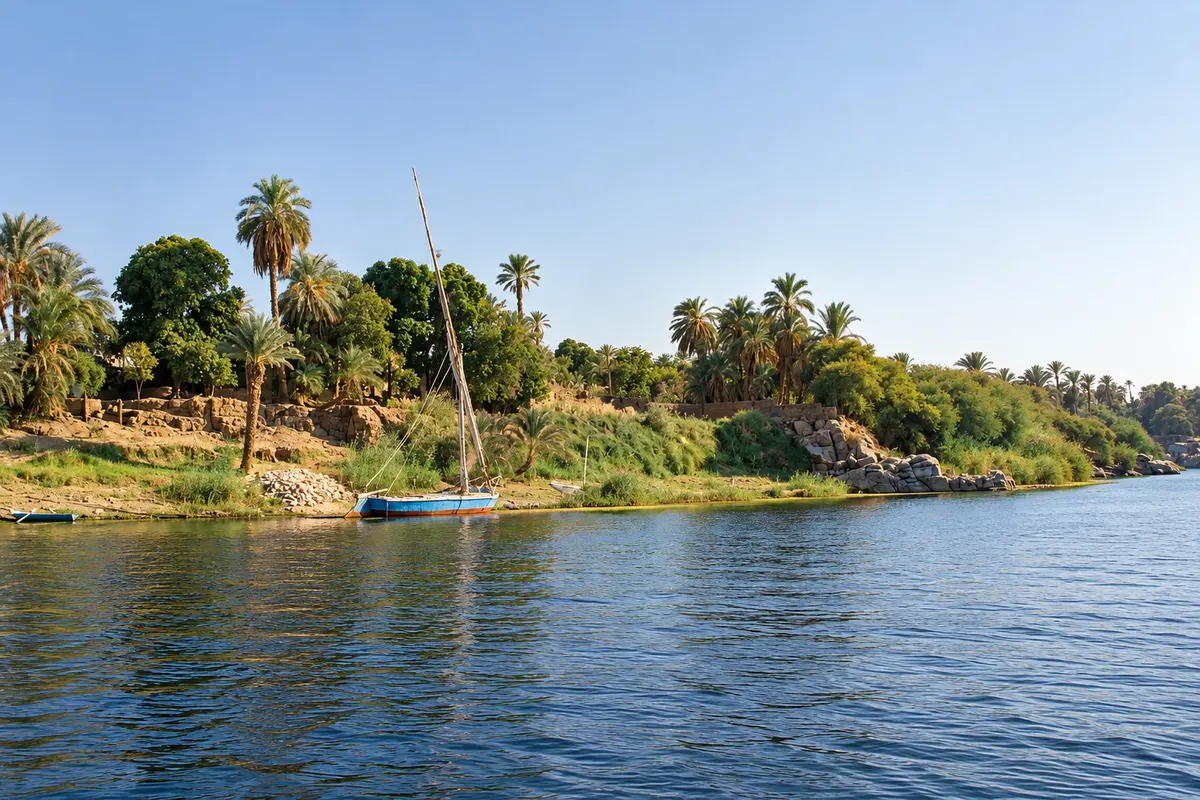
Island · Aswan, Aswan
Elephantine Island
Island in the Nile facing Aswan, with Nubian villages, the ruins of the ancient city of Abu, temples of Khnum and Satet and a nilometer, which measured the height of the floods.
Illustrative images. The pictures in this guide are illustrations based on the real place, not photographs, and may differ from it.



Discover
About Elephantine Island
Elephantine Island sits in the middle of the Nile, opposite Aswan’s center. In antiquity, the city of Abu, on the island’s southern tip, marked Egypt’s frontier and was a trade center with Nubia; the Greek name likely came from the ivory that passed there.
At the archaeological site are remains of temples of Khnum and Satet, old houses and the nilometer, a stone stairway at the river’s edge with marks to measure the height of the floods. The Aswan Museum, on the island, houses finds from the excavations.
In the center and north of the island are two Nubian villages, with painted houses, narrow streets and gardens, which can be explored on foot.
Public ferries run frequently from the riverside avenue, and the crossing is short, making it easy to return to the island in the late afternoon.
Before you go
Practical information
Cidade Turismo reviews its information regularly, but something may have changed. Check with the place before planning your trip.
How much time to set aside
Two to three hours.
Best time
In the morning or late afternoon, when the heat eases.
How to get there
By public ferry or boat, a crossing of just a few minutes from the center.
Tip
Walk through the Nubian villages after the archaeological site and stay to watch the sunset over the dunes on the west bank.
Official website
Get your questions answered
Frequently asked questions about Elephantine Island
How do I get to Elephantine Island?
By the public ferry or by boat, departing from the Corniche.
What is Elephantine’s nilometer?
A stone staircase at the river’s edge with marks to measure the height of the Nile’s floods.
What is there to see on Elephantine Island?
The ruins of the city of Abu, the temples, the nilometer, the Aswan Museum and the Nubian houses.