

 Brazil
 Antarctica
 Argentina
 Bolivia
 Chile
 Colombia
 Ecuador
 Guyana
 French Guiana
 Falkland Islands (Malvinas)
 Paraguay
 Peru
 Suriname
 Uruguay
 Venezuela
 Germany
 Austria
 Belgium
 Croatia
 Denmark
 Slovakia
 Slovenia
 Spain
 Finland
 France
 Greece
 the Netherlands
 Hungary
 Ireland
 Iceland
 Italy
 Luxembourg
 Norway
 Poland
 Portugal
 the United Kingdom
 the Czech Republic
 Sweden
 Switzerland
 Turkey
 Canada
 the United States
 Mexico
 the Dominican Republic
 South Africa
 Egypt
 Australia
 Fiji
 New Zealand
 Papua New Guinea
Parish · Eastern Parishes
Smith's
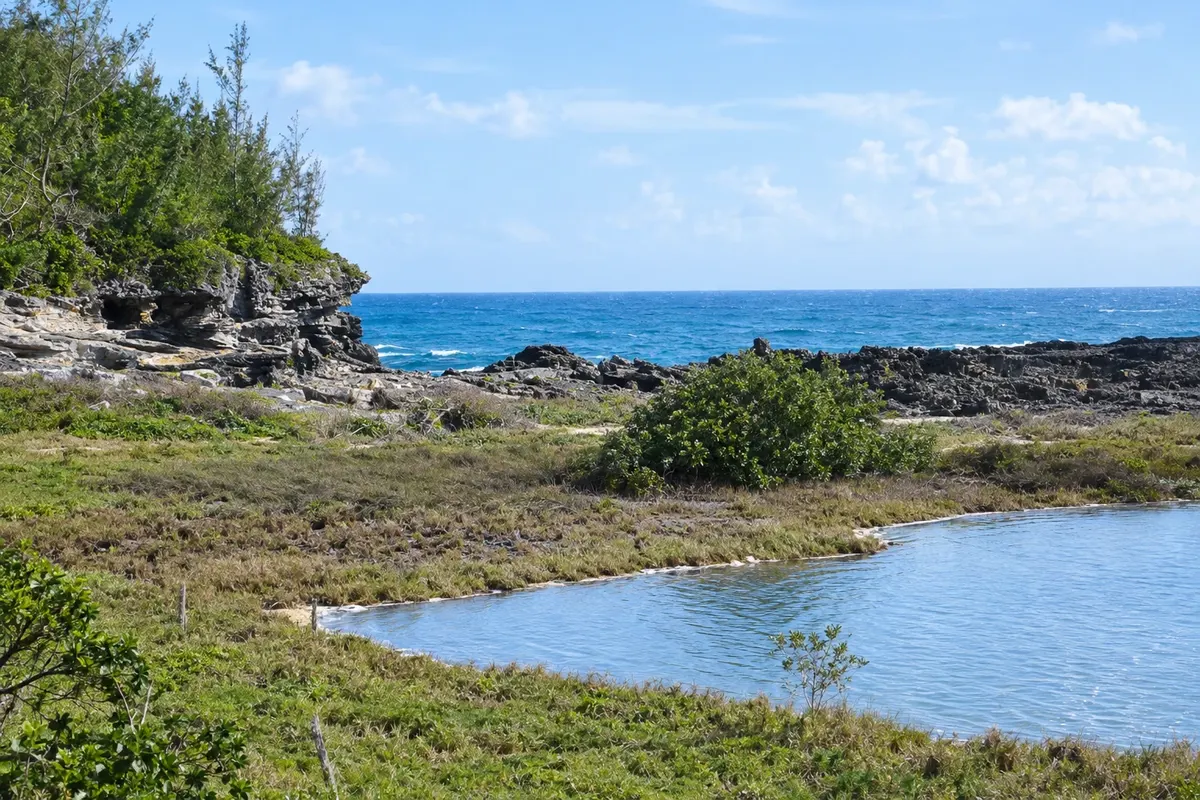
Spittal Pond, the largest wildlife reserve in Bermuda, John Smith's Bay beach, the historic Verdmont house and the southern cliff coast.
In the photo: The pond and the rocky coast of the Spittal Pond reserve, in Smith’s.
Illustrative images. The pictures in this guide are illustrations based on the real place, not photographs, and may differ from it.




The parish
Get to know Smith's
Smith's is a small residential parish in the east of Bermuda, between Devonshire and Harrington Sound, with coastline to the north and to the south. The name recalls Sir Thomas Smith, one of the shareholders of the company that colonized the island. It has no village of its own; part of Flatts Village, by the Harrington Sound channel, lies within its boundaries.
On the southern coast is Spittal Pond, the archipelago's largest wildlife reserve, protected by the Bermuda National Trust and the government. A trail runs past a brackish pond, where migratory birds gather in autumn and winter, and continues along the high cliffs above the sea. Along the way is Spanish Rock, a rock with a 16th‑century inscription attributed to navigators who passed the island before English colonization.
Nearby, John Smith's Bay is one of the few public beaches on the island's south coast in the east, with light sand and a reef near the shore. It's an alternative to the more crowded beaches in the west.
On a hilltop, the early‑18th‑century Verdmont house has been preserved with Bermuda cedar furnishings, porcelains and period portraits, and is open to visitors by the Bermuda National Trust on designated days. Throughout the parish, stepped white roofs on houses show the system that collects rainwater into cisterns.
When to go
From June to October the sea is warmer for swimming at John Smith's Bay. From October to March is the best time to see migratory birds at Spittal Pond. Winters are mild and windy; the cliff trails are more pleasant on days without rain.
Getting there
Smith's sits on the coast between Devonshire and Harrington Sound, near L.F. Wade Airport. The south coastal road (South Road) passes Spittal Pond and John Smith's Bay, and buses running that route stop near the reserve and the beach. You can also reach them by taxi, electric minicab or scooter.
Your questions
Frequently asked questions about Smith's
What to see at Spittal Pond?
A brackish pond with birds, especially from October to March, the southern coastal cliffs and Spanish Rock with a 16th‑century inscription. A circular trail takes about an hour to walk. There is no entrance fee, and the path includes stone and dirt sections.
Is John Smith's Bay a good beach?
It is a public light‑sand beach on the south coast with a reef near the shore, good for snorkeling on calm days. It generally has fewer people than western beaches like Horseshoe Bay. It sits on South Road and has a bus stop.
Can you visit Verdmont house?
Yes, the house is a museum run by the Bermuda National Trust, with 18th‑century furniture, porcelains and portraits. It is open on specified days and times that change throughout the year: check before you go.
Where to stay to explore Smith's?
The parish is residential and has few accommodations. Those who want to stay nearby usually choose Flatts, on the border with Hamilton parish, or the town of Hamilton, which is connected to Smith's by bus. St. George's is also a quick trip from the east.