1 city

 Search
 Brazil
 Antarctica
 Argentina
 Bolivia
 Chile
 Colombia
 Ecuador
 Guyana
 French Guiana
 Falkland Islands (Malvinas)
 Paraguay
 Peru
 Suriname
 Uruguay
 Venezuela
 Germany
 Austria
 Belgium
 Croatia
 Denmark
 Slovakia
 Slovenia
 Spain
 Finland
 France
 Greece
 the Netherlands
 Hungary
 Ireland
 Iceland
 Italy
 Luxembourg
 Norway
 Poland
 Portugal
 the United Kingdom
 the Czech Republic
 Sweden
 Switzerland
 TurkeyBermuda
 Canada
 the United States
 Mexico
 the Dominican RepublicTurkey
 South Africa
 Egypt
 Australia
 Fiji
 New Zealand
 Papua New Guinea
Parish · Central Parishes
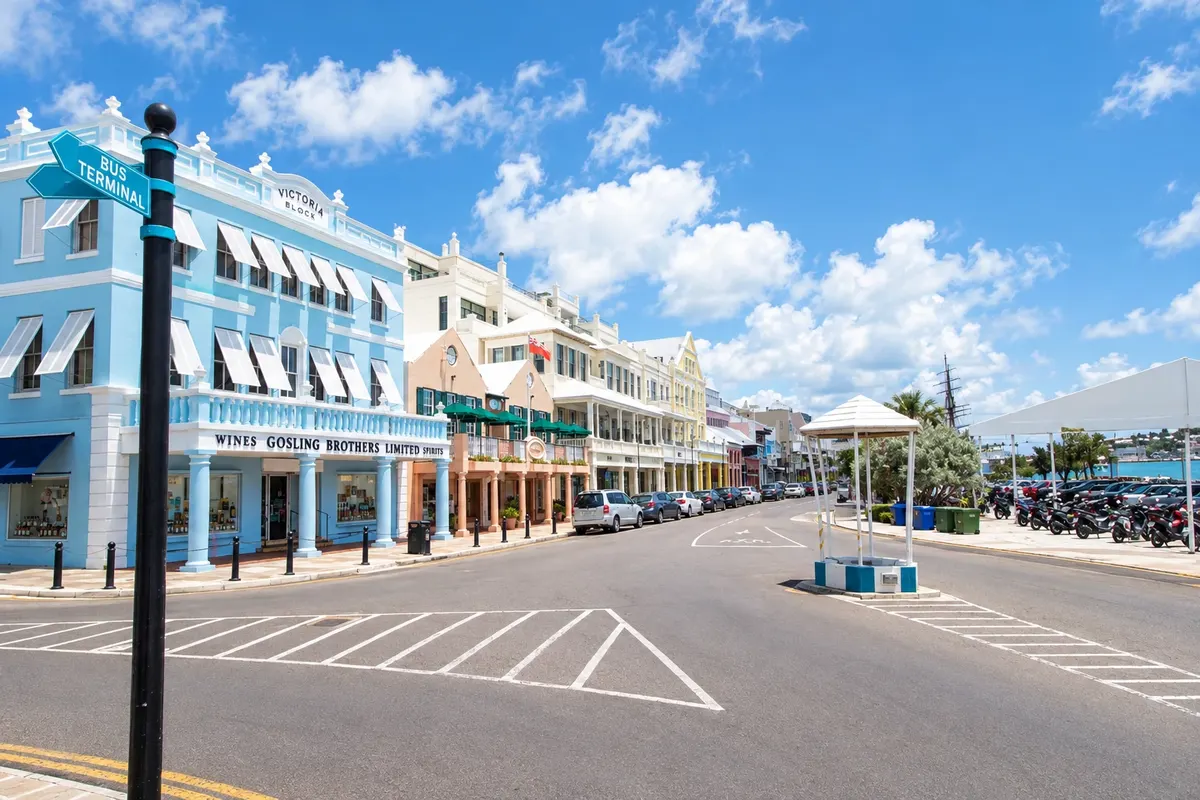
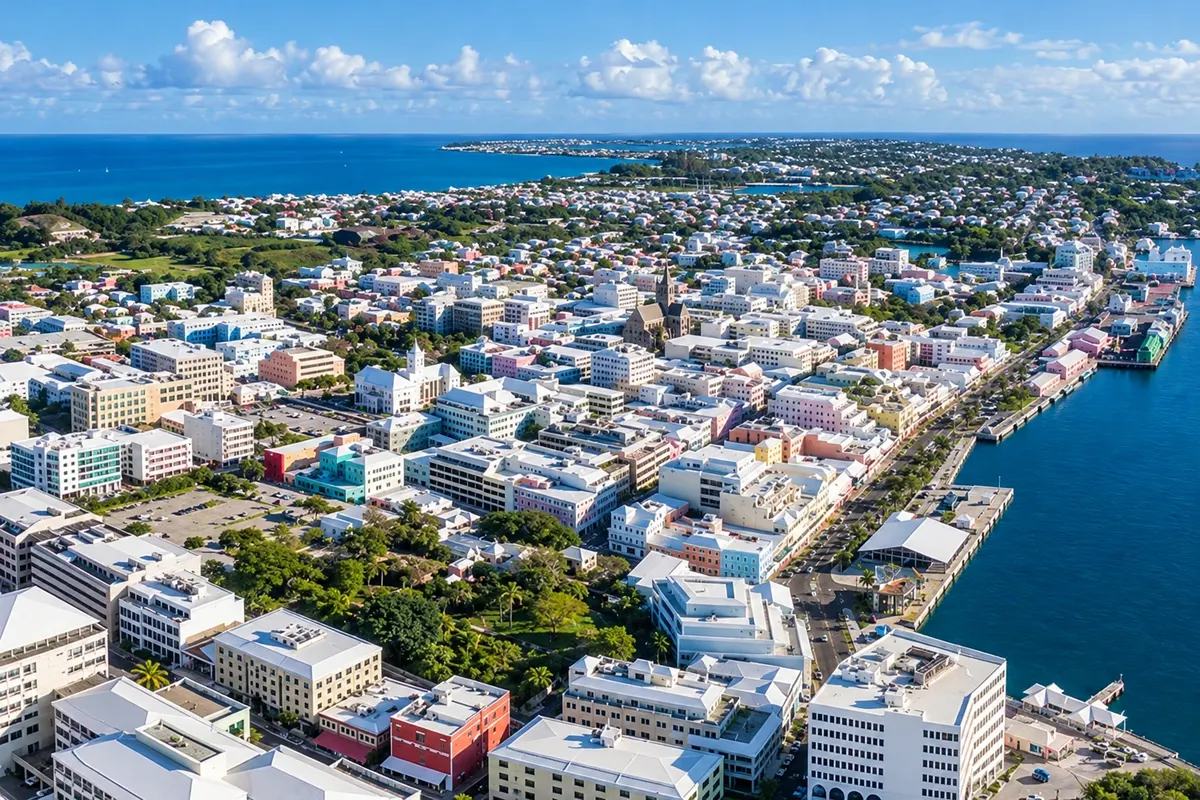
Hamilton, the capital of Bermuda: Front Street, the cathedral, Fort Hamilton, the ferry harbour, the BUEI and the coves of Admiralty House and Spanish Point.
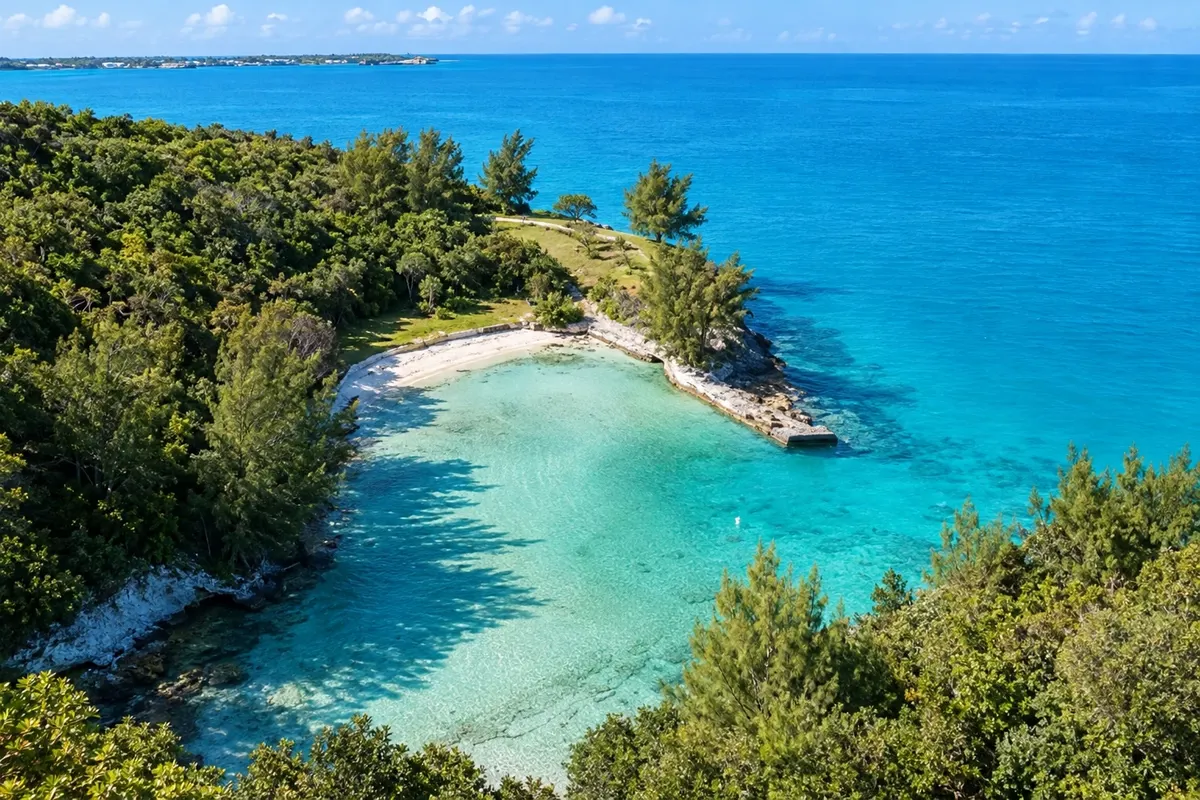
In the photo: Clarence Cove and the treeline of Admiralty House Park, in Pembroke.
Illustrative images. The pictures in this guide are illustrations based on the real place, not photographs, and may differ from it.
The parish
Pembroke is Bermuda’s most populous parish and contains the city of Hamilton, the capital, on the north shore of Hamilton Harbour. The town was planned in the late 18th century and became the capital in 1815, replacing St. George's. Despite its name, the town is not in the parish of Hamilton, which lies to the east of the island.
Hamilton’s downtown is walkable. Front Street runs along the harbour, with shops, cafés and the ferry terminal. A few blocks up are the Cathedral of the Most Holy Trinity, consecrated in 1911, City Hall, which houses an arts centre, the Sessions House, seat of Parliament, and parks such as Victoria Park and Par-la-Ville. Above the town, to the east of the centre, Fort Hamilton, from the 19th century, has a dry moat with gardens and views over the harbour.
Outside the centre, the Bermuda Underwater Exploration Institute (BUEI), on the harbourfront, showcases the ocean around Bermuda, shipwrecks and local shells. On the north coast, Admiralty House Park has coves and caves for swimming, and Spanish Point, on the parish’s western tip, faces the Great Sound.
Hamilton is also the island’s activity hub: bus and ferry lines depart from here, and Front Street is the usual route for the Bermuda Day parade in late May, featuring gombey dancers in masks and colourful costumes. Many of Bermuda’s international insurance and business firms are headquartered in the city.
Destinations
Cities
Hamilton is active year-round. From May to October days are warmer and the harbour is busier, with more sightseeing boats and frequent ferries; the Bermuda Day holiday, in late May, features a parade through the town. From December to March the air is mild and there are fewer tourists; this is the windiest period. hurricane season runs from June to November.
L.F. Wade International Airport (BDA), to the east, is about 15 km from Hamilton and is served by taxis and public buses. The central bus terminal on Washington Street connects the capital with almost all parishes, and the ferry terminal on Front Street has routes to the Royal Naval Dockyard, Southampton, Paget and Warwick. Smaller cruise ships dock in Hamilton Harbour itself.
Your questions
Walk along Front Street and the harbour, visit the Cathedral of the Most Holy Trinity, City Hall and the downtown parks, climb up to Fort Hamilton and visit the Bermuda Underwater Exploration Institute. For swimming, the coves of Admiralty House Park are just minutes away. Ferries depart from the harbour to the west side of the island.
Yes. The town is centrally located on the island, and buses and ferries leave from there to the Royal Naval Dockyard, Southampton, Paget and Warwick. St. George's is to the east and is connected to Hamilton by bus. If you prefer having a beach at your doorstep, people often stay on the south coast in Paget, Warwick or Southampton.
By taxi, which waits at the arrivals exit, or by public bus, with transfers on some routes. The distance is about 15 km, on roads with a 35 km/h speed limit. Visitors may not rent regular cars; electric minicars and scooters are available for hire in town.
One day is enough to see the downtown, Fort Hamilton and the BUEI. Because the town is the base for most excursions, many people stay in or near Hamilton for their whole trip and make day trips by ferry or bus to St. George's, the Dockyard and the south‑coast beaches.
They are groups of masked dancers wearing colourful costumes, tall feathered hats and drums, a tradition that blends African, Caribbean and British roots. They usually appear in the streets on holidays such as Bermuda Day in late May and on December 26.