Gentse waterzooi
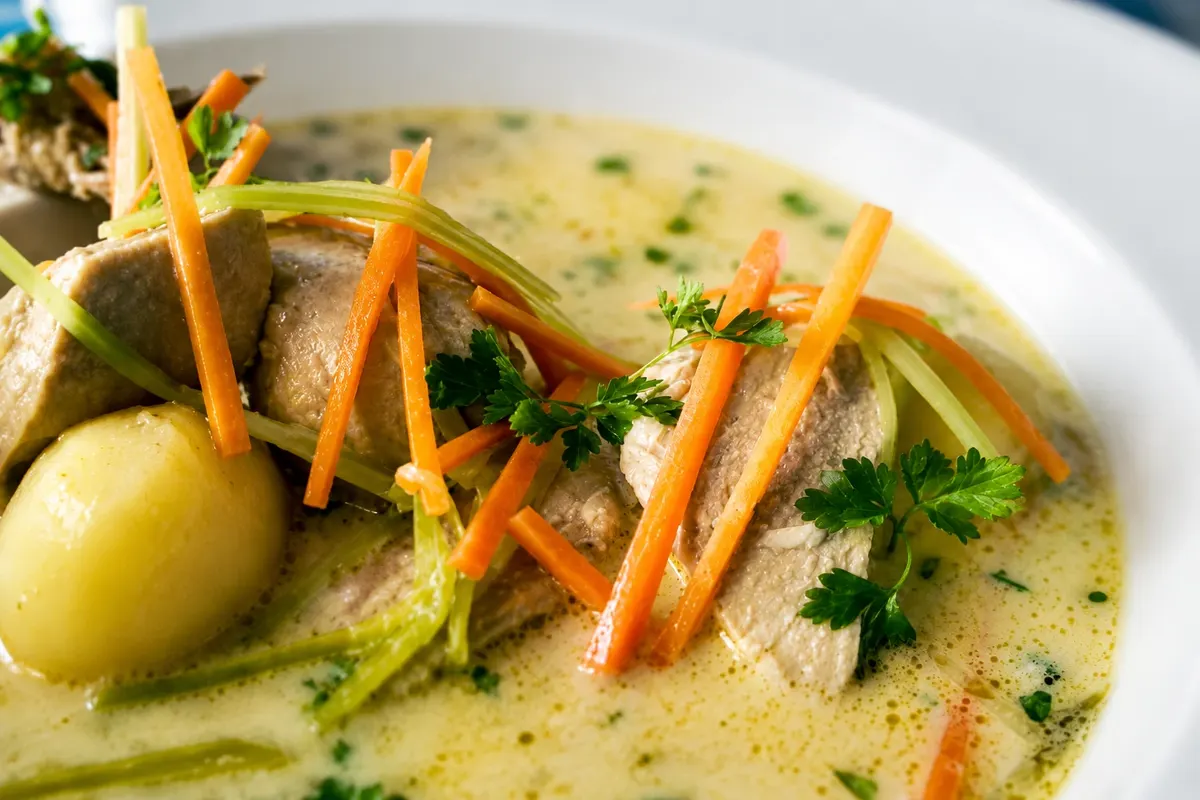
Creamy stew from Ghent, with a broth thickened by cream, vegetables like carrot, leek and celery, potato and chicken. The earliest versions were made with river fish, and fish still appears in some of the city’s kitchens.
Popular festival · Ghent
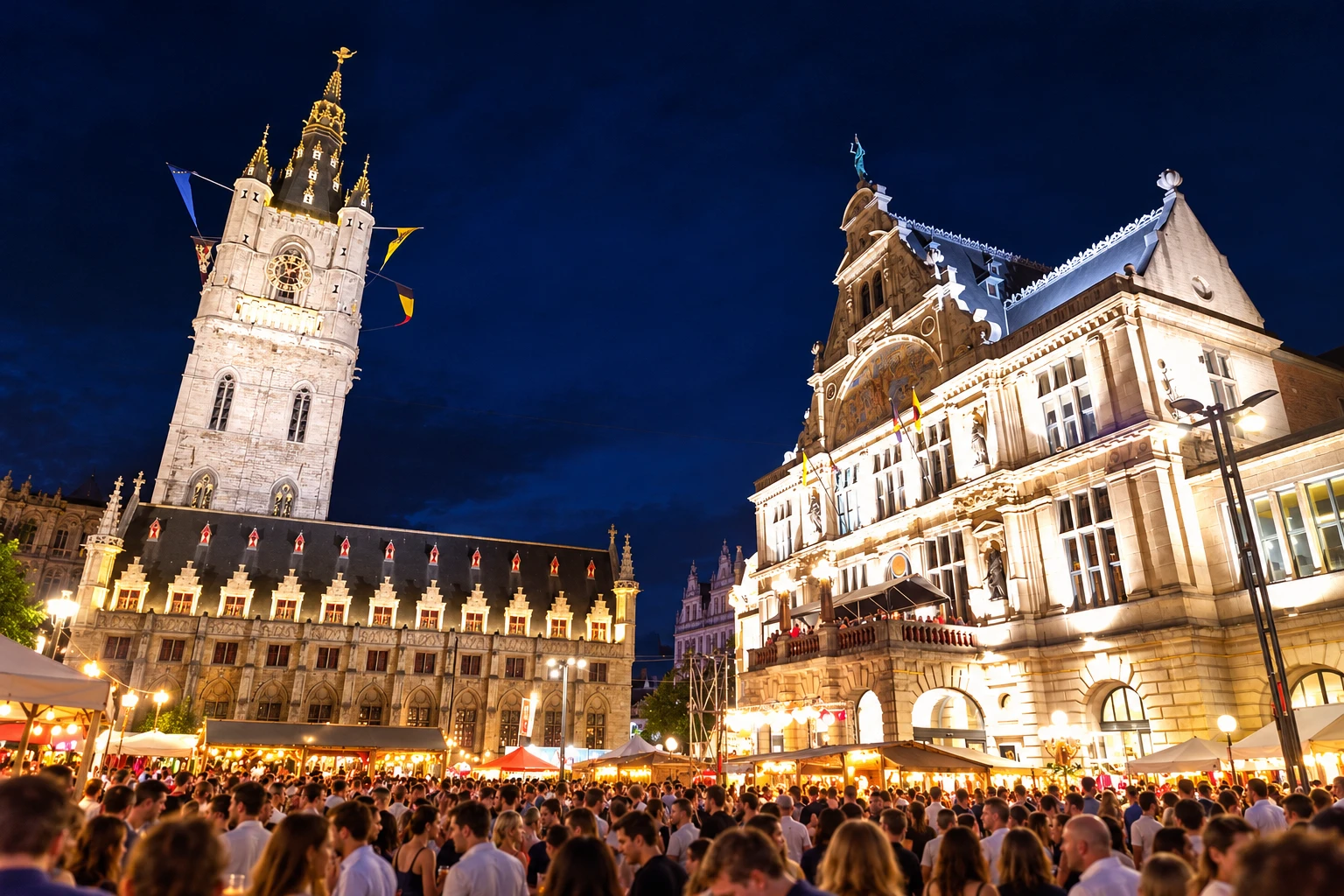
For ten days in July, the Gentse Feesten spread concerts, street theatre, puppetry and bars across the squares and quays of Ghent’s historic centre.
In the photo: Ghent
Illustrative images. The pictures in this guide are illustrations based on the real place, not photographs, and may differ from it.
Click a photo to enlarge it.
Gentse Feesten — Ghent
For ten days in July, including Belgium’s national holiday on July 21.
July
Dates change every year: check this year's date before you travel.
The festival
The Gentse Feesten turn Ghent’s medieval centre into a continuous ten-day celebration in July, always including July 21, Belgium’s national holiday. The city’s tradition of popular festivities dates from the 19th century, and the modern form gained momentum in the late 1960s, when folk singer Walter De Buck and friends brought music and theatre back to the streets around Sint-Jacobs.
There is no single enclosed venue. Each square has its own stage and organisation: the Sint-Baafsplein, in front of the cathedral and Belfry, hosts outdoor concerts; the Korenmarkt concentrates stalls and bars; other spots feature folk, jazz, electronic music, comedy and children’s shows. Much of the programme is free to enter, alongside ticketed festivals that take place at the same time.
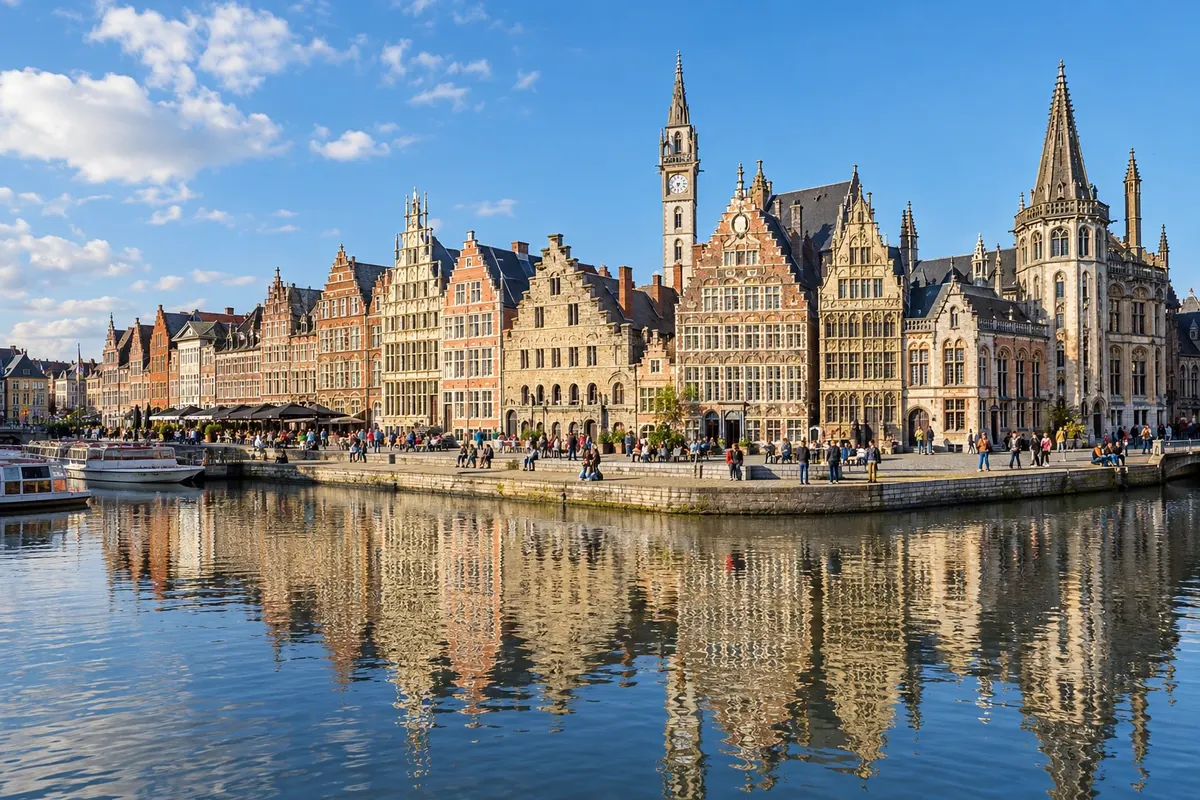
Street theatre, puppeteers and buskers appear throughout the streets and quays, such as Graslei and Korenlei along the River Lys. The city stays open day and night, and the party mixes residents, students and visitors from across Belgium and other countries.
If you visit Ghent in July, it’s the way to see the city in full celebration, with medieval monuments as a backdrop and a programme that changes daily.
Outdoor concerts on the Sint-Baafsplein. Street and puppet performances throughout the centre. Late afternoons on the Graslei and Korenlei quays. July 21, the national holiday, one of the busiest days.
Choose the days by the programme, published in advance on the official website. Weekday afternoons draw fewer people than Saturday and Sunday nights. Arrive by train at Gent-Sint-Pieters and take a tram to the centre, which is closed to cars. Bring rain gear and comfortable footwear.
Accommodation in central Ghent sells out months ahead; book early or stay in Bruges or Brussels, with frequent trains to Ghent. Ticketed festivals within the Feesten sell separate admission.
In the city
Flavors of Belgium
July
June/JulyOver two nights between late June and early July.
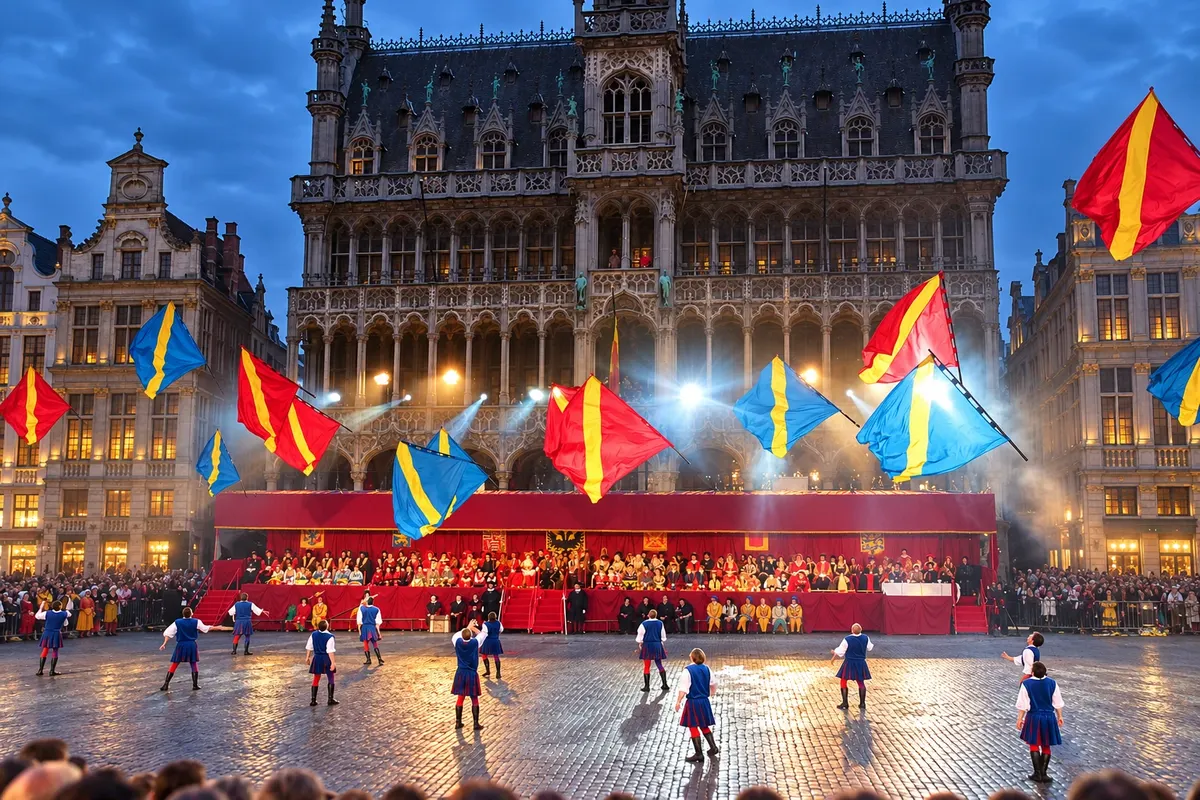
On two early-summer nights, the Ommegang brings hundreds of participants in 16th-century costumes from the Sablon to Brussels’ Grand-Place, recreating the celebration held for Emperor Charles V in 1549.
June/JulyFor four days, from Thursday to Sunday, on the weekend that closes June or opens July.
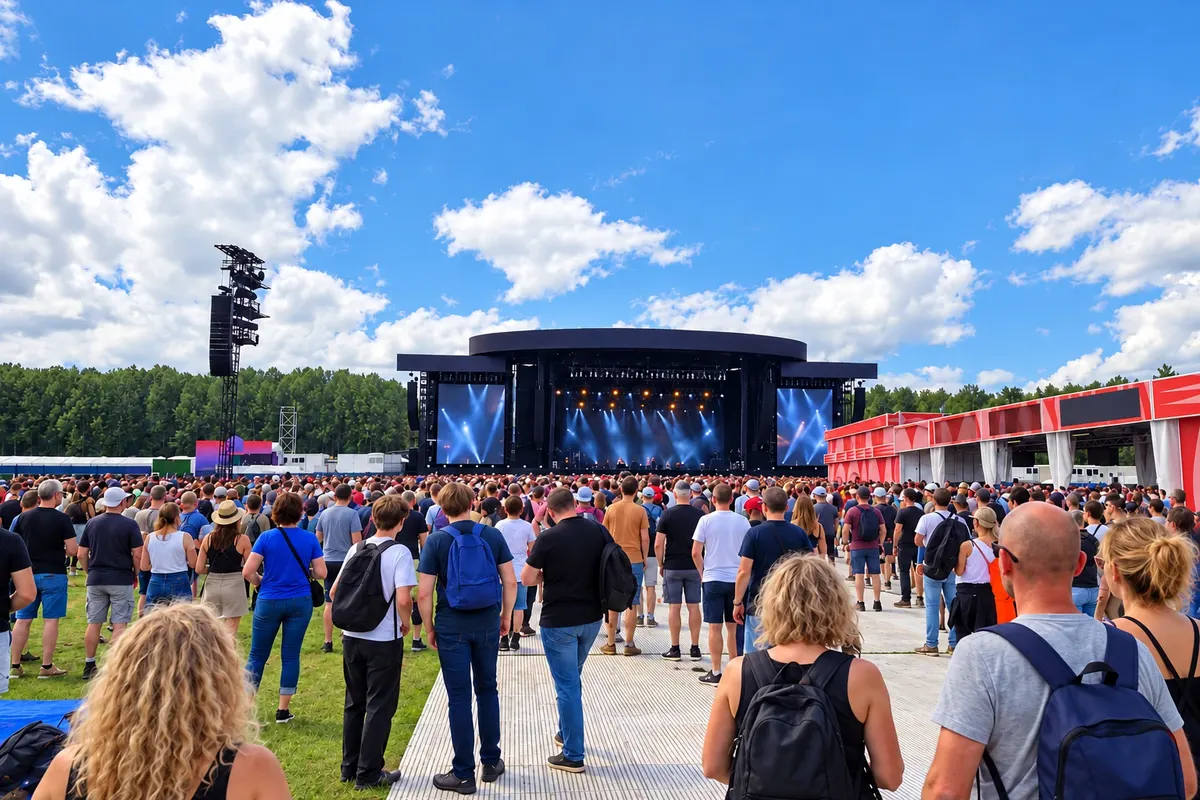
Rock Werchter brings together rock, pop, indie and electronic music over four days at Festivalpark in Werchter, in the municipality of Rotselaar, near Leuven, at the start of summer.
JulyIn July, usually in the second half of the month, over several days depending on each edition's format.
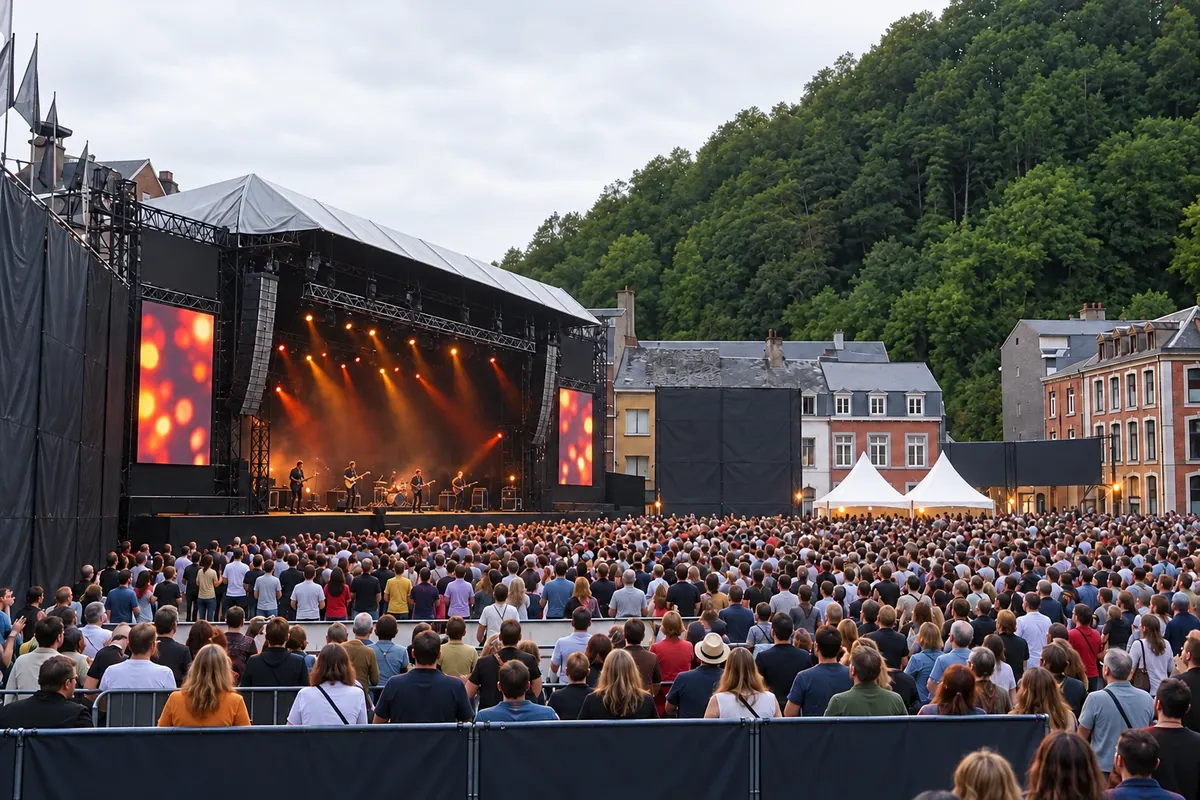
The Francofolies de Spa take over the center of the spa town in July, with francophone music concerts on outdoor stages in the Parc de Sept Heures and in venues such as the Casino.
Your questions
For ten days in July, always including Belgium’s national holiday on July 21. The calendar is published on the official website well in advance.
Much of the programme in the squares is free to enter. Some festivals that take place at the same time sell separate tickets.
In the squares, streets and quays of Ghent’s historic centre, such as the Sint-Baafsplein, the Korenmarkt and the Graslei.
Festivals and events in Belgium
JulyOn the last two weekends of July.
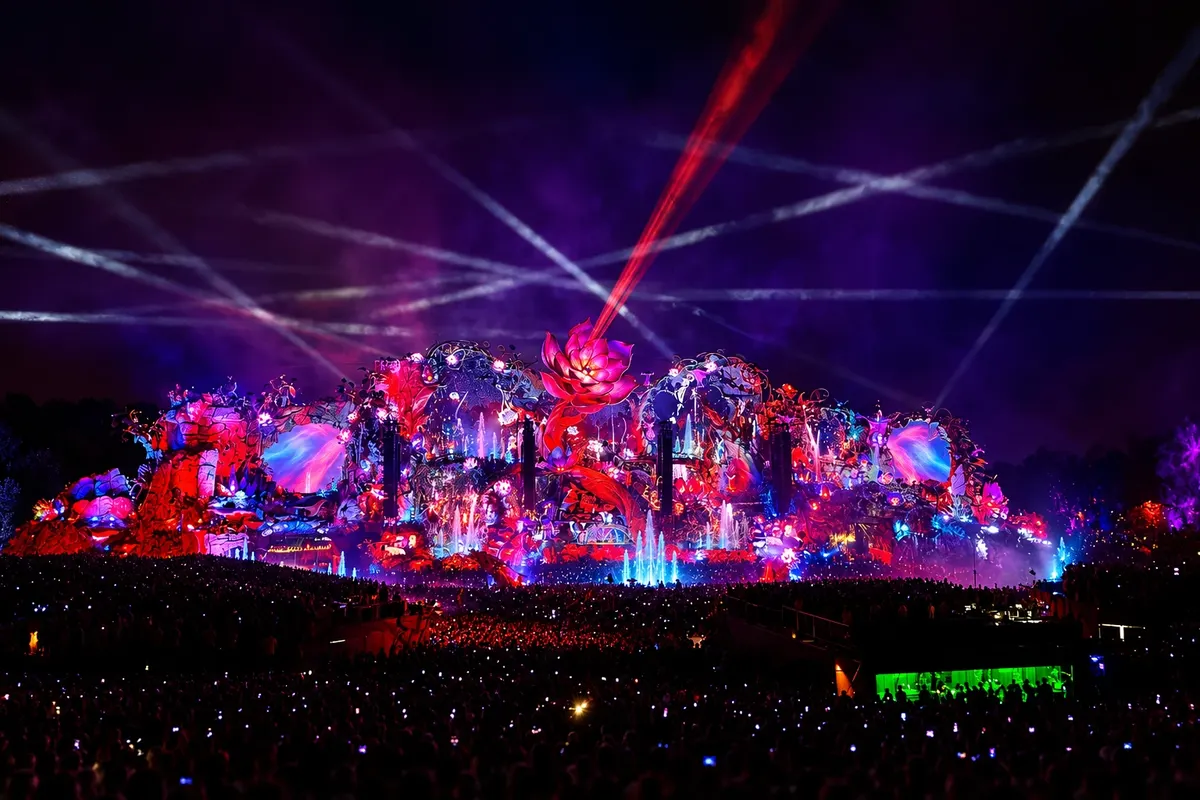
An electronic music festival held across two weekends in July at De Schorre park in Boom, between Antwerp and Brussels, known for its theatrical stages and international audience.
February/MarchFrom Carnival Sunday to Shrove Tuesday, the three days before Ash Wednesday, in February or March depending on the date of Easter.
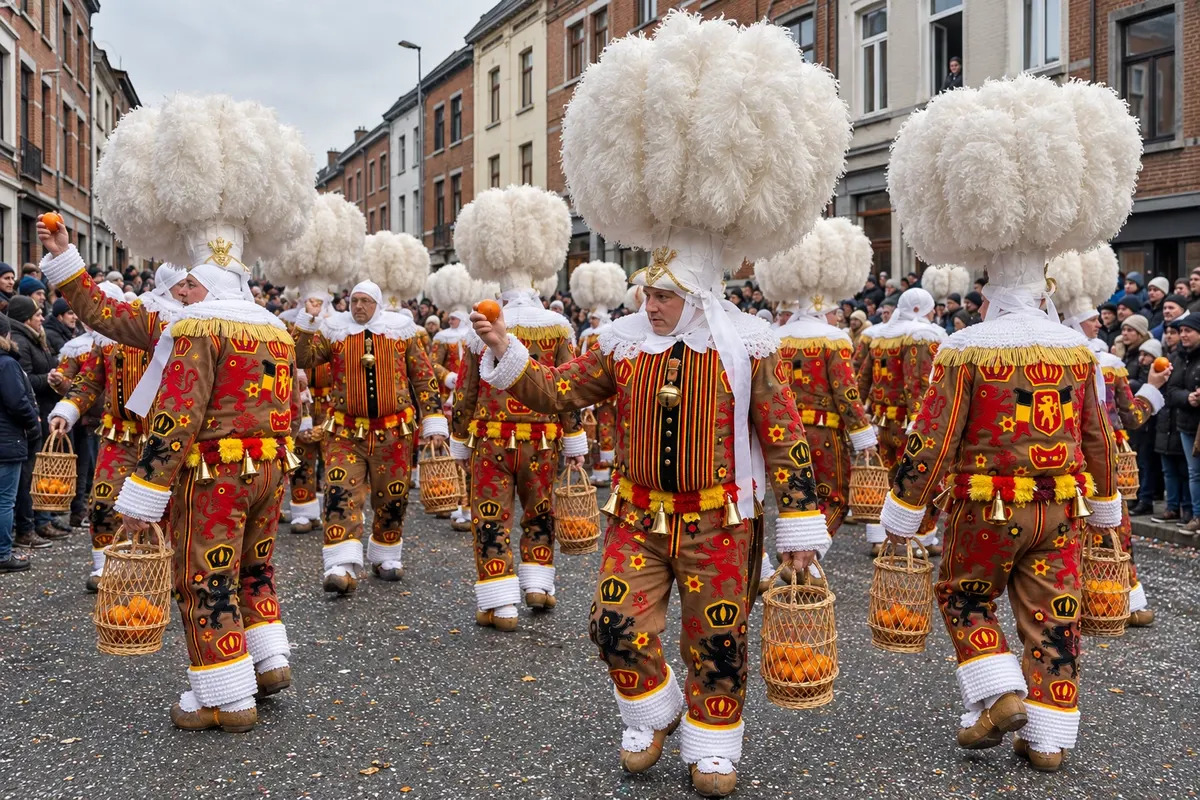
The Binche carnival, in the province of Hainaut, culminates on Shrove Tuesday with the Gilles, figures wearing wax masks and ostrich-feather hats who dance through the streets to the sound of drums and throw oranges to the crowd.
February/MarchFrom Saturday to midnight on Fat Tuesday, before the start of Lent, in February or March, depending on the date of Easter.
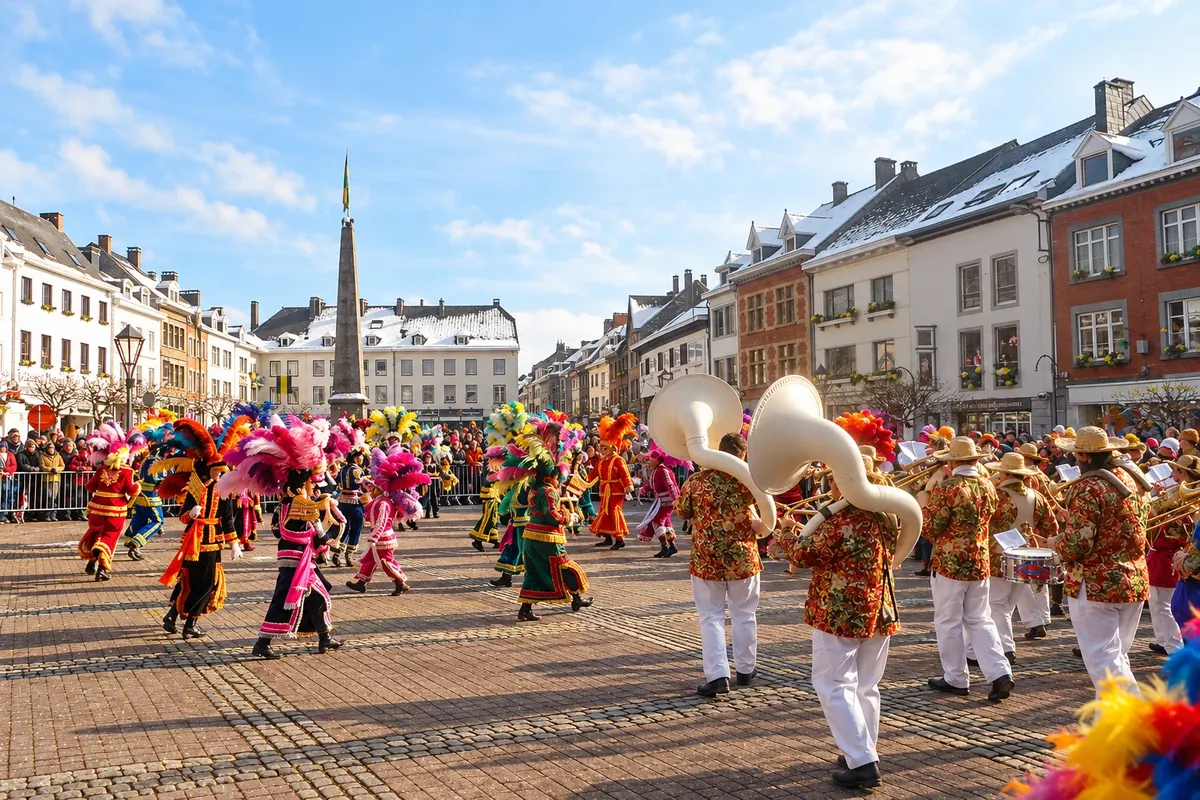
The Cwarmê is Malmedy’s carnival, in the Ardennes: four days when masked figures such as the Haguètes take to the streets, everything is spoken and sung in Walloon, up to the burning of the Haguète on the final night.
March/AprilOn Laetare Sunday, the fourth Sunday of Lent, three weeks before Easter, in March or early April; from Saturday to Monday.
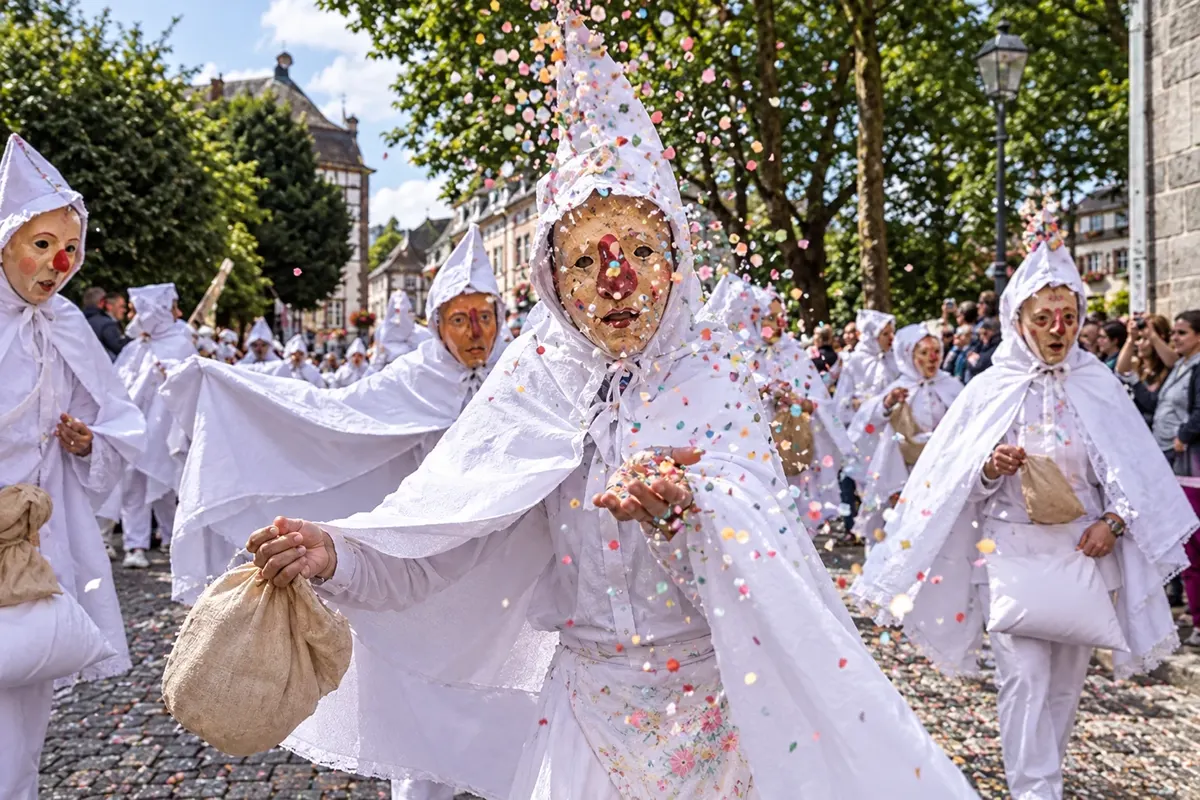
Three weeks before Easter, Stavelot celebrates Laetare with the Blancs Moussis, figures dressed in white with long red-nosed masks who go through the town throwing confetti at the crowd.
May/JuneOn the weekend of the Holy Trinity, the Sunday after Pentecost, between May and June, depending on the date of Easter.
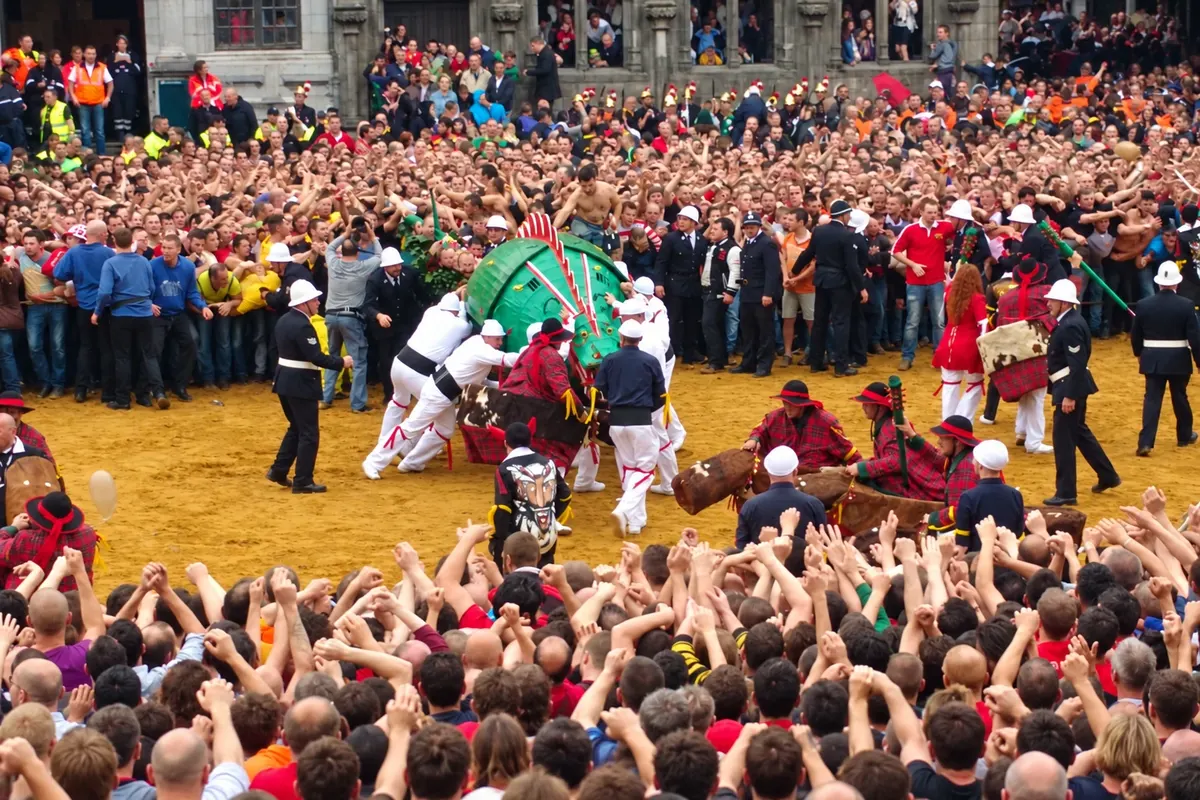
On Trinity weekend, Mons carries the relic of Saint Waltrude on a gilded carriage through the streets and stages the Lumeçon, Saint George’s fight with the dragon, on the Grand-Place.
MayEvery three years, on the second Sunday in May. · Every three years
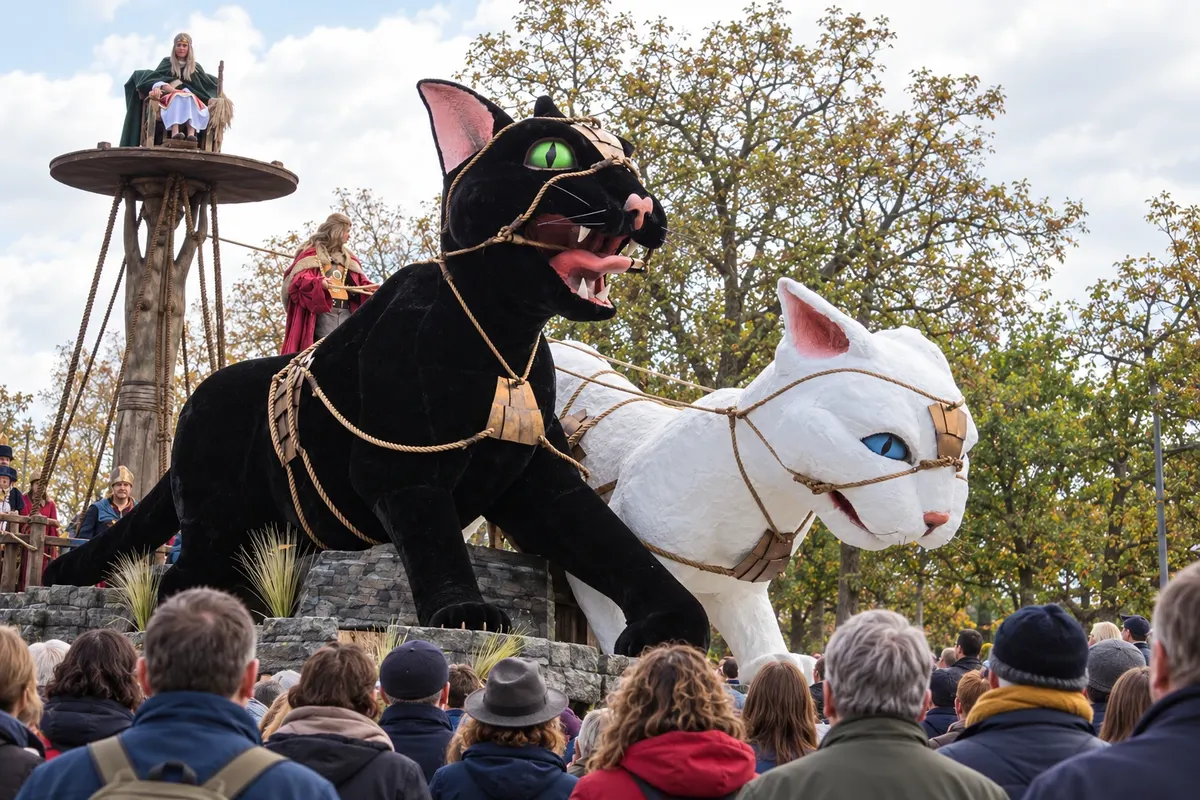
Every three years, on the second Sunday in May, Ypres celebrates cats with the Kattenstoet, a parade of floats, giants and costumes that culminates with the town jester throwing stuffed cats from the Lakenhalle bell tower.