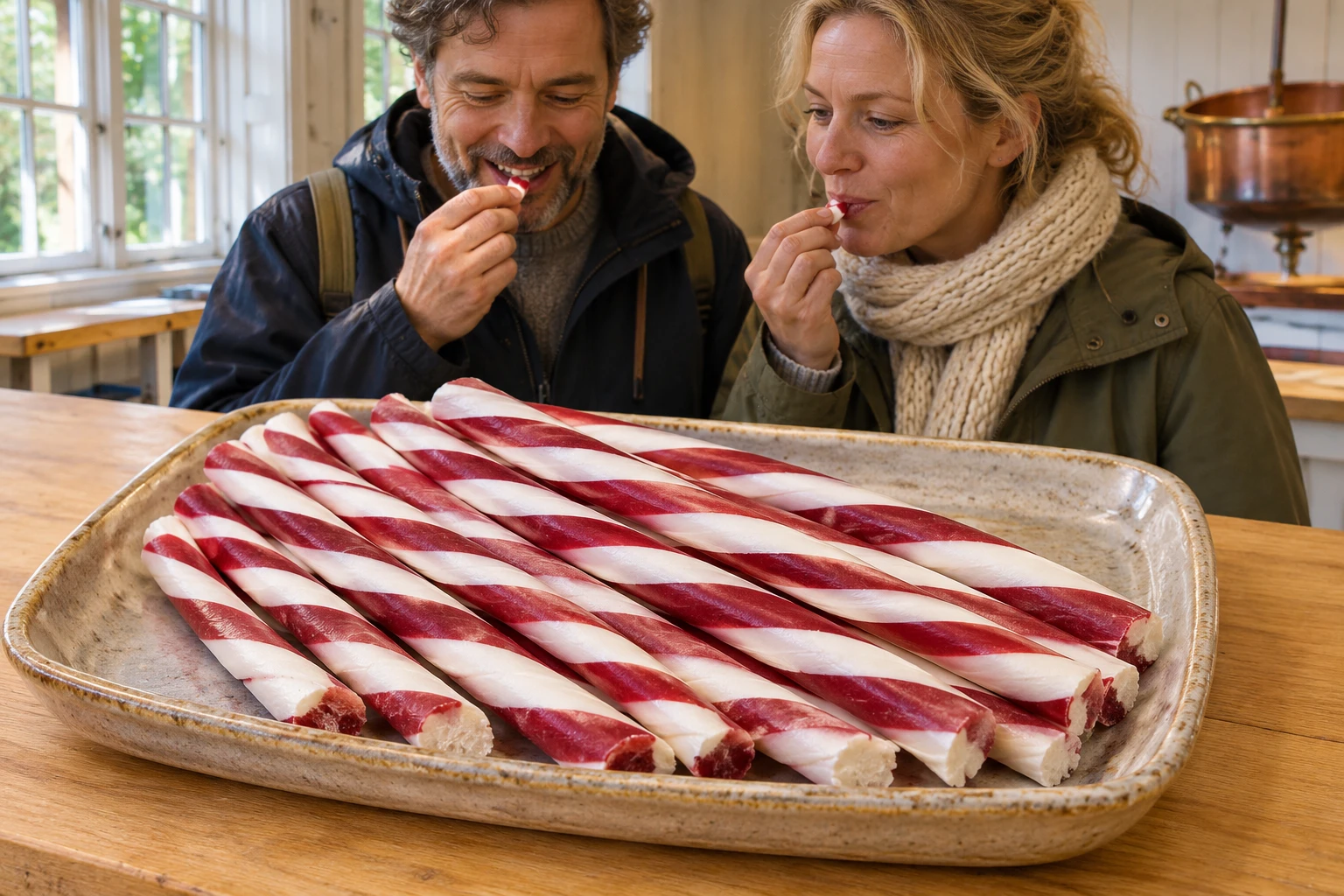
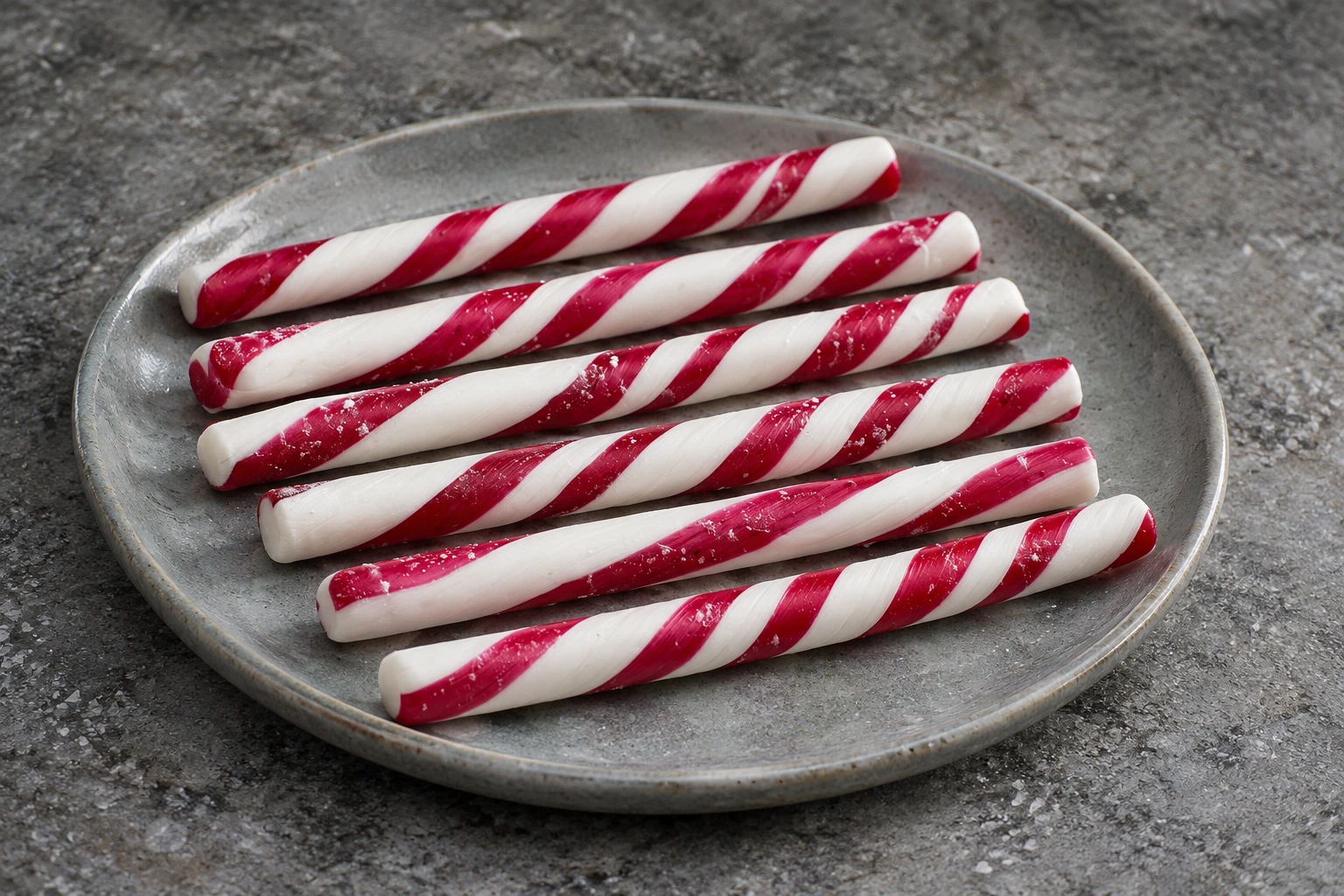
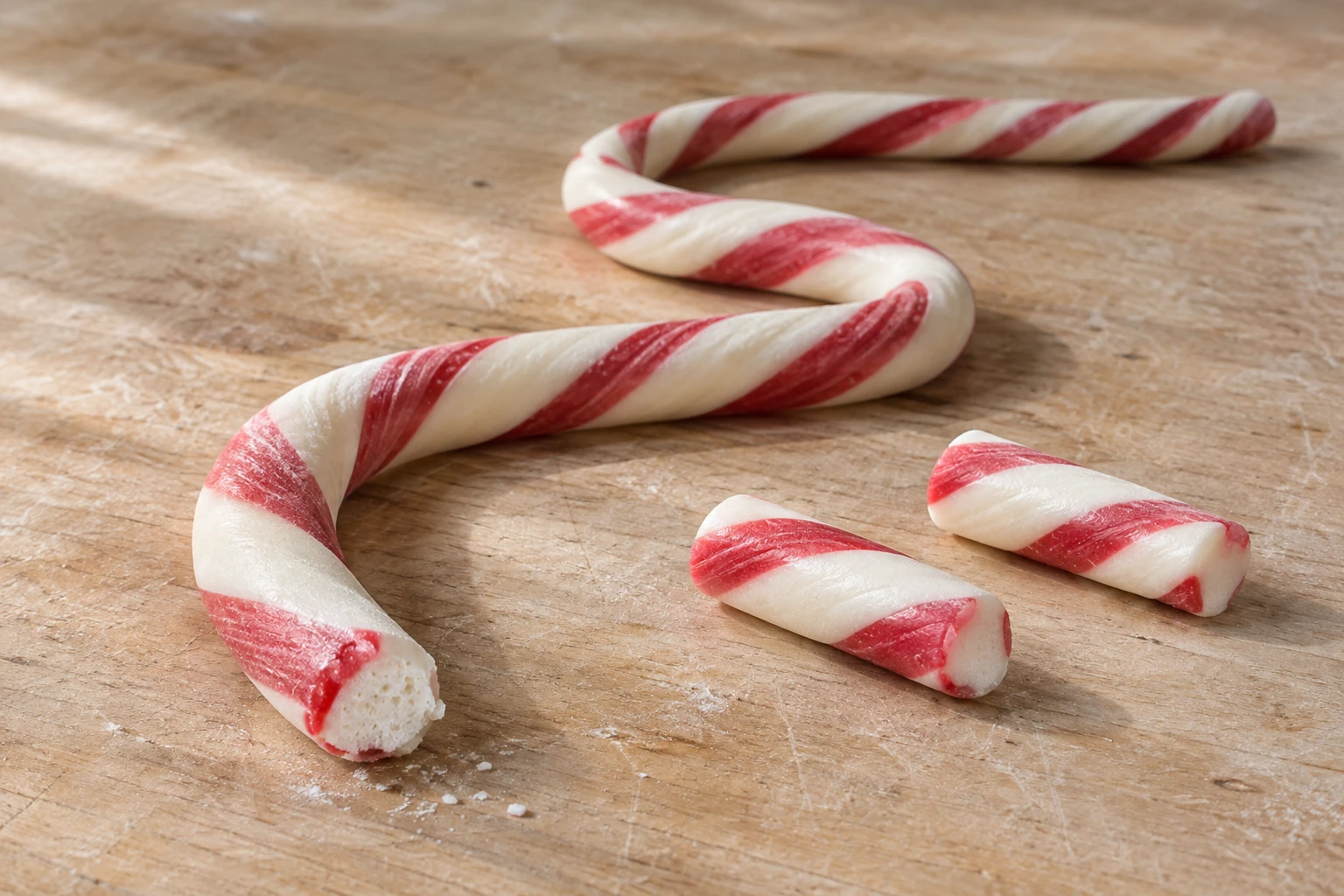
The polkagris is Sweden’s best-known stick candy: white, with a red spiral along its length and peppermint flavor. Its home is Gränna, on the shore of Lake Vättern in Jönköping County, where the candy has been made by hand since the mid-19th century in a way very similar to the original. Confectioners from other parts of the country learned the craft there.
The invention is attributed to Amalia Eriksson (1824–1923). Widowed shortly after her daughter’s birth, she asked Gränna’s magistrate for permission to open a confectionery and sell sweets, including the polkagris, and the license was granted on January 10, 1859. That is also the first written record of the name. The business prospered, other confectioneries opened in town, and Amalia Eriksson has a statue in Gränna.
The name combines polka, a popular dance of the 19th century, and gris, meaning “pig,” a word that at the time was also used for sweets. Gränna’s makers formed an association in 1946, defined criteria for the candy—such as being handmade—and registered the mark Äkta Gränna Polkagrisar in 1948, a name used since the early 20th century. Since 2022, that name has a protected geographical indication in the European Union and may only be used for polkagris made in Gränna.
The dough is made of sugar, glucose syrup, water and a little vinegar, boiled in an open pan in small batches. While still hot it is stretched and worked by hand, peppermint oil is added and it is joined with a red-dyed strip; it is then rolled and twisted into sticks that harden as they cool. In Gränna, several shops make the candy in front of visitors and sell sticks, lollipops and small candies in many colors and flavors in addition to the classic.


 Brazil
 Argentina
 Bolivia
 Chile
 Colombia
 Ecuador
 Guyana
 French Guiana
 Falkland Islands (Malvinas)
 Paraguay
 Peru
 Suriname
 Uruguay
 Venezuela
 Germany
 Austria
 Belgium
 Croatia
 Denmark
 Spain
 Finland
 France
 Greece
 the Netherlands
 Hungary
 Ireland
 Iceland
 Italy
 Luxembourg
 Norway
 Poland
 Portugal
 the United Kingdom
 the Czech Republic
 Switzerland
 Turkey
 Canada
 the United States
 Mexico
 the Dominican Republic
 South Africa
 Australia
 Fiji
 New Zealand
 Papua New Guinea