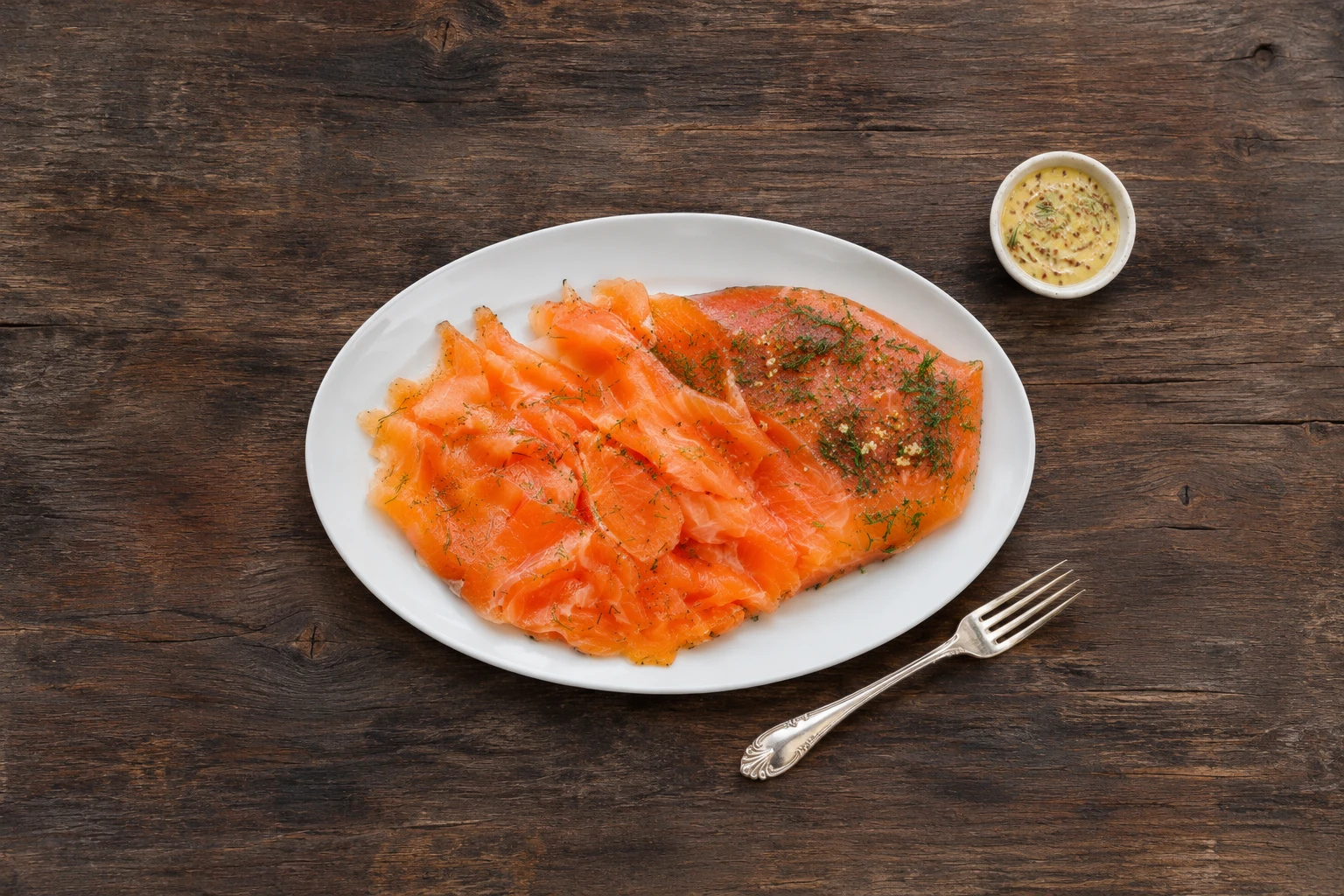
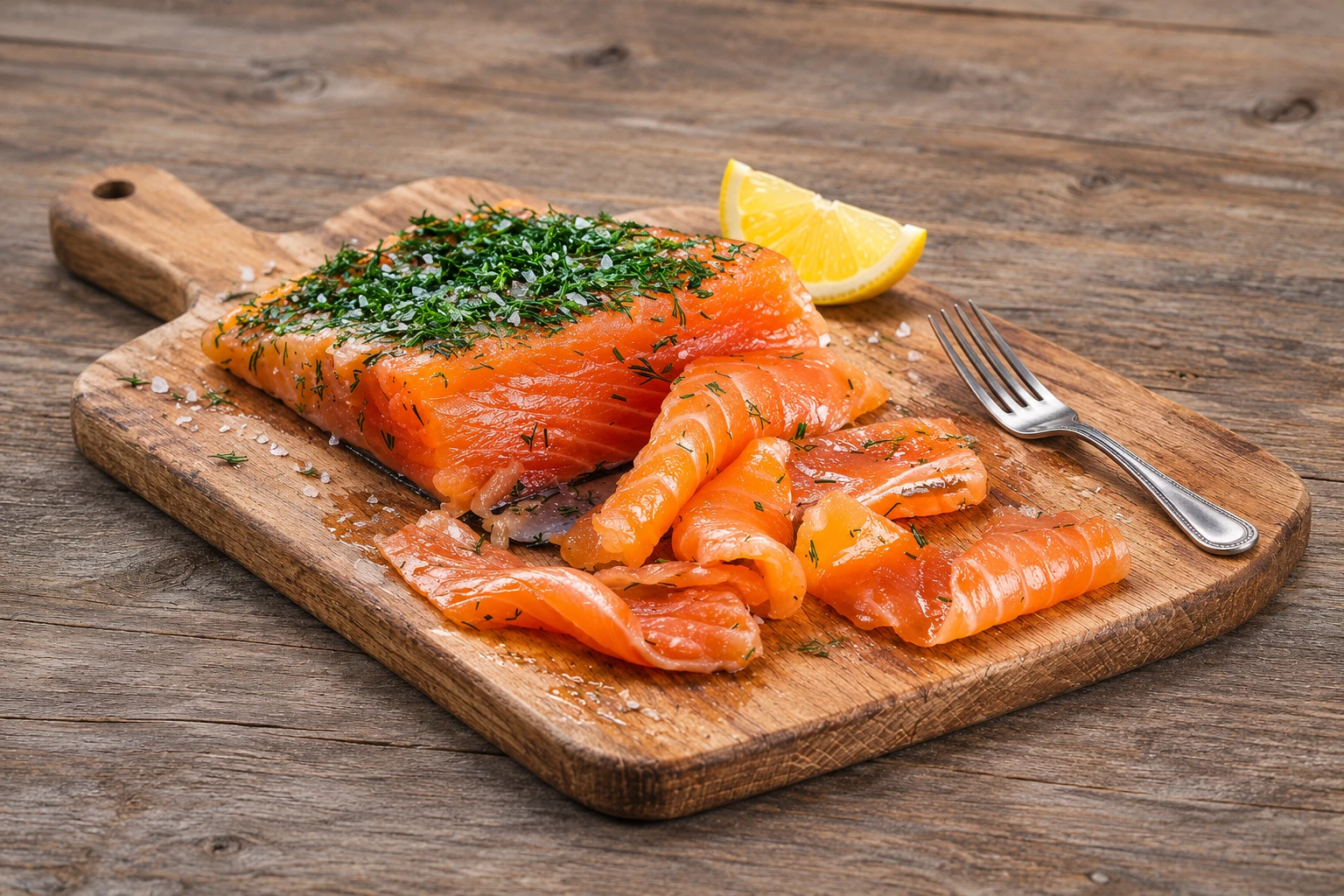
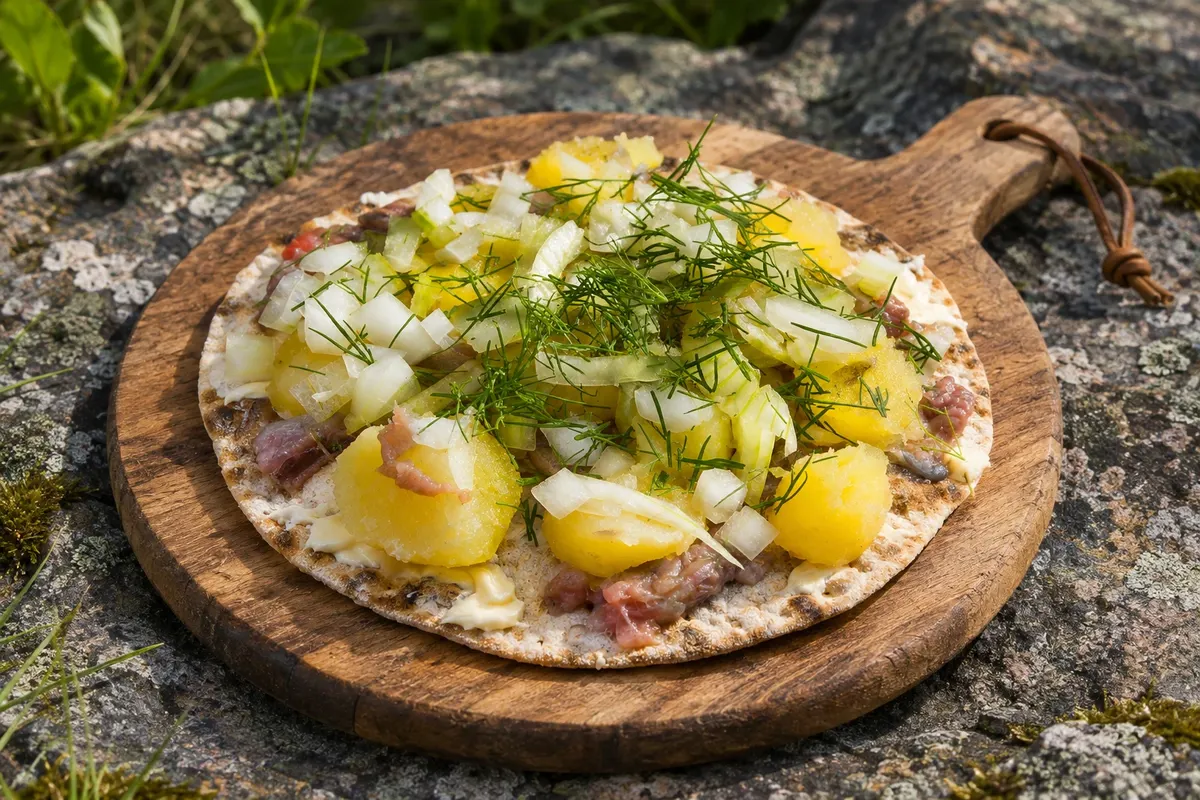
Gravlax, or gravad lax, is raw salmon cured in salt, sugar and dill. The name comes from the Swedish verb grava, which the Swedish Academy’s dictionary links to the act of burying: historically, the fish was salted and buried in the ground to preserve it. The dictionary records the compound word in a text from 1752.
The folklorist Jan-Öjvind Swahn relates that in northern Sweden the rivers were rich in salmon in the Middle Ages, but it was difficult to sell the fish at the time it was caught. Fishermen placed the salmon with a little salt in shallow pits, preserving it until it could be transported to markets. Over time, the fish fermented slightly. That old method of preservation survives in another form in surströmming.
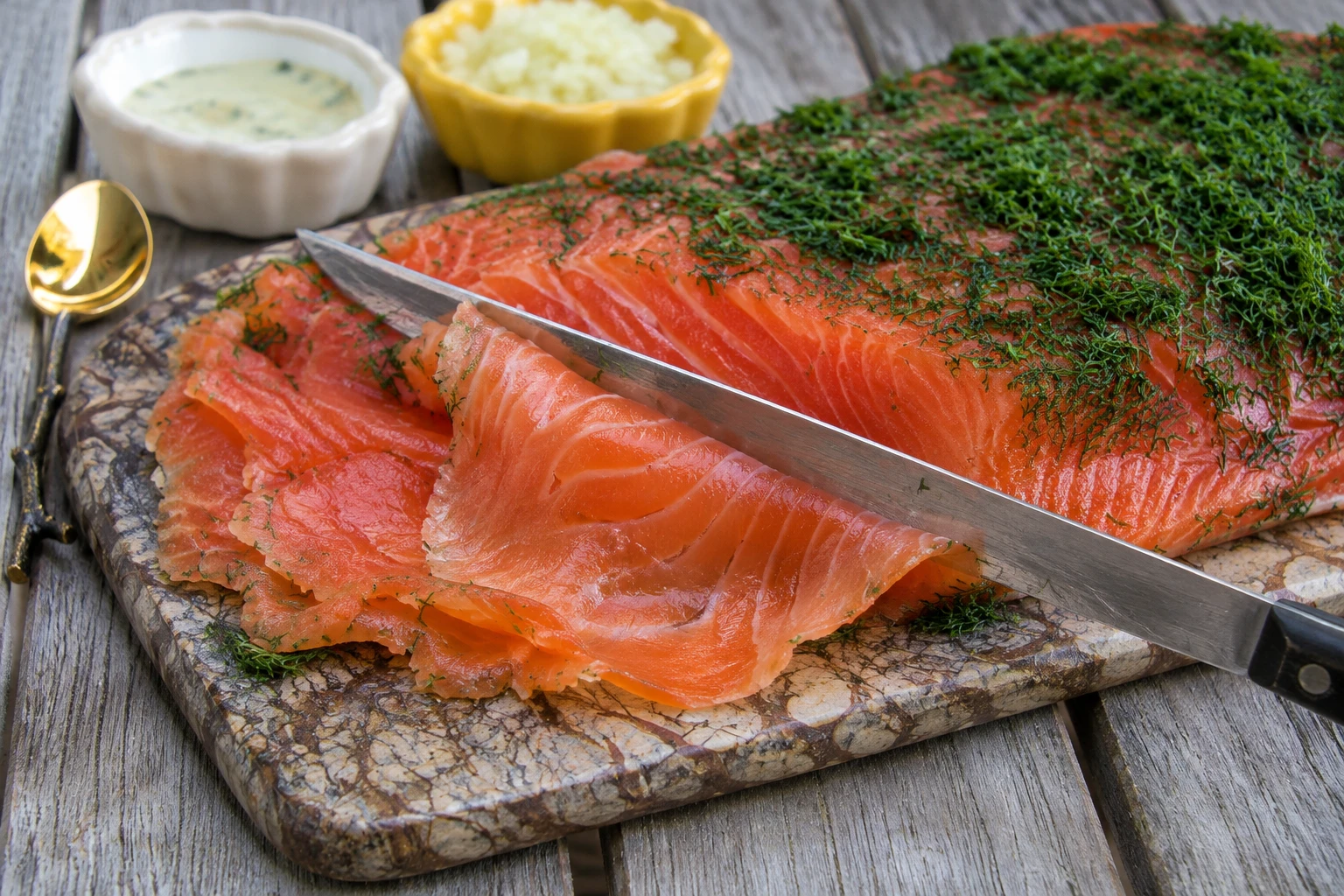
Modern gravlax is not fermented nor buried. The fillet, with skin on, is covered with a mixture of coarse salt, sugar, white pepper and a lot of chopped dill, often pressed, and left in the refrigerator for one or a few days. The salt and sugar draw out the fish’s water and give it a firm texture and a slightly sweet flavor. Afterwards, the salmon is sliced very thin, on the diagonal.
The classic accompaniment is hovmästarsås, also called gravlaxsås, a sauce of mustard, sugar, vinegar, oil and dill. Gravlax appears as a starter, on bread or with boiled potatoes, and is a staple at the year’s celebrations, from the Christmas smorgasbord, the julbord, to Easter and midsommar.


 Brazil
 Argentina
 Bolivia
 Chile
 Colombia
 Ecuador
 Guyana
 French Guiana
 Falkland Islands (Malvinas)
 Paraguay
 Peru
 Suriname
 Uruguay
 Venezuela
 Germany
 Austria
 Belgium
 Croatia
 Denmark
 Spain
 Finland
 France
 Greece
 the Netherlands
 Hungary
 Ireland
 Iceland
 Italy
 Luxembourg
 Norway
 Poland
 Portugal
 the United Kingdom
 the Czech Republic
 Switzerland
 Turkey
 Canada
 the United States
 Mexico
 the Dominican Republic
 South Africa
 Australia
 Fiji
 New Zealand
 Papua New Guinea