Rotorua

Bay of Plenty · New Zealand

Rotorua

City built over a geothermal field, with geysers, boiling mud pools and colorful springs, and the main center for Māori culture for visitors to New Zealand.

Central North Island

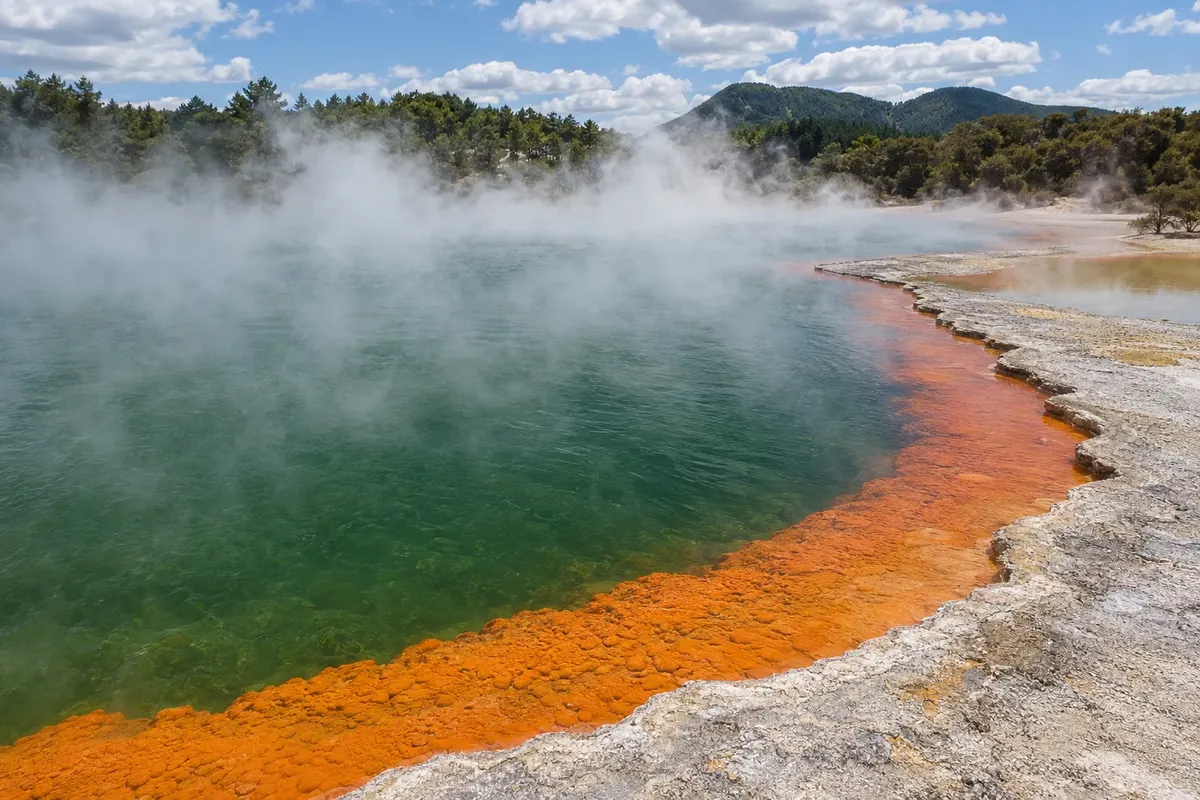
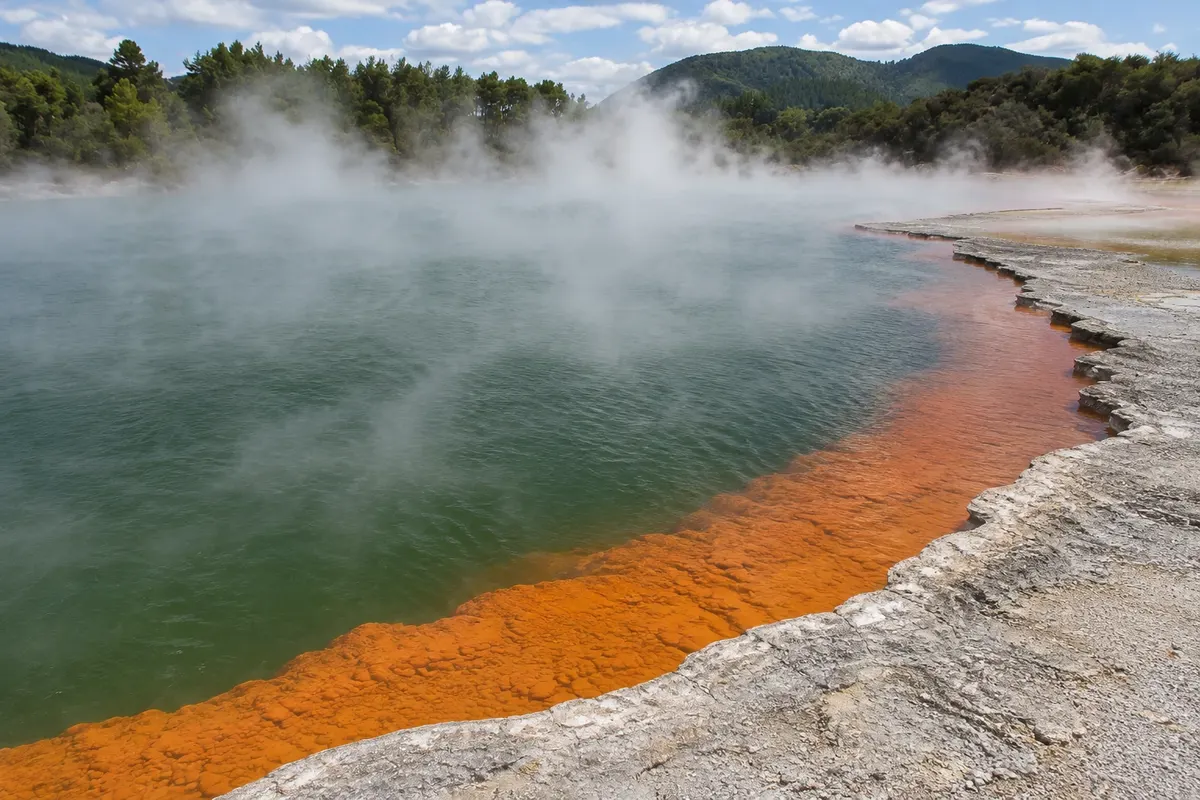
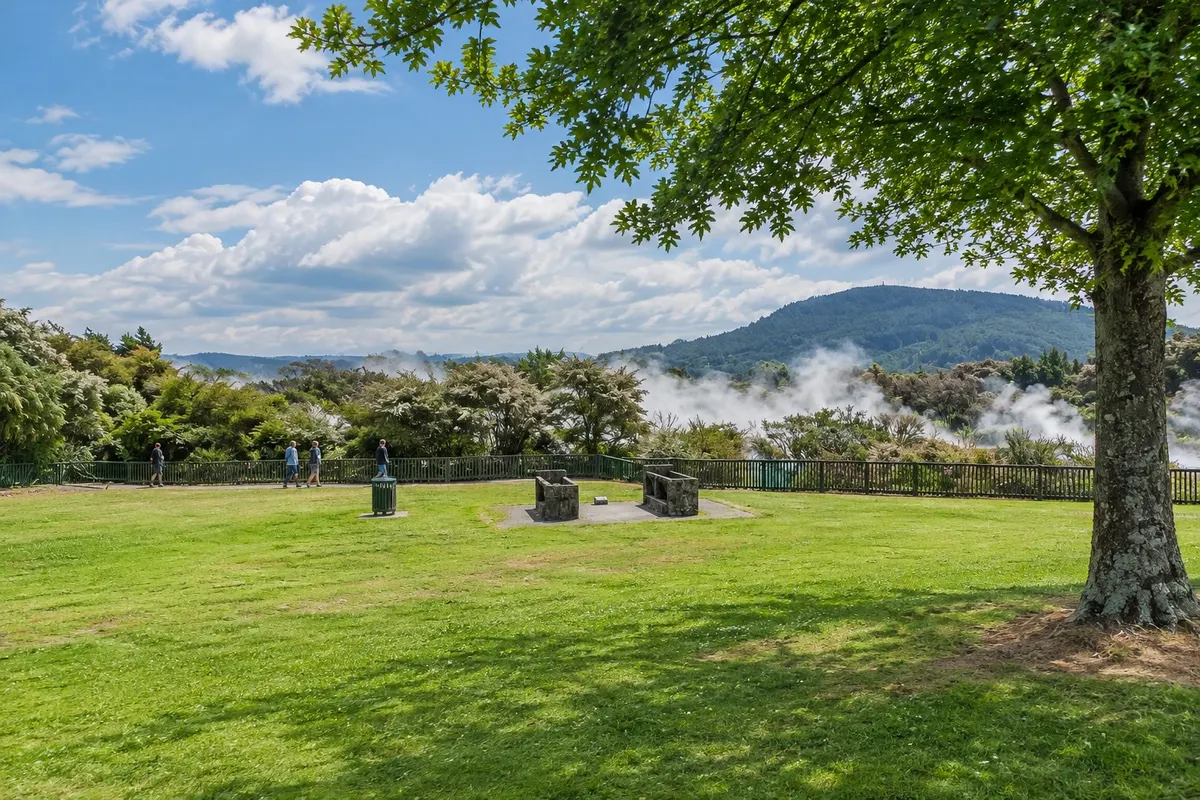
In the photo: Champagne Pool, Wai‑O‑Tapu

Illustrative images. The pictures in this guide are illustrations based on the real place, not photographs, and may differ from it.

Get to know the place

A region to enjoy
at your own pace.

Rotorua sits on the volcanic plateau of the central North Island, on the southern shore of Lake Rotorua, about 230 km from Auckland. The city was built over an active geothermal field: steam rises from the ground in squares, parks and backyards, and the air has the sulfur smell typical of hot springs.

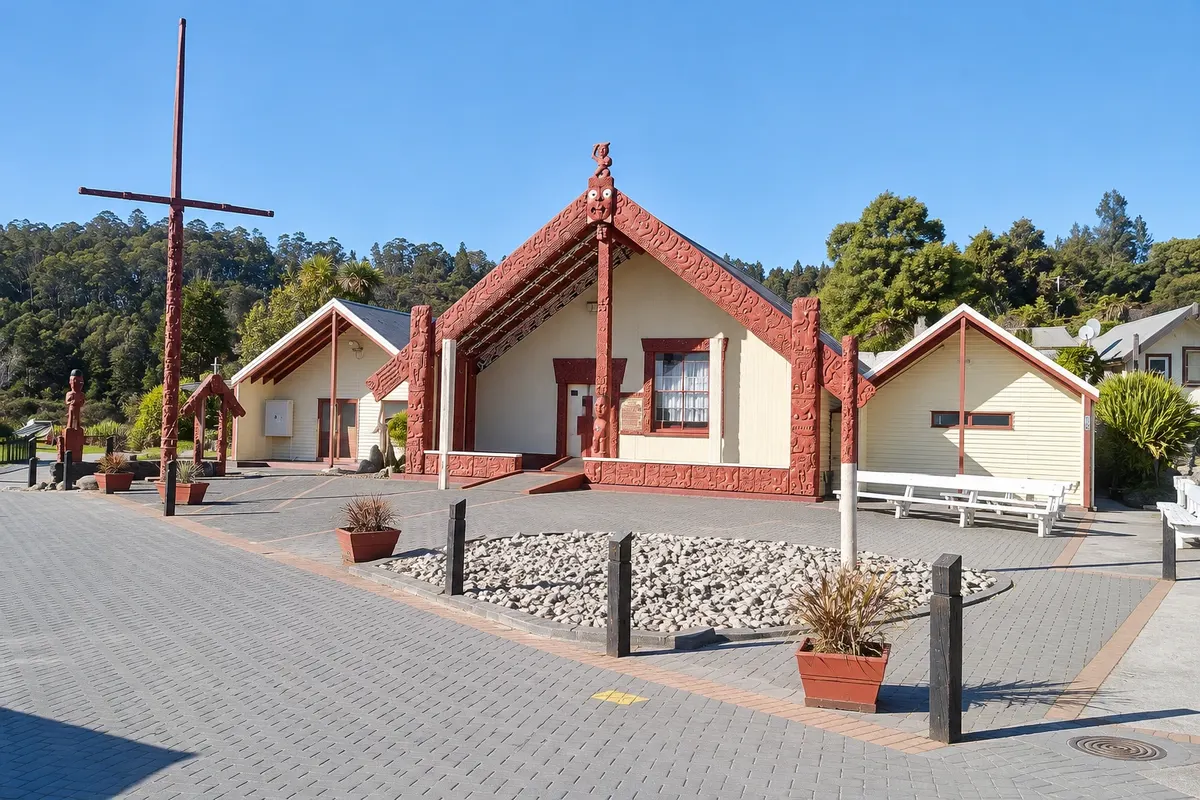
The region is Te Arawa territory; they have lived here for centuries and use the earth’s heat to cook, heat houses and bathe. That is why Rotorua is the most sought-after place to experience Māori culture: singing and dancing performances, the hāngī feast cooked in steam or earth ovens, and carving and weaving schools.

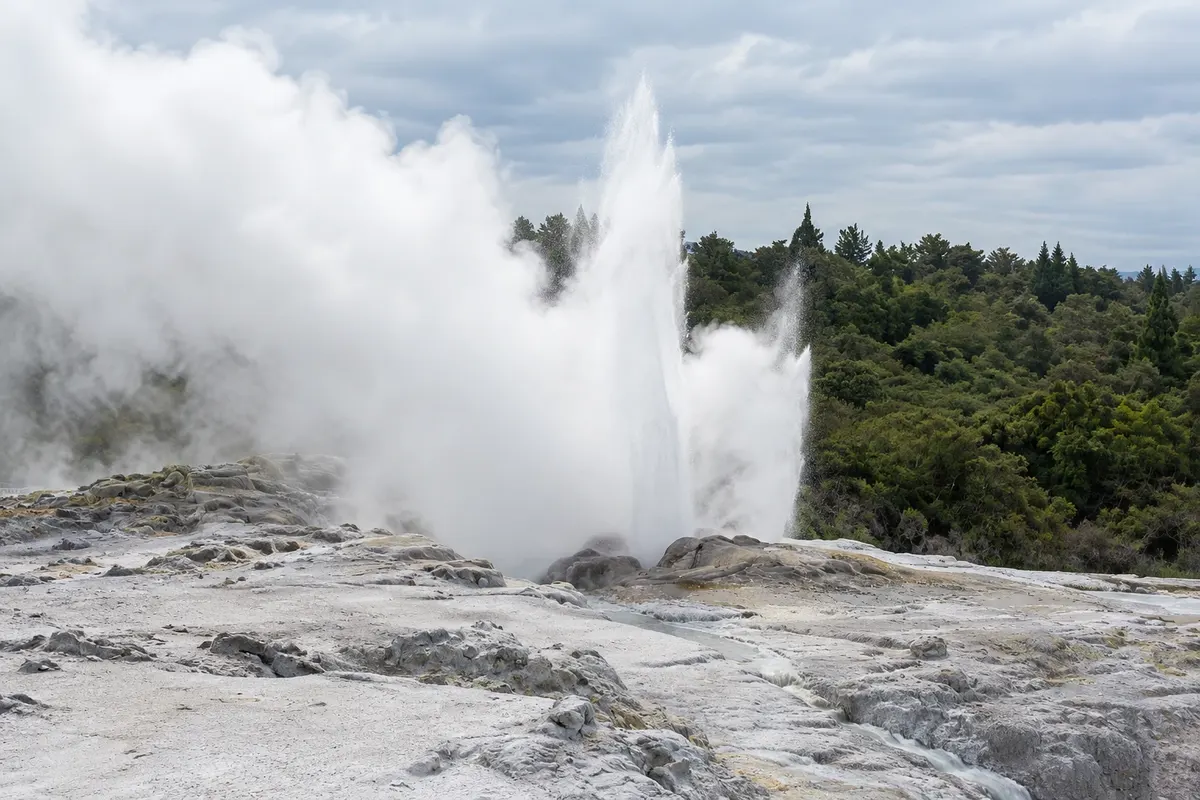
At the city edge, the Te Whakarewarewa valley contains the Pōhutu geyser, one of the most active in the Southern Hemisphere, and an inhabited Māori village. To the south, on the road to Taupō, are Wai-O-Tapu, with colorful thermal pools, and the Waimangu valley, formed by the 1886 eruption of Mount Tarawera. The Kuirau Park and Government Gardens in the center display the city’s steam vents and thermal features.

Surrounding the city are volcanic lakes and forests, such as the Whakarewarewa sequoia forest, with walking and mountain bike trails. The city also has public and commercial hot pools for bathing.

This destination brings together 1 city: Rotorua.

Share: WhatsApp
Traveler, share your experiences through photos Up to 5 photos of each place you visited.

One destination, many paths

The cities on this trip

Start with one city or combine several in your itinerary.

Where Rotorua is
Rotorua

Boundaries: Stats NZ / geoBoundaries (CC BY 4.0). Adapted by Cidade Turismo.

How to get there: Rotorua

✈ Aeroporto de Rotorua (ROT) · 9 km to Rotorua

From Auckland it’s roughly 230 km, about 3 hours by car, or daily scheduled buses. Rotorua Airport has domestic flights, mainly from Auckland, Wellington and Christchurch. Taupō is about 80 km to the south and Matamata about 65 km away.

The local experience

Things to do in Rotorua

Te Puia
Rotorua · Bay of Plenty · Geothermal area

Te Puia

Park in the Te Whakarewarewa geothermal valley, with the Pōhutu geyser, boiling mud lakes, the national school of Māori carving and weaving, a kiwi house and cultural performances.

Whakarewarewa Village
Rotorua · Bay of Plenty · Māori village

Whakarewarewa Village

Inhabited Māori village in Rotorua’s geothermal valley, where residents cook with spring steam and guide visits through houses, thermal pools and viewpoints of the Pōhutu geyser.

Wai-O-Tapu
Rotorua · Bay of Plenty · Geothermal area

Wai-O-Tapu

Geothermal area south of Rotorua with intensely colored pools: the Champagne Pool with an orange rim, the Artist's Palette, the green Devil's Bath and the Lady Knox geyser.

Waimangu Volcanic Valley
Rotorua · Bay of Plenty · Geothermal area

Waimangu Volcanic Valley

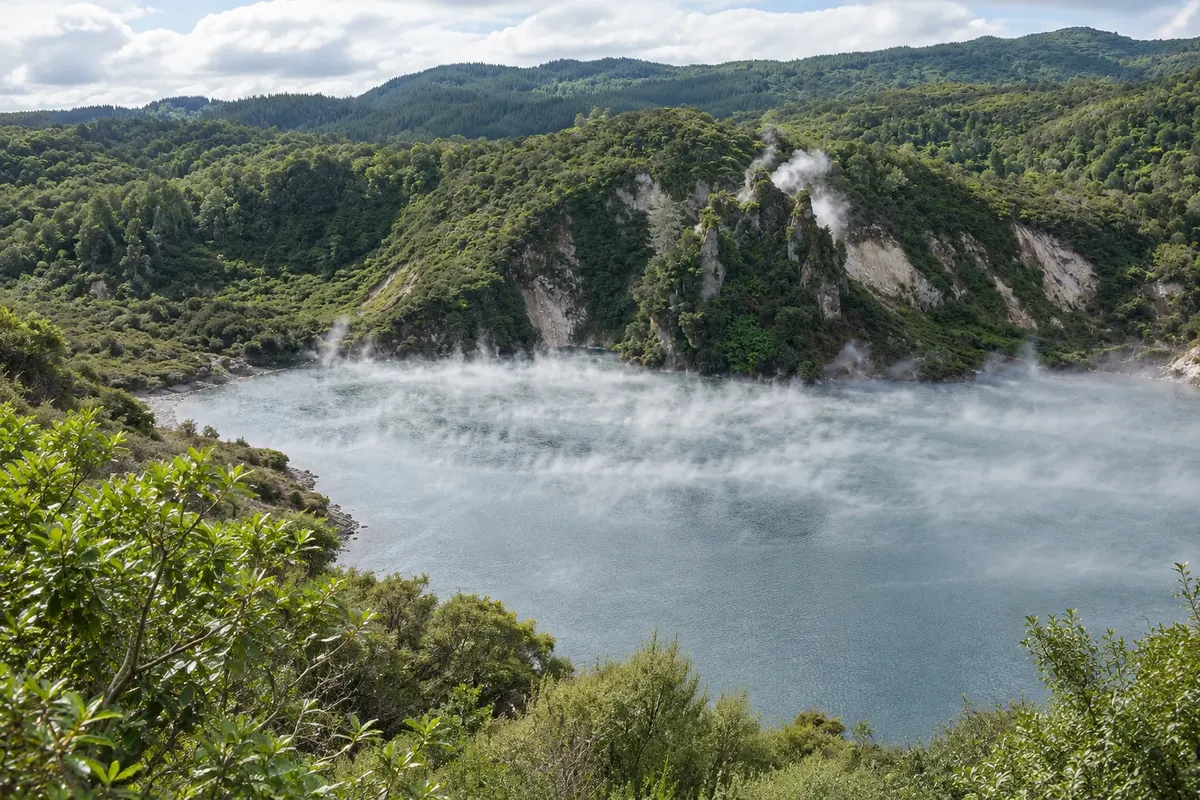
A valley formed by the 1886 eruption of Mount Tarawera, featuring Frying Pan Lake, which released steam like a frying pan, the Inferno crater of blue water and a downhill trail to Lake Rotomahana.

See 3 more places in Rotorua
Whakarewarewa Forest (The Redwoods)
Rotorua · Bay of Plenty · Forest

Whakarewarewa Forest (The Redwoods)

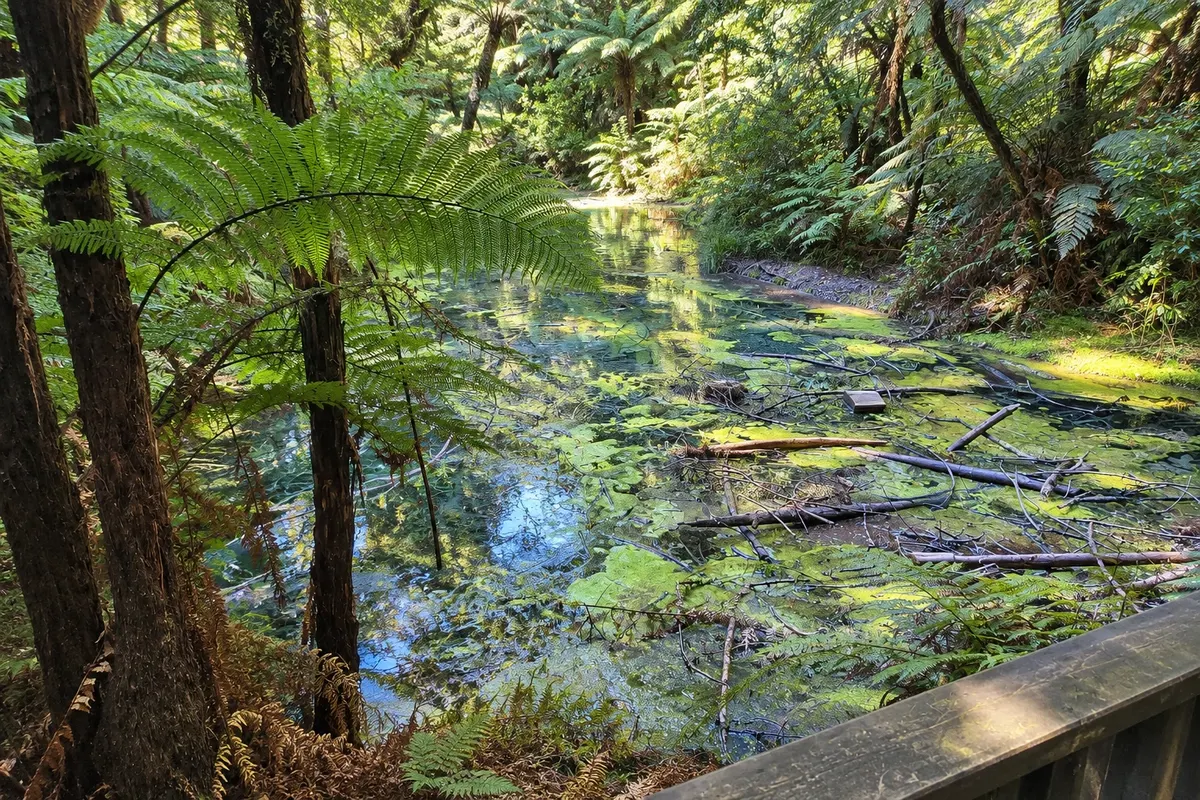
Forest on the edge of Rotorua with a grove of sequoias planted in 1901, walking and mountain-bike trails and a suspended-bridge walkway among the trees.

Government Gardens
Rotorua · Bay of Plenty · Park

Government Gardens

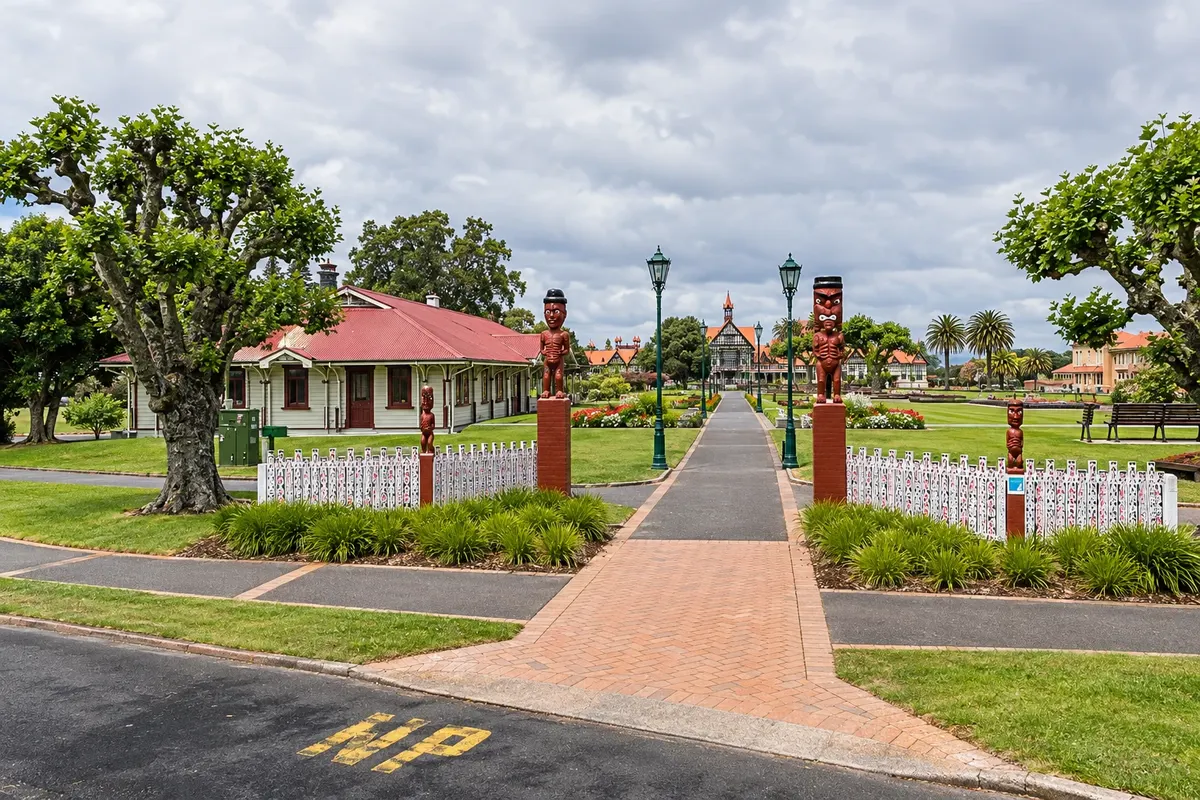
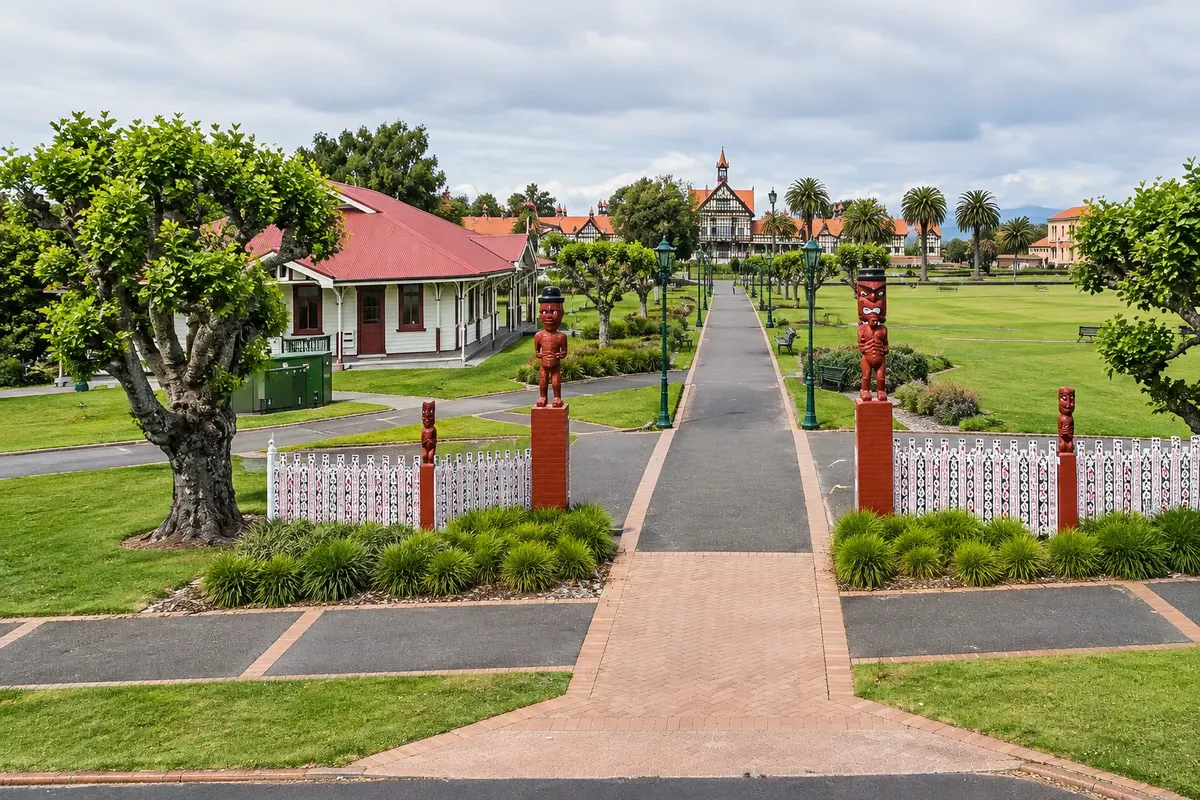
Gardens on the shore of Lake Rotorua in the city centre, with the Tudor‑style building of the former bathhouse, bowling greens, flowerbeds and geothermal steam areas.

Kuirau Park
Rotorua · Bay of Plenty · Park

Kuirau Park

Public park in central Rotorua with a steaming lake, fenced boiling mud pools and thermal footbaths, open at any time.

Before you go

Practical information

A little planning leaves more time to enjoy the journey.

When to go

Rotorua is year‑round. From December to March the days are warm, good for lakes and trails. In winter, from June to August, mornings are cold and the steam from geothermal areas is more visible, and it’s the best time for hot‑pool bathing.

The seasons shown are the most usual ones; nature doesn't always follow the calendar.

How many days to stay

Two days allow you to see Te Puia or the Whakarewarewa village, Wai‑O‑Tapu and one evening with a Māori performance and hāngī. With three days you can add Waimangu, the sequoia forest and a hot‑pool soak.

Which city to stay in

The town center, near the lake and the Government Gardens, has the widest choice of accommodations and restaurants, and many places with their own thermal pools. Fenton Street, which links the center to Whakarewarewa, concentrates motels. Around the lakes there are more isolated houses and guesthouses for those traveling by car.

Respect the place

Take your trash with you, follow the signs and support local businesses. In natural areas, follow the visiting guidelines.

Get your questions answered

Frequently asked questions about Rotorua

How many days to stay in Rotorua?

Two to three days. Two let you see one geothermal area, Wai‑O‑Tapu and an evening of Māori culture; with three you can include Waimangu and the sequoia forest.

Does Rotorua smell of sulfur?

Yes. Steam from geothermal areas contains hydrogen sulfide, which smells like rotten eggs; it’s stronger in some spots and on windless days. After a few hours most people barely notice it.

Do you need a car in Rotorua?

For the center, Te Puia, Whakarewarewa and the parks, no. For Wai‑O‑Tapu and Waimangu to the south, a car or an organized tour is necessary.

Can you do a day trip from Auckland to Rotorua?

It’s possible with organized tours, but it’s about 6 hours of driving roundtrip. Ideally you should stay at least one night.

Which is the best geothermal area in Rotorua?

It depends on your interest: Te Puia and Whakarewarewa combine the Pōhutu geyser and Māori culture; Wai‑O‑Tapu has the most colorful pools; Waimangu offers a long walk through a volcanic valley.

Explore other destinations Search by state and city