

 Brazil
 Antarctica
 Argentina
 Bolivia
 Chile
 Colombia
 Ecuador
 Guyana
 French Guiana
 Falkland Islands (Malvinas)
 Paraguay
 Peru
 Suriname
 Uruguay
 Venezuela
 Germany
 Austria
 Belgium
 Croatia
 Denmark
 Slovakia
 Slovenia
 Spain
 Finland
 France
 Greece
 the Netherlands
 Hungary
 Ireland
 Iceland
 Luxembourg
 Norway
 Poland
 Portugal
 the United Kingdom
 the Czech Republic
 Sweden
 Switzerland
 Turkey
 Bermuda
 Canada
 the United States
 Greenland
 Mexico
 Saint Pierre and Miquelon
 the Dominican Republic
 Japan
 South Africa
 Egypt
 Australia
 Fiji
 New Zealand
 Papua New Guinea
Illustrative images. The pictures in this guide are illustrations based on the real place, not photographs, and may differ from it.


Ways to travel
Sports tourism in Italy
Two rival teams’ jerseys at the San Siro museum, a serve on clay in Rome, an indoor final in Turin. Choose where you want to watch sports in Italy.
In Milan, fans of AC Milan and Inter know the same route to the stadium by heart. On a stadium tour, you can follow a route few fans take during a match. The tunnel at San Siro leads to the edge of the field, where you see the stands from much the same angle as a player stepping onto the field.
Things to do
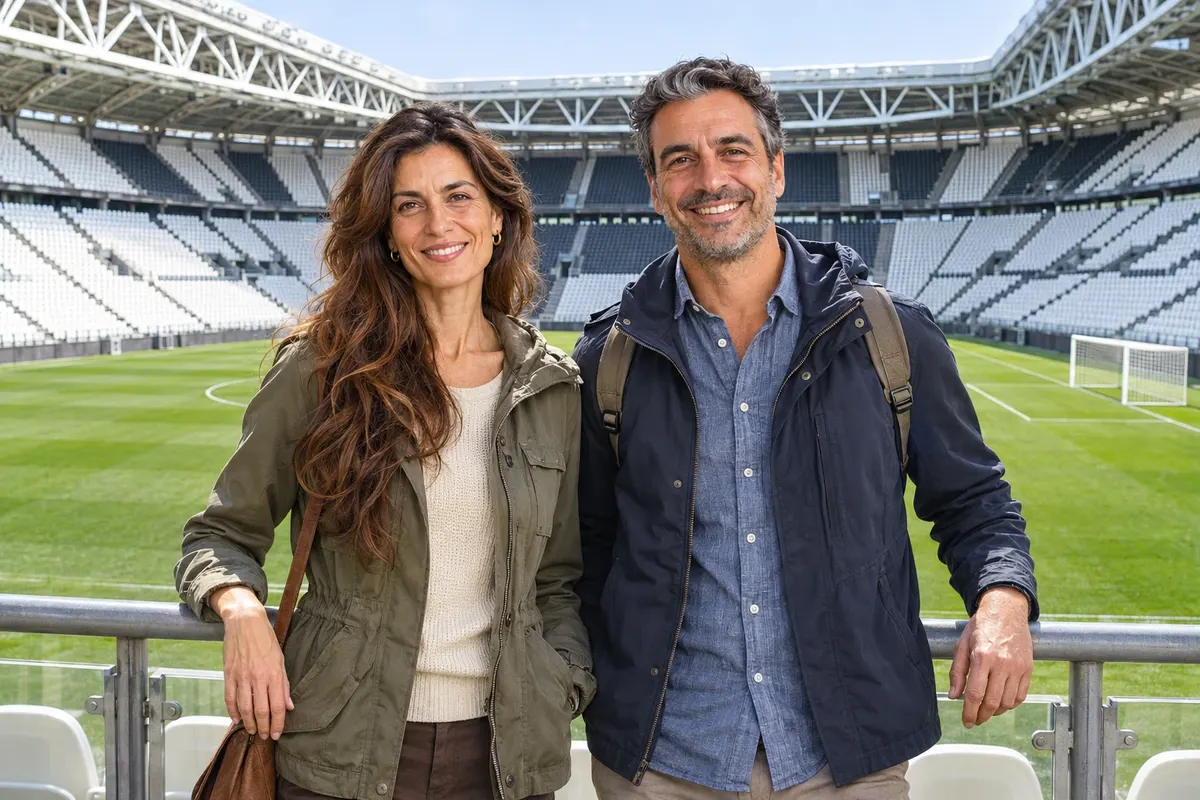
Visit soccer stadiums and museums
Tour San Siro, explore the history of Juventus’s victories, or follow the players’ route through Rome’s Stadio Olimpico.
Learn more
Watch live sporting events
Choose a tennis session at the Foro Italico in Rome, or watch the matches at the ATP Finals in Turin.
Learn moreWhere to go in Italy
Pick a region or type what you are looking for to see the cities and who offers each activity.
If you want to hear the crowd, it’s worth choosing a competition before planning your itinerary. Rome offers soccer at the Stadio Olimpico and tennis at the Foro Italico. Turin, home to Juventus, also hosts the ATP Finals. Whether you visit a club or attend a tournament affects the ticket you need, the time of year you travel, and even what you can see from your seat.
Inside the soccer stadiums of Milan, Turin, and Rome
San Siro is a good place to start if you want to understand soccer in Milan. The red and black jersey belongs to AC Milan, the blue and black one to Inter. In the museum, items from both clubs tell the stories of two teams that took different paths but ended up playing on the same field. From the locker rooms to the end of the tunnel, you can see how each team uses its part of their shared home.
In Turin, the visit focuses on a single club. The trophies at the Juventus Museum commemorate victories many fans know from footage of the finals. At Allianz Stadium, you get a different sense of scale. From the team bench, the sideline is right there, but the far side of the field looks much farther away than it does on TV. Look for a tour option that includes both the museum and the stadium.
Rome’s Olympic Stadium holds memories of Roma and Lazio, the 1960 Olympic Games, and the 1990 World Cup. As you emerge from the tunnel, notice the running track between the field and the stands. You can see at a glance how the same venue was used for both soccer and track events.
From the clay courts of Rome to the indoor court in Turin
The Internazionali BNL d’Italia takes place on the clay courts of the Foro Italico in Rome. In rounds with several matches underway at once, choosing a ticket also means choosing how to spend your day. A ticket with access to the outer courts lets you move around in search of a close match. If you want to see a match scheduled for center court, check which session is listed on your ticket.
In Turin, singles and doubles players compete in the ATP Finals on an indoor hard court at Inalpi Arena. Play starts with a group stage, followed by the semifinals and the final. In the group stage, even players who lose their opening match can play again. Checking the standings before you go in helps explain why the crowd cheers so loudly when a player wins a set, even with the match still undecided.
Watching a doubles team up close also changes how you follow the game. As one player prepares to serve, watch their partner at the net and notice where the two opponents are standing. From the stands, you can choose whose movements to follow, even when the ball is on the other side of the court.
A family visit or a full day of cheering
If you’re traveling with fans of different teams, try a little game at the San Siro museum. Each person picks a jersey and checks the label to find out who wore it and when. The conversation can continue in the tunnel, where it’s easy to imagine what those players saw just before they stepped onto the field.
If someone in your group needs to avoid stairs, check the route for the specific tour you’re considering. Having accessible seating on match days is one thing; being able to reach the locker room with the tour group is another. For a tennis session, use the map to check the distances between the designated entrance, the seating section on the ticket, and any facilities the person plans to use.
For children watching tennis for the first time, the changeovers break the match into short stretches they can focus on. They can pick a player and watch where that player stands to receive the serve. If you’d rather watch a little of each match, look for a ticket in Rome that lets you move between courts.
How to fit sports into your travel dates
The Rome tennis tournament usually draws fans to the Foro Italico in May. The ATP Finals takes place at the end of the men’s season. Check the venue and dates for the year you want to attend before booking your trip. When choosing a day, think about the stage of the tournament, too. The early rounds give you more matches to follow. The appeal of the final is seeing who wins the title.
For soccer, deciding which club to see is just the start. Check whether the team is playing at home that round, and if you’re traveling specifically for the match, wait for confirmation of the date and kickoff time. For a museum visit, a different schedule matters most. Check the tour calendar, since preparations for a match or concert can change which areas are open.
If your itinerary includes both a stadium tour and a tournament, start with whichever date is harder to change. In Turin, for example, book your session at Inalpi Arena first, then look for a tour of the Juventus Museum and Allianz Stadium. That leaves you free to choose a tour time without having to leave the tennis before the last point.
From choosing your seat to getting back to where you’re staying
When choosing a seat for a soccer match, check where the section is in relation to the field. From the sideline, it’s easier to watch both teams push forward and fall back. From behind the goal, the action goes from close up to far away, or vice versa, when the ball crosses the halfway line. If there’s a particular play you love to watch, such as a corner kick, a seating chart is more useful than a general photo of the stadium.
In tennis, a seat behind the baseline lets you follow the direction of the ball and see where space opens up on the court. A side view of the same point gives you a better sense of how far a player runs to reach a short ball. Use the seating chart for your session to choose the angle you prefer.
Keep the gate information with your ticket. At a large venue, getting to the building can take time, and so can getting from there to your seat. Agree on an easy-to-recognize place to meet the people you’re with on the way out. A tennis match can run well beyond its expected finish time, so it’s worth checking your options for getting back before you go in.
Frequently asked questions
Which Italian city is the best fit for Juventus fans?
Turin is home to both the Juventus Museum and Allianz Stadium. To explore the collection and go behind the scenes at the stadium, look for the option that includes both visits and check what time you need to arrive for the guided tour.
Do I need to attend a match to visit San Siro?
The museum and the tour have their own schedules. Even if you only have a morning or an afternoon in Milan, you can explore the history of AC Milan and Inter on a day when there’s no match.
If I buy a ticket for a session, can I see a specific tennis player?
Your ticket tells you which session you can attend and which court you have access to. To see who’s playing, check the order of play published by the tournament. Matchups in later rounds depend on earlier results.
Where can I enjoy soccer and tennis in the same city?
In Rome, the Stadio Olimpico and the tennis courts at the Foro Italico are part of the same sports complex. In Turin, the Juventus stadium tour and the ATP Finals session take place at different venues. Check both schedules and allow time to get from one venue to the other.
More in Ways to travel

Beyond the guide


