The festival
What is Washing of Bonfim
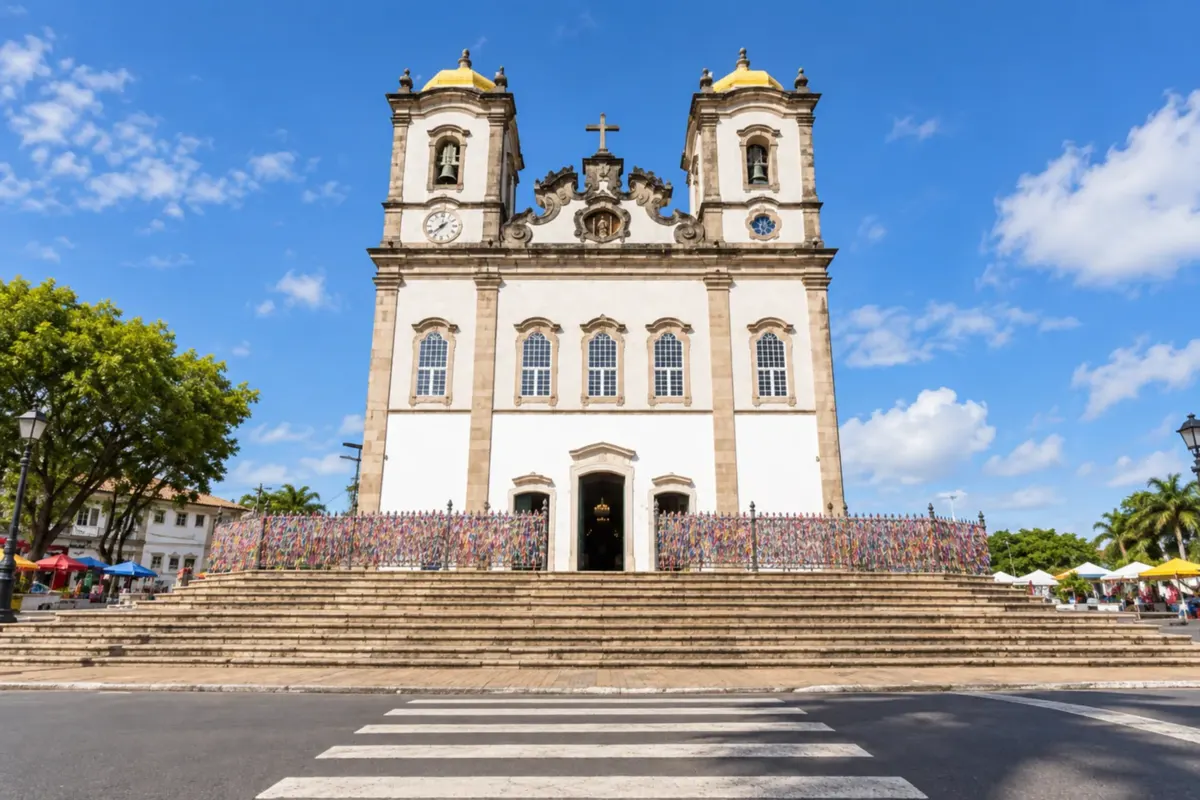
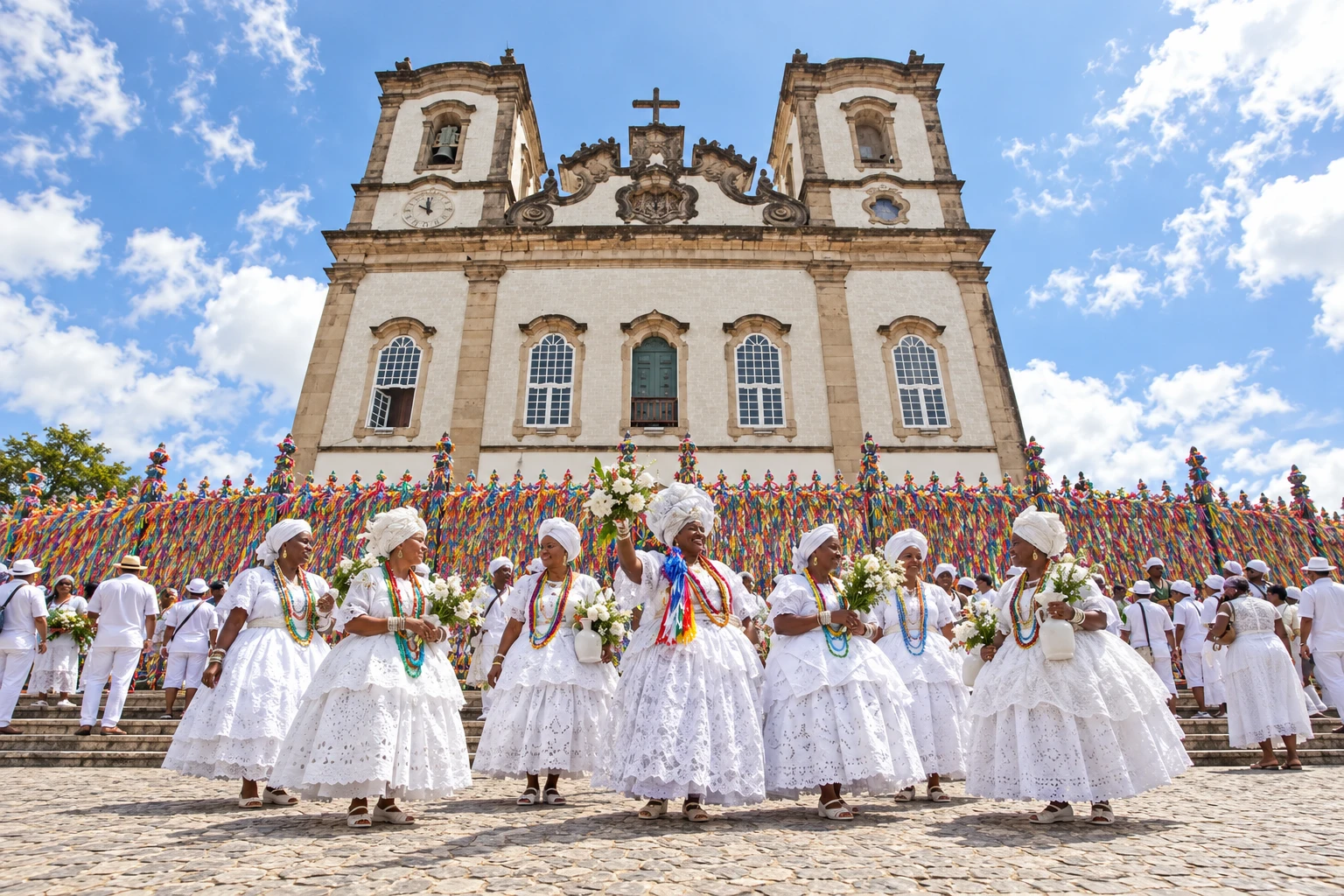
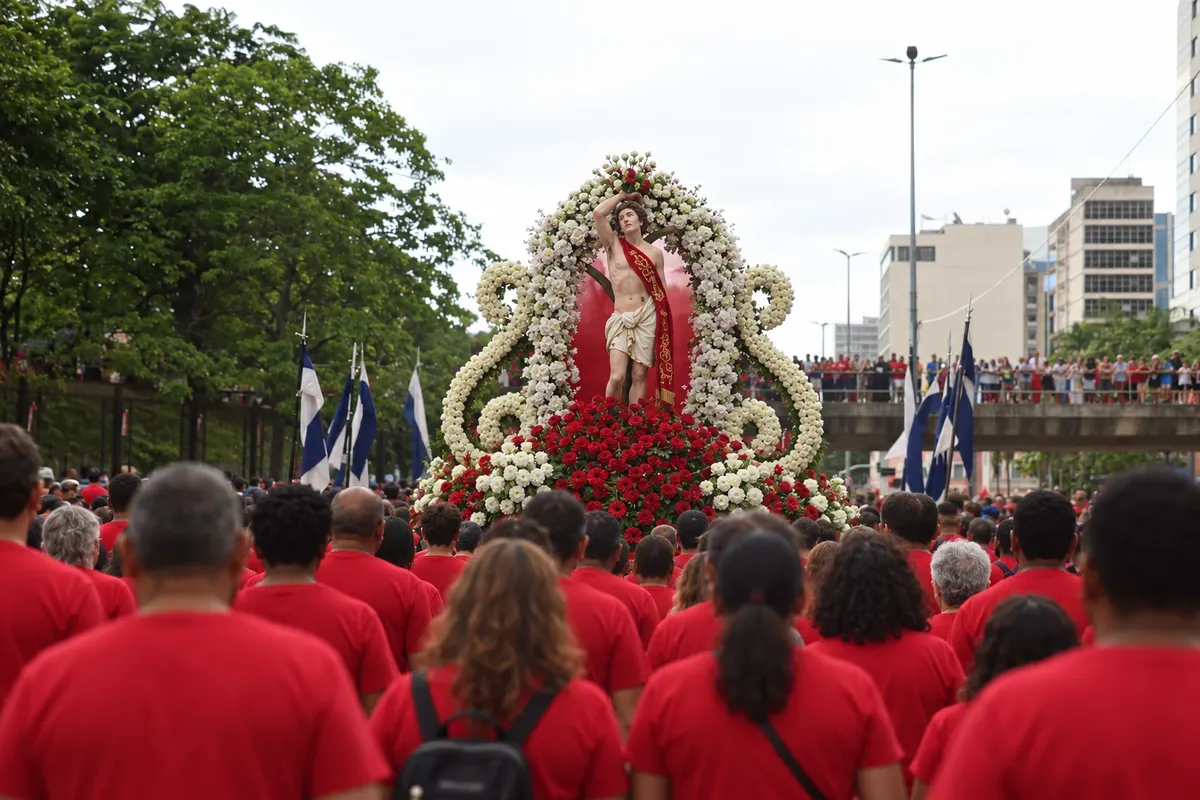
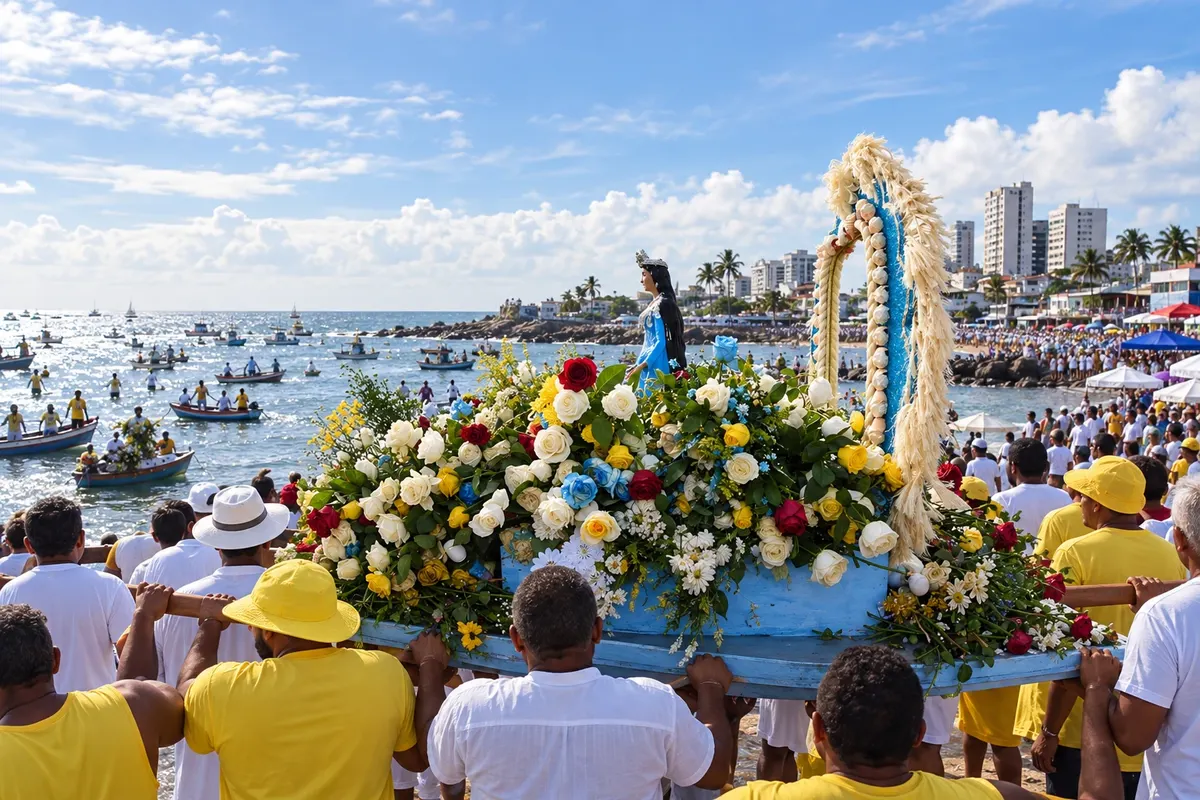
The Washing of Bonfim is the popular highlight of the Feast of the Senhor do Bonfim, the Catholic celebration that closes the Christmas cycle in Salvador. The festival lasts about ten days in January, with novenas and masses, and ends on the second Sunday after Epiphany, the Day of the Senhor do Bonfim. The Washing takes place on the preceding Thursday and brings together faithful, residents and visitors dressed in white.
The custom dates back to the 18th century. Before the festival, the church was washed and decorated; according to historical accounts, the task fell to enslaved people and pilgrims, under the direction of the brotherhood of the Senhor do Bonfim. Over time, the cleaning became a procession and acquired its present meaning: in Bahia’s religious syncretism, the Senhor do Bonfim is associated with Oxalá, and the Washing blends Catholicism and candomblé. In 2013, the Feast of the Senhor do Bonfim was entered in the national intangible heritage register kept by Iphan.
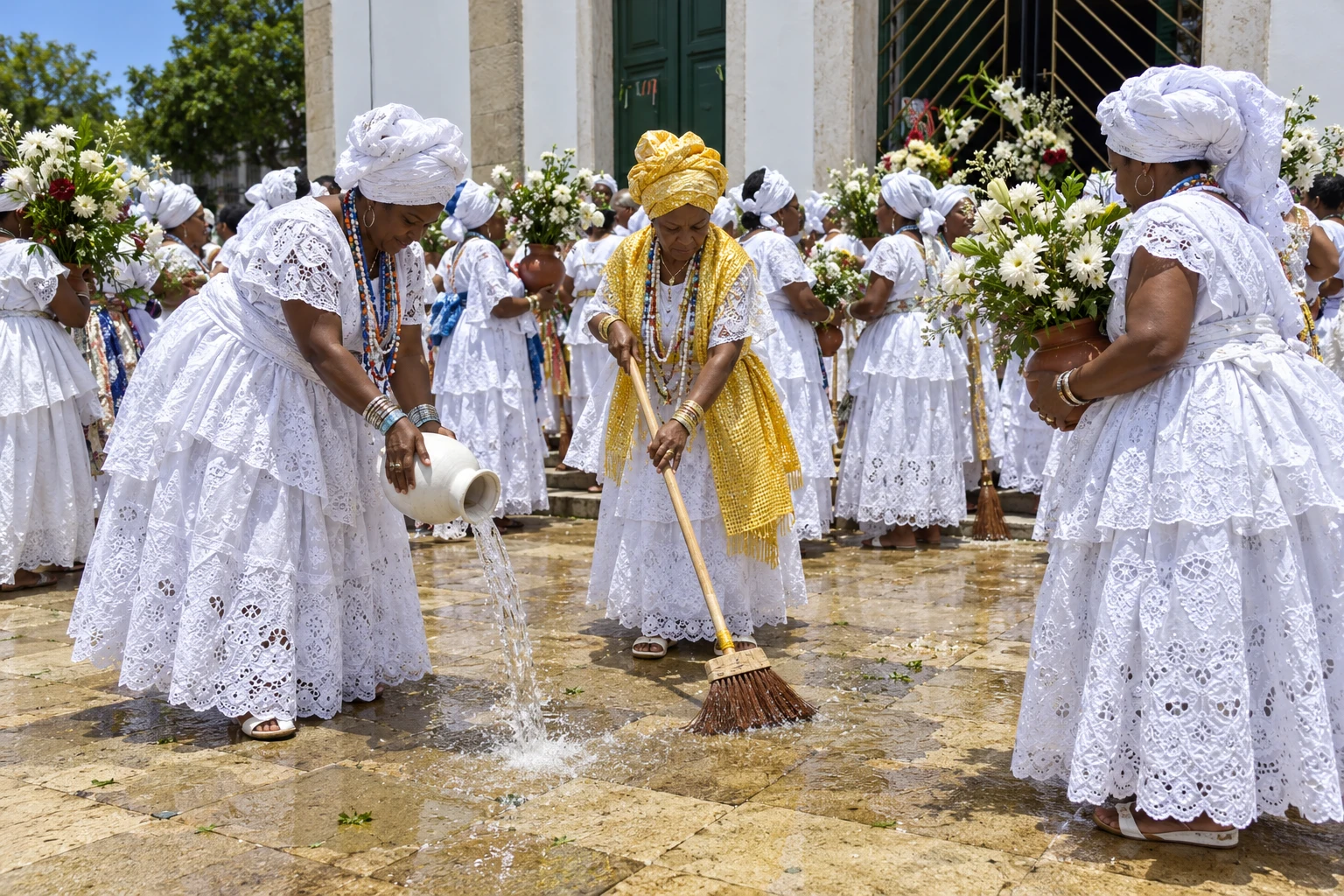
Early in the morning, after an inter-religious ceremony on the forecourt of the Basilica of Our Lady of the Conception of the Beach (Basílica de Nossa Senhora da Conceição da Praia), in the Comércio neighborhood, the procession follows through Cidade Baixa to the Itapagipe Peninsula. Leading the way are the baianas, wearing full skirts and carrying quartinhas (small jars) of scented water and flowers; behind them come decorated carts, afoxé groups, fanfares, blocos and a crowd walking and singing. At the top of the hill, the baianas pour the perfumed water over the steps and the forecourt of the basilica, and many people receive scented water.
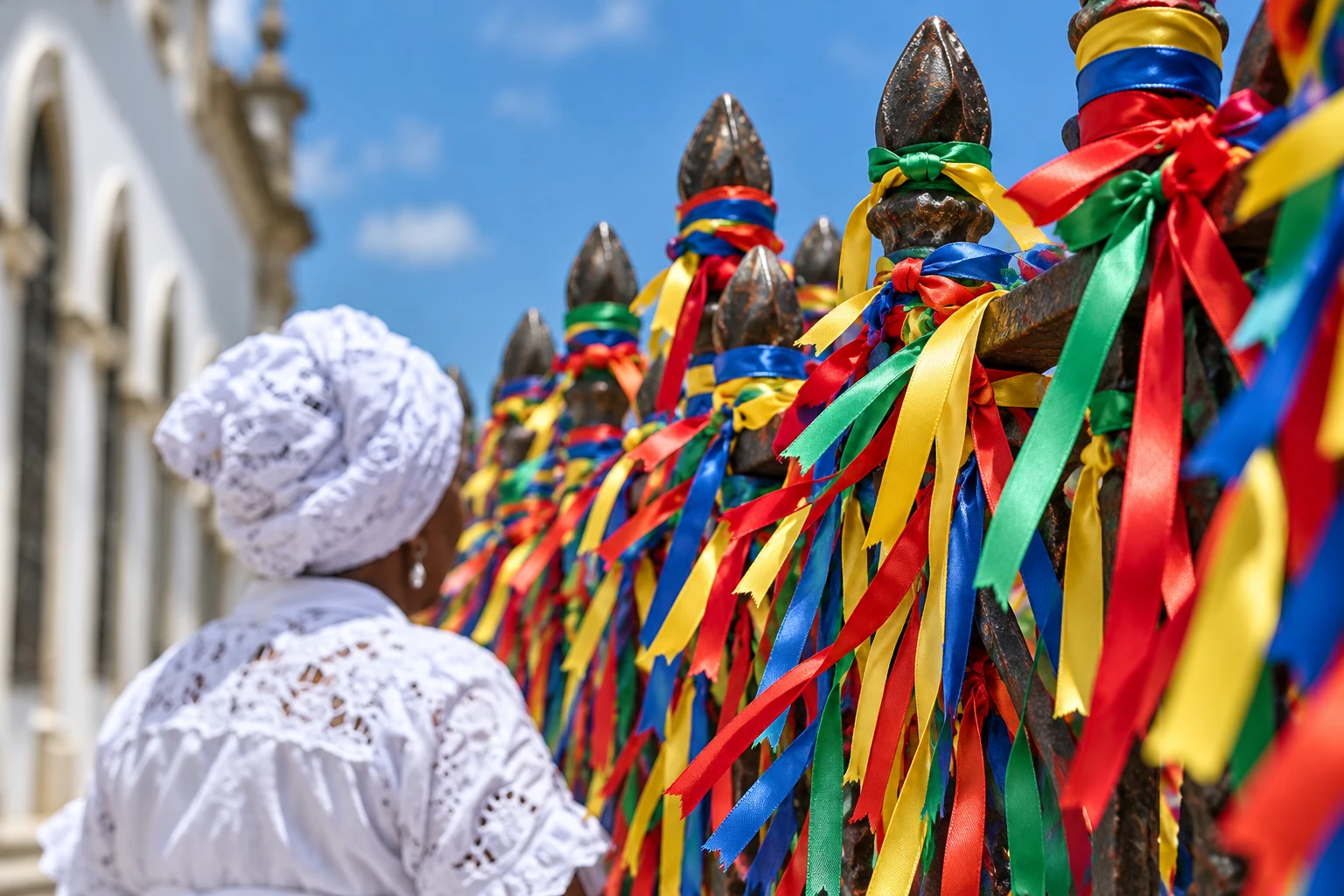
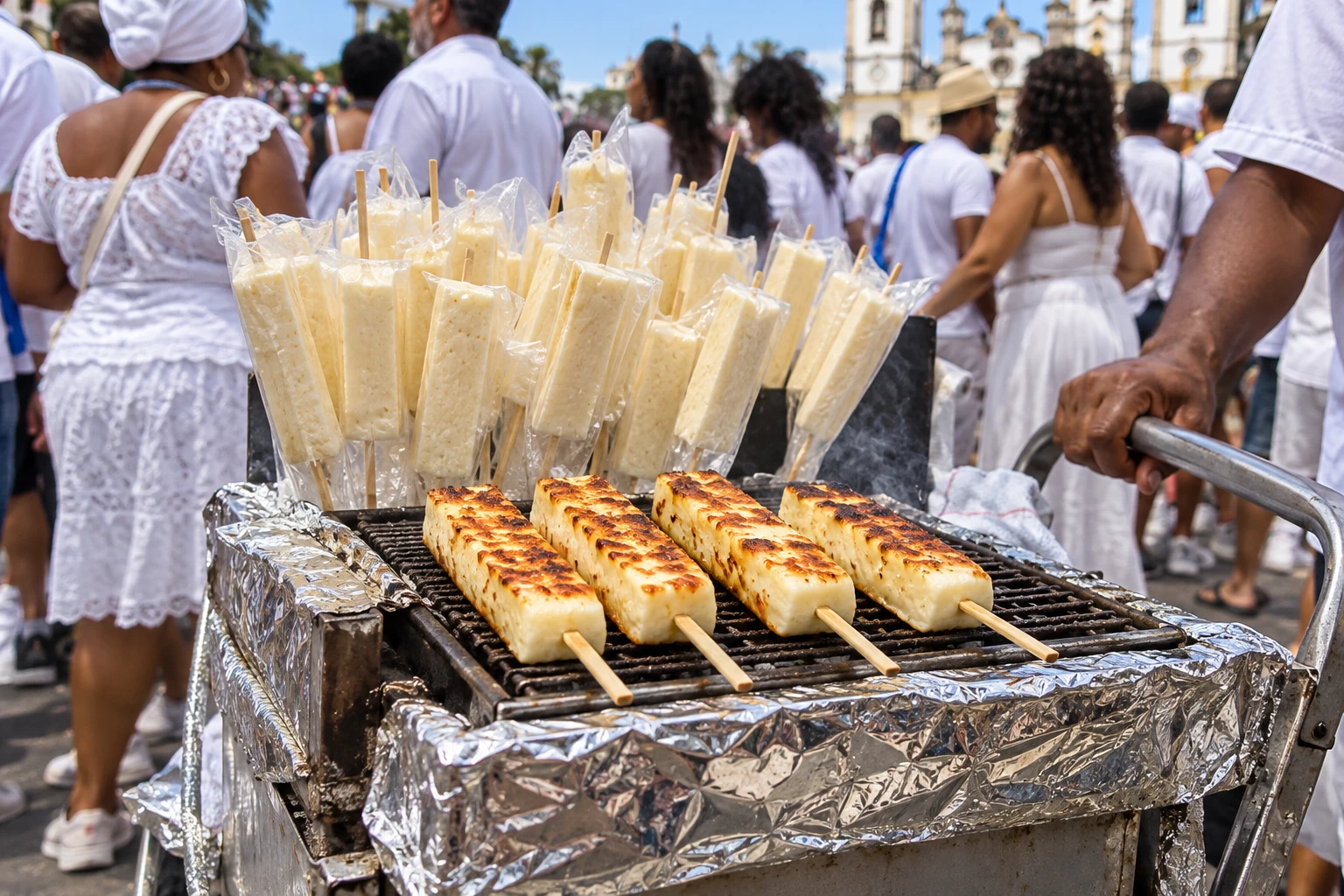
After the washing, the celebration continues in Largo do Bonfim and nearby streets, with stalls, music and samba circles into the night. It is also the day to tie the Senhor do Bonfim ribbons to the church railings — colorful strips bearing the saint’s name that are tied on the wrist while making three wishes. For visitors to Salvador in January, the Washing shows in a single day the city’s religiosity, music and street life.


 Argentina
 Bolivia
 Chile
 Colombia
 Ecuador
 Guyana
 French Guiana
 Falkland Islands (Malvinas)
 Paraguay
 Peru
 Suriname
 Uruguay
 Venezuela
 Germany
 Austria
 Belgium
 Croatia
 Denmark
 Spain
 Finland
 France
 Greece
 the Netherlands
 Hungary
 Ireland
 Iceland
 Italy
 Luxembourg
 Norway
 Poland
 Portugal
 the United Kingdom
 the Czech Republic
 Sweden
 Switzerland
 Turkey
 Canada
 the United States
 Mexico
 the Dominican Republic
 South Africa
 Australia
 Fiji
 New Zealand
 Papua New Guinea