

 Brazil
 Antarctica
 Argentina
 Bolivia
 Chile
 Colombia
 Ecuador
 Guyana
 French Guiana
 Falkland Islands (Malvinas)
 Paraguay
 Peru
 Suriname
 Uruguay
 Venezuela
 Germany
 Austria
 Belgium
 Croatia
 Denmark
 Slovakia
 Slovenia
 Spain
 Finland
 France
 Greece
 the Netherlands
 Hungary
 Ireland
 Iceland
 Italy
 Luxembourg
 Norway
 Poland
 Portugal
 the United Kingdom
 the Czech Republic
 Sweden
 Switzerland
 Turkey
 Bermuda
 Canada
 Greenland
 Mexico
 the Dominican Republic
 South Africa
 Egypt
 Australia
 Fiji
 New Zealand
 Papua New Guinea
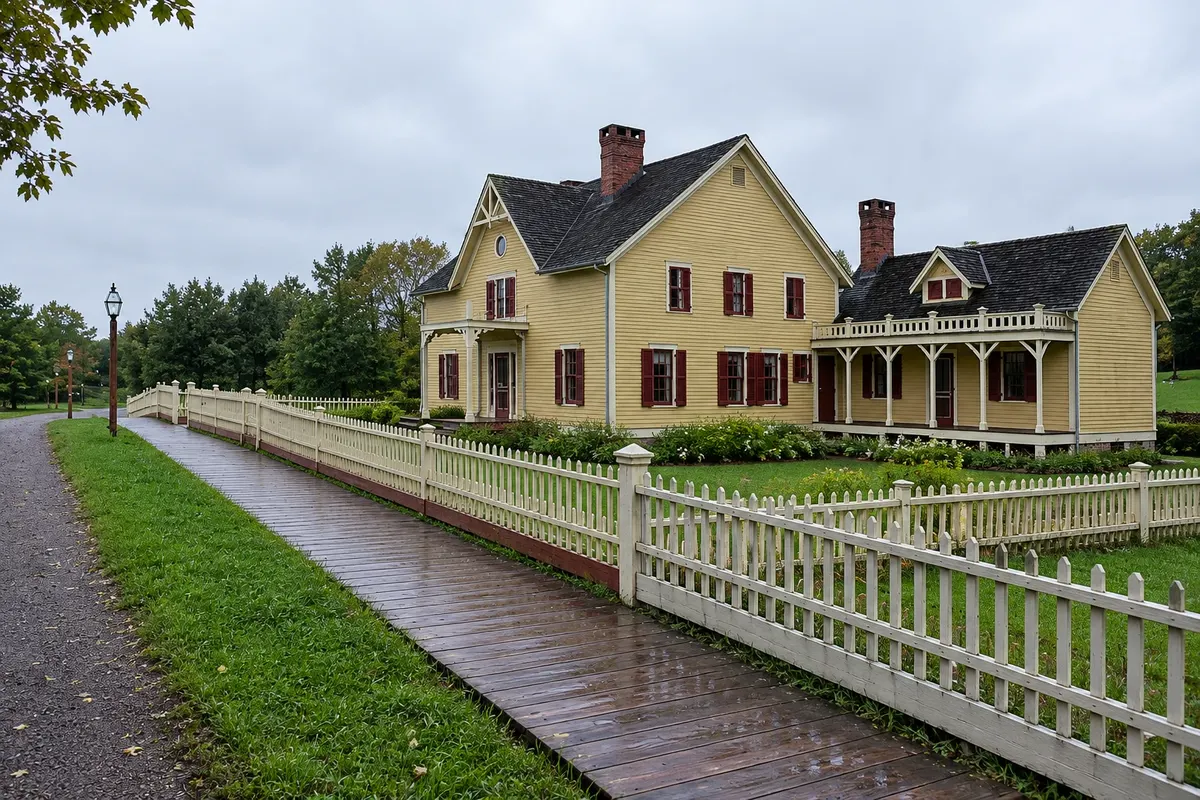
Open-air museum · Des Moines, Iowa
Living History Farms
Open-air museum in Urbandale, with farms from different eras and an 1876 village where interpreters perform as the residents of each period.
Illustrative images. The pictures in this guide are illustrations based on the real place, not photographs, and may differ from it.




Discover
About Living History Farms
Living History Farms covers about 200 hectares in Urbandale, at the western exit of Des Moines. It is an open-air museum that tells how the Iowa prairie became one of the world’s most productive agricultural regions. Visitors walk trails through areas representing different eras.
The first exhibit shows an 18th-century Ioway village. Then there is a pioneer farm from 1850 with a log cabin, and a 1900 farm with draft horses, a barn, and a wooden house. The Walnut Hill village, dating from 1876, has a blacksmith, print shop, store, church, school, and a Victorian house. In each place, interpreters dressed in period clothing cook, plant, harvest, and care for animals.
Visiting season generally runs from late April to late October; from November to April the museum opens only for programs by reservation. During the season, tractor-drawn wagons help cover the distances between farms.
Before you go
Practical information
Cidade Turismo reviews its information regularly, but something may have changed. Check with the place before planning your trip.
How much time to set aside
From three hours to half a day.
Best time
From May to October, during the season. In spring there is planting and new animals; in September and October, the harvest.
How to get there
It’s next to exit 125 on I-35/80 in Urbandale, about 18 km from downtown Des Moines. an express bus line passes nearby; a car is more practical.
Tip
Wear comfortable shoes: the full route exceeds 3 km on foot. Check opening days, which do not include every day of the week.
Official website
Get your questions answered
Frequently asked questions about Living History Farms
When does Living History Farms open?
Visiting season generally runs from late April to late October, Tuesday through Saturday. Outside that period, only programs by reservation. Check the website.
How long does a visit to Living History Farms take?
Three hours to half a day to explore the farms and the 1876 village at a relaxed pace.
Is Living History Farms good for children?
Yes. Children can follow animal care, wood‑stove cooking, and farm tasks, and there is an area for hands‑on activities.