Bratislavský rožok
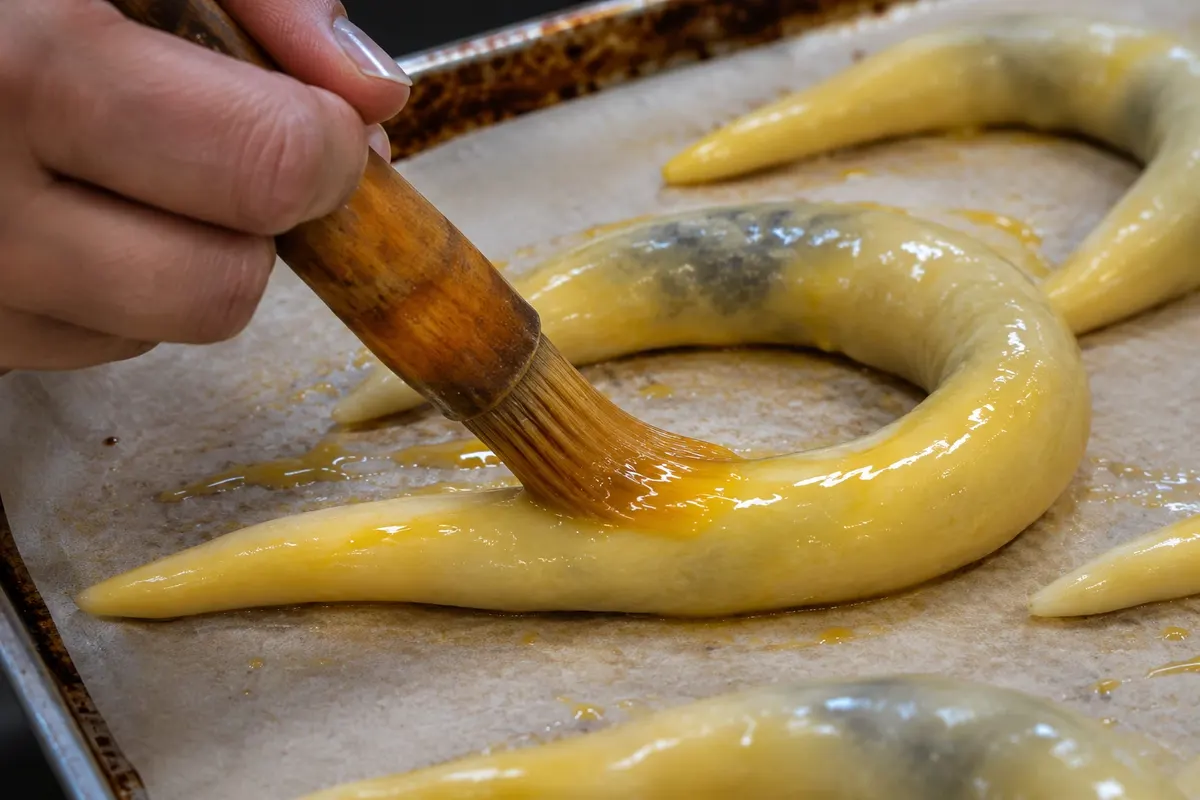
Thin, glossy pastry filled with walnuts or poppy-seed filling. The poppy-seed one is shaped like a horseshoe and the walnut one like the letter C. Registered in the European Union as a traditional speciality guaranteed.
Popular festival · Bratislava
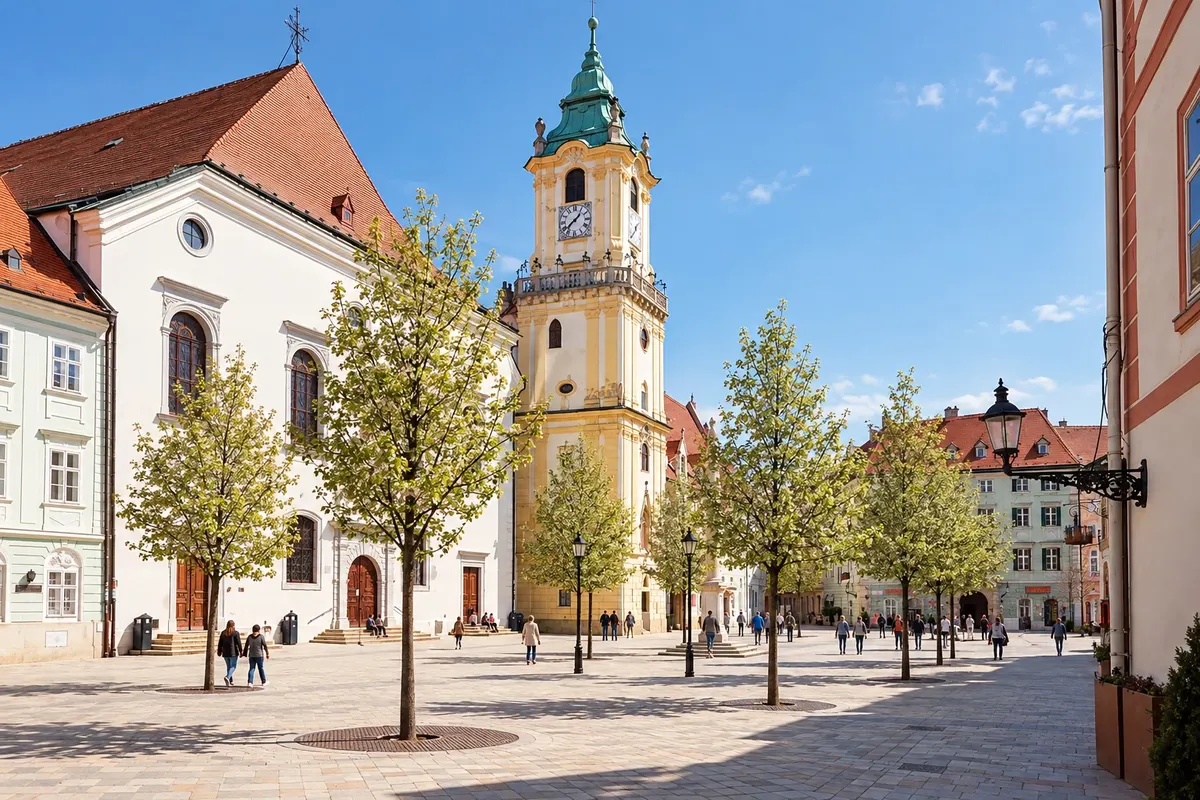
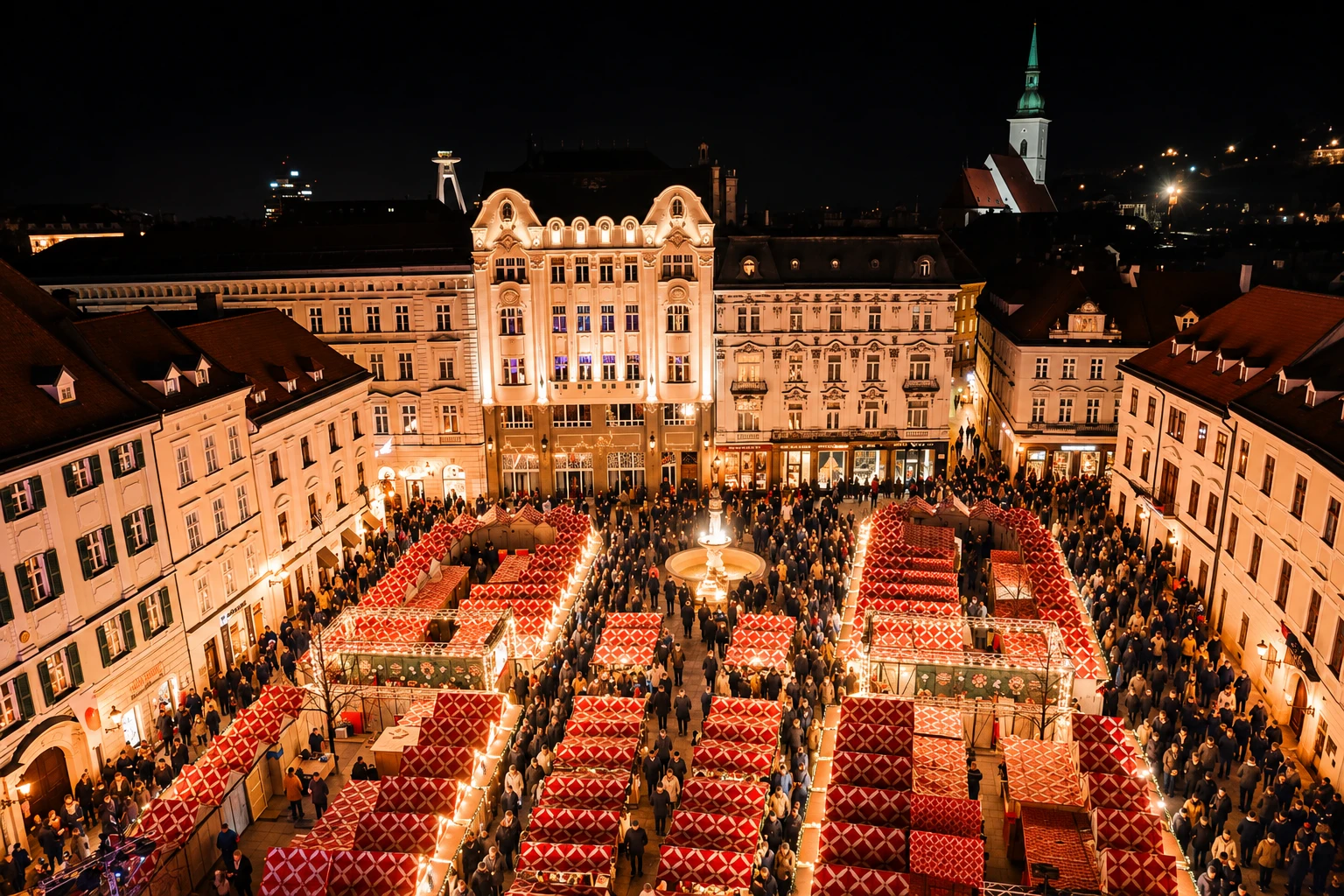
From late November through the year-end holidays, the main square of Bratislava’s Old Town, in front of the old town hall, fills with food stalls, hot drinks and crafts, with a large illuminated tree and a music stage on the neighboring square.
In the photo: Bratislava
Illustrative images. The pictures in this guide are illustrations based on the real place, not photographs, and may differ from it.
Click a photo to enlarge it.
Bratislava Christmas Market — Bratislava
From late November, about four weeks before Christmas, through December; in recent seasons the main market has stayed open until early January.
November/December/January
Dates change every year: check this year's date before you travel.
The festival
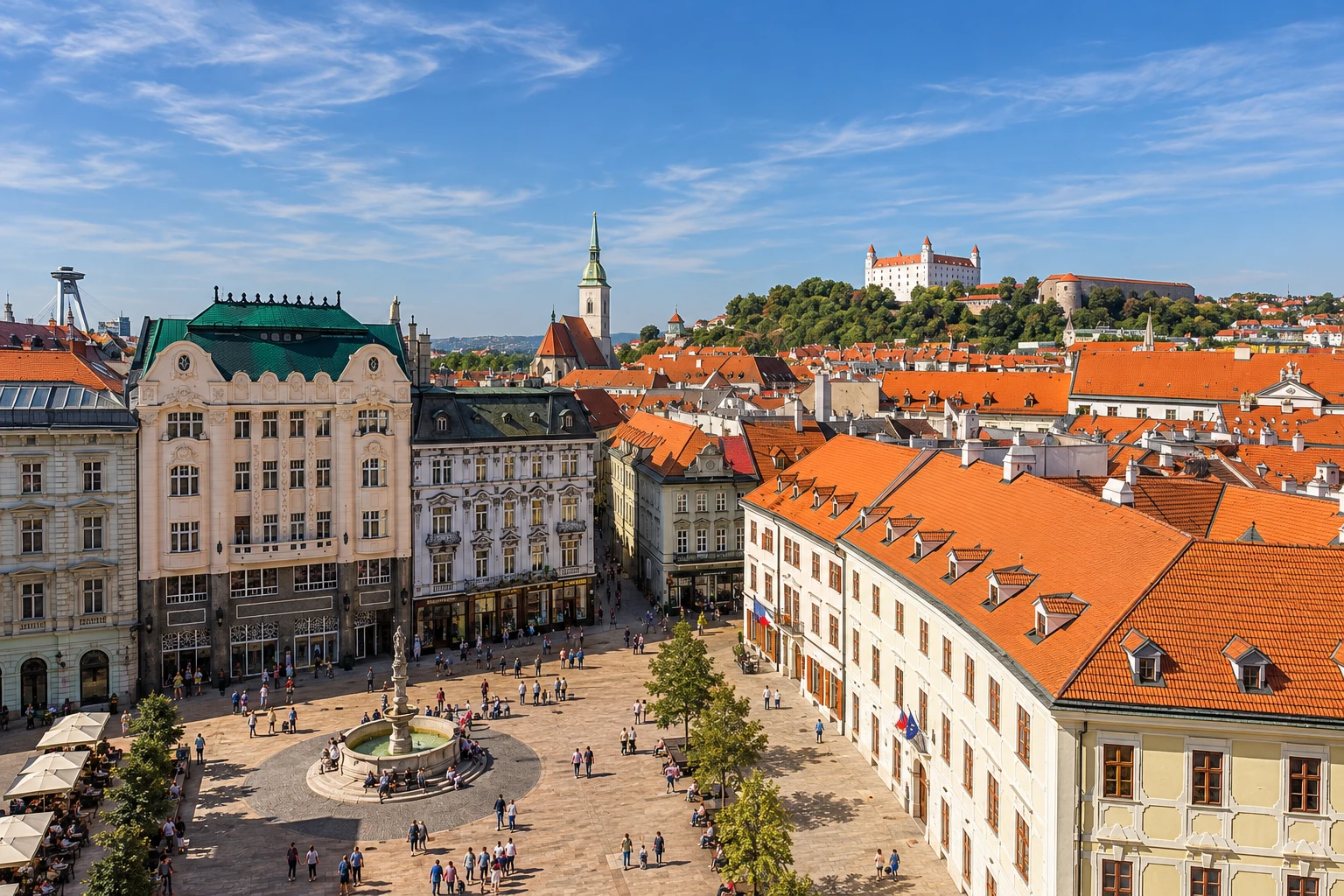
The Bratislava Christmas Market is the main Advent event in the Slovak capital. From late November, roughly four weeks before Christmas, through the end of December — and in recent seasons into early January — Hlavné námestie, the Old Town’s main square, hosts dozens of stalls around a large illuminated tree, with the old town hall and Maximilian’s Fountain (also called Roland’s Fountain) as a backdrop.
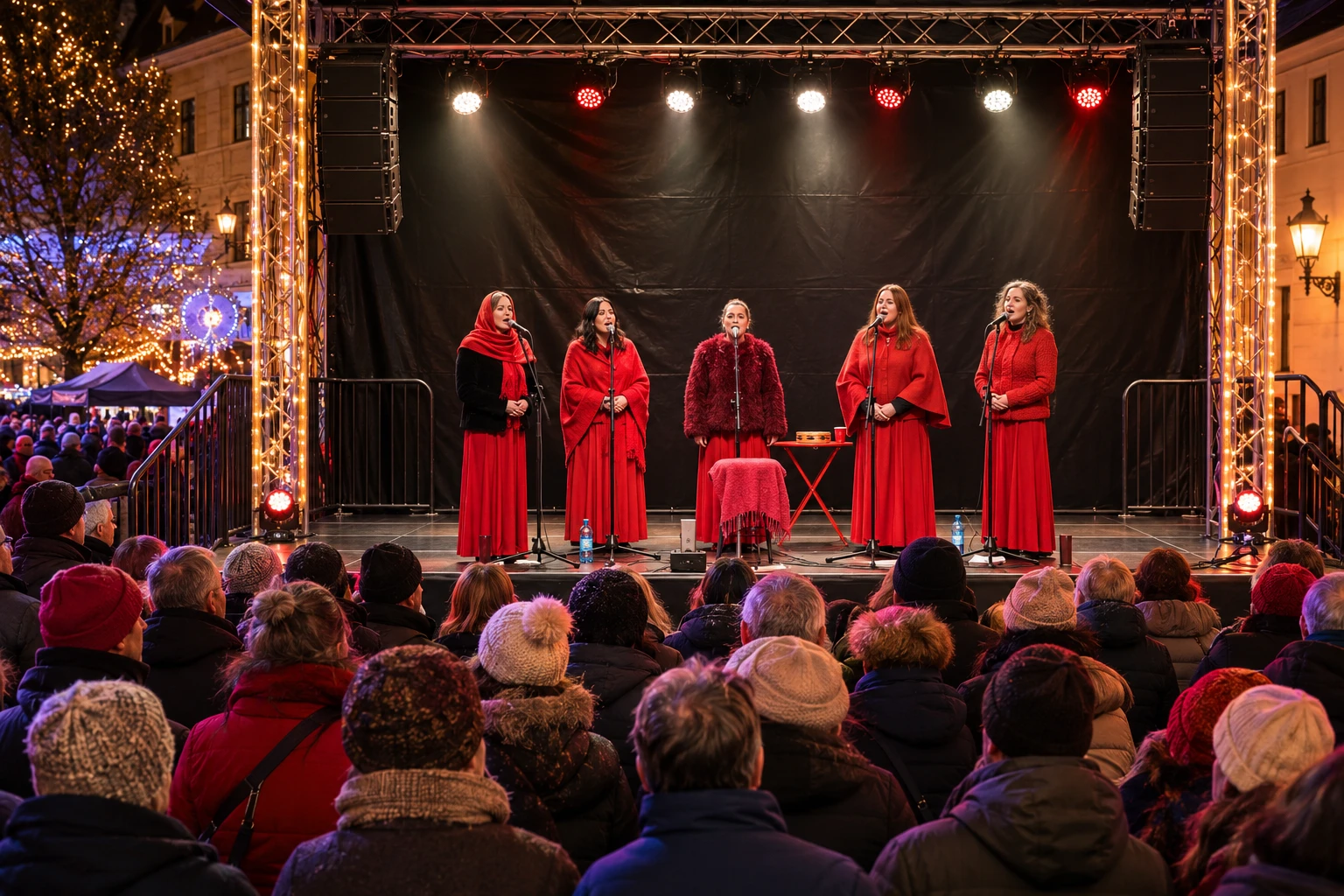
The main square market has taken place since the early 1990s and is organized by the city council. The Christmas tree is lit on one of the first evenings of the season, and there is cultural programming throughout: choir and folk music concerts, theatre and dance on a stage at Františkánske námestie, the Franciscan square adjacent to the main square. Primaciálne námestie, in front of the Primate’s Palace, and Hviezdoslavovo námestie usually have their own stalls and decorations.
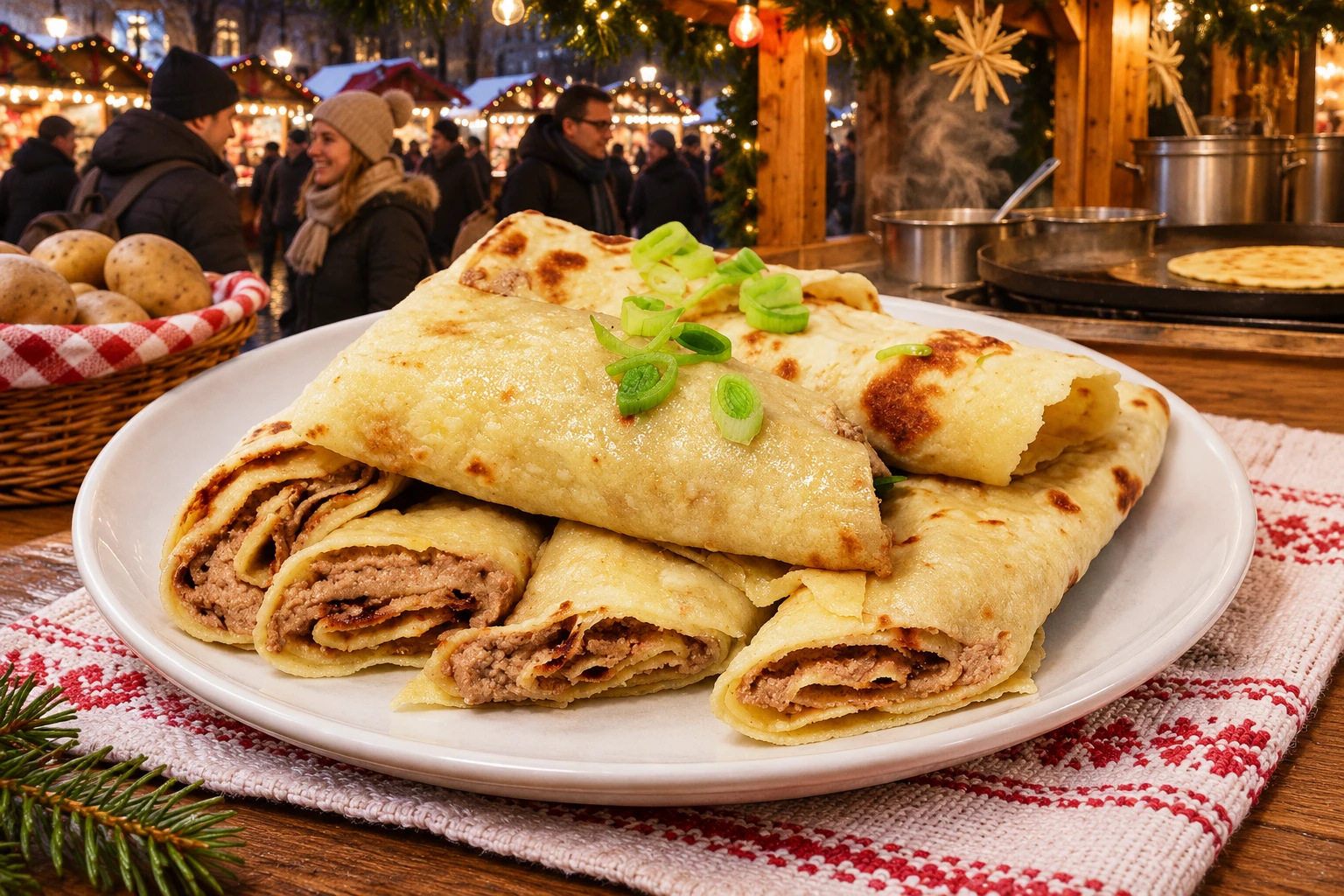
Food is a central part of the visit. Stalls sell lokše, thin potato pancakes served with savory fillings such as goose, cabbage or bryndza (Slovak sheep cheese), or sweet versions with plum jam and poppy seed; cigánska pečienka, a roast-meat sandwich with onion and mustard; roast goose; strudel; and kapustnica, the Slovak sauerkraut soup traditionally served at Christmas. To drink, there is mulled wine made from regional wines, medovina (mead), and punches in various flavors, including nonalcoholic options.
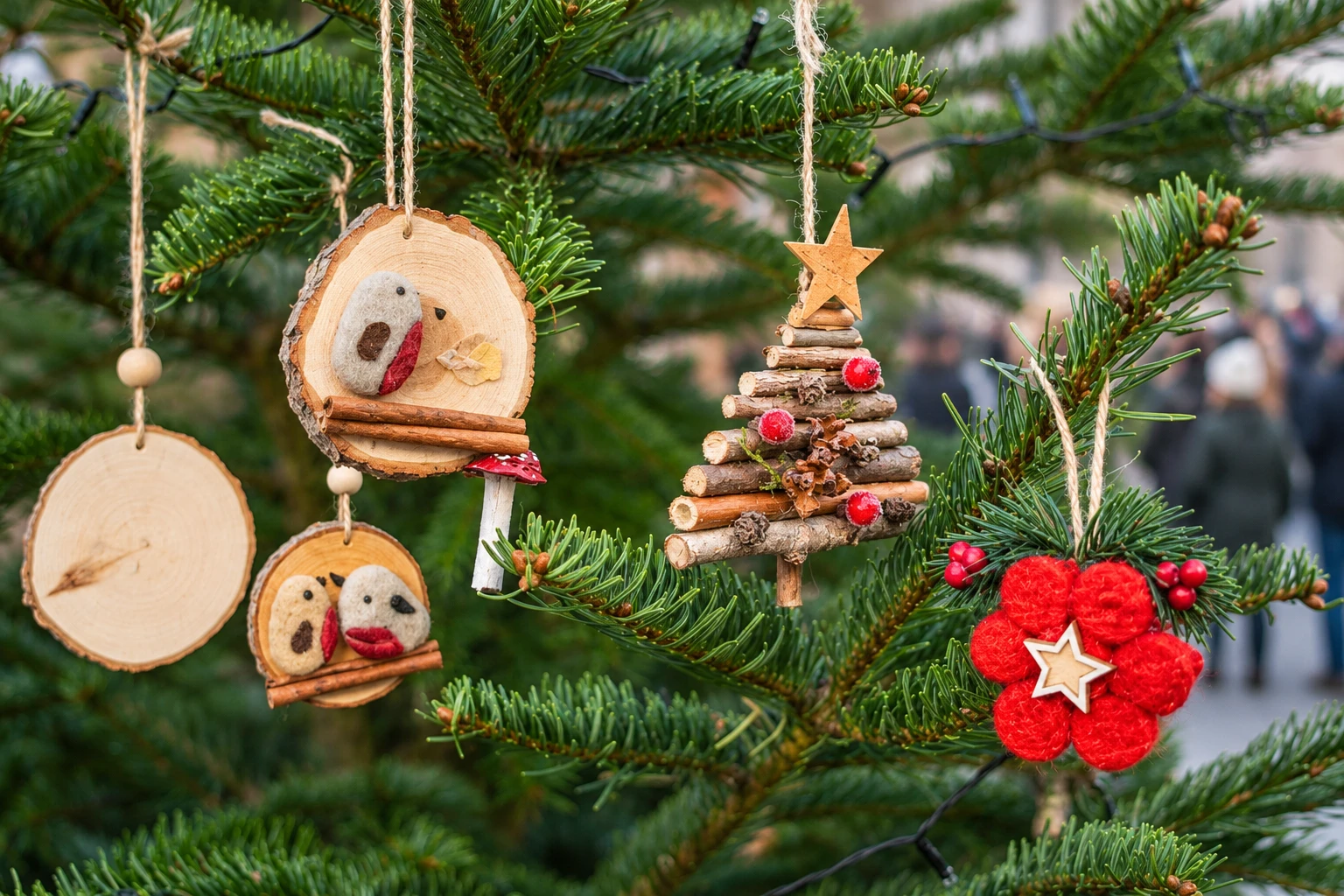
Among the food stalls you’ll find ornaments, ceramics, corn-husk dolls, wooden items and other handmade gifts. At night, when the Old Town streets are lit, the market becomes a meeting point for locals after work and for visitors who arrive from Vienna, about an hour away.
The market is worth the trip if you want a Central European Christmas on a human scale: smaller and calmer than those in some other regional capitals, it lets you combine Slovak food, the illuminated historic centre and, if you wish, Vienna’s markets on the same itinerary.
The lighting of the Christmas tree on the main square at the market opening. Freshly made lokše, savory or sweet, and cigánska pečienka. Mulled wine made with Slovak wines and medovina. The concerts and shows on the Františkánske námestie stage. A walk through the illuminated Old Town up to Michael’s Gate and St. Martin’s Cathedral.
The market operates every day from morning until night and usually closes on December 24 and 25. Early evening, when the lights are on, is the busiest time; for fewer crowds, prefer weekday afternoons. It’s about a twenty-minute walk from the main train station to the centre, and you can reach Bratislava from Vienna by train or bus in about an hour. Bring a coat, hat, gloves and closed shoes: December nights are typically cold, sometimes below 0 °C.
Lokše, thin potato pancakes filled with goose, cabbage, bryndza or, in the sweet version, plum jam and poppy seed. Cigánska pečienka, a roast-meat sandwich with onion and mustard. Roast goose with cabbage, strudel and kapustnica, the Slovak Christmas sauerkraut soup. To drink, mulled wine made with regional wines, medovina (mead), and punches, including nonalcoholic options for children and drivers.

December weekends draw the largest crowds, and many visitors come from Vienna and other nearby cities; book accommodation in the Old Town in advance. Check the Bratislava tourism website for the season’s dates and programme.
In the city
Flavors of Slovakia
Your questions
It opens in late November, about four weeks before Christmas, and runs through December; in recent seasons the main market has stayed open until early January. Check the year’s dates before you travel.
At Hlavné námestie, the Old Town’s main square, in front of the old town hall, with a stage and stalls also on the neighboring Františkánske námestie.
Lokše (thin potato pancakes with various fillings), cigánska pečienka, roast goose, kapustnica and strudel, accompanied by mulled wine, medovina or punch.
Yes. The two cities are about an hour apart by train or bus, and many visitors combine both markets.
Festivals and events in Slovakia
June/July/August/SeptemberOn a summer weekend, Friday to Sunday; the date changes each year and has fallen between June and September, with recent editions in July or August.
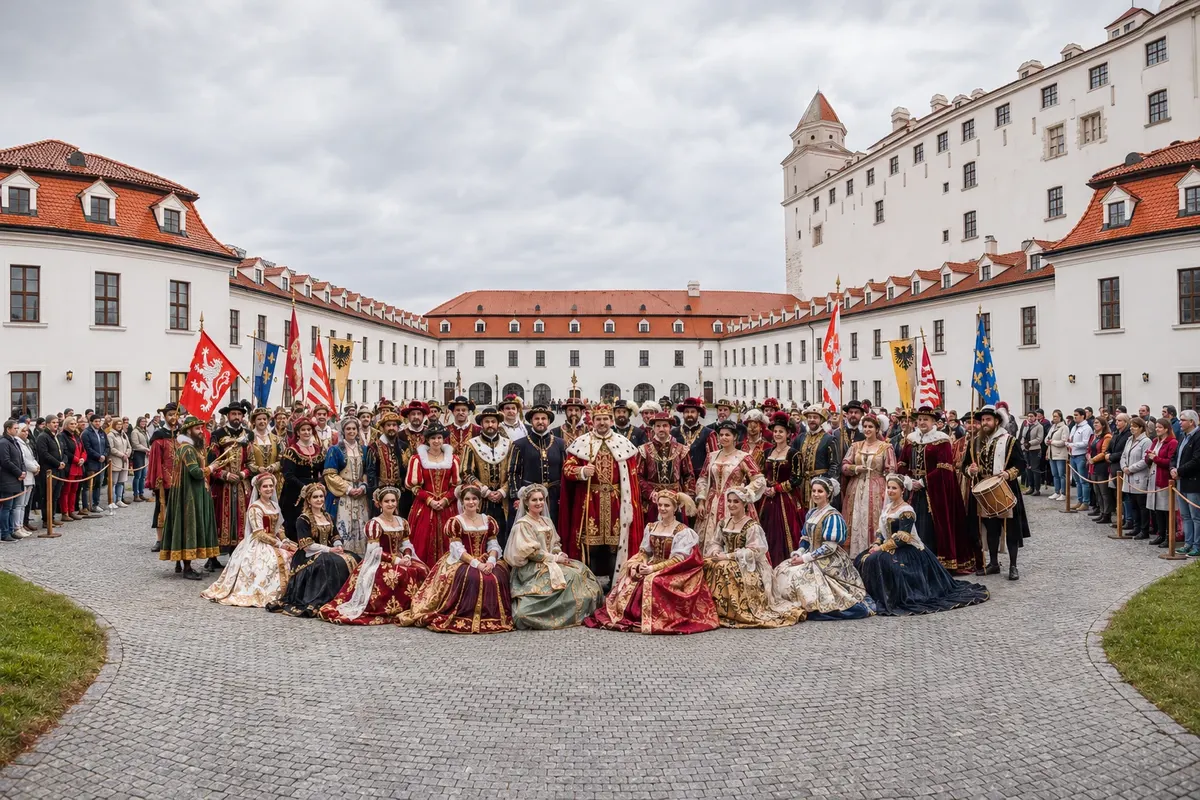
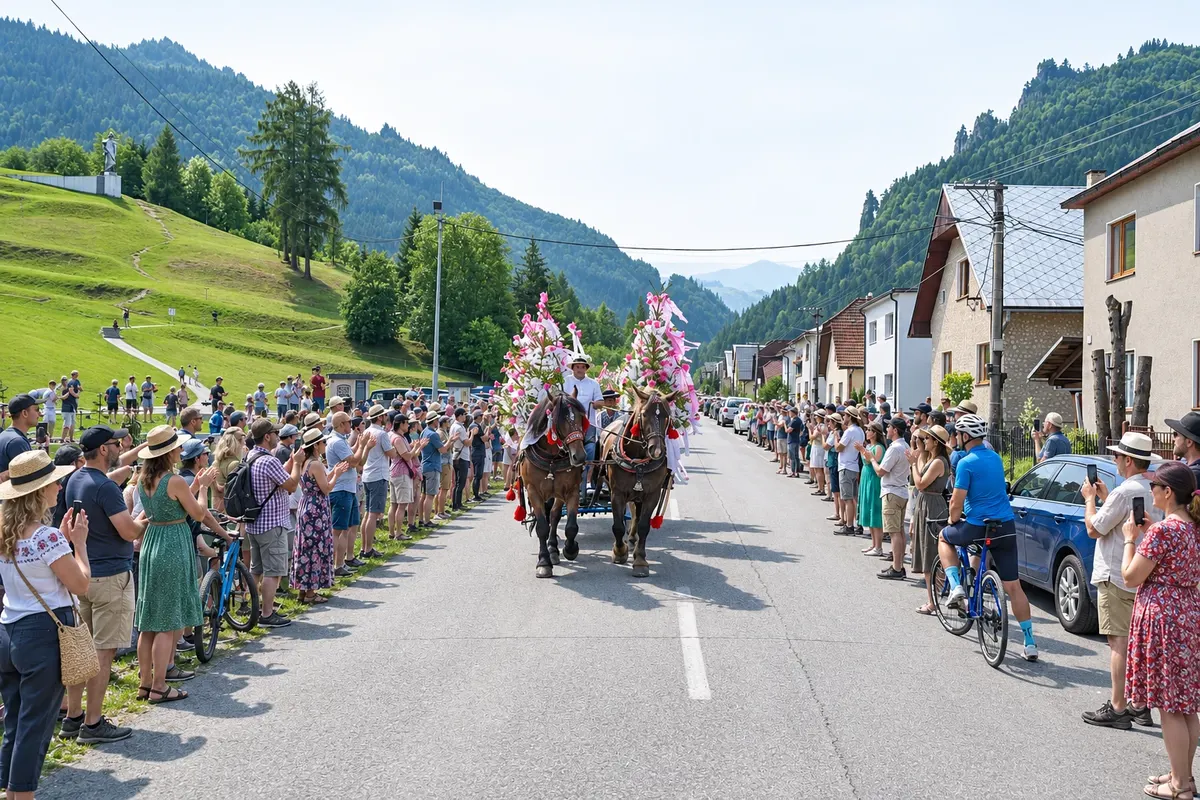
For three days, Bratislava recalls the time when it was the coronation city of the Kingdom of Hungary: a procession in period costume descends from the castle to the main square, where the coronation of a monarch is staged, and knights compete in a tournament on the banks of the Danube.
June/JulyOn the first weekend of July, from Thursday or Friday to Sunday; the opening may fall in the last days of June.
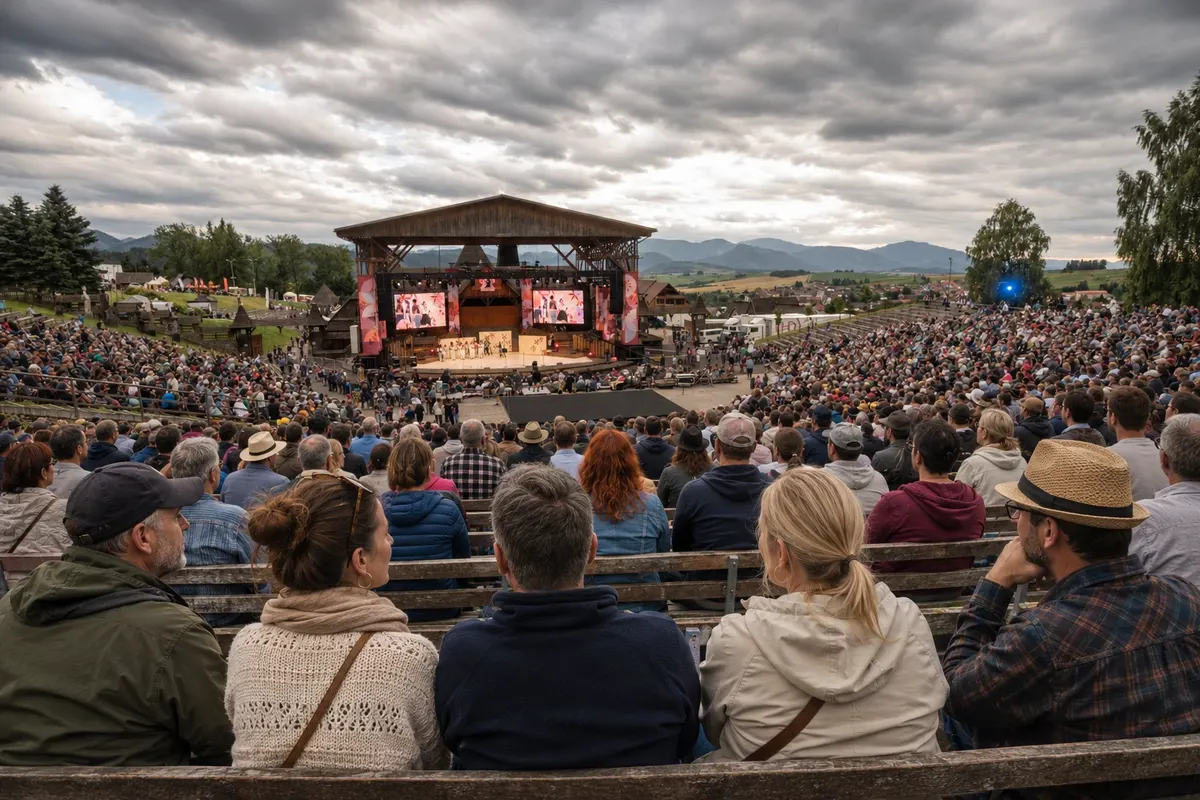
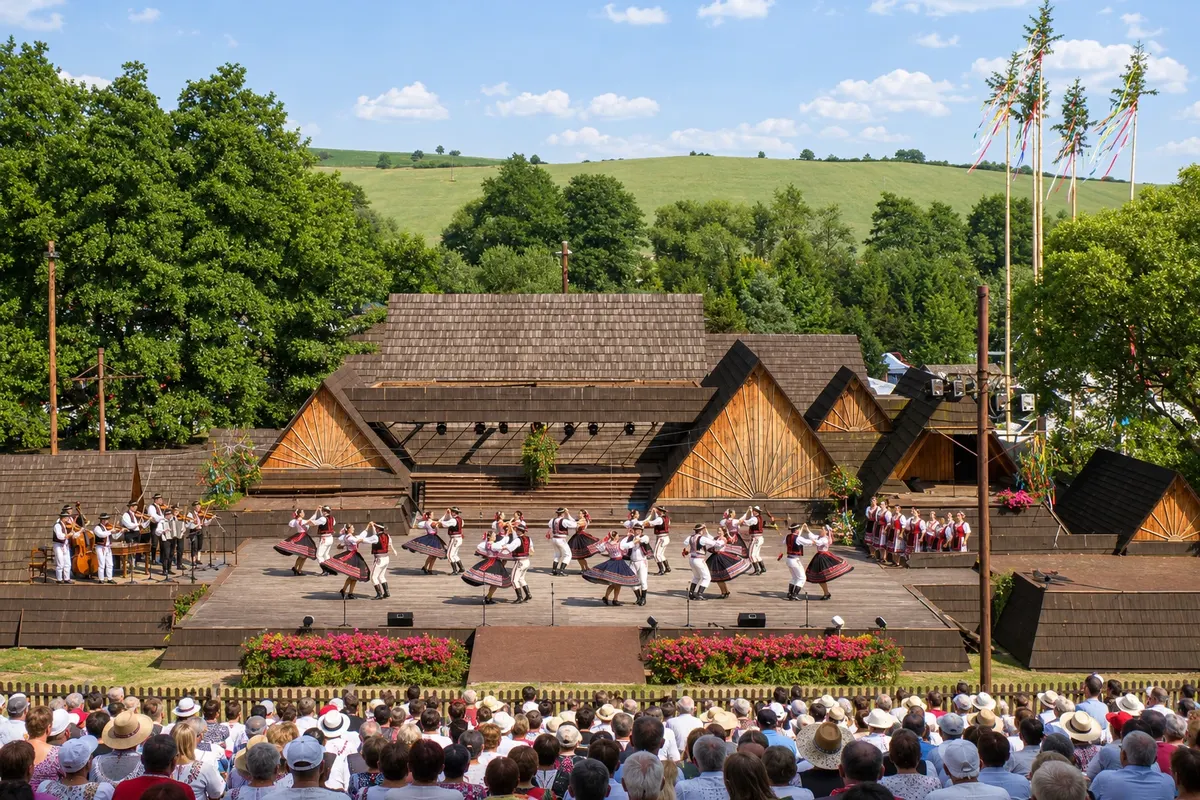
On the first weekend of July, the village of Východná in the Liptov region, beneath the Kriváň peak, hosts Slovakia’s oldest folklore festival: music and dance groups from across the country and invited foreign ensembles perform in an open‑air amphitheater.
July/AugustAt the end of July or the beginning of August, for four or five days, from Wednesday or Thursday to Sunday.
At the turn of July to August, Terchová, a village in the Malá Fatra where the legendary Juraj Jánošík was born, hosts an international folklore festival dedicated to the hero and to the local music, which is inscribed by UNESCO as intangible cultural heritage.
JulyOn the second weekend of July, from Thursday to Sunday.
On the second weekend of July, the town of Detva in central Slovakia, at the foot of the Poľana massif, hosts one of the country’s three largest folklore festivals, featuring folk music and dance in an open-air amphitheater and an afternoon dedicated to Slovaks living abroad.
JulyOn the second weekend of July, from Friday to Sunday.
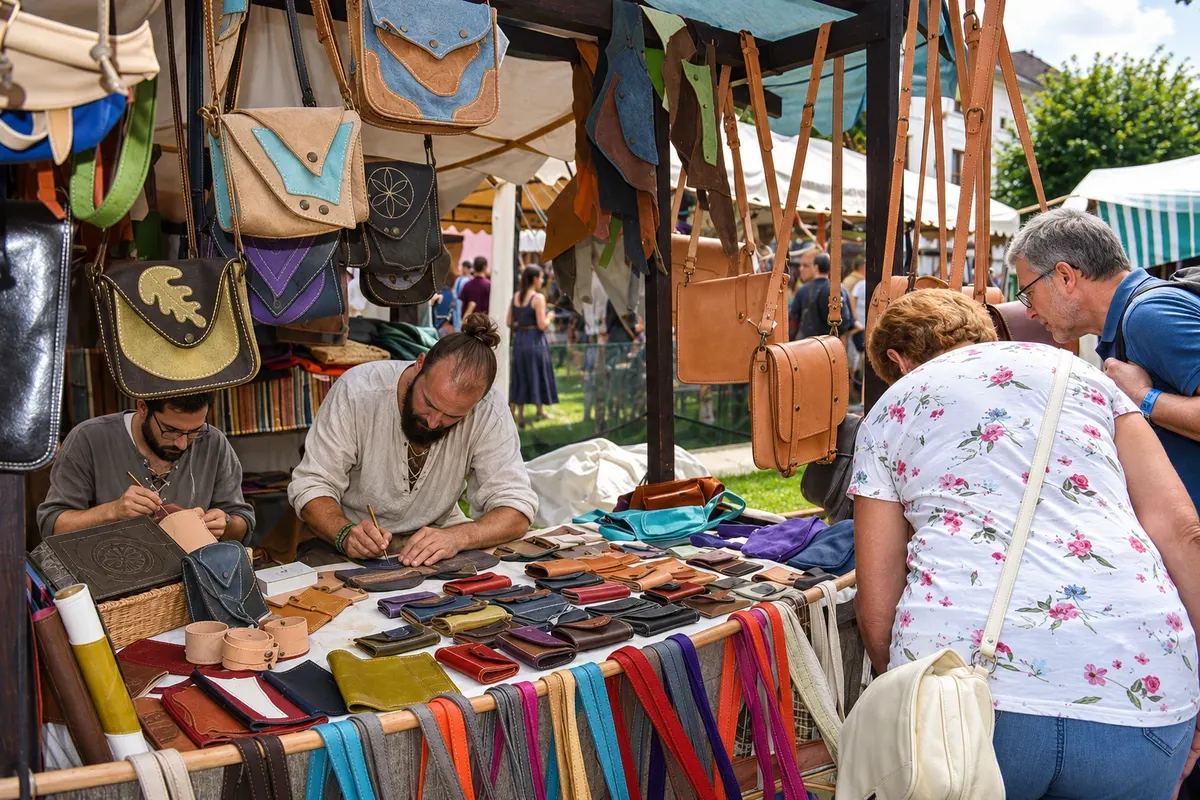
For three days in mid-July, the historic center of Kežmarok, at the foot of the High Tatras, becomes a large open-air workshop: artisans from Slovakia and other countries work live at dozens of traditional crafts, with folk music and dance on the stages.
JulyIn the first half of July, lasting three or four days, concluding on Saturday.
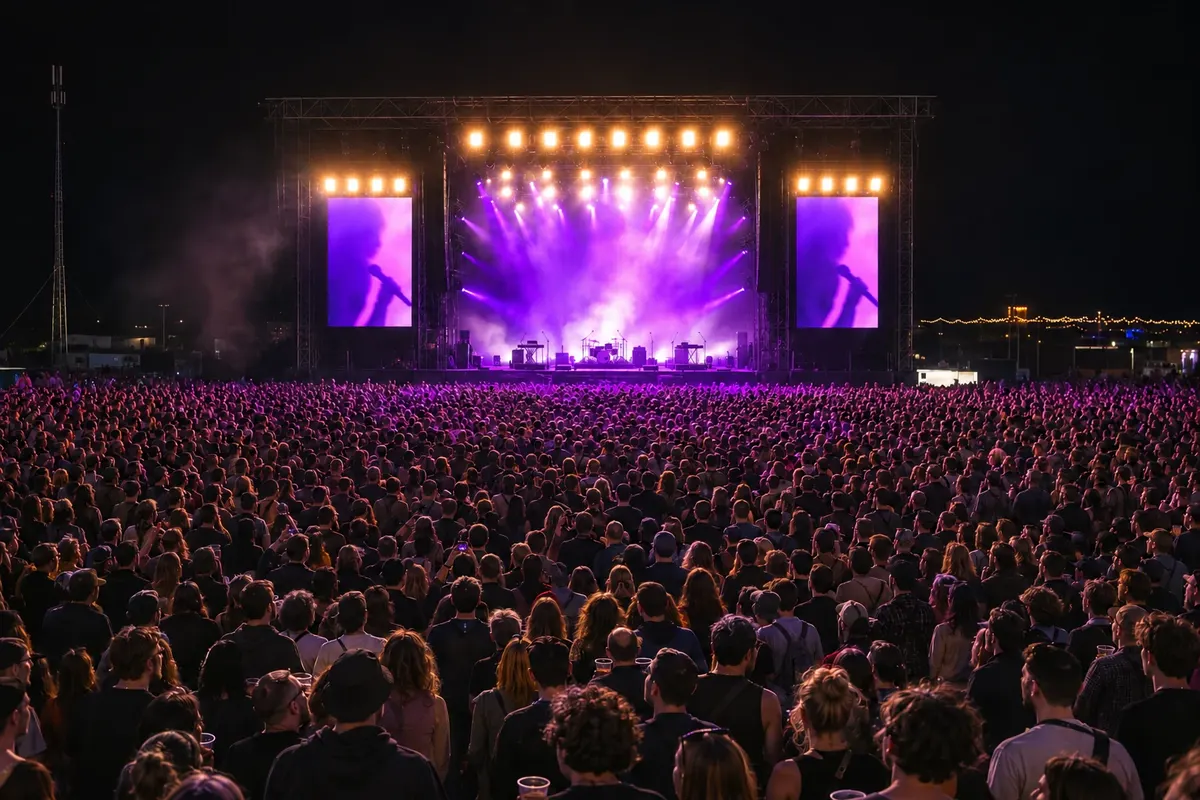
Slovakia’s largest music festival takes over the former Trenčín airport in July: dozens of stages with rock, pop, electronic music, jazz and classical, plus theatre, literature, film and talks.