Ljubljana — Slovenia

Osrednjeslovenska · Slovenia

Ljubljana — Slovenia

The capital of Slovenia on the banks of the Ljubljanica River: a hilltop castle, Jože Plečnik’s bridges, an open-air market and a center you can walk end to end.

Ljubljana and Central Slovenia

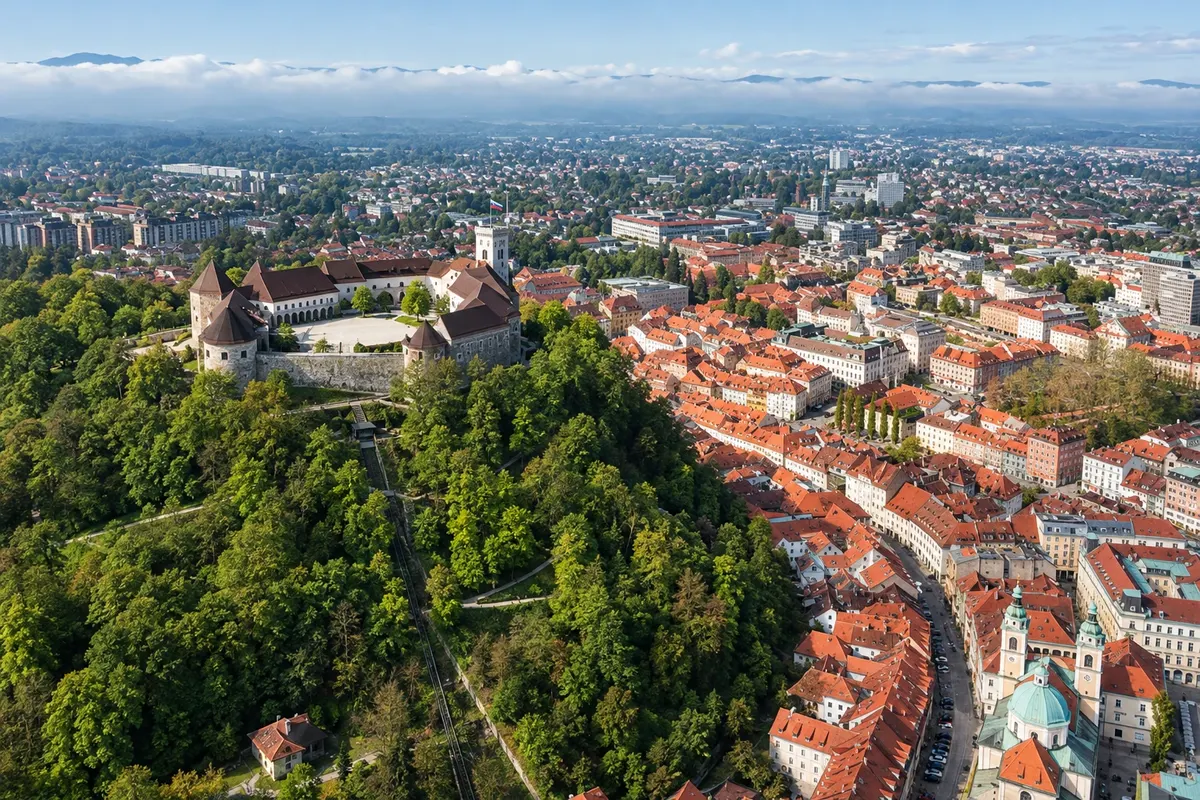
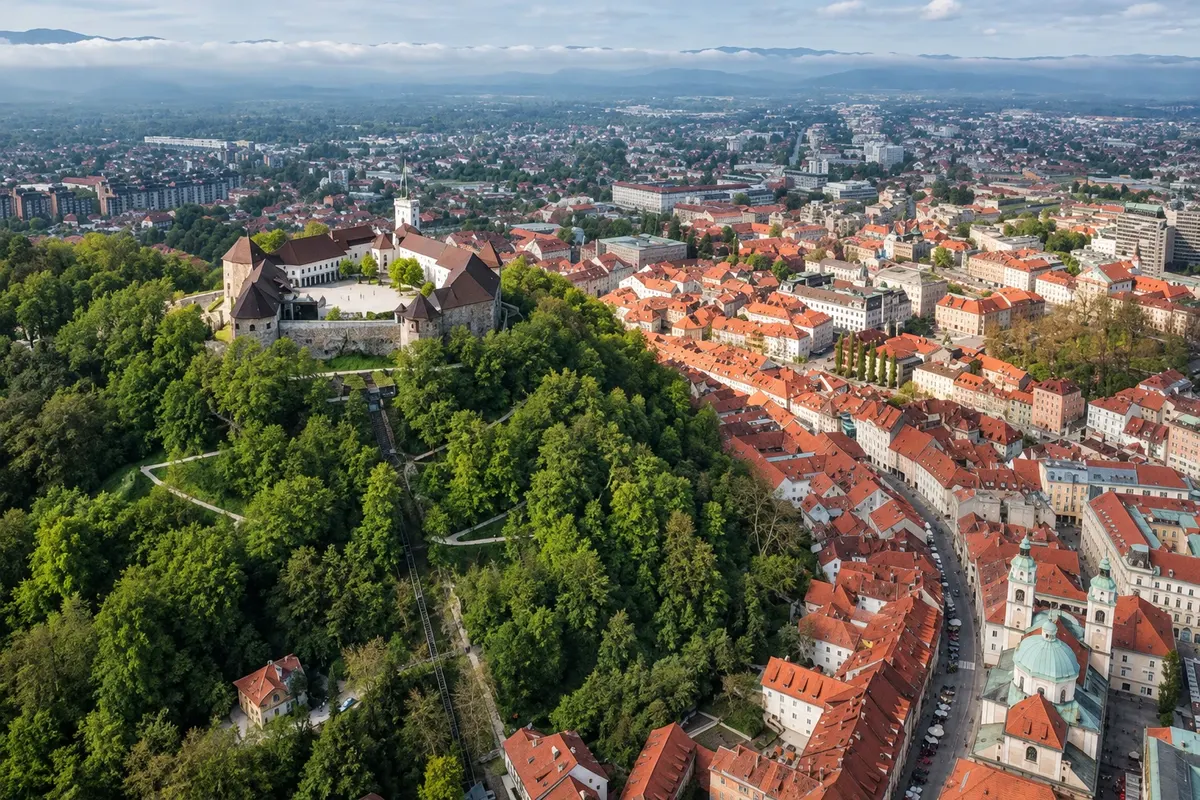
In the photo: Ljubljana Castle and old town.

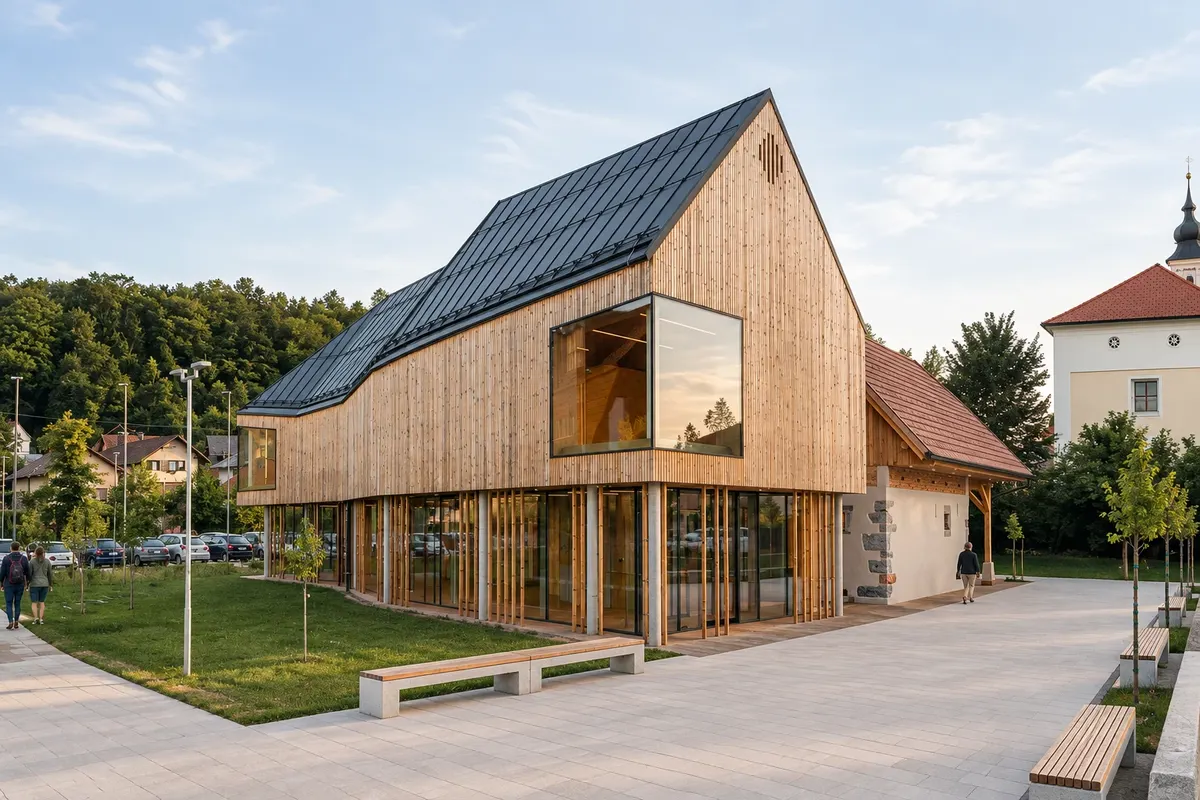
Illustrative images. The pictures in this guide are illustrations based on the real place, not photographs, and may differ from it.

Get to know the place

A region to enjoy
at your own pace.

Ljubljana is the capital and largest city of Slovenia, in the center of the country between the Alps and the Karst. The Ljubljanica River winds through the historic center, and its two banks are connected by a series of bridges, each with its own story. On the hill overlooking the city stands the castle, from which you can see the mountains in the north of the country on clear days.

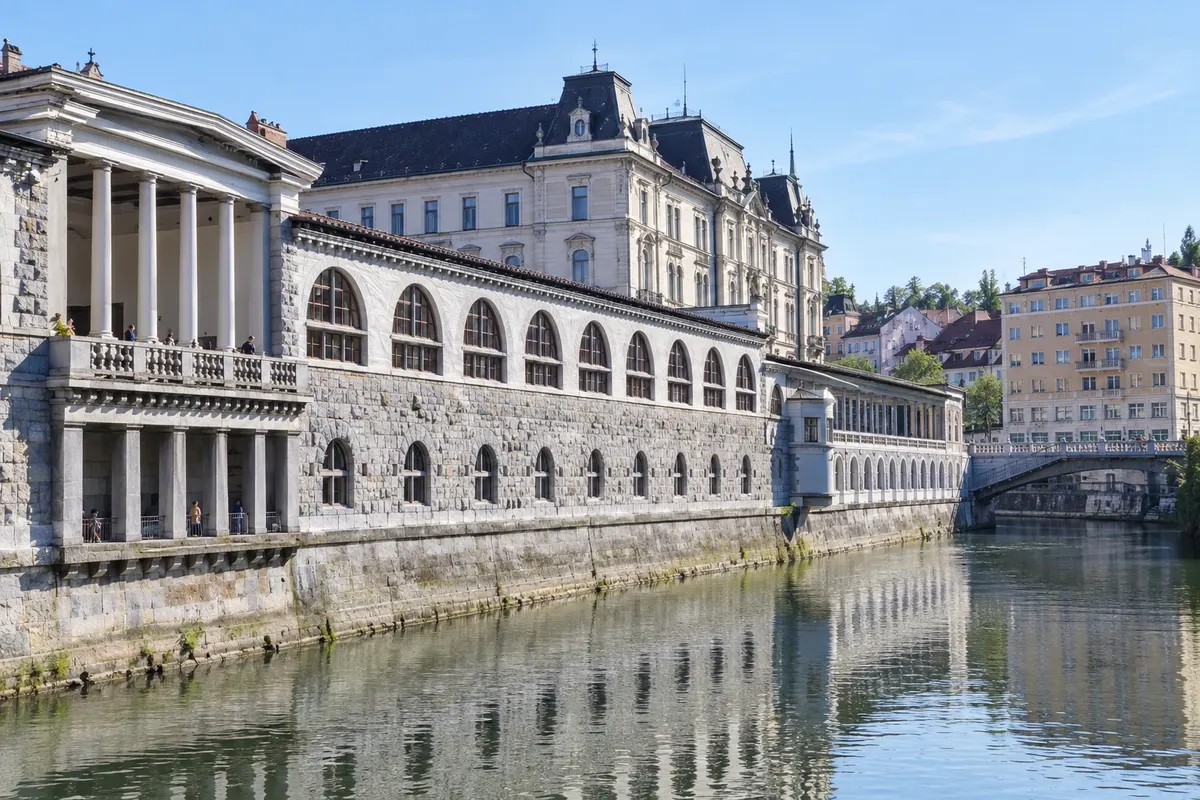
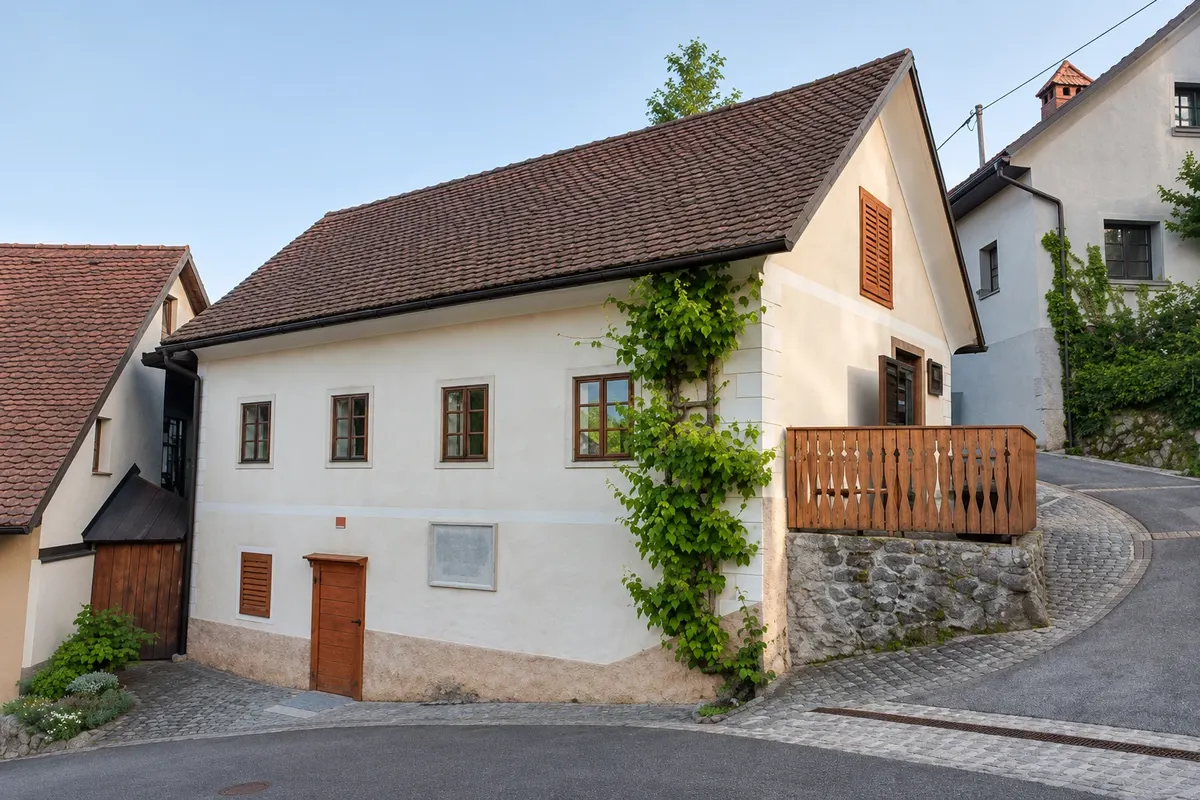
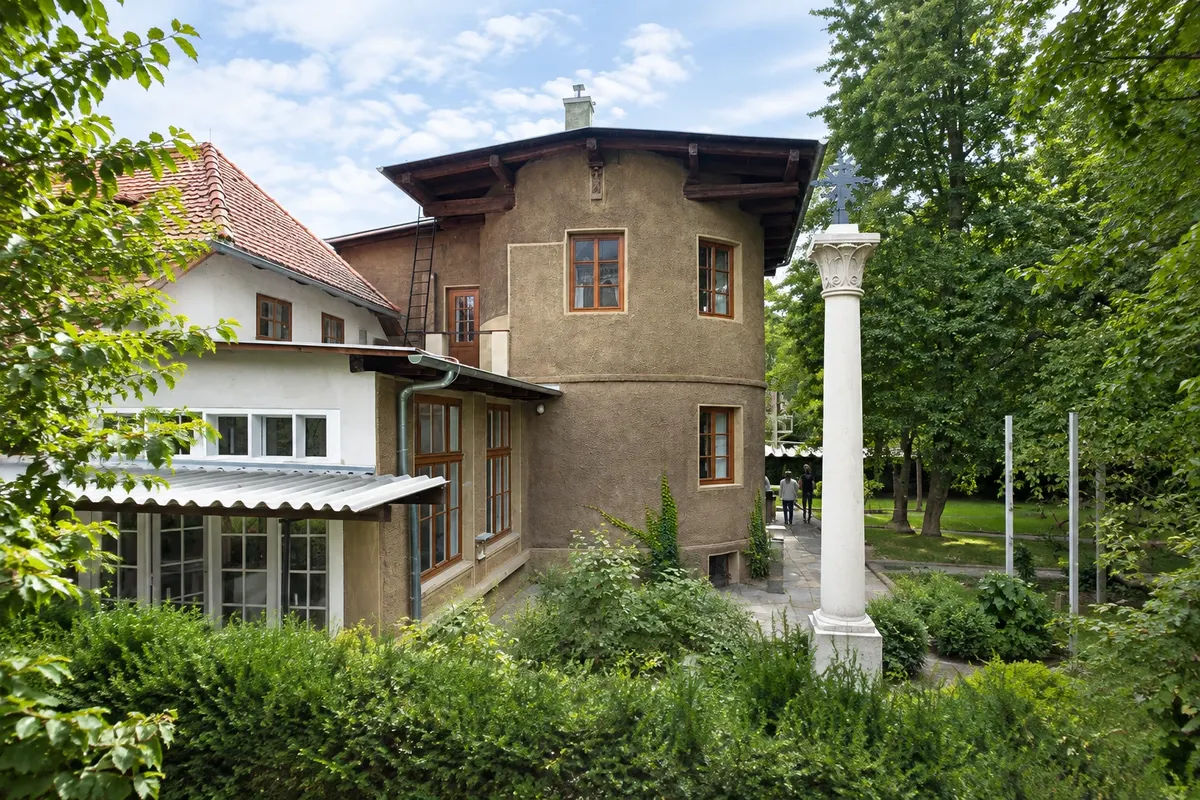
The city’s layout owes much to a single architect. Between the two world wars, Jože Plečnik designed the walkways of the Triple Bridge, the colonnade of the Central Market along the river, embankments with steps down to the water, squares and parks. This ensemble was added to the UNESCO World Heritage List in 2021. The house where he lived, in the Trnovo neighborhood, now operates as a museum.

The old town, closed to cars, includes Prešeren Square, dedicated to the country’s greatest poet, the baroque Cathedral of St. Nicholas, the Dragon Bridge and riverside cafés with outdoor seating. To the west, Tivoli Park leads to the trails of Rožnik Hill. To the south, on the plain of the Ljubljansko barje, prehistoric stilt-house villages were found; UNESCO protects them together with others in the Alpine region.

Ljubljana sits at the crossroads of the country’s main roads and railways. For that reason it serves as a base for day trips to Bled, the Postojna Cave and the coast, all less than two hours by car.

This destination brings together 2 cities: Ljubljana, Vrhnika.

Share: WhatsApp
Traveler, share your experiences through photos Up to 5 photos of each place you visited.

One destination, many paths

The cities on this trip

Start with one city or combine several in your itinerary.

Where Ljubljana — Slovenia is
LiublianaVrhnika

Boundaries: Geodetska uprava Republike Slovenije (GURS), Register prostorskih enot, 28/02/2024, license CC BY 4.0. Adapted by Cidade Turismo.

How to get there: Ljubljana — Slovenia

✈ Letališče Jožeta Pučnika Ljubljana (LJU), in Brnik · 26 km to Ljubljana

Flights arrive at Brnik, 26 km from the center, linked by regular buses and transfers. Long-distance trains and buses use nearby terminals on the northern edge of the old town, with connections across the country and to Austria, Croatia and Italy. By road, the capital is the junction of Slovenia’s two main motorways.

Suggested arrival point: Ljubljana

Festivals and events

Festivals in Ljubljana — Slovenia

Dates change every year: check this year's date before you travel.

Festival calendar in Slovenia

The local experience

Things to do in Ljubljana — Slovenia

Ivan Cankar Memorial House
Vrhnika · Osrednjeslovenska · House museum

Ivan Cankar Memorial House

A house built on the site of Ivan Cankar's birthplace, with an exhibition about the writer and his family.

Ljubljana Castle
Ljubljana · Osrednjeslovenska · Castle

Ljubljana Castle

The fortress on the hill above the centre, with a courtyard, a Gothic chapel, an observation point on top of the tower and a historical exhibition. You can walk up through the woods or take the funicular that departs from Krek Square.

Triple Bridge
Ljubljana · Osrednjeslovenska · Bridge

Triple Bridge

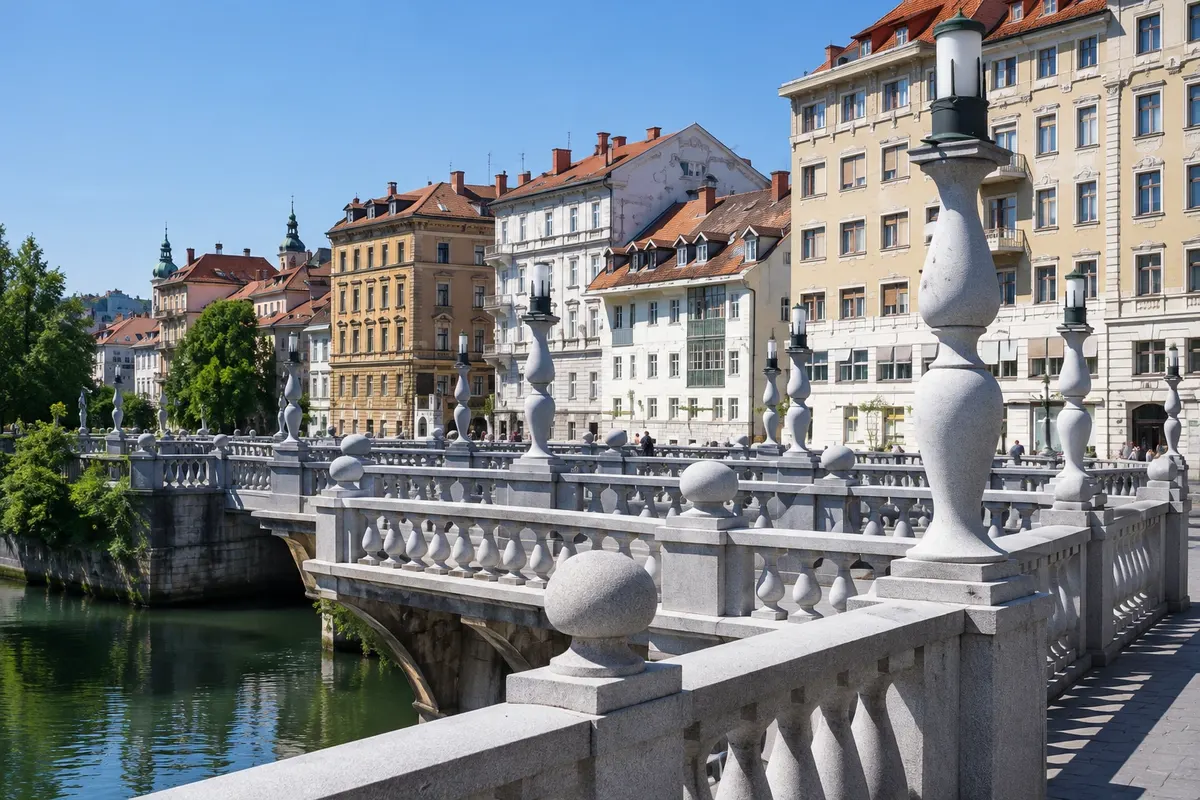
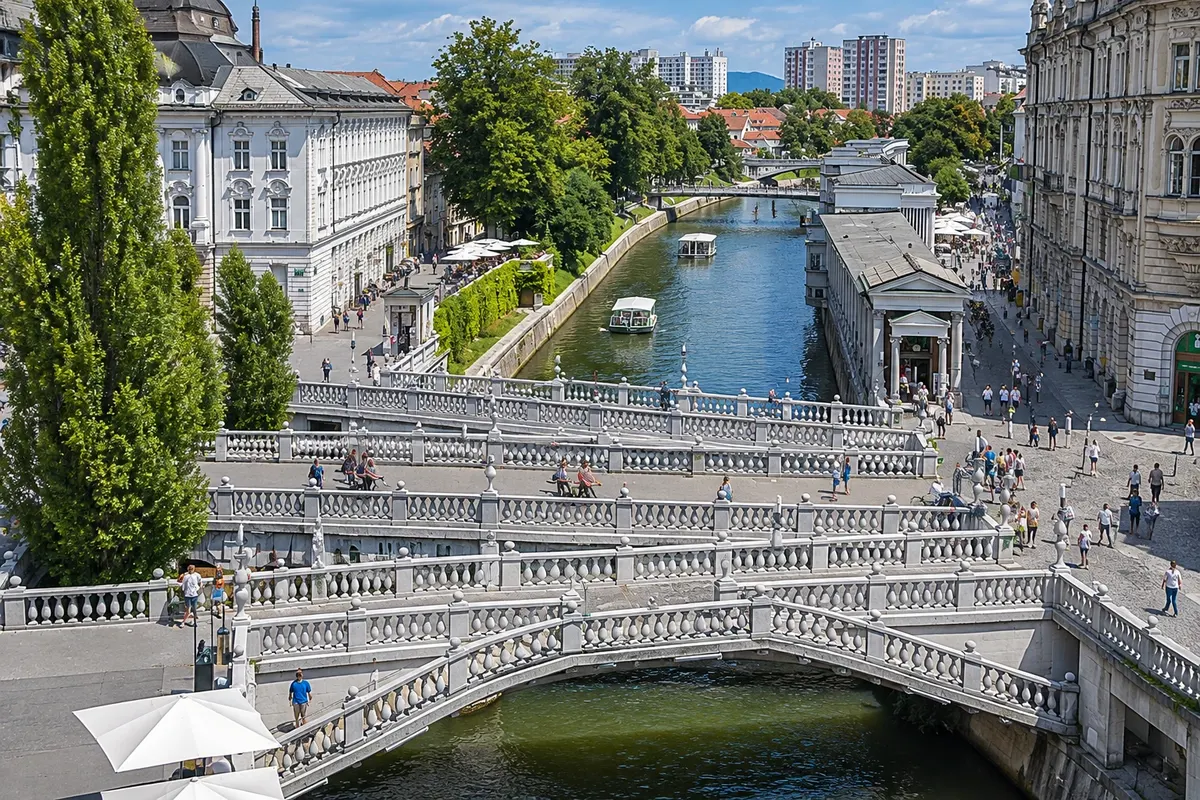
Three side-by-side bridges over the Ljubljanica, linking Prešeren Square to the old town. The middle bridge is from 1842; the two side walkways, with concrete balustrades and steps down to the riverbank, are by Jože Plečnik.

Technical Museum of Slovenia – Bistra
Vrhnika · Osrednjeslovenska · Museum

Technical Museum of Slovenia – Bistra

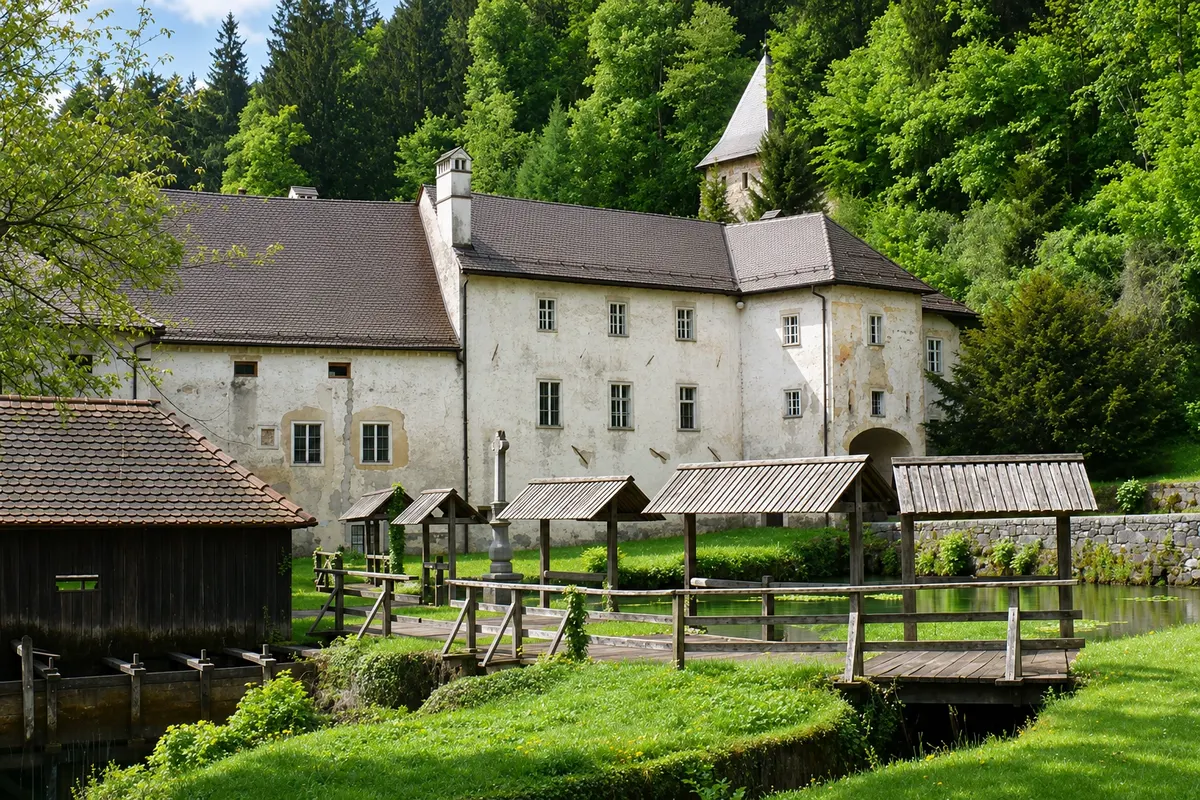
Collections on transportation, technology, and trades fill the rooms and outdoor spaces of the former monastery in Bistra.

See 7 more places in Ljubljana — Slovenia
Ljubljana Central Market
Ljubljana · Osrednjeslovenska · Market

Ljubljana Central Market

The open-air market at Vodnik Square and Plečnik’s pavilions along the river, with stalls selling fruit, vegetables, cheeses, honey and flowers, and a fish market on the lower level.

Močilnik Springs
Vrhnika · Osrednjeslovenska · Spring

Močilnik Springs

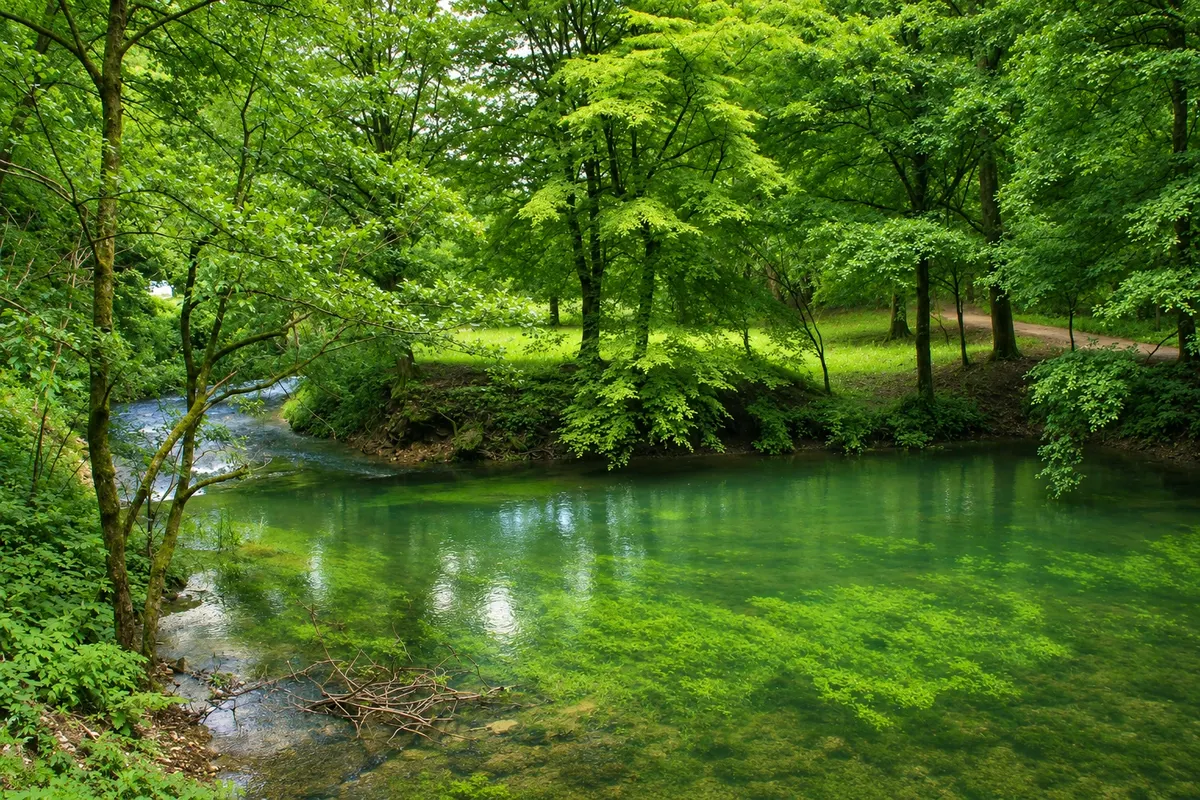
The karst springs of the Mala Ljubljanica lie in a wooded spot southwest of central Vrhnika.

Dragon Bridge
Ljubljana · Osrednjeslovenska · Bridge

Dragon Bridge

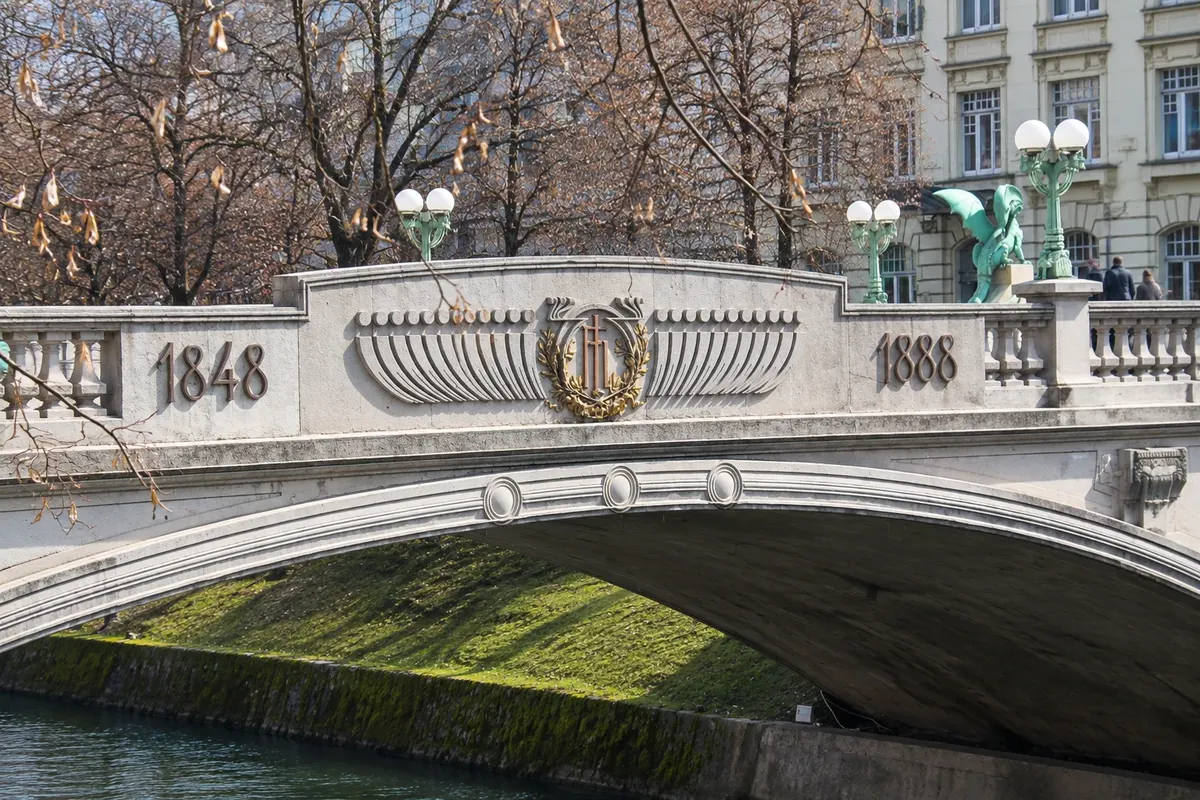
The 1901 bridge over the Ljubljanica with four copper dragons at the corners, the city’s symbol. It was one of the first reinforced-concrete bridges in Europe.

Ljubljana Cathedral
Ljubljana · Osrednjeslovenska · Church

Ljubljana Cathedral

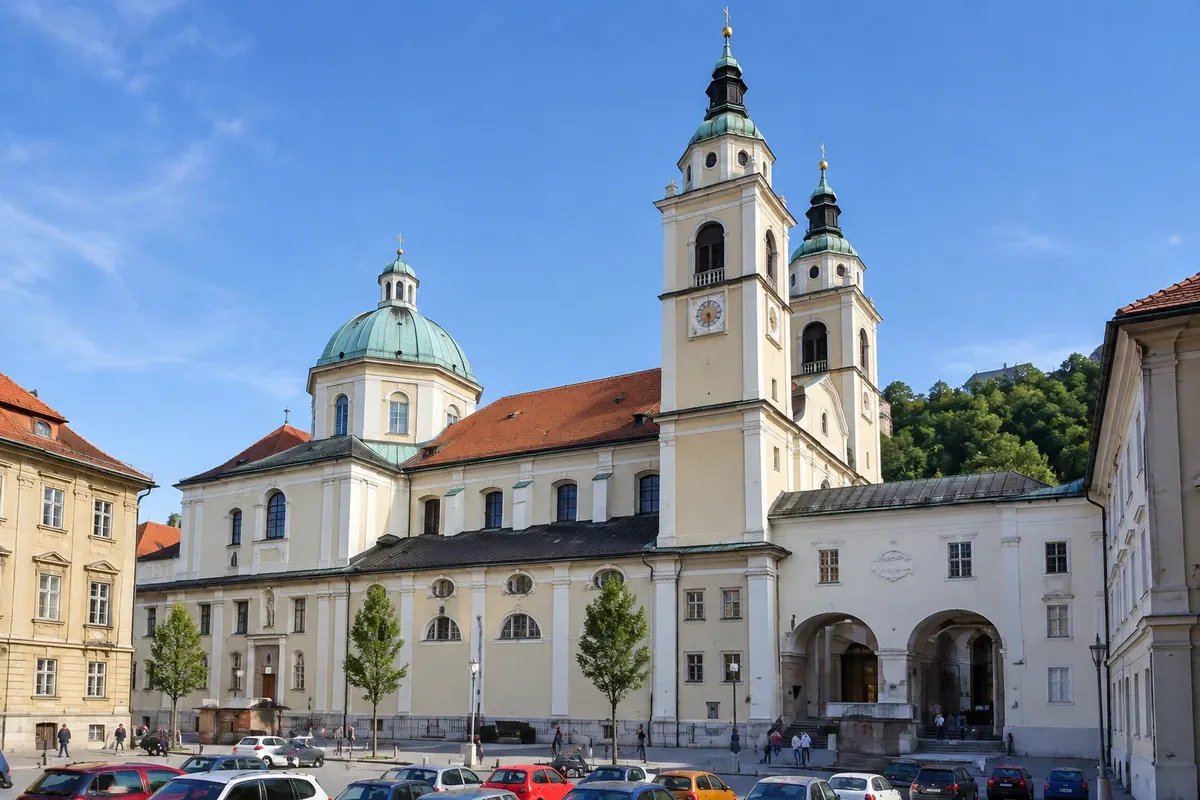
Ljubljana’s baroque cathedral, with a green dome and two towers, next to the Central Market. Inside are frescoes by Giulio Quaglio; at the entrance, bronze doors with scenes from Slovenian history.

Tivoli Park
Ljubljana · Osrednjeslovenska · Park

Tivoli Park

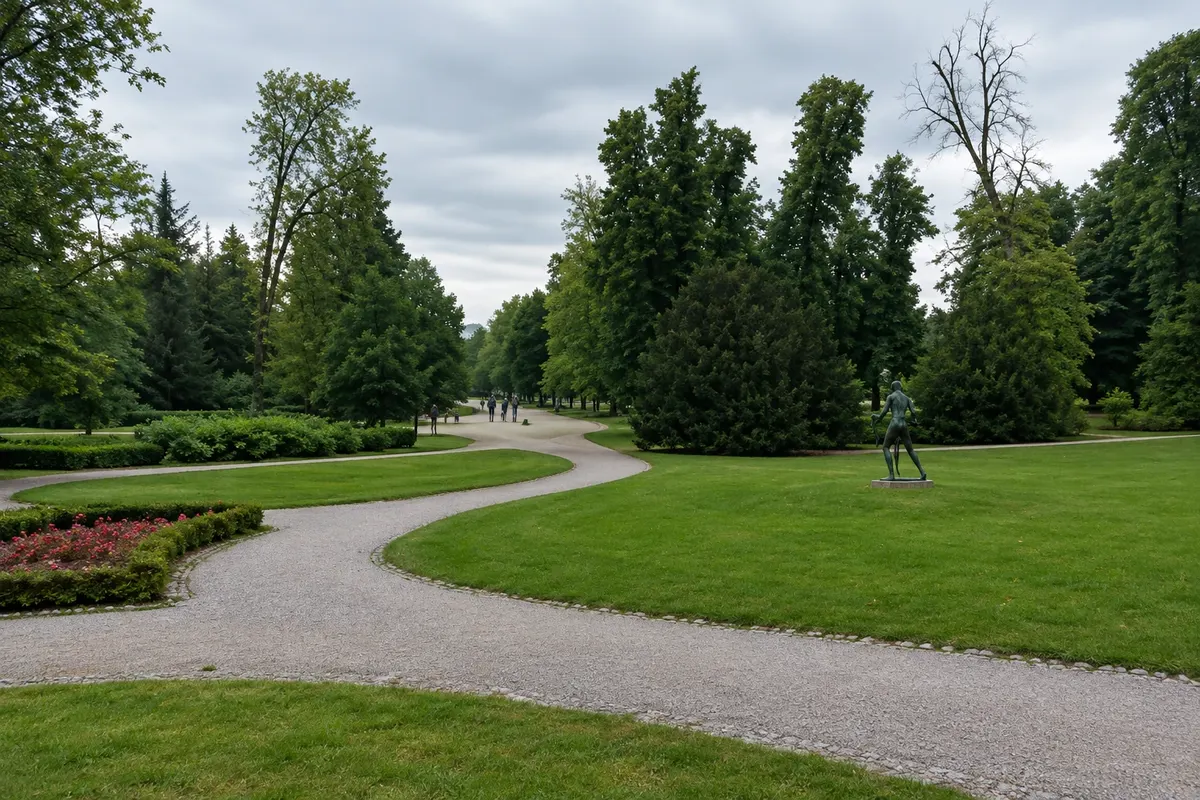
The large park west of the center, with avenues, a shallow lake, Tivoli Castle and the Cekin Palace, which houses the contemporary history museum. Paths from the avenues lead to Rožnik Hill.

Plečnik House
Ljubljana · Osrednjeslovenska · Museum

Plečnik House

The house where architect Jože Plečnik lived and worked, in the Trnovo neighborhood, with his studio, the furniture he designed and the garden. The residential part is only visited with a guide, in small groups.

Morostig (Ig Pile Dwellings)
Ljubljana · Osrednjeslovenska · Archaeological site

Morostig (Ig Pile Dwellings)

The visitor center in Ig about the nature of the Ljubljansko barje and the prehistoric pile dwellings, with a trail through the meadows to a full-scale reconstruction of a stilt village.

To choose before you go

Tours in Ljubljana — Slovenia

Where each tour starts, how long it takes, how it is done, what is included and the price range.

Ljubljana Castle, by funicular or on foot

From Krekov trg, next to the Central Market Funicular or on foot 2 to 3 hours morning or afternoon easy by funicular; moderate on foot

Ljubljana Castle (Ljubljanski grad) has occupied the hill in the middle of the city for about 900 years and is the capital’s main attraction. The funicular departs from Krekov trg, carries 28 passengers and in 1 minute overcomes a height difference of just under 70 meters. If you prefer to walk, you can climb via the trails on the wooded hill from the old town. Up on the hill you can climb the observation tower, built on the site of the old Piper Tower demolished in 1813; from the top and the ramparts you can see the city and the surroundings. The castle also houses an exhibition on the history of Slovenia, divided into six sections, a puppet museum, the Chapel of St. George, the old prison and a video room called the Virtual Castle. There is also a guided tour called the Time Machine, which traces the castle’s history. The castle also hosts art exhibitions, cultural events and, in summer, open-air film screenings in the courtyard.

Stops: Ljubljana Castle, Observation tower, Chapel of St. George.

Includes: Castle ticket, with or without funicular return, paid separately; check the current price list. The city tourist card includes the castle and the funicular.

Tip: Ride the funicular up and walk down to Gornji trg or Stari trg to connect with the old town. In late afternoon the light on the rooftops is softer and there are fewer groups.

Best time: All year round. The open-air cinema runs in summer.

Old town on foot: from Prešernov trg to Gornji trg

From Prešernov trg On foot about 2 hours morning easy

Prešeren Square is Ljubljana’s meeting point. The square originated at a medieval crossroads in front of the old walled-city gate and brings together three images of the capital: the pink façade of the Franciscan church, the monument to the poet France Prešeren, and the Triple Bridge (Tromostovje). The central bridge dates from 1842; between 1929 and 1932 the architect Jože Plečnik added the two side pedestrian walkways and gave all three their stone balustrades and lamp posts. On the other side of the Ljubljanica River is Mestni trg, one of the centers of the medieval town since the 12th century, where Baroque palaces replaced the old houses. The town hall (Mestna hiša), from the late 15th century, took its present form between 1717 and 1719; its façade recalls Venetian architecture, and in the arcaded courtyard there is a fountain by Francesco Robba. In front of it stands the sculptor’s best-known work, the Fountain of the Three Rivers of Carniola. The street continues as Stari trg and then as Gornji trg, the old medieval part now full of restaurants, up to the foot of the castle hill.

Stops: Prešeren Square, Triple Bridge, Mestni trg, Town Hall (Mestna hiša), Robba Fountain, Stari trg, Gornji trg.

Includes: Nothing included: the route is free. The tourist information centre organises a daily guided walk for a fee; check the current schedule.

Tip: The centre is closed to car traffic. Go early, before the tour groups, and return at night along the riverbank, when the cafés fill up.

Best time: Year-round; from May to September activity concentrates along the riverbanks.

Central Market, St. Nicholas Cathedral and Dragon Bridge

From Triple Bridge On foot about 2 hours morning easy

Ljubljana’s Central Market starts just after the Triple Bridge. It has three parts: the outdoor market on Vodnikov trg and Pogačarjev trg, the covered market between them, and the riverside colonnade designed by Jože Plečnik and built between 1940 and 1944, with small food shops following the curve of the Ljubljanica. The stalls sell fruits and vegetables from regional producers, cured meats, cheeses, honey and flowers. On Saturdays Pogačarjev trg hosts an organic market. Next to the market is St. Nicholas Cathedral. The Baroque church was built between 1701 and 1706 to a design by the Jesuit Andrea Pozzo, on the site of a church mentioned since 1262; the dome was added only in 1841. Inside, the frescoes are by Giulio Quaglio. At the end of the market is the Dragon Bridge (Zmajski most), built between 1900 and 1901. It was the city’s first reinforced concrete structure and is an example of Art Nouveau. The four copper dragons at the corners are a symbol of Ljubljana.

Stops: Ljubljana Central Market, Vodnikov trg, Pogačarjev trg, St. Nicholas Cathedral, Dragon Bridge.

Includes: Nothing included: market, cathedral and bridge are free to access. Purchases and food are paid separately.

Tip: Go in the morning, when the stalls are fully stocked, and check opening days. At the cathedral avoid mass times and keep quiet.

Best time: All year. On Fridays from mid-March to the end of October Pogačarjev trg hosts Odprta kuhna, a food market with chefs from Slovenian restaurants; it is cancelled in case of bad weather.

Boat trip on the Ljubljanica River

From Central quays (Ribji trg and others) Tour boat about 1 hour afternoon easy

From Roman times until the arrival of the railway in the mid-19th century, the Ljubljanica was the city’s main trade and supply route. The riverbed is one of Slovenia’s most important archaeological sites, with finds from prehistory to the early modern era. The river’s current appearance in the centre is the work of Jože Plečnik: he designed the stone quays, the tree-lined promenades—such as the willow-stepped Trnovski pristan—and built or refurbished several bridges, including the Triple Bridge, the Shoemaker’s Bridge (Čevljarski most) and the Trnovo bridge. Tour boats depart from central quays like Ribji trg, pass under the bridges and show the façades, quays and cafés from the water. Some trips include an onboard guide who comments on the riverside history. In summer there are also stand-up paddle and kayak departures.

Stops: Ljubljanica River, Ribji trg, Triple Bridge, Shoemaker’s Bridge, Trnovski pristan.

Includes: Boat tour, paid separately at the quay or online; check the current timetable. The city tourist card includes a boat trip.

Tip: Pick late afternoon, when the riverbanks are livelier. Take a jacket: the temperature drops over the water. Confirm departures at the quay.

Best time: From April to October. In December there are trips to see the holiday lights.

Plečnik’s Ljubljana: library, Križanke and Plečnikova hiša

From Shoemakers’ Bridge On foot 3 to 4 hours morning or afternoon easy

In 2021, the works of architect Jože Plečnik (1872–1957) in Ljubljana were inscribed on the UNESCO World Heritage List. After working in Vienna and Prague, where he renovated Prague Castle, Plečnik returned in 1921 and redesigned the city with columns, balustrades and colonnades inspired by classical models, using modest means. The route begins at the Shoemakers’ Bridge (Čevljarski most), from 1931–1932, with its columns of different heights. A few blocks ahead is the National and University Library (NUK), built between 1936 and 1941 and considered the architect’s most important work in Slovenia. The façade mixes brick and stone blocks; inside, a staircase with 32 dark marble columns from Podpeč leads to the large reading room. Next to it is Križanke, the former monastery Plečnik converted into an open‑air theatre. Heading south, you cross the Trnovo Bridge to Plečnikova hiša, the house where he lived, preserved with the furniture, the library and the drawing instruments, alongside a permanent exhibition about his work.

Stops: Shoemakers’ Bridge, National and University Library (NUK), Križanke, Trnovo Bridge, Plečnikova hiša.

Includes: Entrance to Plečnikova hiša, with guided tour of the house charged separately; check the current price list. Bridges and exteriors have no ticket office.

Tip: At Plečnikova hiša, the house is only visited with a guide, in groups of up to seven people, at fixed times: book in advance. The library’s reading room is for registered readers; check about visits.

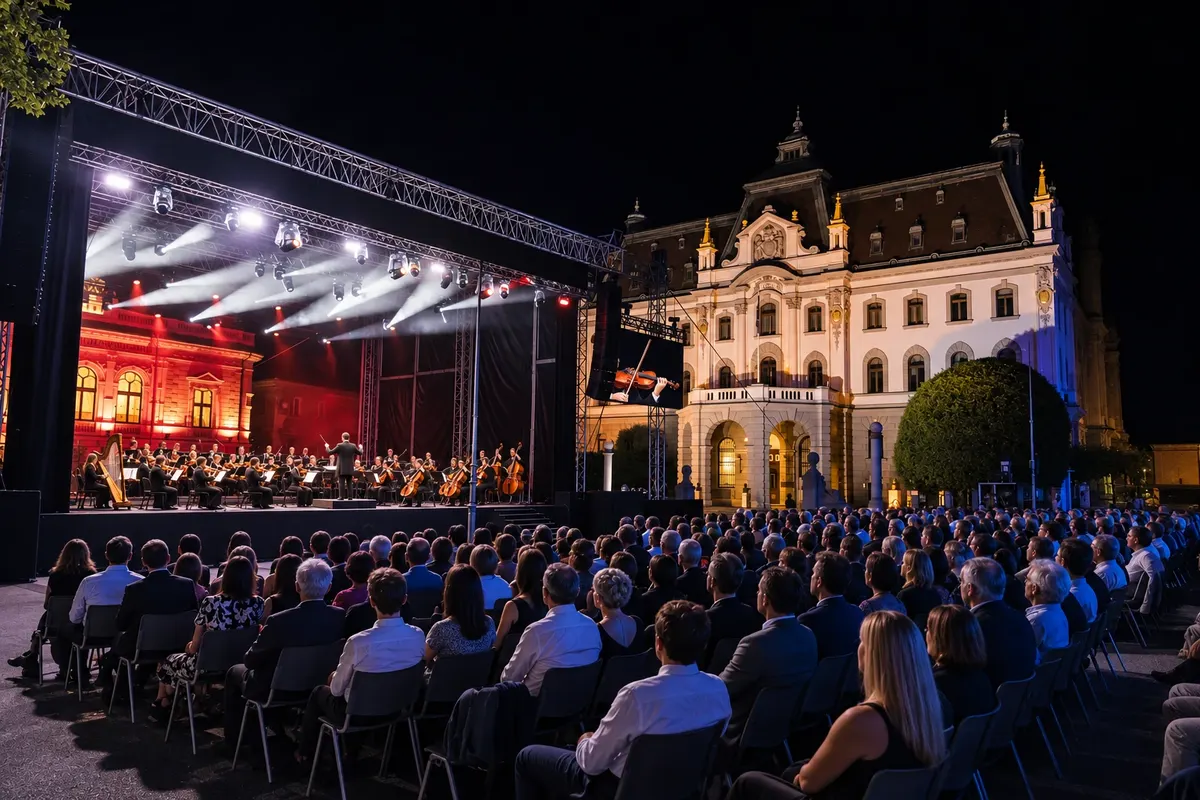
Best time: All year. In summer, Križanke hosts concerts of the Ljubljana Festival.

Tivoli Park and Rožnik Hill

From Ljubljana city centre On foot 2 to 3 hours morning or afternoon easy to moderate

Tivoli Park is Ljubljana’s large park, west of the centre. Its promenades lead to Tivoli Castle, home of the International Centre of Graphic Arts, and to Cekin Palace, which houses the National Museum of Contemporary History. Paths from the promenades lead into the forest covering Rožnik and Šiška hills, protected as a landscape park: few European capitals have a protected forest so close to the centre. Rožnik reaches 391 metres and has been a weekend outing for locals since the first half of the 19th century. At the top stands the Church of the Visitation, existing since the 16th century and redesigned in the 18th. Slightly lower down, an old inn once hosted the writer Ivan Cankar (1876–1918); the house opposite preserves a room in his memory, and the summit bears his name, Cankarjev vrh. Several paths and leisure trails climb Rožnik from the park.

Stops: Tivoli Park, Tivoli Castle, Cekin Palace, Rožnik.

Includes: Nothing included: the park and trails are freely accessible. The museums in Tivoli Castle and in Cekin Palace have separate paid admission.

Tip: Wear closed shoes for the trail, which becomes slippery after rain. You can descend by another path and return to the center via the Cekin Palace side.

Best time: All year; the forest turns colorful in October and is cool on hot days in July and August.


See 7 more tours

Central museums: National Gallery, National Museum and City Museum

From Ljubljana city centre On foot 3 to 4 hours morning or afternoon easy

Ljubljana’s main museums are a few minutes’ walk from each other, between the center and Tivoli Park. The National Gallery (Narodna galerija) houses the country’s largest art collection, from the Middle Ages to the 20th century. The permanent display gathers almost 600 works by Slovenian and European artists, from medieval religious art to Baroque painting and 19th‑century portraits, plus a permanent exhibition of the painter Zoran Mušič. Nearby, the Museum of Modern Art (Moderna galerija) shows Slovenian art of the 20th century. The National Museum of Slovenia occupies a neo‑Renaissance palace built between 1883 and 1885. Among its pieces is the Divje Babe Neanderthal flute, about 60,000 years old. The City Museum of Ljubljana, in the Auersperg Palace, tells the story of the place from prehistoric pile dwellings. Its best-known object is a wooden wheel with an axle, found in the Ljubljansko barje and suggested to be the oldest in the world.

Stops: National Gallery (Narodna galerija), Museum of Modern Art (Moderna galerija), National Museum of Slovenia, City Museum of Ljubljana.

Includes: Tickets are paid separately at each museum; check the current price list. The city tourist card includes several of them.

Tip: Many museums close on Mondays: check before you go. Two museums in one day already makes for a full visit; save the others for a rainy day.

Best time: All year; a good option for rainy autumn days.

Metelkova mesto: the former barracks of alternative culture

From Ljubljana city centre On foot about 1 hour late afternoon or evening easy

Metelkova mesto is an alternative cultural center installed in a former barracks on Metelkova Street. The buildings were erected at the end of the 19th century as barracks for the Austro-Hungarian army. In 1993, about two hundred volunteers occupied the northern part of the complex to prevent its demolition, at the initiative of a network of artists and intellectuals. Since then, the buildings have been transformed by interventions from many artists, both known and unknown, and the façades themselves have become canvases for art. The place was born from an occupation and continues as an autonomous cultural center, bringing together varied creative practices and a program of events. A visit is a walk through the courtyard and between the buildings to see the façades and outdoor works; at night, activity comes from the events. On the same street is the Metelkova branch of the National Museum of Slovenia, which allows you to combine the two visits.

Stops: Metelkova mesto.

Includes: Nothing included: the courtyard is free to access. Concerts and parties have separate paid entry.

Tip: Respect people who work and live there: ask before photographing people and do not enter closed studios. To see the facades, go during the day.

Best time: All year.

Ljubljana Botanical Garden

From Ljubljana city centre On foot, by bicycle or by city bus about 1 hour 30 minutes morning or afternoon easy

The Ljubljana Botanical Garden was founded in 1810 and is Slovenia’s oldest cultural, scientific, and educational institution in continuous operation. It is about 2 km from the center. The garden houses more than 4,500 species and subspecies. A third of them are from Slovenian flora; the rest come from other parts of Europe and other continents. The beds are arranged by themes: in one, the plants are displayed as a tree of life according to evolutionary relationships; in another are marsh and water species that require special conditions. The garden cooperates with more than 270 botanical gardens worldwide and cares for rare and threatened species of the country. The tropical greenhouse, built for the garden’s 200th anniversary, displays over 380 species from rainforest habitats.

Stops: Ljubljana Botanical Garden (Botanični vrt), Tropical greenhouse.

Includes: Nothing included. The tropical greenhouse may have a separate admission fee; check the current price list.

Tip: Confirm opening hours before you go, as they change by season. The greenhouse is a good refuge on a cold day.

Best time: April to October for the beds; the tropical greenhouse is open year-round.

Žale Cemetery, by Plečnik

From Ljubljana city centre By city bus or bicycle about 1 hour 30 minutes morning or afternoon easy

Žale is Ljubljana’s main cemetery, about 4 km from the centre, and one of Jože Plečnik’s works inscribed on the UNESCO World Heritage List. In the early 1930s the city decided to make the old Holy Cross cemetery its central burial ground. The first design was unpopular, and the commission went to Plečnik. By 1940 the complex of funeral chapels was completed — unlike anything else being built at the time — and the name Žale came to be used for the whole cemetery. The entrance is a monumental arch with a two‑storey colonnade that symbolically separates the world of the living from the world of the dead. In front stands the main oratory, classically inspired, with a canopy supported by four columns for farewell ceremonies. Behind, scattered through a garden, are the funeral chapels, each in a different style, from classical Greek to Byzantine.

Stops: Žale.

Includes: Nothing included: there is no entrance fee.

Tip: This is an active cemetery: speak quietly, keep away from funerals and do not photograph people.

Best time: All year.

Ascent to Šmarna gora

From North of Ljubljana, at the foot of the hill On foot (trail) 2 to 3 hours, round trip morning moderate

Šmarna gora, at 664 meters above sea level, is the favourite hill of Ljubljana residents for a quick walk. It lies in the north of the city, and the climb takes from half an hour to a little over an hour, depending on the chosen path: there are 15 signed and well maintained routes, almost all of low difficulty. From the top, the view reaches the Kamnik Alps and the Julian Alps, the Ljubljana basin and, in the distance, the hills of the Dolenjska region. On the summit there is a Baroque church of the Mother of God from the first half of the 18th century, where the priest, composer and mountaineer Jakob Aljaž—born in a village at the foot of the hill—worked. There is also a column erected in memory of the plague and a wishing bell which, according to tradition, grants wishes to those who ring it. The hill has two peaks. The western one, Grmada, is seven meters higher; in the time of the Turkish invasions, fires were lit there to give the alarm. A 4.5 km nature trail with explanatory panels passes by Grmada before reaching the summit.

Stops: Šmarna gora, Grmada.

Includes: Nothing included: the trails are freely accessible.

Tip: Wear trail shoes and carry water. The paths have varying inclines: choose the route according to the signs and, after rain, prefer the easier ones. Check before you leave how to reach the foot of the hill by city bus.

Best time: All year, in dry weather. In summer, go up early.

Ljubljansko barje and Morostig, in Ig

From Ljubljana By car, by bicycle, or by bus 4 to 5 hours morning or afternoon easy

South of Ljubljana the city gives way to the Ljubljansko barje, a marshy plain of about 160 km², with wet meadows, channels, woods and riverbeds. The area is a natural park, is part of the European Natura 2000 network and is listed as a wetland of international importance under the Ramsar Convention. More than 250 bird species have been recorded there. The barje is also an archaeological site. Thousands of years ago the plain was a lake, and its inhabitants built stilt villages. The prehistoric pile dwellings around the Alps, including those at Ig, are on the UNESCO World Heritage List. It was there that a wooden wheel with an axle, more than 5,000 years old, was found; it is now kept at the City Museum of Ljubljana. In Ig, about 13 km from the centre, Morostig explains this past in three parts: an exhibition with nine thematic units about the nature of the barje and the pile dwellings; a themed trail through the meadows; and, at the end of the trail, a reconstruction of a village with five huts and a dugout canoe.

Stops: Ljubljansko barje, Ig, Morostig.

Includes: Admission to Morostig, including the exhibition and the reconstructed village, is paid separately; check the current price list.

Tip: The trail to the village runs across open, wet terrain: wear closed shoes, a hat, and bring insect repellent in summer. Confirm opening days and whether reservations are required before you set out.

Best time: From April to October.

Path of Remembrance and Comradeship (POT)

From Various points around Ljubljana On foot or by bicycle 3 to 4 hours by bike; optional walking sections morning or afternoon easy to moderate (33 km for the full loop)

The Path of Remembrance and Comradeship (Pot spominov in tovarištva, or simply POT) is a 33 km trail that circles Ljubljana. It follows the line of the barbed-wire fence that surrounded the city during World War II, and is therefore also called the Wire Fence Path or the Green Ring. It is a leisure route used daily by runners and walkers. The surface is almost entirely gravel; only the sections that cross residential neighborhoods are paved. Several stretches are lined with trees. Signs and round metal markers indicate the route; one section crosses the wooded Golovec hill. The path is designed for pedestrians and runners. Bicycles are allowed as long as they do not endanger pedestrians; motor vehicles and horses are prohibited. Because the trail is circular and passes through several neighborhoods, you can do just a single section if you prefer.

Stops: Pot spominov in tovarištva.

Includes: Nothing included: the trail is freely accessible.

Tip: By bicycle, slow down near pedestrians and warn before overtaking. Choose the stretch by the signs’ map and carry water.

Best time: From April to October. On the first Saturday after May 9 a recreational march around Ljubljana takes place.

Day by day

2, 3 and 5-day itinerary in Ljubljana — Slovenia

Suggestions to plan the trip. Change the order of the days according to the weather and tour availability.

2 days · Two days in Ljubljana: castle, old town and Plečnik

For For someone with a weekend who wants the essentials of the capital on foot, without a car. · Based in Ljubljana centre
  1. Day 1 · Old town, market and castle

    Start at Prešeren Square and cross the Triple Bridge. Walk the Central Market under Plečnik’s colonnade, enter St. Nicholas Cathedral and continue to the Dragon Bridge. Return via Mestni trg, with the town hall and the Robba Fountain, and continue along Stari trg. After lunch, take the funicular at Krekov trg and spend the afternoon at Ljubljana Castle, with its observation tower. Walk down and finish the day at the tables by the Ljubljanica.

  2. Day 2 · The city of Plečnik, boat and Tivoli

    In the morning, follow the works of Jože Plečnik: Shoemaker’s Bridge, National and University Library, Križanke and, crossing the Trnovo Bridge, Plečnikova hiša, with the guided visit booked. Return to the centre along the riverbank and take the boat tour. At late afternoon, stroll the avenues of Tivoli Park.

3 days · Three days in Ljubljana, with museums and the Ig marsh
For For someone who wants to explore the capital at a relaxing pace and add a museum and a short outing into nature. · Based in Ljubljana centre
  1. Day 1 · Old town, market and castle

    Prešernov trg, Triple Bridge, Central Market, St. Nicholas’ Cathedral and Dragon Bridge in the morning. After lunch, Mestni trg, Stari trg and Gornji trg, and the funicular up to Ljubljana Castle. In the evening, dinner in the old town.

  2. Day 2 · Plečnik, museums and Tivoli

    Start at the National and University Library and Križanke and continue to Plečnikova hiša. In the afternoon, choose either the National Gallery or the National Museum of Slovenia, near Tivoli Park, and then walk up through the wood to Rožnik. At the end of the day, see the façades of Metelkova mesto.

  3. Day 3 · Ljubljansko barje and boat trip

    Go to Ig, about 13 km from the centre, for the Morostig: the exhibition, the trail across the meadows and the reconstructed pile-dwelling village. On the way back, stop at the Botanical Garden. Finish the day with a boat trip on the Ljubljanica in the late afternoon.

5 days · Five days based in Ljubljana
For For those who prefer to sleep in the same place throughout and combine the capital with walks and day trips by train or bus. · Based in Ljubljana centre
  1. Day 1 · Old town and castle

    Walking day in the centre: Prešernov trg, Triple Bridge, Central Market, St. Nicholas’ Cathedral, Dragon Bridge, Mestni trg and Stari trg. In the afternoon, funicular and Ljubljana Castle, with a walk down Gornji trg.

  2. Day 2 · Plečnik, from the river to Žale

    Shoemaker’s Bridge, National and University Library, Križanke and Plečnikova hiša in the morning. After lunch, take a bus to Žale cemetery, about 4 km from the centre, for the entrance arch and the chapels. At late afternoon, boat trip on the Ljubljanica.

  3. Day 3 · Day trip to Bled or Postojna

    Ljubljana is the main departure point for the country’s buses and trains. Reserve a day for Bled, with the lake and the castle, or for Postojna Cave; each place easily fills a full day. Buy tickets and, for the cave, the admission in advance.

  4. Day 4 · Šmarna gora and museums

    Climb Šmarna gora early, north of the city, for views of the Kamnik Alps and the Julian Alps. Back in the centre, spend the afternoon in a museum: the National Gallery, the National Museum of Slovenia or the City Museum of Ljubljana. In the evening, visit Metelkova mesto.

  5. Day 5 · Ljubljansko barje, Botanical Garden and Tivoli

    In the morning, visit the Morostig in Ig, with the reconstructed pile-dwelling village. On the way back, stop at the Botanical Garden and the tropical greenhouse. Finish at Tivoli Park, with the ascent to Rožnik or a section of the Path of Remembrance and Comradeship.

Best time to go

When to go: Ljubljana — Slovenia month by month

From May to September, with long days and outdoor tables by the river; July and August are the warmest months. April and October are usually mild and quieter. In December the center is lit up and hosts Christmas stalls. Winter is cold, with frequent fog and sometimes snow.

The seasons shown are the most usual ones; nature doesn't always follow the calendar.

January Some rain

winter · museums

The coldest month: average highs around 4 °C and lows around -2 °C, with precipitation on about 11 days and snow on about 15. Days are short. The holiday lights stay on until early in the month. A good time for museums, the National Library and the greenhouse at the Botanical Garden, with few people in the city.

February Some rain

Dragon Carnival (February or March)

Still winter: average highs around 7 °C and lows around -1 °C, with possible snow on about 14 days. During carnival time, in February or early March, the Dragon Carnival usually brings a masked parade through the city centre, with programming at Kongresni trg. Boat tours and riverside tables depend on the weather.

March Some rain

early spring · Odprta kuhna restarts

Spring arrives gradually: average highs around 12 °C and lows around 2 °C, with rain on about 11 days and occasional snow. Mid‑month Odprta kuhna restarts, the Friday food market at Pogačarjev trg. Tables return to the banks of the Ljubljanica on sunny days.

April Some rain

spring · parks in bloom

Average highs around 17 °C and lows around 6 °C. It rains on about 14 days, with showers between sunny spells. Tivoli Park and the Botanical Garden turn green again. A good month for walking around the centre and hiking Šmarna gora before it gets hot.

May High rain

mild days · walk around Ljubljana

Average highs around 22 °C and lows around 11 °C. It’s a rainy month, with afternoon thunderstorms on about 14 days, but the days are already long. On the first Saturday after May 9, the recreational march around Ljubljana follows the Path of Remembrance and Comradeship. Life moves to the riverbanks.

June High rain

summer · Jazz Festival and start of the Ljubljana Festival

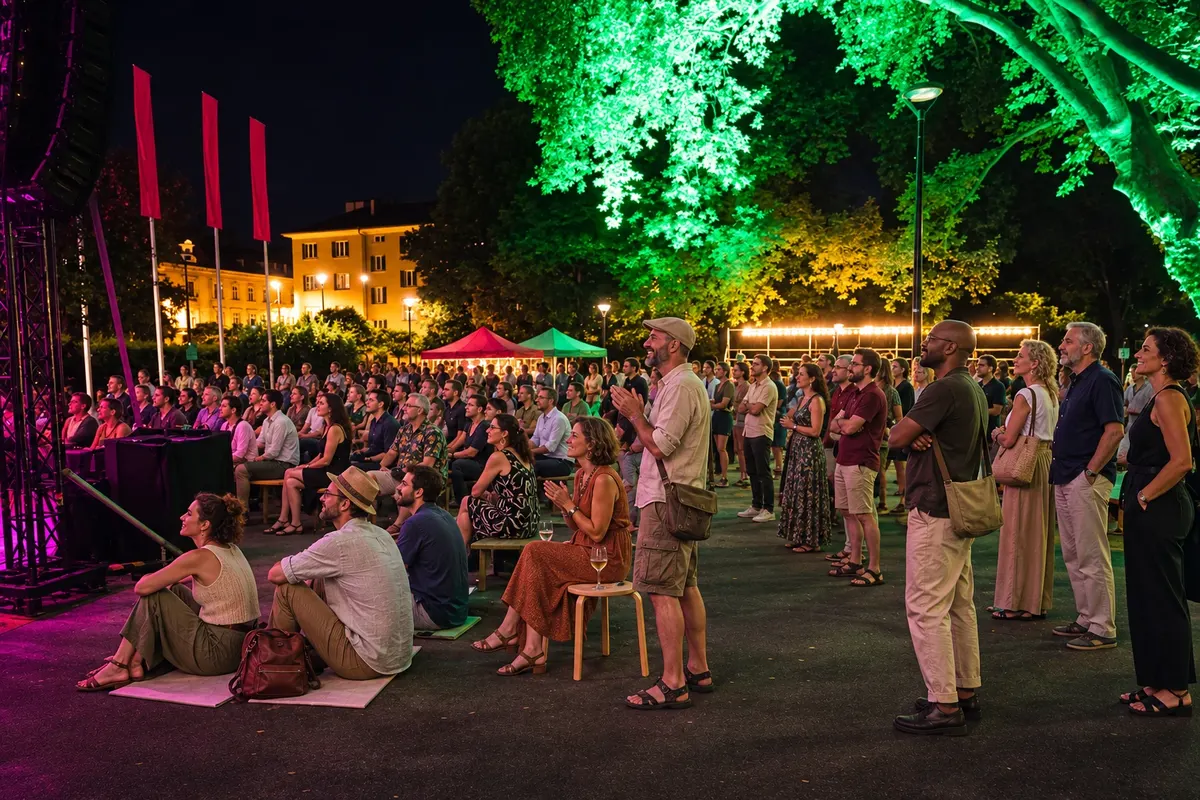
Start of summer: average highs around 26 °C and lows around 14 °C, with thunderstorms on about 14 days. Between late June and early July the Ljubljana Jazz Festival takes place, and the Ljubljana Festival begins with concerts at Križanke and Kongresni trg.

July High rain

high summer · Ljubljana Festival

The hottest month: average highs around 28 °C and lows around 16 °C. Rain comes as strong, short thunderstorms on about 13 days. The city receives more visitors: book Plečnikova hiša and day trips in advance. The Ljubljana Festival fills the nights with opera, ballet and concerts, and the castle hosts open‑air cinema in the courtyard.

August High rain

summer · concerts at Križanke

Heat similar to July: average highs around 28 °C and lows of 16 °C, with rain on about 12 days. The Ljubljana Festival runs until early September. To escape the heat, leave the castle and the center for early morning or late afternoon and spend the middle of the day in the Rožnik forest or in the museums.

September High rain

early autumn · rainiest month

Average highs around 22 °C and lows of 12 °C. It is the month with the highest rainfall by volume, on about 13 days; between weather fronts, days are mild and clear. Visitor numbers drop after summer, and boats and the Odprta kuhna continue. Have a museum plan for rainy days.

October High rain

autumn · Ljubljana Marathon

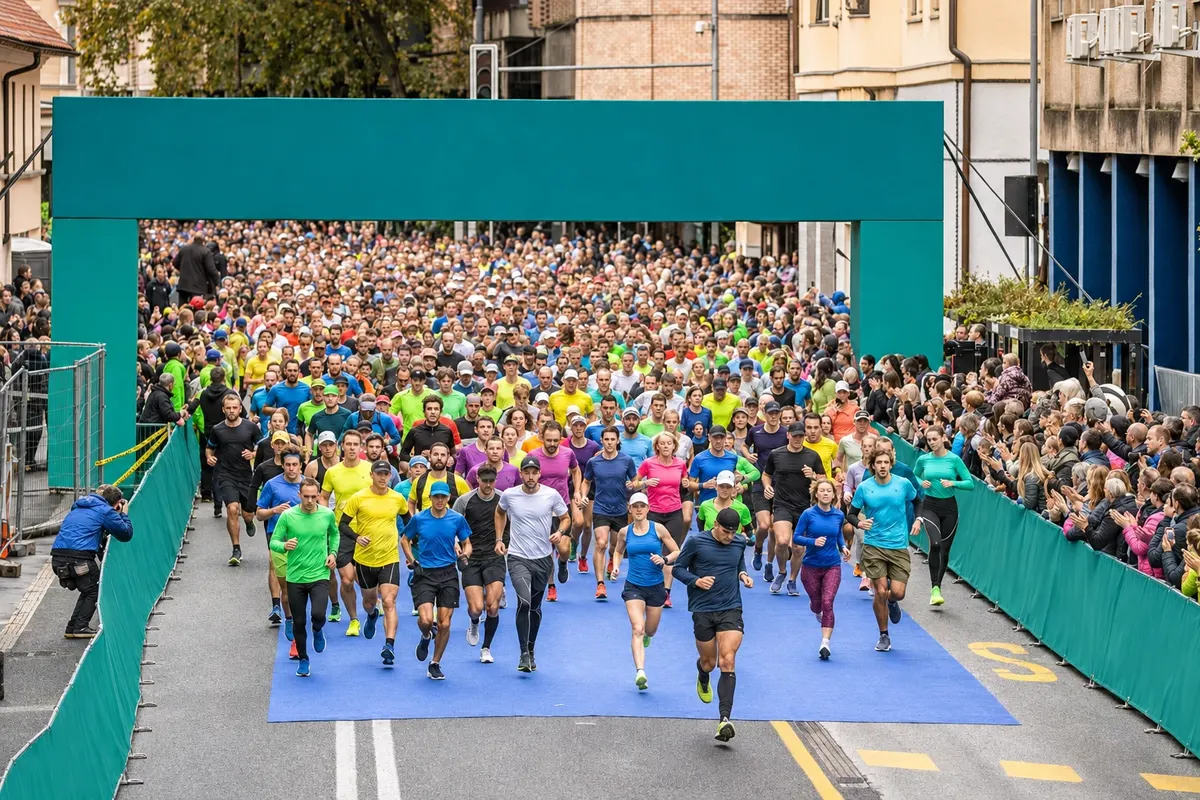
Average highs around 16 °C and lows around 8 °C, with frequent rain on about 13 days. On a weekend in the second half of the month, the Ljubljana Marathon closes streets in the city centre. At the end of October the Odprta kuhna season ends.

November High rain

month with the most rainy days · lights at month’s end

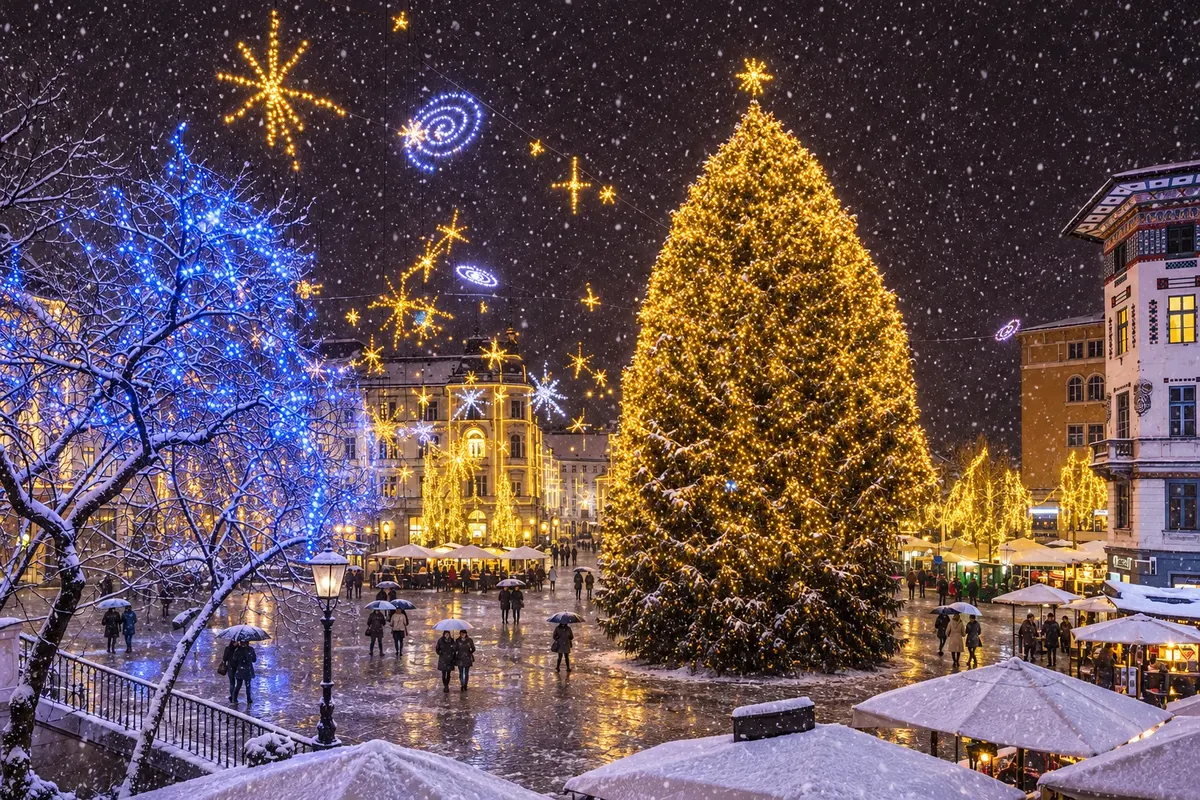
Average highs around 10 °C and lows around 4 °C. This is the month with the most rainy days, about 16, and little sun. A good time for museums and the National Library. At the end of the month, on a Friday near the first Sunday of Advent, the city switches on the holiday lights and opens the riverside stalls.

December Some rain

Festive December

Winter: average highs around 4 °C and lows around -1 °C, with precipitation on about 14 days and snow on about 11. It gets dark mid‑afternoon, which highlights the centre’s lighting. Food stalls, hot drinks and gift stalls line the Ljubljanica; there are concerts in the squares and the New Year’s Eve celebration at Kongresni trg. Book accommodation in advance.

Plan the journey

How to get there: Ljubljana — Slovenia

Via neighboring airports

Ljubljana is also served by airports in neighboring countries: Klagenfurt in Austria, about 85 km away; Trieste in Italy, about 130 km away; and Zagreb in Croatia, about 140 km away. Transfer companies run scheduled connections between these airports and Ljubljana, and there are direct buses from Venice Marco Polo Airport. It’s worth comparing options when a flight to Ljubljana isn’t suitable: the final stretch by land is short.

By train

Ljubljana station is Slovenia’s main railway hub. There are international connections to Vienna, Graz, Munich, Frankfurt, Zurich, Prague, Budapest, Zagreb, Belgrade and Trieste. Within the country, Slovenske železnice (SŽ) trains run from Ljubljana to Maribor, Celje, Koper, Postojna and the Jesenice line, which serves the Bled area. Timetables, tickets and bicycle carriage conditions are on the SŽ website. Confirm before traveling, because line works can replace sections with buses.

By bus

Ljubljana’s bus station is next to the train station and is the country’s main terminal. There are direct international buses from Trieste, Venice (Mestre and Marco Polo Airport), Florence, Milan, Klagenfurt, Vienna, Munich, Budapest, Zagreb, Sarajevo and Belgrade, among others. Regular lines connect the capital with Slovenia’s most popular destinations, such as Bled, Bohinj, the Postojna cave, Portorož and Piran. It is advisable to book in advance on weekends and in high season.

By car

Ljubljana sits at the junction of Slovenia’s main motorways and is easy to reach from neighboring countries: Zagreb is about 140 km away and Trieste about 95 km. The country’s motorways and expressways, including Ljubljana’s ring road, require the electronic vignette (e-vinjeta), purchased online or at authorized points such as petrol stations and post offices. The historic center is closed to cars: leave your vehicle in one of the P+R car parks, which have urban-bus connections to the center. For visiting the city alone, a car is not necessary.

Getting around Ljubljana

The city is compact, and the center is walkable. Urban buses, operated by the municipal company LPP, use the rechargeable Urbana card, sold at tourist information centers, newsstands and the green machines next to stops; one ticket is valid for transfers between buses for 90 minutes. You can also pay by bank card on board, without transfer rights. The BicikeLJ bike-share system has stations throughout the extended center, requires prior online registration and does not charge for the first hour of use. In the traffic-free center the Kavalir circulate, small electric vehicles designed for older people and those with reduced mobility, which are free to ride. The city tourist card includes urban buses.

Language, currency and documents

The official language is Slovene, and English is common in hotels, restaurants, museums and transport. The currency is the euro. Slovenia is part of the European Union and the Schengen area and follows Central European Time, with daylight saving time. Entry requirements depend on nationality, documents and travel conditions. Requirements can change: confirm before traveling.

Your base to explore

Where to stay and where to eat

Before you go

Practical information

A little planning leaves more time to enjoy the journey.

When to go

From May to September, with long days and outdoor tables by the river; July and August are the warmest months. April and October are usually mild and quieter. In December the center is lit up and hosts Christmas stalls. Winter is cold, with frequent fog and sometimes snow.

The seasons shown are the most usual ones; nature doesn't always follow the calendar.

How many days to stay

Two days allow you to see the castle, the bridges, the market, the cathedral, Tivoli and Plečnik’s house at a relaxed pace. With three or four days, the city can be a base for day trips to Bled, the Postojna Cave and the Škocjan Caves, or to the stilt villages of Ig.

Which city to stay in

The historic center, on both sides of the river, makes everything walkable. The streets on the castle side (Stari trg and Mestni trg) are older and quieter at night. Trnovo, to the south, is residential and close to Plečnik’s house. The area to the north, near the train and bus terminals, is practical for those arriving late or departing early for other cities.

Respect the place

Take your trash with you, follow the signs and support local businesses. In natural areas, follow the visiting guidelines.

Your questions

Frequently asked questions about Ljubljana — Slovenia

How many days to stay in Ljubljana?

Two days are enough for the center, the castle, the market and the parks. If you plan to use the city as a base for Bled, Postojna or the coast, allow three or four days.

How to get from Ljubljana airport to the center?

The airport is in Brnik, about 26 km away. There are regular buses to the bus station next to the train station, and transfer services. By taxi, plan about half an hour, depending on traffic.

Do you need a car in Ljubljana?

No. The central streets are pedestrian-only, and city buses cover the neighborhoods. A car only helps for day trips to places without direct train service, such as the stilt houses of Ig or Predjama Castle.

Can you make day trips from Ljubljana to Bled and Postojna?

Yes. Bled is about 55 km away, and the Postojna Cave about 50 km, both served by buses and trains from the capital. Each deserves a full day, or half a day if you go by car.

What is the best time to visit Ljubljana?

From May to September, when life happens along the riverbank. April and October are good options with fewer people. December offers lighting and Christmas stalls, with cold and short days.

How do you get up to Ljubljana Castle?

By funicular or on foot. The funicular departs from Krekov trg square, next to the Central Market, carries 28 passengers and reaches the top in about 1 minute. On foot, you climb the hill trails from the old town in a short but steep walk. The tower and exhibits require an admission ticket.

What are Plečnik’s works in Ljubljana?

They are the interventions by architect Jože Plečnik (1872–1957), who redesigned the city from 1921 onward. Major examples include the Triple Bridge, the Central Market colonnade, the Shoemakers’ Bridge, the National and University Library, the Ljubljanica river embankments, Križanke and the Žale cemetery. In 2021 the ensemble was added to the UNESCO World Heritage list.

Is it worth buying the Ljubljana tourist card?

It depends on your travel pace. The city tourist card includes city buses, the castle with the funicular, a boat ride, the guided walking tour of the center and admission to several museums. It pays off if you plan to visit many paid attractions in a short time. Add up the tickets for what you want to see and compare with the card’s current price list.

When does Odprta kuhna, Ljubljana’s food market, take place?

On Fridays, from mid‑March to the end of October, at Pogačarjev trg square next to the Central Market. Chefs from Slovenian restaurants prepare dishes from various cuisines in stalls. In case of bad weather, the market is cancelled.

How to take the bus in Ljubljana?

City buses use the rechargeable Urbana card, sold at tourist information centers, newsstands and the green machines next to stops. One fare allows transfers between buses for 90 minutes. You can also pay with a bank card on board, but without transfer rights.

Where to see the prehistoric pile dwellings near Ljubljana?

In Ig, about 13 km from the center, in the Ljubljansko barje. Morostig has an exhibition about the marsh’s nature and the pile dwellings, a themed trail and a reconstruction of a village with five huts. The prehistoric pile dwellings around the Alps are a UNESCO World Heritage Site. The City Museum of Ljubljana displays the wooden wheel with axle found in the marsh.

Can you hike without leaving Ljubljana?

Yes. Trails leave Tivoli Park through the woods up to Rožnik, at 391 m. North of the city, Šmarna gora, at 664 m, has 15 marked routes, with ascents of about half an hour to a little over an hour. And the Trail of Remembrance and Comradeship circles the city in 33 km, on foot or by bike.

Cross-border routes

Ljubljana — Slovenia is on the Ljubljana–Trieste by train

From Ljubljana to Trieste along the Karst railway, with stops at Postojna, Divača and Sežana and arrival by the Adriatic.

Explore the Ljubljana–Trieste by train
Explore other destinations Search by state and city

Beyond the guide