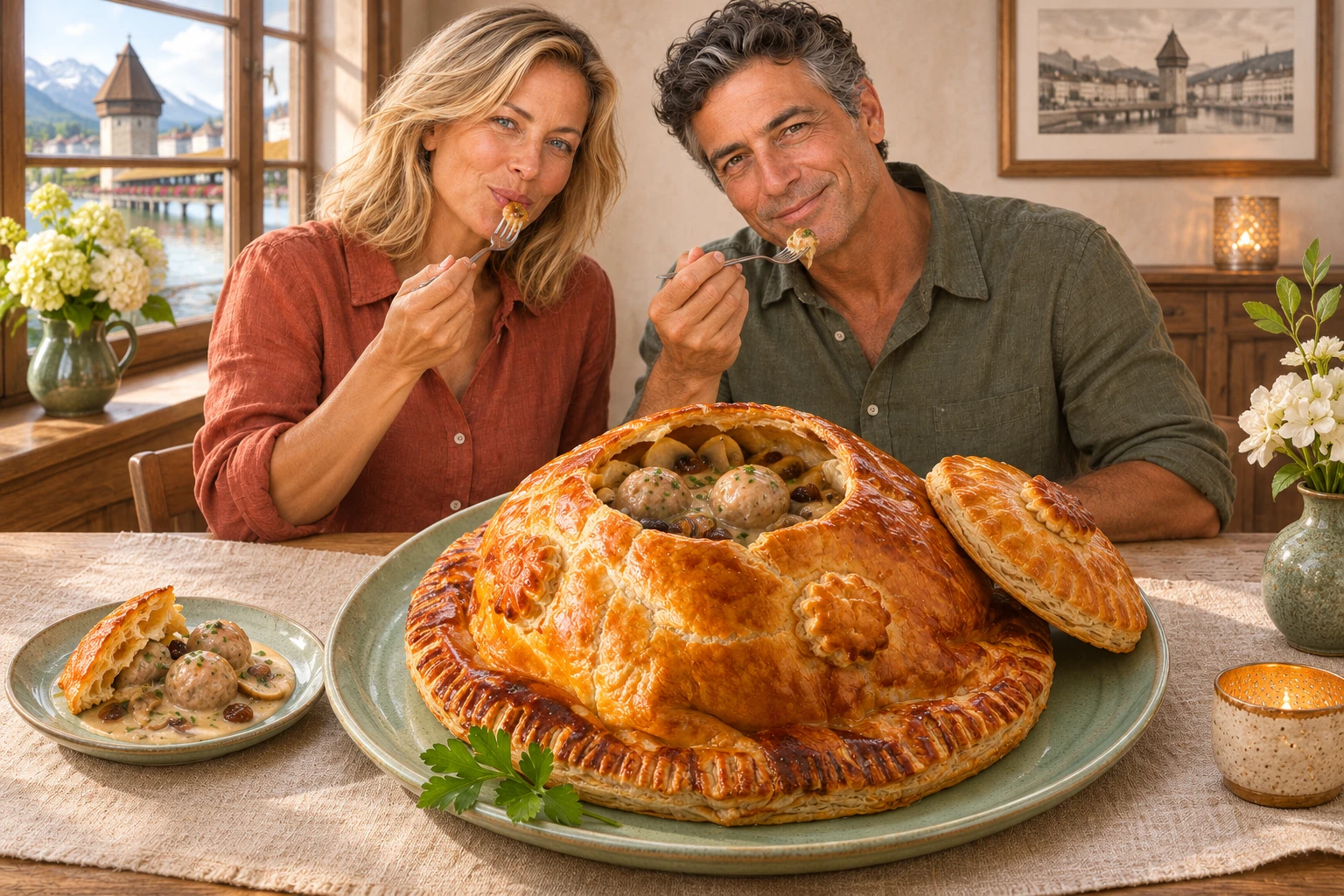
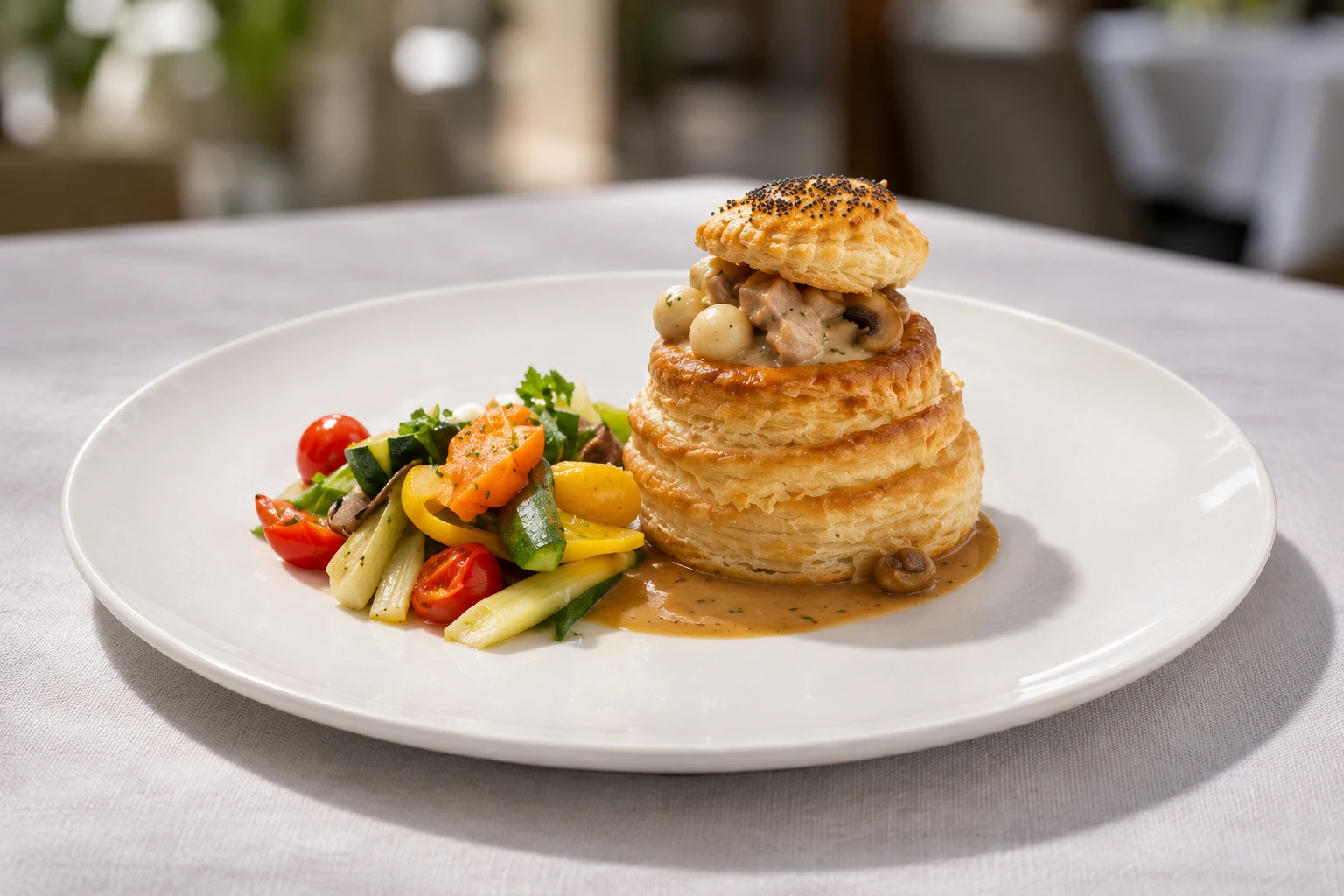
The Luzerner Chügelipastete, Lozärner Chügelipastete in the local dialect, is Lucerne’s celebratory dish. The name comes from Chügeli, meaning “little balls,” the shape of most of the filling’s ingredients. It is also called Fritschipastete, referring to Fritschi, the figure that represents the city’s carnival and the guild associated with it.
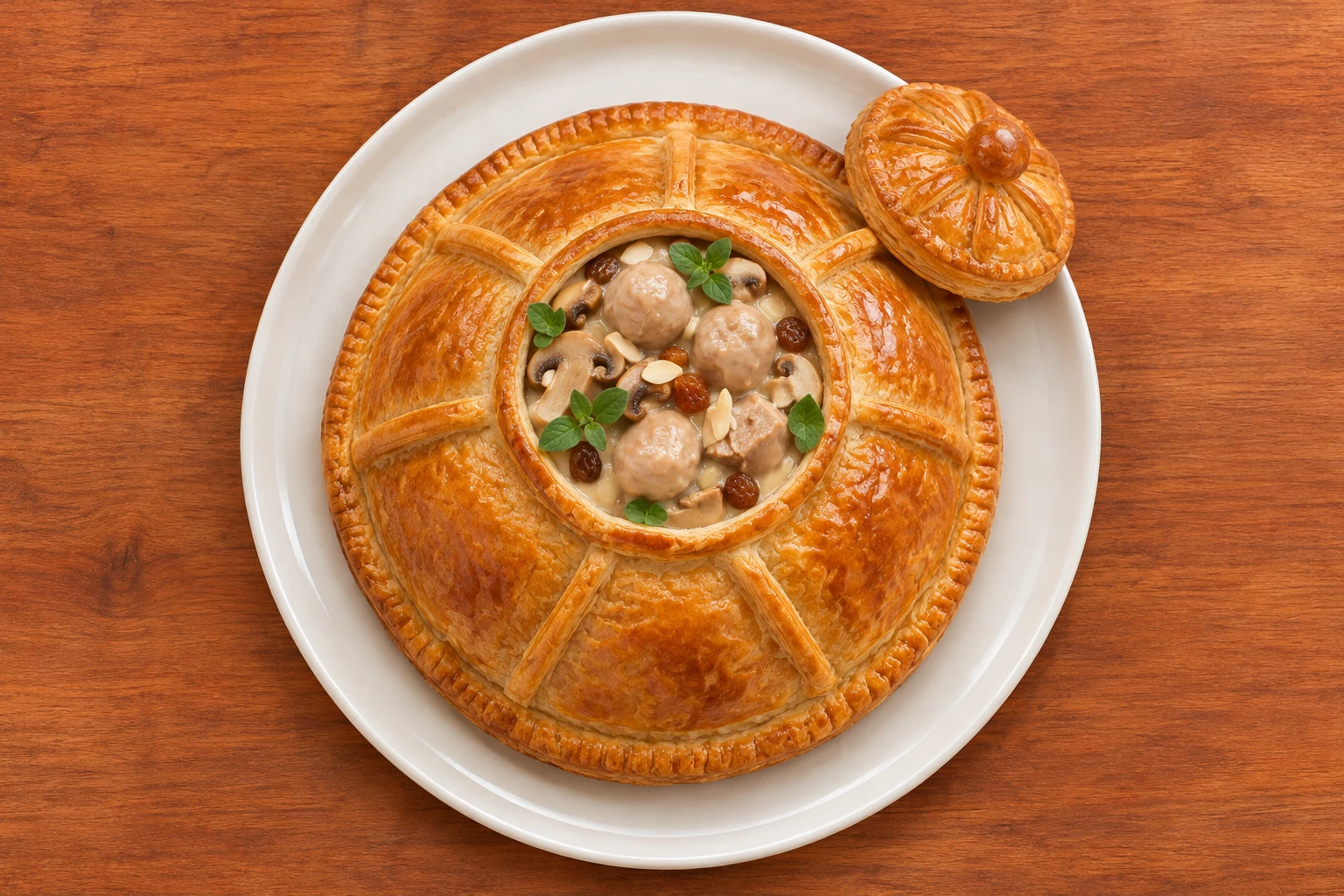
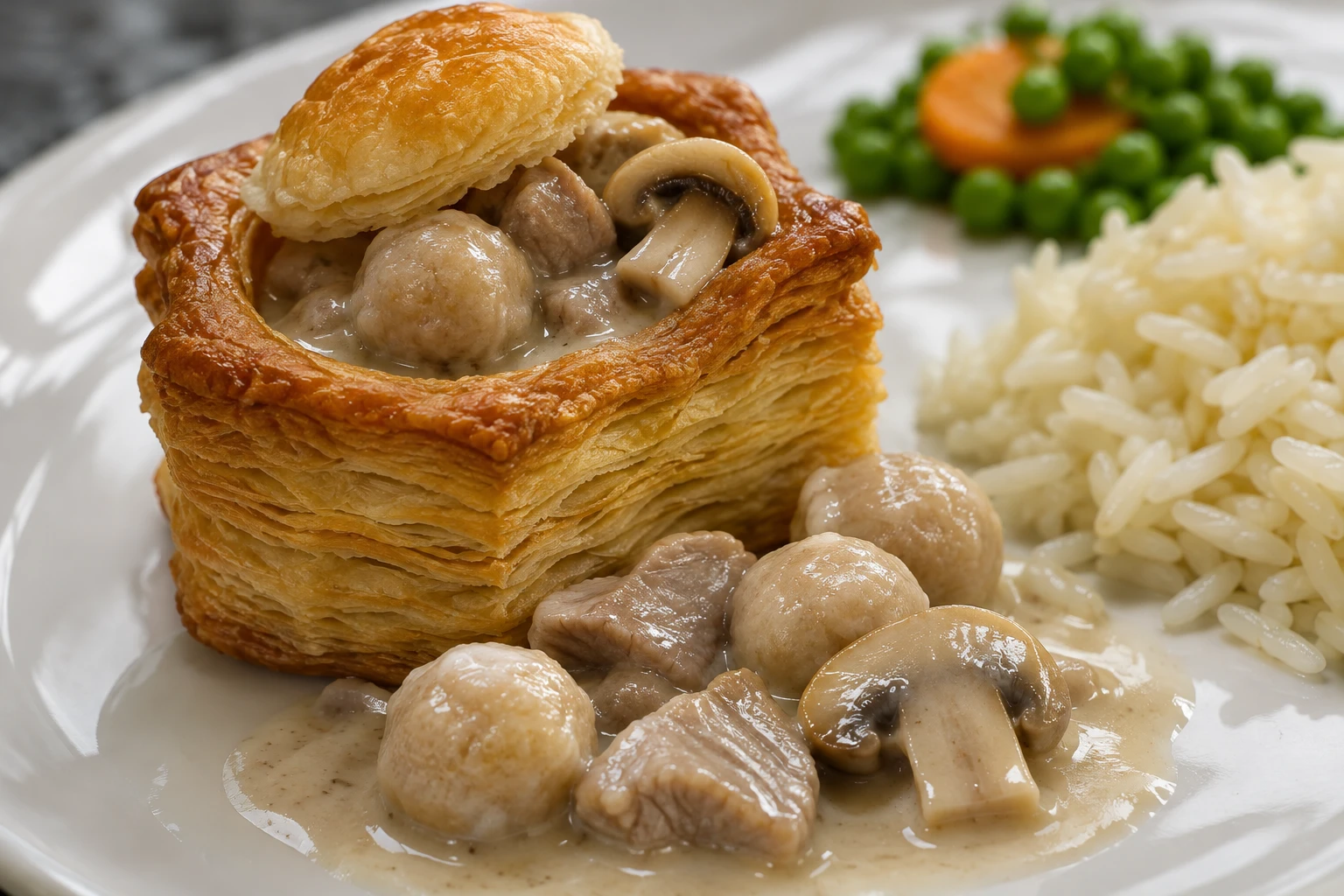
The earliest mentions of the dish date to the 18th century, and since then the recipe has changed several times in form and composition. The base has remained: a puff-pastry shell, the Pastetenhaus, filled with a ragout of meat, mushrooms and raisins.
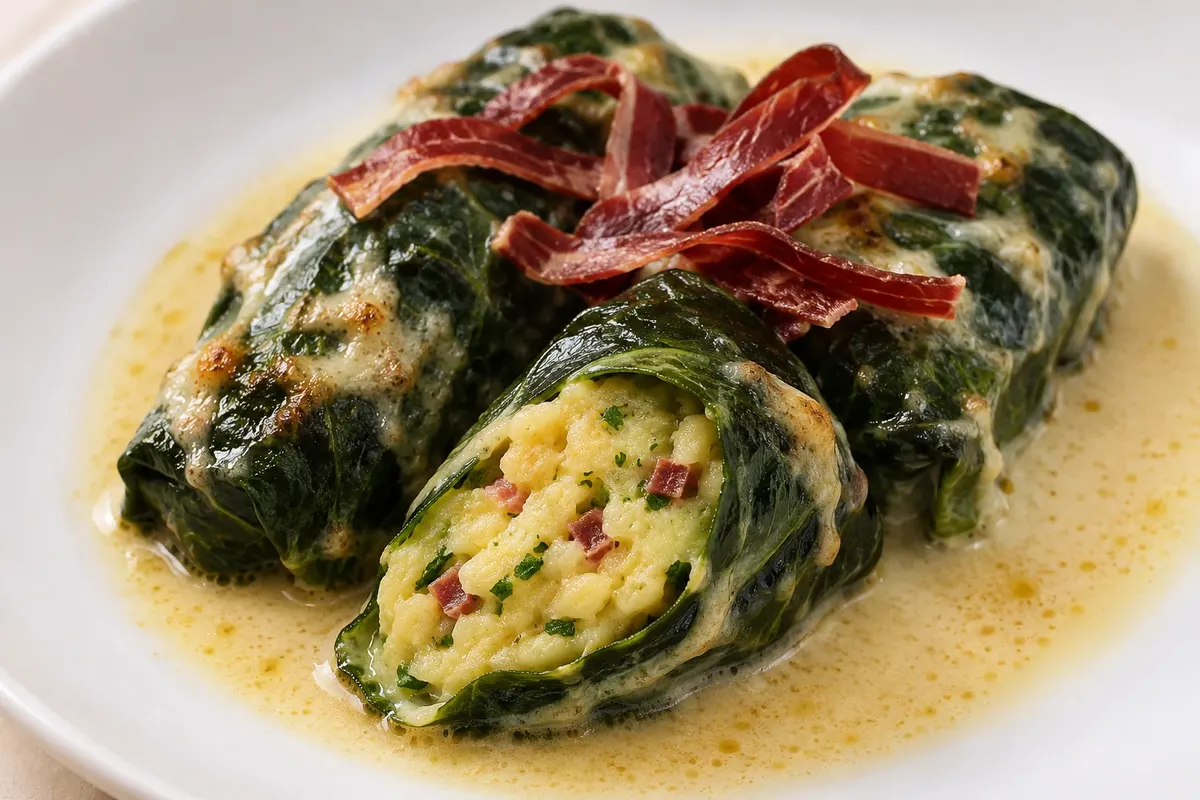
For the classic version, veal is cut into cubes and a fine mixture of pork and veal is made into small balls and cooked in broth. In central Switzerland these meatballs are sold ready-made. Before serving, the meat, mushrooms and meatballs are combined in a creamy white sauce, sometimes with white wine or apple juice, and with marinated raisins. The puff-pastry dome, decorated on top, receives the filling.
Making the pastry shell is laborious, so the Chügelipastete is reserved for special occasions and carnival days. In the city’s traditional restaurants it also appears year-round, sometimes in individual or vegetarian versions.


 Brazil
 Argentina
 Bolivia
 Chile
 Colombia
 Ecuador
 Guyana
 French Guiana
 Falkland Islands (Malvinas)
 Paraguay
 Peru
 Suriname
 Uruguay
 Venezuela
 Germany
 Austria
 Belgium
 Croatia
 Denmark
 Spain
 Finland
 France
 Greece
 the Netherlands
 Hungary
 Ireland
 Iceland
 Italy
 Luxembourg
 Norway
 Poland
 Portugal
 the United Kingdom
 the Czech Republic
 Sweden
 Turkey
 Canada
 the United States
 Mexico
 the Dominican Republic
 South Africa
 Australia
 Fiji
 New Zealand
 Papua New Guinea