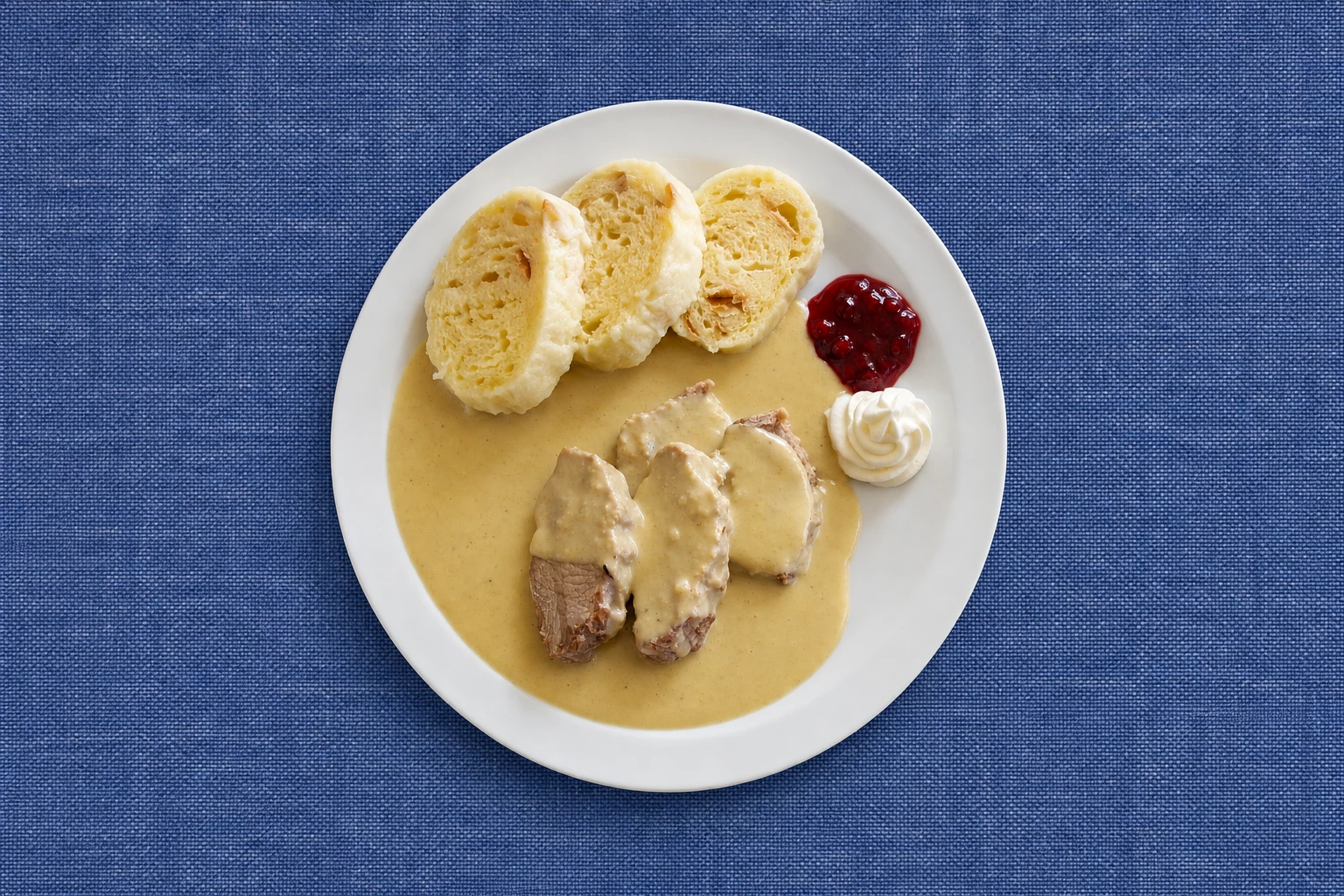
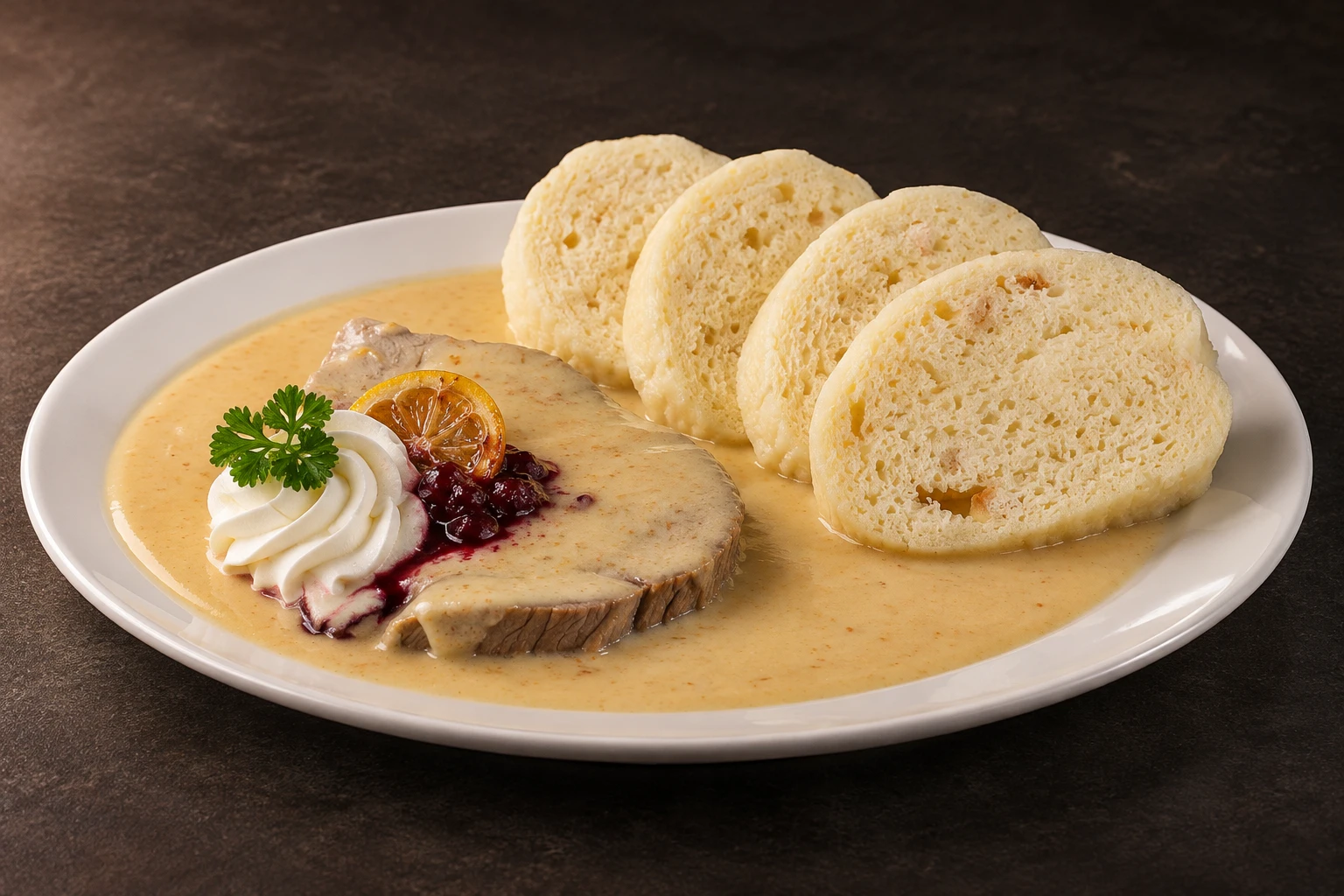
Svíčková na smetaně is beef with a root-vegetable sauce and cream. The name comes from the cut: svíčková is the beef tenderloin, although many kitchens use other cuts. The meat is seasoned and left to marinate with carrots, parsley root, celery–kohlrabi, and onion, together with spices such as bay leaf, allspice and black pepper, and then slowly roasted with those vegetables.
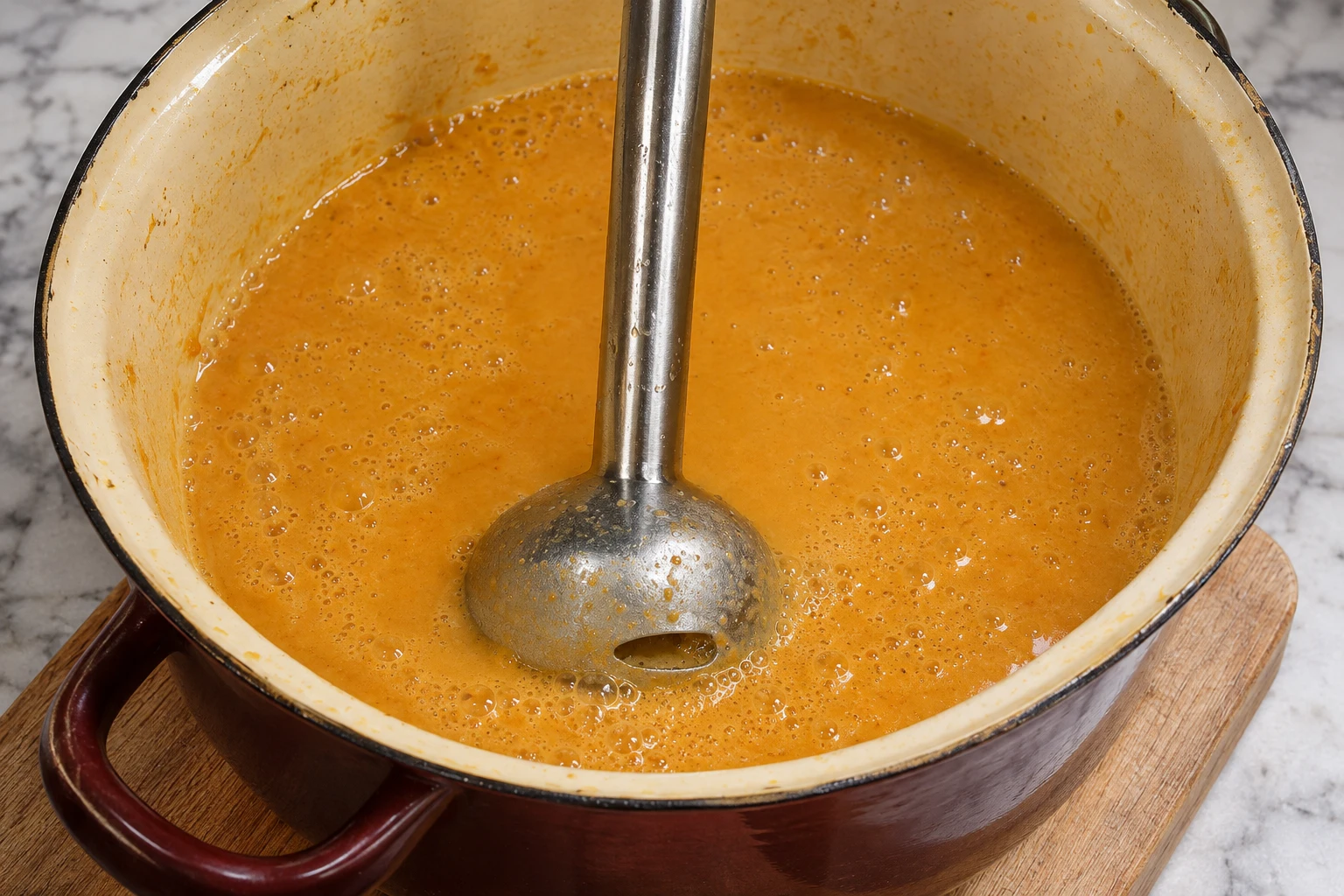
The roasted vegetables are passed through a sieve or blended with the roasting juices and heavy cream, which gives the sauce its pale color and thick texture. The dish is assembled with slices of the meat covered in sauce, alongside slices of bread knedlík. On top go a spoonful of whipped cream, a spoonful of cranberry jam and a slice of lemon.
Czech chefs point to svíčková as the Czech national dish, and the Czech Hotel and Restaurant Association cites it as one of the best-selling dishes in the country’s restaurants and inns. It’s also a festive food: it appears at weddings, birthdays and Sunday lunches.
The origin is unclear. The association with Magdalena Dobromila Rettigová’s 1826 cookbook is debated: the first edition describes meat with spices and cream, without the roots of the later-known version. There are close relatives in other Central European cuisines, such as the German Sauerbraten.
Each family has its own version, with more or less vinegar, sugar or spices in the sauce.


 Brazil
 Argentina
 Bolivia
 Chile
 Colombia
 Ecuador
 Guyana
 French Guiana
 Falkland Islands (Malvinas)
 Paraguay
 Peru
 Suriname
 Uruguay
 Venezuela
 Germany
 Austria
 Belgium
 Croatia
 Denmark
 Spain
 Finland
 France
 Greece
 the Netherlands
 Hungary
 Ireland
 Iceland
 Italy
 Luxembourg
 Norway
 Poland
 Portugal
 the United Kingdom
 Sweden
 Switzerland
 Turkey
 Canada
 the United States
 Mexico
 the Dominican Republic
 South Africa
 Australia
 Fiji
 New Zealand
 Papua New Guinea