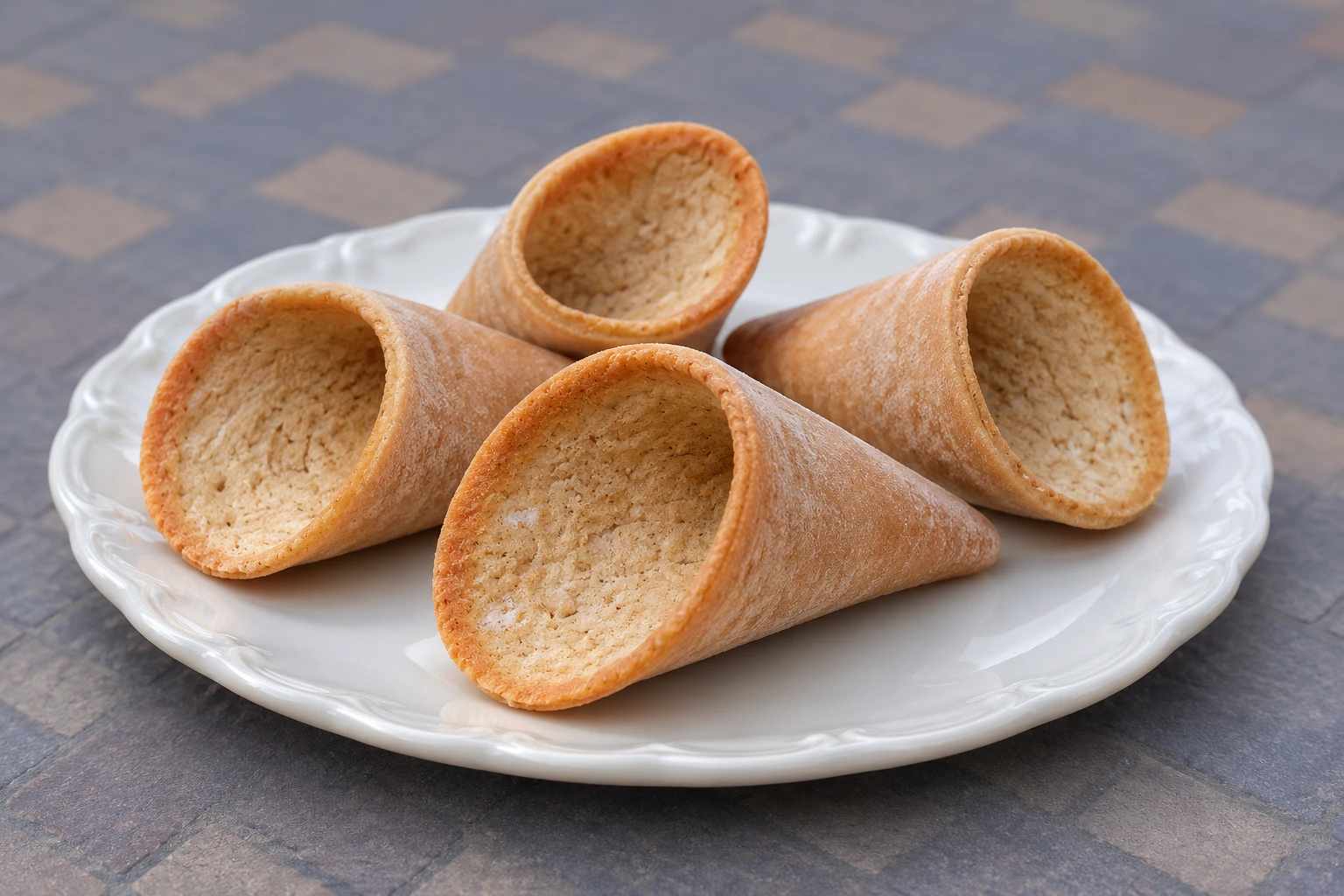
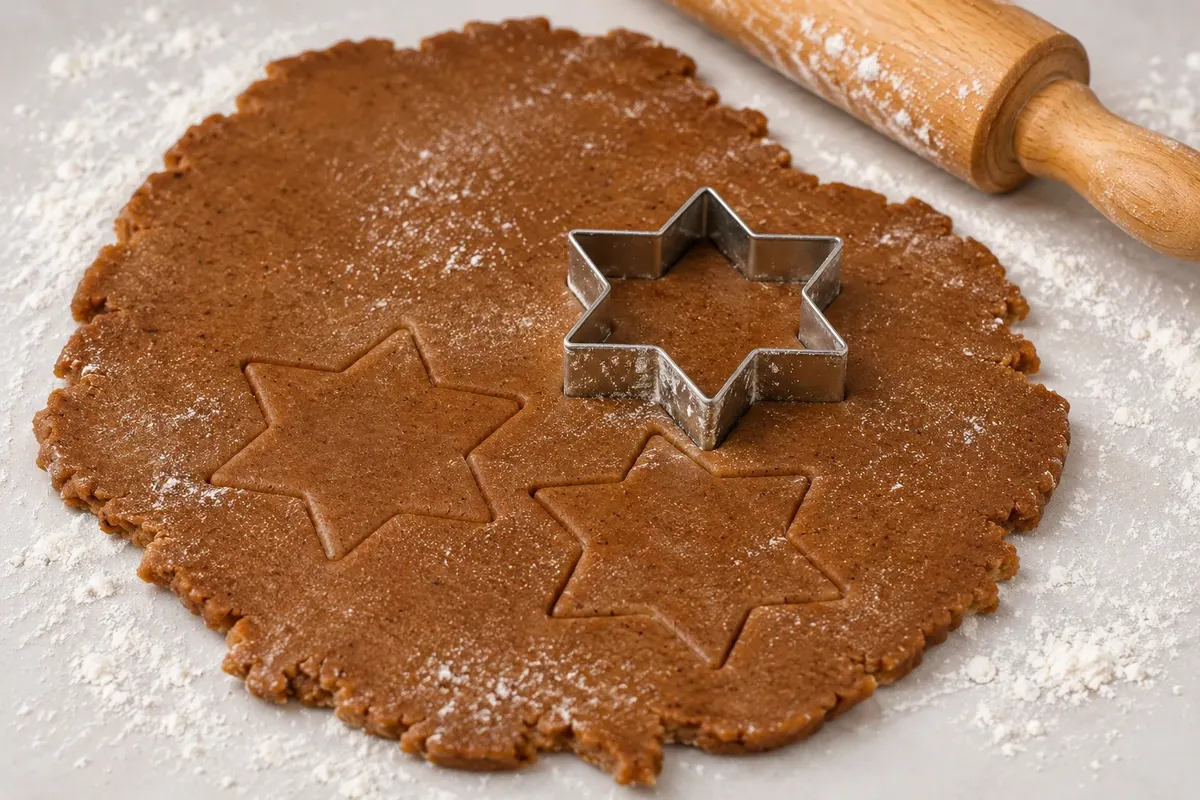
Štramberské uši, the ears of Štramberk, are made from a thin dough of flour, sugar and honey, flavored with spices such as anise, cinnamon and clove. After baking, each still-warm sheet is rolled into a cone resembling an ear. The result is crisp, dark brown, and fragrant with spices.
The name comes from a legend. According to local tradition, in 1241 Tatar troops arrived in Moravia, and the townspeople took refuge on Kotouč hill. During a storm they opened the sluices of a pond and the water flooded the enemy camp; afterwards they found sacks with the ears cut from the Christians who had been killed, which the Tatars were said to have sent to their leader. The dough ears are said to recall that victory.
Štramberské uši received European Union protected geographical indication in 2007. The name may only be used by those who bake them in Štramberk, and the town holds the trademarks. Local bakers compete in an annual contest for the best ear.
In the streets of Štramberk’s wooden houses, the ears are sold in packages or freshly made. They are eaten plain or filled with whipped cream, sometimes with fruit.


 Brazil
 Argentina
 Bolivia
 Chile
 Colombia
 Ecuador
 Guyana
 French Guiana
 Falkland Islands (Malvinas)
 Paraguay
 Peru
 Suriname
 Uruguay
 Venezuela
 Germany
 Austria
 Belgium
 Croatia
 Denmark
 Spain
 Finland
 France
 Greece
 the Netherlands
 Hungary
 Ireland
 Iceland
 Italy
 Luxembourg
 Norway
 Poland
 Portugal
 the United Kingdom
 Sweden
 Switzerland
 Turkey
 Canada
 the United States
 Mexico
 the Dominican Republic
 South Africa
 Australia
 Fiji
 New Zealand
 Papua New Guinea